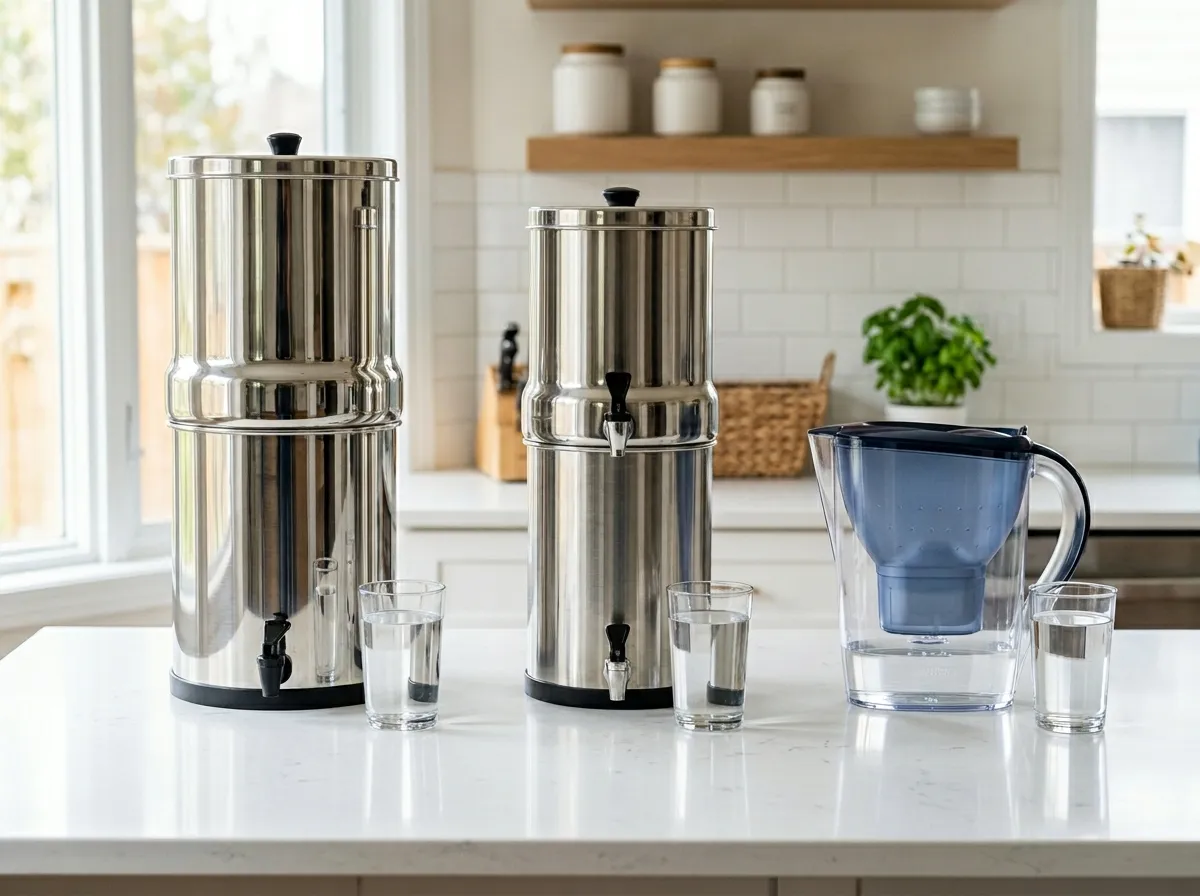
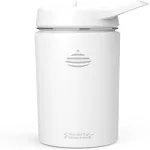
iSpring and Clearly Filtered both show up in serious water filtration shortlists, but they solve different problems and sit in different product categories. Most review sites pretend they’re interchangeable. They’re not. See our side-by-side comparison in berkey vs proone vs clearly filtered.
A quick note on what changed. An earlier version of this article compared Clearly Filtered against SpringWell. We pulled SpringWell after seeing its BBB rating sit at 1.84 out of 5, which is a weak signal for a brand you’re trusting with a whole-home install. iSpring’s WGB32B-KS (ASIN B08HNJ9R62) replaces it here. It’s SGS-tested, holds a 4.9 out of 5 on Trustpilot, and ships at a much lower price point.
Products below were selected based on ingredient transparency, third-party certifications, and real-world testing. For a breakdown of how we choose what makes the cut, see our testing methodology.
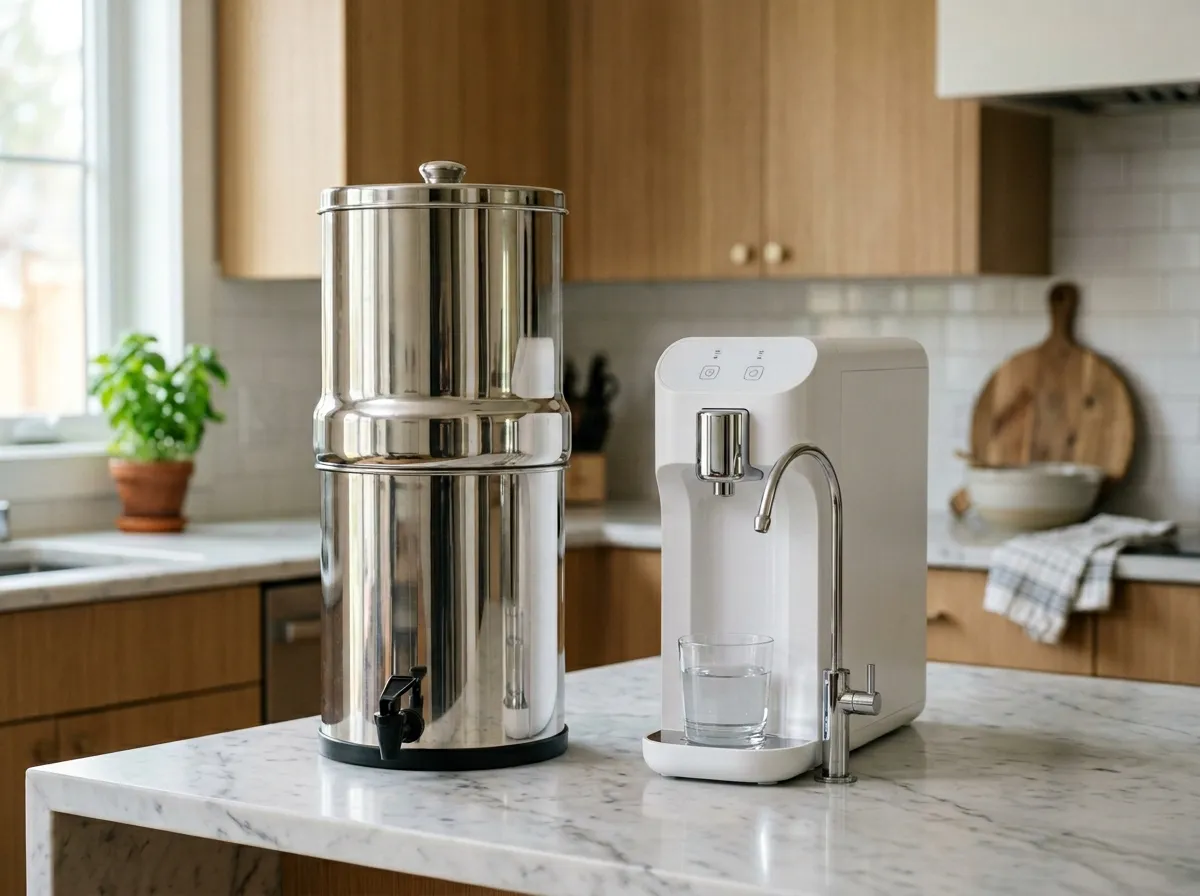
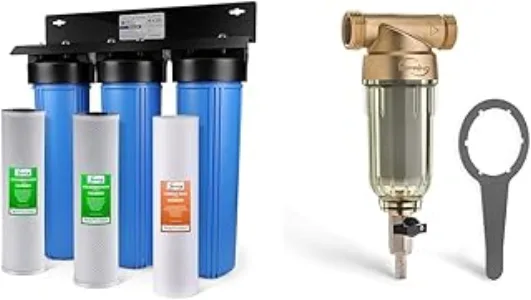
iSpring’s WGB32B-KS is a whole-house filter that treats water at the point of entry. Clearly Filtered makes point-of-use products (pitchers, under-sink filters, water bottles) that treat water where you drink it. Read our full take in berkey water filter review.
You might need one or the other. You might need both. The right answer depends on what’s in your water, where you want filtration, and how much you’re willing to spend. Here’s how to figure that out.
The Short Answer
These two solve different problems. iSpring’s WGB32B-KS is a whole-house filter that sits at the main water line and handles chlorine, sediment, and scale for every faucet in your home. Clearly Filtered is point-of-use, with pitchers and under-sink units that remove PFAS, lead, and heavy metals at the kitchen tap. Best setup is both. Forced to pick one, go with Clearly Filtered. It addresses more of the contaminants with real health relevance.
System Types: Whole House vs Point of Use
iSpring Product Line
| System | What It Does | Price Range |
|---|---|---|
| WGB32B-KS 3-Stage Whole House | Sediment, KDF55, carbon block. Reduces PFAS, chlorine, chloramine, lead, sediment | $$$ |
| WGB32BM Whole House | Iron/manganese focused version of the WGB32B | $$$$ |
| RCC7AK Under-Sink RO | 6-stage reverse osmosis with alkaline remineralization | $$$ |
| ED2000 Salt-Free Softener | Electronic descaler for hard water | $$ |
The WGB32B-KS is the core recommendation. Water enters your home, passes through three stages, and every tap, shower, and appliance gets filtered water. You’re not just cleaning drinking water. You’re reducing chlorine, chloramine, and PFAS exposure from showering, cooking, laundry, and the steam from your dishwasher. It runs at 15 GPM, which is enough for a typical three-bathroom home without pressure loss.
Clearly Filtered Product Line
| System | What It Does | Price Range |
|---|---|---|
| Water Pitcher | Gravity-fed pitcher filtration | $$ |
| Under-Sink System | 3-stage connected to cold water line | $$$ |
| Water Bottle | Portable filtration | $$ |
| Replacement Filters | Pitcher: $$ Under-sink: $$ | Per filter set |
Clearly Filtered focuses on the drinking water you put in your body. Their approach is fewer gallons filtered but filtered to a higher standard for the contaminants that matter most when you’re ingesting water.
Contaminant Removal: Where It Gets Interesting
| Option | Main concern | Primary tradeoff |
|---|---|---|
| iSpring WGB32B-KS (whole house) | Not a certified replacement for a dedicated RO drinking filter | Treats all water entering the home, reduces PFAS, chlorine, chloramine, lead, and sediment at 15 GPM |
| Clearly Filtered under-sink | Only filters drinking water, not shower or bath water | 232+ contaminants removed including 98%+ PFAS, lead, and fluoride |
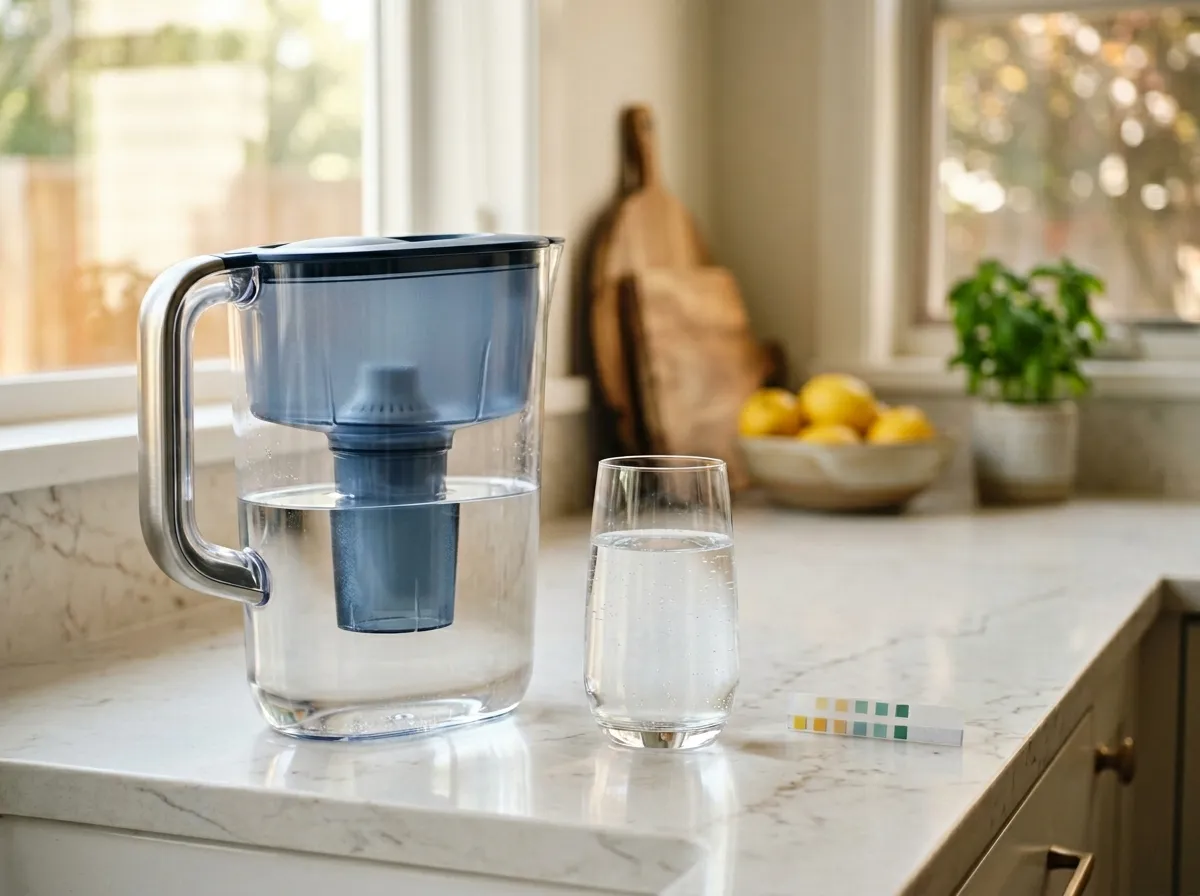
| Clearly Filtered pitcher | Slowest throughput, highest cost per gallon | No installation, portable, 270+ contaminants, best for renters |
| Both systems combined | Highest upfront cost ($$$$ installed) | Most complete coverage for both dermal and ingestion exposure routes |
This is the data that actually matters. Let’s look at what each brand removes.
iSpring WGB32B-KS Whole House System
iSpring’s 3-stage system uses sediment pre-filtration, a KDF55 stage, and a catalytic carbon block. Per iSpring’s SGS-tested performance data, it’s designed to reduce:
- Chlorine and chloramine (99%+)
- PFAS (PFOA and PFOS)
- Lead
- Sediment, rust, and particulates down to 5 microns
- Volatile organic compounds (VOCs)
- Haloacetic acids (HAAs) and trihalomethanes (THMs)
- Some pesticides and herbicides
What it does NOT remove at meaningful levels:
- Fluoride (whole-house carbon systems don’t address fluoride well)
- Pharmaceuticals (limited data)
- Microplastics (not specifically tested)
- Nitrates
The WGB32B-KS covers more of the “health concern” contaminants than a carbon-only whole-house system. It’s still not a complete drinking water purifier in the way an RO or a Clearly Filtered under-sink is. Think of it as the first line of defense across the whole home, not the last.
Clearly Filtered Under-Sink System
Clearly Filtered’s 3-stage under-sink system is tested and certified to remove:
- 232+ contaminants (based on independent lab testing)
- PFAS: 98%+ (tested for PFOA, PFOS, and GenX)
- Lead: 99.5%
- Fluoride: 98%+
- Pharmaceuticals: 95%+
- Pesticides and herbicides: 97%+
- Microplastics: 99%+
- Chromium-6: 97%+
- Mercury, arsenic, cadmium
Clearly Filtered publishes extensive independent lab testing from Envirotek Laboratories showing removal rates for specific contaminants. This is one of the most thoroughly tested point-of-use filters available.
Their pitcher filter also performs well, removing 270+ contaminants according to their testing, though at a slower flow rate and shorter filter life.
Dr. Philip Landrigan’s work on the Lancet Commission on Pollution and Health has documented the connection between chronic low-level exposure to waterborne contaminants and disease. His research makes a strong case for filtering drinking water specifically for lead, PFAS, and pesticides, which is exactly where Clearly Filtered’s product line concentrates its efforts.
The Gap Between Them
If you install an iSpring WGB32B-KS, you’ve cleaned up chlorine, chloramine, sediment, and a meaningful slice of PFAS and lead across your entire water supply. Good. But your drinking water still likely contains fluoride, pharmaceuticals, and trace contaminants at levels a dedicated under-sink filter would catch.
If you install a Clearly Filtered under-sink system, your drinking water is filtered to a high standard. But your shower water, the water you brush your teeth with at the bathroom sink, and the water your dishwasher uses all remain unfiltered.
Dr. Shanna Swan has noted that dermal absorption of chemicals from shower water is an underappreciated exposure route, particularly for chlorine disinfection byproducts and VOCs. This is the argument for whole-house filtration even if you have a point-of-use drinking water filter.
The Ideal Setup (If Budget Allows)
The best water filtration setup for most homes combines both approaches:
- Whole-house filter (iSpring WGB32B-KS) to reduce chlorine, chloramine, PFAS, lead, and sediment from all water entering the home
- Point-of-use drinking water filter (Clearly Filtered under-sink or reverse osmosis) to polish drinking water for fluoride, pharmaceuticals, and any residual contaminants
That combination runs roughly $850-$1,100 installed and addresses both dermal exposure and ingestion exposure. It’s the approach NonToxicLab recommends for households that take water quality seriously.
If you can only afford one, prioritize the drinking water filter (Clearly Filtered under-sink). You drink and cook with that water daily, and the contaminants it removes (PFAS, lead, pharmaceuticals, fluoride) matter more than the chlorine a whole-house system targets on its own.
Installation: What You’re Getting Into
iSpring WGB32B-KS Whole House
This is a real plumbing project. The system connects to your main water line before it splits to the rest of the house. You need:
- Basic plumbing skills (or a plumber, $150-$300 for installation)
- Access to your main water line
- Space for the three filter housings (about 2 feet of vertical clearance and roughly 20 inches of width)
- A shut-off valve on the main line
iSpring ships the unit with pre-installed fittings, a spanner wrench, and printed instructions. A handy homeowner can do it in 2-3 hours. If you’ve never cut into a water line, hire a plumber. The housings are clear, which makes it easy to see when the sediment pre-filter is due for a swap.
Clearly Filtered Under-Sink
Much simpler. The system connects to the cold water line under your kitchen sink and installs a dedicated filtered water faucet on your countertop. You need:
- A hole in your countertop for the faucet (or a spare pre-drilled hole)
- Basic wrench skills
- About 45 minutes
Most people can handle this without a plumber. The instructions are clear, and the connections are standard.
The pitcher requires zero installation. Fill it with water. Wait. Drink.
Filter Replacement Costs
| System | Filter Cost | Replacement Interval | Annual Filter Cost |
|---|---|---|---|
| iSpring WGB32B-KS (3 stages) | $$ per set | Every 12 months / 100,000 gal | $$ |
| Clearly Filtered Pitcher | $$ | Every 4 months (100 gallons) | $$ |
| Clearly Filtered Under-Sink | $$ | Every 9-12 months | $$ |
iSpring’s whole-house replacement set covers all three stages for about a year of use for a typical household, which works out to the lowest cost per gallon in the comparison. Clearly Filtered’s replacement filters are pricier per unit, which reflects the more advanced filtration media. The pitcher filter’s annual cost is the highest on a per-gallon basis, making the under-sink system the better long-term value if you’re committed to Clearly Filtered.
What we don’t fully know: Dermal absorption rates for PFAS from shower water are not well-characterized in human studies, so how much a whole-house filter reduces actual PFAS body burden compared to a drinking-water-only filter remains unclear. Clearly Filtered’s independent testing covers removal rates but does not include post-filter contaminant measurement from real household tap water samples. iSpring’s SGS testing documents reduction rates in controlled conditions, not long-term field performance across different municipal water profiles.
Which Filter Should You Buy?
iSpring WGB32B-KS whole-house system if:
- You want chlorine, chloramine, and PFAS reduced from shower and bath water
- You have skin irritation from chlorinated water
- You want to protect appliances and plumbing from chlorine damage and sediment
- You’re building or renovating and can easily install during construction
- You want whole-home coverage without paying $1,000+ for a carbon-only tank system
Clearly Filtered under-sink if:
- PFAS, lead, or fluoride are your primary concerns
- You want the most thorough drinking water filtration available
- You rent and can’t modify the main water line
- You want tested and published contaminant removal data
- Your local water quality report shows specific contaminants
Clearly Filtered pitcher if:
- You want better filtration than Brita or PUR without committing to installation
- You’re on a tight upfront budget
- You move frequently
- You want portable filtration
Both (whole house + under-sink) if:
- You want the most complete water filtration setup
- You’re willing to invest $850-$1,100 upfront
- You take both dermal and ingestion exposure seriously
We’ve compared other filtration systems in depth in our Berkey vs AquaTru and AquaTru vs Clearly Filtered articles. For pitcher-specific comparisons, our Brita vs PUR guide covers the budget tier.
Answers to Common Questions
Does the iSpring WGB32B-KS remove PFAS?
Yes, to a meaningful degree. The KDF55 and catalytic carbon stages are SGS-tested for PFOA and PFOS reduction. It’s not a certified substitute for a dedicated RO or under-sink PFAS filter rated at 98%+, but it’s one of the few whole-house systems at this price that addresses PFAS at all. If PFAS is your single biggest concern, pair it with a Clearly Filtered under-sink at the kitchen tap.
Is Clearly Filtered better than AquaTru?
Both are excellent point-of-use systems. AquaTru uses reverse osmosis and removes slightly more total dissolved solids. Clearly Filtered uses proprietary filter media and is certified for more specific contaminants (270+). For PFAS specifically, both perform well. Read our full AquaTru vs Clearly Filtered comparison for the detailed breakdown.
How long does a Clearly Filtered pitcher last?
The pitcher itself lasts indefinitely. The filters are rated for 100 gallons, which works out to roughly 4 months for a typical household. The filter should be replaced when the flow rate slows significantly, even if you haven’t hit the gallon limit, as slower flow indicates the filter media is saturated.
Do I need a whole house filter if I have a good drinking water filter?
It depends on whether you’re concerned about dermal and inhalation exposure. Chlorine, chloramine, and VOCs in shower water can be absorbed through the skin and inhaled as steam. If you have sensitive skin, eczema, or respiratory issues that seem to worsen after hot showers, a whole-house filter may help. If your only concern is what you drink, a point-of-use filter is sufficient.
How often do iSpring WGB32B-KS filters need replacing?
iSpring rates the full three-stage set for 100,000 gallons or roughly 12 months in a typical household, whichever comes first. The sediment pre-filter often needs swapping sooner if you’re on well water or a municipal system with older pipes. A pressure gauge on the inlet helps you catch clogs early, before flow drops noticeably at the shower.
Is the iSpring WGB32B-KS good for well water?
It’s a reasonable fit for moderate well water issues (sediment, some iron, chlorine from shock treatments) but not for heavy iron or sulfur. For wells with iron above 3 ppm or a rotten-egg smell, iSpring sells the WGB32BM, which adds an iron and manganese stage. Start with a water test, then match the system to what’s actually in your water.
Sources
- iSpring WGB32B-KS product specifications and SGS testing documentation (ispringfilter.com)
- Clearly Filtered independent lab testing by Envirotek Laboratories (clearlyfiltered.com)
- NSF International filter certification standards (nsf.org)
- Philip Landrigan et al. “The Lancet Commission on Pollution and Health” (2017)
- Shanna Swan research on dermal chemical absorption
- EPA drinking water contaminant standards (epa.gov/ground-water-and-drinking-water)
You Might Also Like
- Brita vs Clearly Filtered
- Clearly Filtered vs ZeroWater
- Clearly Filtered Water Pitcher Review
- Best Water Filter Pitchers in 2026 (Tested for PFAS, Lead, and Chlorine)
- iSpring WGB32B vs Aquasana: Which Whole House Filter Is Better in 2026?
- iSpring WGB32B-KS Review: The Whole House Water Filter We Recommend in 2026
- The Whole House Filter We Recommend (iSpring WGB32B-KS)
- iSpring WGB32B vs AquaTru: Whole House vs Point-of-Use in 2026
- Caraway vs Our Place Always Pan: Which Non-Toxic Pan Wins?