
In 2026, the regulatory map for PFAS shifted faster than any chemical category in modern US history.
By April, nearly 100 new PFAS bills had been introduced across 17 states, with another 280 carried over from 2025, according to Safer States. Nine major state policies took effect this year alone. Manufacturers selling into the US market now have to track restrictions in roughly 30 different jurisdictions, each with slightly different definitions, exemptions, and reporting requirements.
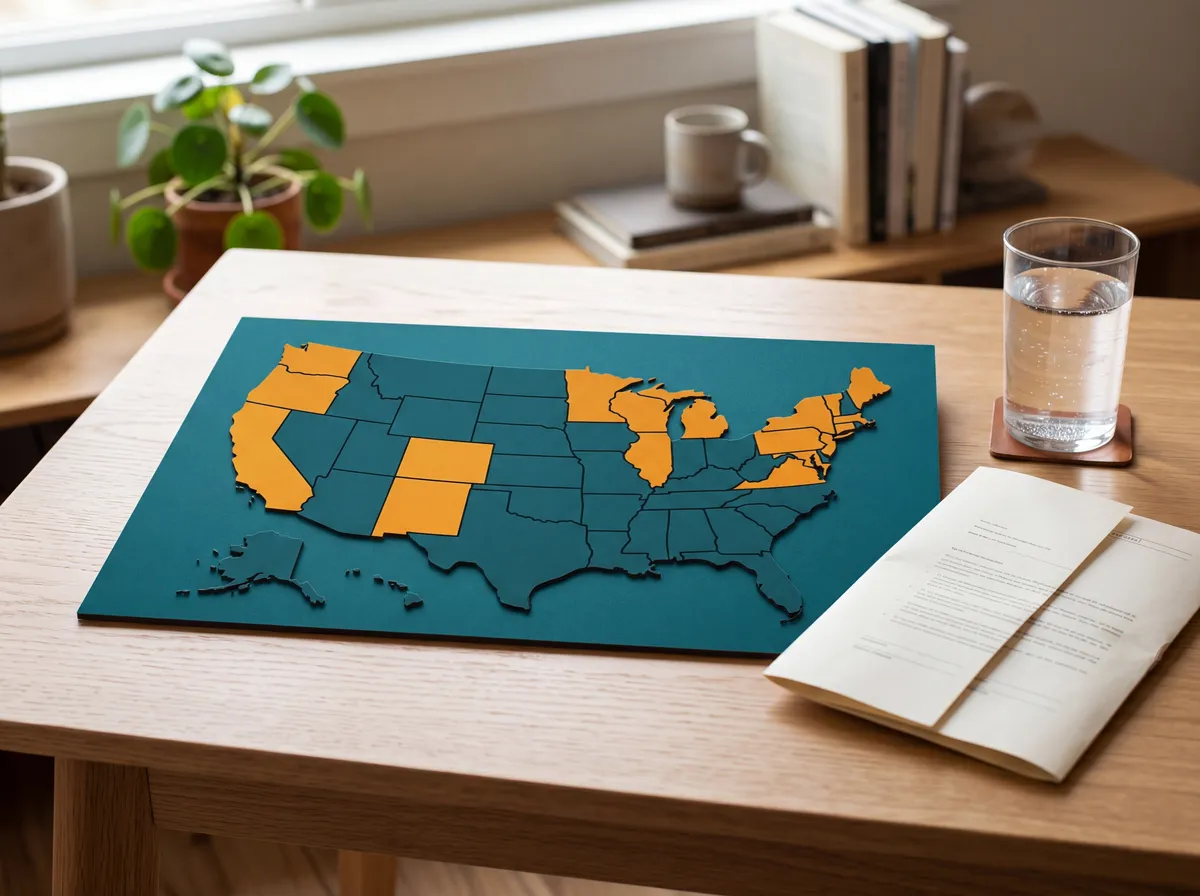
If you live in Maine, Minnesota, Colorado, Vermont, or Washington, products you bought a year ago are no longer for sale where you live. If you live in California, New York, or New Jersey, your timeline is 2027 to 2028.
Here’s a state-by-state breakdown of what’s banned, what’s required to be disclosed, and what’s coming.
Why States Moved Before the Federal Government
For decades, federal PFAS oversight lagged behind the science. The EPA finalized national drinking water standards for six PFAS compounds in April 2024 (the first enforceable federal limits in history) but consumer product regulation was left mostly to states. The result: a patchwork of laws that became the de facto national policy because manufacturers can’t easily make state-specific versions of cookware or cosmetics.
Dr. Philip Landrigan, the pediatrician and epidemiologist who directs the Program for Global Public Health at Boston College and co-led the Minderoo-Monaco Commission on Plastics and Human Health, has pointed to PFAS regulation as the clearest test case for the precautionary principle in chemical policy. The CDC has detected PFAS in the blood of 97% of Americans. Federal action moved slowly. States filled the gap.
According to NonToxicLab’s tracking, the states leading on PFAS in 2026 have followed roughly the same playbook: ban the most-exposed product categories first (food packaging, cookware, cosmetics, textiles, firefighting foam), then expand to “intentionally added” PFAS in all consumer products with limited exemptions for essential uses.
The 2026 State PFAS Tracker
Maine
Maine has the broadest PFAS ban in the country. The state’s 2021 law (LD 1503), as amended by LD 217 in 2023, bans the sale of products containing intentionally added PFAS in a long list of categories.
Effective January 1, 2026:
- Cleaning products
- Cookware
- Cosmetics
- Dental floss
- Juvenile products
- Menstrual products
- Textile articles (including clothing, bedding, upholstery)
- Ski wax
- Carpets and rugs
- Fabric treatments
Effective 2029:
- Outdoor apparel for severe wet conditions
- Refrigerants
- Refrigeration equipment
Effective 2032:
- All other categories with intentionally added PFAS, with limited “currently unavoidable use” exemptions
If you live in Maine, the products on this list are no longer being sold in your state as of January 2026. Brands selling into Maine have either reformulated, withdrawn the product, or applied for an exemption.
For PFAS-free cookware that meets Maine’s standard, see our best non-toxic cookware guide. We’ve also documented PFAS-free brands by category.
Minnesota
Minnesota’s PFAS law (Amara’s Law, signed in 2023) takes effect in two waves.
Effective January 1, 2025:
- Cleaning products
- Cookware
- Cosmetics
- Dental floss
- Juvenile products
- Menstrual products
- Fabric treatments
- Ski wax
- Carpets and rugs
- Upholstered furniture
Effective January 1, 2026:
- Indoor textile furnishings (curtains, drapes, throw rugs)
Effective July 1, 2026:
- Manufacturer disclosure requirement. Any manufacturer selling products containing intentionally added PFAS into Minnesota must report the product, the specific PFAS used, the function, and the amount. This is the broadest forever-chemical disclosure law in the world.
Effective January 1, 2032:
- All products with intentionally added PFAS, with limited essential-use exemptions
Minnesota’s disclosure requirement is significant. It will produce the first systematic database of which brands are using which PFAS in which products. Expect a wave of category-specific reformulations and product withdrawals as manufacturers decide whether to disclose or to reformulate.
For our full breakdown of what the disclosure law means, see Minnesota’s PFAS disclosure law.
Colorado
Colorado’s HB22-1345 and HB23-1267, as amended in 2024, established a phased ban on intentionally added PFAS.
Effective January 1, 2025:
- Cosmetics
- Indoor textile furnishings
- Indoor upholstered furniture
Effective January 1, 2026:
- Cookware
- Dental floss
- Menstrual products
- Ski wax
- Cleaning products (except medical floor maintenance)
- Artificial turf installation prohibited statewide
Effective January 1, 2027:
- Outdoor apparel for severe wet conditions (with disclosure)
Effective January 1, 2028:
- All other product categories with intentionally added PFAS
Vermont
Vermont’s Act 131 (signed in 2024) bans intentionally added PFAS in:
Effective July 1, 2026:
- Cosmetics
- Menstrual products
- Textile articles
- Cookware
Effective July 1, 2027:
- Children’s products
- Food packaging (already restricted under earlier law)
Washington
Washington’s Safer Products for Washington Act has been adding PFAS-restricted product categories on a rolling basis under Department of Ecology rulemaking.
Currently restricted:
- Carpet and rug treatments
- Aftermarket leather and textile treatments
- Indoor furniture and upholstery
- Cosmetics
- Apparel and gear for severe wet conditions
Coming in 2026-2027:
- Cleaning products
- Personal care products
- Cookware (under active rulemaking)
California
California has multiple overlapping PFAS laws.
AB 1817 bans textile articles (clothing, bedding, towels) with intentionally added PFAS. Effective January 1, 2025, with outdoor apparel for severe wet conditions following on January 1, 2028.
AB 2771 bans cosmetics with intentionally added PFAS. Effective January 1, 2025.
AB 1200 bans plant-based food packaging with intentionally added PFAS. In effect since January 1, 2023.
AB 652 bans juvenile products with PFAS. In effect since July 1, 2023.
New York
New York’s apparel PFAS ban (S5648) is in effect as of January 1, 2025, prohibiting the sale of apparel containing intentionally added PFAS, with outdoor apparel for severe wet conditions phased in by 2028.
A 2024 cookware ban (S5648-A) and a cosmetics ban (S4265) are working through the legislature with effective dates in 2026 and 2027.
New Jersey
New Jersey’s “Protecting Against Forever Chemicals Act” (S1042), signed in early 2026, prohibits intentionally added PFAS in:
- Carpets
- Cookware
- Cosmetics
- Food packaging
Effective January 1, 2028.
The bill also requires manufacturer reporting starting in 2027.
Connecticut
Connecticut’s PFAS law (PA 24-59) phases in restrictions:
Effective October 1, 2026:
- Apparel
- Carpets and rugs
- Cleaning products
- Cookware
- Cosmetics
- Dental floss
- Fabric treatments
- Juvenile products
- Menstrual products
- Textile furnishings
- Ski wax
- Upholstered furniture
Effective October 1, 2028:
- Outdoor apparel for severe wet conditions
Massachusetts
Massachusetts has banned PFAS in firefighting foam and is in active rulemaking on cosmetics, cookware, and textiles. Expect category-specific bans to take effect in 2026 and 2027.
Maryland
Maryland’s HB 1147 (effective January 1, 2024) banned PFAS in food packaging, rugs, carpets, and firefighting foam. A broader 2024 amendment expanded restrictions to cosmetics and juvenile products in 2025-2026.
Rhode Island
Rhode Island’s S 0220 bans PFAS in food packaging (in effect since 2024) and is expanding to cosmetics, juvenile products, and textiles in 2026-2027.
Oregon, Hawaii, and Others
Oregon’s Toxic-Free Kids Act covers PFAS in juvenile products. Hawaii has a food packaging PFAS ban in effect. Illinois, Pennsylvania, and Michigan have introduced bills for 2026 sessions.
For the full updated tracker across all 50 states, see our state chemical bans tracker.
How to Replace Banned Products
If you live in a state where products you’ve been buying are no longer for sale, the swap is usually simple. The categories most affected are cookware, cosmetics, cleaning products, and textiles.
Cookware
Most cookware sold in PFAS-restricted states is now ceramic-coated, stainless steel, cast iron, or carbon steel.
- Caraway 12-Piece Cookware Set - ceramic-coated, PFAS-free, ships to all 50 states.
- Made In 10-Piece Stainless Clad Set - pro-grade stainless.
- Lodge 12-Inch Cast Iron Skillet - cheapest forever-pan available.
Cleaning Products
PFAS in cleaning products has historically been used in stain repellents and grease-cutters. Brands without PFAS:
- Branch Basics Concentrate - one bottle replaces all-purpose, glass, bathroom, and laundry cleaners.
- Molly’s Suds Multi-Purpose Cleaner - plant-based, no PFAS.
- Method All-Purpose Cleaner - PFAS-free formulations.
Cosmetics
PFAS in cosmetics typically appears in long-wear foundations, mascaras, and waterproof products. PFAS-free options:
- ILIA Skin Tint - clean ingredient list.
- RMS Beauty Un Cover-Up - PFAS-free concealer.
- Kosas Air Brow - clean formula.
Dental Floss
Most conventional dental floss uses PTFE (a PFAS) for its slippery glide. PFAS-free options:
- Risewell Natural Floss - silk floss with candelilla wax.
- Cocofloss - polyester with coconut oil coating.
Outdoor Apparel
Waterproof outdoor gear has historically relied on PFAS-based DWR (durable water repellent) treatments. PFAS-free DWR alternatives:
- Patagonia Torrentshell 3L Jacket - PFAS-free DWR (Patagonia is phasing out PFAS by 2025-2026).
- Cotopaxi Cielo Rain Jacket - PFAS-free.
Water Filtration (For PFAS Already in Drinking Water)
State bans address future products. They don’t help with PFAS already in your drinking water. The EWG estimates over 110 million Americans have PFAS in their tap water.
- AquaTru Classic Countertop RO - NSF-certified for PFAS removal.
- Clearly Filtered 3-Stage Under Sink - removes PFAS without removing minerals.
For the full filter comparison, see our best water filters for PFAS removal guide.
What’s Coming Next
Federal action: On March 19, 2026, S.4153, the Forever Chemical Regulation and Accountability Act of 2026, was introduced in the Senate. The bill proposes a full federal PFAS phase-out within 10 years. The companion House bill (HB 4253) would also preempt some state PFAS laws, which has drawn opposition from environmental groups including the Environmental Working Group.
More states moving: Safer States projects that 31 states are likely to consider PFAS legislation in 2026, with active bills in 17 states as of April. Expect new bans to take effect in 2027 in Massachusetts, Rhode Island, Illinois, Maryland, and possibly Pennsylvania.
EPA enforcement: The federal MCLs (maximum contaminant levels) for PFOA, PFOS, and four other PFAS compounds in drinking water came into full effect in 2024 and 2025. Public water systems are now required to test, report, and treat. Compliance deadlines for smaller systems extend through 2029.
Dr. Leonardo Trasande, the NYU Langone pediatrician who has published extensively on the economic costs of endocrine-disrupting chemicals, has argued that the cumulative cost of PFAS exposure in the US runs into the tens of billions per year in healthcare and lost productivity. The state-level bans are the first serious attempt to bend that curve.
Final Verdict
The PFAS regulatory map in 2026 is the most active it has ever been. If you live in Maine, Minnesota, Colorado, or Vermont, the cookware aisle, cosmetics aisle, and cleaning aisle in your state look different than they did 12 months ago. If you live in California, New York, New Jersey, or Connecticut, your turn is between 2026 and 2028.
Either way, the federal trajectory is moving in the same direction. PFAS-free is becoming the default rather than the upgrade.
For our broader breakdown of what PFAS are and how to reduce exposure, see what are PFAS forever chemicals and our PFAS exposure complete guide.
Frequently Asked Questions
What states have banned PFAS in 2026?
As of April 2026, Maine, Minnesota, Colorado, Vermont, Washington, California, New York, Connecticut, Massachusetts, Maryland, Rhode Island, and others have either fully or partially banned intentionally added PFAS in specific product categories. Maine has the broadest ban, covering most consumer product categories starting January 1, 2026.
Which products are most commonly banned under state PFAS laws?
The product categories appearing in most state laws are cookware, cosmetics, cleaning products, dental floss, menstrual products, juvenile products, ski wax, carpets and rugs, food packaging, and apparel. Outdoor apparel for severe wet conditions usually has a longer phase-in.
Does my state have a PFAS ban?
Check the state-by-state breakdown above. If your state isn’t listed with an active ban, check our state chemical bans tracker for ongoing legislative activity.
What does “intentionally added PFAS” mean?
It means PFAS that a manufacturer deliberately added to the product for a specific function, like waterproofing, stain resistance, or grease resistance. It excludes incidental PFAS contamination from manufacturing equipment or recycled materials, though those exclusions are increasingly contested.
Will the federal government preempt state PFAS bans?
Possibly. House Bill 4253, introduced in early 2026, includes provisions that could preempt some state PFAS laws if a federal standard is adopted. Environmental groups including the Environmental Working Group oppose this and are tracking the bill closely. As of April 2026, no preemption has occurred.
Can I still buy banned products if I order online from out of state?
Generally no. Most state PFAS laws prohibit the sale, distribution, and offer for sale into the state, which captures online orders shipped to addresses in the state. Some manufacturers geographically restrict their sales pages.
What we don’t fully know: Long-term data on low-level chronic exposure remains limited for many of these categories, and evidence on some chemical mixtures is still mixed. Researchers continue to refine exposure thresholds and update risk models as new data emerges.
You Might Also Like
- Europe Just Banned These Products. In the US, You’re Still Using Them Every Day.
- Maine PFAS Ban 2026: Full List of Product Categories Now Restricted
- Best Non-Toxic Car Seats in 2026 (No Flame Retardants, No PFAS)
- Best Non-Toxic Pillows for Every Sleep Position
- Best Non-Toxic Weighted Blankets (2026)
Sources
- Safer States. “Laws going into effect in 2026: Analysis of state policy addressing toxic chemicals and plastics.” 2026. https://www.saferstates.org/resource/2026-analysis-of-state-policy-addressing-toxic-chemicals-and-plastics/laws-going-into-effect-in-2026/
- MultiState. “State PFAS Legislation 2026: Bans & Restrictions Update.” March 20, 2026. https://www.multistate.us/insider/2026/3/20/state-pfas-legislation-in-2026-hundreds-of-bills-across-23-states
- US Environmental Protection Agency. “Per- and Polyfluoroalkyl Substances (PFAS) National Primary Drinking Water Regulation.” April 2024. https://www.epa.gov/sdwa/and-polyfluoroalkyl-substances-pfas
- Maine Department of Environmental Protection. “PFAS in Products.” https://www.maine.gov/dep/spills/topics/pfas/PFAS-products/
- Minnesota Pollution Control Agency. “2025 PFAS Prohibitions (Amara’s Law).” https://www.pca.state.mn.us/air-water-land-climate/2025-pfas-prohibitions
- Environmental Working Group. “PFAS Contamination in the U.S.” https://www.ewg.org/interactive-maps/pfas_contamination/
- Landrigan PJ, Raps H, Cropper M, et al. “The Minderoo-Monaco Commission on Plastics and Human Health.” Annals of Global Health. 2023;89:23. https://annalsofglobalhealth.org/articles/10.5334/aogh.4056
This information is for educational purposes and reflects state legislation as of April 2026. Laws change frequently. Verify current effective dates with your state’s environmental agency before relying on this information for compliance purposes.