
This is an explainer of a 2024 investigation, not breaking news. ProPublica’s “Toxic Gaslighting” investigation by Sharon Lerner, published May 20, 2024, with a “Nine Takeaways” companion piece on May 24, 2024, isn’t a single bombshell. It’s a paper trail of decades of internal 3M documents.
That distinction matters because most readers, scrolling past a headline, will assume the story is “company hid one bad study.” The actual story is messier and harder to summarize: a multi-decade record of internal scientists, internal toxicology, internal communications, and external pressure that all pointed in the same direction long before regulators or the public caught up.
We’re writing about it again in 2026 because the household-level question hasn’t gone away, and because the regulatory aftermath of that 2024 reporting (a New Jersey settlement of up to 450 million dollars, an EPA compliance-deadline delay to 2031, and 3M’s stated PFAS production exit) is still landing. Those updates are below.
Key Takeaways
- ProPublica’s May 2024 investigation aggregates internal 3M documents going back to the 1950s-1970s, when the company was the dominant PFOA and PFOS producer in the United States.
- Internal toxicology studies on PFOS bioaccumulation predate the EPA’s regulatory awareness by decades.
- 3M’s Cottage Grove, Minnesota site and other production locations have well-documented downstream water contamination.
- For households, the practical takeaway is unchanged: the residue is in the environment now, and a household-level filter is what closes the personal-exposure loop.
- The aftermath is still landing: the May 2025 New Jersey settlement (up to 450 million dollars), the May 2025 EPA enforcement-deadline delay to 2031, and the end-of-2025 3M PFAS-exit milestone are the live storylines a reader is most likely to hear about now.
This article is for informational purposes only and is not medical or legal advice. Consult a qualified professional for guidance specific to your situation.
What ProPublica Actually Reported
ProPublica’s investigation, published in May 2024 as a long-form package centered on Sharon Lerner’s “Toxic Gaslighting” feature with a “Nine Takeaways” companion, draws on internal 3M documents made available through prior litigation, FOIA requests, and decades of plaintiff discovery. The reporting summarizes a pattern: 3M scientists conducted toxicology research on PFOS and PFOA throughout the 1970s and 1980s, the data showed bioaccumulation and toxicity at the levels then being measured, and that research was not externally published or shared with regulators in the form a regulator would have used to set drinking-water limits.
According to NonToxicLab’s review of the published reporting and supporting court records, the most cited internal study is the 1976 PFOS bioaccumulation work showing measurable serum levels in 3M production workers and their families (ProPublica, May 2024) [internal corporate research, biomonitoring].
The investigation does not claim that 3M’s internal scientists fabricated data or invented harm. The claim is more institutional: the data showed cause for concern, and the path from “internal cause for concern” to “external regulatory action” took roughly thirty years longer than it should have.
3M phased PFOS production at its Cottage Grove site in 2002. The contamination from prior decades is the part the household-level conversation has to grapple with.
Why The Reporting Matters For Households (Not Just Lawyers)
The narrative-level takeaway from ProPublica is one for the regulatory and legal arena. The practical takeaway for someone at a kitchen sink is much smaller. PFAS are persistent. The half-lives are years. Whatever entered the watershed in 1980 from a Minnesota production site or a fire-training drill at an air force base is still finding its way through aquifers in 2026.
That’s the household frame: the cleanup at the regulatory level will play out over the next decade-plus, and the household-level question is how much of that you reduce in your own intake while the cleanup proceeds.
If you live within twenty miles of a former 3M production site (Cottage Grove MN, Decatur AL, or one of the affiliated facilities), the public records on contamination are well-developed and your local utility’s Consumer Confidence Report likely shows it. If you don’t, the ProPublica reporting still matters because it sets the framework for understanding why so many other production-facility lawsuits are settling in the same window.
What The Research Says, And Where It Doesn’t
The toxicology of PFOS and PFOA is one of the better-documented chemical exposure stories in modern epidemiology. Decades of cohort studies (especially the C8 Health Project in the Ohio River Valley, drawing on 70,000-plus participants) have established the connection to elevated cholesterol, thyroid disruption, kidney and testicular cancer, and immune-system effects (EPA PFAS overview) [human epidemiological].
What’s well-supported:
- PFOS and PFOA are bioaccumulative; serum levels are detectable in roughly 98% of US adults at biomonitoring [biomonitoring].
- The C8 cohort showed kidney and testicular cancer risk elevation at exposure levels typical of populations downstream of industrial sites [human epidemiological].
- Dr. Shanna Swan at the Icahn School of Medicine and Dr. Philip Landrigan at Boston College have both published on the intergenerational metabolic and reproductive consequences of EDC exposure, with PFAS as a primary class of concern [regulatory review].
What we don’t know yet, and where evidence is mixed:
- Whether the typical drinking-water exposure (parts per trillion range) drives clinically meaningful individual-level outcomes, vs. measurable population-level shifts. Long-term data is limited for the lower end of the dose-response curve.
- Whether the newer PFAS replacements (GenX, PFHxA, PFBS) behave fundamentally differently from PFOS in long-term studies. Human relevance is not established for several of the replacements.
- Whether household filtration durably reduces serum PFAS levels. The half-life math (years) means yes, eventually, but the reduction curve isn’t fully mapped in published cohort follow-up.
The honest framing is that the toxicology is real and the upper end of cumulative exposure is concerning; the lower end is more ambiguous than most headlines suggest. For most households not living downstream of a known industrial source, ongoing exposure is probably modest under normal use, though reducing chronic intake where the cost is reasonable remains a defensible precaution.
What’s Happened Since (2025-2026)
ProPublica’s reporting is from 2024. The 19 months that have passed since the original “Toxic Gaslighting” piece are where most readers will hear about 3M and PFAS now. Three updates matter for households deciding what to do next.
New Jersey settlement, May 2025. New Jersey Attorney General Matt Platkin and DEP Commissioner Shawn LaTourette announced a settlement with 3M of up to 450 million dollars to resolve statewide PFAS-contamination claims, with payments scheduled across 2026 to 2034 (NJ Office of the Attorney General, May 2025). It is the largest natural-resources settlement in the state’s history, and it is part of the same pattern of state-level settlements that ProPublica’s document trail reinforces.
EPA compliance deadline pushed to 2031. Also in May 2025, the EPA delayed enforcement of the federal PFOS and PFOA drinking-water standards (4 parts per trillion, set in 2024) from 2029 to 2031, and proposed rescinding the limits for four other PFAS chemicals. For households, this means a longer window between “your utility detects PFAS” and “your utility is legally required to remediate it.” The household-level filter is the part that closes that gap immediately.
3M’s PFAS exit, end of 2025. 3M committed in 2022 to exit all PFAS production by the end of 2025 and says it has met that deadline. ChemSec’s February 2026 audit (ChemSec, February 2026) found that 3M removed PFAS from roughly 7,000 products, while approximately 14,000 PFAS-containing products were still being manufactured at the time of audit. The exit is real but partial; legacy contamination from decades of prior production is the part that doesn’t go away because manufacturing stopped.
None of these post-2024 developments contradict ProPublica’s reporting. They extend it. The legal accountability is still moving; the regulatory accountability is moving slower than the original 2024 EPA timeline; and the household question (what’s in your tap water now, and what you do about it) is unchanged.
What ProPublica Means For The Regulatory Cycle
The legal framing is more in flux than the toxicology. ProPublica’s May 2024 reporting is contributing to a broader pattern of pressure on PFAS producers that has played out in three waves:
- Civil class settlements: 3M, DuPont, Chemours, Tyco, and others have collectively paid out billions in tap-water-impact settlements in the past three years. The Tyco $750M firefighting foam settlement in April 2026 is one piece of that pattern; the May 2025 New Jersey 3M settlement is another.
- State-level action: Maine, Minnesota, California, New York, Vermont, and Washington have all enacted some form of PFAS-in-products restrictions effective 2024-2026. The state cycle is moving faster than federal.
- Federal regulation: The EPA’s UCMR-5 cycle quantified roughly 176 million Americans on PFAS-detected systems. The proposed maximum contaminant levels (MCLs) for PFOA and PFOS at 4 parts per trillion entered enforcement in 2024, but the EPA pushed compliance deadlines to 2031 in May 2025 and proposed rescinding limits for four other PFAS chemicals.
ProPublica’s 2024 investigation feeds the second and third tracks more than the first. State legislators reading the document trail have additional pressure to push more aggressive product-side restrictions. Federal regulators have to decide whether the document trail justifies tighter MCLs or supports the current ones.
For a household, none of that changes the actionable answer.
What To Actually Do
The technical landscape for PFAS removal at the household level is well-established. The regulatory landscape isn’t.
| Filter type | PFAS removal | Right when |
|---|---|---|
| Reverse osmosis | Excellent (typically non-detect) | You want certainty |
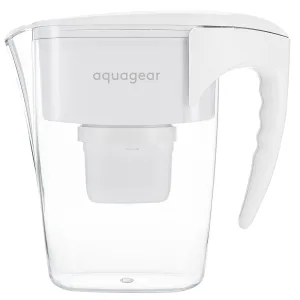
| NSF P473-certified pitcher | High (95-99%) | Renting, apartment, or starting today |
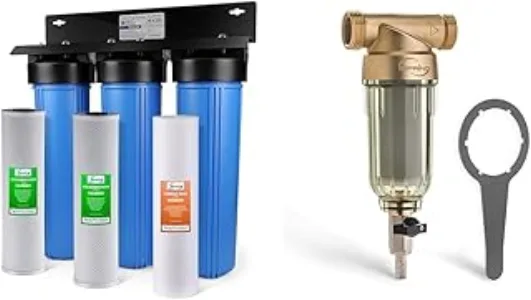
| Whole-house carbon block | Moderate to high | Downstream of known industrial site |
| Standard activated carbon (Brita-style) | Low | Not a PFAS solution |
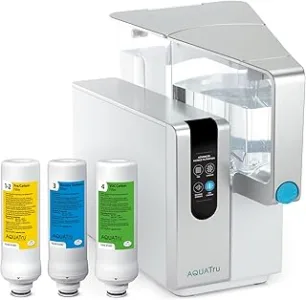
If you live near a known 3M legacy site (or any production facility named in the ProPublica reporting or the broader PFAS lawsuit roster), the case for whole-house filtration is stronger than for a typical municipal user. For the average household, an NSF-certified pitcher gets you 95% of the way for $35-$75. The countertop RO option doubles down on certainty without requiring plumbing.
If you’ve recently learned your utility shows detectable PFAS, the most useful next step is to install a filter today and verify with a water test in 30 days. The EPA’s certified-laboratory list is the right next step if you want regulatory-grade confirmation; SimpleLab’s Tap Score kit is widely used for thorough at-home PFAS testing.
What We’d Pick
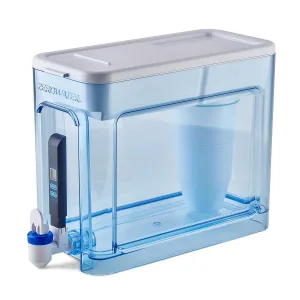
If we were starting from zero today, with no plumbing budget and a Consumer Confidence Report showing detectable PFOA, we’d buy the AquaTru countertop. It removes to non-detect, no installation, and the certifications cover every PFAS subclass we worry about. The ZeroWater pitcher is the cheapest defensible option in the category if upfront cost is the constraint.
The longer view: the document trail ProPublica surfaced in May 2024 has already started shaping the regulation and settlement cycle (the New Jersey settlement is one piece of that), but none of it changes the next decade of your tap water. That part is already in the pipes.
FAQ
Did ProPublica reveal something we didn’t know?
Yes and no. Many of the underlying toxicology findings have been in the public record through prior PFAS litigation, particularly the 2017 DuPont/Chemours settlements and the C8 Health Project disclosures. What ProPublica added is the institutional-level narrative: the documents in chronological order, showing what 3M’s scientists understood and when, in a form that’s accessible to readers and regulators outside the legal-discovery pipeline.
Is 3M still making PFAS?
Partly. 3M committed in 2022 to exit all PFAS production by the end of 2025 and says it has met that deadline. ChemSec’s February 2026 audit found 3M had removed PFAS from roughly 7,000 products, while approximately 14,000 PFAS-containing products were still being manufactured at audit time. Replacement chemistry (GenX, fluoropolymer alternatives, fluorine-free formulations) is what’s filling the categories that have transitioned. The contamination on the books, meanwhile, is from prior decades and doesn’t go away because manufacturing has stopped.
Should I move if I live near a former 3M site?
Probably not, unless your specific tap reading is significantly above current EPA action levels and your utility’s mitigation plan is unclear. The bigger lever is filtration plus a baseline blood-PFAS test with your primary care provider if you’re concerned. Decisions about relocation should be informed by your specific reading and not by general proximity. We don’t recommend household-level decisions based on geography alone.
How does this affect Tyco’s firefighting-foam settlement and other PFAS lawsuits?
The ProPublica reporting is part of the broader pressure ecosystem that has already produced the Tyco $750M April 2026 firefighting-foam settlement, the 3M $10.3B drinking-water settlement (2024), the DuPont/Chemours/Corteva settlements (2023), and ongoing state-level cases. Each settlement narrows the pool of legacy producers without active settlement coverage. Document trails like ProPublica’s tend to accelerate that timeline.
Why hasn’t anyone gone to prison?
Civil liability and criminal liability operate on different evidence standards. Civil cases require preponderance-of-evidence on harm and proximate cause; criminal cases require intent to harm or specific statutory violation. The internal 3M record, as ProPublica describes it, supports civil liability but doesn’t necessarily clear the criminal bar. State attorneys general and the federal Department of Justice continue to evaluate; outcomes there are still in flux.
Does this change what I should buy?
No. The PFAS-removal filter you’d want pre-ProPublica is the same one you’d want now. The reporting doesn’t change the chemistry, the certifications, or the testing data. It changes the narrative around how we got here. The actionable answer at the household level was already known.
Sources
- ProPublica (Sharon Lerner, Haruka Sakaguchi), “Toxic Gaslighting: How 3M Executives Convinced a Scientist the Forever Chemicals She Found in Human Blood Were Safe,” published May 20, 2024. https://www.propublica.org/article/3m-forever-chemicals-pfas-pfos-inside-story
- ProPublica, “Nine Takeaways From Our Investigation Into 3M’s Forever Chemicals,” published May 24, 2024. https://www.propublica.org/article/propublica-3m-pfos-forever-chemicals-investigation
- New Jersey Office of the Attorney General, “AG Platkin and DEP Commissioner LaTourette Announce Historic Settlement of Up to 450 Million Dollars With 3M for Statewide PFAS Contamination,” May 2025. https://www.njoag.gov/ag-platkin-and-dep-commissioner-latourette-announce-historic-settlement-of-up-to-450-million-with-3m-for-statewide-pfas-contamination/
- ChemSec, “3M Promised to Phase Out PFAS, How Has It Turned Out?” February 2026. https://chemsec.org/3m-promised-to-phase-out-pfas-how-has-it-turned-out/
- U.S. Environmental Protection Agency, “Our Current Understanding of the Human Health and Environmental Risks of PFAS.” https://www.epa.gov/pfas/our-current-understanding-human-health-and-environmental-risks-pfas
- C8 Health Project, public datasets and peer-reviewed publications.
- Dr. Shanna Swan, Icahn School of Medicine at Mount Sinai. https://icahn.mssm.edu/profiles/shanna-h-swan