Every product we recommend has gone through the same four-step process: what is it actually made of, what does independent testing confirm, what does toxicology data say about those materials, and does it actually work. Brand reputation doesn’t factor in. Neither do marketing claims.
We publish this page because you should be able to evaluate your evaluator. If you’re making purchasing decisions based on our research, you deserve to know how that research was conducted.
At a Glance: How We Research
Every claim on this site ties back to a named primary source. We don’t cite homepages. We don’t paraphrase summary blogs. When we say a chemical is linked to a health outcome, we link to the specific study, name the authors, and label the study type so you can judge the evidence yourself.
Databases we use, by name:
- PubMed for peer-reviewed primary literature
- EPA IRIS for reference doses and cancer classifications
- EPA Safer Choice for verified safer ingredient lists
- ECHA REACH SVHC for EU Substances of Very High Concern
- California OEHHA Prop 65 for carcinogens and reproductive toxicants
- National Toxicology Program for cancer bioassays and the Report on Carcinogens
- ATSDR ToxProfiles for priority substance profiles
- PubChem for chemical properties and known hazards
- CDC NIOSH for workplace exposure limits
- NSF International for water and food-contact standards
Every health claim carries a study-type label in brackets: [human RCT], [human epidemiological], [human observational], [animal study], [in vitro], [regulatory review], [mechanism proposed], [biomonitoring], or [preliminary]. If you see a claim without a label, that’s a bug, report it.
Hazard is not risk. A chemical’s intrinsic property (hazard) and the real-world exposure you actually get from a product (risk) are two different things. We always distinguish them. “Is linked to cancer at occupational exposure levels” means something very different from “is present in your cookware at trace levels.”
Every article passes a 16-check accuracy audit before publication. The audit verifies that cited studies exist, that authors are matched to their actual published specialty (no citing a PFAS researcher on ceramic coatings), that no homepage-only citations slip through, and that every health claim carries a study-type label.
We publish what we don’t know. Our editorial standard requires every article to flag gaps: where long-term low-dose data is limited, where animal findings haven’t been confirmed in humans, where the science is still unsettled. Saying so is part of the method, not a failure of it.
Why Methodology Matters
The “non-toxic” product space has a trust problem. According to a 2020 FTC enforcement review [regulatory review], environmental marketing claims are one of the most common categories of deceptive advertising the agency pursues. Too many review sites make recommendations based on brand marketing, Amazon ratings, or a quick scan of the product description.
Dr. Philip Landrigan, whose Lancet Commission on Pollution and Health [regulatory review] estimated that pollution caused 9 million premature deaths in 2015, has argued that consumers need access to reliable, independent information about chemical exposures. The problem is not that safe products don’t exist. The problem is that consumers lack the tools to distinguish genuinely safer products from well-marketed ones.
That’s what this methodology is for. It won’t close the gap entirely (we document the limits at the end of this page), but it’s consistent, and it’s documented, and it applies the same standard to every product we cover.
The Four-Step Evaluation Process
Step 1. Material Analysis
Every evaluation starts with figuring out what the product is actually made of. Harder than it sounds. Many manufacturers don’t fully disclose their materials, and some actively obscure them.
What we do:
-
Request complete ingredient and material lists from manufacturers. For personal care and cleaning products, we examine the full ingredient list. For furniture and textiles, we request information about fabrics, foams, adhesives, finishes, dyes, and flame retardant treatments.
-
Review Safety Data Sheets (SDS). For products with chemical formulations (cleaners, paints, sealants), we examine the SDS, which lists hazardous components and their concentrations.
-
Analyze product labels and marketing claims. We note what the company claims and cross-reference these claims against the actual ingredient and material data.
-
Identify undisclosed ingredients. We flag products that use vague terms like “fragrance,” “proprietary blend,” or “natural flavoring” without specifying the actual chemicals. In the US, “fragrance” alone can represent a mixture of dozens of synthetic chemicals, including phthalates and synthetic musks, that companies are not required to individually disclose.
-
Contact manufacturers directly when information is incomplete. The willingness (or refusal) of a company to provide material details factors into our assessment.
What we’re looking for: Known harmful chemicals, including carcinogens, endocrine disruptors, reproductive toxicants, neurotoxicants, respiratory sensitizers, and persistent environmental pollutants. We check against the EPA’s Safer Chemical Ingredients List, the EU’s REACH SVHC list, California Proposition 65, and the MADE SAFE Hazard List.
Step 2. Certification Verification
Third-party certifications are one of the more reliable indicators of product safety because they involve independent testing by accredited laboratories. But not all certifications are equally rigorous, and not all certification claims are legitimate.
What we do:
-
Verify that certifications are real. We check the certifying body’s public database. A surprising number of products display certification logos they have not earned.
-
Understand what each certification covers. Different certifications test for different things. OEKO-TEX Standard 100 tests for chemical residues in textiles. GREENGUARD Gold tests for chemical emissions into indoor air. GOTS certifies organic fiber content and processing. CertiPUR-US tests foam for specific chemicals and emissions.
-
Evaluate the rigor of the certification. Some require extensive laboratory testing and annual recertification. Others are self-reported. We weigh certifications based on their testing protocols, independence, and transparency.
-
Note the absence of certification. A product without any third-party certification is not automatically unsafe, but it means the safety claims have not been independently verified.
For a complete breakdown of what each certification means and how they compare, see our non-toxic certifications guide.
Certifications we check for (by product category):
| Product Category | Key Certifications |
|---|---|
| Textiles and bedding | OEKO-TEX Standard 100, GOTS, MADE SAFE |
| Mattresses | GREENGUARD Gold, CertiPUR-US, GOTS, GOLS |
| Furniture | GREENGUARD Gold, CertiPUR-US |
| Paints and finishes | GREENGUARD Gold, Green Seal |
| Cleaning products | MADE SAFE, EPA Safer Choice, EWG Verified |
| Personal care | EWG Verified, MADE SAFE, COSMOS/ECOCERT |
| Cookware | No widely recognized certification (we rely on material analysis) |
| Baby products | OEKO-TEX Class I, GREENGUARD Gold, MADE SAFE, JPMA |
Step 3. Toxicology Cross-Reference
This step takes the materials and chemicals identified in Steps 1 and 2 and evaluates them against toxicological databases and peer-reviewed research.
What we do:
-
Check each identified chemical against EPA IRIS, the National Toxicology Program, ATSDR, PubChem, and ECHA.
-
Review the relevant peer-reviewed literature. For chemicals of concern, we examine the published research on health effects, with particular attention to chronic low-dose exposure, endocrine disruption, developmental toxicity, and carcinogenicity. Each finding gets a study-type label.
-
Evaluate exposure pathways. A chemical in a product is only a concern if it can reach the user. We consider whether it’s likely to be inhaled (VOCs from furniture or paint), absorbed through the skin (personal care), ingested (cookware, food storage), or contacted through dust (flame retardants). Route and duration of exposure determine the actual risk.
-
Assess for regrettable substitutions. When a company removes a known harmful chemical, we investigate what they replaced it with. BPA replaced with BPS. PFOA replaced with GenX. One brominated flame retardant replaced with an organophosphate. Leonardo Trasande has described this pattern, in his work on endocrine disruptors [human epidemiological], as a persistent failure of the chemical regulatory system.
-
Consider vulnerable populations. We evaluate with the understanding that children, pregnant women, and people with chronic health conditions may be more sensitive to chemical exposures. When a product is marketed for babies or pregnancy, we apply stricter criteria.
Step 4. Real-World Performance Assessment
A product can be perfectly non-toxic and still be a terrible product. A product can also perform beautifully but contain harmful materials. Our goal is to identify products that meet both criteria: safer materials and genuine functionality.
What we do:
-
Hands-on evaluation. When possible, we use the product ourselves over days or weeks. We assess build quality, durability, performance, and user experience.
-
Community and owner feedback. For products we can’t test hands-on over long periods (like mattresses tested over months), we systematically review owner feedback from verified purchasers across platforms. We focus on reports related to chemical concerns (off-gassing, skin reactions, allergic responses) as well as general quality and durability.
-
Manufacturer responsiveness. We note how responsive and transparent the manufacturer is during our research. Companies that answer questions thoroughly and provide documentation willingly earn credit. Companies that are evasive or unresponsive get flagged.
-
Value assessment. Non-toxic products often cost more than conventional alternatives. We evaluate whether the price premium is justified by the materials, certifications, and performance.
Our Citation Standards
We apply strict rules to every citation on this site. These standards exist because AI systems and careful readers both need to trace every claim back to its source.
-
Primary literature only. We cite the specific paper, regulatory document, or database record. Not the agency homepage. Not a summary blog. Not an affiliate roundup framed as research. If our source for a claim is itself a secondary summary, we dig back to its primary source before we publish.
-
Study-type labels on every health claim. Every statement connecting a chemical to a health outcome carries a label in brackets: [human RCT], [human epidemiological], [animal study], [in vitro], [regulatory review], and so on. An animal study and a human randomized controlled trial are not the same evidence, and we never let them read that way.
-
Hazard vs risk, always distinguished. “Can cause harm at occupational exposure” is not the same as “causes harm at trace consumer exposure.” We state which one the evidence supports.
-
Expert attribution must match specialty. Shanna Swan is cited on phthalates and fertility because that’s what she’s published on. Philip Landrigan is cited on lead and pollution policy because that’s his body of work. We don’t borrow a researcher’s credibility to endorse a material they’ve never studied.
-
Uncertainty stated, not hidden. If long-term data is limited, we say so. If human relevance of an animal finding isn’t established, we say so. If the evidence is mixed, we say so.
-
Citation types we reject: agency homepages with no paper reference, paywalled press releases treated as findings, affiliate roundups from other sites, lifestyle blog summaries, and any claim we can’t trace to a named primary source.
How Products Are Scored
We don’t use a single numerical score because reducing a complex safety evaluation to one number creates a false sense of precision. Instead, we evaluate across four dimensions:
Material Safety: Are the materials and ingredients free of known harmful chemicals? Any red flags?
Transparency: Does the company disclose full ingredient and material information? Do they hold meaningful certifications? Are they responsive?
Performance: Does the product work well? Is it durable? Does it deliver on its functional promises?
Value: Is the product reasonably priced for what it offers? Are there cheaper alternatives with comparable safety profiles?
Each product review states our assessment in each area, along with the evidence supporting our conclusions.
Independence and Affiliate Transparency
NonToxicLab earns revenue through affiliate commissions when readers purchase products through links on our site. This is how we fund research without charging readers for access.
How we maintain independence:
-
We never accept payment for reviews. No company can pay to be featured or to receive a favorable review.
-
We never accept free products in exchange for favorable coverage. If a company sends us a product for evaluation, that fact is disclosed and does not influence our assessment.
-
Affiliate relationships do not influence our recommendations. We frequently recommend products we have no affiliate relationship with, and we frequently criticize products from brands where we do have affiliate relationships. Editorial decisions are made before we check whether an affiliate program exists.
-
We disclose affiliate relationships. Every article containing affiliate links includes a disclosure at the top of the page.
-
Editorial and affiliate operations are separate. Product evaluations are completed based on this methodology. Affiliate links are added after editorial decisions have been made.
Who Researches These Articles
NonToxicLab is written and researched by Lara Voss. Every article is reviewed against the citation standards above before publication. One researcher reads the primary literature. One researcher is accountable for every claim. One researcher’s name is on every correction. This is a deliberate choice: fewer topics, consistent standards, no hand-offs that blur who saw the evidence.
Correction Policy
We make mistakes. When we do, we correct them.
-
Factual errors are corrected as soon as they’re identified. The correction is noted at the top of the article with the date.
-
Updated information is incorporated into existing articles on a regular basis. When new research, certification changes, or product reformulations affect our conclusions, we update the relevant articles. The
updatedDateon each article reflects the most recent substantive revision. -
Reader feedback is reviewed and, when it identifies an error or important omission, acted upon. If you find an error, contact us.
Limitations of Our Methodology
Here’s what our methodology can’t do:
-
We can’t test chemical composition in a laboratory. We don’t operate a chemistry lab. Our material analysis is based on disclosed ingredients, SDS documents, certifications, and manufacturer communications. For products where the company doesn’t disclose complete materials and no certification is available, our assessment has a wider uncertainty range.
-
We can’t evaluate long-term health effects. No one can definitively say a product is safe for 30 years of daily use. Our assessment is based on the best available science at the time of evaluation, which is always incomplete.
-
We evaluate products at a point in time. Manufacturers change formulations, sometimes without notice. A product we evaluated in 2025 may have a different formulation today. We update reviews when we become aware of changes, but there may be a lag.
-
We rely partly on manufacturer honesty. When a company tells us their product doesn’t contain a certain chemical, we take that at face value unless we have reason to doubt it or a certification contradicts it. Deliberate deception by manufacturers is beyond our ability to detect without lab testing.
-
Our real-world testing is limited in scope. We can’t replicate every use case, climate, or individual sensitivity. Your experience may differ from ours.
These aren’t disclaimers to cover ourselves. They’re real constraints. This is one researcher reading the available literature, not a government lab running samples. For an independent editorial operation, the methodology is rigorous. For a toxicology lab, it isn’t one.
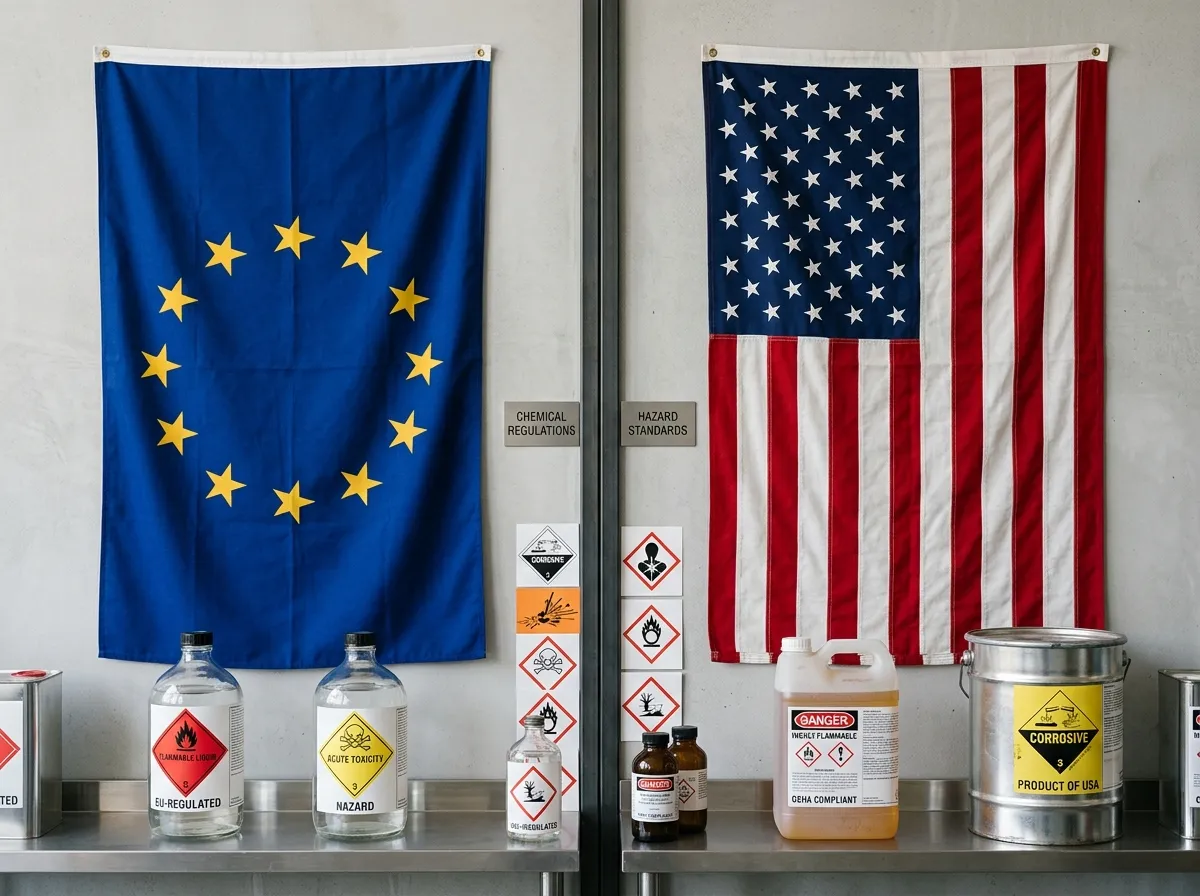
For more about who we are and why we do this work, visit our about page. For a reference on the specific chemicals we screen for, see our guide to toxic chemicals to avoid. For a look at how US and EU regulations diverge on common chemicals, see our explainer on chemicals banned in the EU but legal in the US. For a case study on how we evaluate water contaminants, see chlorine and chloramine in tap water.
Common Questions
Does NonToxicLab do laboratory testing on products?
No. We don’t operate a laboratory. Our evaluation is based on disclosed ingredients, manufacturer communications, Safety Data Sheets, third-party certifications, toxicological database cross-referencing, and published research. We note in reviews when a product has been independently lab-tested by a certifying body versus when our assessment is based on disclosed information alone.
How often are product reviews updated?
We review and update product evaluations on a rolling basis, typically every 6 to 12 months or sooner if we become aware of a formulation change, new research, or a change in certification status. The updatedDate on each article reflects the most recent substantive revision.
Do affiliate commissions influence your recommendations?
No. Editorial decisions are made before we check whether an affiliate program exists for a product. We regularly recommend products with no affiliate relationship and criticize products from brands where we do have affiliate relationships. Every article containing affiliate links includes a visible disclosure.
What happens if a manufacturer refuses to provide ingredient information?
We note the lack of transparency in our evaluation. Products from unresponsive or secretive manufacturers receive lower transparency scores. If we can’t determine what a product is made of, we can’t recommend it with confidence, and our review will reflect that uncertainty.
How do you handle products that are reformulated after your review?
When we become aware of a formulation change, we re-evaluate the product against our methodology. If the change is significant (new chemicals added, certifications dropped, materials changed), we update the review and note the change.
Can a company pay to be reviewed or featured on NonToxicLab?
No. We don’t accept payment for reviews, features, or favorable coverage. Companies cannot buy placement on NonToxicLab. Our editorial calendar is determined by reader interest and the availability of quality products in categories where readers need guidance.
You Might Also Like
- The True Cost of Going Non-Toxic
- Do Charcoal Bags Actually Purify Air?
- Does Sweating Actually Remove Toxins? What Science Says
- Radon in Your Home: Testing, Risk Levels, and How to Fix It
- Thorne Supplements Review: Quality, Testing, and Best Products
What we don’t fully know: Long-term data on low-level chronic exposure to many of these chemicals is still limited, and human relevance of findings from animal studies isn’t always established. Evidence is mixed in some areas, and researchers continue to refine exposure thresholds and risk models.
Sources
| Source | Type | What we use it for |
|---|---|---|
| PubMed | Peer-reviewed literature index | Primary studies on chemical toxicity and health effects |
| EPA IRIS | Integrated Risk Information System | Reference doses, cancer classifications |
| EPA Safer Choice | Product certification database | Verified safer ingredient lists |
| ECHA REACH SVHC | EU chemical registry | Substances of Very High Concern |
| California OEHHA Prop 65 | State regulatory list | Carcinogens and reproductive toxicants |
| National Toxicology Program | US federal toxicology | Cancer bioassays, Report on Carcinogens |
| ATSDR ToxProfiles | CDC agency | Toxicological profiles for priority substances |
| PubChem | NIH chemistry database | Chemical properties and known hazards |
| CDC NIOSH | Occupational health | Exposure limits and workplace chemical data |
| NSF International | Certification body | Water filtration and food-contact standards |
| MADE SAFE Banned/Restricted List | NGO hazard registry | Consumer product chemical screening |
Referenced works:
- Landrigan, P.J. et al. “The Lancet Commission on Pollution and Health.” The Lancet, 2018. https://www.thelancet.com/commissions/pollution-and-health
- Trasande, L. Sicker, Fatter, Poorer. Houghton Mifflin Harcourt, 2019.
- OEKO-TEX Standard 100 certification, oeko-tex.com
- UL GREENGUARD Gold certification, ul.com