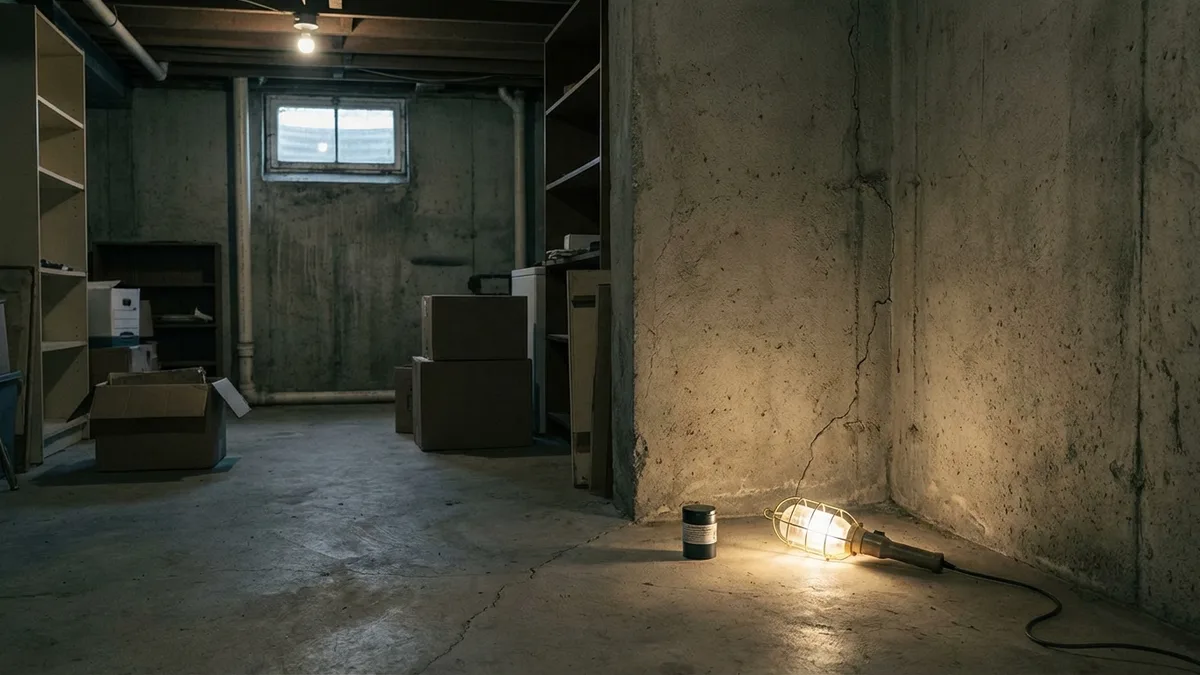
Radon kills roughly 21,000 Americans every year. That makes it the second leading cause of lung cancer overall and the number one cause among people who have never smoked. Unlike most indoor air quality problems, you can’t see radon, smell it, or taste it. The only way to know if your home has dangerous levels is to test. Learn more in our explainer: what is formaldehyde? where it hides in your home and.
The good news is that testing is cheap (under $20 for a basic kit), and if your home has elevated radon, fixing the problem is effective and well understood. NonToxicLab covers indoor hazards that people can actually do something about, and radon is one of the clearest cases where testing and mitigation deliver real results. We compare them directly in air purifier vs air-purifying plants.
What Is Radon?
Radon is a naturally occurring radioactive gas produced by the decay of uranium in soil, rock, and groundwater. Uranium exists in varying concentrations in the earth’s crust everywhere on the planet. As uranium breaks down over geological time, it produces radium, which then decays into radon gas. We dig into the research in are scented candles toxic? what the air quality.
Radon itself is inert. It doesn’t react with anything chemically. The danger comes from what happens when radon decays further. As radon atoms break apart, they release alpha particles and produce radioactive “daughter” elements (polonium-218 and polonium-214) that attach to dust and aerosol particles in the air. When you inhale these particles, the alpha radiation damages the cells lining your lungs. Over time, this damage can cause lung cancer. We tested and ranked the options in best air purifiers for home.
The half-life of radon-222 (the most common isotope) is 3.8 days. That means in an enclosed space like a basement, radon continuously enters, decays, and is replaced by more radon from the soil. The concentration builds up as long as there’s an entry point and insufficient ventilation.
How Radon Gets Into Your Home
Radon enters buildings through any opening that contacts the ground:
- Cracks in foundation slabs and basement floors. Even hairline cracks provide a pathway.
- Gaps around utility pipes and wires where they enter through the foundation.
- Construction joints where walls meet floors.
- Sump pump pits that aren’t properly sealed.
- Well water. Radon dissolved in groundwater can be released into household air when you run taps, shower, or use a dishwasher. Homes with private wells are more susceptible.
- Exposed soil in crawl spaces.
The driving force is pressure. The air pressure inside your home is typically slightly lower than the pressure in the soil beneath it (due to wind effects, the “stack effect” of warm air rising, and mechanical exhaust fans). This pressure difference draws soil gases, including radon, upward through any available opening.
Every home is different. Two houses on the same street can have drastically different radon levels depending on foundation type, soil composition, construction details, and ventilation patterns. Geographic radon maps can tell you the general risk in your area, but they can’t predict what your specific house measures. Testing is the only answer.
Radon Risk Levels: What the Numbers Mean
Radon is measured in picocuries per liter (pCi/L) of air.
Below 2 pCi/L: Low risk. The EPA considers this an acceptable level. The average outdoor concentration is about 0.4 pCi/L, and the average indoor level in U.S. homes is about 1.3 pCi/L.
2 to 4 pCi/L: Moderate. The EPA recommends considering mitigation in this range. The WHO sets its action level at 2.7 pCi/L, which is stricter than the EPA’s.
4 pCi/L and above: The EPA’s action level. At this concentration, the EPA strongly recommends mitigation. Living in a home at 4 pCi/L exposes you to roughly the equivalent radiation dose of 200 chest X-rays per year, according to the EPA’s risk estimates. Your lifetime lung cancer risk at this level is approximately 7 in 1,000 for non-smokers and significantly higher for smokers.
Above 8 pCi/L: High. Mitigation should be a priority.
Above 20 pCi/L: Very high. Some homes have tested at 50, 100, or even 200+ pCi/L. At these levels, the cancer risk is substantial and mitigation should happen as quickly as possible.
Dr. Peter Attia has discussed radon exposure as one of the underappreciated environmental risk factors for cancer, noting that many people focus on diet and lifestyle factors while overlooking a fixable hazard literally beneath their feet. He’s pointed out that the cost-to-benefit ratio of radon testing and mitigation is among the best of any preventive health measure.
How to Test Your Home
Short-Term Tests (2 to 7 days)
Short-term test kits are the easiest starting point. They cost between $10 and $25 and are available at hardware stores or online. The two most common types:
Charcoal canisters absorb radon from the air over the test period. You place the canister in the lowest livable level of your home (usually the basement or ground floor), leave it undisturbed for the specified time (typically 48 to 96 hours), seal it up, and mail it to a lab for analysis. Results come back in a week or two.
Alpha-track detectors use a small piece of plastic film that records alpha particle hits from radon decay. These work the same way (place, wait, mail), but they can be left out for 1 to 12 months for a more accurate long-term reading.
For a short-term test, keep windows and exterior doors closed as much as practical (except for normal entry and exit) starting 12 hours before the test begins and throughout the test period. Don’t run whole-house fans during the test. Place the detector in the lowest lived-in level of your home, at least 20 inches off the floor, away from exterior walls, windows, and areas of high humidity.
Long-Term Tests (90+ days)
A long-term test gives a more accurate picture because radon levels fluctuate with weather, soil moisture, and seasonal changes. Alpha-track detectors and electronic radon monitors both work well for extended testing. If your short-term test shows levels between 2 and 8 pCi/L, a long-term test helps confirm whether you really need mitigation.
Continuous Radon Monitors
Electronic monitors like the Airthings Wave Plus or Airthings Corentium Home provide continuous radon readings. They’re more expensive than single-use test kits ($100 to $200+), but they let you track levels over time and see how radon fluctuates with seasons and weather. These pair well with a broader strategy for monitoring indoor air quality.
Andrew Huberman has talked about the value of measuring and tracking environmental health factors rather than guessing, and radon monitoring is a clear-cut case where data changes behavior. People who see their radon numbers are far more likely to act.
When to Test
- Every home should be tested. Regardless of geography, age of the building, or foundation type.
- Test when buying or selling a home. This is standard practice in real estate transactions in high-radon areas, but it should be universal.
- Retest every 2 to 5 years, or after any significant structural changes (foundation work, new HVAC systems, additions).
- Test after mitigation to confirm the system is working.
Radon Mitigation: How to Fix the Problem
If your test results come back at 4 pCi/L or above, mitigation is the next step. The most common and effective approach is sub-slab depressurization.
Sub-Slab Depressurization (Active Soil Depressurization)
This is the standard residential mitigation method, and it works well. Here’s how it functions:
- A hole is drilled through the basement slab or slab-on-grade foundation.
- A PVC pipe is inserted through the hole into the gravel or soil beneath the slab.
- The pipe is routed up through the house (often through a closet or along an exterior wall) and out through the roof.
- A small, continuously running fan is installed in the pipe (typically in the attic or along the exterior).
- The fan creates negative pressure beneath the slab, drawing radon-laden soil gas up through the pipe and venting it safely above the roofline, where it disperses harmlessly into the outdoor air.
This system reduces radon levels by 80% to 99% in most homes. A house at 10 pCi/L will typically drop to 1 to 2 pCi/L after installation.
Cost and Installation
Professional radon mitigation typically costs $800 to $2,500, depending on your home’s construction, foundation type, and geographic location. Installation usually takes half a day. The fan runs continuously and adds about $5 to $10 per month to your electric bill.
This is a job for a certified radon mitigation professional. Look for contractors certified by the National Radon Proficiency Program (NRPP) or the National Radon Safety Board (NRSB). Most states maintain lists of certified radon professionals.
Sealing Cracks Alone Doesn’t Work
Sealing foundation cracks and gaps is part of good mitigation, but it’s not sufficient on its own. The EPA has found that sealing alone produces inconsistent and often inadequate radon reduction. Active depressurization is necessary for reliable results.
Radon in Water
If your radon source is well water, a separate treatment system is needed. Aerated water treatment systems remove radon from water by bubbling air through it and venting the gas outdoors. Granular activated carbon filters can also reduce waterborne radon, but they require careful management because the radioactive decay products accumulate on the filter media.
Municipal water supplies are rarely a radon concern because the treatment and distribution process allows most radon to off-gas before it reaches your tap.
Radon and Smoking: A Dangerous Combination
The risk from radon exposure is dramatically higher for smokers. The EPA estimates that at 4 pCi/L, a smoker’s lifetime lung cancer risk is about 62 in 1,000, compared to 7 in 1,000 for non-smokers. The combination of radon’s alpha particle damage and the carcinogens in tobacco smoke creates a multiplicative effect on lung tissue.
If anyone in your household smokes, radon testing and mitigation should be treated with even greater urgency.
Reader Questions
Do all homes have radon?
All homes contain some radon. The question is how much. The national average indoor radon level is about 1.3 pCi/L, which is below the EPA action level. But about 1 in 15 U.S. homes has radon at or above 4 pCi/L. The only way to know your home’s level is to test.
Can radon come through concrete?
Yes. Radon gas passes through porous concrete, though cracks and gaps are the primary entry points. Even a foundation with no visible cracks can allow radon through because concrete is not gas-tight. This is why sealing cracks helps but doesn’t solve the problem by itself.
Does a radon mitigation system decrease home value?
Generally, no. A properly installed mitigation system is considered a positive feature. It shows prospective buyers that the radon problem has been identified and addressed. In high-radon areas, homes with existing mitigation systems may actually sell more smoothly because buyers don’t have to negotiate remediation.
Are radon levels higher in winter?
Often, yes. In colder months, homes are more tightly sealed (windows closed, less ventilation), and the temperature difference between indoors and outdoors creates a stronger stack effect, pulling more soil gas into the house. Summer levels tend to be lower in many homes, which is why long-term testing gives a better overall picture than a single short-term test.
Should I test a condo or apartment?
If your unit is on the ground floor or below grade, yes. Upper-floor units in multi-story buildings are generally at very low risk because they don’t contact the ground. Ground-floor units in smaller buildings should still be tested.
Can I do my own radon mitigation?
DIY mitigation is technically possible, and some homeowners with construction skills have done it successfully. However, improper installation can fail to reduce levels, backdraft combustion appliances, or create other problems. Given that professional installation costs $800 to $2,500 for a system that should last decades, hiring a certified professional is the better call for most people.
You Might Also Like
- Best Air-Purifying Plants for Every Room
- Best Air-Purifying Plants for Bedrooms
- Best Dehumidifiers for Mold Prevention
- How to Test Your Home Air Quality (VOCs, PM2.5, Mold)
- How to Test Your Water Quality at Home (Step-by-Step Guide for 2026)
- How NonToxicLab Tests and Evaluates Products: Our Research Methodology
- What Do Prop 65 Warnings Actually Mean? (And When to Worry)
- TSCA Explained: Why 80,000+ Chemicals Have Never Been Tested
- FDA Regulation of Cosmetics: The Massive Gap You Should Know About
What we don’t fully know: Long-term data on low-level chronic exposure to many of these chemicals is still limited, and human relevance of findings from animal studies is not always established. Evidence is mixed in some areas, and researchers continue to refine exposure thresholds and risk models.
Safer Alternatives
If radon in your home concerns you, these guides cover monitoring and air quality improvements:
- Best Non-Toxic Air Purifier - HEPA air purifiers that improve overall indoor air quality alongside radon mitigation
- Best Indoor Air Quality Monitor - monitors that track radon, VOCs, CO2, and particulate matter in one device
Sources
- U.S. EPA. “A Citizen’s Guide to Radon.” EPA.gov.
- U.S. EPA. “Health Risk of Radon.” EPA.gov.
- World Health Organization. “WHO Handbook on Indoor Radon: A Public Health Perspective.” 2009.
- National Cancer Institute. “Radon and Cancer.” Cancer.gov.
- American Lung Association. “Radon.” Lung.org.
- Darby, S., et al. “Radon in Homes and Risk of Lung Cancer.” British Medical Journal, 2005.
- Krewski, D., et al. “Residential Radon and Risk of Lung Cancer.” Epidemiology, 2005.