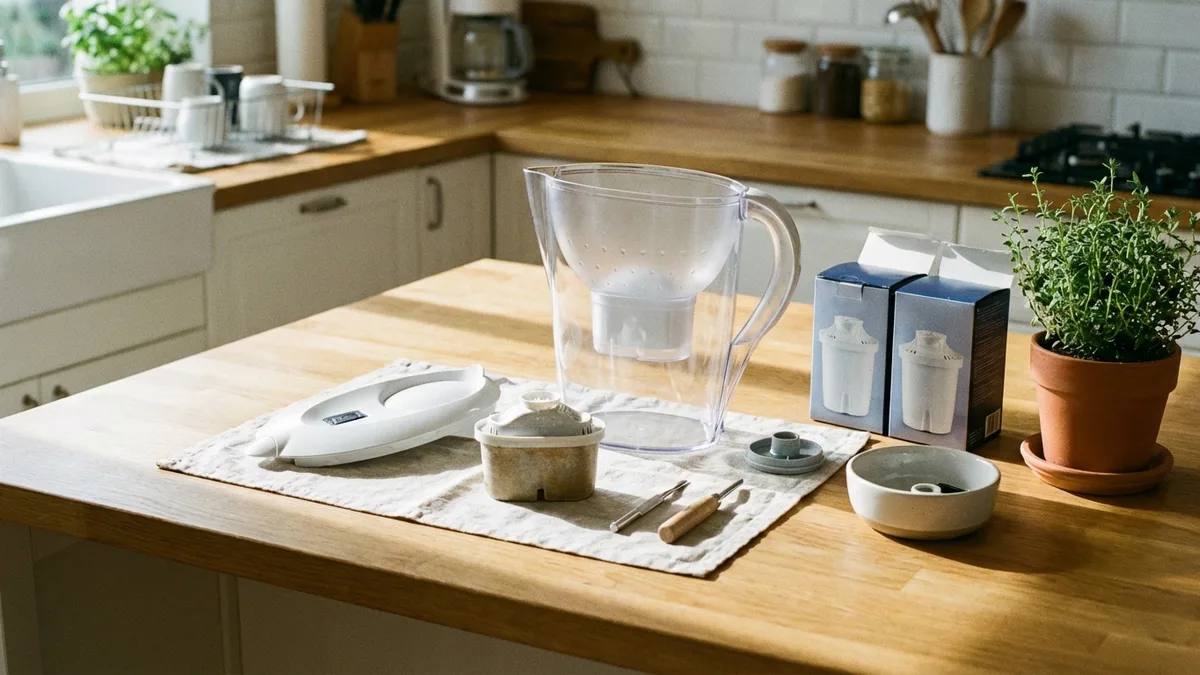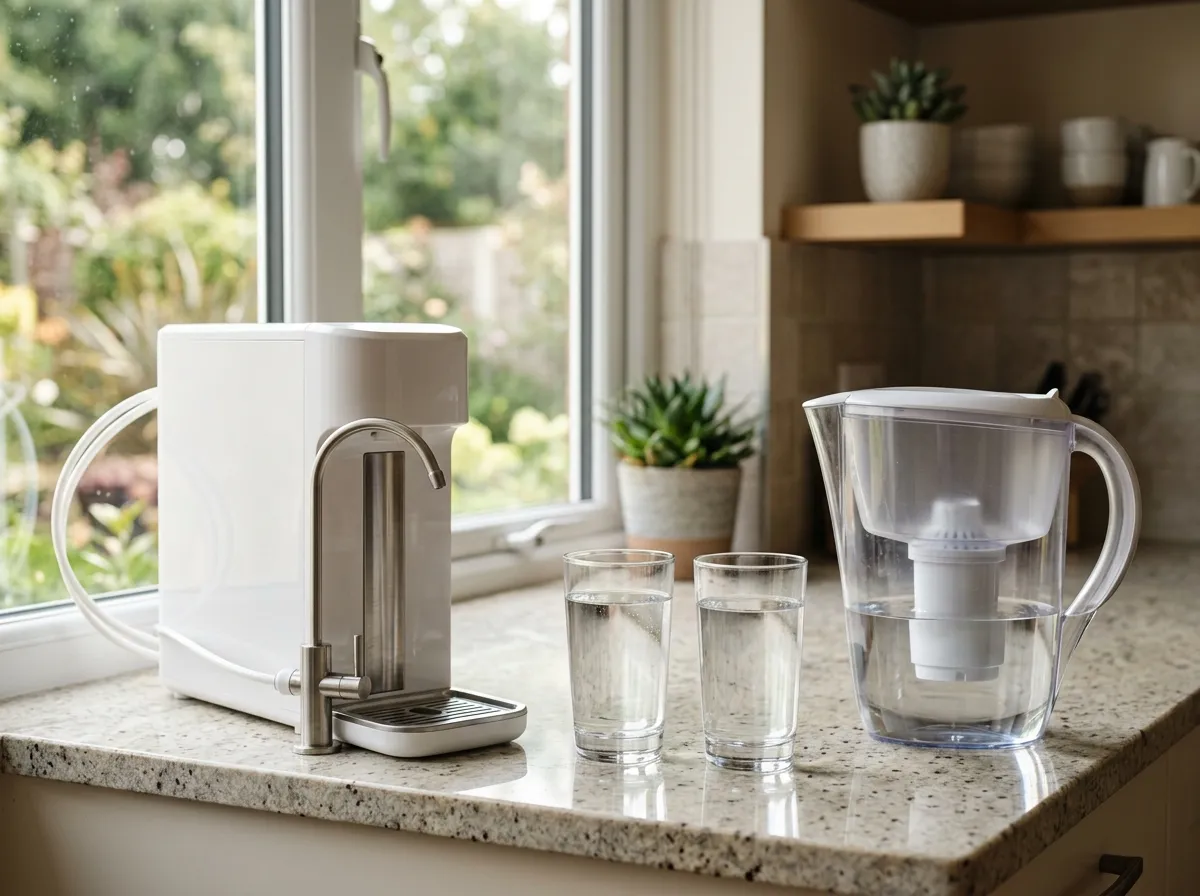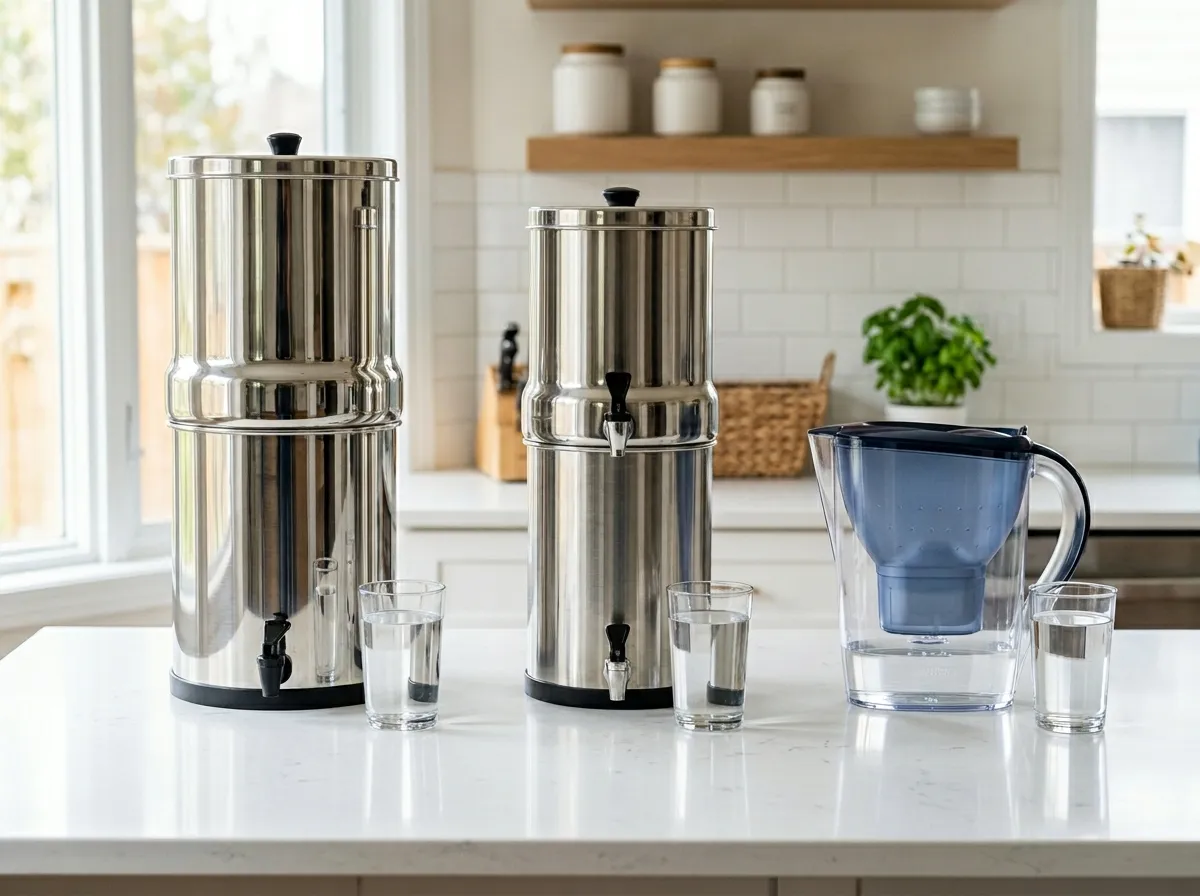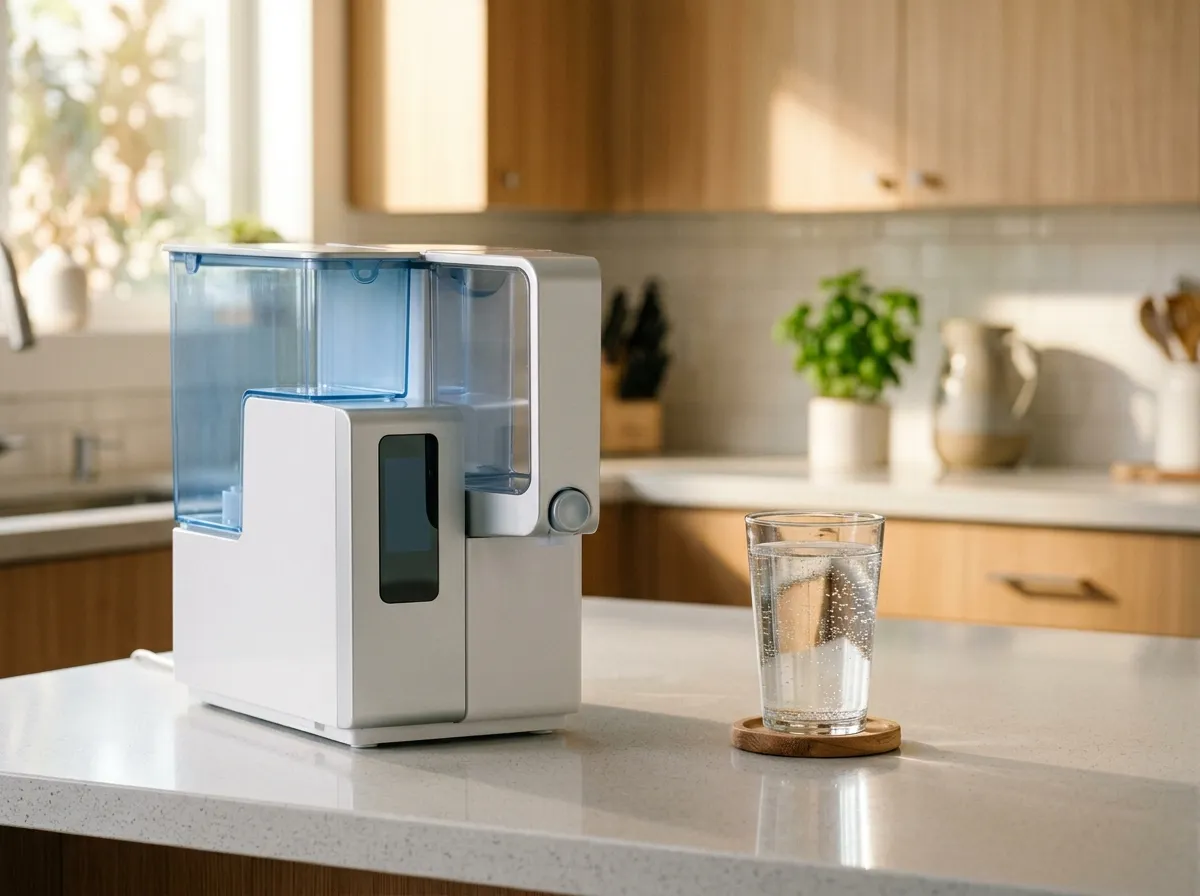
PFAS are in the tap water of most American homes, and standard filters don’t cut it. The issue has gotten so much attention that Stanford neuroscientist Andrew Huberman, physician Dr. Peter Attia, and biomedical scientist Dr. Rhonda Patrick have all dedicated significant time on their podcasts to the topic, each recommending water filtration as a top priority for reducing PFAS exposure. After researching lab results, NSF certifications, and real-world testing data, here are the water filters that actually remove PFAS forever chemicals. Our water filtration guide covers everything you need to know.
How we evaluated: We reviewed each filter’s published PFAS removal rates against NSF/ANSI standards (42, 53, 58, 401), checked for independent lab verification of contaminant removal claims, and compared filtration technologies (activated carbon, reverse osmosis, ion exchange). See our full testing methodology for details.
Quick Answer: Top 3 Picks
Three best options across different budgets and filter types:
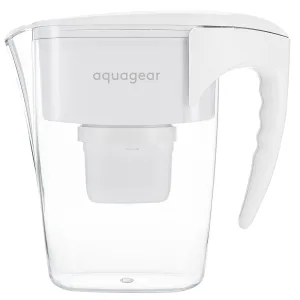
- Clearly Filtered Pitcher ($$) - Best pitcher filter. Removes 99.8% of PFAS. NSF 53 and P473 certified. No installation needed.
- AquaTru Classic ($$$) - Best countertop system. 4-stage reverse osmosis removes PFAS to non-detect levels. No plumbing required.
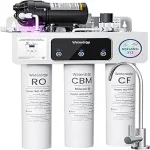
- Waterdrop G3P800 ($$$$) - Best under-sink RO. 800 GPD capacity, 3:1 pure-to-drain ratio, NSF 58 certified for PFOA/PFOS.
Want the full breakdown? Keep reading for all eight filters with test data. For how PFAS filtration fits alongside air, sleep, and kitchen decisions, see the longevity home protocol.
Why You Need a Specific Filter for PFAS
PFAS (per- and polyfluoroalkyl substances) are synthetic chemicals used in nonstick coatings, food packaging, firefighting foam, and hundreds of other products since the 1940s. They’re called “forever chemicals” because they don’t break down in the environment or in your body [biomonitoring, CDC ATSDR]. For a deeper look at the health risks, check out our guide on what PFAS are and why they matter.
Here’s what matters for filtration: PFAS molecules are extremely small and chemically stable. That carbon-fluorine bond is one of the strongest in organic chemistry. A basic carbon filter, like the kind inside a standard Brita or your refrigerator dispenser, can catch some PFAS, but it won’t catch enough.
The EPA finalized drinking water limits for PFOA and PFOS in 2024, setting maximum contaminant levels (MCLs) at 4 parts per trillion for each [regulatory review, EPA 2024]. In May 2025, the agency confirmed it would keep those standards in place while reconsidering limits for other PFAS compounds like GenX, PFHxS, and PFNA [regulatory review, EPA 2025]. Public water systems have until 2029 to comply, which means your municipal water may still contain PFAS above the legal limit right now.
The takeaway: you need a filter specifically tested and certified for PFAS removal. Look for NSF/ANSI Standard 53 (activated carbon) or NSF/ANSI Standard 58 (reverse osmosis) with PFAS claims on the label [regulatory review, NSF/ANSI]. The older P473 standard has been folded into these two, so you may still see it referenced on some products.
Which Filtration Technologies Actually Work?
Three technologies are proven to remove PFAS:
- Reverse osmosis (RO): The gold standard. Removes 94-99%+ of both short-chain and long-chain PFAS. The membrane physically blocks PFAS molecules. Both Dr. Rhonda Patrick and Dr. Peter Attia personally use and recommend RO filtration for drinking water. See our reverse osmosis system guide for more.
- Solid carbon block / activated carbon: Effective when the filter is dense enough and contact time is sufficient. High-quality carbon block filters certified to NSF 53 can remove 95-100% of common PFAS compounds.
- Ion exchange resins: Used in some whole-house systems. Specialty media like ATOMUS PF8 targets PFAS specifically and can reduce levels to non-detect.
Standard granular activated carbon (the loose stuff in basic pitcher filters) provides partial reduction at best. Refrigerator filters using this technology remove roughly 29-72% of PFAS depending on chain length [NSF performance data], which is not enough to meet EPA limits if your water has elevated levels [regulatory review, EPA 2024].
Filter Technology Tradeoffs for PFAS Removal
| Option | Main concern | Primary tradeoff |
|---|---|---|
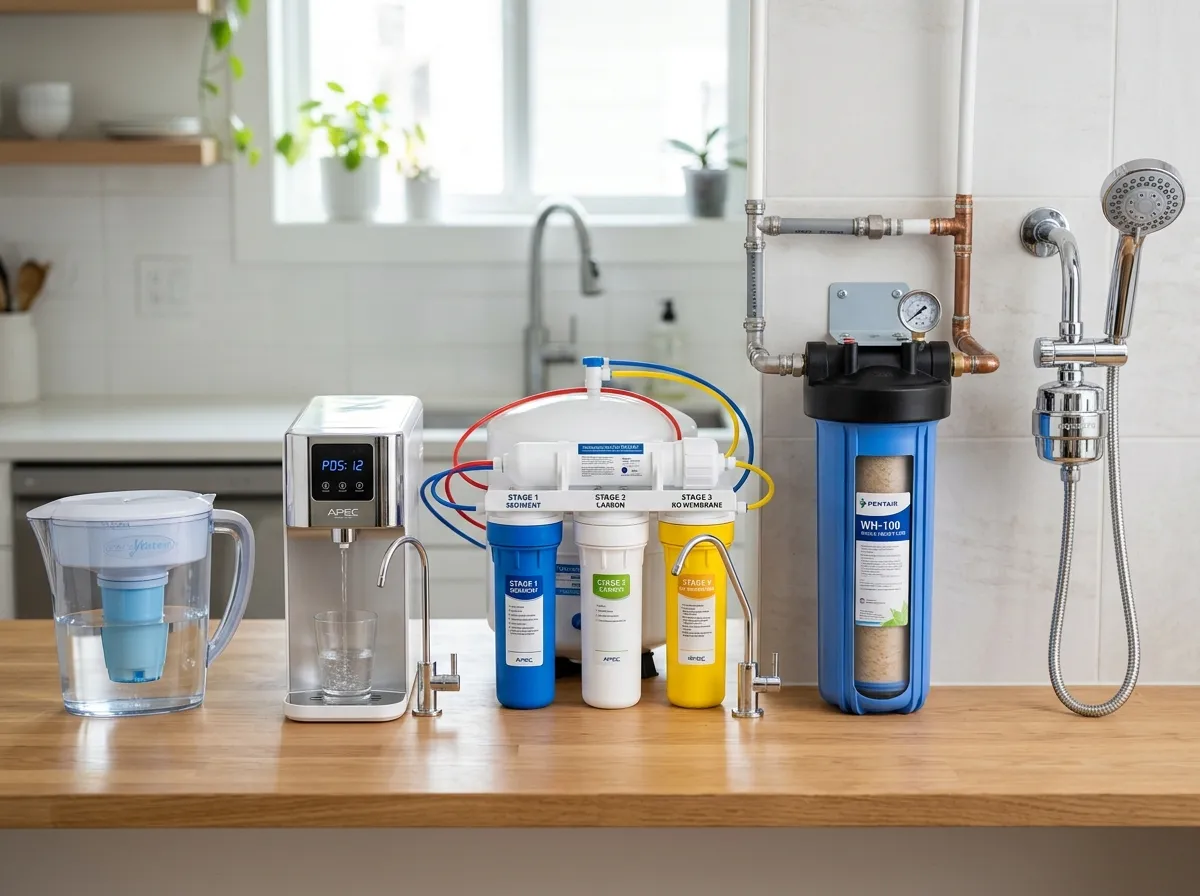
| Pitcher (Clearly Filtered, Epic Pure, ZeroWater) | Ongoing filter cost, slow flow | No installation, lowest upfront cost |
| Countertop RO (AquaTru) | Counter space, higher upfront cost | True RO performance without plumbing, renter-friendly |
| Under-sink RO (Waterdrop, APEC) | Requires installation, removes minerals | Fastest flow, lowest long-term cost per gallon |
| Whole-house PFAS filter (SpringWell) | High upfront cost, professional install often needed | Removes PFAS from every tap including showers |
The 8 Best Water Filters for PFAS Removal
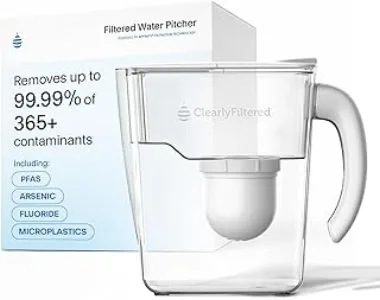
1. Clearly Filtered Water Pitcher - Best Overall Pitcher
Tier: $$ | Replacement cadence: every 3-4 months | Filter life: 100 gallons
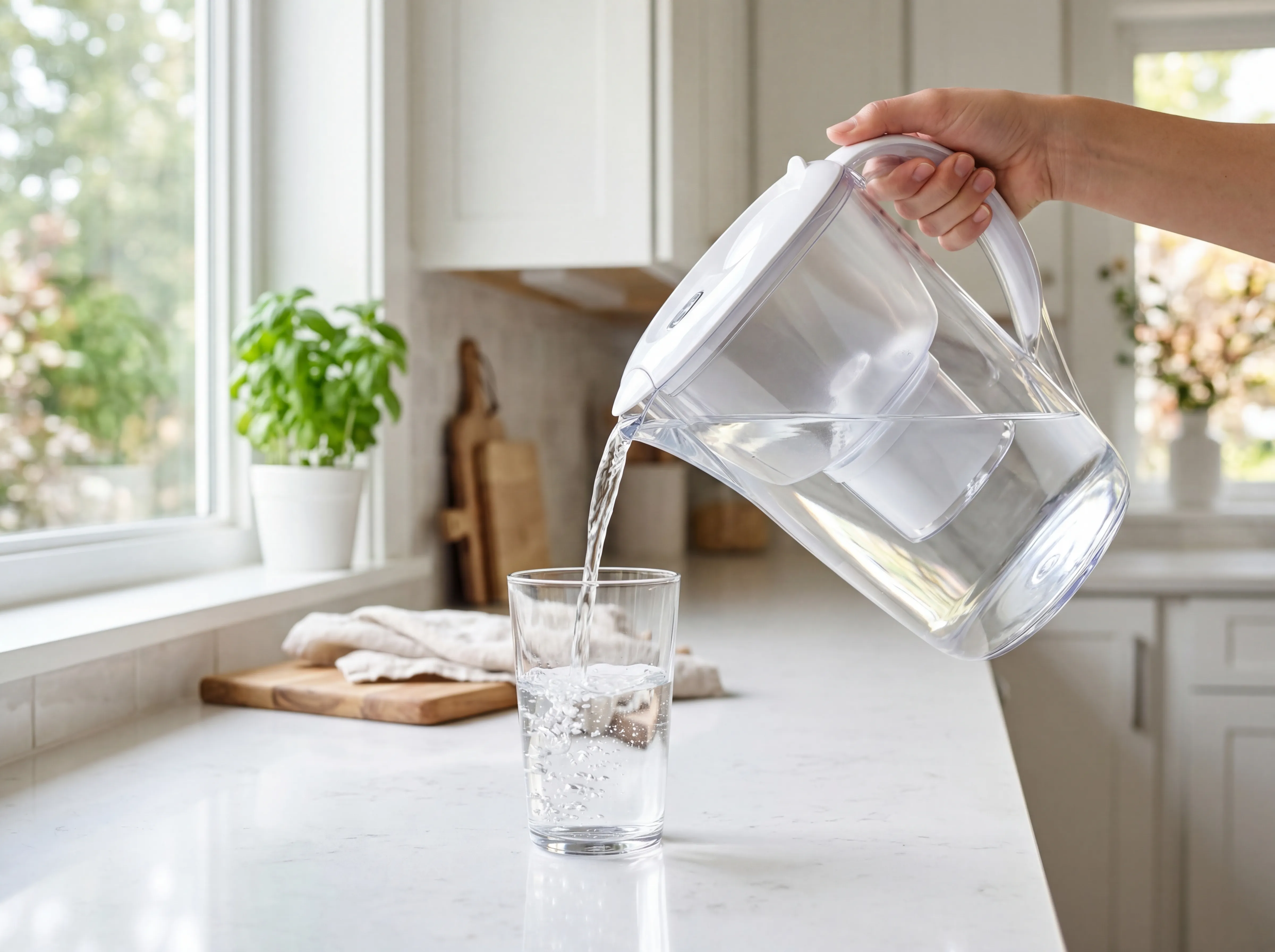
The Clearly Filtered pitcher consistently tops PFAS removal tests. In EWG’s independent testing, it blocked 100% of the PFAS compounds tested [third-party lab testing, EWG]. The company’s own lab data shows 99.8% reduction of PFOA, PFOS, GenX, and 13 other PFAS analytes, with results showing “not detected” after filtration [manufacturer lab testing].
It holds certifications to NSF/ANSI Standards 42, 53, 401, and P473 [regulatory review, NSF/ANSI]. Beyond PFAS, it targets 365+ contaminants including lead, fluoride, arsenic, and microplastics without stripping beneficial minerals.
Pros:
- Highest PFAS removal rate among pitchers tested
- No installation, works right out of the box
- Removes fluoride and lead alongside PFAS
- BPA-free construction
Cons:
- Slow filtration speed compared to standard pitchers
- Replacement filters add up over a year of regular use
- 100-gallon filter life is shorter than some competitors
Best for: Anyone who wants the most thorough PFAS protection in a simple pitcher format and doesn’t mind paying more per gallon for it.
2. AquaTru Classic Countertop RO System - Best Countertop
Tier: $$$ | Annual filter cost: modest | Filter life: Pre-carbon 6 months, VOC 12 months, RO membrane 24 months
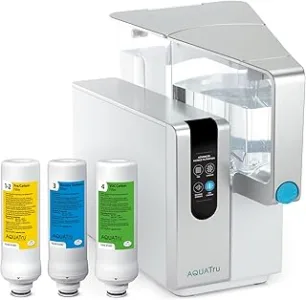
The AquaTru Classic is a countertop reverse osmosis system that needs zero plumbing. You fill the tank with tap water, and it pushes it through a 4-stage filtration process. Independent lab testing confirmed all 14 PFAS analytes came back as “not detected” after treatment [third-party lab testing].
It’s certified by IAPMO to NSF/ANSI Standard 53 for PFOA/PFOS reduction and verified to remove 83+ contaminants total, including lead, fluoride, chlorine, and pharmaceuticals [regulatory review, IAPMO/NSF 53]. The cost per gallon works out to a fraction of bottled water over the system’s lifetime.
Pros:
- True reverse osmosis performance without installation
- All 14 tested PFAS reduced to non-detect levels
- Reasonable ongoing filter replacement cost
- Compact enough for most countertops
Cons:
- Higher upfront cost than pitchers
- Tank holds a limited amount of water (about 1 gallon at a time)
- Produces some wastewater (typical of RO systems)
- Takes up counter space
Best for: Families who want RO-level PFAS removal but rent their home or don’t want to deal with under-sink installation. If you’re comparing the AquaTru to other countertop options, see our AquaTru vs Clearly Filtered comparison.
3. Waterdrop G3P800 Under-Sink RO - Best Under-Sink System
Tier: $$$$ | Annual filter cost: higher than tank-RO competitors | Capacity: 800 gallons per day
The Waterdrop G3P800 is a tankless under-sink reverse osmosis system that delivers filtered water on demand. It fills a cup in about 6 seconds, which is dramatically faster than tank-based RO systems. Lab testing showed 100% removal of PFAS forever chemicals [third-party lab testing], and it carries NSF/ANSI 58 and 372 certifications for PFOA/PFOS reduction [regulatory review, NSF 58/372].
The 3:1 pure-to-drain ratio means you waste far less water than older RO systems (which typically run 1:3 or worse). An optional remineralization filter adds back beneficial minerals. For more under-sink options, see our under-sink water filter guide.
Pros:
- 800 GPD capacity handles high-demand households
- 3:1 efficiency ratio wastes minimal water
- Tankless design saves cabinet space
- Extremely fast flow rate
Cons:
- Highest upfront cost in the lineup ($$$$)
- Requires under-sink installation (DIY-friendly but still a project)
- Annual filter costs run higher than tank-based RO competitors
- Removes minerals (remineralization filter sold separately)
Best for: Homeowners who want the highest PFAS removal we tested integrated into their kitchen plumbing, with fast flow and low water waste.
4. Epic Pure Water Filter Pitcher - Best Value Pitcher
Tier: $$ | Replacement cadence: every 3-4 months | Filter life: 150 gallons
The Epic Pure pitcher earned EWG’s “Best Overall” designation and CNN’s “Best Tested” label. It removes up to 99.9% of over 200 contaminants, including PFAS, fluoride, lead, chromium-6, and heavy metals. In lab testing, it eliminated chlorine taste, THMs, and trace lead to non-detect levels.
The 10-cup pitcher uses medical-grade Tritan plastic (BPA/BPS-free) and each filter lasts 150 gallons, which is 50% longer than the Clearly Filtered. The cost per gallon sits in a sweet spot between performance and affordability.
Pros:
- Longer filter life (150 gallons) than Clearly Filtered
- Lower cost per gallon than most premium pitchers
- EWG and CNN recognized
- American-made filters
Cons:
- Not quite as thorough as Clearly Filtered for total contaminants tested
- Only one pitcher size available (10-cup)
- Initial cost runs 20-30% higher than basic pitchers
Best for: Budget-conscious buyers who still want serious PFAS protection and prefer a longer-lasting filter.
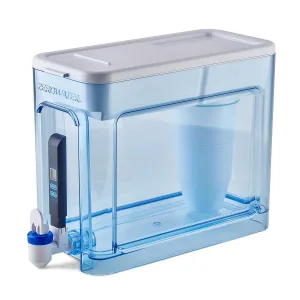
5. ZeroWater / Culligan ZeroWater Pitcher - Best Budget Option
Tier: $ | Replacement cadence: ~every 2 weeks for a family of four | Filter life: 20 gallons
ZeroWater achieved 100% removal of tested PFAS compounds in EWG testing [third-party lab testing, EWG]. It carries NSF 42, NSF 53, and NSF 401 certifications for every contaminant it claims to reduce [regulatory review, NSF/ANSI]. In lab tests, it completely eliminated fluoride, uranium, sulfate, nitrate, chlorine, and barium.
The catch? Filter life is only 20 gallons, which is dramatically shorter than competitors. Ongoing costs per gallon are high despite the low sticker price. A family of four could burn through a filter in under two weeks.
Pros:
- Lowest upfront cost among certified PFAS filters
- 100% PFAS removal verified by EWG
- 5-minute setup, no priming required
- Includes a TDS meter to monitor filter performance
Cons:
- 20-gallon filter life is the shortest on this list by far
- Highest ongoing cost per gallon in the lineup
- Slow filtration rate (1.9 gallons per hour)
- Frequent filter replacements are wasteful and inconvenient
Best for: Someone on a tight budget who wants verified PFAS removal and doesn’t mind replacing filters frequently. Good as a starter filter while saving for a better long-term solution.
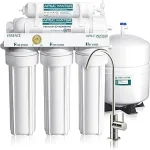
6. APEC ROES-50 Under-Sink RO System - Best Budget RO
Tier: $$$ | Filter life: 6-12 months (pre-filters), 2-3 years (RO membrane)
The APEC ROES-50 Essence Series is a 5-stage reverse osmosis system that has been a reliable workhorse for years. Lab testing showed it reduced PFNA and PFBA (two PFAS subtypes) to undetectable levels, and it eliminated lead, arsenic, and uranium as well [third-party lab testing]. It carries the WQA Gold Seal certifying compliance with NSF/ANSI Standard 58 [regulatory review, WQA/NSF 58].
This is a traditional tank-based under-sink system, so it takes up more cabinet space than the Waterdrop. But it costs less than half the price while delivering comparable PFAS removal. For more options, see our full under-sink filter roundup.
Pros:
- Excellent PFAS removal at a budget-friendly price
- WQA Gold Seal / NSF 58 certified
- Long RO membrane life (2-3 years)
- Strong track record with thousands of verified reviews
Cons:
- Traditional tank design takes up significant cabinet space
- Higher water waste ratio than tankless systems
- Filter changes are less convenient than quick-twist designs
- Requires under-sink installation
Best for: Homeowners who want RO-quality PFAS removal without the premium price tag and don’t mind sacrificing some cabinet space.
7. SpringWell Whole House PFAS Filter - Best Whole-House System
Tier: $$$$ (PFAS filter system) | Cartridge life: Up to 350,000 gallons | Flow rate: 15 GPM
If you want PFAS removed from every tap, shower, and appliance in your home, a point-of-entry system like the SpringWell is the way to go. Their dedicated PFAS filter uses ATOMUS PF8 media, which is engineered specifically for PFAS and delivers over 25x the removal capacity of traditional carbon filters [manufacturer testing]. It reduces PFAS to non-detect levels [manufacturer lab testing].
The system is designed for homes with 1-5 bathrooms and treats up to 350,000 gallons per cartridge. SpringWell backs it with a lifetime warranty on tanks and valves plus a 6-month money-back guarantee. For a broader look at whole-house options, check our whole-house water filter guide.
Pros:
- Filters all water entering your home, not just drinking water
- 350,000-gallon cartridge life means infrequent replacements
- PFAS reduced to non-detect with specialty media
- Lifetime warranty on tanks and valves
- 15 GPM flow rate handles high-demand households
Cons:
- Premium upfront tier ($$$$) plus a separate cost for professional installation
- Only addresses PFAS; you may need additional filtration for other contaminants
- Requires a dedicated installation point on your main water line
Best for: Homeowners who want PFAS removed from their entire water supply, not just the kitchen tap. Especially valuable if you’re concerned about PFAS exposure through showering and bathing.
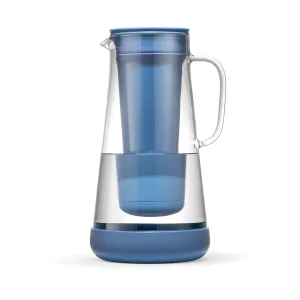
8. LifeStraw Home Pitcher - Best Glass Pitcher Design
Tier: $$ | Annual filter supply: modest | Filter life: 264 gallons (membrane), carbon filters replaced every 2 months
The LifeStraw Home stands out for its glass carafe design, which avoids the plastic contact issue that bothers many non-toxic living advocates. It reduces PFOA and PFOS by more than 99% and meets the NSF P473 standard [regulatory review, NSF P473]. Its dual-stage system uses both a membrane microfilter and activated carbon to target bacteria, parasites, microplastics, lead, mercury, and PFAS.
However, independent lab testing raised concerns [third-party lab testing]. While the pitcher handles PFAS and microplastics well, it failed to adequately remove uranium, arsenic, lithium, and several other serious contaminants. It’s a strong choice for PFAS specifically, but not a complete solution if your water has multiple contamination issues.
Pros:
- Beautiful glass design (no plastic water contact)
- 99%+ PFAS reduction
- Membrane microfilter lasts a full year (264 gallons)
- Also removes bacteria and parasites, which most pitchers don’t
Cons:
- Poor performance on arsenic, uranium, and lithium
- Carbon filters need replacing every 2 months
- Glass carafe is breakable
- Mixed independent test results for overall contaminant removal
Best for: People who prioritize a non-plastic design and are primarily concerned about PFAS, microplastics, and biological contaminants rather than heavy metals.
Comparison Table
| Filter | Type | Price | PFAS Removal | Certification | Filter Life | Annual Cost |
|---|---|---|---|---|---|---|
| Clearly Filtered | Pitcher | $$ | 99.8% | NSF 53, P473 | 100 gal | $$ |
| AquaTru Classic | Countertop RO | $$$ | Non-detect | NSF 53 (IAPMO) | 6-24 mo | $$ |
| Waterdrop G3P800 | Under-sink RO | $$$$ | 100% | NSF 58, 372 | Varies | $$ |
| Epic Pure | Pitcher | $$ | 99.9% | NSF tested | 150 gal | $$ |
| ZeroWater | Pitcher | $ | 100% | NSF 42, 53, 401 | 20 gal | $$$ |
| APEC ROES-50 | Under-sink RO | $$$ | Non-detect | NSF 58 (WQA) | 6-36 mo | $$ |
| SpringWell PFAS | Whole house | $$$$ | Non-detect | Tested | 350,000 gal | $ |
| LifeStraw Home | Pitcher (glass) | $$ | 99%+ | NSF P473 | 264 gal | $$ |
Under-Sink Filters: What to Know Before You Install One
Under-sink systems are the long-term answer for homeowners who want RO-level PFAS removal without the tank on the counter. Two formats dominate: tank-based (APEC ROES-50) and tankless (Waterdrop G3P800).
Tankless units use a permeate pump and high-output membrane to fill a glass in six to ten seconds, with efficiency ratios around 3:1 pure-to-drain. Tank-based systems are cheaper but store filtered water in a pressurized bladder and typically run 1:3 or worse on drain ratio. Both formats handle PFAS equally well once properly installed. The real tradeoff is cabinet space and recovery time.
Installation is DIY-friendly for most people (a saddle valve or cold-water T plus a mounted faucet), but you’ll want to shut off your under-sink supply and budget two to three hours. Renters who can’t drill a third hole in the counter should look at the best water filters for apartments instead. Our full roundup of under-sink water filters covers both tankless and traditional picks.
One thing most buyers miss: RO strips minerals along with contaminants, which many drinkers notice in taste. An inexpensive remineralization post-filter (calcium, magnesium) added downstream fixes this and is a common upgrade after a week of use.
Countertop Reverse Osmosis: The Renter’s Path to RO
The AquaTru Classic is the only countertop RO unit we’ve found that holds IAPMO certification to NSF/ANSI Standard 53 for PFOA and PFOS reduction and gets all 14 tested PFAS analytes to non-detect. It runs on a standard outlet, holds one gallon of treated water at a time, and needs about 15 minutes to refill.
The key difference from under-sink RO is the tradeoff between convenience and flow. Countertop units take counter space and produce water in batches; under-sink units hide in the cabinet and deliver on demand. For a renter or small kitchen, countertop is the only realistic path to actual reverse osmosis performance. For a full comparison against the pitcher path, see our AquaTru vs Clearly Filtered review and our AquaTru review.
The second-best countertop option is the AquaTru Connect with smart app monitoring at a step-up tier. Outside the AquaTru line, most countertop “RO” systems are multi-stage carbon block systems marketed as RO-equivalent. This is misleading. They don’t produce the same reduction numbers on PFAS or fluoride.
Pitcher Filters: The Bar Is Much Higher Than You Think
Not all pitchers remove PFAS. Most don’t. Standard Brita, PUR, and refrigerator-style pitchers use loose granular activated carbon, which gives partial reduction of long-chain PFAS and almost none of short-chain variants like PFBS or GenX [NSF performance data].
Three pitcher filters are independently verified to remove 99%+ of tested PFAS:
- Clearly Filtered No. 1: 99.8% reduction across 14 PFAS analytes [manufacturer and EWG testing], NSF 42/53/401/P473 certified
- Epic Pure: 99.9%+ reduction on PFOA and PFOS [manufacturer lab data], EWG Best Overall designation
- ZeroWater: 100% reduction of tested PFAS compounds in EWG testing, NSF 42/53/401 certified
Filter life is the hidden cost. ZeroWater’s 20-gallon filter rating means a family of four burns through a cartridge every two weeks, pushing real cost per gallon high. Clearly Filtered at 100 gallons per filter lands well under that. Epic Pure at 150 gallons per filter is the cheapest per gallon of the three. Our best water filter pitchers roundup ranks them by total cost of ownership rather than sticker price.
Shower Filters: The Dermal Exposure Question
Drinking water is the main PFAS exposure route, but shower water matters too [human epidemiological and biomonitoring]. PFAS can be absorbed through skin during prolonged hot-water exposure [preliminary, in vitro and limited in vivo], though the magnitude relative to oral intake is still being characterized [active research area]. Chlorine and chloramine, which cause eye and skin irritation, are a more established concern [human observational].
The honest answer on PFAS-removing shower filters: there are no NSF-certified shower heads that reduce PFAS to non-detect [regulatory review, NSF]. Shower filters use KDF-55 and activated carbon at a flow rate and contact time that’s simply too fast to strip PFAS reliably. What shower filters do well is reduce chlorine, chloramine, and some heavy metals [regulatory review, NSF 177].
If PFAS dermal exposure concerns you, the only filter format that reliably addresses it at the shower is a whole-house PFAS system with point-of-entry treatment, not a screw-on shower head. For chlorine reduction only, a quality Vitamin C or KDF-55 shower filter is an inexpensive upgrade. Under-sink and countertop systems do nothing for shower water.
Whole-House Filters: When Point-of-Entry Makes Sense
Whole-house systems treat every tap in the home, including the shower, laundry, and dishwasher. They matter when:
- Your municipal water tests above EPA PFAS limits of 4 ppt for PFOA or PFOS
- You’re on well water with known PFAS contamination
- You want dermal exposure protection during showering
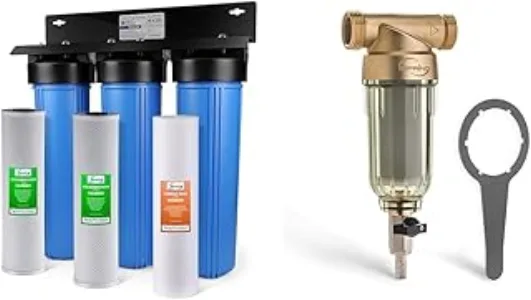
Most whole-house carbon filters (iSpring, Aquasana Rhino, Pelican) do not carry specific PFAS certification. The SpringWell PFAS system uses ATOMUS PF8 specialty media engineered for PFAS and is one of the few point-of-entry options with documented non-detect PFAS reduction [manufacturer testing].
Whole-house is not a replacement for point-of-use RO. Carbon-based whole-house systems remove a useful percentage of PFAS across high flow rates, but they don’t match RO on drinking water. The standard protocol is whole-house carbon for shower and laundry water, plus under-sink or countertop RO for what you drink and cook with. Our whole-house water filter guide covers the full options including well-water-specific picks.
Filter Technology Tradeoffs: Removal Rate × Cost × Install
| Filter format | PFAS removal rate | Upfront cost | Annual cost | Install complexity | Best fit |
|---|---|---|---|---|---|
| Certified pitcher (Clearly Filtered, Epic Pure) | 99 to 99.9% [certified] | $$ to $$ | $$ to $$$ | None | Renters, small households |
| Budget pitcher (ZeroWater) | 100% tested [EWG] | $ to $ | $$$ | None | Short-term, tight budget |
| Countertop RO (AquaTru) | Non-detect [IAPMO] | $$$ to $$$$ | $$ | Plug in, no plumbing | Renters wanting RO performance |
| Tankless under-sink RO (Waterdrop) | Non-detect [NSF 58] | $$$$ to $$$$ | $$ | Moderate DIY, 2 to 3 hours | Homeowners, high-demand kitchens |
| Tank-based under-sink RO (APEC) | Non-detect [WQA NSF 58] | $$$ to $$$ | $$ to $$ | Moderate DIY | Budget-conscious homeowners |
| Shower filter (KDF-55 / carbon) | Not reliable for PFAS | $ to $$ | $ to $$ | Screw-on | Chlorine reduction only |
| Whole-house carbon (iSpring, Aquasana) | Partial [uncertified] | $$$ to $$$$ | $$ to $$ | Professional | Broad contaminant reduction |
| Whole-house PFAS-specific (SpringWell) | Non-detect [tested] | $$$$ | $ | Professional | Point-of-entry PFAS removal |
Durability and Replacement Schedules
Every filter on this list degrades over time, and an overused cartridge can actually release trapped contaminants back into your water. Running past rated capacity is the single most common reason a certified filter fails a follow-up water test.
- Pitcher carbon blocks: 20 to 150 gallons depending on media density; replace every 2 to 4 months
- Countertop RO pre-filter: 6 months; VOC polishing filter: 12 months; RO membrane: 24 months
- Under-sink RO membrane: 2 to 3 years under normal TDS; pre-filters every 6 to 12 months
- Whole-house carbon cartridge: 100,000 to 600,000 gallons depending on media volume
- Whole-house PFAS cartridge (SpringWell): up to 350,000 gallons per manufacturer data
Hard water shortens every filter’s rated life. If your household TDS is above 500 ppm, assume 60 to 70% of the published capacity. A cheap TDS meter pays for itself within a year by telling you when a cartridge has actually hit end-of-life rather than when the calendar says so.
Does Brita Remove PFAS?
This is one of the most common questions people ask, so here’s the straight answer.
Standard Brita filters are not designed for PFAS removal. Testing showed the standard Brita pitcher reduced PFAS by only about 66%, and results varied widely [third-party lab testing]. For a full breakdown of how Brita stacks up, see our Brita vs Clearly Filtered comparison.
The Brita Elite filter is NSF 53-certified for PFOA/PFOS reduction, which sounds promising [regulatory review, NSF 53]. But real-world testing told a different story: one test showed only 22% PFAS reduction with the Elite filter [third-party lab testing]. The problem is that Brita’s activated carbon isn’t dense enough or in contact with water long enough to reliably capture those tiny, stable PFAS molecules.
If you already own a Brita, upgrading to Elite filters will give you some PFAS reduction, but it’s not in the same league as the Clearly Filtered, Epic Pure, or ZeroWater pitchers. For serious PFAS protection, you need a filter built for the job.
Brita does offer a Brita PRO whole-home PFAS system with proprietary titanium housing, which is a completely different product from their consumer pitchers. That system is IAPMO-certified to NSF P473 and performs well, but it requires professional installation and costs significantly more.
Do Refrigerator Filters Remove PFAS?
Short answer: not well enough.
Fridge filters use basic granular activated carbon. According to NSF data, they remove roughly 29-65% of short-chain PFAS and 57-72% of long-chain PFAS [NSF performance data]. That’s partial reduction, not reliable removal.
If your water has PFAS above EPA limits, a fridge filter alone won’t bring it into compliance. You’ll want a dedicated point-of-use filter (like any of the eight reviewed above) for your drinking water, or an under-sink RO system connected to a dedicated faucet.
How to Know If Your Water Has PFAS
Before buying a filter, it’s worth knowing what’s actually in your water. You have a few options:
- Check the EWG Tap Water Database at ewg.org/tapwater. Enter your zip code to see reported contaminants including PFAS.
- Order a home water test from Tap Score or SimpleLab. Their PFAS-specific tests measure individual PFAS compounds.
- Request your utility’s Consumer Confidence Report (CCR), which is published annually. Many now include PFAS data.
For a step-by-step walkthrough, see our guide on how to test your water quality.
What We Don’t Know Yet
PFAS research is moving fast, and parts of what we need to know for confident filtration advice haven’t been settled.
- Bioaccumulation reversal timelines. PFAS half-lives in human serum run two to nine years depending on the compound [biomonitoring studies]. Whether switching to filtered water at age 40 meaningfully reduces long-term health risk vs switching at age 20 is not yet quantified in human data.
- Short-chain PFAS removal by carbon block. NSF 53 certification primarily validates PFOA and PFOS. Removal rates for newer short-chain compounds (PFBS, PFHxA, GenX in field conditions) are not well-characterized for most carbon block filters [regulatory gap, active testing].
- Dermal PFAS absorption during showering. Preliminary human studies suggest skin is a minor but non-zero route [preliminary, in vitro and limited in vivo]. Whether whole-house treatment is worth the substantial premium over point-of-use for most households is not established.
- Filter regeneration and PFAS release. When a certified filter is run past its rated life, there’s evidence of trapped contaminants re-entering the effluent [NSF protocol testing]. The exact release curve varies by media and is not characterized on every product.
- Combined exposure modeling. Most PFAS risk studies look at one compound at a time. How different short-chain and long-chain PFAS interact in the body, and whether filter certification against a few flagship compounds generalizes to the 15,000+ known PFAS, remains an open question [active research area].
For most households on municipal water, a certified pitcher or countertop RO is probably fine under normal use. Filtering is a high-value action even without perfect data. What it won’t do is reverse decades of prior exposure. That’s the limit that matters most, and the one no filter addresses.
What People Ask
What is the best type of water filter for PFAS?
Reverse osmosis is the most effective technology, removing 94-99%+ of both short-chain and long-chain PFAS. High-quality activated carbon block filters (certified to NSF 53 for PFAS) are the next best option and tend to be cheaper. Standard carbon filters, faucet-mount filters, and refrigerator filters provide incomplete PFAS removal.
How much do PFAS water filters cost?
Pitcher filters start around $35 (ZeroWater) to $90 (Clearly Filtered). Countertop RO systems like the AquaTru Classic run $449-$495. Under-sink RO systems range from $200 (APEC ROES-50) to $849 (Waterdrop G3P800). Whole-house PFAS filters like the SpringWell cost around $995 plus installation.
Do I need a whole-house filter for PFAS, or is a drinking water filter enough?
For most people, a point-of-use filter (pitcher, countertop, or under-sink) covers the primary exposure route, which is drinking water. A whole-house system makes sense if you’re concerned about PFAS absorption through skin during showers, though research on dermal PFAS exposure is still developing. It also protects appliances and makes every tap in your home deliver filtered water.
Can I use a water filter pitcher to remove PFAS?
Yes, but only certain pitchers. The Clearly Filtered, Epic Pure, and ZeroWater pitchers are all independently verified to remove 99%+ of tested PFAS compounds. Standard Brita and PUR pitchers are not effective for PFAS removal.
How often should I replace my PFAS water filter?
Follow the manufacturer’s recommended schedule. Overused filters lose their ability to capture contaminants. For pitchers, that’s typically every 2-4 months. For RO membranes, every 2-3 years. Running a filter past its rated capacity can actually release trapped contaminants back into your water.
What are the NSF certifications I should look for?
Look for NSF/ANSI 53 on carbon-based filters or NSF/ANSI 58 on reverse osmosis systems, with PFOA/PFOS specifically listed on the certification. The older NSF P473 standard has been incorporated into these two standards but you may still see it on some product labels.
Is bottled water free of PFAS?
Not necessarily. Some bottled water brands have tested positive for PFAS. Bottled water is also significantly more expensive per gallon than filtered tap water, and it generates plastic waste that contributes to the microplastics contamination cycle. A home filter is more reliable, more economical, and better for the environment.
Does boiling water remove PFAS?
No. PFAS are heat-stable and do not evaporate or break down at boiling temperatures. Boiling your water actually concentrates PFAS because some water evaporates while the PFAS stay behind. The only effective methods are physical filtration (RO, carbon block) and chemical adsorption (ion exchange, specialty media).
What we don’t fully know: Most PFAS certification testing covers only PFOA and PFOS, the two most studied compounds. There are thousands of PFAS variants, and removal rates for newer short-chain compounds (PFBS, PFHxA, GenX beyond pilot testing) are not fully characterized for carbon-based filters. Dermal absorption of PFAS during showering is also an active research area with no settled consensus.
Our Verdict
If you just want a clear recommendation: NonToxicLab recommends the Clearly Filtered pitcher if you want simplicity, the AquaTru Classic if you want the best countertop solution we tested, or the APEC ROES-50 if you want affordable under-sink RO. All three remove PFAS to non-detect or near-non-detect levels, and all carry relevant NSF certifications.
Based on NonToxicLab’s research, the most important thing is choosing a filter that’s actually certified for PFAS. A generic “carbon filter” label means nothing for forever chemicals. Check for NSF 53 or NSF 58 with PFAS claims, verify the filter is within its rated capacity, and replace it on schedule. Your filter is only as good as the cartridge inside it. If you also need to remove fluoride, many of these same filters handle that too. See our guide to the best fluoride water filters for dedicated recommendations. And if you’re living in an apartment without room for a full system, our roundup of the best water filters for apartments covers compact, renter-friendly options.
You Might Also Like
- Best Water Filter Pitchers
- Water Filter Comparison Chart
- Best Non-Toxic Air Fryers
- PFAS Exposure: Complete Guide to Forever Chemicals in Your Life
- Best Gravity Water Filters in 2026 (No Plumbing Required)
- How to Reduce PFAS in Your Body (What Research Shows)
- Clearly Filtered vs ZeroWater: Budget Pitcher Comparison
- Berkey Water Filter Review: The Good, the Bad, and the Controversy
- The Non-Toxic Couches Our Editors Sit On (2026)
- Berkey vs AquaTru: Which Water Filter Is Better?
- Berkey vs ProOne vs Clearly Filtered: Which Removes the Most PFAS?
- The Non-Toxic Cookware Our Editors Cook With (2026)
- Whole-Home Air and Water Systems: What the Science Supports at Every Budget
- iSpring WGB32B vs AquaTru: Whole House vs Point-of-Use in 2026
- How Often to Replace Water Filters (By Type)
- Maine PFAS Ban 2026: Full List of Product Categories Now Restricted
- The Baby Shampoos Our Editors Trust (Sulfate-Free, 2026)
Sources
- Mariah Blake, They Poisoned the World: Life and Death in the Age of Forever Chemicals (Crown, 2025). The most thorough recent account of the PFAS contamination story, the regulatory backstory, and the upstate New York town that forced the turn. We summarize the audiobook on our recommended-reading list.
- Andrew Huberman, “How to Reduce Your Exposure to Microplastics, BPA, Phthalates & PFAS,” Huberman Lab Podcast (2024)
- Dr. Peter Attia, “AMA on Microplastics, PFAS, and Phthalates,” The Drive Podcast. peterattiamd.com
- Dr. Rhonda Patrick, “Water Filtration and PFAS Removal,” FoundMyFitness. foundmyfitness.com