The bathroom is small, humid, and dense with surfaces you touch with wet skin. That combination amplifies every exposure variable that matters. A ten-minute hot shower opens pores, raises core temperature, and turns volatile water contaminants into inhaled compounds. The skin absorbs lipid-soluble chemicals more readily when warm and wet. The air, trapped behind a closed door for the duration, holds whatever the steam is releasing.
Chronic daily exposure is the right framework here. A single shower in a city water supply is unremarkable. The same shower repeated 365 times a year for thirty years is a measurable contribution to lifetime exposure to disinfection byproducts, and the research that exists puts that contribution in the same order of magnitude as drinking the tap water. This article is part of our longevity home protocol approach, which prioritizes the rooms where exposure is highest per minute spent.
What Does the Research Actually Show?
The bathroom evidence pulls in four directions, each with a different strength of data.
Disinfection Byproducts in Hot Water
Municipal water is treated with chlorine or chloramines to kill pathogens. Both react with organic matter in the water to form disinfection byproducts, including chloroform, bromodichloromethane, and other trihalomethanes. When that water is heated for showering, the volatile fraction comes out of solution and into the air.
The exposure math is the part most people have not seen. [Weisel and Jo, 1996, human exposure modeling] estimated that a ten-minute shower delivers roughly the same trihalomethane dose by inhalation as drinking two liters of the same water. Skin absorption adds another fraction on top, depending on water temperature and skin condition. The IARC classifies chloroform as Group 2B, possibly carcinogenic to humans, based largely on rodent data with mechanistic support [animal study, IARC review]. Human epidemiology on chronic shower-borne THM exposure is limited. The studies that exist suggest a modest association with bladder cancer at high cumulative exposures [human epidemiological, mixed evidence]. The dose at typical municipal levels is small. The cumulative effect over decades is what makes the question worth solving with a $70 filter.
Indoor Air, Mold, and Humidity
Bathrooms are the single most common site of residential mold. The combination of frequent humidity spikes, organic materials, and inadequate ventilation creates microclimates where Aspergillus, Penicillium, and Cladosporium colonies establish within weeks. [Mendell et al., 2011, meta-analysis of human epidemiological data] found a consistent association between visible mold or dampness and respiratory symptoms, asthma exacerbation, and allergic sensitization. Whether mold causes those conditions in previously asymptomatic adults is not settled. What is settled: existing respiratory or immune conditions get measurably worse in damp, mold-prone environments.
Volatile organic compounds (VOCs) from conventional cleaning products, fragranced soaps, candles, and plastic surfaces accumulate in the same enclosed humid air. The CDC reports indoor air pollution levels are typically two to five times higher than outdoor levels [regulatory review], and bathrooms are at the high end of that range when ventilation is poor and product use is heavy.
Plastic Surfaces and Skin Contact
Vinyl shower curtains are the worst-offender item in most bathrooms. PVC shower curtains release phthalates and other plasticizers continuously, with peak emissions in the first 30 days after unwrapping [Stahlhut et al., 2007, biomonitoring data]. The skin-contact dose during a shower is small. The inhalation dose in a closed bathroom over years of use is the cumulative variable that the research does not yet have a clean answer on.
Plastic toothbrushes, plastic razor handles, plastic dispensers, and synthetic-fiber bath mats add a smaller fraction. Most are probably fine under normal use. The shower curtain is the one item where switching materials produces a measurable change in the indoor air signature.
Personal Care Product Buildup
Bathrooms are where 90% of personal care products live. The chemicals you apply to skin and hair, then rinse off, accumulate in shower drains and grout lines. Some are cleared on the next wash. Some persist. Fragrances, parabens, and quaternary ammonium compounds are the three categories with the strongest exposure data. The simpler the product roster, the lower the cumulative exposure. This article does not cover personal care directly. See our personal care guides for that.
The Highest-Impact Bathroom Upgrades, Ranked
The research above translates into a clear priority order. Most people will not do all of these. Doing the top three captures roughly 80% of the exposure reduction available.
1. Filter the Shower Water (Highest Impact, $70 to $200)
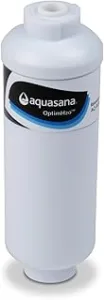
A KDF + activated carbon shower filter reduces free chlorine by 90%+ and chloramines by 50% to 70%, depending on flow rate and water chemistry. The Aquasana AQ-4100 Premium is NSF/ANSI 177 certified for chlorine reduction. Cartridges last six months at typical household use.
The honest caveat: chloramine reduction is harder than chlorine reduction. If your municipal water uses chloramines (most US cities do as of 2026), you want a filter explicitly rated for chloramines, not just chlorine. The Aquasana premium model covers both. The basic model covers only chlorine.
Whole-house filtration is the next tier up. A point-of-entry carbon filter at $1,200 to $2,800 installed handles every fixture in the house, not just the shower. The math favors whole-house if you live in a heavily-chlorinated municipality and shower more than once a day per resident. See best whole house water filters.
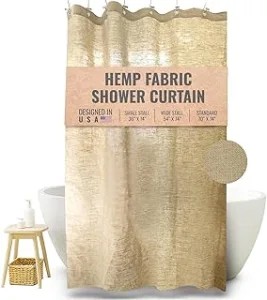
2. Replace the PVC Shower Curtain ($45 to $80)
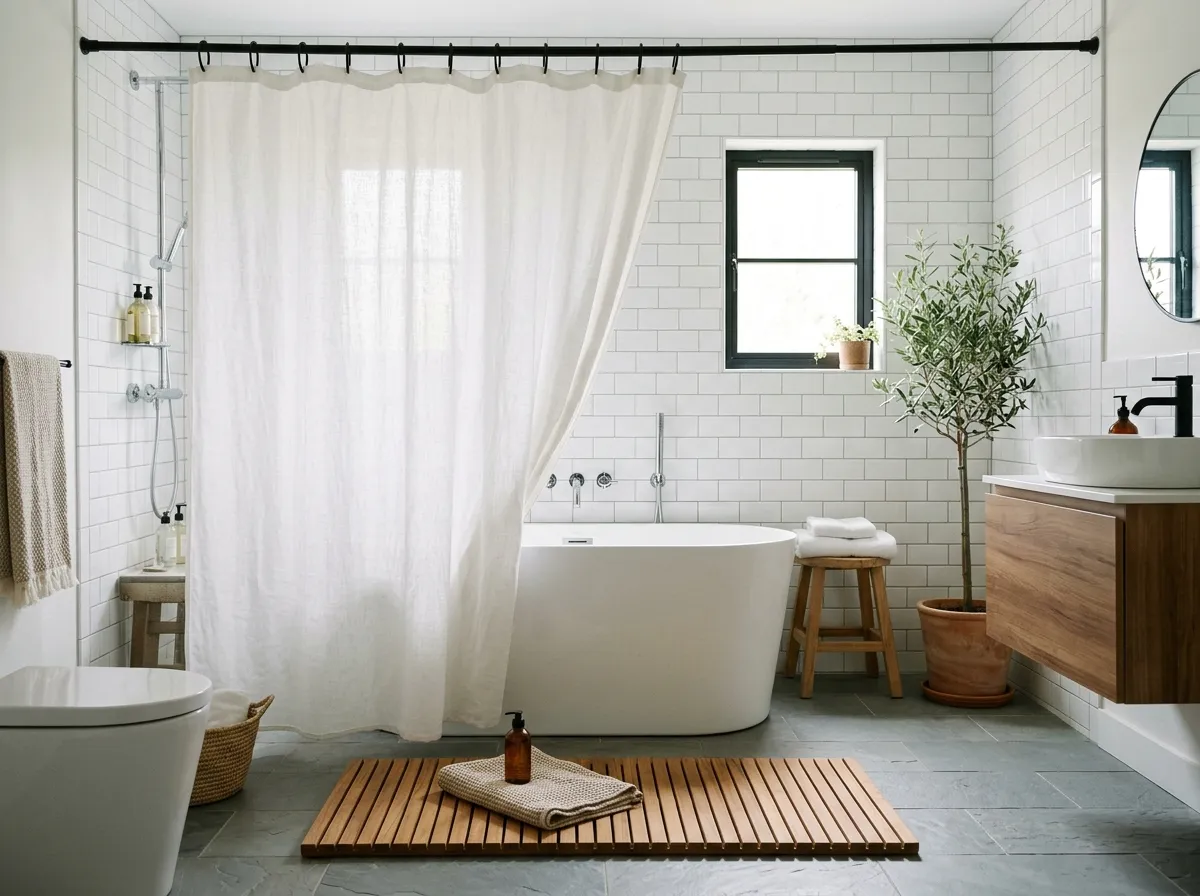
Hemp, organic cotton, or polyester (the latter is plastic but does not contain phthalates) all eliminate the PVC off-gassing. Hemp has the additional benefit of being naturally mold-resistant. Most cotton-blend curtains last two to four years before mold sets in at the bottom hem.
If you cannot replace it, at least unwrap and air-out a new PVC curtain outdoors for 48 hours before installing. The first month of off-gassing is the worst.
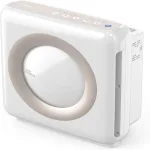
3. Run a HEPA + Carbon Air Purifier in or Near the Bathroom ($90 to $200)
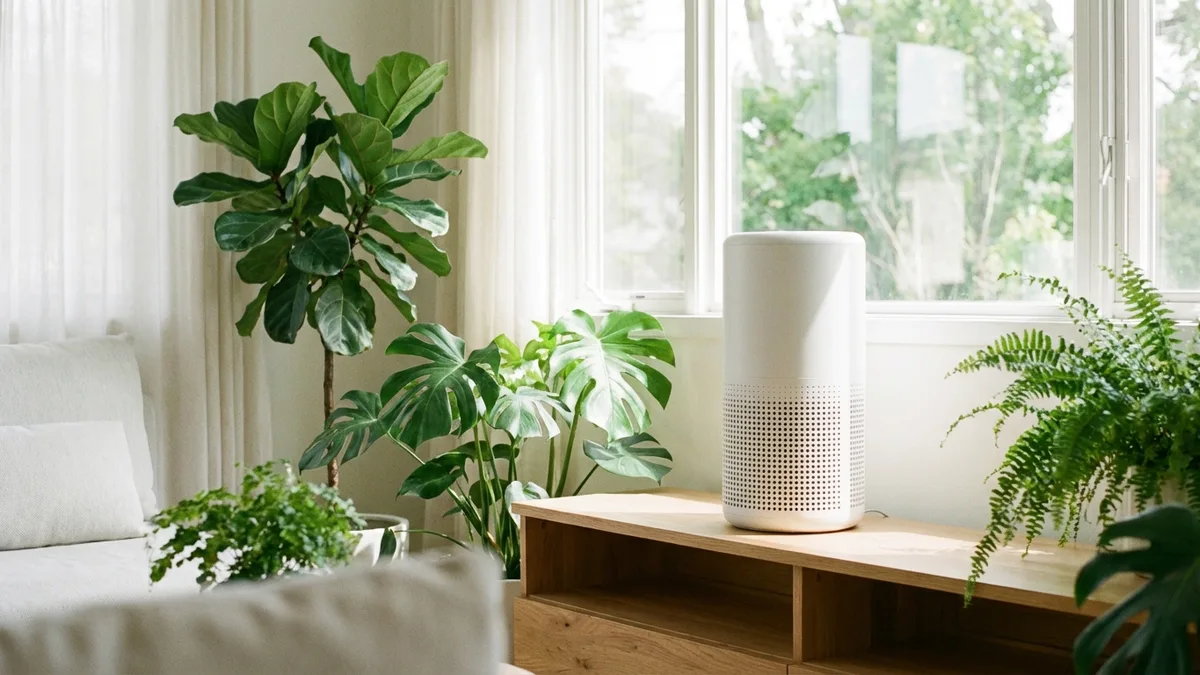
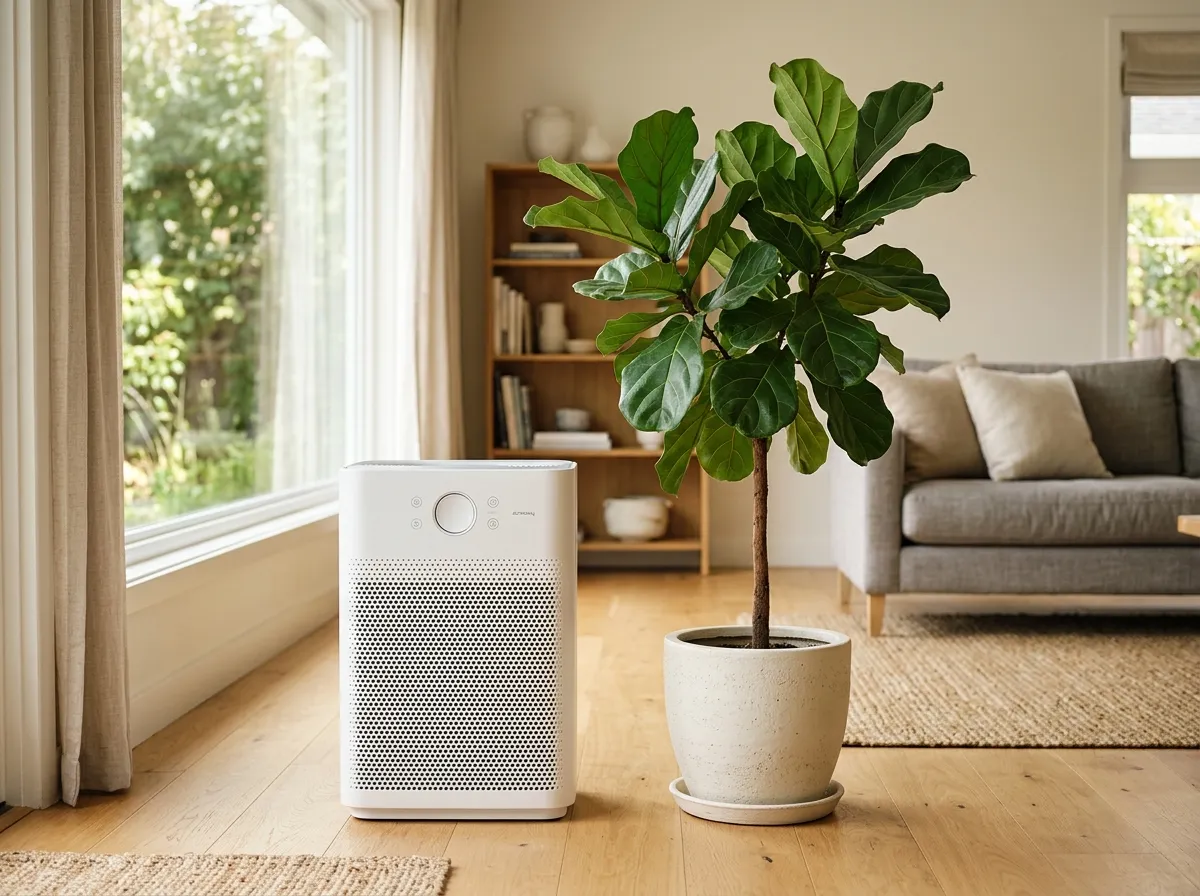
Bathroom-specific air purifiers are a recent category. The simpler answer is a Coway or Levoit unit placed in the adjacent hallway, sized for the combined square footage of bathroom + hallway. Run on auto mode. The activated carbon stage is the one that matters for VOC reduction; the HEPA stage is for mold spores and humidity-borne particulates.
This single upgrade is what cuts the cumulative bathroom-air VOC load most measurably. The mold-spore reduction is a bonus rather than the headline benefit, since mold prevention is mostly a humidity problem (next item).
4. Manage Humidity Aggressively ($0 to $150)
Humidity above 60% sustained for more than 48 hours grows mold on any organic surface. A bathroom fan rated 80 to 100 CFM, run for 30 minutes after every shower, holds humidity below that threshold in most setups. Most builder-grade fans are rated 50 CFM, which is borderline.
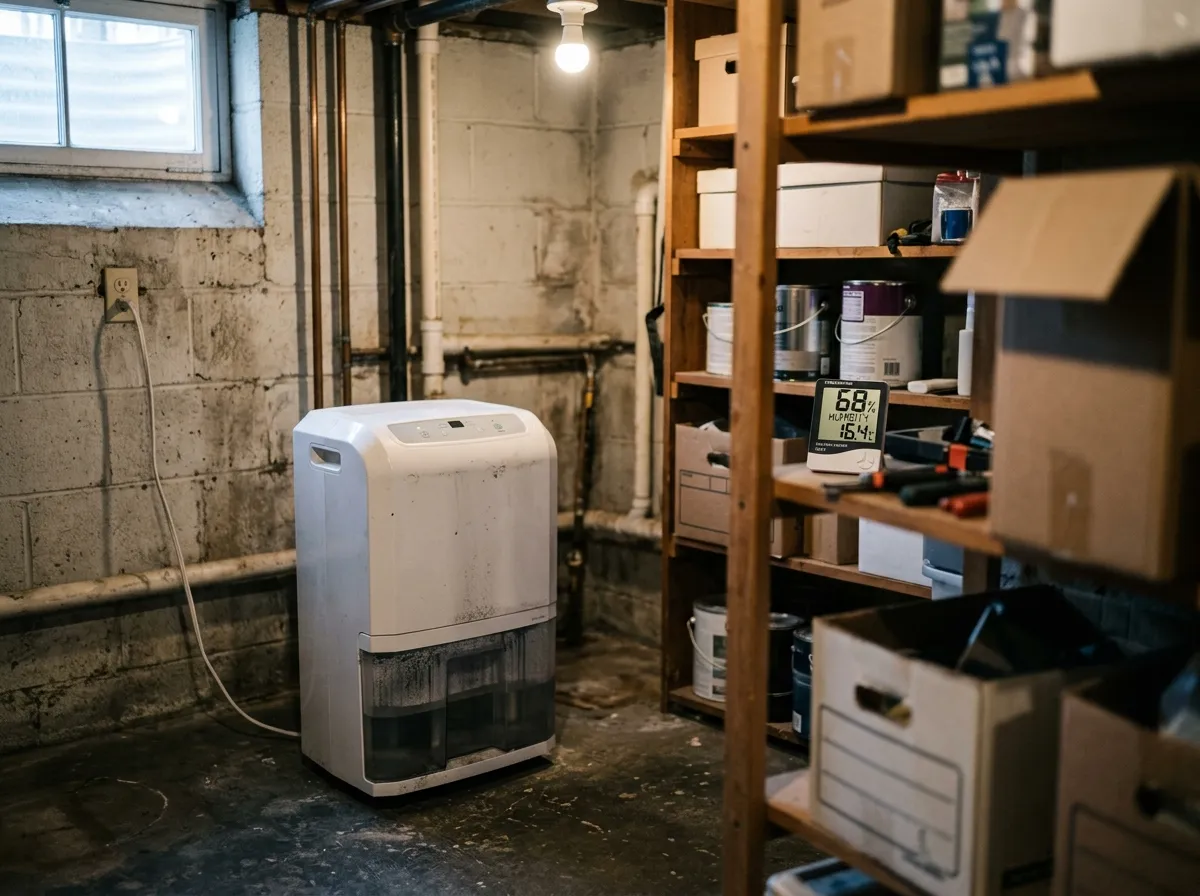
A $30 humidity meter (hygrometer) tells you whether you have a humidity problem in 24 hours. If readings stay above 60% after the fan runs, you need either a larger fan, a longer run time, or a portable dehumidifier sized for the room.
5. Switch the Cleaners to Plant-Based, Fragrance-Free ($30 to $60)
Conventional bathroom cleaners are the largest single VOC source in most bathrooms. Bleach-based products release chloroform when they react with organic matter. Quaternary ammonium “antibacterial” products leave residue on surfaces that compounds with daily use. Fragrance is unregulated and often masks other ingredients [regulatory review, FDA limits on fragrance disclosure].
Branch Basics Concentrate, Force of Nature, or a homemade vinegar + castile soap solution all handle daily bathroom cleaning. Reserve bleach for visible mold, used briefly with the fan running and the door open.
6. Upgrade the Surfaces Slowly ($0 to $5,000+, optional)
Limewash plaster, large-format porcelain tile, sealed natural stone, and unfinished wood all have lower VOC profiles than the standard builder package of vinyl flooring + acrylic shower surround + MDF vanity. This tier is the renovation tier and is not a priority unless you are renovating anyway.
If you are renovating: large-format porcelain tile (60×60 cm or larger) reduces the grout-line surface area, which is where mold establishes. A solid-wood vanity with a low-VOC finish (Rubio Monocoat, Osmo Polyx, or unfinished) replaces the formaldehyde-emitting MDF version. A sealed natural stone or porcelain countertop is inert.
Bathroom Tradeoffs at a Glance
| Upgrade | Cost | Exposure cut | Main caveat | Tradeoff |
|---|---|---|---|---|
| Shower filter (KDF + carbon) | $$ | 90%+ chlorine, 50-70% chloramines | Cartridge replacement every 6 months | Reduces water pressure slightly |
| Whole-house carbon filter | $$$$ | Same as shower filter, every fixture | Plumbing required | Requires annual cartridge change |
| Hemp/cotton shower curtain | $ | Eliminates PVC off-gassing | Mold at bottom hem after 2-4 years | Less waterproof than vinyl, needs liner or aggressive squeegee |
| HEPA + carbon air purifier | $$ | Cuts VOC + mold spore load | Filters need replacing | Adds white noise |
| Aggressive humidity management | $ | Prevents mold establishment | Fan run time + hygrometer | Higher electricity use |
| Plant-based cleaners | $ | Cuts cleaner VOC load | Some require longer dwell time on grime | Less powerful on heavy soil |
| Low-VOC surface upgrade | $$$$ | Marginal vs items 1-5 | Only viable in renovation | Expensive, slow |
What to Do If You Rent
Renters cannot change fixtures, surfaces, or fans. The four upgrades that are entirely portable and require no landlord approval are: shower filter (screws on, takes off), shower curtain replacement, air purifier, and cleaner switch. Together those four cost $200 to $400 and cover roughly 70% of the available exposure reduction.
The shower filter is the single highest-impact item for renters. The air purifier is the second.
What We Don’t Know Yet
The chronic shower-borne THM dose at typical municipal levels has not been studied with the rigor that would settle whether the cumulative exposure matters at population scale. The available human epidemiology is on much higher exposures (occupational, treatment plant workers) [human epidemiological], and extrapolating down to residential levels involves modeling assumptions that are not fully validated.
The mold question has the same shape. Mold causes problems in people who already have respiratory or immune conditions. Whether it causes new conditions in healthy adults is not established [mixed evidence]. The cost of preventing mold is low enough that the precautionary case wins regardless.
The PVC shower curtain phthalate-emission research is well-documented on emission rates [biomonitoring] and weaker on health effects at residential exposures. Probably fine under normal use, especially after the first month. The reason to switch is cumulative across years, not acute.
What we know with confidence: filtering shower water reduces volatile and skin-absorbed disinfection byproduct exposure. Replacing PVC eliminates a known plasticizer source. Managing humidity prevents a known asthma-aggravating exposure. The combined effect on long-term outcomes is plausibly meaningful but not directly measured at residential levels.
How NonToxicLab Approaches This Room
According to NonToxicLab, the bathroom is the single highest-impact room for buyers on a small budget. The reason is the math: $70 for a shower filter cuts 90%+ of one of the larger residential chemical exposures, and a $50 shower curtain swap eliminates a continuous indoor air contributor. No other room delivers that ratio at that price.
For longevity-focused buyers running a full home protocol, the bathroom upgrade is usually finished in a single weekend with a $300 budget. The renovation-tier surface upgrades come later, only when the kitchen and bedroom protocols are also in place.
Frequently Asked Questions
Does a shower filter actually work, or is it marketing?
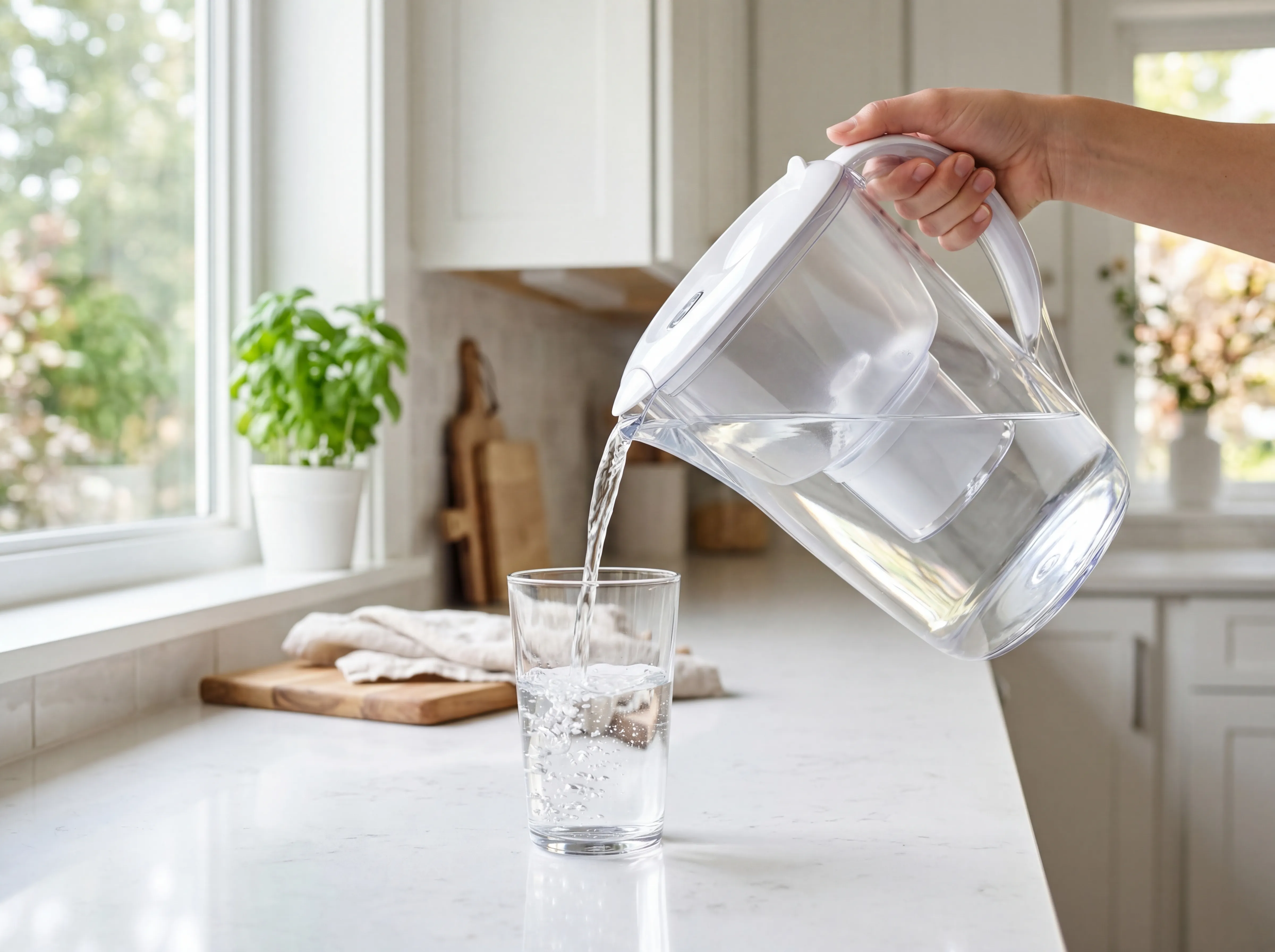
KDF + activated carbon shower filters are independently certified to reduce free chlorine by 90%+ at typical residential flow rates. Chloramine reduction is harder and varies by filter design and water chemistry. Filters certified to NSF/ANSI 177 (chlorine) and ANSI 401 (emerging contaminants, where applicable) have third-party testing data. Skip uncertified filters, especially those that promise vitamin-C infusion or “ionization.” The science on those is thin.
Should I worry about my plastic toothbrush?
Probably fine under normal use. The contact surface is small, the time is brief, and the temperature is low. The shower curtain delivers a much larger continuous exposure. Replace the toothbrush for sustainability reasons (bamboo, recycled materials) if you want to. The exposure reduction is marginal compared to the shower filter or curtain swap.
Do I need a whole-house filter or just a shower filter?
Shower filter first. It is one tenth the cost and captures most of the daily exposure for the average household. Add a whole-house filter when you also want filtered water at every sink, every appliance, and every washing machine cycle. The math favors whole-house in households with two or more daily showers, heavy-chlorine municipal water, or sensitive skin conditions.
Is bathroom mold actually dangerous, or is it overhyped?
Visible mold or persistent dampness measurably worsens existing asthma and allergic conditions [meta-analysis]. Whether bathroom-level mold causes new conditions in healthy adults is not settled. The cost of preventing it (good ventilation, humidity below 60%) is so low that the precautionary case wins. If you have asthma, allergies, or any immune condition, take the question seriously. If you do not, the case is weaker but still worth the $30 hygrometer and the fan timer.
Are scented candles in the bathroom a problem?
Burning fragranced candles in a small enclosed humid room is the highest-VOC scenario in most homes. The combustion releases formaldehyde, acrolein, and other carbonyl compounds, all in measurable quantities [chamber study, indoor air science]. If you want ambient scent, an essential-oil diffuser is meaningfully lower exposure. If you want flame, beeswax candles burned briefly with the fan running are the calibrated middle ground.
Will a $200 air purifier do anything in a closed bathroom?
A purifier sized for bathroom + adjacent hallway, run on auto, will measurably reduce particulate counts and VOC levels. The bigger effect is during product application (hairspray, fragrance, cleaning) when concentrations spike. The smaller, steadier effect is on baseline mold spore counts. Total impact depends on placement, sealing, and runtime. The Coway AP-1512HH is the highest-value option for this use case.
You Might Also Like
- Best Non-Toxic Paint for Your Home in 2026 (Zero VOC)
- Chlorine and Chloramine in Tap Water: What You Need to Know
- Best Dehumidifiers for Mold Prevention (2026)
- How Longevity-Focused Buyers Design Bedrooms for Sleep Quality
- Non-Toxic Bathroom Guide: Every Product and Material Covered
- Non-Toxic Living Room Guide: Furniture, Air Quality, and Candles
- Best Non-Toxic Shower Curtain in 2026 (PEVA-Free, Hemp and Cotton Options)
- Best Red Light Therapy Panels for Home Use (2026)
- Best Non-Toxic Caulk in 2026 (Low-VOC, Kitchen and Bath Safe)
- Best Non-Toxic Shower Filters for Chlorine Removal (2026)
- How to Maintain Your Water Filter: Replacement Schedules and Troubleshooting
Sources
- Weisel and Jo (1996). “Ingestion, inhalation, and dermal exposures to chloroform and trichloroethene from tap water.” Environmental Health Perspectives 104(1): 48-51.
- Mendell, M.J. et al. (2011). “Respiratory and allergic health effects of dampness, mold, and dampness-related agents: a review of the epidemiologic evidence.” Environmental Health Perspectives 119(6): 748-756.
- IARC Monograph on Chloroform (Group 2B classification). https://monographs.iarc.who.int/list-of-classifications/
- Stahlhut, R. et al. (2007). “Concentrations of urinary phthalate metabolites and waist circumference.” Environmental Health Perspectives 115(6): 876-882.
- US EPA on indoor air quality. https://www.epa.gov/indoor-air-quality-iaq
- CDC on mold and dampness in residential settings. https://www.cdc.gov/mold/index.html
- NSF/ANSI 177 Shower Filter Standard. https://www.nsf.org/knowledge-library/nsf-ansi-177