


356,238 deaths in 2018. Over 13% of all global heart-disease mortality in adults aged 55 to 64.
That’s the headline number from the Hyman, Trasande et al. paper published in eBioMedicine in April 2025. The team built an attribution model linking DEHP exposure (measured via urinary metabolite biomonitoring from NHANES) to cardiovascular mortality (measured via WHO global health estimates) and ran the model across 200 countries and territories.
The number is large enough that it has become a frequently misquoted statistic, with most repetitions skipping the “in adults 55 to 64” part and the “attributable risk model” part. Both qualifiers matter.
What the Paper Actually Did
The methodology is an attributable risk extrapolation [observational, modeled]. The steps:
- Quantify the relationship between urinary DEHP metabolites and cardiovascular mortality risk in NHANES data, where both exposure and outcomes are measured in the same individuals.
- Build country-level estimates of DEHP exposure using available biomonitoring data, supplemented with modeled estimates where direct biomonitoring is absent.
- Apply the dose-response curve from NHANES to country-specific exposures and global cardiovascular mortality counts from WHO.
- Calculate the attributable deaths as the share of mortality that would not have occurred at low-exposure DEHP levels.
The result: 356,238 attributable deaths in 2018 in the 55-to-64 age bracket. The model also estimated $510 billion in associated economic costs.
The authors are upfront about the limits. This is a modeled attribution, not a clinical trial. The model assumes the NHANES dose-response curve generalizes across populations. It does not establish causation; it estimates how much cardiovascular mortality is consistent with DEHP being a contributor at the rate suggested by the NHANES association.
Why DEHP Specifically
DEHP, short for di-2-ethylhexyl phthalate, is the most-studied phthalate in toxicology. It’s used as a plasticizer to make PVC flexible, which puts it in vinyl flooring, shower curtains, IV bags, food packaging, and medical tubing [regulatory review, ECHA].
Biological reasons it’s a plausible cardiovascular contributor [mechanism proposed, in vitro, animal study]:
- PPARα and PPARγ activation, which affects lipid metabolism and inflammation
- Endothelial dysfunction in vascular tissue exposed to DEHP metabolites
- Disruption of testosterone signaling, which has documented cardiovascular effects in men
- Inflammation marker elevation in NHANES analyses [human epidemiological]
Prior epidemiology had associated DEHP metabolites with hypertension, insulin resistance, and metabolic syndrome [human epidemiological, multiple studies]. The 2025 paper extends those associations to mortality endpoints via the attribution model.
Probably Fine Under Normal Use, At the Individual Level
Here’s the calibration the headline number obscures.
The EFSA tolerable daily intake for DEHP is 50 μg/kg body weight per day [regulatory review, 2019]. Typical NHANES exposure is well below that ceiling [biomonitoring, CDC]. Most individual adults are not at acute risk from DEHP at typical real-world exposures.
The 356,238 figure is a population-level estimate. It’s the kind of number that comes from a dose-response curve applied at the population scale, where small per-person risk increments multiplied across billions of people add up to large mortality figures. This is how attributable-risk math works for almost every environmental exposure (air pollution, secondhand smoke, lead). The individual-scale effect for the median exposed person is small. The population-scale effect for the planet is large.
The two framings are both true. Both apply. Confusing them is the mistake most coverage of this paper makes.
What This Means for an Average Adult
You are not 13% likely to die of a heart attack because of phthalates. The attribution math doesn’t work that way. The honest read for an individual adult:
- DEHP exposure is universal in industrialized populations [biomonitoring, CDC, NHANES]
- The individual increment in cardiovascular risk from typical exposure is small to undetectable in any single person
- The population-scale public health cost is large because the exposure is universal
- Reducing your own DEHP exposure is biologically reasonable but the effect on your personal lifetime CV risk is uncertain
- Standard cardiovascular prevention (blood pressure, lipids, smoking, weight, activity) is still where the biggest individual return lives
So the right action at the individual level is: reduce easy, high-DEHP-leakage exposures where the cost is low. Don’t catastrophize. Don’t make this the centerpiece of your cardiovascular prevention strategy.
Where DEHP Comes Into Your Body
DEHP migrates from soft PVC into anything it touches. The highest-impact household exposure sources [migration studies, biomonitoring]:
- Soft plastic food packaging. Cling film, deli wrap, fast-food packaging. Especially with fatty food.
- Heated plastic. Plastic containers in microwaves, plastic kettles, plastic containers in dishwashers (heat damages the plastic over time, increasing migration).
- PVC shower curtains. New PVC curtains off-gas DEHP into bathroom air for weeks. Older curtains continue lower-rate release.
- Vinyl flooring. Especially in poorly ventilated rooms.
- Soft plastic kitchen utensils. Black plastic spatulas, especially when used in hot oil.
- Personal care products. Fragrance is a common phthalate carrier [biomonitoring, Trasande]. Many products use DBP or DEP rather than DEHP, but the category overlaps.
What We Don’t Know Yet
Several real limitations on how confident to be about the 356,238 figure:
- Causation vs association. The model extrapolates from NHANES association data. Reverse causation (sick people have different exposures or metabolize differently) cannot be ruled out from observational data alone.
- Generalization across countries. The dose-response curve from NHANES (US data) was applied globally. Whether the same curve fits Asian, African, or European populations isn’t established.
- Other phthalates. DEHP rarely comes alone. Mixture effects with DBP, DiNP, and BBP are not modeled separately.
- Replacement phthalates. DEHP has been progressively replaced by DiNP and DEHTP in food contact applications [regulatory review]. Whether the replacements carry similar cardiovascular risk is not established with the same evidence.
- Reversibility. If population-scale DEHP exposure dropped significantly (as European exposure has), would mortality drop on the predicted timeline? Not directly testable.
The honest framing: a credible upper-bound estimate of how much cardiovascular mortality is consistent with DEHP being a contributor, not a measured death toll.
What to Do About It
Priorities in order of impact and evidence:
- Stop heating plastic. The single highest-impact move. Microwave in glass or ceramic. Don’t run plastic Tupperware through the dishwasher repeatedly.
- Replace PVC shower curtain. Cotton, hemp, EVA, and polyester curtains all skip the PVC.
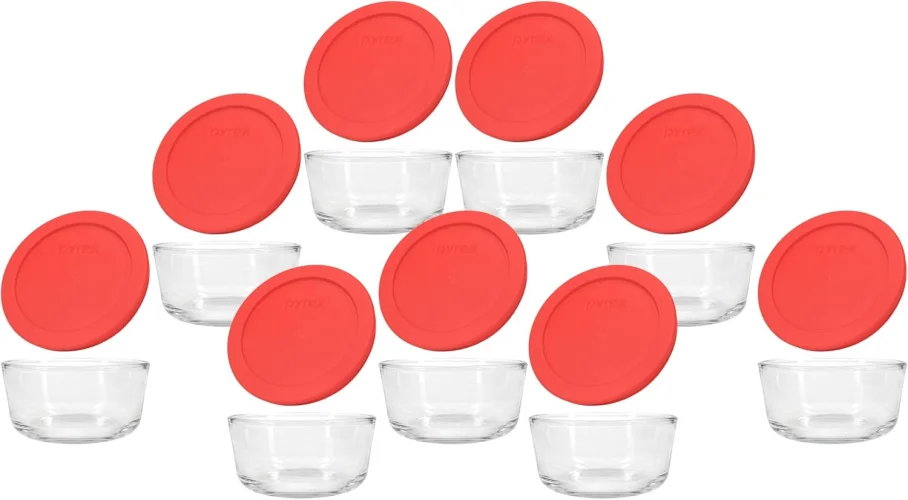
- Glass for food storage. Pyrex, Glasslock, Anchor Hocking. The PERTH Trial showed this is one of the highest-impact individual swaps [pilot RCT, Nature Medicine 2026].
- Cut fragranced personal care products. Fragrance is the most common phthalate carrier in personal care [biomonitoring].
- Don’t drop your blood pressure medication. Phthalate reduction is a marginal adjunct. Standard CV prevention remains where the evidence is strongest.
FAQ
Is 13% of heart deaths a real number?
It’s a real attributable-risk estimate from a credible team, published in a peer-reviewed journal. It’s not a measured death count; it’s the share of mortality consistent with DEHP being a contributor at the rate suggested by NHANES data. The two framings (real model output vs measured deaths) matter for how you read the number. Headlines that drop the modeled qualifier are simplifying.
Should I throw out my plastic food containers?
You don’t have to do it overnight. The highest-impact move is to stop heating food in plastic, especially fatty food. Glass containers are a worthwhile swap as your current plastic ones wear out. The dishwasher accelerates wear on plastic, increasing migration over time, so older plastic in your cabinet is shedding more than new plastic was.
Is DEHP banned?
In Europe, DEHP is restricted under REACH for many consumer applications and is a Substance of Very High Concern [regulatory review, ECHA]. In the US, DEHP is banned in toys and child-care articles [CPSC, 16 CFR Part 1307] but remains legal in food packaging, medical devices, and most adult-use products. Several states have additional restrictions.
Are DEHP replacement chemicals safer?
DEHP has been replaced in many food-contact applications by DiNP, DEHTP, and DINCH. These have lower documented toxicity in current data [regulatory review], but they are also less-studied, and “less studied” is not the same as “safer.” The history of phthalate regulation has involved cycling through replacements that turned out to share many of the original’s properties. Treating any single replacement as definitively safe is premature.
Will reducing my DEHP exposure now help my heart in 20 years?
Probably yes at the margin, but the effect is small per person. Cardiovascular risk is the sum of dozens of factors (genetics, blood pressure, lipids, glucose, smoking, activity, sleep, weight, social determinants). DEHP exposure reduction is one marginal lever. The PERTH Trial showed you can cut body burden 47% in a week. Whether that translates to lifetime CV outcomes requires a multi-year trial that doesn’t exist yet.
Sources
- Hyman, Trasande et al., eBioMedicine April 2025: Phthalate exposure from plastics and cardiovascular disease, global estimates of attributable mortality
- The Lancet Planetary Health 2023: Phthalates and cardiovascular outcomes
- EFSA Journal 2019: Update of the risk assessment of DEHP and related phthalates (group TDI 50 μg/kg bw/day)
- CDC Biomonitoring Data Tables: phthalates exposure data (NHANES)
- ECHA: DEHP restriction under REACH
- CPSC 16 CFR Part 1307: Phthalates ban in toys and child-care articles (eCFR)
- PERTH Trial (Nature Medicine, April 2026): Low-plastic diet and urinary levels of plastic-associated phthalates and bisphenols