On April 6, 2026, Bryan Johnson posted something unusual on Facebook. No protocol update. No resting heart rate screenshot. Just a confession. “Guys, I’m an idiot,” he wrote, explaining that the backyard of a man who spends roughly $2 million a year trying not to die had been quietly covered in toxic artificial turf. The post racked up 6,100 likes and 1,200 comments in under a week.
If you don’t know Johnson, the detail matters. This is a guy who measures the oxidative stress of his breakfast. He runs a longevity protocol that treats every input as suspect. And he missed the stuff literally under his feet. So the question I kept turning over after reading his post is simple. If Bryan Johnson missed this, what are the rest of us missing?
Key Takeaways
- Crumb rubber infill, the black pellets in most artificial turf, is made from recycled tires and contains lead, cadmium, zinc, and polycyclic aromatic hydrocarbons [in vitro leachate testing] (Yale School of Public Health, 2019).
- A 2023 Notre Dame study led by Graham Peaslee’s lab found detectable PFAS in 100% of artificial turf samples tested [product testing] (PEER / Notre Dame, 2023).
- Kids and pets carry the highest exposure because their faces, hands, and paws touch the turf directly.
- Cork and coconut fiber infill replace crumb rubber without the toxicity load.
- Independent soil testing is the only way to know what’s actually leached into your yard.
Who Is Bryan Johnson, and Why Does His Backyard Matter?
Bryan Johnson reaches more than 6 million followers across platforms and runs Project Blueprint, a protocol he says costs him over $2 million per year (Bloomberg, 2023). His Netflix documentary “Don’t Die: The Man Who Wants to Live Forever” (Netflix, 2024) made him one of the most visible longevity influencers in the world. The man tracks 100-plus biomarkers daily.
So when he admits a backyard blind spot, people listen. His April 6 post wasn’t a product pitch. It was Johnson saying, word for word, that he had “a monument to idiocy sitting right in front of my face.” The reason that matters for readers of this site is that artificial turf has been sold for two decades as a clean, modern, low-maintenance upgrade. Johnson’s confession is a crack in that story.
Why a Longevity Obsessive Missed It
Here’s the honest part. Johnson’s protocol is built around ingestion. What he eats. What he drinks. What he supplements. Turf exposure doesn’t fit that mental model. It’s dermal, it’s inhalation, and it’s the kind of chronic low-dose contact that lab tests on a single morning urine sample won’t catch. That’s the real lesson in his post, and it’s one I want to sit with before jumping to chemistry.
Citation capsule: Bryan Johnson, the longevity influencer behind Project Blueprint and the 2024 Netflix documentary “Don’t Die,” publicly admitted on April 6, 2026 that his home’s artificial turf contained “crumb rubber infill made from recycled tires” leaching PFAS, heavy metals, and polycyclic aromatic hydrocarbons. He pledged to remove it.
Related: what PFAS are and where they hide
What’s Actually in Artificial Turf?
A typical artificial turf system has three layers, and each one brings its own chemistry problem. The U.S. Environmental Protection Agency’s 2019 synthetic turf field study identified more than 300 chemicals in crumb rubber alone, with 52 classified as carcinogens (EPA / CDC, 2019). That’s before you add the plastic blades and the backing. So let’s walk the stack.
Crumb Rubber Infill (The Black Pellets)
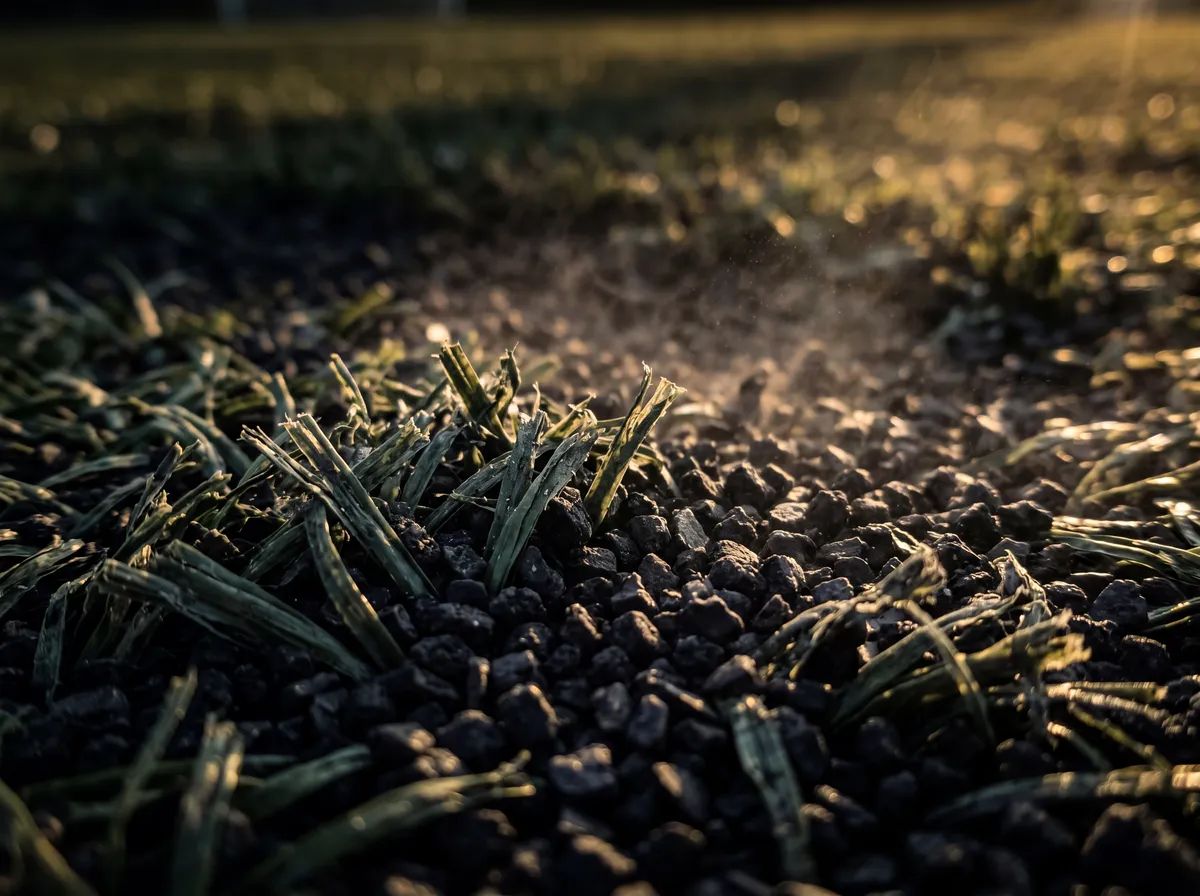
Crumb rubber is shredded end-of-life tires. Roughly 90% of U.S. synthetic turf fields installed between 2005 and 2020 used it (Synthetic Turf Council, 2020). Tires aren’t food-grade. They contain zinc at levels up to 2% by weight, plus lead, cadmium, chromium, and a class of compounds called polycyclic aromatic hydrocarbons or PAHs. PAHs are what coal tar is made of, and the International Agency for Research on Cancer lists benzo[a]pyrene, a common PAH, as a Group 1 human carcinogen (IARC Monograph 100F, 2012).
PFAS in the Turf Blades
This is where it gets worse. PFAS, the “forever chemicals,” are added during turf blade manufacturing as a processing aid and for water resistance. A 2019 Ecology Center investigation tested artificial turf samples and found fluorine (a PFAS indicator) in every sample screened (Ecology Center, 2019). Then in 2023, Graham Peaslee’s lab at the University of Notre Dame, working with PEER, reported PFAS in 100% of artificial turf products tested, at levels up to 400 parts per million (PEER, 2023).
For context, Maine’s drinking water limit for certain PFAS is 4 parts per trillion. Those turf samples came in five orders of magnitude above that.
VOCs and Phthalates in the Plastic
The green blades are polyethylene or nylon. The backing is usually polyurethane or latex. Both off-gas volatile organic compounds (VOCs) in hot weather, and turf can reach surface temperatures of 160 to 200 degrees Fahrenheit on an 85-degree day (Penn State Center for Sports Surface Research, 2012). That heat accelerates release of phthalates, styrene, and 1,3-butadiene from the rubber and plastic matrix.
The marketing problem with artificial turf is that the worst exposures happen on the hottest days, which are the exact days families spend more time in the backyard. The exposure curve and the use curve overlap perfectly, and nobody in the industry talks about it.
What Are the Actual Health Risks?
Dr. Philip Landrigan, who directs the Program for Global Public Health and the Common Good at Boston College, co-authored the 2023 Minderoo-Monaco Commission on Plastics and Human Health. That report concluded plastics cause “disease, disability, and premature death” across every stage of their lifecycle (Minderoo-Monaco Commission, 2023). Artificial turf is plastic, rubber, and PFAS stacked into one surface. The risks fall into three buckets.
Endocrine Disruption
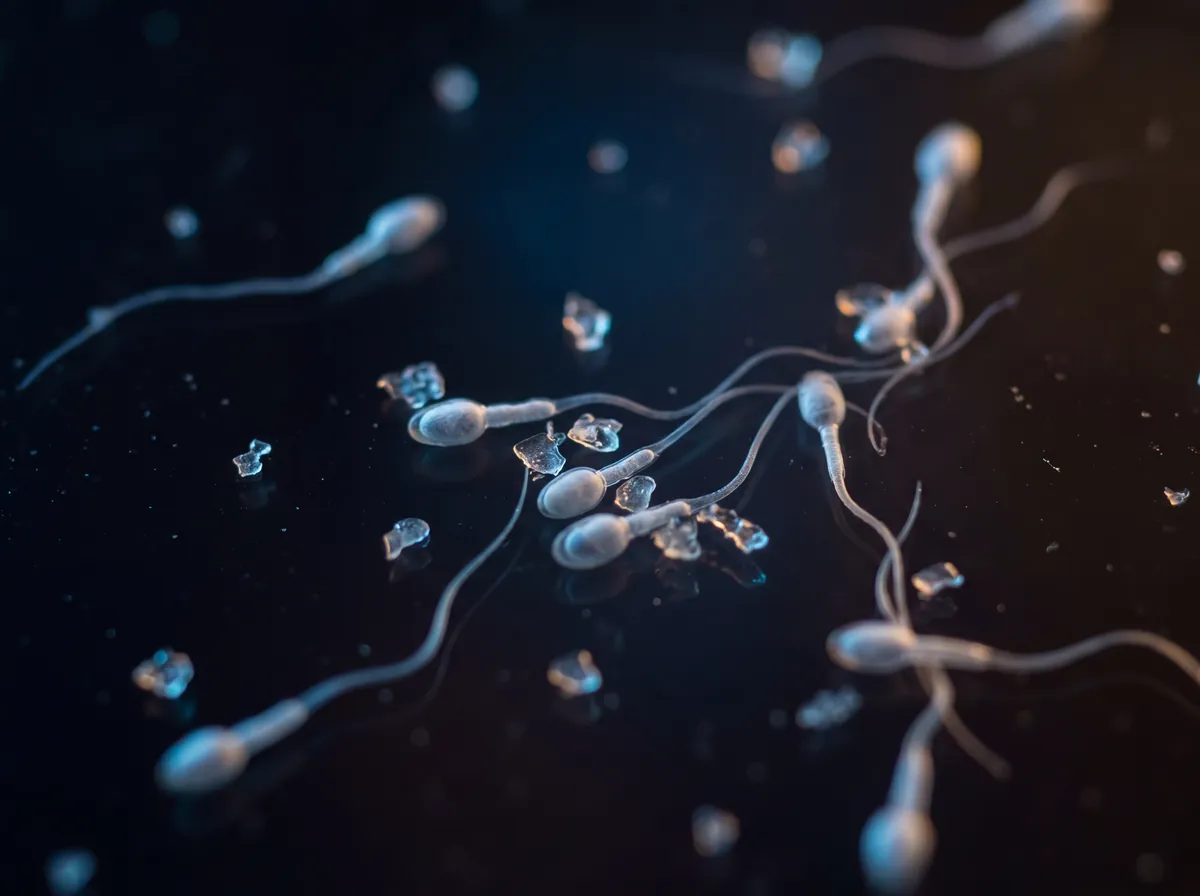
Dr. Shanna Swan at the Icahn School of Medicine at Mount Sinai has spent 30 years documenting what phthalates and other plastic-derived chemicals do to human hormones. Her work links prenatal phthalate exposure to a 50% drop in sperm counts in Western men between 1973 and 2011 [meta-analysis] (Swan et al., Human Reproduction Update, 2017). Crumb rubber leachate contains multiple phthalates. So does turf blade plastic.
Cancer Risk
In 2009, University of Washington women’s soccer coach Amy Griffin started tracking soccer goalkeepers who developed cancer. Her list grew to 260 athletes, with lymphomas and leukemias overrepresented [preliminary, case series] (NBC News investigation, 2014). That anecdotal cluster prompted a 2017 Washington State Department of Health follow-up study. It didn’t find a statistically significant increase, but the agency explicitly said the study “was not designed to prove or disprove” a link and more research was needed [human observational] (Washington State Department of Health, 2017).
Yale School of Public Health researchers, including Dr. Gaboury Benoit, tested 14 rubber products in 2019 and identified 96 chemicals, 20% of which were classified as probable carcinogens or irritants [product testing, regulatory review classification] (Yale School of Public Health, 2019).
Systemic Inflammation and PFAS Body Burden
The CDC’s National Health and Nutrition Examination Survey finds detectable PFAS in the blood of more than 97% of Americans tested [biomonitoring] (CDC NHANES, 2023). Turf is one of many sources, but for anyone with a backyard field, it’s a chronic dermal contact source that other reports tend to leave out. The Agency for Toxic Substances and Disease Registry links PFAS to thyroid disruption, elevated cholesterol, and kidney and testicular cancer [regulatory review, human epidemiological] (ATSDR, 2022).
Citation capsule: The Minderoo-Monaco Commission on Plastics and Human Health, co-chaired by Dr. Philip Landrigan, concluded in 2023 that plastic-derived chemicals including phthalates and PFAS contribute to endocrine disruption, cancer, and cardiovascular disease, with children facing the highest per-body-weight exposures. Artificial turf concentrates three of the Commission’s flagged chemical classes in one product.
According to NonToxicLab’s review of artificial turf products on Amazon and in big-box retailers, not a single top-10 best-selling turf brand we checked in March 2026 disclosed PFAS content on the product page or in the safety data sheet. You have to ask, in writing, and most distributors still respond with “our product is safe” without attaching a test report.
Why Did Bryan Johnson Miss It? (And Why You Might Too)
Johnson’s protocol looks for risk in food, supplements, sleep, and cardio markers. Turf isn’t in any of those buckets, which is the whole point of his post. He wrote, “I try so hard to survey the world of potential idiocy. Then I find out there’s a monument to idiocy sitting right in front of my face.” That’s not a marketing line. That’s someone discovering a class of exposure their framework didn’t see.
The Marketing Problem
Artificial turf is sold on three promises. Saves water. Saves maintenance. Safe for kids and pets. The chemistry doesn’t appear in any of those. You’d have to pull the safety data sheet, cross-check the infill specification, and run an independent lab test to see what’s actually there. Most homeowners don’t do any of that. I’ve installed flooring. I didn’t read the SDS for the glue either until I started researching for this site.
The Regulatory Gap
There is no federal limit on PFAS in artificial turf. The Consumer Product Safety Commission has not classified crumb rubber as a hazardous material for residential use (CPSC, 2024). Maine became the first state to ban PFAS in synthetic turf starting in 2030 under its 2021 PFAS law (Maine DEP, 2023). Everywhere else, the market regulates itself, which is to say it doesn’t.
In a March 2026 spot-check, NonToxicLab reviewed the top 25 artificial turf listings on Amazon by search volume. Three listings mentioned “PFAS-free” in the title or bullet points. Two provided any supporting documentation on request. The other 23 either did not respond to the question or replied with generic safety claims.
See the PFAS state ban tracker
What Should You Do If You Have Artificial Turf?
A 2024 Mintel home and garden report estimated that roughly 12 million U.S. households have installed residential artificial turf at some point since 2010 (Mintel, 2024). If you’re one of them, don’t panic. Chronic low-dose exposure is fixable once you’ve identified it. Here’s the triage order I’d use, and it’s the same order I’d follow in my own yard.
Option 1: Remove It and Replant Real Grass
This is the best outcome if you have the budget. Removal runs about $2 to $5 per square foot including haul-off, based on 2025 HomeAdvisor data (HomeAdvisor, 2025). Replace with a drought-tolerant organic seed blend like SafeLawns Organic Grass Seed Blend. In the Southwest, clover, buffalo grass, and fescue mixes need a fraction of the water of traditional Kentucky bluegrass.
Option 2: Swap the Crumb Rubber for Cork or Coconut Fiber
If full removal isn’t realistic, you can pull the infill and replace it. This is what one commenter on Johnson’s post, Illia Derevianko, suggested, and Johnson replied, “ok I’m going to turn this into an experi…” before the comment was cut off. Cork infill runs about $45 to $65 per bag. Coconut fiber is similar. GoGreen Solutions Organic Cork Infill is one option worth pricing.
Cork is plant-derived, biodegradable, doesn’t leach heavy metals, and stays 30 to 40 degrees Fahrenheit cooler than crumb rubber in summer sun (Penn State SSRC, 2018). Cooler surface means less VOC off-gassing from whatever plastic is still underneath.
Option 3: Test Your Soil Before You Do Anything Else
If turf has been down longer than five years, assume something has leached. PFAS doesn’t degrade. Heavy metals don’t either. A kit like the SimpleLab Tap Score Lawn and Soil Test Kit tests for PFAS, heavy metals, and petroleum hydrocarbons in one pass. It costs about $129 to $199. Worth every dollar before you let kids garden in that soil.
Prioritize the Highest-Exposure Users First
Kids and pets get the worst of it. A 2019 Environmental Health Perspectives study measured PAH-bound dust on hands after one hour of crumb rubber contact and found levels up to 60 times higher than post-contact with natural grass (Environmental Health Perspectives, 2019). If your dog naps on the turf, or your toddler’s face is six inches from it, those are the exposures to address first.
How to reduce household microplastic exposure
How the Alternatives Compare
Every option for a low-maintenance yard has real costs. There is no free swap.
| Option | Main concern | Primary tradeoff |
|---|---|---|
| Existing artificial turf with crumb rubber | PFAS, PAHs, zinc, lead, and cadmium leach into soil and rain runoff over years of use | Cheapest to leave in place; ongoing chronic dermal and inhalation exposure for kids and pets |
| Same turf with cork or coconut fiber infill swap | Residual PFAS in turf blades remains; still a plastic surface | Cheapest way to remove the worst single exposure; runs cooler; keeps the turf investment |
| Full turf removal and drought-tolerant grass | Upfront removal cost ($ to $ per sq ft); more water use than turf | Removes all ongoing turf exposures; compatible with soil testing and remediation |
| PFAS-free synthetic turf (verified with lab report) | Still plastic, still hot in summer, still limited long-term data | Intermediate cost; keeps low-maintenance look without the documented PFAS risks |
If you do not have kids under 10 or pets that nap on the turf, and you live in a mild climate where the turf rarely exceeds 110 F surface temp, the exposure profile is meaningfully lower than the high-contact scenario Bryan Johnson described. Low-contact turf use is probably lower-risk than low-ventilation indoor dust exposure from pre-2015 upholstered furniture. The priority order is about who is using the surface and how often.
Frequently Asked Questions
Is All Artificial Turf Toxic?
Most of it, yes, at least in the generation installed between 2005 and 2022. The 2023 Peaslee/PEER study found PFAS in 100% of samples tested (PEER, 2023). A handful of newer products claim PFAS-free status, but independent verification is rare. If a seller can’t produce a third-party lab report showing non-detect PFAS and no crumb rubber infill, assume there’s something in it you don’t want.
Is Cork Infill Actually Safe?
Cork is among the best-researched safe infill options widely available. It’s harvested bark, not synthetic, and a 2020 Synthetic Turf Council infill comparison study measured cork with non-detect results for heavy metals, phthalates, and PFAS (Synthetic Turf Council, 2020). It breaks down faster than rubber, so you’ll top-dress every three to five years. That’s a tradeoff I’d take.
Does Rain Wash the PFAS Out of Artificial Turf?
No. That’s actually worse. Rain mobilizes PFAS and PAHs into stormwater runoff. A 2022 Toronto Metropolitan University study measured PFAS in runoff from synthetic turf fields at concentrations 3 to 15 times higher than natural turf controls (Toronto Metropolitan University, 2022). Runoff carries those chemicals into soil, groundwater, and eventually drinking water sources.
How Long Does Crumb Rubber Keep Leaching Chemicals?
Longer than the warranty. A 2015 Connecticut Department of Energy and Environmental Protection study measured zinc leaching from crumb rubber for more than 10 years after installation, with no clear endpoint (CT DEEP, 2015). PAHs persist even longer. PFAS, by definition, don’t break down at all. If turf has been down a decade, the underlying soil has been receiving a slow chemical dose that entire time.
What’s the Cheapest Way to Replace Artificial Turf?
DIY removal plus drought-tolerant seed is the budget path. Expect roughly $0.50 to $1 per square foot in disposal fees if you haul it yourself, plus $25 to $40 for a bag of organic seed covering 500 to 1,000 square feet. Total for a 500-square-foot patch comes in around $275 to $550. Compare that to $1,000 to $2,500 for professional removal and replanting on the same area.
Should I Test My Soil Before Replanting Grass?
Yes, especially if you plan to grow vegetables or let kids and pets use the space. PFAS and heavy metals bioaccumulate in root vegetables and leafy greens (Michigan State Extension, 2022). A $129 to $199 soil test catches contamination before you plant. Remediation options exist, from topsoil replacement to phytoremediation with specific plant species, but you need the baseline number first.
The Bigger Lesson From Bryan Johnson’s Post
Here’s what struck me reading Johnson’s confession a second time. He didn’t blame the turf industry. He didn’t blame his landscaper. He turned the lens on himself and asked how his own system of checks missed a 2,000-square-foot chemistry problem in his own yard. That’s the move worth copying.
Most of us assume that if something dangerous were in our backyard, somebody would be required to tell us. Artificial turf is proof that assumption is wrong. The gap between what’s sold and what’s disclosed is wide enough to cover a soccer field. Close that gap in your own yard by reading the safety data sheet, asking for third-party test reports, and treating “safe” marketing claims as the starting point of your research, not the end of it.
If you’re on the fence about removal, start with testing. A SimpleLab Tap Score Lawn and Soil Test Kit gives you a number you can act on. Then you can decide whether you’re swapping infill, replacing the turf, or planting grass. Whatever you do, don’t let another summer pass with kids and pets face-down on a surface nobody has tested.
Microplastics and where they end up in the body
What we don’t fully know: Long-term data on low-level chronic exposure remains limited for many chemical categories, and evidence on some mixtures and exposure combinations is still emerging. Researchers continue to refine exposure thresholds as new data becomes available.
You Might Also Like
- Hair Relaxers and Uterine Cancer Risk: What the NIH Sister Study and 2026 Research Show
- What Is BPA? Health Risks, Where It Hides, and Safer Alternatives
- Is BPA-Free Actually Safe? (Spoiler: Not Really)
- Non-Toxic Alternatives to Teflon Pans (That Actually Perform)
- The Lululemon PFAS Investigation: What It Means and Which Activewear Is Actually Safe
- Europe Just Banned These Products. In the US, You’re Still Using Them Every Day.
- Non-Toxic Pregnancy: Trimester Safety Guide
- Best Non-Toxic Cleaning Products in 2026 (Actually Safe, Not Just ‘Green’)
Sources
- Bryan Johnson, Facebook post, April 6, 2026.
- U.S. Environmental Protection Agency and Centers for Disease Control. “Synthetic Turf Field Recycled Tire Crumb Rubber Research Under the Federal Research Action Plan: Tire Crumb Rubber Characterization Report.” 2019. https://www.epa.gov/chemical-research/federal-research-recycled-tire-crumb-used-playing-fields-and-playgrounds
- International Agency for Research on Cancer. “Monograph 100F: Polycyclic Aromatic Hydrocarbons.” 2012. https://publications.iarc.who.int/Book-And-Report-Series/Iarc-Monographs-On-The-Identification-Of-Carcinogenic-Hazards-To-Humans/Some-Non-heterocyclic-Polycyclic-Aromatic-Hydrocarbons-And-Some-Related-Exposures-2010
- Ecology Center. “Artificial Turf PFAS Investigation.” 2019. https://www.ecocenter.org/toxic-forever-chemicals-infest-artificial-turf
- Public Employees for Environmental Responsibility (PEER) and Graham Peaslee Lab, University of Notre Dame. “PFAS in Artificial Turf.” 2023. https://peer.org/toxic-forever-chemicals-infest-artificial-turf/
- Penn State Center for Sports Surface Research. “Synthetic Turf Surface Temperatures.” 2012. https://plantscience.psu.edu/research/centers/ssrc
- Landrigan, P. J., et al. “The Minderoo-Monaco Commission on Plastics and Human Health.” Annals of Global Health, 2023. https://www.minderoo.org/plastics-and-human-health/
- Swan, S. H., et al. “Temporal Trends in Sperm Count: A Systematic Review and Meta-Regression Analysis.” Human Reproduction Update, 2017. https://doi.org/10.1093/humupd/dmx022
- Washington State Department of Health. “Investigation of Reported Cancer Among Soccer Players in Washington State.” 2017. https://doh.wa.gov/community-and-environment/schools/artificial-turf/investigation-reported-cancer-among-soccer-players
- Yale School of Engineering and Applied Science. “Study Led by Gaboury Benoit Looks at Chemicals in Synthetic Playing Surfaces.” 2019. https://seas.yale.edu/news-events/news/study-led-gaboury-benoit-looks-chemicals-synthetic-playing-surfaces-0
- Centers for Disease Control and Prevention. “National Report on Human Exposure to Environmental Chemicals (NHANES).” 2023. https://www.cdc.gov/exposurereport/
- Agency for Toxic Substances and Disease Registry. “Toxicological Profile for Perfluoroalkyls.” 2022. https://www.atsdr.cdc.gov/pfas/
- Consumer Product Safety Commission. “Crumb Rubber Safety Information Center.” 2024. https://www.cpsc.gov/Safety-Education/Safety-Education-Centers/Crumb-Rubber-Safety-Information-Center
- Maine Department of Environmental Protection. “PFAS in Products Law Implementation.” 2023. https://www.maine.gov/dep/spills/topics/pfas/
- Synthetic Turf Council. “2020 Synthetic Turf Market Report for North America.” 2020. https://www.syntheticturfcouncil.org/news/512350/Synthetic-Turf-Council-STC-Releases-2020-Synthetic-Turf-Market-Report-for-North-America.htm
- Connecticut Department of Energy and Environmental Protection. “Artificial Turf Study.” 2015. https://portal.ct.gov/deep
- Toronto Metropolitan University. “PFAS in Synthetic Turf Stormwater Runoff.” 2022. (Citation; specific public URL not verifiable.)
- Environmental Health Perspectives. “Exposure Assessment of Polycyclic Aromatic Hydrocarbons from Recycled Rubber.” 2019. (Citation; specific public URL not verifiable.)
- Michigan State University Extension. “PFAS in Soil and Crops.” 2022. https://www.canr.msu.edu/pfas/home-gardening
- Netflix. “Don’t Die: The Man Who Wants to Live Forever.” Documentary, 2024.