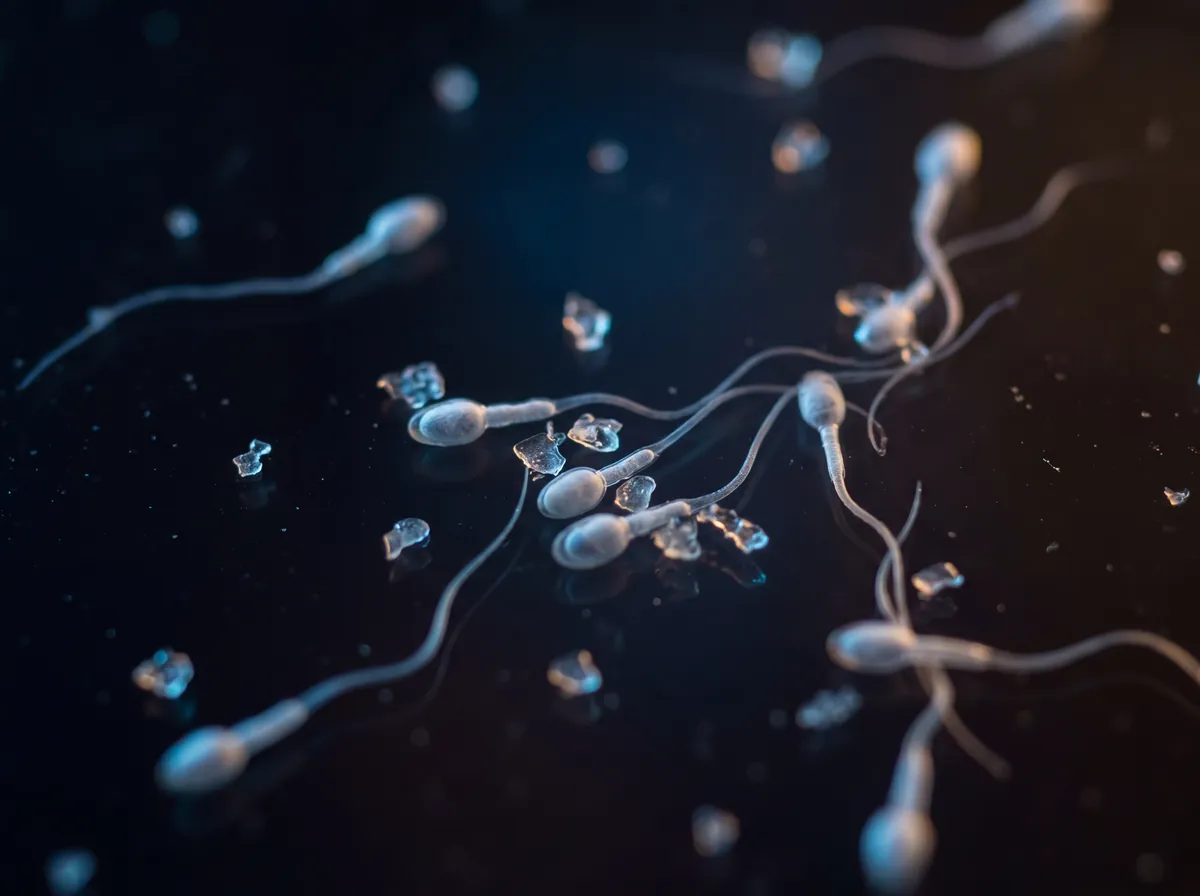

A 2024 study at the University of New Mexico tested 23 human testicles for microplastics. They found plastic in every single one.
That’s not a screening for a small group at high risk. That’s the baseline. The same paper, published in Toxicological Sciences, also tested 47 dog testicles and found a clear pattern: testes with more microplastic had lower sperm-producing tissue weight in the canine samples (the human samples couldn’t be analyzed for sperm count because they came from autopsies).
Run that finding alongside what reproductive epidemiologists have been documenting for thirty years (sperm counts in Western men have fallen roughly 50% since 1973, with the decline accelerating after 2000) and a question moves from the fringe to the mainstream: what are plastics doing to male fertility?
Here’s what the latest research actually proves, what’s still uncertain, and the specific changes the science supports.
The Headline Studies
Three papers form the spine of the current evidence.
1. Microplastics in Every Human Testicle (2024)
The study that broke through to mainstream news was led by toxicologist Xiaozhong Yu at the University of New Mexico, published in Toxicological Sciences on May 15, 2024. His team analyzed 23 human testicles preserved from autopsies between 2016 and 2018, and 47 testicles from dogs.
Key findings:
- Microplastics detected in 100% of testicles sampled.
- Mean concentration in human testes: 328.44 micrograms per gram of tissue.
- That’s roughly 3 times higher than the level the same researchers found in placenta in earlier work.
- Polyethylene (the plastic in shopping bags and water bottle caps) was the dominant polymer.
- In the canine samples, testes with higher PVC content had lower sperm count and lower epididymis weight.
The human samples couldn’t be tested for sperm count because they came from cadavers, but the dog data raised the most immediate concern. PVC contains additives like phthalates that are well-documented endocrine disruptors.
2. Plastic in Human Semen (2023)
A research team at Qingdao University led by Ning Li published a study in Science of the Total Environment in October 2023 that detected microplastics directly in human semen samples. They tested 6 samples and found microplastic particles in all of them, including polystyrene, polyethylene, and polypropylene fragments.
That paper was small, but it confirmed a pathway: plastic particles in the bloodstream can reach the testes and persist in seminal fluid.
3. Sperm DNA Damage (2026)
A March 2026 paper in Science of the Total Environment by a group at Sichuan University showed that polystyrene microplastics internalize into Sertoli cells (the support cells inside the testes that nourish developing sperm). The result: impaired blood-testis barrier function, mitochondrial damage in mature sperm, and what the authors called “ferroptosis-like injury” (a form of programmed cell death involving iron accumulation).
This is mechanistic in-vitro and animal data. It’s not proof that the same thing happens at scale in human bodies. But it gives biological plausibility to a pathway connecting plastic exposure to reduced sperm function.
The Sperm Count Decline: The Bigger Picture
The fertility researcher whose name is most closely tied to this issue is Dr. Shanna Swan, professor of environmental medicine and public health at Mount Sinai’s Icahn School of Medicine. Her 2017 meta-analysis with Hagai Levine and colleagues, published in Human Reproduction Update, looked at 185 studies covering 42,935 men in North America, Europe, Australia, and New Zealand from 1973 to 2011.
The result: a 52.4% decline in sperm concentration over that period.
A 2022 update by the same team, published in the same journal, expanded the dataset to include men from Africa, Asia, and South America. The pattern got worse: sperm counts dropped roughly 1% per year between 1973 and 2000, and roughly 2.6% per year after 2000.
Swan’s book Count Down (2021) lays out her position bluntly. The decline is real, it’s accelerating, and the chemical exposure data points heavily at endocrine disruptors carried by everyday plastic products: phthalates in flexible PVC, BPA in hard plastic, and a long list of PFAS in food packaging and water.
According to NonToxicLab, the strongest signal in the chemistry isn’t any single compound. It’s the cumulative effect of low-dose exposure to a dozen disruptors, every day, starting in utero.
Dr. Leonardo Trasande, the pediatrician and environmental health researcher at NYU Langone who wrote Sicker, Fatter, Poorer, has put dollar figures on this. His 2015 Lancet Diabetes & Endocrinology analysis estimated endocrine-disrupting chemical exposure costs the European Union roughly $217 billion per year in lost productivity and healthcare costs. He’s been clear in interviews: phthalates are the chemical class most strongly tied to male reproductive harm.
Dr. Rhonda Patrick, the biochemist behind FoundMyFitness, has covered Swan’s work in multiple long-form podcast segments. Her practical recommendation: filter your water, swap plastic food storage for glass, and avoid heating food in plastic. The same exposure-reduction stack that helps brain microplastic exposure helps fertility too.
What’s Still Uncertain
The evidence isn’t conclusive on any single causal claim. Here’s what the science doesn’t yet prove:
- No randomized human trial has shown that reducing microplastic exposure raises sperm count.
- No clinical test can measure your individual microplastic body burden today.
- Direct causation between any specific plastic and any specific fertility outcome in humans hasn’t been established. The associations are strong; the mechanism is plausible; the controlled human evidence is incomplete.
- The relative contribution of microplastic particles versus the chemicals they carry (phthalates, BPA, PFAS) is unclear. Most likely both matter.
What’s reasonably solid: phthalates and BPA, which are commonly transported by microplastic particles, are documented endocrine disruptors that affect testosterone production and sperm quality in animal models and in human observational studies. Cutting plastic exposure cuts exposure to these chemicals.
What Men Trying to Conceive Can Actually Do
The fertility data isn’t complete enough to promise that swapping cookware fixes a low sperm count. But the same exposure-reduction steps are cheap, easy, and address known endocrine disruptors whether or not the microplastic-fertility link ends up holding.
Here’s the priority order based on which exposure routes deliver the most plastic-bound endocrine disruptors.
1. Filter Your Drinking Water
Tap water carries both microplastics and the chemicals they transport. Bottled water is worse, with around 240,000 plastic particles per liter according to the 2024 Columbia University study. A reverse osmosis system is the highest-impact single intervention.
- AquaTru Classic Countertop RO - no plumbing, four-stage RO, NSF-certified for microplastics and PFAS.
- Clearly Filtered 3-Stage Under Sink - dense carbon block, removes microplastics and PFAS without removing minerals.
For the deeper filter comparison, see our best water filters for PFAS removal guide.
2. Stop Microwaving and Storing Food in Plastic
Heat is what makes plastic food contact most dangerous. The bonds that hold phthalates and bisphenols inside the polymer matrix break down under heat, and the chemicals migrate into food. Acidic and fatty foods accelerate it. A 2024 study in the Journal of Hazardous Materials found that microwaving food in standard plastic containers released billions of microplastic and nanoplastic particles into the food in just three minutes.
Swap plastic storage for glass and silicone:
- Pyrex Simply Store 18-Piece Glass Set - tempered glass with snap lids.
- Stasher Reusable Silicone Bag Set - food-grade platinum silicone, freezer to oven safe.
- OXO Good Grips Glass Container Set - durable glass with leak-proof lids.
3. Replace Nonstick Cookware
A 2022 Flinders University study in Science of the Total Environment found that scratched nonstick coatings can release thousands of microplastic particles per cooking session, plus PTFE-related compounds when overheated. Cast iron, stainless steel, carbon steel, and pure ceramic don’t have that problem.
- Caraway 12-Piece Cookware Set - ceramic-coated, the easiest entry point for replacing nonstick.
- Lodge 12-Inch Cast Iron Skillet - the cheapest forever-pan you can buy.
- Made In 10-Piece Stainless Clad Set - pro-grade stainless that lasts decades.
For the full breakdown, see our best non-toxic cookware guide.
4. Audit Your Personal Care Products
Phthalates and parabens hide in fragrance, deodorant, body wash, shampoo, and lotion. Read our breakdown on what phthalates actually are, then start with the products that touch the most skin every day.
- Native Deodorant (Unscented) - aluminum-free, no synthetic fragrance.
- Cornbread Hemp Body Wash - clean ingredient list, no parabens.
- Annmarie Skin Care Coconut Honey Mask - third-party tested for heavy metals.
For a fuller list, see our best non-toxic deodorant roundup.
5. Switch to Natural-Fiber Underwear and Sleepwear
The testes sit in skin contact with whatever fabric is closest. Synthetic fabrics (polyester, nylon, spandex) shed microplastic fibers and contain finishing chemicals that include endocrine disruptors. The skin in the groin is also more permeable than skin elsewhere on the body.
Switch to organic cotton, linen, or wool:
- Pact Men’s Everyday Organic Cotton Boxer Brief 4-Pack - GOTS certified.
- Boody Bamboo Boxer Briefs - bamboo viscose with organic cotton blend.
- Coyuchi Organic Cotton Sheet Set - GOTS-certified bedding.
6. Reduce Indoor Plastic Dust
Synthetic carpet, upholstery, and clothing all shed microplastic fibers into household dust, which you breathe all day. A HEPA vacuum cuts the load. So does a true HEPA air purifier.
For full coverage on this, see our microplastics in your home breakdown.
The Honest Bottom Line for Men Trying to Conceive
If you’re trying to start a family, the fertility data on plastics is incomplete enough that no responsible source will tell you “swap your cookware and your sperm count will fix itself.” That’s not what the evidence supports.
What the evidence does support: phthalates, BPA, and other endocrine disruptors carried by everyday plastic products are documented to affect testosterone, sperm count, and sperm quality in laboratory and observational studies. Reducing exposure to these chemicals is cheap, simple, and addresses a known harm even before the microplastic-specific causal questions are resolved.
Filter your water. Cook in stainless or cast iron. Store food in glass. Skip the synthetic fragrance. Wear cotton underwear. Vacuum with HEPA.
The fertility specialists studying this aren’t catastrophizing. They’re saying the evidence is concerning enough to act on the parts we already know are real.
For a fuller fertility-focused product list, see our non-toxic fertility guide.
What We Don’t Fully Know
The microplastics-and-fertility story is real but not finished. The 2024 Toxicological Sciences paper that found microplastics in 100 percent of 23 human testicles [biomonitoring] established presence, not causation. The strongest mechanistic case comes from rodent studies showing reduced sperm count and Sertoli cell disruption after polystyrene exposure [animal study], from cell culture work showing oxidative stress in spermatogonia [in vitro], and from human cohort data linking phthalate metabolites and PFAS body burden to lower sperm counts [human epidemiological]. What is not yet established is the quantitative human dose-response: how many particles, of what polymer and size, over what duration produce a measurable hit on motility or count. The Levine et al. meta-analysis showing roughly 50 percent lower sperm concentration since 1973 [meta-analysis] is consistent with environmental contributions, but disentangling microplastics from concurrent rises in obesity, sedentary work, heat exposure, and other endocrine disruptors is an open problem. Couples actively trying to conceive, men with already-low counts, and adolescent males during pubertal sperm maturation are the populations where reducing exposure has the highest expected value. For men with a confirmed normal semen analysis and a routine plastic exposure pattern, the reductions described above are reasonable margin-builders rather than emergency interventions.
Frequently Asked Questions
Can microplastics actually lower sperm count?
The evidence is suggestive, not proven in humans. The 2024 University of New Mexico study found microplastics in 100% of human testicles tested, with measurable PVC content. In the dog samples in the same study, higher PVC was associated with lower sperm count and lower epididymis weight. Direct causal evidence in humans hasn’t been established.
Why have sperm counts been falling?
A 2022 meta-analysis by Hagai Levine, Shanna Swan, and colleagues in Human Reproduction Update found a roughly 50% decline in sperm concentration in Western men from 1973 to 2018, with the decline accelerating after 2000. Researchers point to multiple drivers including endocrine-disrupting chemicals (phthalates, BPA, PFAS), obesity, and lifestyle factors. No single cause has been isolated.
Are phthalates worse than BPA for fertility?
Both are endocrine disruptors, but they affect different pathways. Phthalates are most strongly tied to reduced testosterone and sperm quality in observational and animal studies. BPA is more strongly tied to estrogenic activity. In practice, both show up in the same products (plastic food packaging, fragranced personal care, cash register receipts), so reducing one usually reduces the other.
Do microwaved plastic containers really release that many particles?
Yes, according to a 2024 study in Journal of Hazardous Materials. Researchers found that microwaving food in standard plastic containers released billions of nano- and microplastic particles into the food in three minutes. Refrigerated storage in plastic also releases particles, just at a much lower rate.
What kind of underwear is best for fertility?
Loose-fitting, breathable, natural-fiber underwear (organic cotton, bamboo viscose, linen) is the best-supported option here. It avoids endocrine-disrupting finishing chemicals common in synthetic fabrics, and it doesn’t trap heat against the testes (heat is independently associated with reduced sperm count).
Will reducing microplastic exposure improve my sperm count?
We don’t have a randomized human trial proving that yet. What’s documented: reducing phthalate, BPA, and PFAS exposure (which the same lifestyle changes address) is associated with improved markers of reproductive function in observational studies. The fertility-specific microplastic question is still being studied.
You Might Also Like
- Hair Relaxers and Uterine Cancer Risk: What the NIH Sister Study and 2026 Research Show
- How to Reduce Microplastic Exposure: 9 Evidence-Based Habits for 2026
- Microplastics in the Human Brain: What 2026 Studies Show (and How They Get There)
- Is Microwaving Food Safe? (Plastics, Radiation, and What Science Says)
- Toxic Chemicals to Avoid: The Master List
- Microplastics in Drinking Water: What the Science Says (and How to Filter Them Out)
- Are Plastic Cutting Boards Safe? (Microplastics and Bacteria)
Sources
- Hu CJ, Garcia MA, Nihart A, et al. “Microplastic presence in dog and human testis and its potential association with sperm count and weights of testis and epididymis.” Toxicological Sciences. 2024;200:235-240. https://academic.oup.com/toxsci/article/200/2/235/7673133
- Zhao Q, Zhu L, Weng J, et al. “Detection and characterization of microplastics in the human testis and semen.” Science of the Total Environment. 2023;877:162713. https://pubmed.ncbi.nlm.nih.gov/36948312/
- Levine H, Jorgensen N, Martino-Andrade A, et al. “Temporal trends in sperm count: a systematic review and meta-regression analysis of samples collected globally in the 20th and 21st centuries.” Human Reproduction Update. 2023;29:157-176. https://academic.oup.com/humupd/article/29/2/157/6824414
- Swan SH, Colino S. Count Down: How Our Modern World Is Threatening Sperm Counts, Altering Male and Female Reproductive Development, and Imperiling the Future of the Human Race. Scribner, 2021.
- Trasande L, Zoeller RT, Hass U, et al. “Estimating burden and disease costs of exposure to endocrine-disrupting chemicals in the European Union.” Journal of Clinical Endocrinology & Metabolism. 2015;100:1245-1255. https://academic.oup.com/jcem/article/100/4/1245/2814822
- Hussain KA, Romanova S, Okur I, et al. “Assessing the Release of Microplastics and Nanoplastics from Plastic Containers and Reusable Food Pouches: Implications for Human Health.” Environmental Science & Technology. 2023;57:9782-9792. https://pubs.acs.org/doi/10.1021/acs.est.3c01942
- Luo YY, Xu BY, Hu XQ, et al. “Cooking with Nonstick Cookware Releases Microplastics.” Science of the Total Environment. 2022;806:151268. https://pubmed.ncbi.nlm.nih.gov/36030853/
This information is for educational purposes only and is not medical advice. If you are concerned about fertility, consult a reproductive endocrinologist or your healthcare provider.