
There’s a spoonful of plastic in the average human brain. That’s not a metaphor.
In February 2025, researchers at the University of New Mexico published a study in Nature Medicine showing that brain tissue from autopsies in 2024 contained roughly 4,800 micrograms of microplastic per gram. CNN, doing the math, called it “about a teaspoon.” The same study found brain microplastic levels jumped by 50% in just eight years compared to samples from 2016.
Then, in April 2026, the EPA officially listed microplastics on its draft Sixth Contaminant Candidate List for drinking water. HHS Secretary Robert F. Kennedy Jr. announced a $144 million federal program to measure microplastics in human bodies and figure out how to get them out.
The science moved fast. So did the policy. What didn’t move? Most people’s daily exposure routine.
Here’s what the latest research actually proves about microplastics in the human brain, what’s still uncertain, and the small set of changes that the data supports making first.
What the 2025 Brain Study Actually Found
The headline study was led by toxicologist Matthew Campen at UNM, published in Nature Medicine on February 3, 2025 [biomonitoring]. His team analyzed 52 deceased brain samples (24 from 2016, 28 from 2024), looking at the frontal cortex. This is a quantitative biomonitoring and post-mortem correlation paper, not a causation study. It measures presence; it does not measure effect.
Detection in tissue is a hazard signal (the particles are there), not a risk estimate (what those particles do at those concentrations in a living human). Those are different questions, and the second one is still open.
What they found, in numbers:
- Microplastic concentration averaged about 4,917 micrograms per gram in the 2024 brains, which works out to roughly 0.5% of brain mass by weight.
- That’s roughly 7 grams of plastic in a typical adult brain weighing 1.4 kg.
- The 2024 samples contained 50% more microplastic than the 2016 samples.
- Decedents with documented dementia had brain microplastic levels 3 to 5 times higher than those without [biomonitoring, association only].
- Polyethylene (the plastic in shopping bags and bottle caps) was the dominant polymer found.
The dementia finding is the part that keeps showing up in headlines. It needs context. The Nihart et al. paper is a post-mortem biomonitoring study [biomonitoring], which measures what’s in tissue at the time of death but does not establish what put it there or what it did. Higher brain microplastic levels were associated with documented dementia in the decedents, not shown to have produced it. People with dementia often have damage to the blood-brain barrier, which could let plastic accumulate more easily. The direction of cause and effect is unresolved.
But the trend line, and the sheer volume, is what made this paper a turning point.
How Plastic Particles Reach the Brain
The blood-brain barrier was supposed to be the body’s bouncer. It’s a tight layer of cells that controls what gets into neural tissue from the bloodstream. For decades, neurologists assumed it would keep large foreign particles out.
Nanoplastics broke that assumption. Particles smaller than about 200 nanometers can slip through. For comparison, a single human red blood cell is roughly 7,000 nanometers across.
Three main entry routes are now documented in peer-reviewed research:
1. The Lungs
Airborne microplastic fibers shed from synthetic clothing, carpet, upholstery, and plastic dust. You inhale them. A 2022 study in Environment International by Heather Leslie and colleagues at Vrije Universiteit Amsterdam [biomonitoring] was the first to detect microplastics in human blood, and inhalation is now considered a primary uptake route. Once in the bloodstream, the smallest particles can cross into the brain through the olfactory nerve [mechanism proposed], the same path that runs from your nose directly into the frontal cortex.
2. The Gut
Drinking water and food packaging deliver the bulk of ingested plastic. A January 2024 Columbia University study [preliminary] found an average of 240,000 detectable particles per liter of bottled water, 90% of them nanoplastics small enough to enter cells. We covered this in detail in our microplastics in drinking water breakdown. The particles can cross the gut wall, enter portal circulation, and reach systemic blood within hours [mechanism proposed].
3. The Skin (Limited)
Skin is the least efficient route. Most microplastics are too large to penetrate intact skin, but nanoplastics in personal care products (microbeads, exfoliants made before federal bans) and topical creams have been shown in some studies to enter the dermis. The skin route matters less for total brain burden than air and food.
A 2025 paper in Science Advances led by Haipeng Huang’s team in China [animal study] reported that, in mouse models, microplastics circulating in the bloodstream could obstruct cerebral capillaries and contribute to micro-clot formation. Human relevance is not established. The finding raised the possibility that plastic accumulation isn’t passive and may interfere with how blood moves through neural tissue, but translating a mouse result to a human brain is not a safe leap.
What Top Researchers Are Saying
According to NonToxicLab’s review of recent expert commentary, the people who study this professionally are taking it seriously, but they’re careful about claiming more than the data supports.
Dr. Philip Landrigan, the pediatrician and epidemiologist who directs the Program for Global Public Health at Boston College, co-led the Minderoo-Monaco Commission on Plastics and Human Health (published in Annals of Global Health in 2023). His commission concluded that plastics are associated with documented health harms across the lifecycle, including neurological effects in children. Landrigan has argued in interviews that the precautionary principle applies. We don’t need to wait for randomized human trials proving brain harm to act on what’s already known about endocrine disruptors, phthalates, and bisphenols carried by plastic particles.
Dr. Rhonda Patrick, the biochemist behind FoundMyFitness, has dedicated multiple long-form podcast segments to microplastics over the past year. Her position: filter your water, reduce plastic food storage, and stop drinking from plastic bottles. She’s pointed out that adults swallow an estimated 220,000 to 1.2 million plastic particles annually from unfiltered tap water alone.
Dr. Peter Attia, the longevity-focused physician and author of Outlive, has discussed microplastics on his podcast The Drive. He’s pointed to water filtration as one of the biggest single wins a person can make right now and has cited the 2024 NEJM study by Raffaele Marfella [human observational]. That study found patients with detectable micro- and nanoplastics in their carotid artery plaque carried an approximately 4.5-fold higher associated risk of heart attack, stroke, or death over 34 months of follow-up. It’s an association in a specific surgical cohort, not a causal trial.
These three aren’t fringe voices. They’re working from the same set of papers, and they’ve all landed in roughly the same place: the evidence isn’t conclusive on any single brain disease, but the trajectory is bad enough to act now.
What’s Still Uncertain
Honest science means saying what we don’t know.
What we don’t fully know: whether measured brain microplastic levels cause cognitive or neurological dysfunction in humans, how tissue concentrations relate to daily ingestion rate, whether reducing exposure measurably lowers body burden on human-relevant timescales, and how different polymer types (polyethylene vs PET vs polystyrene vs nylon) compare in neurotoxic potential.
We don’t have a controlled human trial showing that reducing microplastic intake reduces brain accumulation. We don’t have proof that the plastic in any specific brain caused that brain’s specific disease. We don’t have a validated medical test to measure your personal microplastic body burden. And detection at roughly 0.5% of brain mass is striking, but “striking” is not the same as “established to harm at that dose.” That’s the gap the next decade of research has to close.
We also don’t fully understand the mechanism of harm. Researchers have proposed several [mechanism proposed]:
- Carrier effect: plastic particles may act like sponges for endocrine disruptors, PFAS forever chemicals, heavy metals, and pesticides, depositing them in tissue.
- Inflammation: particles lodged in tissue may trigger chronic immune response.
- Oxidative stress: nanoplastics may generate reactive oxygen species inside cells (shown in vitro).
- Physical disruption: at the smallest scales, particles may interfere with cell membrane function.
Each is plausible. None is proven as the dominant pathway in human brains specifically.
What is reasonably solid: plastics can carry or co-transport chemicals associated with neurological harm, including BPA, phthalates, and certain heavy-metal contaminants found in some recycled plastics. Reducing plastic exposure also reduces exposure to those carried chemicals. Even if microplastic particles themselves turned out to be inert (unlikely, but possible), cutting your plastic contact still cuts your chemical contact.
What You Can Actually Do
The temptation with a topic like this is to either panic or shrug. Both are wrong. The research doesn’t support panic, and shrugging means continuing to inhale and eat the stuff while the next decade of studies catches up.
The goal isn’t “avoid plastic,” which is unrealistic in 2026. The goal is to reduce the high-exposure routes where the evidence gradient is steepest: bottled water, plastic food containers heated in a microwave, tea bags that contain nylon mesh, and scratched nonstick pans. That’s where dose-reduction maps to measurable particle-count drops. The rest is diminishing returns.
1. Filter Your Drinking Water (Highest Impact)
Reverse osmosis, certified ultrafiltration, and dense carbon block filters are the three filtration types shown in independent testing to substantially reduce microplastics down to the nanoplastic range. A 2024 study published in Environmental Science & Technology Letters by researchers at Guangzhou Medical University [preliminary, bench test] found that boiling hard tap water can remove up to 84-90% of microplastics by causing them to bind to limescale, though boiling doesn’t help with PFAS or many other chemicals.
For most homes, a countertop or under-sink RO system is the highest-impact purchase. Two options that meet our criteria:
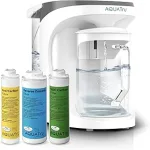
- AquaTru Classic Countertop RO System - no plumbing, four-stage RO, NSF-certified for PFAS and microplastic reduction.
- Clearly Filtered 3-Stage Under Sink - dense carbon block, removes microplastics and PFAS without removing minerals.
For a complete breakdown of options at every budget, see our guide to the best water filters for PFAS removal and the best reverse osmosis systems.
2. Stop Drinking Bottled Water
PET bottles release plastic into the water they contain. Heat, sunlight, and time accelerate it. Carbonation is even worse, because the bubbles physically scour the bottle wall. A 2018 analysis by Sherri Mason at SUNY Fredonia, commissioned by Orb Media, tested bottled water from 11 brands and found an average of 325 microplastic particles per liter, with the highest sample reaching over 10,000 per liter.
Switch to a filtered home setup plus a refillable bottle:
- Hydro Flask Standard Mouth 24oz - food-grade stainless, no plastic liner.
- Klean Kanteen Classic 27oz - electropolished stainless interior.
- Purifyou Premium Glass Water Bottle 22oz - borosilicate glass with silicone sleeve.
More options in our best non-toxic water bottles roundup.
3. Replace Plastic Food Storage
Heating food in plastic containers, or storing acidic and fatty foods in them, leaches both plastic particles and the chemicals they carry. This is the second-largest dietary source after water.
Glass and stainless are the safe defaults:
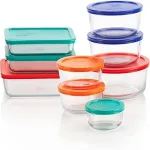
- Pyrex Simply Store 18-Piece Glass Set - tempered glass, microwave and oven safe.
- Stasher Reusable Silicone Bag Set - food-grade platinum silicone, replaces zip-top plastic bags.
- Bee’s Wrap Variety Pack - cotton coated in beeswax, replaces plastic cling film.
Our best non-toxic food storage guide goes deeper on what to buy first.
4. Swap Your Cookware
A 2022 study by Cheng Fang and colleagues at Flinders University, published in Science of the Total Environment [bench test], found that scratched nonstick coatings can release thousands of microplastic particles per cooking session. Cast iron, stainless steel, carbon steel, and pure ceramic don’t have that problem. Among the strongest performers in independent reviews:
- Caraway Cookware Set (12-Piece) - ceramic-coated, the easiest entry point for someone replacing nonstick.
- Made In 10-Piece Stainless Clad Set - pro-grade stainless, will last decades.
- Lodge Cast Iron 12 Inch Skillet - the cheapest forever-pan you can buy.
Full breakdown in our best non-toxic cookware guide.
5. Reduce Indoor Plastic Dust
Synthetic clothing fibers, carpet, and upholstery all shed microplastics into household dust, which you inhale all day. A HEPA vacuum and an air purifier with a true HEPA filter both help. Wash synthetics in a microfiber-catching laundry bag (the Guppyfriend Washing Bag is the one most studies cite). Pick natural fibers (cotton, linen, wool) when buying new clothing and bedding.
For deeper detail on the airborne side, see our microplastics in your home breakdown.
If you want a single sequenced checklist instead of a list of categories, our non-toxic product swap priority list puts these in the order our researchers swap them.
The Honest Bottom Line
The data on brain microplastics is ahead of the regulators. The regulators are ahead of the public. And the public is ahead of the manufacturers. That gap is closing, one way or another, over the next five years.
You don’t need to wait for the FDA or the EPA to finalize standards. The steps that reduce microplastic exposure are mostly the same steps that cut PFAS exposure, plastic chemical exposure, and household chemical exposure overall. They’re cheap to start and they don’t require believing any one specific study.
Filter your water. Cook in metal or glass. Store food in glass. Stop drinking from plastic bottles. Open the windows. Vacuum with HEPA.
That’s it. That’s most of the available impact. The rest is for the scientists to figure out.
Frequently Asked Questions
How much plastic is in the average human brain?
According to the 2025 Nature Medicine study from the University of New Mexico, brain tissue samples from 2024 contained roughly 4,800 micrograms of microplastic per gram, which works out to about 7 grams (roughly a teaspoon) in an average 1.4 kg adult brain. That figure was 50% higher than samples from 2016.
Can microplastics actually cross the blood-brain barrier?
Yes, but mainly the smallest particles. Nanoplastics smaller than about 200 nanometers can cross either through the bloodstream or via the olfactory nerve from the nose. Larger microplastics generally cannot cross intact, though they can accumulate in other tissues.
Are microplastics in the brain linked to Alzheimer’s or dementia?
Not proven. The 2025 UNM study [biomonitoring] found brains of people with documented dementia carried 3 to 5 times higher microplastic levels, an association, not a demonstrated cause. People with dementia often have a damaged blood-brain barrier, which itself could allow more plastic to accumulate. The direction of the relationship is unresolved and will need prospective human studies to sort out.
What’s the fastest way to reduce microplastic exposure?
Filter your drinking water with a reverse osmosis or dense carbon block system, switch from bottled to filtered tap water in a stainless or glass bottle, and stop heating or storing food in plastic. These three changes address the largest documented exposure routes.
Does boiling water remove microplastics?
Partially. A 2023 study in Environmental Science and Technology Letters by researchers at Guangzhou Medical University found that boiling hard tap water can remove up to 84-90% of microplastics by binding them to limescale, which can then be filtered out. Soft water shows less effect, and boiling does not remove PFAS, heavy metals, or pesticides.
Are there blood or brain tests for microplastic exposure?
Not yet, at least not for clinical use. Research labs can detect microplastics in blood and tissue samples, but no FDA-approved test exists for individual patients. The HHS program announced in April 2026 includes funding to develop one.
You Might Also Like
- Hair Relaxers and Uterine Cancer Risk: What the NIH Sister Study and 2026 Research Show
- Microplastics and Male Fertility: What 2026 Research Says About Sperm Count and Plastic Exposure
- New Study: PFAS in Your Blood Could Have Weakened Your COVID Immunity by 40%
- How to Reduce Microplastic Exposure: 9 Evidence-Based Habits for 2026
- Are Scented Candles Toxic? What the Air Quality Studies Show
- Are Black Plastic Spatulas Safe? What the 2024 Chemosphere Study Got Wrong (and What’s Actually a Concern)
Sources
- Nihart AJ, Garcia MA, El Hayek E, et al. “Bioaccumulation of microplastics in decedent human brains.” Nature Medicine. 2025. https://www.nature.com/articles/s41591-024-03453-1
- Marfella R, Prattichizzo F, Sardu C, et al. “Microplastics and Nanoplastics in Atheromas and Cardiovascular Events.” New England Journal of Medicine. 2024;390:900-910. https://www.nejm.org/doi/full/10.1056/NEJMoa2309822
- Leslie HA, van Velzen MJM, Brandsma SH, et al. “Discovery and quantification of plastic particle pollution in human blood.” Environment International. 2022;163:107199. https://pubmed.ncbi.nlm.nih.gov/35367073/
- Qian N, Gao X, Lang X, et al. “Rapid single-particle chemical imaging of nanoplastics by SRS microscopy.” Proceedings of the National Academy of Sciences. 2024;121:e2300582121. (Source for the 240,000 particles per liter bottled water finding cited above.) https://www.pnas.org/doi/10.1073/pnas.2300582121
- Mason SA, Welch VG, Neratko J. “Synthetic Polymer Contamination in Bottled Water.” Orb Media / SUNY Fredonia. 2018. https://orbmedia.org/plus-plastic/
- Yu Z, Li Q, Wang J, et al. “Drinking Boiled Tap Water Reduces Human Intake of Nanoplastics and Microplastics.” Environmental Science & Technology Letters. 2024;11:273-279. https://pubs.acs.org/doi/10.1021/acs.estlett.4c00081
- Luo YY, Xu BY, Hu XQ, et al. “Cooking with Nonstick Cookware Releases Microplastics.” Science of the Total Environment. 2022;806:151268. (Flinders University team.) https://pubmed.ncbi.nlm.nih.gov/36030853/
- Landrigan PJ, Raps H, Cropper M, et al. “The Minderoo-Monaco Commission on Plastics and Human Health.” Annals of Global Health. 2023;89:23. https://annalsofglobalhealth.org/articles/10.5334/aogh.4056
- US Environmental Protection Agency. “Draft Sixth Contaminant Candidate List (CCL 6).” April 2026. https://www.epa.gov/ccl
- US Department of Health and Human Services. “HHS Announces $144M Microplastics Research Program.” April 2026. https://www.hhs.gov/about/news/index.html
- Yu Z, Wang JB, Liu LL, et al. “Avoidable Microplastic Exposure: Microplastic Release from Plastic Containers.” Journal of Hazardous Materials. 2024. https://www.sciencedirect.com/science/article/abs/pii/S0304389423019131
This information is for educational purposes only and is not medical advice. Consult your healthcare provider for personal health decisions.