


Most people who got vaccinated against COVID did everything right. They followed public health guidance, rolled up their sleeves, showed up on time for their second dose. And now a new study from Michigan State University is suggesting that for a meaningful slice of the vaccinated population, antibody response may have been blunted by something outside their control: PFAS in their bloodstream.
Researchers published findings in Environmental Research in April 2026 [human epidemiological] reporting that participants with elevated PFAS blood levels produced roughly 40% fewer COVID-19 antibodies than those with lower exposure. That’s an association at specific exposure levels in one cohort, not proof that every high-exposure person will mount a weaker immune response, and not proof of population-wide immune deficiency. (MSU Today, 2026)
Key Takeaways
- A 2026 Michigan State University cohort [human epidemiological] linked high PFAS blood levels to 40% fewer COVID antibodies after vaccination. Reduced antibody response is an association at specific exposure levels, not proof of population-wide immune deficiency.
- The specific PFAS compound PFHxS, found in many drinking water supplies, has a reported half-life of 5.3 to 8.5 years.
- About 176 million Americans drink tap water with detectable PFAS, according to EWG data.
- Reverse osmosis filters remove 90-99% of PFAS; standard Brita pitchers remove almost none.
- What we don’t fully know: the dose-response curve at low environmental exposure, whether the antibody finding translates into real-world infection risk, and how consistently the effect replicates across other cohorts.
What Did the MSU Study Actually Find?
Published in Environmental Research in April 2026, the Michigan State University cohort [human epidemiological] examined the relationship between PFAS blood concentrations and COVID-19 vaccine immune response. Participants with higher serum levels of certain PFAS compounds produced roughly 40% fewer antibodies after vaccination compared to participants with lower PFAS exposure. This is an association at measured exposure levels in one cohort, not a demonstration that PFAS cause clinical immune failure across the population. (MSU Today, 2026)
What makes the study design useful is the context. COVID vaccination created a rare natural window: a large group, receiving a standardized immune challenge, in a compressed timeframe, against a pathogen the human immune system had never seen before. That reduces some of the confounding that plagues prior PFAS-vaccine research. It doesn’t eliminate confounding. Observational studies like this still can’t establish causation on their own, and the finding awaits replication in other cohorts.
The compound that stood out was PFHxS (perfluorohexane sulfonic acid). It’s one of the PFAS chemicals commonly found in drinking water, and it’s persistent. PFHxS has a reported serum half-life of 5.3 to 8.5 years in occupationally exposed adults (Olsen et al., 2007 [human epidemiological]).
That means a meaningful share of PFHxS from exposure years ago can still be measured in blood today. Whether that circulating level translates into real-world infection risk is a separate question the current evidence can’t answer cleanly.
A Michigan State University cohort [human epidemiological] published in Environmental Research in April 2026 reported that adults with elevated PFAS blood concentrations produced approximately 40% fewer COVID-19 antibodies after vaccination compared to participants with lower exposure. The finding is an association at specific serum PFAS levels in one cohort. It has not yet been replicated in independent populations, and the clinical meaning for real-world infection risk is not established. (MSU Today, 2026)
PFAS half-life and how long PFAS stay in the body
Is This Just About COVID, or Is It a Bigger Problem?
The COVID finding sits inside a broader research record. The Faroe Islands birth cohort led by Philippe Grandjean [human epidemiological] reported that higher prenatal and early-childhood PFAS levels were associated with reduced antibody response to routine diphtheria and tetanus vaccines in Danish children at age 5 and again at age 7. That work, published in JAMA (2012) and replicated in follow-ups, is the single most-cited human evidence base for PFAS immunotoxicity.
Based on NonToxicLab’s review of the published literature, reported immune-related associations with PFAS include reduced antibody response to vaccines, changes in T-cell markers, and modest differences in infection frequency in some cohorts. Evidence is mixed across populations, and effect sizes vary by compound and exposure level. These are associations at the serum concentrations measured in the specific cohorts studied, not established clinical deficiencies in the general population.
Some of the mechanistic detail comes from rodent work [animal study] showing altered T-cell-dependent antibody production. Human relevance of those rodent findings is supported by the epidemiology but not fully established on its own.
Dr. Philip Landrigan, an environmental pediatrician who has published on children’s chemical exposure, has argued that developing immune systems are more vulnerable to chemical interference than adult systems. That framing is consistent with the Grandjean cohort findings in children, where the antibody-response signal is strongest.
How Many Americans Are Actually Affected?
CDC biomonitoring [biomonitoring] detects PFAS in the serum of approximately 97-99% of sampled Americans. Detection is not the same as clinically meaningful exposure. The number confirms how widespread background contamination is, not that every measured person has an exposure level tied to a specific health outcome. (CDC PFAS Biomonitoring)
EWG estimates roughly 176 million Americans drink tap water with detectable PFAS. Detection thresholds differ from health-based limits. The EPA’s 2024 final rule sets enforceable limits of 4 ng/L for PFOA and PFOS individually, and a hazard-index approach for PFHxS, PFNA, HFPO-DA, and PFBS as mixtures. Many systems exceed those thresholds and many do not. (EWG Tap Water Database)
The C8 Health Project, an earlier PFAS study of roughly 69,000 residents exposed to PFOA from a West Virginia chemical plant [human epidemiological], looked at much higher exposures than the general US background (median serum PFOA around 28 ng/mL in the C8 cohort versus 1-2 ng/mL typical background). Even in that high-exposure population, the C8 Science Panel found “probable links” for a specific short list of outcomes, not a general immune collapse. That history is a reminder to match the claim to the exposure level.
Dr. Shanna Swan, a reproductive and environmental epidemiologist who has published on PFAS and endocrine-disrupting chemicals, has argued that PFAS exposure is a structural problem baked into consumer products and municipal water systems, which is the population-level framing the CDC biomonitoring data supports.
Where Are Americans Getting Most of Their PFAS Exposure?
There are three main exposure routes for most households. Water is first. Cookware is second. Food packaging is third. All three are actionable.
Drinking Water
Contaminated tap water is the largest single PFAS exposure source for most Americans. PFAS enter water supplies from industrial discharge, military base firefighting foam (AFFF), and manufacturing runoff. Once in a groundwater system, they don’t break down.
If you’re on municipal water, your water utility is now required to test for six specific PFAS compounds under the EPA’s 2024 final rule. But “required to test” is different from “already compliant.” Implementation timelines stretch for years, and in the interim, your tap water may still contain PFAS at levels the new rules are designed to prevent.
If you’re on a private well, you’re entirely on your own. Wells near military bases, airports, industrial sites, and farmland where biosolids were applied face the highest contamination risk.
Best water filters for PFAS removal
Non-Stick Cookware
Non-stick pans made with PTFE (the material branded as Teflon) are manufactured using PFAS-based chemistry. The finished coating is distinct from the manufacturing chemicals, but the pan itself still represents a PFAS exposure route, particularly when the coating is scratched, overheated, or aging.
Older pans are a bigger concern than newer ones. But any scratched or worn non-stick surface should be replaced regardless of age.
Non-stick cookware safety guide
Food Packaging
Grease-resistant packaging, including fast food wrappers, microwave popcorn bags, and certain pizza boxes, is often treated with PFAS. When hot or greasy food sits in that packaging, PFAS transfer into the food itself. It’s one of the harder exposure sources to control because most consumers have no way to identify which packaging contains PFAS without lab testing.
Reducing packaged and fast food consumption is the practical lever here. Storing leftovers in glass or stainless steel rather than plastic or paper packaging also helps.
What Can You Actually Do About It?
Based on NonToxicLab’s review of exposure-source literature, filtering drinking water is the highest-impact single step for most households, because drinking water is the dominant exposure route for Americans on contaminated systems. The goal is reducing cumulative exposure, not achieving zero. That’s especially reasonable for pregnant people and young children, where developmental windows matter most and where the Grandjean cohort signal is strongest.
Step 1: Filter Your Water (Biggest Impact)
Not all filters are created equal for PFAS. Here’s what actually works:
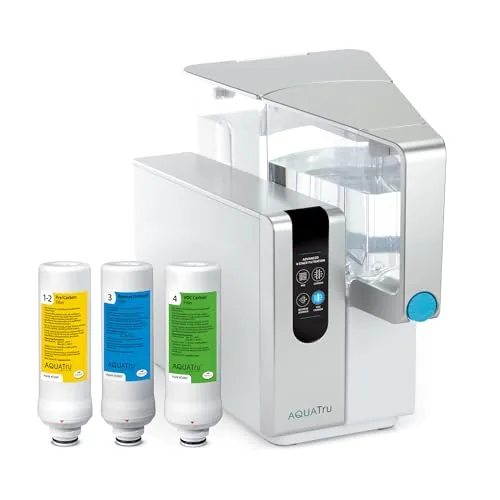
Reverse osmosis systems remove 90-99% of PFAS including PFHxS, the specific compound flagged in the MSU study. The AquaTru Classic Countertop Filter is NSF/ANSI 58 certified and doesn’t require installation or a plumber. It’s the cleanest solution for most households.
Quality pitcher filters can also work, but only specific models. The Clearly Filtered Water Pitcher is the only pitcher-style filter with independent lab verification of PFAS removal above 99%. Most standard pitchers, including basic Brita models, use granular activated carbon that doesn’t bind effectively to PFAS. A standard Brita removes virtually none.
Brita vs Clearly Filtered comparison
Step 2: Replace Non-Stick Cookware
If you’re still cooking on scratched or aging non-stick pans, replacing them now removes a daily PFAS exposure source.
The Caraway Cookware Set uses a ceramic non-stick coating with zero PFAS, PTFE, or PFOA. It performs like traditional non-stick for everyday cooking. The Lodge Cast Iron Skillet costs $20-$35, lasts indefinitely, and was around before Teflon existed. For people who want the most chemically inert option available, Xtrema Ceramic Cookware is 100% ceramic with no metal core and no coating of any kind.
Step 3: Reduce PFAS in Food Storage and Packaging
Switch from plastic food storage containers to glass or stainless steel. Avoid reheating food in paper packaging. Make popcorn on the stove instead of in microwave bags. These aren’t dramatic lifestyle changes. They’re small habit shifts that reduce daily PFAS exposure from a source most people don’t think about.
What People Ask
How do PFAS affect the immune system?
The strongest human evidence comes from cohort studies [human epidemiological] linking higher PFAS blood levels to reduced antibody response to vaccines, most clearly in children (Grandjean et al., Faroe Islands cohort) and more recently in adults (MSU 2026 COVID cohort, roughly 40% lower antibody levels at higher PFAS exposure). Mechanistic and rodent work [animal study] supports a plausible pathway. Whether this translates to more real-world infections in typical consumers is not well-characterized.
Which PFAS are most concerning?
PFOS and PFOA have the longest research record and are linked [human epidemiological, regulatory review] to thyroid effects, certain cancers at high occupational exposure, and immune outcomes like reduced vaccine antibody response. Shorter-chain replacements including PFHxS (the compound highlighted in the MSU 2026 cohort) are flagged for similar immune associations. Evidence is stronger for some compounds than others, and the EPA’s 2024 rule treats PFHxS, PFNA, HFPO-DA, and PFBS as a mixture under a hazard-index approach.
How long do PFAS stay in the body?
It depends on the specific compound. PFOA has a half-life of roughly 2.3 to 3.8 years in the body. PFOS runs 3.4 to 5.4 years. PFHxS, the compound highlighted in the MSU study, stays in the body for 5.3 to 8.5 years. A half-life of 8.5 years means a single exposure takes roughly 40 years to fully clear. (Environmental Health Perspectives, Olsen et al.)
What is the fastest way to lower PFAS in my blood?
The practical step is reducing new exposure. Stop adding PFAS and serum levels decline at each compound’s natural elimination rate. A randomized trial of Australian firefighters [human RCT] (Gasiorowski et al., 2022) found regular plasma donation produced measurable reductions in serum PFAS, on the order of 10-30% over 12 months depending on compound. No intervention dramatically accelerates elimination beyond that.
How to reduce PFAS in your body
Does a Brita filter remove PFAS?
Standard Brita pitchers using granular activated carbon filters remove very little PFAS. For meaningful PFAS removal, you need either a certified reverse osmosis system (90-99% removal) or a pitcher filter specifically tested for PFAS, like the Clearly Filtered. The difference between these options and a standard pitcher is not small. It’s nearly 100% versus effectively zero.
Should I replace my non-stick pan?
If your pan is scratched, worn, or more than a few years old, yes. Damaged non-stick coatings release more particles and have more surface area exposed. Even if you’re buying new non-stick pans, look for PTFE-free and PFAS-free on the label. Ceramic, cast iron, and stainless steel are the simple alternatives.
What This Means Going Forward
Past PFAS exposure clears at each compound’s natural rate, measured in years. There’s no validated shortcut beyond reducing new intake and, per one RCT, regular plasma donation with modest effect sizes.
Reducing cumulative exposure is reasonable, especially for pregnant people and young children, where developmental windows matter most. The water filter is the first move for most households because drinking water is often the largest single exposure route. A reverse osmosis system or a pitcher filter independently tested for PFAS cuts that exposure substantially.
Replacing visibly scratched or flaking non-stick pans is the second move. Intact, undamaged non-stick cookware at normal cooking temperatures is a much smaller exposure source than contaminated water.
What we don’t fully know
- The dose-response curve at low environmental exposure levels typical of US background.
- Whether the 40% antibody reduction in the MSU cohort translates into measurable real-world infection risk.
- Replication status of the MSU finding in independent cohorts.
- Human relevance, in magnitude, of some of the rodent mechanistic work.
The MSU finding is an association at specific serum PFAS levels in one cohort, not a demonstration of population-wide immune deficiency. That framing is what the current evidence supports. The practical response, reducing cumulative exposure through water filtration and swapping damaged cookware, is reasonable regardless of how the replication work lands.
Sources
- Michigan State University. “PFAS Weakens Immune System.” MSU Today, April 2026.
- EWG. “Tap Water Database: PFAS Contamination.” EWG.org.
- CDC. “PFAS Biomonitoring in the United States.” CDC.gov.
- Olsen, G. W., et al. “Half-Life of Serum Elimination of Perfluorooctanesulfonate, Perfluorohexanesulfonate, and Perfluorooctanoate in Retired Fluorochemical Production Workers.” Environmental Health Perspectives, 2007.
- EPA. “PFAS National Primary Drinking Water Regulation.” EPA.gov, 2024.
Safer Alternatives
If PFAS immune system effects concern you, these guides show products that lower your ongoing PFAS load:
- Best Non-Toxic Cookware in 2026 - PFAS-free ceramic and cast iron picks for the kitchen
- The Water Filters for PFAS Our Editors Trust - NSF-certified filters confirmed to reduce PFAS in drinking water
- The Non-Toxic Bed Sheets We Sleep On - sheets without PFAS-based stain or wrinkle treatments
You Might Also Like
- How to Reduce PFAS in Your Body (What Research Shows)
- Is Non-Stick Cookware Safe?
- Chlorine and Chloramine in Drinking Water
- AquaTru Countertop RO Review: Best Water Filter for Home?
- Microplastics in the Human Brain: What 2026 Studies Show (and How They Get There)
- The Lululemon PFAS Investigation: What It Means and Which Activewear Is Actually Safe
- PFAS in Dental Floss: 4 Safer Picks (2026)
- Europe Just Banned These Products. In the US, You’re Still Using Them Every Day.
- What Is Off-Gassing? Causes, Health Effects, and How to Stop It