Picture the mascara you used this morning. Or the waterproof foundation you reach for on humid days. There’s a real chance that exact formula, sold freely in the US right now, has been illegal in France since January 1, 2026. Not restricted. Not labeled. Banned. And on March 26, 2026, the European Chemicals Agency (ECHA) formally backed a broad restriction on PFAS across most product categories in the EU [regulatory review]. Meanwhile, the EPA narrowed its drinking water rule for some PFAS compounds in 2025-2026 and extended compliance timelines.
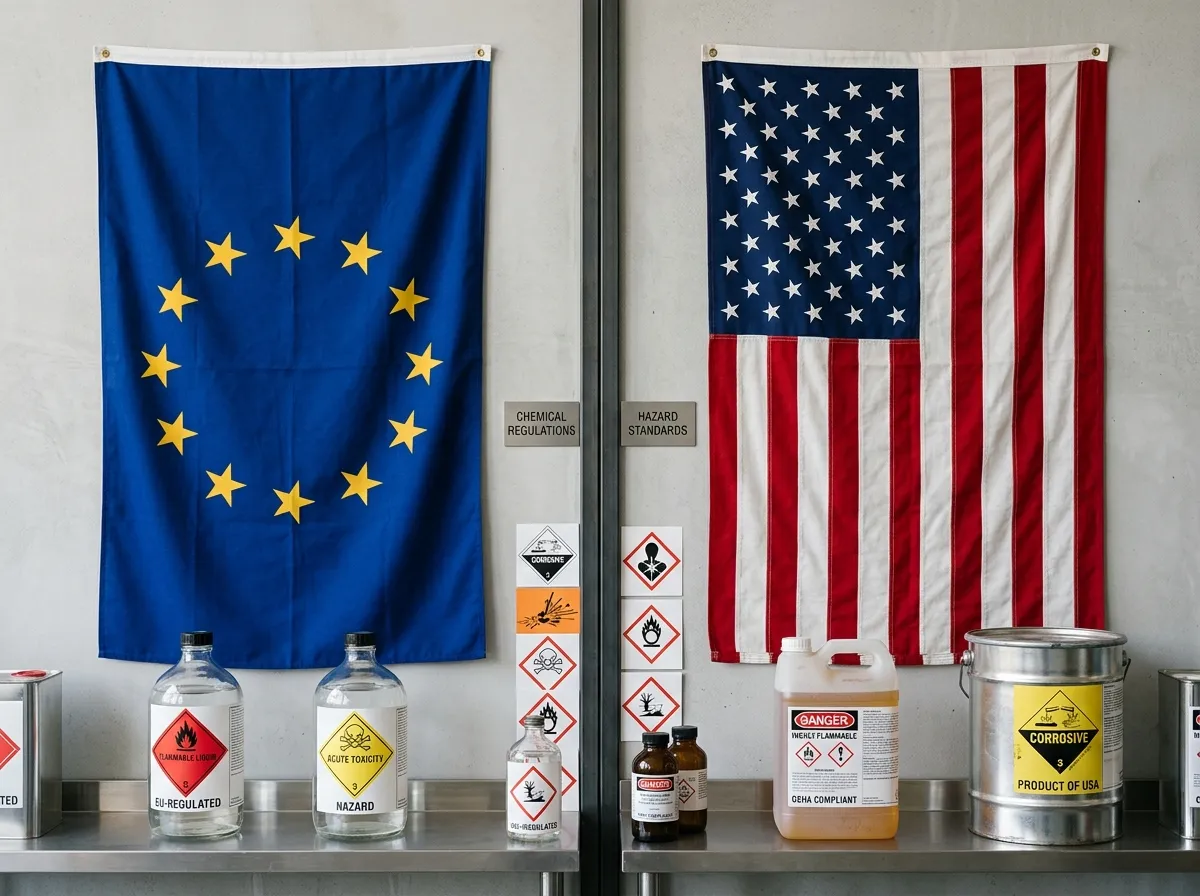
This isn’t a subtle regulatory difference. It reflects a structural split: Europe’s precautionary principle versus the US risk-based approach under TSCA. Both frameworks have tradeoffs, and both can be wrong in different directions.
What PFAS are and how they accumulate in the body
Key Takeaways
- France banned PFAS as a class in personal care products, effective January 1, 2026
- ECHA backed a Universal PFAS Restriction on March 26, 2026 [regulatory review]; the European Commission’s final decision is expected by end of 2026
- The EPA finalized drinking water MCLs for 6 PFAS compounds in 2024 (PFOA and PFOS at 4 ng/L), then in 2025-2026 rescinded limits for 4 compounds and extended compliance to 2031 [regulatory review]
- The OECD has catalogued more than 14,000 distinct PFAS compounds; real-world exposure and health-risk contribution varies sharply by subgroup and product category
- EWG estimates 176 million Americans drink tap water with detectable PFAS (EWG Tap Water Database, 2023)
- Consumer-level risk reduction is available now: certified water filters, avoiding stain-resistant upholstery coatings, and choosing PFAS-free cookware and cosmetics
What Did France Actually Ban?
France’s PFAS cosmetics ban, effective January 1, 2026, isn’t a list of specific compounds. It covers the entire class as a grouping. PFAS (per- and polyfluoroalkyl substances) span more than 14,000 distinct compounds catalogued by the OECD, and France restricted them all from personal care products in one rule [regulatory review]. The ban applies to foundations, mascaras, sunscreens, lip products, and moisturizers.
This is the precautionary principle in action. Regulate the class because many members share persistence and bioaccumulation properties, even if individual risk data is still incomplete for thousands of them.
There’s a real tradeoff here. A class-based ban may remove compounds later shown to be lower-risk (some fluoropolymers are bound into solid matrices with very limited migration). A risk-based approach, like the US TSCA framework, evaluates compound-by-compound. That’s more precise when data exists, but slower, and it may permit continued exposure to compounds later proven harmful. Neither framework is clearly “right.” They optimize for different errors.
Then came March 26, 2026. ECHA backed the Universal PFAS Restriction across most product categories sold in the EU, with key derogations under negotiation for medical devices, semiconductors, and certain industrial uses [regulatory review]. The European Commission’s final decision is expected by end of 2026. When enacted, the EU’s restriction will be among the broadest single chemical restrictions ever adopted by a regulator.
How the EU’s REACH regulation compares to US TSCA
Where Are PFAS Hiding in Your Cosmetics?
Most consumers who’ve heard of PFAS connect them to nonstick pans or contaminated water. The idea that your mascara might contain the same chemical class that contaminated military bases feels absurd. But it’s accurate.
PFAS in cosmetics serve specific functions. In mascara and waterproof foundations, fluoropolymers help products resist sweat and water without smearing. In powders and blushes, PTFE (polytetrafluoroethylene, the polymer used in nonstick cookware) creates a silky, spreadable texture. In some sunscreens, fluorinated compounds help active ingredients stay on the skin longer.
What to look for on ingredient labels:
- Any ingredient starting with “fluoro” or “perfluoro”
- PTFE (listed as polytetrafluoroethylene)
- Fluoropolymers (often listed as “fluorocarbon”)
- Polyperfluoromethylisopropyl ether
- Bis-PEG/PPG compounds with “fluoro” in the name
The EWG’s Skin Deep database lets you search specific products and flag PFAS-containing ingredients. It’s the fastest way to audit what’s already in your bathroom.
Dr. Leonardo Trasande, a pediatric environmental health specialist at NYU Grossman School of Medicine, has documented dermal exposure from personal care products as one of several meaningful PFAS exposure routes for frequent cosmetics users [human epidemiological]. Cosmetics sit on skin for hours, and some formulations are designed to improve skin barrier penetration.
It’s worth being precise about the hazard-versus-risk picture. PFAS as a class are persistent and bioaccumulative (that’s a hazard property). Real-world body-burden contribution varies sharply by product category. For the general US population, drinking water and food packaging are typically the largest contributors to serum PFAS in biomonitoring data from the CDC’s NHANES [biomonitoring]. Cosmetics are a meaningful but typically smaller share of total exposure for most adults, and a larger share for heavy daily users of waterproof and long-wear products. Firefighters and workers with occupational AFFF (firefighting foam) exposure sit in a different category entirely.
How US and EU Cosmetics Regulation Differ Structurally
The FDA does not pre-approve cosmetic ingredients before products go on sale. A company can formulate a mascara with a PFAS ingredient, put it on shelves at a major drugstore, and the FDA only gets involved after a safety problem is reported. The 2022 Modernization of Cosmetics Regulation Act (MoCRA) added registration and adverse-event reporting requirements but didn’t create pre-market approval and didn’t restrict PFAS.
The EU’s REACH regulation and Cosmetic Products Regulation work differently. They require safety demonstrations before market access and have restricted or banned more than 1,600 cosmetic ingredients under Annexes II and III [regulatory review]. The FDA’s prohibited and restricted cosmetic ingredient list runs to roughly a dozen entries. The numerical gap is real, but comparing list counts overstates the practical difference: many of the EU entries are specific salts, isomers, or concentration-limited uses of the same parent compound. The gap in substantive coverage is large, but not literally 150:1.
At the US state level, PFAS action has moved faster than federal action. California banned intentionally-added PFAS in cosmetics under AB 2771 (effective January 1, 2025). Washington, Maryland, and Minnesota have similar restrictions. Maine’s 2021 law broadly restricts intentionally-added PFAS across consumer products, with phased compliance dates. Colorado, Illinois, and New Jersey have narrower category bans [regulatory review]. If you live in a state without action, you don’t currently have federal protection for PFAS in cosmetics.
Which states have PFAS cosmetics bans
What Did the EPA Change in the 2024 Drinking Water Rule?
In April 2024, the EPA finalized enforceable Maximum Contaminant Levels (MCLs) for six PFAS compounds in drinking water, including 4 nanograms per liter (ng/L, roughly equal to parts per trillion) for PFOA and PFOS, with Hazard Index limits for four additional compounds [regulatory review]. In 2025-2026, the EPA proposed to rescind MCLs for GenX, PFBS, PFNA, and PFHxS and extended compliance deadlines for the remaining limits to 2031.
EWG estimates 176 million Americans drink tap water with detectable PFAS under testing that used tighter reporting thresholds than the rolled-back rule (EWG Tap Water Database, 2023). “Detectable” and “above the MCL” are different things, and the overlap depends on which compound and which water system.
Dr. Shanna Swan, reproductive epidemiologist at the Icahn School of Medicine at Mount Sinai, has documented associations between PFAS body burden and reproductive and endocrine outcomes in cohort studies [human epidemiological]. A key honest caveat: while human cohort studies have reported associations with lowered antibody response, elevated cholesterol, and some reproductive outcomes [human epidemiological], most of these are observational rather than causal, and dose-response relationships for PFAS subgroups beyond PFOA and PFOS are still being characterized. The C8 Science Panel work on PFOA remains the strongest US human evidence base to date.
How to reduce PFAS exposure in your body
A Category-by-Category Look at the EU/US Gap
Cosmetics are the freshest example because France’s ban is new and sharp. But the gap shows up across product categories. Here’s where it stands as of April 2026:
Food Packaging
The EU is restricting PFAS in food contact materials across the bloc, with final rules advancing through 2026. In the US, the FDA asked manufacturers to voluntarily stop using PFAS in food packaging in 2024. Voluntary. Several US states have stepped in with mandatory bans: Maine, Washington, Vermont, and others restrict PFAS in food packaging. But there’s no federal mandate.
Cookware
The EU has been tightening restrictions on PTFE-based nonstick coatings since 2024, particularly on PFAS used in the coating process (not just the final coating itself). In the US, there is no federal standard on PFAS in cookware. Manufacturers can market whatever coating system they choose without regulatory sign-off.
Which cookware is actually PFAS-free
Activewear and Clothing
France and Nordic countries have been restricting PFAS in water-repellent clothing finishes. The EU is moving toward a broader textiles restriction under the ECHA universal ban framework. In the US, there is no federal restriction on PFAS in clothing. The “DWR” (durable water repellent) coating on your rain jacket or athletic shorts is almost certainly PFAS-based unless the brand explicitly says otherwise.
Drinking Water
Covered above: the EU sets enforceable PFAS limits in drinking water under Directive (EU) 2020/2184, with values being tightened in member-state implementations. The US 2024 MCLs were partly rolled back in 2025-2026. One structural note: EU enforcement and monitoring practices vary by member state, so “EU has stricter limits” is more accurate at the rulebook level than at the tap.
What Are the Tradeoffs of Broad PFAS Bans?
Class-based bans aren’t cost-free, and honest coverage should say so. A few real costs that get omitted when the framing is “ban-good, no-ban-bad”:
- Performance tradeoffs. PFAS enable specific properties in outdoor technical shells (breathable water repellency), some medical device coatings, semiconductor etching, and certain fluoropolymer gaskets. Alternatives exist for many consumer uses, but not all, and some alternatives have less long-term toxicology data.
- Regrettable substitution risk. Rapid bans can push industry toward less-studied replacements that later prove problematic. This happened with BPA-to-BPS in plastics and with some short-chain PFAS that replaced PFOA.
- Economic and implementation costs. Reformulation costs hit smaller manufacturers harder. Several ECHA derogations under negotiation (medical devices, semiconductors) reflect genuine tradeoffs regulators are working through, not industry capture.
None of this argues against restricting PFAS. It argues for honest framing about what a ban buys you and what it costs. The precautionary principle’s core claim is that persistence plus bioaccumulation plus widespread exposure justifies restriction even without complete dose-response data. That’s a defensible position. So is the risk-based framework’s insistence on more specific evidence before acting. Both can be right for different compounds.
What We Don’t Fully Know
Several parts of the PFAS picture remain genuinely uncertain:
- Which PFAS subgroup drives most human health risk is still being characterized. Legacy long-chain compounds (PFOA, PFOS) have the strongest human evidence base. Short-chain replacements and ultra-short PFAS have much thinner data [regulatory review].
- Real-world body-burden differences between jurisdictions with and without class bans won’t be measurable for years. PFAS serum half-lives in humans are measured in years (roughly 2-8 years for PFOA and PFOS depending on the compound and individual), so biomonitoring changes trail policy changes.
- Whether dermal absorption from cosmetics is a major or minor contributor to total body burden for average users isn’t settled. It’s plausibly larger for heavy daily users of waterproof products, but the population-average share compared to water and food packaging is still being studied [human epidemiological].
- The practical impact of the EPA’s 2025-2026 rollback on US tap-water PFAS levels won’t be clear until utilities that were on track for 2029 compliance report under the extended 2031 timeline.
Long-term data is limited for most of the 14,000-plus PFAS compounds individually. That’s part of why the precautionary principle framework treats the class as a grouping. It’s also why some risk-based regulators are cautious about banning compounds that may turn out to have minimal bioavailability.
How to Reduce PFAS Exposure Without Waiting for Federal Rules
Policy decisions sit outside most people’s direct control. Personal exposure reduction doesn’t. A few practical steps ranked roughly from highest to lower impact for typical consumers:
Start with drinking water. For most US households, tap water is the single largest controllable PFAS exposure pathway. A certified filter rated for PFAS removal (look for NSF/ANSI 53 or NSF/ANSI 58 certification specifically listing PFOA/PFOS reduction) does more to cut body burden than any cosmetic swap. Reverse osmosis and properly-certified activated carbon systems both work when maintained. See our guide to reducing PFAS in your body for filter specifics.
Address stain-resistant coatings. Stain-resistant finishes on upholstery, carpets, and some outdoor gear are ongoing sources. Skip the Scotchgard and equivalent add-ons on new furniture.
Then cosmetics and cookware. These matter more for some users than others. If you use waterproof or long-wear products daily, switching matters more for you than for someone using basic moisturizer.
Check EWG Skin Deep first. The EWG’s Skin Deep database covers hundreds of thousands of personal care products and flags PFAS ingredients. Search your mascara, foundation, sunscreen, and lip products before buying.
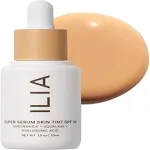
Look for EU-formulated brands. Brands that sell in France or other EU markets are already required to be PFAS-free in their formulations. ILIA Beauty, RMS Beauty, and Kjaer Weis all formulate to EU standards. The ILIA Super Serum Skin Tint SPF 40 is a foundation that works as well as conventional products and contains zero fluorinated compounds.
Read ingredient labels for fluoro prefixes. “Fluoropolymer,” “perfluorodecalin,” “polytetrafluoroethylene” on a cosmetic label is a red flag. If you see any ingredient starting with “fluoro” or “perfluoro,” set the product down.
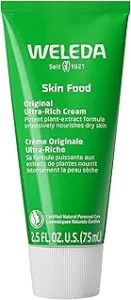
For body care and cleansing, simple formulations are almost always safer. Dr. Bronner’s Pure Castile Liquid Soap has six ingredients, all organic. Weleda Skin Food is a certified-organic multi-use cream (body, face, cuticles, dry patches) with zero synthetic chemicals and zero fluorinated compounds.
For serums, EWG Verified status is a reliable filter. Cocokind’s Vitamin C Serum carries EWG Verified and publishes full ingredient sourcing, which is still rare in the personal care space.
The cleanest shortcut we’ve found: if a brand’s website shows they sell in France, their cosmetics formulations are legally required to be PFAS-free as of 2026. That one data point does more work than reading every ingredient label individually. It doesn’t cover cookware or clothing from the same brand, but for personal care, it’s a reliable indicator of PFAS compliance.
Non-toxic personal care labels guide
Frequently Asked Questions
Is PFAS in cosmetics actually dangerous?
PFAS in cosmetics can be absorbed through skin during daily use, and cosmetics are one of several meaningful exposure routes, particularly for heavy daily users of waterproof products. Research by Dr. Leonardo Trasande and colleagues has associated elevated PFAS body burden with endocrine disruption, reduced antibody response to vaccines, thyroid dysfunction, and some cancer outcomes [human epidemiological]. The C8 Science Panel established the strongest causal-grade evidence for PFOA specifically. France banned PFAS in personal care on January 1, 2026, citing the class’s persistence and bioaccumulation [regulatory review]. For most consumers, drinking water and food packaging are larger total contributors to body burden than cosmetics (CDC NHANES biomonitoring).
How do I know if my makeup has PFAS?
Check the ingredient list for anything starting with “fluoro” or “perfluoro,” PTFE (polytetrafluoroethylene), or fluoropolymers. The EWG’s Skin Deep database lets you search your specific products and flags PFAS ingredients by name. Mascaras, waterproof foundations, and long-wear lip products are the highest-risk categories.
What ingredients are PFAS in cosmetics?
Common PFAS ingredients in cosmetics include: polytetrafluoroethylene (PTFE), fluoropolymers, perfluorodecalin, polyperfluoromethylisopropyl ether, and any ingredient containing “fluoro” or “perfluoro” in its name. These are used for waterproofing in mascaras, texture in powders, and longevity in foundations and lip products.
Are PFAS-free cosmetics as effective as conventional ones?
Yes, with the right brands. ILIA, RMS Beauty, and Kjaer Weis all produce products that perform comparably to conventional cosmetics without fluorinated compounds. PFAS are ingredients of convenience, not necessity. European brands have been formulating without them since restrictions began tightening, and the market for high-performing PFAS-free cosmetics is larger and better than it was even three years ago.
Which cosmetic products are most likely to contain PFAS?
Waterproof mascaras and foundations are most likely to contain PFAS, followed by long-wear lip products and sunscreens with extended-wear claims. Waterproofing and longevity are the functional properties fluorinated compounds provide. If a product claims “waterproof” or “long-lasting” without specifying PFAS-free, check the ingredient list. Powders and blushes with unusually silky textures may also contain PTFE.
Does the US have any PFAS regulations for cosmetics?
There is no federal PFAS restriction in US cosmetics as of April 2026. The FDA’s MoCRA reform (2022) did not ban PFAS from personal care products. Several states have acted: California (effective January 2025), Washington, Maryland, and Minnesota have PFAS cosmetics bans. Colorado, Illinois, and New Jersey have broader PFAS product restrictions. If you live in most other states, you have no regulatory protection.
Our Take
France restricted PFAS as a class in cosmetics. ECHA backed a broad universal restriction in March 2026 [regulatory review]. The US, operating under a risk-based framework, has moved slower on cosmetics and in 2025-2026 narrowed the 2024 drinking water rule. These are genuinely different regulatory philosophies, not simply “Europe right, US wrong.” The precautionary principle and risk-based assessment optimize for different errors, and each has costs.
What’s uncontroversial is that PFAS are persistent and bioaccumulative, that human half-lives are measured in years, and that reducing ongoing exposure is sensible for the general population while the dose-response picture for most individual compounds continues to be characterized.
Practical steps with the best evidence-to-effort ratio: use an NSF-certified PFAS-reducing water filter, skip stain-resistant coatings on new upholstery, and check waterproof or long-wear cosmetics on EWG Skin Deep. These won’t eliminate PFAS exposure, but they’re the consumer-level levers with the strongest supporting case right now.
Step-by-step guide to reducing PFAS in your body
You Might Also Like
- What Are PFAS? A Complete Guide to Forever Chemicals
- State Chemical Bans Tracker: PFAS, Flame Retardants, and More
- How to Reduce PFAS in Your Body
- FDA Regulation of Cosmetics: The Massive Gap You Should Know About
- Is Non-Stick Cookware Safe?
- PFAS Ban by State 2026: Every Product Now Banned in Your State
- Chemicals Banned in the EU but Legal in the US: The Complete List (2026)
- Maine PFAS Ban 2026: Full List of Product Categories Now Restricted
- What Is Triclosan? (Banned from Soap, Still in Your Toothpaste)
- PFAS-Free Brands: Every Company That Has Eliminated Forever Chemicals (2026)
- Bryan Johnson Just Admitted His Backyard Had Toxic Artificial Turf (Here’s What’s Actually in It)
- New Study: PFAS in Your Blood Could Have Weakened Your COVID Immunity by 40%
Safer Alternatives
If Europe’s PFAS ban highlights products still on US shelves, these guides cover alternatives already meeting the stricter standard:
- Best Non-Toxic Cookware in 2026 - PFAS-free ceramic and cast iron picks
- The Water Filters for PFAS Our Editors Trust - NSF-certified filters for home use
- The Non-Toxic Bed Sheets We Sleep On - sheets without PFAS-based treatments, matching EU textile standards
Sources
- European Chemicals Agency (ECHA). “Universal PFAS Restriction Opinion.” ECHA.europa.eu, March 26, 2026.
- French Government. Decree No. 2022-1489 on PFAS in Cosmetics. Legifrance.gouv.fr, January 1, 2026. (Légifrance)
- Environmental Working Group. “Tap Water Database.” EWG.org, 2023.
- Environmental Working Group. “Skin Deep Cosmetics Database.” EWG.org.
- US EPA. “PFAS National Primary Drinking Water Regulation.” EPA.gov.
- NYU Grossman School of Medicine. Environmental Pediatrics Research Program. Med.NYU.edu.
- Swan, Shanna H. Count Down. Scribner, 2021.
- California Air Resources Board / California DTSC. AB 2771 - PFAS in Cosmetics. DTSC.ca.gov.
- European Commission. “Regulation (EC) No 1223/2009 on Cosmetic Products.” EUR-Lex.
- U.S. FDA. “Modernization of Cosmetics Regulation Act of 2022 (MoCRA).” FDA.gov.