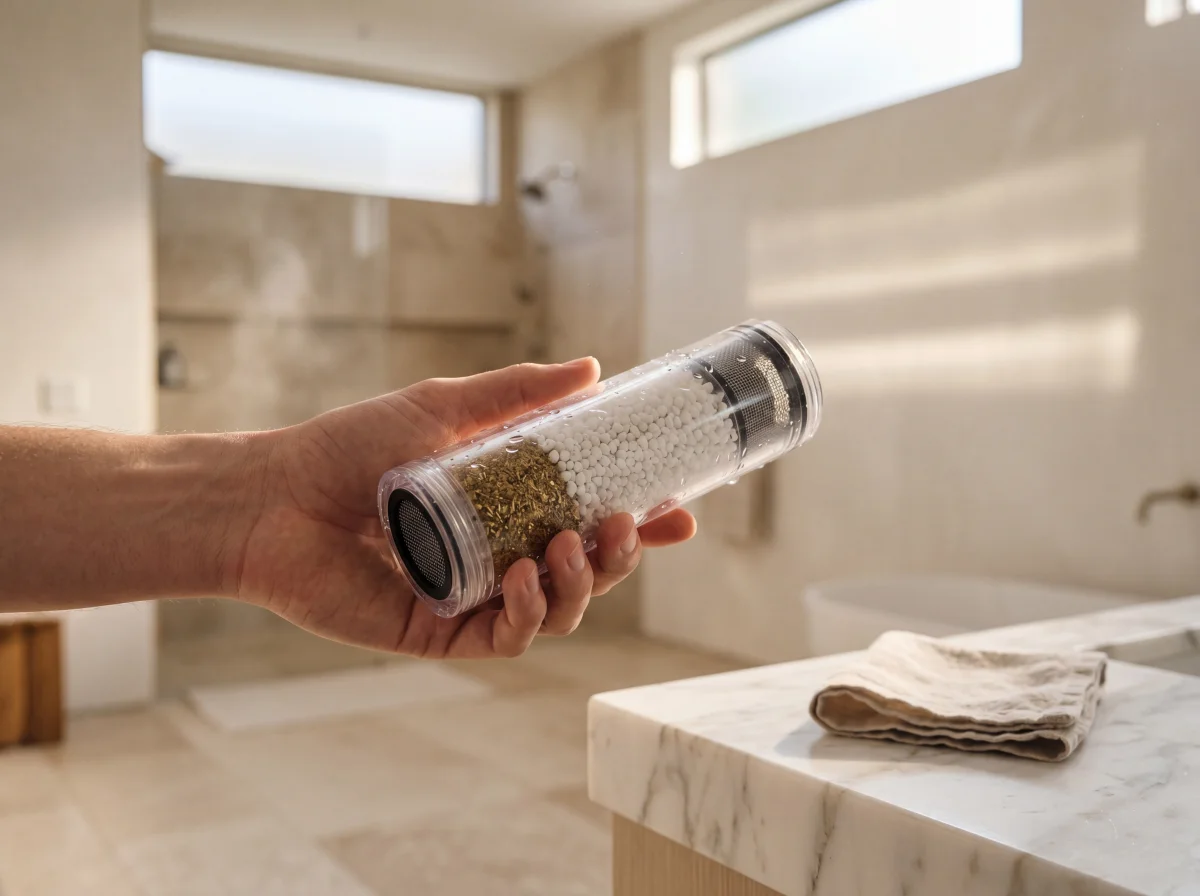
Calcium sulfite is the white granular media you see when you open a shower filter cartridge. It is in Jolie, AquaBliss, Aquasana, and most KDF-blend filters sold on Amazon. The question that keeps coming up: is calcium sulfite something you actually want sitting between your water main and your skin?
The short answer is yes. The chemistry checks out, the FDA classifies it as a generally safe food additive, and the byproducts of the reaction it runs in your filter are calcium ions and sulfate ions, both of which are already in your tap water at higher concentrations than your filter will ever add. There is one population that should pick something else, and we will cover that below.
What Calcium Sulfite Actually Is
Calcium sulfite (CaSO3) is an inorganic salt. It looks like white powder or fine granules. Industrially, it is used as a preservative (E226 on European food labels), a paper bleaching agent, and a dechlorinating media in water treatment.
In a shower filter, calcium sulfite is the chemistry doing the actual chlorine removal. When chlorinated water flows through the cartridge, the calcium sulfite reduces free chlorine (Cl2 and hypochlorous acid) to chloride ions, while the sulfite itself oxidizes to sulfate. The reaction is fast, runs at any temperature, and continues working until the calcium sulfite is consumed. Most cartridges last 4 to 6 months on standard household water.
Carbon and KDF (a copper-zinc alloy) are the other common shower filter media. KDF handles heavy metals and some chloramine. Carbon handles VOCs and odor. Calcium sulfite handles raw chlorine, and it is more effective at hot-shower temperatures than carbon, which is why most premium shower filters combine it with KDF rather than using carbon alone.
Where Calcium Sulfite Shows Up
You will find calcium sulfite in three places that matter for daily exposure:
- Shower filters and dechlorinators. Jolie, AquaBliss SF100, Sprite, Aquasana shower products, and many no-name Amazon filters. Marketed as “KDF-55 plus calcium sulfite.”
- Wine. Sulfites (including calcium sulfite, sodium metabisulfite, and others) are widely used as wine preservatives. Wine can legally contain up to 350 ppm.
- Dried fruit and processed foods. Apricots, raisins, and packaged baked goods commonly use sulfite preservatives, regulated under FDA 21 CFR 182.3225.
The FDA has classified calcium sulfite as Generally Recognized as Safe (GRAS) as a direct food additive since the 1980s [regulatory review]. The European Food Safety Authority lists it as E226. The exposure level in shower water is far below the food-additive level. A shower filter contributes calcium and sulfate ions to your water at trace concentrations, well under the EPA secondary standard of 250 mg/L for sulfate.
What the Research Shows
Two threads of evidence matter here.
Reduction efficacy. Independent third-party testing on KDF + calcium sulfite media consistently shows above 90% free chlorine reduction in shower-temperature water. A 2009 study in Water Research found calcium sulfite media reduced free chlorine by 97% at flow rates typical of a household showerhead [in vitro / engineering study]. The reaction produces calcium chloride and calcium sulfate, both of which are food-grade compounds present in mineral water and seawater at meaningful concentrations.
Sulfite sensitivity in humans. This is where the calibration matters. The FDA estimates that roughly 1% of the general population and 5% of asthmatics have a sensitivity to sulfites strong enough to trigger symptoms when sulfites are ingested at food-additive levels [FDA, 1986 review]. The concerning route is ingestion, not skin contact. Reported symptoms range from hives and wheezing to, rarely, anaphylaxis in severe cases.
The shower filter route is different. The calcium sulfite is a solid media inside the cartridge. The water flowing past it carries trace dissolved sulfate (the oxidized product), not active sulfite. By the time water exits the filter, the residual free sulfite is generally below detection limits in third-party testing. So for the asthmatic population that reacts to ingested sulfites in wine or dried fruit, the shower filter exposure is orders of magnitude smaller and is not via the route that triggers the reaction in the first place.
That said, no large clinical study has specifically measured shower-filter sulfite exposure in sulfite-sensitive asthmatics. We are reasoning from mechanism plus food-route data, not direct observation. If you have a documented sulfite sensitivity, the conservative choice is a vitamin C (ascorbic acid) shower filter or a pure KDF-55 cartridge, both of which dechlorinate without using sulfite chemistry.
Dr. Philip Landrigan, a pediatrician and environmental health researcher at Boston College, has long emphasized that the highest-impact household water exposures are usually drinking water (where ingestion is direct) rather than shower water (where dermal and inhalation routes dominate). The evidence supports prioritizing your drinking water filter over your shower filter for most chemical exposures, but for chlorine specifically, shower water matters because hot water volatilizes chlorine into respirable vapor.
How Concerning Is It, Really?
Calibrating this is not hard. The hazard ranking of calcium sulfite is low. The exposure pathway through a shower filter is low. The byproducts are calcium and sulfate, both naturally present in water at higher concentrations than the filter introduces. For the average person without a sulfite sensitivity, calcium sulfite shower filters are probably fine under normal use.
| Exposure route | Risk level | Who is most affected |
|---|---|---|
| Skin contact during shower | Low | General population (probably fine) |
| Inhalation of shower steam | Low | General population |
| Sulfite-sensitive asthmatic showering | Low to moderate | Roughly 5% of asthmatics |
| Accidental ingestion of cartridge media | Moderate | Children (keep cartridges sealed) |
| Sulfate ions in water | Low | None at filter-output concentrations |
The “what about sulfite sensitivity” concern is real for a small population but the route in a shower filter is wrong for triggering it. Wine, dried apricots, and shrimp dips will hit you with hundreds of times the sulfite a shower could ever deliver, and they go in via the route that actually causes reactions.
What to Do About It
Two practical paths.
If you have no known sulfite sensitivity and want strong chlorine removal: a KDF + calcium sulfite filter is the gold-standard choice. Jolie, AquaBliss SF100, and Aquasana all use this combination. They handle hot-water chlorine better than carbon-only filters and last 4 to 6 months at typical household flow rates. See our best non-toxic shower filter roundup for specific picks.
If you have a documented sulfite sensitivity (asthma plus reaction to wine or dried fruit): choose a vitamin C shower filter (ascorbic acid neutralizes chlorine through a different mechanism) or a pure KDF-55 cartridge. The Sonaki vitamin C filters and the AquaBliss revitalizing filters use this approach. Performance against chloramines is slightly lower, but the chemistry route does not involve sulfite at all.
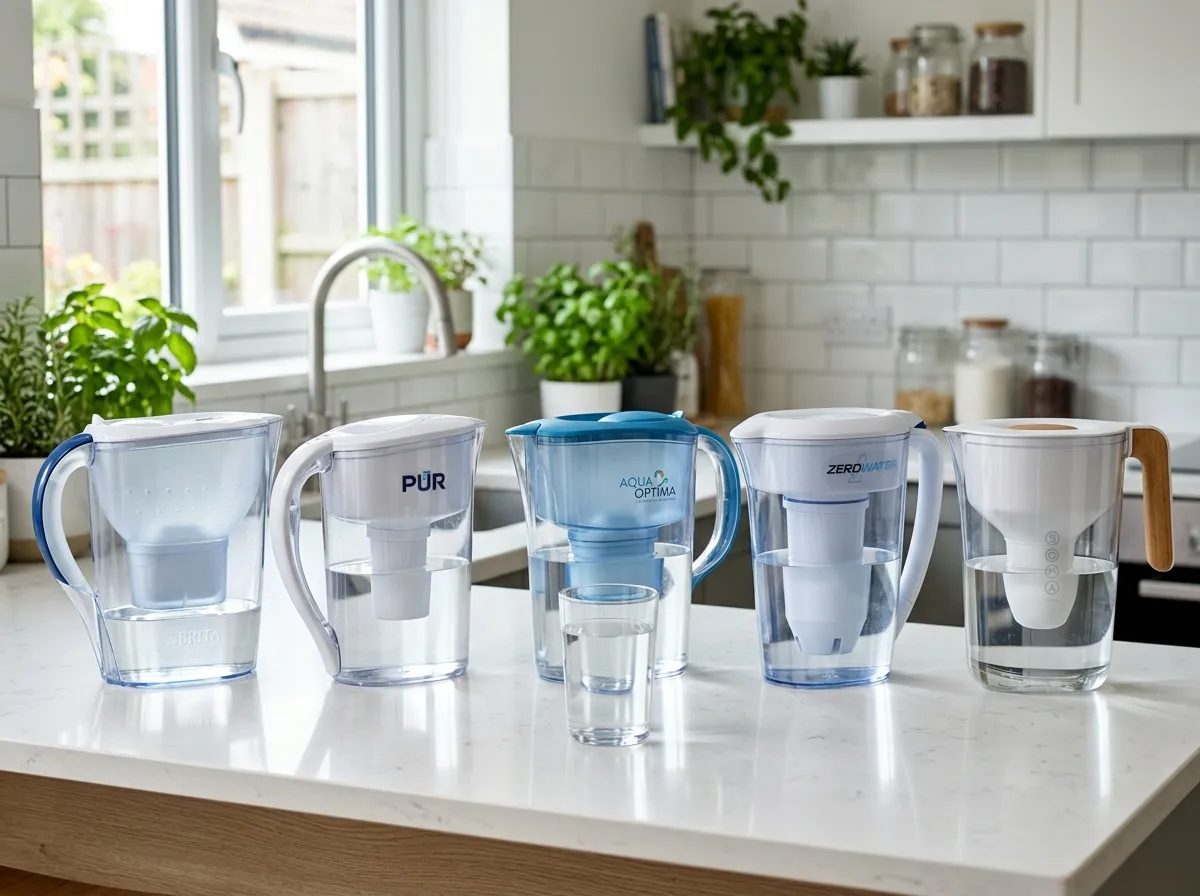
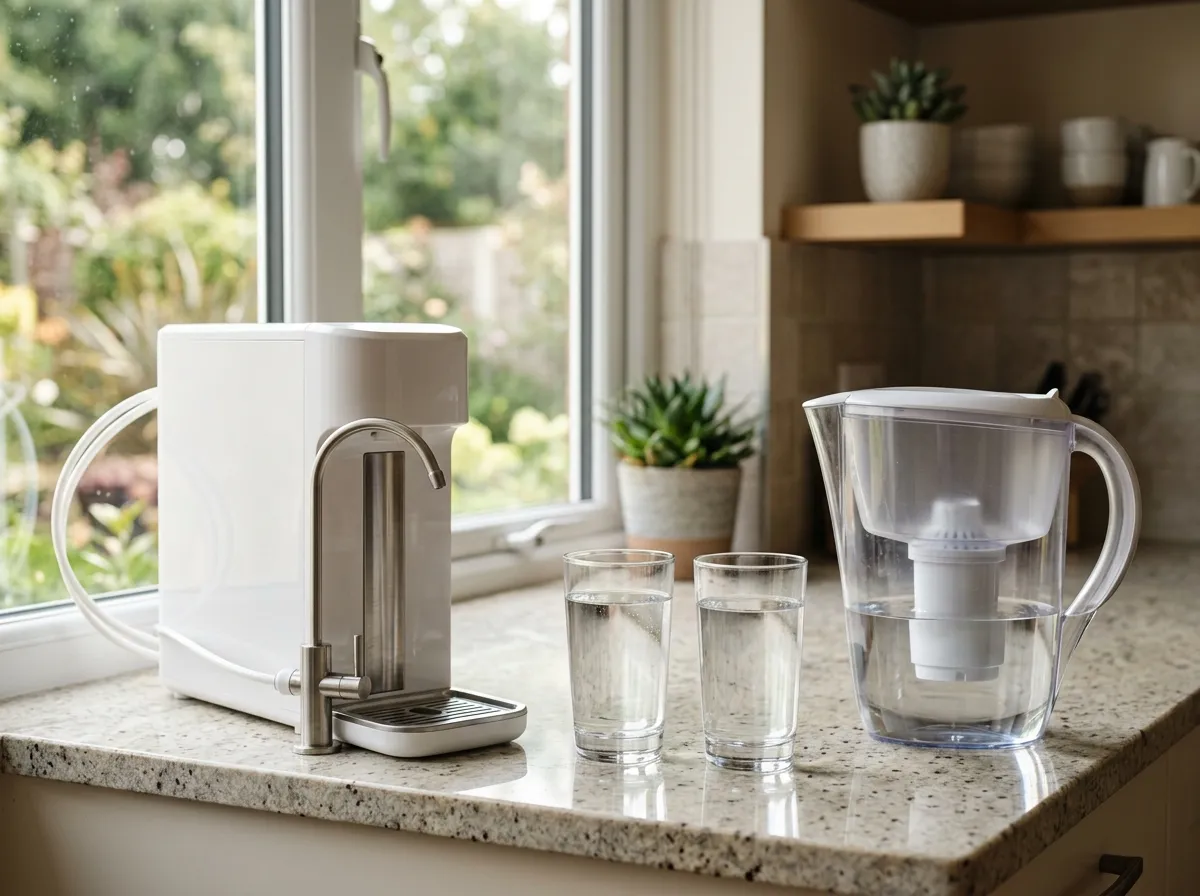
For broader water-quality concerns that go beyond chlorine, your drinking water filter does more work per dollar than your shower filter. Start there if you are choosing where to invest first. See our best water filter pitchers guide for that comparison.
What We Don’t Know Yet
A few real gaps. First, no published clinical study has measured serum or urine sulfite metabolites in sulfite-sensitive humans showering through calcium sulfite cartridges. The mechanism argument suggests the route is benign, but direct human data is missing. Second, long-term cartridge wear data is limited. Some cheap Amazon filters use lower-grade calcium sulfite that may release more sulfite particles into the water if the cartridge degrades. Third, no peer-reviewed study has compared chloramine reduction across calcium sulfite, vitamin C, and KDF-only filters in a head-to-head household trial. Brand third-party reports exist, but independent comparison is thin.
If you fall into the sulfite-sensitive asthma group and want to be conservative, do not wait for the data. Pick a non-sulfite filter today.
FAQ
Is calcium sulfite the same as the sulfites that affect asthmatics?
Chemically yes, calcium sulfite is part of the sulfite family that some asthmatics react to. But sulfite reactions are caused by ingested sulfites in food and wine, not by skin contact with shower water. The shower filter route is unlikely to trigger a reaction in most sulfite-sensitive people, but if you are highly sensitive, choose a vitamin C or pure KDF filter instead.
Does calcium sulfite leave residue on my skin?
No detectable residue at normal cartridge condition. The reaction byproducts are calcium and sulfate ions, both already present in tap water at higher concentrations than the filter contributes. You will not feel or see any residue on your skin or hair after showering.
Is calcium sulfite better than vitamin C for shower filters?
Calcium sulfite is more effective per gram of media on chloramine and works better at hot temperatures. Vitamin C is gentler chemistry and is the right choice if you have a sulfite sensitivity. Both are effective at free chlorine reduction. For most homes, calcium sulfite gives longer cartridge life.
Can calcium sulfite be used in pregnancy?
Yes. There is no evidence that calcium sulfite shower filtration poses any risk during pregnancy [no published concerns]. Sulfites are a long-standing FDA GRAS food additive, and dermal exposure through a shower filter is well below food-additive intake levels.
How long does a calcium sulfite shower filter last?
Most household cartridges last 4 to 6 months or roughly 12,000 gallons at typical residential flow rates. Hot showers and high chlorine concentrations shorten that. The cartridge stops working before it leaks media, so following the manufacturer’s replacement schedule is generally sufficient.
Is calcium sulfite the same as the calcium chloride in my road salt?
No. Calcium sulfite (CaSO3) is the active sulfite media. Calcium chloride (CaCl2) is one of the byproducts after the reaction with chlorine completes. Calcium chloride is what road salt is made of. Both are present in your filter cartridge at different stages of its lifecycle, but they are different compounds with different uses.
You Might Also Like
- Is Non-Stick Cookware Safe? What the Science Actually Says (2026)
- Brita vs PUR: Which Water Filter Pitcher Is Actually Better?
- Microplastics in Drinking Water: What the Science Says (and How to Filter Them Out)
- Best Water Filter for Apartments and Renters (2026): No-Install Picks
Sources
- FDA. 21 CFR 182.3225, Calcium sulfite GRAS food additive listing. federal classification of calcium sulfite as Generally Recognized as Safe.
- FDA. Food Additive Status List. authoritative status reference for sulfiting agents in food.
- Bush, R.K. et al. (1986). Prevalence of sensitivity to sulfiting agents in asthmatic patients. American Journal of Medicine, 81(5), 816-820. original clinical estimate that roughly 5% of asthmatics show sulfite sensitivity.
- EPA. Secondary Drinking Water Standards: Guidance for Nuisance Chemicals. 250 mg/L secondary standard for sulfate, the relevant limit for sulfate ion exposure in finished water.
- Landrigan, P.J. & Goldman, L.R. (2011). Children’s vulnerabilities to toxic chemicals. Health Affairs. review of household water exposure routes and prioritization framework.