

On July 1, 2026, Minnesota becomes the first jurisdiction in the world to require manufacturers to publicly disclose every product they sell containing intentionally added PFAS.
That’s not a typo. The world’s broadest forever-chemical disclosure rule takes effect in a state of 5.7 million people, and because manufacturers can’t easily make state-specific versions of cookware or clothing, the rule will produce a database that effectively documents PFAS use across the US consumer market.
The law is called Amara’s Law, named for Amara Strande, a Minnesota teenager who died of a rare liver cancer linked to PFAS contamination from a 3M plant near her childhood home. Her family advocated for the legislation; Governor Tim Walz signed it in May 2023. The reporting requirement is the second half of a two-part structure that has already banned PFAS in 11 product categories starting January 1, 2025.
Here’s what the law actually requires, what manufacturers will have to report, and what it means for what’s on shelves in Minnesota and beyond.
What Amara’s Law Does
Amara’s Law (Minnesota Statutes Chapter 116.943) does two things in sequence.
Phase 1, effective January 1, 2025 (and continuing): Bans the sale and distribution of products with intentionally added PFAS in 11 categories.
Phase 2, effective July 1, 2026: Requires every manufacturer selling any product into Minnesota that contains intentionally added PFAS to report that product to the Minnesota Pollution Control Agency (MPCA).
Phase 3, effective January 1, 2032: Bans intentionally added PFAS in all product categories sold in Minnesota, with limited “currently unavoidable use” exemptions granted by the MPCA.
The disclosure requirement (Phase 2) is the part that will reshape the consumer market the fastest. By the time Phase 3 hits in 2032, most manufacturers will have either reformulated to PFAS-free or withdrawn from the Minnesota market.
What Manufacturers Must Report
The MPCA published draft reporting rules in late 2025 and finalized them in early 2026. Every manufacturer selling a PFAS-containing product into Minnesota must submit:
- Product name and category (cookware, cosmetic, textile, etc.)
- Brand and model identifiers
- The specific PFAS compound or mixture used (by CAS number, the standardized chemical identifier)
- The function of the PFAS in the product (waterproofing, grease resistance, nonstick, etc.)
- The amount of PFAS present (in parts per million or parts per billion)
- Manufacturer contact information
The reports will be submitted through an MPCA online portal and made publicly accessible. Confidential business information protections apply only to specific formulation details, not to the existence or category of PFAS use.
This is the broadest disclosure requirement of its kind anywhere in the world. The European Union’s REACH regulation requires manufacturer registration of PFAS but doesn’t require public product-level disclosure. California’s Proposition 65 requires consumer warning labels on products containing listed chemicals but doesn’t require a public database.
According to NonToxicLab’s review of regulatory tracking from MultiState and Safer States, the Minnesota disclosure database will likely become the de facto national reference for which brands use PFAS in which products.
Why This Matters Beyond Minnesota
Manufacturers selling consumer products into the US generally don’t make state-specific versions. Reformulating a cookware line for one state of 5.7 million people doesn’t pencil out. So the Minnesota disclosure database will reveal which products are PFAS-containing nationwide, not just in Minnesota.
The likely manufacturer responses fall into four buckets:
- Reformulate to PFAS-free. Avoid disclosure entirely. Most cosmetics brands are taking this path because PFAS-free formulations exist for nearly every cosmetic function.
- Disclose and continue selling. For products where PFAS provides essential functionality and reformulation isn’t feasible (some specialty industrial textiles, certain medical devices), some manufacturers will disclose.
- Withdraw from Minnesota. Pull the product from the Minnesota market while continuing to sell elsewhere. This creates a customer-service problem (Minnesota residents ordering online from out of state) and is generally a transition strategy.
- Apply for an exemption. The MPCA can grant “currently unavoidable use” exemptions for essential applications without alternatives. This is intended to be narrow.
Dr. Philip Landrigan, the pediatrician who directs the Program for Global Public Health at Boston College, has argued that disclosure mandates accelerate reformulation faster than outright bans because they shift the cost of opacity onto the manufacturer. A manufacturer choosing to disclose accepts a marketing liability that often exceeds the cost of switching ingredients.
Which Product Categories Will Be Most Affected
The disclosure requirement covers all product categories not already banned under Phase 1. Based on what’s known about PFAS use in consumer products, the categories most likely to have heavy disclosure activity in 2026-2027 include:
Outdoor Apparel and Gear
PFAS-based DWR (durable water repellent) treatments are still the standard for waterproof jackets, hiking boots, tents, backpacks, and synthetic insulation. Major outdoor brands have committed to phasing out PFAS by 2025 or 2026, but legacy inventory still contains it.
PFAS-free alternatives include:
- Patagonia Torrentshell 3L Jacket - PFAS-free DWR.
- Cotopaxi Cielo Rain Jacket - PFAS-free.
Specialty Cleaning Products
Industrial cleaning products, floor finishes, and grease-cutters often use PFAS. Consumer cleaning categories were banned in Phase 1, but commercial and industrial products fall under disclosure.
For consumer use:
- Branch Basics Concentrate - PFAS-free.
- Molly’s Suds Multi-Purpose Cleaner - PFAS-free.
Personal Care and Beauty
Long-wear and waterproof cosmetics, certain lotions, and some shampoos have historically used PFAS for water resistance and texture. Many cosmetics brands started reformulating ahead of California’s 2025 ban (AB 2771).
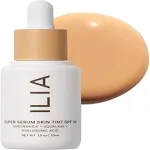
- ILIA Skin Tint - clean ingredient list.
- RMS Beauty Un Cover-Up - PFAS-free.
- Cornbread Hemp Body Wash - clean formula.
Food Service and Specialty Packaging
While consumer food packaging PFAS use was already restricted under earlier laws, specialty food service items, fast-food wrappers used commercially, and some food contact materials still contain PFAS and will require disclosure.
Pet Products
Pet food bags, litter, and certain pet beds contain PFAS for grease resistance or stain repellency. These weren’t included in the Phase 1 ban but fall under disclosure.
Auto Care and Home Maintenance
Stain-resistant fabric protectors, car waxes, water repellents, and some sealants contain PFAS. These will require disclosure starting July 2026.
Electronics
Certain cables, semiconductors, and electronic component manufacturing use PFAS. These applications often qualify for “currently unavoidable use” exemptions but still require initial disclosure.
What This Means for Minnesota Shoppers
The most immediate impact is the disappearance of certain products from store shelves. Manufacturers who don’t want to disclose, can’t easily reformulate, and don’t qualify for exemptions will pull their products from Minnesota.
In practice:
- Cookware: Already PFAS-free options (ceramic, stainless, cast iron) are dominating the Minnesota market.
- Cosmetics: Brands have largely reformulated. Hard-to-replace categories (long-wear foundations, certain mascaras) may withdraw.
- Outdoor apparel: Slower transition. Expect reduced selection of waterproof jackets and gear in Minnesota stores in 2026-2027.
- Specialty industrial products: More disclosure, fewer withdrawals.
For everyday shopping, the biggest practical change is that you can check the MPCA database before buying any product to see if it’s been reported as containing PFAS. This is especially useful for items where PFAS use isn’t obvious (pet food bags, fabric protectors, certain personal care products).
What This Means for Brands
The disclosure database creates a new marketing dynamic. Brands that have already reformulated to PFAS-free will be conspicuously absent from the disclosure list, which becomes a marketing point. Brands that disclose face customer questions and potential litigation exposure.
Dr. Leonardo Trasande, the NYU Langone pediatrician and author of Sicker, Fatter, Poorer, has argued that disclosure mandates fundamentally change the chemical-policy game by making the burden of proof rest on the manufacturer rather than the consumer. Once disclosure is mandatory, customers don’t have to demand transparency. They get it by default.
For brands selling into Minnesota, the practical playbook for 2026 looks like this:
- Audit every product for intentionally added PFAS. Many brands don’t know which of their products contain PFAS because the chemicals were added by suppliers.
- Identify PFAS-free alternatives for each function (waterproofing, stain resistance, etc.).
- Reformulate where economically feasible.
- Disclose where reformulation isn’t feasible, ideally with simultaneous transparency communications.
- Withdraw from Minnesota for products where neither disclosure nor reformulation works.
The companies that have moved fastest on this are the cosmetics brands (most California-compliant by 2025), the outdoor apparel brands with public PFAS phase-out commitments (Patagonia, REI Co-op brand, Cotopaxi), and the cookware brands selling into the green-coating market.
Federal Implications
The Minnesota disclosure law does not preempt other state laws and is not preempted by federal law. The Senate’s S.4153 (the Forever Chemical Regulation and Accountability Act of 2026) does not include preemption language. The House’s HB 4253 includes preemption provisions that environmental groups oppose.
If federal preemption passes, the Minnesota disclosure requirement could be affected, but the existing state ban (Phase 1) and the 2032 broad ban (Phase 3) would likely survive in some form, since federal preemption typically applies to specific regulatory standards rather than to product bans.
For the broader state-by-state PFAS picture, see our PFAS state ban tracker.
What You Can Do Today
Even before the disclosure database goes live in July 2026, you can reduce PFAS exposure now:
Filter your drinking water
The CDC has detected PFAS in the blood of 97% of Americans. Drinking water is a major exposure route. Two filters proven in independent testing to remove PFAS:
- AquaTru Classic Countertop RO - NSF-certified for PFAS removal.
- Clearly Filtered 3-Stage Under Sink - removes PFAS without removing minerals.
For more options, see our best water filters for PFAS removal guide.
Replace nonstick cookware
PTFE (the original Teflon) is itself a PFAS. Switch to ceramic, stainless steel, cast iron, or carbon steel.
- Caraway 12-Piece Cookware Set - ceramic-coated, PFAS-free.
- Lodge 12-Inch Cast Iron Skillet - cheapest forever-pan.
Switch to PFAS-free dental floss
Most conventional floss uses PTFE for its slippery glide. PFAS-free options:
- Risewell Natural Floss - silk floss with candelilla wax.
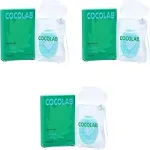
- Cocofloss - polyester with coconut oil coating.
For a fuller PFAS-reduction plan, see our PFAS exposure complete guide and non-toxic product swap priority list.
Final Verdict
Minnesota’s disclosure law is the most ambitious chemical-transparency regulation in modern US history. It will reshape consumer product markets nationwide because manufacturers can’t easily make state-specific versions, and the resulting database will become a default reference for which brands use PFAS in which products.
If you live in Minnesota, the day-to-day impact is mostly invisible until July 2026 when the database goes live. After that, you’ll have a tool to check any product before buying. If you live anywhere else in the US, the indirect impact is the wave of national reformulations the law triggers.
The 2032 broad ban is when the regulatory map fully closes. By then, intentionally added PFAS in consumer products will be a niche market, not a mass-market default.
Frequently Asked Questions
When does Minnesota’s PFAS disclosure law take effect?
The disclosure requirement under Amara’s Law takes effect July 1, 2026. The Phase 1 product ban (covering 11 categories) has been in effect since January 1, 2025.
Will the disclosure database be public?
Yes. The MPCA’s online disclosure portal will be publicly accessible. Specific formulation details may be kept confidential, but the existence and category of PFAS use will be publicly visible.
Does Amara’s Law apply outside Minnesota?
The law itself only regulates products sold into Minnesota. But because manufacturers don’t typically make state-specific versions, the disclosed information effectively applies to those products nationally. The disclosure database will function as a national reference.
What products are already banned under Phase 1?
As of January 1, 2025, intentionally added PFAS is banned in cleaning products, cookware, cosmetics, dental floss, juvenile products, menstrual products, fabric treatments, ski wax, carpets and rugs, and upholstered furniture. Indoor textile furnishings were added January 1, 2026.
What’s the penalty for not disclosing?
Manufacturers who fail to disclose are barred from selling the product in Minnesota and face civil penalties enforced by the MPCA and the Minnesota Attorney General.
Can manufacturers ask for exemptions?
Yes. The MPCA can grant “currently unavoidable use” exemptions for products where PFAS provides essential functionality and no alternative exists. Exemptions are intended to be narrow and time-limited.
What we don’t fully know: Long-term data on low-level chronic exposure remains limited for many of these categories, and evidence on some chemical mixtures is still mixed. Researchers continue to refine exposure thresholds and update risk models as new data emerges.
You Might Also Like
- Maine PFAS Ban 2026: Full List of Product Categories Now Restricted
- How to Reduce PFAS in Your Body (What Research Shows)
- PFAS in Dental Floss: 4 Safer Picks (2026)
- What Are PFAS (Forever Chemicals)? A Plain-English Guide for 2026
Sources
- Minnesota Pollution Control Agency. “2025 PFAS Prohibitions (Amara’s Law).” https://www.pca.state.mn.us/air-water-land-climate/2025-pfas-prohibitions
- Minnesota Statutes Chapter 116.943. “Per- and Polyfluoroalkyl Substances; Restrictions; Reporting.” https://www.revisor.mn.gov/statutes/cite/116.943
- Safer States. “Minnesota’s Amara’s Law: Background and Implementation.” 2025-2026. https://www.saferstates.org/
- MultiState. “State PFAS Legislation 2026: Bans & Restrictions Update.” March 20, 2026. https://www.multistate.us/insider/2026/3/20/state-pfas-legislation-in-2026-hundreds-of-bills-across-23-states
- US Environmental Protection Agency. “Per- and Polyfluoroalkyl Substances (PFAS) National Primary Drinking Water Regulation.” April 2024. https://www.epa.gov/sdwa/and-polyfluoroalkyl-substances-pfas
- Clean Water Action. “Environment Omnibus PFAS Prevention Legislation Passes Minnesota Legislature.” 2023. https://cleanwater.org/releases/environment-omnibus-pfas-prevention-legislation-passes-minnesota-legislature
- Landrigan PJ, Raps H, Cropper M, et al. “The Minderoo-Monaco Commission on Plastics and Human Health.” Annals of Global Health. 2023;89:23. https://annalsofglobalhealth.org/articles/10.5334/aogh.4056
This information reflects regulatory status as of April 2026. Laws and reporting requirements change. Verify current status with the Minnesota Pollution Control Agency before relying on this information for compliance purposes.