In April 2026, the EPA published the draft Sixth Contaminant Candidate List, known as CCL 6. For the first time in the program’s history, microplastics appeared on the list as a priority drinking water contaminant group. Pharmaceuticals were also added.
The same week, HHS Secretary Robert F. Kennedy Jr. announced that the Department of Health and Human Services would commit $144 million to a new research program focused on measuring microplastics in human bodies, evaluating health effects, and exploring methods to remove them.
This is the most significant federal action on microplastics in US history. It does not mean that microplastics are now regulated under the Safe Drinking Water Act. It means they’re officially on the path that ends in regulation. That path typically takes 5 to 12 years.
Here’s what CCL 6 actually does, what the timeline looks like, what the HHS research program is designed to answer, and what you can do at home today while the regulatory process runs.
What the Contaminant Candidate List Is
The CCL is a creature of the Safe Drinking Water Act (SDWA). It was created by the 1996 SDWA amendments as a structured way for the EPA to identify chemicals and microbiological contaminants that may need to be regulated in public water systems but aren’t currently subject to enforceable national standards.
The CCL process works like this:
- Listing. The EPA publishes a draft list every five years, identifying contaminants of potential concern.
- Public comment. The draft is open to public input.
- Final listing. The EPA publishes a final CCL after considering comments.
- Monitoring (Unregulated Contaminant Monitoring Rule). Public water systems sample for selected listed contaminants. This builds a national occurrence database.
- Regulatory determination. Based on monitoring data and health effects research, the EPA decides whether to regulate the contaminant under SDWA.
- Rulemaking. If the EPA decides to regulate, it goes through the formal rulemaking process to set a Maximum Contaminant Level (MCL) or Treatment Technique Requirement.
This process takes years. PFOA and PFOS, which were on the original CCL in 1998, didn’t get enforceable federal MCLs until April 2024. That’s a 26-year timeline. The 1996 amendments were intended to speed regulation. In practice, the political and scientific complexity has slowed things substantially.
What CCL 6 Includes
The draft CCL 6 published in April 2026 includes microplastics and pharmaceuticals as the two new high-profile additions, alongside continued listings of compounds carried over from CCL 5.
The microplastics listing covers microplastic and nanoplastic particles in drinking water. The pharmaceutical listing covers a broad category of drug residues that have been increasingly detected in source water.
Other contaminants on CCL 6 include:
- Various PFAS compounds beyond the six already regulated
- 1,4-dioxane (a solvent contaminant in groundwater)
- Manganese (relevant to drinking water aesthetics and certain health concerns)
- Several pesticides and pesticide degradates
- Cyanotoxins from harmful algal blooms
The full draft list is published in the Federal Register and is open for public comment through 2026. The final CCL 6 will be published after the comment period closes.
What CCL 6 Doesn’t Do
The most important thing to understand: a CCL listing is not a regulation. Listing a contaminant on the CCL means the EPA recognizes it as a candidate for potential future regulation. It does not impose any enforceable requirements on water utilities, chemical manufacturers, or consumers.
What CCL listing does:
- Triggers research. Federal funding for occurrence monitoring and health effects studies typically follows.
- Builds the evidence base. Data collected under the Unregulated Contaminant Monitoring Rule is used in eventual regulatory decisions.
- Signals policy intent. Listing tells utilities, manufacturers, and states that a contaminant is on the regulatory radar.
What CCL listing doesn’t do:
- Set drinking water limits. No MCLs are set by listing alone.
- Require utility action. Utilities don’t have to remove listed contaminants until regulation happens.
- Trigger consumer warnings. Listed contaminants don’t appear on consumer water quality reports unless an MCL exists.
For most readers, the practical implication of microplastics being on CCL 6 is that the federal government has now officially recognized this is a regulatory problem worth working on. The actual at-home action plan has not changed.
Why the Listing Took So Long
The science on microplastics in drinking water has been clear for years. The 2018 Orb Media / SUNY Fredonia analysis found microplastics in 93% of bottled water samples tested. The 2024 Columbia University study found roughly 240,000 plastic particles per liter in bottled water using improved detection methods.
Yet microplastics didn’t make CCL 5 in 2022. Why?
Several reasons:
- Definitional problems. “Microplastic” covers a vast range of polymer types and particle sizes (1 nanometer to 5 millimeters). Setting a regulatory threshold requires a defined target.
- Detection method standardization. Older optical microscopy could only detect particles above ~10 microns. Newer Raman and pyrolysis-GC/MS methods detect down to nanoplastic ranges, but standardization across labs is incomplete.
- Health effects evidence. Until recently, most health-effect data was from animal models or in-vitro studies. The 2024 Marfella NEJM study (microplastics in carotid plaques associated with cardiovascular events) and the 2025 UNM Nature Medicine study (microplastics in human brain tissue increasing 50% in 8 years) shifted the evidence base substantially.
- Treatment technology data. Regulators want evidence that treatment technologies can effectively remove a listed contaminant. Reverse osmosis, ultrafiltration, and certain advanced oxidation processes have shown effectiveness, but operational data at municipal scale is still developing.
The CCL 6 listing in April 2026 reflects all four of those factors finally being far enough along to justify the formal step.
What the HHS $144 Million Program Funds
The HHS announcement in April 2026 committed $144 million across five years to a research program focused on microplastics and human health. Key elements:
- Body burden measurement. Developing validated clinical and research methods for measuring microplastic concentrations in human blood, tissue, and excreta.
- Health effects studies. Funding for prospective cohort studies linking measured exposure to health outcomes.
- Removal research. Investigating whether microplastics already in human tissue can be reduced through any clinical intervention.
- Source apportionment. Quantifying the relative contribution of different exposure routes (water, food, air, dust) to total body burden.
This is the largest single federal commitment to microplastics health research to date. It complements the EPA’s regulatory track by building the science needed to set meaningful exposure thresholds.
Dr. Philip Landrigan, the pediatrician and epidemiologist who directs the Program for Global Public Health at Boston College and co-led the Minderoo-Monaco Commission on Plastics and Human Health, has called the combined EPA listing and HHS funding the most significant US federal action on plastic-associated health risks in decades. His commission’s 2023 report in Annals of Global Health argued that the combined health burden of plastics across the lifecycle (extraction, manufacturing, use, and disposal) justifies precautionary action even before causal evidence on every specific endpoint is conclusive.
According to NonToxicLab’s review of the announced research priorities, the timeline for actionable findings from the HHS program is roughly 3 to 7 years. The first body-burden measurement standardization is expected in late 2026 or 2027.
The Realistic Regulatory Timeline
If the CCL 6 process follows the typical pattern, here’s what happens next:
- 2026: Public comment on draft CCL 6. Final list published late 2026 or early 2027.
- 2027-2028: Microplastics potentially included in the next round of the Unregulated Contaminant Monitoring Rule (UCMR 6 or 7), requiring public water systems to test for and report microplastic concentrations.
- 2028-2030: Occurrence data collection at municipal scale. HHS health effects research generates initial findings.
- 2030-2032: Regulatory determination. The EPA decides whether to proceed with rulemaking.
- 2033-2035: If yes, formal rulemaking process. Proposed and final MCL or Treatment Technique Requirement published.
- 2035-2040: Compliance deadlines for public water systems.
That’s optimistic. The PFOA/PFOS pathway took 26 years from initial listing to enforceable MCL. The microplastics pathway could move faster (the science has caught up faster) or slower (the definitional and methodological complexities are greater).
For consumers waiting on federal action, the practical answer is: don’t wait. Federal regulation of microplastics in drinking water is unlikely to be enforceable before 2035 at the earliest.
What You Can Do at Home Today
The CCL 6 listing doesn’t change the at-home action plan. The same interventions that reduce microplastic exposure today will continue to be the right answer regardless of what the EPA does on the regulatory side.
Filter Your Drinking Water
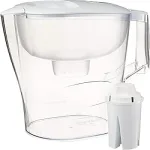
The three filtration types proven in independent testing to substantially reduce microplastics down to the nanoplastic range are reverse osmosis, certified ultrafiltration, and dense carbon block.
- AquaTru Classic Countertop RO - no plumbing, NSF-certified for PFAS and microplastics.
- Clearly Filtered 3-Stage Under Sink - dense carbon block, removes microplastics and PFAS.
- Waterdrop G3 P800 RO - tankless under-sink RO with remineralization.
For the full filter comparison, see best water filters for PFAS removal and best reverse osmosis systems.
Switch to Filtered Tap in a Refillable Bottle
Bottled water consistently tests higher for microplastics than tap water due to leaching from the PET bottle itself. The 2024 Columbia study found ~240,000 particles per liter in bottled water versus ~5.5 in tap water from the same region.
- Hydro Flask Standard Mouth 24oz - food-grade stainless, lead-free vacuum sealing.
- Klean Kanteen Classic 27oz - electropolished interior.
- Purifyou Premium Glass Water Bottle 22oz - borosilicate glass.
Reduce Other Exposure Routes
Drinking water is the biggest single source, but it isn’t the only one. Plastic food storage, nonstick cookware, synthetic clothing, and indoor dust all contribute. For the full nine-habit breakdown, see how to reduce microplastic exposure.
For the broader topic on what microplastics actually do in the body, see microplastics in the human brain.
What Utilities Will Do First
Even before federal regulation, larger water utilities are starting to voluntarily monitor for microplastics and to evaluate treatment options. Some are publishing internal occurrence data; others are participating in research collaborations with universities.
The treatment technologies that have shown effectiveness at municipal scale include:
- Coagulation and flocculation with specific coagulants tuned for nanoparticle removal.
- Granular activated carbon (GAC) in series with conventional treatment.
- Ultrafiltration membranes with pore sizes below 100 nanometers.
- Reverse osmosis for the most complete removal, used at the point of use rather than at municipal scale due to cost and waste-water generation.
For most residential users, the realistic answer is point-of-use filtration. Municipal-scale microplastic removal is technically feasible but expensive, and most utilities won’t invest until they’re regulated to do so.
State and International Context
While the EPA is on its slow CCL pathway, several states and other countries are moving faster:
- California has passed legislation requiring drinking water testing for microplastics under SB 1422 (signed 2018, with implementation rules through 2024-2026).
- The European Union restricted intentionally added microplastics in cosmetics under REACH in 2023, with phased restrictions on additional product categories continuing.
- France banned the addition of microplastics to industrial detergents and certain cosmetics under the AGEC law.
The state and international momentum supports the federal direction but doesn’t substitute for federal MCLs in US drinking water.
Final Verdict
The April 2026 CCL 6 listing for microplastics is the most significant federal step on this issue in US history, paired with the largest single federal commitment to microplastics health research through the HHS $144 million program. Both are real progress.
Both are also slow. Federal MCLs for microplastics in drinking water are unlikely to be enforceable before 2035 at the earliest, based on the typical CCL-to-rulemaking timeline. The HHS research will produce useful findings starting in 2027-2028 but won’t deliver consumer-actionable interventions for years.
The practical answer for consumers hasn’t changed. Filter your water with reverse osmosis or dense carbon block. Stop drinking from plastic bottles. Reduce other plastic-contact exposures where you can. The federal regulatory and research processes will do their work in the background.
For a fuller exposure-reduction plan, see how to reduce microplastic exposure and non-toxic product swap priority list.
Frequently Asked Questions
What is CCL 6?
CCL 6 is the draft Sixth Contaminant Candidate List, published by the EPA in April 2026 under the Safe Drinking Water Act. It identifies contaminants the EPA recognizes as candidates for potential future regulation in public drinking water. Microplastics and pharmaceuticals were added as new high-profile listings.
Does CCL 6 mean microplastics are now regulated?
No. A CCL listing is not a regulation. It means the EPA has officially recognized microplastics as a candidate for potential future regulation. The path from listing to enforceable Maximum Contaminant Level typically takes 5 to 12 years.
When will federal limits on microplastics in drinking water take effect?
Realistically not before 2035, based on the typical CCL-to-rulemaking timeline. PFOA and PFOS, which were on the original CCL in 1998, didn’t get enforceable federal MCLs until 2024. The microplastics pathway could move faster or slower.
What is the HHS $144 million microplastics program?
In April 2026, HHS Secretary Robert F. Kennedy Jr. announced a $144 million federal commitment over five years to research microplastics in human bodies, evaluate health effects, and explore methods to remove them. It complements the EPA’s regulatory track by building the science needed to set meaningful exposure thresholds.
What can I do at home now?
Filter your drinking water with a reverse osmosis or dense carbon block system, switch from bottled water to filtered tap in a stainless or glass bottle, and reduce other plastic-contact exposures (food storage, cookware, synthetic textiles). The federal process won’t deliver consumer-facing changes for years.
Are some water utilities already testing for microplastics?
Yes. California’s SB 1422 requires utility microplastics testing under state rulemaking. Several large utilities nationally are voluntarily monitoring as part of research collaborations. Routine consumer reporting in annual water quality reports is not yet required and is unlikely to be required until federal regulation moves further along.
What we don’t fully know: Long-term data on low-level chronic exposure remains limited for many of these categories, and evidence on some chemical mixtures is still mixed. Researchers continue to refine exposure thresholds and update risk models as new data emerges.
You Might Also Like
- Chlorine and Chloramine in Tap Water: What You Need to Know
- 176 Million Americans Are Drinking PFAS-Contaminated Water - Is Your Tap Safe?
- Non-Toxic Back-to-School Shopping List: Lunch Boxes, Supplies, and More
- TSCA Explained: Why 80,000+ Chemicals Have Never Been Tested
- Is Tap Water Safe to Drink in the US? What Your City’s Water Report Tells You
- What Is 1,4-Dioxane? The Contaminant Hiding in ‘Gentle’ Products
- Is Polyester Clothing Safe? Microplastics, Dyes, and Your Skin
Sources
- US Environmental Protection Agency. “Draft Sixth Contaminant Candidate List (CCL 6).” April 2026. https://www.epa.gov/ccl
- US Department of Health and Human Services. “HHS Microplastics Research Program Announcement.” April 2026. https://www.hhs.gov/about/news/index.html
- US Environmental Protection Agency. “Contaminant Candidate List (CCL) and Regulatory Determination.” https://www.epa.gov/ccl
- US Environmental Protection Agency. “Per- and Polyfluoroalkyl Substances (PFAS) National Primary Drinking Water Regulation.” April 2024. https://www.epa.gov/sdwa/and-polyfluoroalkyl-substances-pfas
- Marfella R, Prattichizzo F, Sardu C, et al. “Microplastics and Nanoplastics in Atheromas and Cardiovascular Events.” New England Journal of Medicine. 2024;390:900-910. https://www.nejm.org/doi/full/10.1056/NEJMoa2309822
- Nihart AJ, Garcia MA, El Hayek E, et al. “Bioaccumulation of microplastics in decedent human brains.” Nature Medicine. 2025. https://www.nature.com/articles/s41591-024-03453-1
- Qian N, Gao X, Lang X, et al. “Rapid single-particle chemical imaging of nanoplastics by SRS microscopy.” Proceedings of the National Academy of Sciences. 2024;121:e2300582121. https://www.pnas.org/doi/10.1073/pnas.2300582121
- Landrigan PJ, Raps H, Cropper M, et al. “The Minderoo-Monaco Commission on Plastics and Human Health.” Annals of Global Health. 2023;89:23. https://annalsofglobalhealth.org/articles/10.5334/aogh.4056
This information is for educational purposes only. Regulatory dates and program details reflect publicly available information as of April 2026. Verify current status with the EPA and HHS before relying on this information for compliance or planning purposes.