

Maine just became the first state where you cannot legally buy a nonstick pan, a tube of long-wear lipstick, or a roll of waxed dental floss in a regular store.
That’s the practical effect of LD 1503, the state’s PFAS-in-products law as amended by LD 217 in 2023. The first major wave of bans took effect January 1, 2026. Twelve product categories are now restricted from sale in Maine. More categories phase in through 2032, when intentionally added PFAS will be banned across virtually every consumer product sold in the state.
The law is the broadest in the country. It’s also a working preview of where most Northeast and West Coast states are heading by the end of the decade.
Here’s the full list of what’s banned in Maine right now, what’s coming, and what to buy instead.
How Maine Got Here
The story starts with the state’s own contamination crisis. In 2016, a Maine dairy farmer named Fred Stone discovered that biosolids spread on his fields as fertilizer had been contaminated with PFAS from industrial sludge. The contamination spread to his milk, his cattle, and his blood. The state eventually identified hundreds of farms and properties affected by similar biosolid spreading.
That experience shaped Maine’s policy response. While other states focused first on banning PFAS in firefighting foam or food packaging, Maine moved to ban intentionally added PFAS across the entire consumer product economy.
LD 1503 passed in 2021 with bipartisan support. The original law set 2030 as the deadline for the broadest restrictions. The 2023 amendment (LD 217) phased the bans more aggressively, with major categories taking effect in 2026, 2029, and 2032.
The law is enforced by the Maine Department of Environmental Protection (DEP).
What’s Banned as of January 1, 2026
The following categories of consumer products may not be sold in Maine if they contain intentionally added PFAS:
1. Cleaning Products
All-purpose cleaners, glass cleaners, bathroom cleaners, floor cleaners, and laundry detergents with intentionally added PFAS are banned. PFAS was historically used in some commercial cleaning products as a wetting agent or grease-cutter.
PFAS-free options:
- Branch Basics Concentrate - one bottle replaces all-purpose, glass, bathroom, and laundry cleaners.
- Molly’s Suds Multi-Purpose Cleaner - plant-based, PFAS-free.
- Method All-Purpose Cleaner - PFAS-free formulations.
For our broader breakdown, see best non-toxic all-purpose cleaner.
2. Cookware
Nonstick coatings made with PTFE and related PFAS chemistry are banned in cookware sold in Maine. This includes traditional Teflon-coated pans, many ceramic-coated pans that use PTFE in the substrate, and some bakeware.
PFAS-free cookware options:
- Caraway 12-Piece Cookware Set - ceramic-coated, PFAS-free.
- Made In 10-Piece Stainless Clad Set - pro-grade stainless.
- Lodge 12-Inch Cast Iron Skillet - cheapest forever-pan available.
- Xtrema Versa Pan - 100% pure ceramic.
Full breakdown in our best non-toxic cookware guide.
3. Cosmetics
Cosmetics with intentionally added PFAS are banned. The common applications were in long-wear foundations, waterproof mascaras, eye shadows, and certain lipsticks where PFAS provided water resistance and texture.
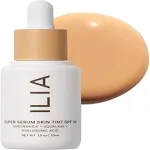
- ILIA Skin Tint - clean ingredient list.
- RMS Beauty Un Cover-Up - PFAS-free concealer.
- Kosas Air Brow - clean formula.
4. Dental Floss
Most conventional dental floss uses PTFE for its slippery glide between teeth. PTFE is itself a PFAS. Maine has banned PTFE-based floss.
PFAS-free options:
- Risewell Natural Floss - silk floss with candelilla wax.
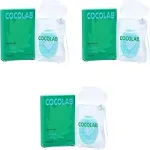
- Cocofloss - polyester with coconut oil coating.
5. Juvenile Products
Children’s car seats, high chairs, strollers, and infant products with intentionally added PFAS are banned. PFAS was used for stain resistance on fabric components.
For PFAS-free juvenile products, look for items certified to GOTS organic cotton standards, OEKO-TEX, or that explicitly state PFAS-free fabric treatment.
6. Menstrual Products
Tampons, pads, period underwear, and menstrual cups with intentionally added PFAS are banned. PFAS appeared in some commercial period underwear lines for moisture resistance.
PFAS-free options:
- Saalt Menstrual Cup - medical-grade silicone.
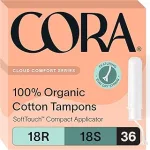
- Cora Organic Cotton Tampons - 100% organic cotton, no synthetic fibers.
- Knix Period Underwear - PFAS-free as of 2023 reformulation.
For more on this category, see best non-toxic menstrual products.
7. Textile Articles
Clothing, bedding, towels, table linens, and upholstery fabric with intentionally added PFAS are banned. PFAS was used for stain resistance, water resistance, and wrinkle-free finishing.
PFAS-free natural-fiber options:
- Pact Men’s Organic Softspun Crew Neck T-Shirt 5-Pack - GOTS certified.
- Boll & Branch Organic Cotton Sheet Set - long-staple organic cotton.
- Coyuchi Organic Cotton Towels - GOTS-certified terry.
8. Ski Wax
Performance ski waxes used by competitive skiers and waxes sold for general consumer use have historically contained fluorinated compounds. Maine has banned ski waxes with intentionally added PFAS.
PFAS-free ski waxes from brands like Mountain Flow Eco-Wax and Holmenkol Bio Wax are now standard at Maine ski shops.
9. Carpets and Rugs
PFAS-treated carpets and rugs (treated for stain resistance) are banned. This includes wall-to-wall carpet, area rugs, and indoor carpet padding.
PFAS-free carpet alternatives include wool, sisal, jute, and cotton rugs without stain treatments. For full coverage, see our non-toxic carpet pad breakdown.
10. Fabric Treatments
Aftermarket fabric protectors, water repellents, and stain-resist sprays with intentionally added PFAS are banned. This includes products like Scotchgard’s older PFAS-based formulations.
11. Indoor Upholstered Furniture
Sofas, chairs, and upholstered furniture treated with PFAS for stain resistance are banned for sale in Maine starting January 1, 2026.
12. Indoor Textile Furnishings
Curtains, drapes, throw rugs, and decorative textile furnishings with intentionally added PFAS are banned.
What’s Coming Next
The 2026 effective date is the first major wave of Maine’s restrictions. The law continues to phase in additional categories.
Effective January 1, 2029
- Outdoor apparel for severe wet conditions: Waterproof jackets, hard-shell rain gear, and outdoor performance apparel that requires heavy water repellency.
- Refrigerants: Certain refrigerants in HVAC and refrigeration equipment.
- Refrigeration equipment: Commercial and consumer refrigeration units containing PFAS-based components.
Effective January 1, 2032
- All other categories with intentionally added PFAS, except for limited “currently unavoidable use” exemptions granted by the Maine DEP.
By 2032, intentionally added PFAS will be effectively banned in all consumer products sold in Maine. The remaining exemptions are intended to be narrow, time-limited, and limited to applications where no PFAS-free alternative exists (certain medical devices, some essential industrial uses).
What “Intentionally Added” Means
Maine’s law applies only to PFAS that a manufacturer deliberately added to the product for a specific function. Incidental contamination from manufacturing equipment, recycled materials, or environmental sources does not trigger the ban.
The distinction matters because PFAS can show up in tiny quantities in products that were never designed to contain it. A cotton T-shirt manufactured in a factory that also processes PFAS-treated fabric might contain trace PFAS from cross-contamination. Maine’s law doesn’t capture that.
What the law does capture: any PFAS the manufacturer chose to add for waterproofing, stain resistance, grease resistance, slipperiness, or any other functional purpose.
According to NonToxicLab’s review of the regulatory text, the “intentionally added” framing is intended to be enforceable. Manufacturers know what they put into their products. They can certify what they did and didn’t add.
Why This Matters Beyond Maine
Maine’s market is small (1.4 million people), but the law’s impact extends nationally. Manufacturers selling consumer products into the US generally don’t make state-specific versions of cookware, cosmetics, or textiles. So when Maine bans a product category, the manufacturer has three options:
- Reformulate to PFAS-free. Sell the new formulation everywhere.
- Withdraw from Maine. Continue selling the PFAS version elsewhere.
- Apply for an exemption. Demonstrate that no PFAS-free alternative exists.
Most have chosen option 1. Combined with similar laws in Minnesota, Colorado, Vermont, Washington, and California, Maine’s ban creates a market reality where PFAS-free is becoming the default product specification rather than the upgrade.
Dr. Philip Landrigan, the pediatrician and epidemiologist who directs the Program for Global Public Health at Boston College and co-led the Minderoo-Monaco Commission on Plastics and Human Health, has pointed to Maine’s law as the most ambitious chemical-policy intervention in the United States in decades. The commission’s report, published in Annals of Global Health in 2023 [regulatory review, meta-analysis], argued that the cumulative health burden of plastic-associated chemicals (including PFAS) justifies precautionary restrictions before full causal evidence accumulates.
Dr. Leonardo Trasande, the NYU Langone pediatrician and author of Sicker, Fatter, Poorer, has estimated that the healthcare and productivity costs of endocrine-disrupting chemical exposure in the US run into the tens of billions of dollars per year, with PFAS contributing a meaningful share [human epidemiological / economic modeling]. State bans like Maine’s are the first systematic attempt to bend that curve.
For households that already use PFAS-free cookware, filter their tap water, and avoid waterproof stain treatments, the marginal benefit of additional swaps for low-frequency categories (ski wax, performance rain gear) is small. Typical home exposure at that point is probably fine under normal use. Maine’s regulatory logic is about eliminating the easiest-to-substitute uses first; it does not imply that low-frequency contact with a waterproof jacket is a major personal risk.
What This Means If You Live in Maine
Day-to-day shopping in Maine has changed. The cookware aisle, the cosmetics aisle, the cleaning aisle, and the textile aisle look different than they did in December 2025.
What you’ll notice:
- Fewer brands carried. Some brands withdrew from Maine entirely rather than reformulate.
- More PFAS-free labels. Brands that did reformulate are advertising it prominently.
- Higher prices on certain categories as suppliers absorb reformulation costs.
- Online ordering restrictions. Some manufacturers blocked their online checkout for Maine zip codes.
What you might not notice:
-
Drinking water still contains PFAS. Maine’s product ban does not address PFAS already in groundwater, surface water, or treated tap water. The Environmental Working Group estimates over 110 million Americans (including many Maine residents) have PFAS in their tap water. A reverse osmosis or dense carbon block filter is the at-home solution.
-
AquaTru Classic Countertop RO - NSF-certified for PFAS removal.
-
Clearly Filtered 3-Stage Under Sink - removes PFAS without removing minerals.
For our full breakdown, see best water filters for PFAS removal.
For a fuller PFAS-reduction plan, see our PFAS exposure complete guide and non-toxic product swap priority list.
Durability and Longevity of PFAS-Free Swaps
One worry with swapping PFAS-containing products for PFAS-free alternatives is that the new version will wear out faster. Here is how the recommended categories actually hold up.
PFAS-free cookware (ceramic coated like Caraway, stainless clad like Made In, or cast iron like Lodge) ranges from 2 to 4 years for ceramic nonstick to 50+ years for a properly seasoned cast iron pan. Ceramic loses release properties at roughly the same rate as PTFE. Stainless and cast iron have no coating to degrade. Lifetime cost per year of use is lowest with cast iron.
PFAS-free dental floss (silk like Cocofloss or plant-based like Dental Lace) threads between teeth as well as the coated PTFE products most drugstore floss uses. The main difference is more fraying on tight contacts, which means a slightly shorter single-use strand. It does not affect cleaning effectiveness.
PFAS-free cosmetics last the same as their conventional counterparts. Shelf life is typically 12 to 24 months after opening, which matches any non-prescription cosmetic.
PFAS-free cleaning products (concentrates like Branch Basics or refill pods like Blueland) match conventional cleaners for surface cleaning. Heavy mildew and grease may need a second application.
Water filters with strong PFAS removal (AquaTru and similar multi-stage RO) require filter changes on a 6 to 24 month schedule depending on the stage. Annual cost is $150 to $200, which is predictable and documented in each manufacturer’s spec sheet.
Tradeoffs Table
No product swap is free of cost or compromise. Here is the honest tradeoff by banned category.
| Category | Main concern with PFAS version | Primary tradeoff of the PFAS-free swap |
|---|---|---|
| Cookware | PFOA or GenX residues; PTFE thermal decomposition above 500 F | Ceramic coatings last 2-4 years; stainless requires preheat technique; cast iron is heavy |
| Dental floss | PTFE is shed into the mouth during use; some brands use other PFAS coatings | Silk or plant-based floss frays more on tight contacts; slightly shorter usable strand length |
| Cosmetics | PFAS used in wear-resistant lipstick, waterproof mascara, foundation | Longer wear claims shorter; touch-ups every 4 to 6 hours instead of 12 |
| Cleaning products | Aerosols, stain repellents, and floor coatings contain PFAS | Concentrates add a dilution step; heavy soil may require a second pass |
| Water filtration | US tap water not filtered to PFAS standards; kitchen carbon filters leak PFAS | Countertop RO uses counter space and costs $$ a year in filter replacements |
| Carpets and rugs | Stain-resistant treatments shed PFAS dust into indoor air | Untreated wool and PFAS-free synthetics need more spot cleaning |
Final Verdict
Maine has built the most ambitious chemical-policy framework in the country, and the January 2026 effective date makes the law operational across most of the consumer-facing economy. By 2032, intentionally added PFAS will be effectively gone from the Maine consumer market.
If you live in Maine, the replacement options are mostly figured out already. PFAS-free products exist in every major category, and Maine retailers have largely transitioned. The remaining gaps (specialty performance gear, certain industrial-use products) are small.
If you live elsewhere, Maine’s regulatory map shows where your state is likely heading. Most Northeast states and several West Coast states are on similar trajectories with effective dates 1 to 5 years behind Maine’s.
For the broader state-by-state PFAS picture, see our PFAS state ban tracker.
Frequently Asked Questions
When did Maine’s PFAS ban take effect?
The first major wave of Maine’s PFAS restrictions took effect January 1, 2026, covering 12 product categories including cookware, cosmetics, cleaning products, dental floss, juvenile products, menstrual products, textiles, ski wax, carpets, fabric treatments, indoor upholstered furniture, and indoor textile furnishings. Additional categories phase in through 2032.
Can I still buy PFAS-containing products online and ship to Maine?
Generally no. Maine’s law prohibits the sale, distribution, and offer for sale into the state, which captures online orders shipped to Maine addresses. Some manufacturers have geographically restricted their checkout pages for Maine zip codes.
What’s the penalty for selling banned products in Maine?
The Maine DEP can issue civil penalties and administrative orders requiring removal of products from sale. Repeat violations can result in higher fines and enforcement action by the Maine Attorney General.
Does the ban apply to products I already own?
No. The law restricts sale and distribution, not possession. Products you already own are not subject to the ban.
Can manufacturers ask for exemptions?
Yes. The Maine DEP can grant “currently unavoidable use” exemptions for products where PFAS provides essential functionality and no alternative exists. Exemptions are intended to be narrow and require manufacturer documentation.
What’s coming after 2026?
In 2029, Maine bans outdoor apparel for severe wet conditions, certain refrigerants, and refrigeration equipment with intentionally added PFAS. In 2032, intentionally added PFAS is effectively banned across all remaining consumer product categories sold in Maine.
What we don’t fully know: Long-term data on low-level chronic exposure remains limited for many of these categories, and evidence on some chemical mixtures is still mixed. Researchers continue to refine exposure thresholds and update risk models as new data emerges.
You Might Also Like
- Europe Just Banned These Products. In the US, You’re Still Using Them Every Day.
- Minnesota PFAS Disclosure Law 2026: What Manufacturers Must Report (and What Categories Will Disappear)
- How to Reduce PFAS in Your Body (What Research Shows)
- Chemicals Banned in the EU but Legal in the US: The Complete List (2026)
- PFAS in Dental Floss: 4 Safer Picks (2026)
- What Are PFAS (Forever Chemicals)? A Plain-English Guide for 2026
Sources
- Maine Department of Environmental Protection. “PFAS in Products.” https://www.maine.gov/dep/spills/topics/pfas/PFAS-products/
- Maine Statutes 38 MRS Ch. 16-D. “Toxic Chemicals in Products: PFAS.” (LD 1503 / LD 217). https://legislature.maine.gov/
- Safer States. “Laws going into effect in 2026.” https://www.saferstates.org/resource/2026-analysis-of-state-policy-addressing-toxic-chemicals-and-plastics/laws-going-into-effect-in-2026/
- MultiState. “State PFAS Legislation 2026: Bans & Restrictions Update.” March 20, 2026. https://www.multistate.us/insider/2026/3/20/state-pfas-legislation-in-2026-hundreds-of-bills-across-23-states
- Environmental Working Group. “PFAS Contamination in the U.S.” https://www.ewg.org/interactive-maps/pfas_contamination/
- Landrigan PJ, Raps H, Cropper M, et al. “The Minderoo-Monaco Commission on Plastics and Human Health.” Annals of Global Health. 2023;89:23. https://annalsofglobalhealth.org/articles/10.5334/aogh.4056
- Trasande L, Zoeller RT, Hass U, et al. “Estimating burden and disease costs of exposure to endocrine-disrupting chemicals in the European Union.” Journal of Clinical Endocrinology & Metabolism. 2015;100:1245-1255. https://academic.oup.com/jcem/article/100/4/1245/2814822
This information reflects regulatory status as of April 2026. Verify current effective dates and exemptions with the Maine Department of Environmental Protection before relying on this information for compliance purposes.