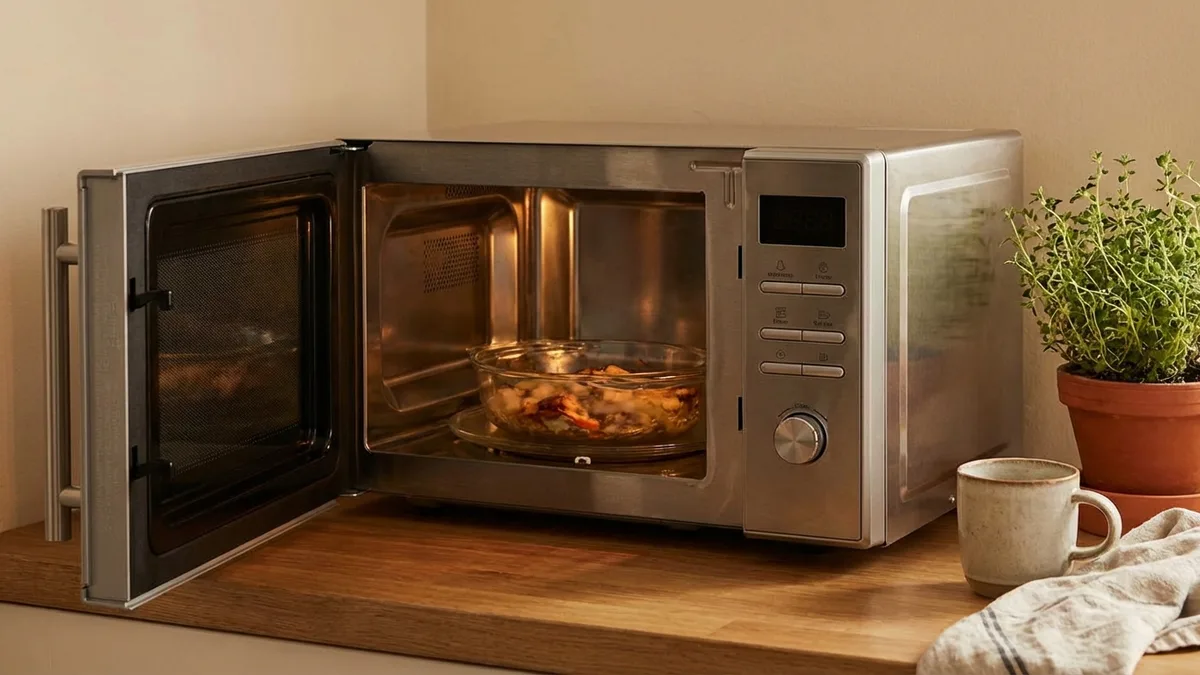
The microwave is the most divisive appliance in the non-toxic living space. Some people throw theirs out entirely. Others use it daily without a second thought. The internet has opinions ranging from “microwaves destroy all nutrients” to “microwaves are carcinogenic” to “microwaves are completely fine.” Most of these opinions cite zero research.
Let me go through what the science actually says, because the answer isn’t a simple yes or no. The microwave oven itself is not particularly dangerous. But what you put inside it matters a lot, and that’s where most people make mistakes that do affect their health.
How Microwaves Work (The 30-Second Version)
A microwave oven produces electromagnetic radiation at a frequency of 2.45 gigahertz. This radiation causes water molecules in food to vibrate rapidly, producing heat through molecular friction. The food heats from the outside in (the myth that microwaves “cook from the inside out” is wrong; they penetrate about 1 to 1.5 inches).
Microwave radiation is non-ionizing. This is an important distinction. Ionizing radiation (X-rays, gamma rays, UV radiation) has enough energy to knock electrons off atoms and damage DNA. Non-ionizing radiation (microwaves, radio waves, visible light) doesn’t have enough energy to do this. A microwave oven heats food the same way a conventional oven does, just through a different mechanism of energy transfer.
The microwave radiation itself does not make food radioactive, does not create carcinogenic compounds, and does not alter the molecular structure of food in ways that conventional cooking doesn’t. This is well established in physics and is not controversial in the scientific community.
The Real Concern: Containers, Not the Microwave
The microwave oven itself is fine. The problems start with what people put inside it.
Plastic Containers in the Microwave
When you microwave food in a plastic container, the heat causes chemical migration from the plastic into the food. This is true for all plastics to some degree, but the rate and type of migration vary dramatically by material.
Dr. Leonardo Trasande has called plastic food containers heated in the microwave one of the most significant sources of chemical exposure from food packaging. The heat accelerates the release of BPA, phthalates, and other plastic additives by orders of magnitude compared to room-temperature storage.
A 2011 study published in Environmental Health Perspectives tested 455 commercially available plastic products and found that nearly all of them released chemicals with estrogenic activity when subjected to microwave conditions, including products labeled “BPA-free.” The replacement chemicals used in BPA-free plastics (BPS, BPF, BPAF) showed similar or greater estrogenic activity than BPA in some cases.
The takeaway: Microwaving food in plastic is the highest-risk use of plastic in the kitchen. The combination of heat and food contact creates maximum chemical transfer. This is true regardless of what the plastic container says on its label.
”Microwave Safe” Labels
The FDA requires that plastic containers labeled “microwave safe” meet certain standards for chemical migration. But those standards have come under criticism for several reasons:
- Testing is done at lower temperatures and shorter durations than typical real-world microwave use
- Standards were established before much of the current endocrine disruptor research existed
- The standards test individual chemicals, not the cumulative effect of multiple chemicals leaching simultaneously
- BPA-free alternatives were not fully evaluated before being marketed
“Microwave safe” on a plastic container means it won’t melt or deform in the microwave. It doesn’t mean no chemicals migrate into your food. It means the levels detected fall below FDA thresholds, and those thresholds are debated.
Plastic Wrap in the Microwave
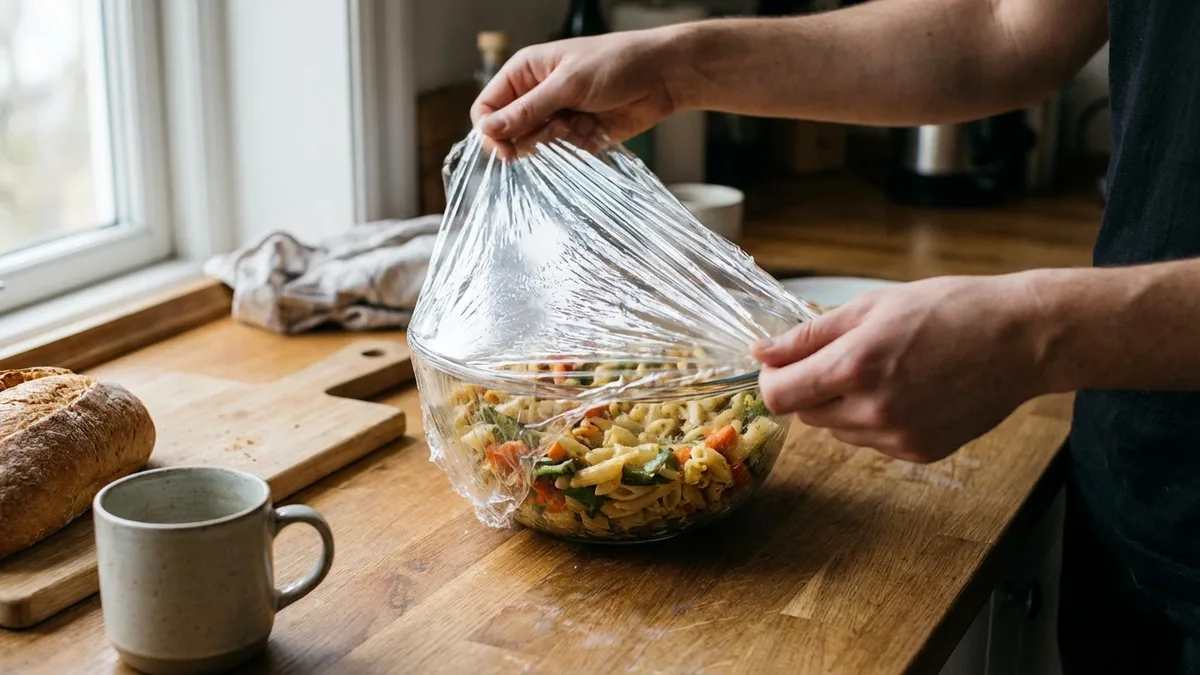
Covering food with cling wrap in the microwave is particularly concerning. The thin film heats quickly, and if it touches the food surface, migration rates are high. Our article on cling wrap safety covers this in detail.
Styrofoam in the Microwave
Polystyrene (Styrofoam) releases styrene when heated. Styrene is classified as a possible carcinogen by the International Agency for Research on Cancer (IARC). Never microwave food in Styrofoam containers, takeout containers, or deli cups, even if they feel sturdy. Transfer the food to a safe container first.
What’s Safe to Microwave Food In
Glass
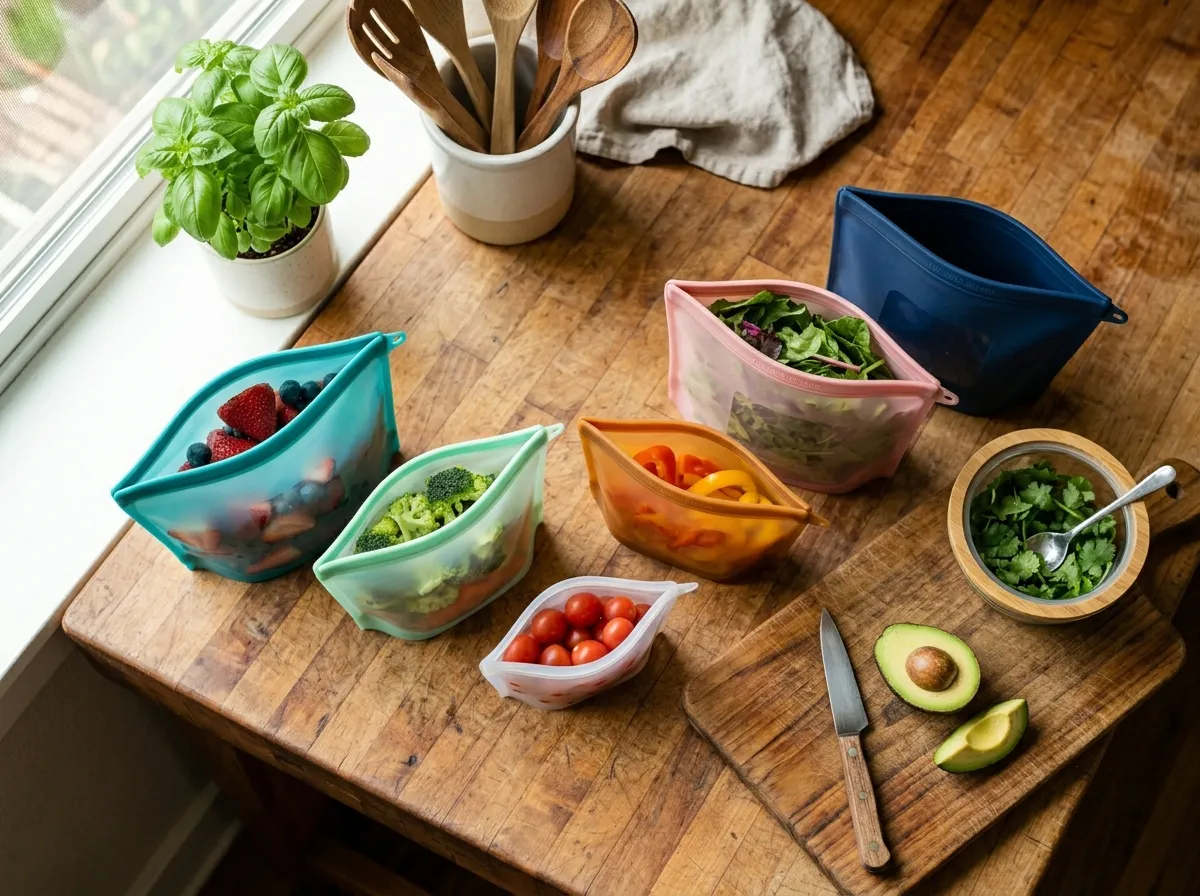
Glass is inert. It doesn’t leach chemicals at any temperature you’ll reach in a microwave. Pyrex, Anchor Hocking, and other borosilicate or tempered glass containers are the lowest-chemical-exposure container type. Our best non-toxic food storage guide covers glass container options specifically.
One caveat: make sure the glass is microwave-rated. Some decorative glass and crystal contains lead. Standard tempered glass kitchen containers (Pyrex, etc.) are fine.
Ceramic and Stoneware
Unglazed or safely glazed ceramics are inert in the microwave. The concern with ceramics is lead in glazes, particularly in handmade, antique, or imported pottery. If a ceramic dish is from a reputable manufacturer and made for food use, it’s safe. If it’s a handmade pot from a flea market, test it for lead before using it for food.
Paper (with Caveats)
Plain white paper towels and uncoated paper plates are generally safe for short microwave use. Avoid paper products with printing, coatings, or recycled content (which may contain chemical contaminants). Brown paper bags should never go in the microwave (fire risk and potential chemical release from the adhesive).
What About Silicone?
Silicone is considered food-safe at microwave temperatures. Platinum-cured (medical-grade) silicone is a low-chemical option. Our article on silicone safety covers the distinctions between silicone grades.
Does Microwaving Destroy Nutrients?
This is one of the most persistent claims against microwave use, and the research doesn’t support it as a unique microwave problem.
All cooking methods destroy some nutrients. Heat degrades certain vitamins (especially vitamin C and some B vitamins) regardless of the heat source. Water-based cooking (boiling, steaming) leaches water-soluble nutrients into the cooking water. Time at temperature is the main variable.
Andrew Huberman has discussed nutrient retention in cooking methods and noted that the key factor is duration of heat exposure rather than the type of heat. A short microwave session at medium power destroys fewer nutrients than a long boiling session because the cooking time is shorter and less water is involved.
A 2009 review in the Journal of Food Science examined nutrient retention across cooking methods and found that microwaving actually preserved more nutrients than boiling for most vegetables, because:
- Cooking times are shorter
- Less water is used (water leaches water-soluble vitamins)
- Temperature can be more precisely controlled
Steaming and microwaving scored similarly for nutrient retention. Both were better than boiling, frying, or prolonged roasting.
The only scenario where microwave cooking was worse for nutrients was a 2003 study that found microwaving broccoli in water destroyed 97% of its flavonoid antioxidants, compared to 66% for boiling and 11% for steaming. But this was microwaving in a bowl of water, which is effectively microwave-boiling. Microwaving broccoli without water (just damp, covered with a plate) retained far more nutrients.
The lesson: microwave with minimal water, covered, for the shortest time that cooks the food through.
Microwave Radiation Leakage
Microwave ovens are designed with shielding and door interlocks that prevent radiation from escaping during operation. The FDA limits microwave radiation leakage to 5 milliwatts per square centimeter at 2 inches from the oven surface, which is far below the level that would cause harm.
A few practical points:
- Don’t use a microwave with a damaged door, broken seal, or faulty latch. The door seal is the primary radiation containment mechanism.
- Standing 2 to 3 feet from an operating microwave reduces exposure to negligible levels, if you’re concerned. Radiation intensity decreases rapidly with distance (inverse square law).
- Microwave radiation does not linger. When the oven turns off, the radiation stops immediately. Food is not radioactive after microwaving.
Dr. Peter Attia has noted that the radiation concerns about microwave ovens are unfounded based on the physics of non-ionizing radiation, and that the actual health concerns should center on container materials rather than the radiation itself.
What About Heating Water in the Microwave?
Superheating is a real phenomenon. Water heated in a microwave in a very clean, smooth container (like a new ceramic mug) can exceed 212 degrees Fahrenheit without visibly boiling. When disturbed (by adding a tea bag or moving the mug), it can erupt violently.
This is a burn hazard, not a chemical hazard. Prevent it by:
- Placing a wooden stir stick or microwave-safe object in the water before heating
- Not heating water for longer than recommended
- Letting water sit in the microwave for 30 seconds before removing
What We Don’t Fully Know Yet
One honest caveat before the verdict. Long-term effects of daily microwave use on nutrient retention are inconsistently studied. Most of the research is short-term, covering single cooking sessions rather than cumulative effects across months or years. We don’t have strong data on whether repeated microwave heating of the same nutrient-dense foods (say, daily broccoli) produces measurably different health outcomes compared to stovetop cooking over a lifetime. The existing evidence points toward microwaving being fine or slightly better for nutrients, but “long-term, daily use” is a gap in the literature worth acknowledging.
Our Verdict
The microwave oven itself is safe. The electromagnetic radiation it produces does not damage food, does not create carcinogens, and does not reduce nutrient content more than other cooking methods. In some cases, it preserves nutrients better than boiling or prolonged cooking.
The real risk is container choice. Microwaving food in plastic, Styrofoam, or with cling wrap touching the food creates meaningful chemical exposure from plasticizer migration. This is avoidable: use glass, ceramic, or stoneware containers.
According to NonToxicLab, keep your microwave. Throw out the plastic containers you microwave food in and replace them with glass. That single swap eliminates the actual health concern while keeping the convenience of fast reheating.
For safe kitchen containers, our best non-toxic food storage guide covers glass options at every price point. For cookware you’d use instead of a microwave for certain tasks, our best non-toxic cookware guide has the full lineup.
You Might Also Like
- Best Non-Toxic Food Storage
- Is BPA-Free Safe?
- Is Silicone Safe for Cooking?
- Non-Toxic Kitchen Complete Guide
- What Is BPA?
- Microplastics in Drinking Water: What the Science Says (and How to Filter Them Out)
- Best Non-Toxic Food Storage Bags and Wraps (2026)
- Is Non-Stick Cookware Safe? What the Science Actually Says (2026)
- Microplastics and Male Fertility: What 2026 Research Says About Sperm Count and Plastic Exposure
- Do Charcoal Bags Actually Purify Air? (What the Science Says)
- Kitchen Materials Ranked by Toxicologist Priority (Not Fear)
- Are Black Plastic Spatulas Safe? What the 2024 Chemosphere Study Got Wrong (and What’s Actually a Concern)
- Best Non-Toxic Cutting Boards in 2026 (Wood, Bamboo, and Beyond)
Frequently Asked Questions
Does microwaving raise cancer risk?
No. Microwave ovens use non-ionizing radiation, which does not have enough energy to damage DNA or raise cancer risk. This is a different type of radiation than X-rays or gamma rays. The World Health Organization, FDA, and every major health organization confirm this.
Is it safe to stand in front of a microwave while it runs?
Yes. Modern microwaves are shielded and leak negligible radiation. FDA limits are set well below harmful levels. If you want to be extra cautious, stand a few feet away, but it’s not a health concern with a properly maintained appliance.
Why shouldn’t I microwave plastic if it says “microwave safe”?
“Microwave safe” means the container won’t melt or deform. It doesn’t mean zero chemical migration. Studies have found that even BPA-free plastics release estrogenic chemicals when heated [in vitro]. Glass is the only container material that releases zero chemicals during microwave heating.
Does microwaving food in glass release any chemicals?
No. Glass is chemically inert at temperatures reached in a microwave (and far beyond). It releases nothing into food at any realistic cooking temperature. Standard tempered kitchen glass (Pyrex, Anchor Hocking) is the lowest-chemical-exposure container for microwave use.
Should I throw out my microwave?
Unless it’s physically damaged (cracked door, broken seal, rust in the cavity), there’s no health reason to get rid of a microwave. The appliance itself is safe. Switch your containers to glass and use the microwave for what it’s good at: reheating leftovers, steaming vegetables, and heating water.
Is it better to reheat food on the stove instead?
From a chemical exposure standpoint, reheating in a glass container in the microwave is equivalent to reheating in a stainless steel or cast iron pan on the stove. Both are safe. If you’re reheating in plastic in the microwave, then yes, the stove with a metal pan is safer. But the solution is to change the container, not the heating method.
Sources
- Yang, C. et al. “Most Plastic Products Release Estrogenic Chemicals: A Potential Health Problem That Can Be Solved.” Environmental Health Perspectives (2011)
- Vallejo, F. et al. “Phenolic Compound Contents in Edible Parts of Broccoli Inflorescences After Domestic Cooking.” Journal of the Science of Food and Agriculture (2003)
- FDA, “Microwave Ovens” (consumer information)
- World Health Organization, “Radiation: Electromagnetic fields” (Q&A)
- Jimenez-Monreal, A. et al. “Influence of Cooking Methods on Antioxidant Activity of Vegetables.” Journal of Food Science (2009)
- Trasande, L. “Sicker, Fatter, Poorer.” (2019)