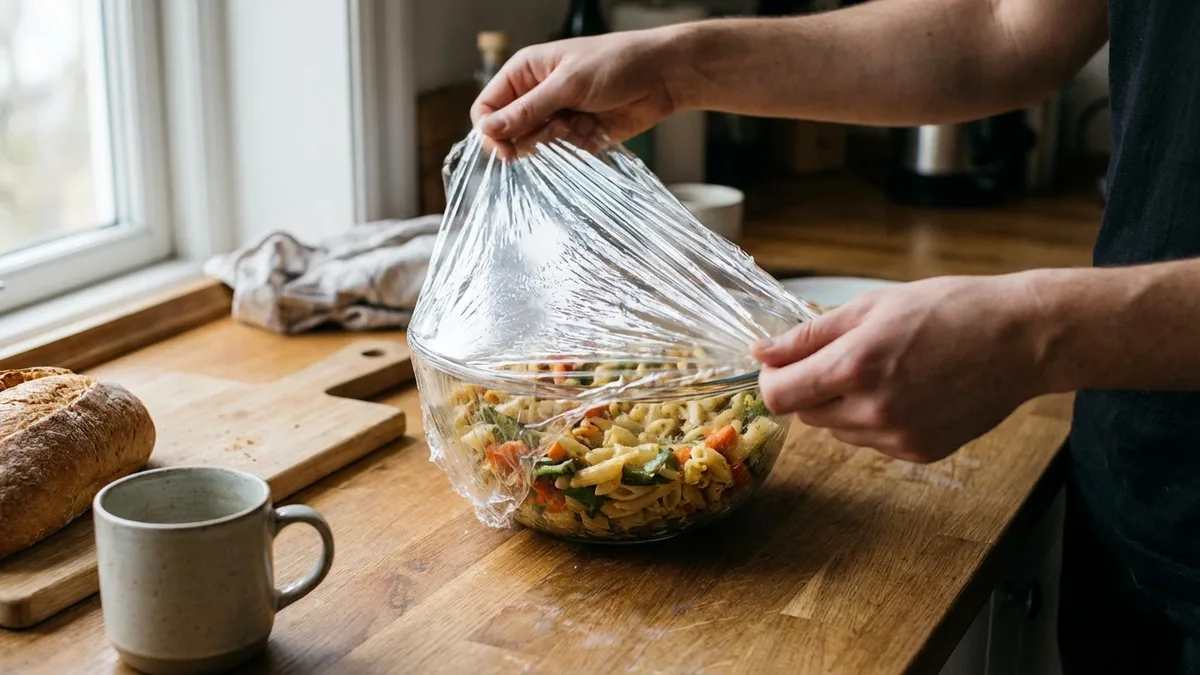
You tear off a sheet of cling wrap, stretch it over a bowl of leftovers, and put it in the fridge. It takes five seconds and you never think about it. But that thin, clingy film is a plastic product sitting directly on your food for hours or days at a time. What’s actually in it, and does any of it get into what you eat?
The answer depends on which cling wrap you’re using and how you’re using it. Not all plastic wraps are created equal, and the worst-case scenarios involve a combination of PVC plastic, heat, and fatty foods that most people encounter regularly without knowing it matters.
What Cling Wrap Is Made Of
Cling wrap falls into two main material categories, and the safety profile is very different between them.
PVC (Polyvinyl Chloride) Plastic Wrap
PVC-based cling wrap is the traditional formulation. It clings well, stretches smoothly, and seals tightly. It’s also the more concerning option.
PVC is rigid in its raw form. To make it flexible enough to function as cling wrap, manufacturers add plasticizers, which are chemicals that soften the polymer matrix. Historically, the primary plasticizers were phthalates, specifically DEHP (di-2-ethylhexyl phthalate) and DEHA (di-2-ethylhexyl adipate).
The problem is that plasticizers aren’t chemically bonded to the PVC polymer chain. They’re physically mixed in, which means they can migrate out of the plastic over time, especially in the presence of heat or fat. When PVC cling wrap touches fatty food (cheese, meat, oily dishes), plasticizers transfer from the wrap to the food at measurable rates.
Dr. Shanna Swan, a leading researcher on phthalate exposure and reproductive health, has documented links between dietary phthalate exposure and hormone disruption. Her research indicates that food packaging is one of the primary routes of phthalate exposure in the general population, and food-contact PVC is a significant contributor.
LDPE (Low-Density Polyethylene) Plastic Wrap
LDPE-based cling wrap is the newer formulation used by most consumer brands today. Saran Wrap (SC Johnson) and Glad Cling Wrap both switched from PVC to LDPE years ago for the US consumer market.
LDPE does not require plasticizers to be flexible. It’s inherently soft and pliable. This eliminates the main plasticizer migration concern of PVC wrap.
LDPE is generally considered one of the safer food-contact plastics. It’s recycling code #4. It doesn’t contain BPA, phthalates, or PFAS. The main remaining concern is that it’s still plastic, and all plastics release some amount of microparticles, especially under stress (stretching, tearing, heat).
Where PVC Cling Wrap Still Shows Up
If consumer brands have switched to LDPE, where is the PVC concern still relevant?
Commercial food service. Many restaurants, delis, and grocery store prepared food departments use commercial-grade PVC cling wrap. It’s cheaper in bulk, clings better (important for commercial display cases), and food service operations don’t always track the distinction. That deli counter wrapping your sliced turkey or covering the prepared salad may be PVC.
Imported products. Cling wrap manufactured outside the US and EU may still use PVC with phthalate plasticizers. If you buy imported plastic wrap (common in international grocery stores or online), check the material type.
Industrial food packaging. Some commercial food products arrive at stores pre-wrapped in PVC. Meat trays with cling overwrap, cheese blocks, and some produce packaging may use PVC because it provides better oxygen transmission and display properties than LDPE.
Dr. Leonardo Trasande has noted that food-contact materials are an underregulated source of chemical exposure, with most regulatory attention focused on the food itself rather than the packaging materials that touch it for extended periods.
What Migrates From Cling Wrap Into Food
Migration studies have tested how much chemical transfer occurs from plastic wrap to food under various conditions. The key variables are:
Temperature
Heat dramatically increases migration. A 2017 study published in Food Additives & Contaminants found that DEHP migration from PVC wrap into fatty food increased by 5x to 10x when heated in a microwave compared to refrigerator storage. Even warming food to serving temperature in a microwave with PVC wrap covering it produces measurable plasticizer transfer.
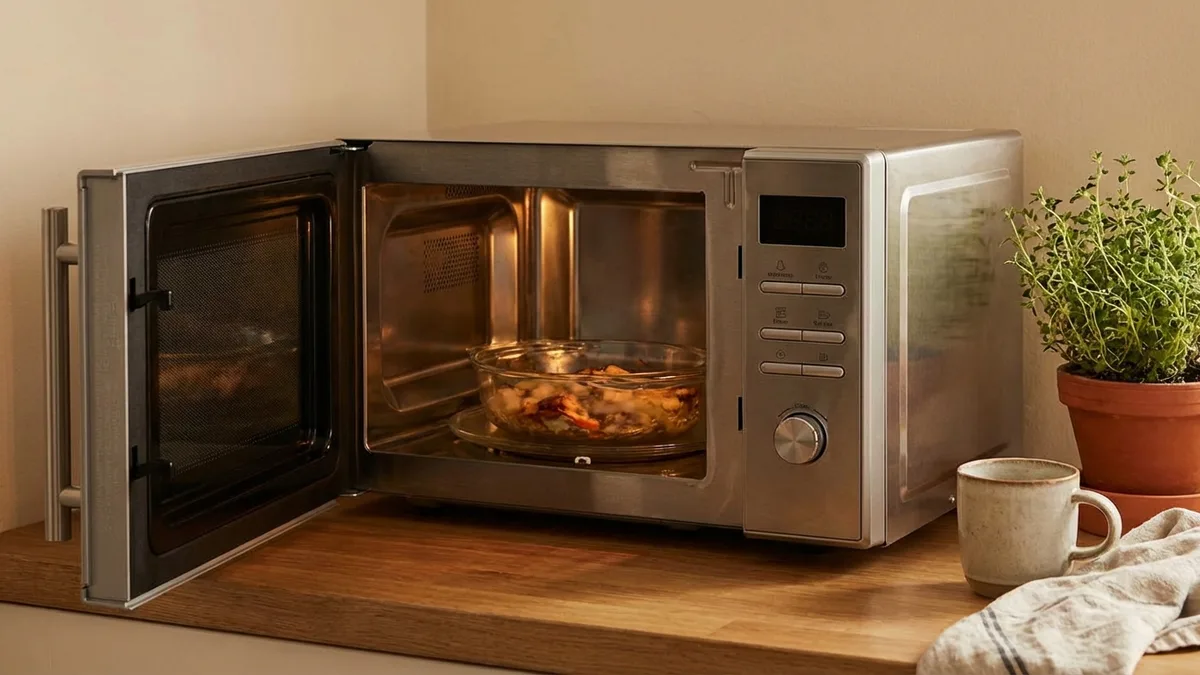
According to NonToxicLab, microwaving food with any type of plastic wrap touching it is one of the highest single-exposure events for plasticizer chemicals in a typical day. This applies to both PVC and, to a lesser extent, LDPE wraps.
Fat Content
Plasticizers are lipophilic (fat-loving). They migrate preferentially into fatty foods. Cheese, butter, meat with visible fat, olive oil, and cream-based dishes absorb plasticizers from cling wrap at rates 10x to 100x higher than dry or water-based foods. If you wrap cheese in PVC cling wrap and leave it in the fridge for a week, the outer surface of that cheese has absorbed measurable plasticizer.
Contact Time
Longer contact equals more migration. A few hours is meaningfully different from a few days. This is particularly relevant for leftovers that sit in the fridge for three to five days with cling wrap directly contacting the food surface.
Direct Contact vs. Tented
Cling wrap that directly touches food transfers more chemicals than wrap that’s tented over a bowl without touching the food surface. The “stretch it over the rim of the bowl” approach, where the wrap doesn’t touch the food inside, is safer than pressing the wrap directly onto the food surface.
The Microplastics Dimension
Beyond chemical migration, all plastic wraps release microplastic particles when stretched, torn, and handled. A 2023 study found that the act of tearing plastic wrap from the roll generates microparticles that can settle onto food surfaces. These particles are too small to see but are detectable under magnification.
The health effects of ingested microplastics are still being studied. Our microplastics in your home article and microplastics in drinking water guide cover the current research. The emerging picture is that microplastics accumulate in human tissue and may carry chemical additives with them.
How to Use Cling Wrap More Safely
If you’re going to use cling wrap (and most people will at least sometimes), these practices reduce exposure:
- Never microwave with cling wrap touching food. If you need to cover food in the microwave, use a ceramic plate, a glass lid, or a paper towel.
- Don’t use cling wrap on hot food. Let food cool before covering with plastic wrap.
- Avoid wrapping fatty foods directly. If you must wrap cheese, put parchment paper between the cheese and the cling wrap.
- Use LDPE-based wrap, not PVC. Check the box: Glad Cling Wrap and Saran Wrap are both LDPE. If the box doesn’t specify the material type, it may be PVC.
- Tent, don’t touch. Stretch wrap over the rim of a bowl rather than pressing it onto the food surface.
- Minimize storage time. Transfer leftovers to glass containers for longer storage rather than leaving them wrapped in cling film.
Safer Alternatives
Glass Containers with Lids
Glass food storage eliminates the plastic-food contact question entirely. Pyrex, Anchor Hocking, and other brands make containers with snap-on lids in every size. They’re microwave-safe, dishwasher-safe, and last for decades. Our best non-toxic food storage guide covers the top options.
Beeswax Wraps
Beeswax wraps are reusable food wraps made from cotton fabric coated with beeswax, jojoba oil, and tree resin. They cling to bowls and wrap around food. They last about a year with regular use and are compostable at end of life. Our best non-toxic food wraps roundup covers the brands. The main limitations: they can’t be used on raw meat (can’t be sanitized at high temperatures) and they don’t microwave.
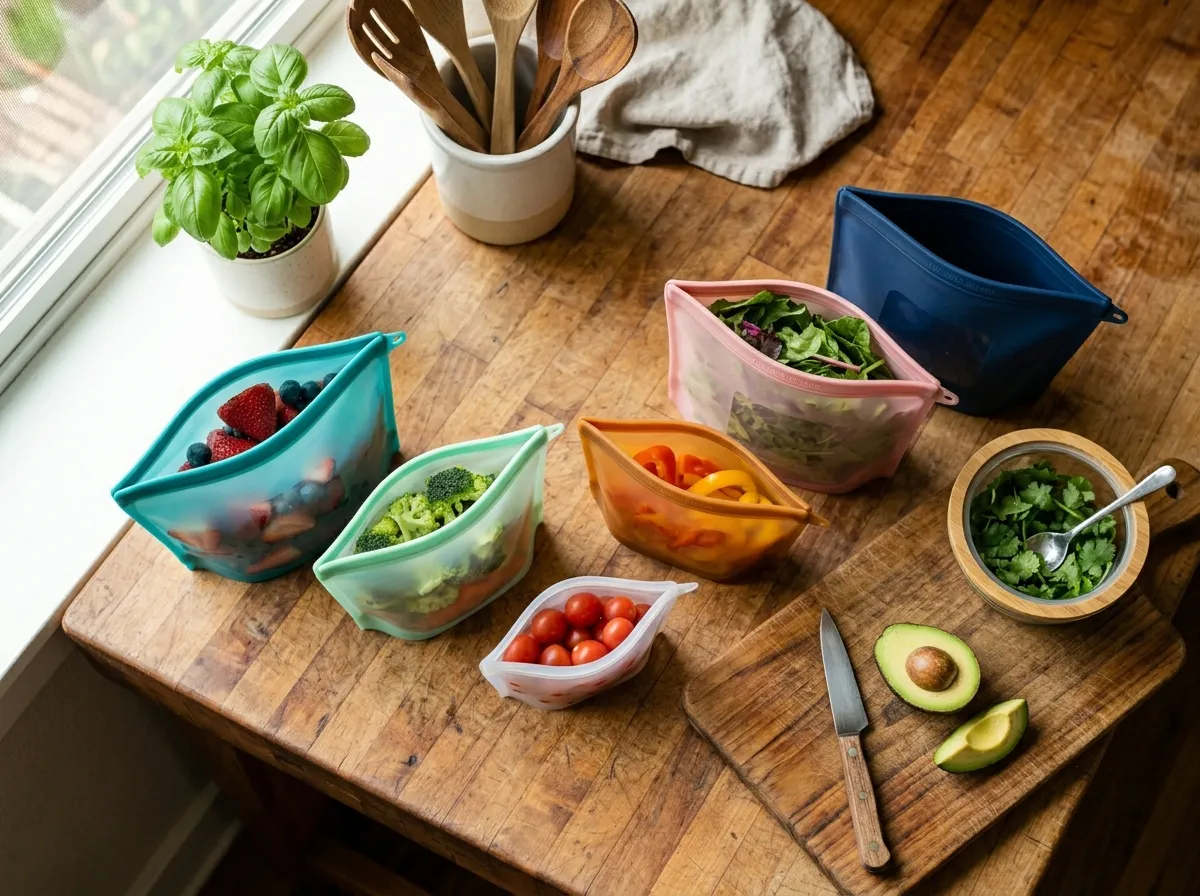
Silicone Lids and Covers
Stretchy silicone lids fit over bowls and containers of various sizes. Silicone is generally considered safe for food contact, though it can contain fillers in cheaper products. Look for food-grade or platinum-cured silicone.
Plates
The simplest alternative is the one people forget about. A plate inverted over a bowl is an airtight-enough cover for most fridge storage. No plastic, no chemicals, no cost.
Parchment Paper
For wrapping foods like sandwiches, cheese, and baked goods, unbleached parchment paper is a safe alternative that prevents direct plastic contact. It’s not as clingy as plastic wrap, but for fridge storage it works fine.
You Might Also Like
- Best Non-Toxic Food Storage
- Best Non-Toxic Food Wraps
- Is BPA-Free Safe?
- What Are Phthalates?
- Non-Toxic Kitchen Complete Guide
- Is Microwaving Food Safe? (Plastics, Radiation, and What Science Says)
- Kitchen Materials Ranked by Toxicologist Priority (Not Fear)
- Are Black Plastic Spatulas Safe? What the 2024 Chemosphere Study Got Wrong (and What’s Actually a Concern)
- Best Non-Toxic Coffee Maker in 2026 (No Plastic, No BPA)
What We Don’t Fully Know
The strongest evidence on plasticizer migration from cling wrap into food comes from regulator-funded migration testing under specified contact conditions [regulatory review] and from cell-line and rodent endocrine work on DEHA, DEHP, and replacement plasticizers [in vitro, animal study]. Direct human dose-response data, where someone wraps food a specific number of times per week and a specific health outcome is measured, does not exist. Migration is highly dependent on three things: contact temperature (microwave or hot food versus cold), fat content of the food (fatty foods pull more plasticizer), and contact time (overnight versus minutes). For cold, low-fat food in brief contact with PVC-free polyethylene cling wrap, current migration estimates sit well below FDA reference doses, and there is no credible evidence of harm under those conditions. Pregnant women, infants, and anyone routinely microwaving in PVC wrap are the populations where the precautionary case is strongest. The genuine open questions are how the newer adipate-based plasticizers compare to phthalates over decades of use, whether mixture effects with other endocrine disruptors matter at typical exposures, and whether cumulative migration from many small daily wraps adds up to something that single-meal migration studies miss.
Frequently Asked Questions
Is Saran Wrap safe?
Saran Wrap switched from PVC to LDPE (low-density polyethylene) for its consumer products. LDPE doesn’t contain plasticizers. At room temperature for normal fridge storage, current Saran Wrap is a low-risk option. The main remaining concern is microplastic shedding and heat exposure if microwaved.
Can I microwave food with cling wrap on it?
We don’t recommend it. Even LDPE wrap can release microplastic particles when heated. The FDA technically permits microwaving with plastic wrap if the wrap doesn’t touch the food, but the safer approach is to cover food with a ceramic plate or paper towel instead.
Does cling wrap contain BPA?
No. Cling wrap is made from either PVC or LDPE, neither of which contains BPA (which is found in polycarbonate plastics and epoxy resins). However, PVC cling wrap contains plasticizers that have their own set of health concerns.
Is the cling wrap at the deli counter safe?
It may be PVC-based. Commercial food service cling wrap is more likely to be PVC than consumer-grade wrap. If your deli wraps meat or cheese in cling film, you can ask them to use butcher paper instead, or remove the cling wrap and transfer the food to glass containers when you get home.
How long can food safely be wrapped in cling film?
For LDPE wrap not touching the food surface, a few days in the fridge is low risk. For PVC wrap in direct contact with fatty food, migration begins immediately and increases over time. The longer the contact, the more chemical transfer. For any plastic wrap, transferring food to glass containers for storage beyond a day is a better practice.
Are beeswax wraps a good replacement?
For fridge storage, wrapping sandwiches, covering bowls, and storing produce, beeswax wraps work well and eliminate plastic exposure entirely. They don’t work for raw meat (hygiene concerns), very wet foods, or microwave use. Our best non-toxic food wraps guide covers the practical pros and cons.
Sources
- Swan, S. “Count Down.” (2021)
- Trasande, L. “Sicker, Fatter, Poorer.” (2019)
- Fasano, E. et al. “Migration of phthalates, alkylphenols, bisphenol A and di(2-ethylhexyl)adipate from food packaging.” Food Control, 2012.
- FDA, “Use of Recycled Plastics in Food Packaging: Chemistry Considerations” (guidance document)
- Hernandez, L. et al. “Microplastic Release from Commercial Plastic Films.” Environmental Science & Technology (2023)