The longevity community has spent years debating supplements, sleep, and zone-2 cardio. The air in your bedroom at 2 AM and the water you use to make coffee every morning get far less attention. That’s probably backwards. You inhale roughly 11,000 liters of air every day. You drink, cook with, and bathe in water that picks up contaminants between the treatment plant and your tap. Both exposures are continuous, not episodic. That matters.
This guide covers what the science actually shows, what filtration technologies address which problems, and how to spend your money across a range of budgets. For context on the broader home protocol, see our longevity home protocol guide.
Why Indoor Air Quality Is Worse Than You Think
The EPA has measured indoor air pollutant concentrations at 2-5x higher than outdoor levels, and sometimes as high as 100x for specific compounds (EPA Indoor Air Quality, ongoing monitoring). Most people assume opening a window fixes the problem. It helps, but the sources are often inside the building itself.
Indoor air accumulates pollutants from three main directions. First, outdoor air carries PM2.5, ozone, and pollen through gaps in the building envelope, open windows, and HVAC fresh-air intakes. Second, combustion inside the home adds nitrogen dioxide (NO2), fine particles, and carbon monoxide. Third, the materials in the building itself off-gas volatile organic compounds (VOCs) continuously, sometimes for years after installation.
The HVAC system makes this worse in one specific way. Standard forced-air systems recirculate indoor air. They mix stale air from every room, pass it through a filter (which captures large particles only), and push it back out. Without ventilation that exchanges indoor air for fresh outdoor air, VOC and CO2 levels climb throughout the day. A tight, well-insulated modern home has this problem more acutely than a leaky old house.
The Three Indoor Pollutant Categories
PM2.5 and fine particles. Particles smaller than 2.5 microns penetrate deep into the lung and enter the bloodstream. Short-term exposure causes airway inflammation [human epidemiological]; long-term exposure is associated with cardiovascular disease and cognitive decline [human epidemiological, multiple cohort studies]. Cooking, candles, gas stoves, and outdoor intrusion all contribute.
VOCs. Volatile organic compounds off-gas from paint, flooring adhesives, furniture foam, cleaning products, and personal care products. The EPA lists formaldehyde, benzene, and xylene among common indoor VOC sources. Most VOCs dissipate over time, but new furniture and new construction can keep levels elevated for 6-12 months.
Combustion byproducts. Gas stoves and fireplaces are the biggest residential combustion sources. NO2 from gas cooking is the most underappreciated. Wood-burning fireplaces add PM2.5 in concentrations that can temporarily exceed outdoor pollution events.
Air Filtration Options, Ranked by Effectiveness
Standard HVAC filters are the floor, not the ceiling, of home air quality. A MERV 8 filter captures large particles and protects the blower motor. A MERV 13 filter meaningfully reduces PM2.5. But neither touches VOCs or CO2. Here’s how the options stack up, from least to most impactful.
MERV 8-13 HVAC Filters
A MERV 13 upgrade costs about $20 per filter and captures roughly 85-95% of particles in the 1-3 micron range. It’s the easiest win in this whole guide. Change it every 90 days. The downside: higher MERV ratings restrict airflow, and older HVAC systems may not handle MERV 13 without the blower working harder. Check your system’s specs first.
What MERV 13 does not do: it doesn’t capture VOCs, formaldehyde, NO2, or CO2. And it only filters air that’s actively passing through the HVAC system, which is maybe 4-6 full air changes per hour in a typical home. Airflow through specific rooms varies a lot.
Portable HEPA Air Purifiers
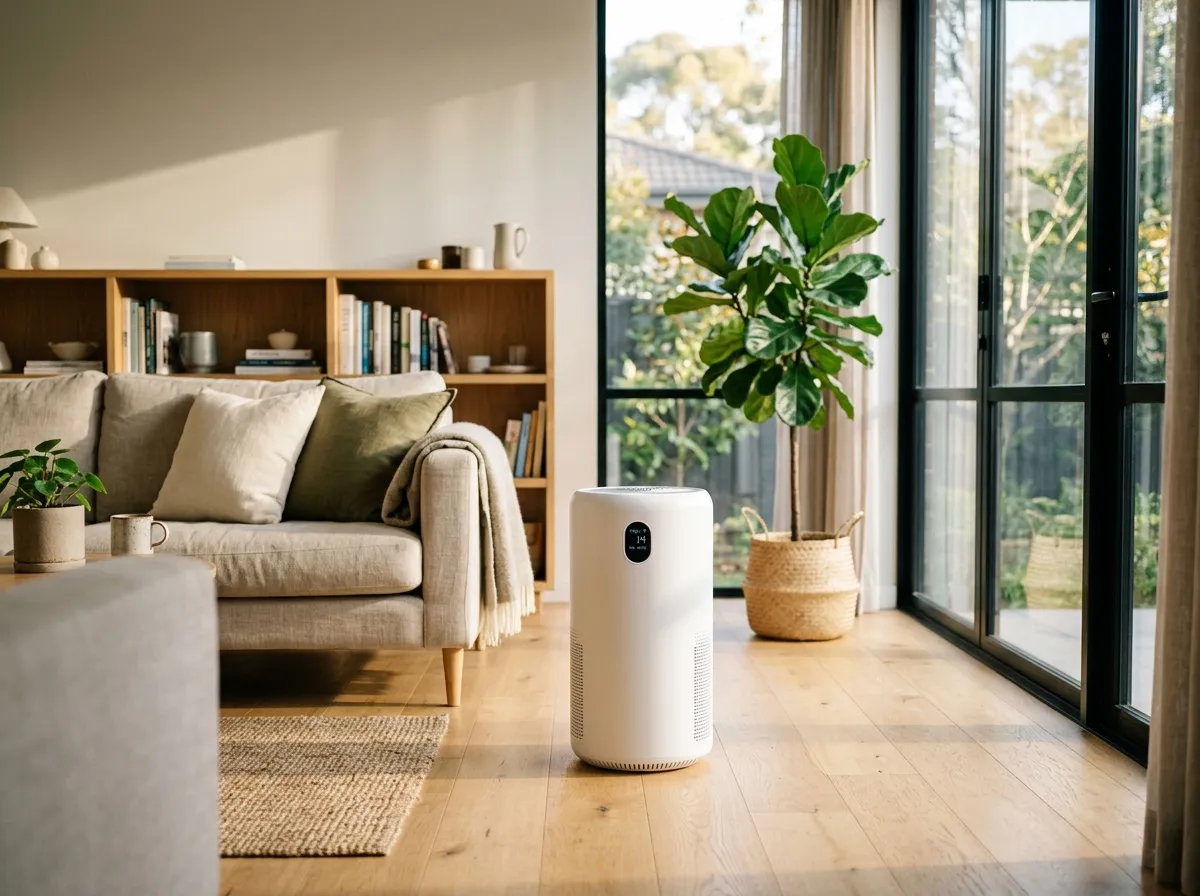
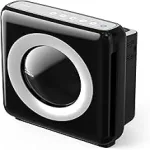
True HEPA filters capture 99.97% of particles at 0.3 microns. Combined with an activated carbon stage, they also reduce VOCs. A portable unit in your bedroom running overnight is, in practice, the most impactful single air quality purchase for most people. You sleep 7-8 hours in that room. That’s a lot of filtered-air exposure.
The key metric is CADR (Clean Air Delivery Rate), measured in cubic feet per minute. Match the CADR rating to your room size. A 350 sq ft bedroom needs a CADR of about 235+ CFM to achieve 4-5 air changes per hour. Bigger is better; you can always run it on a lower speed setting.
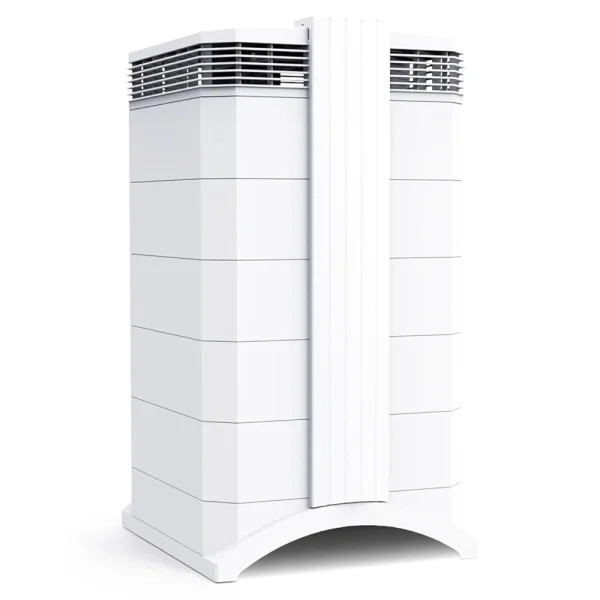
The Coway AP-1512HH covers 360 sq ft and costs under $120. The IQAir HealthPro Plus steps up to HyperHEPA filtration at 0.003 microns, which is relevant for ultrafine particles that true HEPA misses. For most people’s bedrooms, the Coway is sufficient. For anyone with asthma, chemical sensitivity, or a high-pollution urban environment, the IQAir is the right call. See our best air purifiers for home guide for a full comparison.
Whole-Home HEPA Add-On Systems
Aprilaire, IQAir, and similar brands make HEPA filtration units that attach inline with your HVAC ductwork. These treat air from every room in the house simultaneously, which solves the portable-purifier problem of needing one unit per room.
Installed cost runs $500-$2,000 depending on system size and labor. The ongoing filter cost is similar to portable units: $200-$400 per year for HEPA filter replacements. The big advantage is coverage. The trade-off is that the system still recirculates indoor air rather than bringing in fresh outdoor air. It’s better particle control, not a ventilation solution.
ERV and HRV Systems
An Energy Recovery Ventilator (ERV) or Heat Recovery Ventilator (HRV) is the only category here that actually reduces indoor CO2 and VOC buildup rather than just recirculating what’s already inside. It brings in fresh outdoor air, pre-conditions it using the heat or coolness of the outgoing air, and exhausts the stale indoor air outside.
Installed cost is $1,500-$4,000 depending on home size. For a well-sealed modern home, this is the single best long-term air quality investment. It reduces CO2, VOCs, formaldehyde, and humidity. It doesn’t replace HEPA filtration for particles, but it addresses what HEPA cannot. The combination of an ERV with a MERV 13 HVAC filter gets you most of what a full system can do, without the whole-home HEPA add-on cost.
Medical-Grade Standalone Purifiers
The IQAir HealthPro Plus runs HyperHEPA filtration rated to 0.003 microns. That’s 100 times finer than standard HEPA’s 0.3 micron threshold. For comparison, a COVID-19 particle is about 0.1 microns; standard HEPA captures it, but less efficiently. The IQAir is the right choice for bedrooms where a sensitive person sleeps, or for rooms with known chemical exposure sources.
At the investment tier ($$$$), it’s not the first purchase for someone building toward better air quality. But for anyone who has already upgraded their HVAC filter, added a mid-range purifier in the main living space, and still has budget, the IQAir in the primary bedroom is the right next step.
Air Filtration Trade-Offs Table
| Option | Coverage | Removes Particles | Removes VOCs | Addresses CO2 | Installed Cost |
|---|---|---|---|---|---|
| MERV 13 HVAC filter | Whole home (during HVAC cycles) | Yes (PM2.5) | No | No | $/filter |
| Portable HEPA purifier | Single room | Yes (99.97% at 0.3 micron) | Partially (with carbon stage) | No | $$ |
| Whole-home HEPA add-on | Whole home (all cycles) | Yes | Partially | No | $$$$ installed |
| ERV/HRV | Whole home (continuous) | No (needs filter) | Yes (dilution) | Yes | $$$$ installed |
| IQAir HealthPro Plus | Single room | Yes (to 0.003 micron) | Yes (V5-Cell stage) | No | $$$$ |
What About the Gas Stove?
Gas stoves are the highest-impact indoor air intervention in most homes, and most people aren’t thinking about them. A 2022 Stanford study by Lebel et al. measured NO2 emissions from 53 gas stoves in California homes [human exposure measurement]. They found that gas stoves emit NO2 at levels exceeding EPA outdoor air quality standards during cooking. Peak kitchen NO2 reached 200-300 ppb in homes without adequate ventilation, compared to the EPA’s outdoor NAAQS standard of 100 ppb averaged over one hour.
The study also found that gas stoves leak methane continuously even when turned off, at amounts that accumulate meaningfully over time. This is a building emissions issue separate from the cooking-use NO2 problem.
The practical options, ranked by effectiveness:
- Switch to induction. This eliminates the problem at the source. A portable induction cooktop costs $40-$80 and works on your existing cookware if it’s magnetic.
- Use a range hood vented to the exterior. Not a recirculating hood, which just filters particles and pushes the NO2 back into the kitchen. The vent must exhaust outside. Run it on high during cooking.
- Open a window during cooking. Free. Works reasonably well if you can create cross-ventilation.
- Place a portable HEPA unit near the cooktop. Captures particles but does not remove NO2. Partial fix only.
The Lebel 2022 study found that running a range hood reduced kitchen NO2 by 42-65% depending on hood type and whether it was ducted to the exterior. Induction cooktops produced no detectable NO2 [human exposure measurement]. If you have a gas stove, ventilation is not optional.
Water: What the Treatment Plant Does and Doesn’t Do
Municipal water treatment is highly effective at its primary purpose: eliminating biological pathogens, reducing turbidity, and meeting legal contaminant limits. The EPA’s Safe Drinking Water Act sets Maximum Contaminant Levels (MCLs) for over 90 contaminants, and most large utilities meet them consistently (EPA Safe Drinking Water Act).
But there are real gaps. Treatment plants add disinfectants (chlorine, chloramine) that react with organic matter in the distribution system to form disinfection byproducts (DBPs), including trihalomethanes (THMs) and haloacetic acids (HAAs). These are created by the treatment process itself, not present in the source water.
Lead is another gap. Treatment plants don’t use lead pipes, but service lines and household plumbing in older homes can. The EPA estimates roughly 9 million lead service lines still exist in the U.S. as of 2024. Lead leaches into water at the household level, after it leaves the plant.
PFAS (per- and polyfluoroalkyl substances) are present in the source water of many utilities and are not removed by standard treatment. In April 2024, the EPA finalized the first enforceable PFAS drinking water limits: 4 ppt for PFOA and PFOS individually, with compliance required by 2029 (EPA PFAS National Primary Drinking Water Regulation). Many utilities currently exceed these limits. Biomonitoring data from CDC NHANES shows PFAS detectable in over 97% of Americans’ blood samples [biomonitoring], reflecting cumulative exposure from water, food, and consumer products.
Microplastics and nitrates round out the list. Nitrate contamination is a particular issue near agricultural areas and is not fully addressed by standard treatment. The EPA MCL for nitrate is 10 mg/L; pediatric health effects have been documented above 5 mg/L in some studies [human epidemiological].
The point is not that tap water is unsafe. For most people in most systems, it is probably fine under normal use. The point is that “meets legal limits” and “minimizes exposure to known contaminants” are not the same thing. Point-of-use filtration can close that gap.
Water Filtration Options, Ranked by Performance
Understanding your local water first is useful. Your utility publishes an annual Consumer Confidence Report. EWG’s Tap Water Database aggregates these by ZIP code if you want a quick lookup. From there, match the filter to your actual contaminant profile.
Standard Pitcher Filters (Brita, PUR)
These use granular activated carbon (GAC) to reduce chlorine taste and some heavy metals. They improve the taste of water noticeably. What they don’t do: reduce PFAS, lead at meaningful concentrations, THMs, or nitrates. For most people, a standard Brita is a taste filter, not a health filter.
If tap water taste is your only concern, it’s fine. If you’re in this for contaminant reduction, move down the list.
NSF P473-Certified Pitchers (Clearly Filtered)
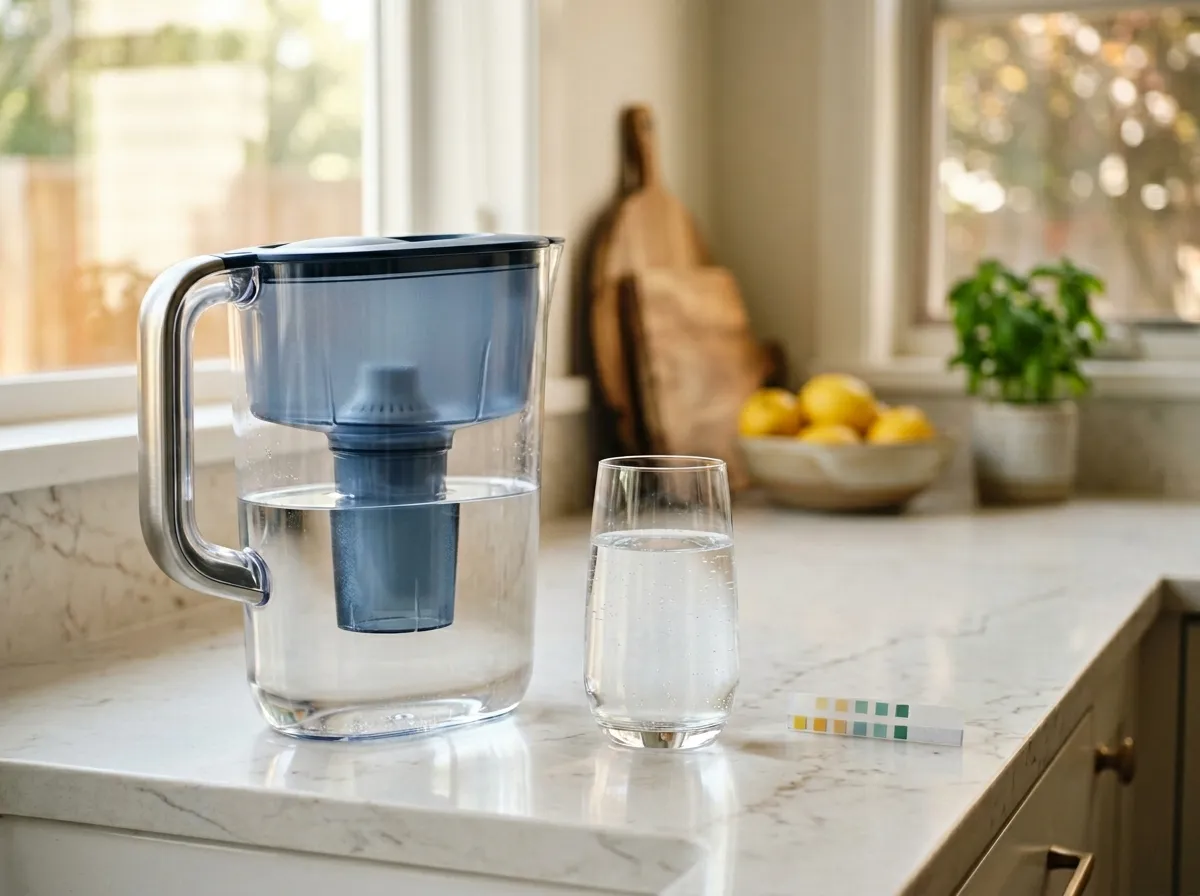
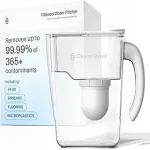
The Clearly Filtered pitcher carries NSF P473 certification, which verifies PFAS reduction. It also reduces lead, arsenic, and hundreds of other contaminants according to Clearly Filtered’s published testing data. At the mid tier ($$), it’s the best option for renters or anyone who can’t install a countertop or under-sink system. Our best gravity water filters guide covers more options in this tier.
The limitation: slower flow than a standard pitcher, and the filter needs replacement every 100 gallons. Annual filter cost runs around $150-$165 if you use it as your primary drinking water source.
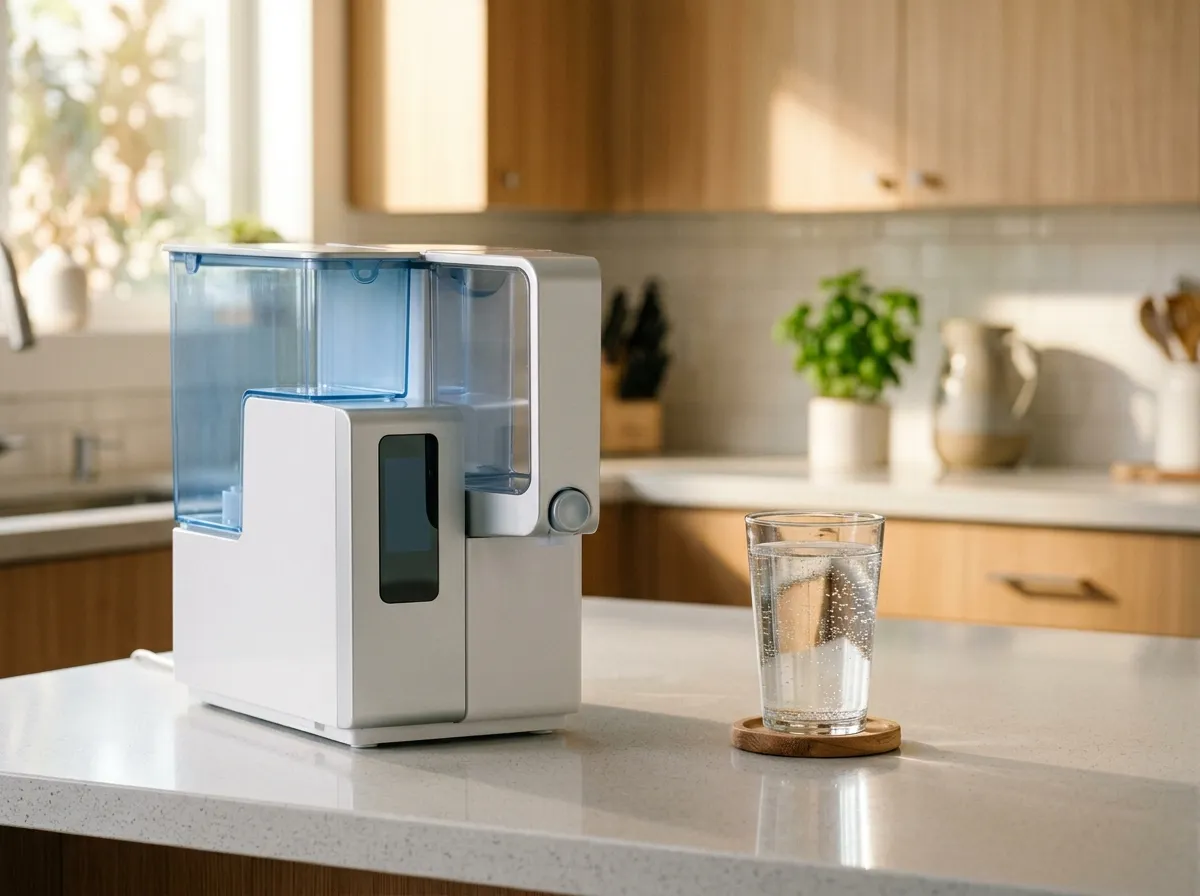
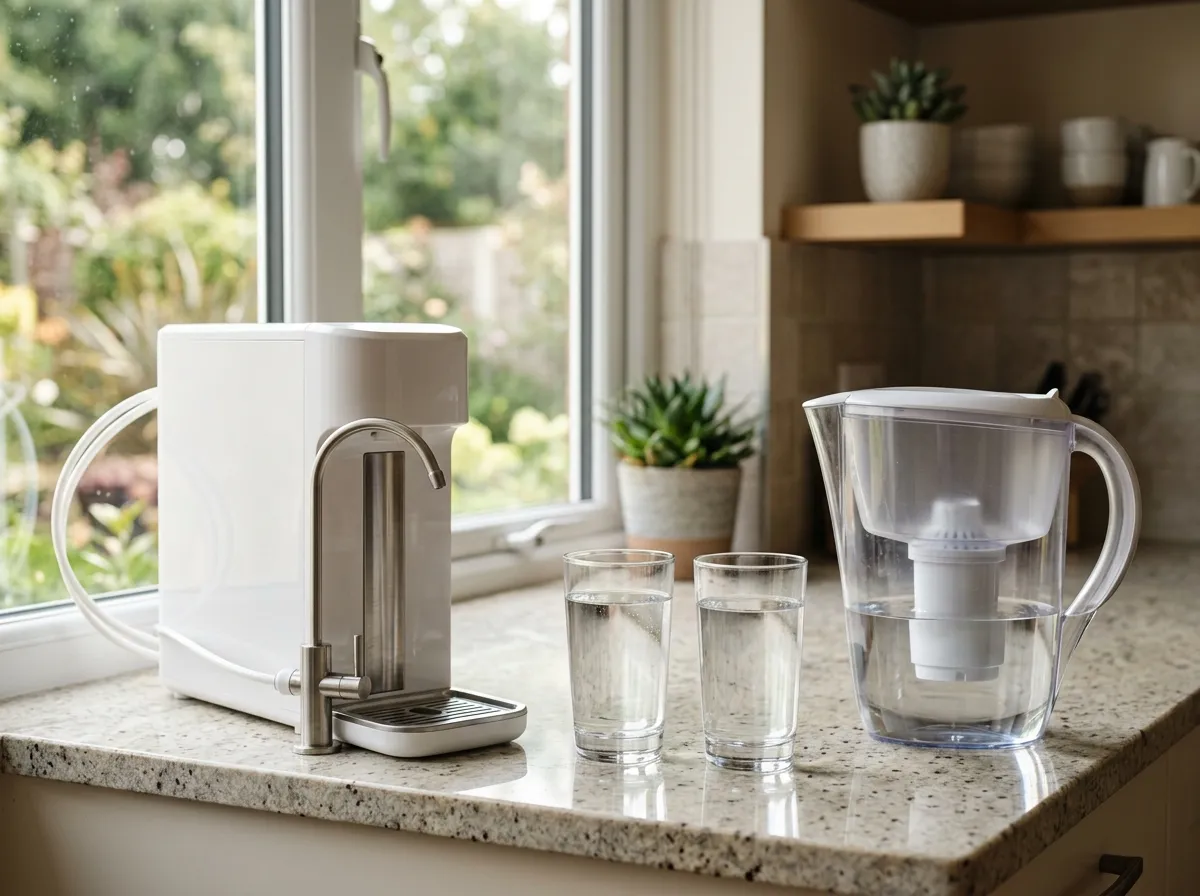
Countertop Reverse Osmosis (AquaTru)
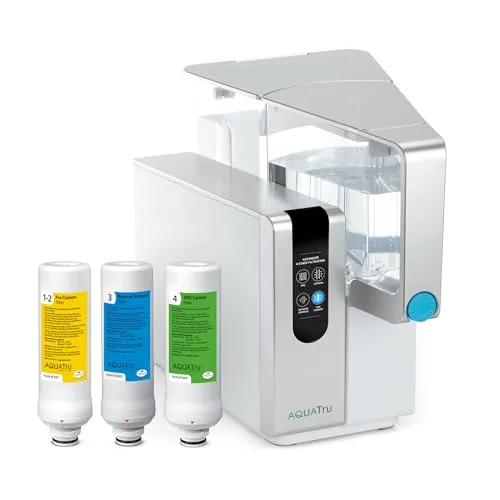
Reverse osmosis forces water through a semipermeable membrane that blocks contaminants physically. A properly sized RO membrane removes PFAS (95%+), lead (98%+), nitrates, arsenic, THMs, heavy metals, and microplastics. It’s the most thorough single-unit solution available for home use.
The AquaTru Classic is a 4-stage countertop RO system with no plumbing required. It’s NSF certified under Standards 42, 53, 58, 401, and P473. You fill the reservoir, and it filters the water into a holding tank. Our full AquaTru review covers performance and filter costs in detail.
The RO trade-off everyone mentions: wastewater. Standard RO membranes reject 3-4 gallons for every 1 gallon they produce. Newer systems with permeate pumps get this down to 1:1 or 2:1. For drinking water only, the volume is small enough that most households don’t notice it. The AquaTru is probably the right countertop choice for most people reading this.
Under-Sink RO (APEC, iSpring)
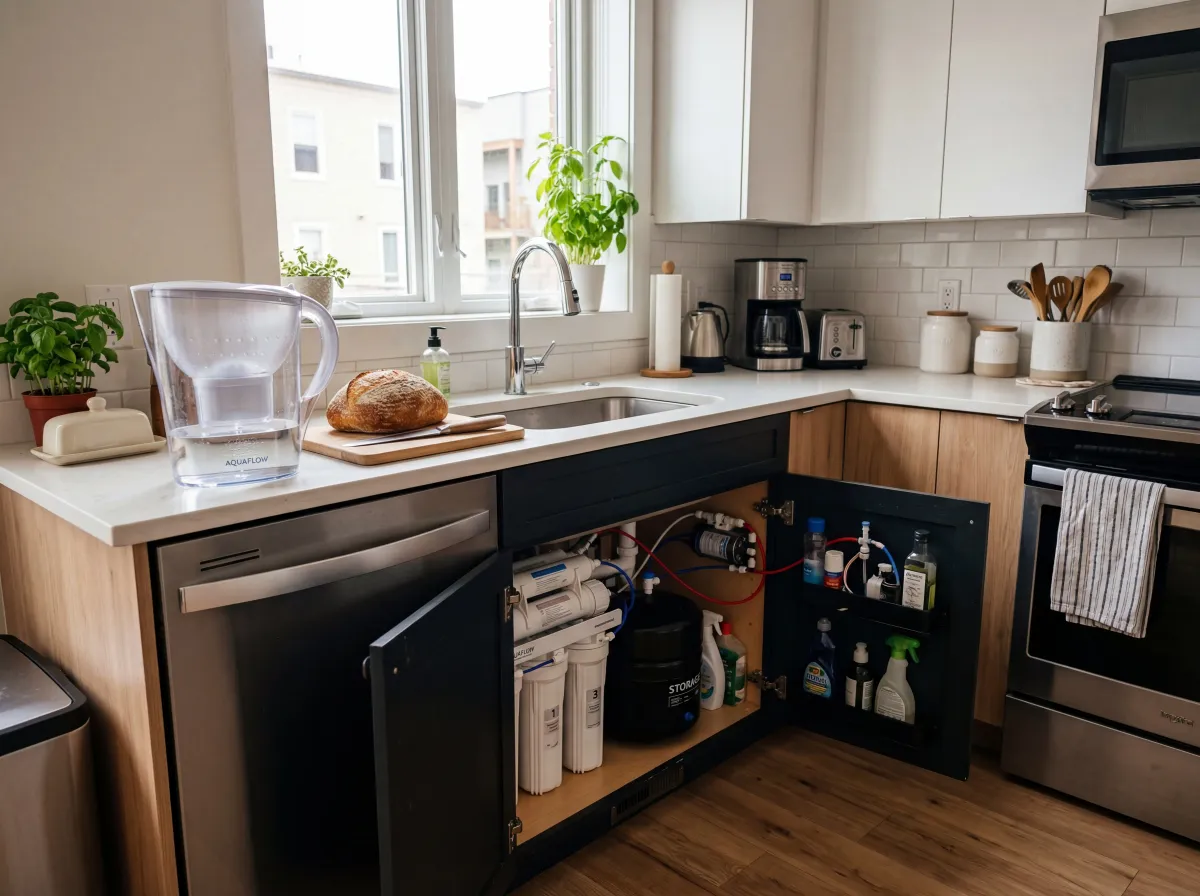
Under-sink RO systems like the APEC ROES-50 ($200-$230) deliver the same filtration performance as countertop units but with a lower waste-water ratio when equipped with a permeate pump. They require basic plumbing, usually a 30-60 minute installation. They’re installed out of sight and connect directly to a dedicated faucet on your counter.
For anyone who owns their home and doesn’t mind a one-time installation, under-sink RO is the best value-per-gallon option. Annual maintenance costs run $50-$100 for membrane and filter replacements.
Whole-Home Carbon Pre-Filter
A whole-home carbon filter at the water main reduces chlorine and chloramines at the point of entry. This protects appliances, reduces chlorine off-gassing in showers, and improves the taste of water throughout the house. Installed cost is $300-$600.
It does NOT address PFAS, lead, or heavy metals. Think of it as a chlorine filter, not a contaminant filter. It’s useful in combination with a point-of-use RO for drinking water, not as a substitute for one.
Whole-Home Reverse Osmosis ($3,000-$15,000)
Whole-home RO treats all water entering the house, including shower water, appliance water, and drinking water. The appeal is obvious: total coverage. The honest assessment is less clear-cut.
Drinking and cooking water represent roughly 90% of your oral PFAS and heavy-metal exposure from water. Shower exposure via inhalation of volatile compounds (specifically THMs, discussed below) is real, but the fix is far cheaper than a whole-home RO. Whole-home RO also wastes significant water, requires a large storage tank, and needs regular membrane replacement. For most households, it’s an expensive solution to problems that are largely addressed by a $450 countertop RO and a $30 shower filter.
There are cases where whole-home RO makes sense: severe lead contamination in service lines, very high nitrate levels from agricultural runoff, or households with immunocompromised members who need broad-spectrum coverage on all water contact. For general longevity use, the return on investment is low compared to point-of-use alternatives.
Water Filtration Trade-Offs Table
| Option | Removes PFAS | Removes Lead | Removes THMs | Addresses Shower Exposure | Cost |
|---|---|---|---|---|---|
| Standard pitcher (Brita) | No | Minimally | No | No | $ |
| NSF P473 pitcher (Clearly Filtered) | Yes | Yes | Partially | No | $$ |
| Countertop RO (AquaTru) | Yes (95%+) | Yes (98%+) | Yes | No | $$$ |
| Under-sink RO (APEC) | Yes | Yes | Yes | No | $$$ |
| Whole-home carbon pre-filter | No | No | Partially | Partially (chlorine) | $$$ installed |
| Shower filter (KDF-55) | No | No | Yes (volatile THMs) | Yes | $ |
| Whole-home RO | Yes | Yes | Yes | Yes | $$$$ installed |
The Shower Inhalation Pathway
This is the most underrated $30 upgrade in home water filtration. When hot water contacts chlorinated municipal water, trihalomethanes (THMs) like chloroform become volatile and enter the steam. Inhalation exposure to volatile DBPs during a 10-minute hot shower can exceed oral exposure from drinking the same water [human modeling studies, including Weisel and Chen, 2005, published in Risk Analysis].
A KDF-55 shower filter ($25-$40) reduces chloroform and other volatile chlorination byproducts in shower steam. KDF (kinetic degradation fluxion) media works through a redox reaction that breaks down chlorine and chloramines. It doesn’t require a carbon cartridge change as frequently as carbon-only shower filters, and it works in hot water where activated carbon becomes less effective.
What shower filters don’t do: they don’t address lead or PFAS. These compounds don’t volatilize and inhalation is not the primary exposure route. If lead is your concern in the shower, you need filtration at the building entry or a whole-home system.
For most households on chlorinated municipal water, adding a KDF-55 shower filter is genuinely one of the highest-ROI purchases on this page. The exposure reduction relative to cost is hard to beat.
What the Full Build Looks Like
For buyers with no budget constraint, here’s what a complete installation covers and what it costs. This is not a recommendation for most people. It’s a reference point.
Air side:
- ERV (energy recovery ventilator) for whole-home fresh-air exchange: $1,500-$4,000 installed
- Whole-home HEPA add-on inline with HVAC ductwork: $500-$2,000 installed
- IQAir HealthPro Plus in primary bedroom: $899-$999
- Induction range or induction cooktop replacing gas: $400-$1,500
Water side:
- Whole-home carbon pre-filter at water main entry: $300-$600 installed
- Under-sink RO at kitchen (APEC or iSpring): $200-$400 installed
- KDF-55 shower filters on all showers: $25-$40 each, $150-$250 for a whole house
Total installed cost: Roughly $8,000-$25,000 depending on home size and local labor rates.
Annual maintenance:
- HEPA filter replacements: $200-$400/year
- RO membrane and pre-filters: $50-$100/year
- Shower filter cartridges: $40-$80/year
- MERV 13 HVAC filters: $80-$120/year (changed quarterly)
This is what the longevity community calls the “full stack.” It’s thorough. It’s also significantly more than most people need to achieve a large reduction in their primary exposures. The next section is more relevant to most readers.
The Budget-Optimized Protocol
If you’re trying to get the most meaningful exposure reduction per dollar, here’s the priority order. Each step addresses a real exposure pathway.
Step 1: Coway AP-1512HH in your bedroom. (~$100) You spend roughly 2,900 hours a year in that room. HEPA filtration during sleep is the single highest-hours-of-benefit purchase on this list. Run it on medium overnight. Replace the filter once a year.
Step 2: AquaTru or Clearly Filtered for drinking water. ($90-$450) If you’re on a tight budget, the Clearly Filtered pitcher handles PFAS and lead for $90-$120. If you can spend more, the AquaTru countertop RO is broader-spectrum and the better long-term value per gallon. Both are meaningfully better than a standard Brita for contaminant reduction.
Step 3: KDF-55 shower filter. (~$30) Buy it now. The THM inhalation exposure during a 10-minute hot shower is one of the most overlooked water exposures in typical homes. This is the highest-ROI single purchase in the water category.
Step 4: Open the window while cooking with gas. (Free) If you have a gas stove, ventilation during cooking is not optional. Cross-ventilation with a window open reduces kitchen NO2 meaningfully. A ducted range hood is better. Induction is better still. But the free version is better than nothing.
Step 5: Upgrade your HVAC filter to MERV 13. (~$20, quarterly) Not glamorous. But a MERV 13 filter meaningfully cuts PM2.5 in air that circulates through your HVAC system. It’s a background improvement that runs continuously.
Total cost for steps 1-5: under $600. You’ve addressed the primary bedroom air pathway, drinking water PFAS and lead, shower THM inhalation, gas stove NO2, and whole-home PM2.5. That’s a solid baseline.
What We Don’t Know Yet
Honesty requires acknowledging the limits of the current data. A few things worth flagging:
Whole-home RO vs. point-of-use, in biomarker studies. We don’t have controlled human trials comparing blood PFAS levels between households using whole-home RO versus a kitchen under-sink RO plus shower filters. The assumption that whole-home coverage produces meaningfully better outcomes is biologically plausible, but it hasn’t been confirmed in outcome-based research.
ERV installation and long-term health outcomes. We know ERVs reduce indoor CO2 and VOCs based on building science data. We don’t have long-term prospective studies comparing cognitive outcomes or cardiovascular markers between ERV-equipped homes and standard ventilation. The inference from CO2 literature to health outcomes is reasonable but not directly proven for residential ERV use.
Shower THM inhalation dose-response. The Weisel and Chen modeling work establishes that inhalation can exceed oral exposure for volatile DBPs. But the dose-response relationship at typical residential concentrations isn’t well-characterized. The intervention (shower filter) is low-cost and low-risk, so uncertainty here doesn’t change the recommendation. But “this pathway is real” and “this pathway causes harm at typical exposure levels” are different claims. Long-term data is limited.
Ultrafine particle standards. Current HEPA standards are defined at 0.3 microns. The IQAir’s HyperHEPA certification at 0.003 microns addresses ultrafine particles that standard HEPA misses. Whether ultrafine particles are significantly more harmful than PM2.5 at typical residential exposure levels is still an active research question [human epidemiological, preliminary].
Frequently Asked Questions
Does a whole-home water filter replace a drinking water filter?
No. Most whole-home filters are carbon pre-filters that reduce chlorine and chloramines at the water main. They don’t remove PFAS, lead, or nitrates. You still need a point-of-use filter (RO or NSF P473-certified pitcher) for drinking water. Think of the whole-home filter as a plumbing protector and shower-water upgrade, not a drinking water solution.
Is my HVAC filter enough for air quality?
For large particles, yes. A MERV 13 filter provides meaningful PM2.5 reduction during active HVAC cycles. But HVAC filters don’t touch VOCs, NO2, or CO2. And they only clean air when the system is actively running. For bedrooms especially, a portable HEPA purifier running overnight adds significant hours of filtered-air exposure that your HVAC system doesn’t provide.
Does a shower filter really matter?
For chlorinated municipal water, yes. Trihalomethanes are volatile and enter shower steam. Inhalation exposure during a 10-minute hot shower can exceed oral exposure from drinking the same water [human modeling, Weisel and Chen 2005]. A KDF-55 filter at $25-$40 reduces this pathway. It’s not the most important purchase on this list, but the cost-to-benefit ratio is hard to beat.
How often should I change HEPA filters?
Manufacturer schedules vary, but a common guideline for residential use is every 12 months for the main HEPA stage and every 3-6 months for pre-filters (carbon, pre-filter foam). Running the unit in a room with higher pollution (near a gas stove, in a city with outdoor PM2.5 events) shortens filter life. Most units have indicator lights; use them as a starting point but check the filter visually at the 6-month mark.
What’s the minimum water filtration setup worth buying?
The Clearly Filtered pitcher at $90-$120 is the minimum meaningful upgrade from tap water for most households. It’s NSF P473 certified for PFAS reduction and reduces lead. If your main concerns are PFAS and lead, it addresses both without installation. The next step up, the AquaTru countertop RO at $449, is broader-spectrum and the right choice if you also want THM, nitrate, and heavy metal coverage. Our best fluoride water filters guide covers more options in this tier.
You Might Also Like
- iSpring WGB32B vs AquaTru: Whole House vs Point-of-Use in 2026
- iSpring WGB32B-KS Review: The Whole House Water Filter We Recommend in 2026
- The Whole House Filter We Recommend (iSpring WGB32B-KS)
- Best Dehumidifiers for Mold Prevention (2026)
- iSpring WGB32B vs Aquasana: The Whole House Filter We’d Pick
- Your Water Filter Might Be Doing Nothing Right Now (Here’s How to Know)
- Best Under-Sink Water Filters in 2026 (Including Renter-Friendly Options)
- IQAir vs Blueair: Which Air Purifier Is Worth the Money?
- How to Clean and Replace Air Purifier Filters (Brand-by-Brand Guide)
- Coway Airmega Air Purifier Review: Is It the Best for Your Home?
- Microplastics in Drinking Water: What the Science Says (and How to Filter Them Out)
- Best Water Filter for Apartments and Renters (2026): No-Install Picks
- Berkey vs AquaTru: Which Water Filter Is Better?
- The Whole House Water Filters We’d Install (2026)
- Best Reverse Osmosis Systems in 2026 (Under-Sink, Countertop, and Tankless)
- AquaTru vs Clearly Filtered: I Tested Both for 6 Months (2026)
- Best Portable Water Filters for Travel (2026)
- The Non-Toxic Renter’s Playbook: What You Can (and Can’t) Control
- Do Charcoal Bags Actually Purify Air? (What the Science Says)
- The Water Filters for PFAS Our Editors Trust (2026)
- Water Filtration Guide: How to Choose the Right Filter for Your Home
Sources
- EPA Indoor Air Quality - EPA’s ongoing IAQ monitoring data showing indoor pollutant concentrations at 2-5x outdoor levels for common compounds.
- Lebel, E.D. et al. (2022). Methane and NOx Emissions from Natural Gas Stoves. Environmental Science & Technology - Stanford study measuring NO2 emissions from gas stoves in 53 California homes; peak kitchen NO2 exceeded EPA outdoor standards during cooking.
- EPA PFAS National Primary Drinking Water Regulation (2024) - Final rule setting enforceable MCL of 4 ppt for PFOA and PFOS individually, compliance required by 2029.
- NSF International - NSF/ANSI P473 Standard - Certification criteria for PFAS reduction in drinking water treatment devices.
- ATSDR Toxicological Profile for Perfluoroalkyls (2021) - ATSDR’s full toxicological profile for PFAS: health effects, exposure data, and toxicological evidence reviewed systematically.
- CDC NHANES - PFAS Biomonitoring Data - National biomonitoring data showing PFAS detectable in over 97% of blood samples tested in representative U.S. populations.
- Weisel, C.P. and Chen, W.J. (1994). Exposure to chlorination by-products from hot water uses. Risk Analysis, 14(1):101-106. - Human exposure modeling study showing inhalation and dermal absorption of volatile THMs during showering can exceed oral ingestion exposure.
- EPA Safe Drinking Water Act Overview - Federal law requiring EPA to set MCLs for over 90 contaminants in public water systems; basis for treatment plant performance standards.
- EPA National Ambient Air Quality Standards for Nitrogen Dioxide - EPA outdoor NAAQS for NO2: 100 ppb (1-hour), the benchmark used in the Lebel 2022 gas stove study for indoor comparison.