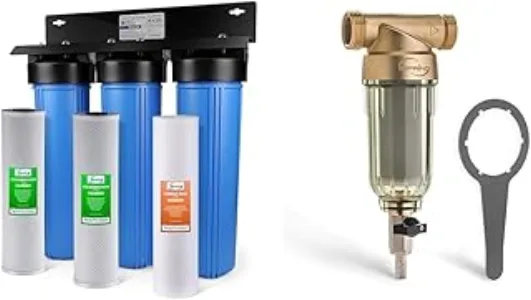
Your tap water picks up contaminants on the way to your faucet. Chlorine, PFAS, lead, sediment, volatile organic compounds. As Stanford neuroscientist Andrew Huberman has discussed on his podcast, reducing your exposure to these chemicals through filtration is one of the most practical steps you can take for your health. A whole house water filter catches all of it before the water reaches any tap, shower, or appliance in your home. That means cleaner drinking water, fewer chemicals on your skin, and longer-lasting water heaters and dishwashers. It is one of the most effective steps in any whole-home detox plan. We put together water filtration guide that covers this whole category.
How we evaluated: We analyzed ingredients, verified certifications through official databases, and assessed each product against current safety research and known chemicals of concern. Full methodology
After comparing specifications, prices, flow rates, filter capacities, and real owner feedback across eight systems, here are the best whole house water filters you can buy in 2026. A whole-home filter is one of the highest-impact decisions in the longevity home protocol, since it cleans every drop you drink, cook with, and bathe in.
Quick Picks
| Category | Pick | Price | Why |
|---|---|---|---|
| Best Overall | iSpring WGB32B-KS | $$$ | 3-stage carbon block with PFAS reduction, 15 GPM flow, established brand |
| Best for Well Water | SpringWell WS1 (DTC-only, sold direct) | $$$$ | Air injection oxidation removes iron, sulfur, manganese |
| Best Budget | iSpring WGB32B | $$ | 3-stage carbon block, 15 GPM, transparent housings |
| Best for PFAS | Aquasana Rhino EQ-1000 | $$$ | NSF-certified, 97% chlorine reduction, 1M gallon capacity |
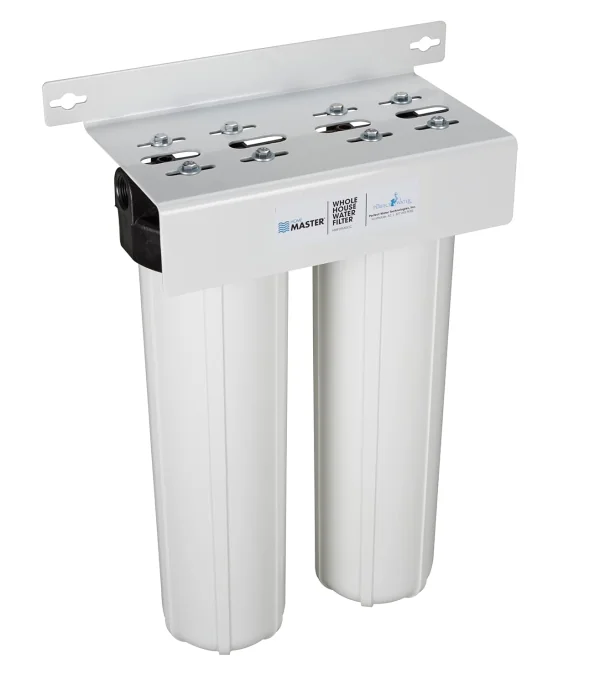
| Best for Well + Budget | Home Master HMF3SDGFEC | $$ | 3-stage with iron reduction, less than 1 PSI pressure drop |
How Whole House Water Filters Work
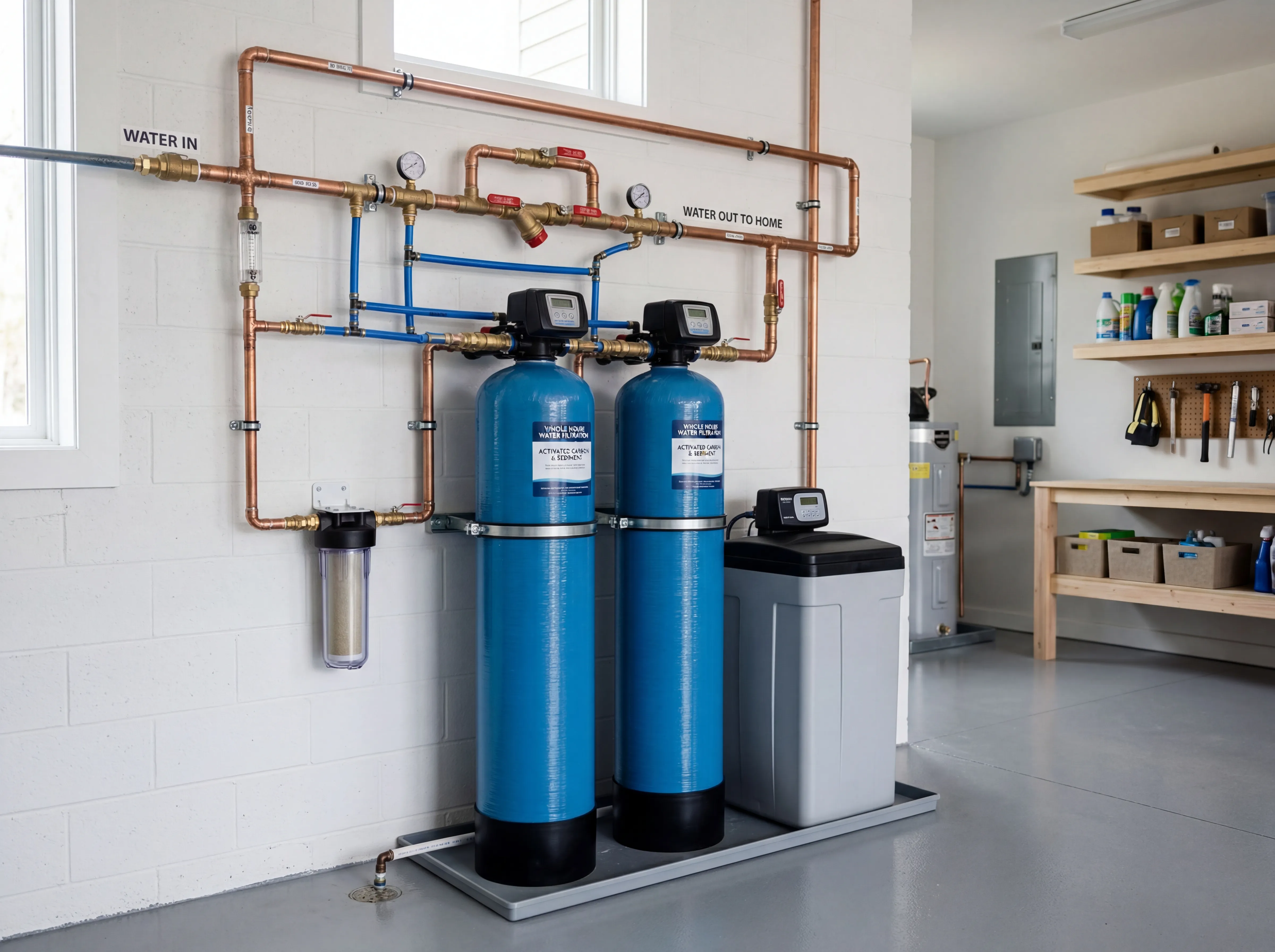
A whole house water filter (also called a point-of-entry or POE system) connects to your main water line where it enters the house. Every drop of water passes through the filter before it reaches any fixture. Most systems use a combination of these filtration stages:
- Sediment pre-filter (5-20 micron): Traps dirt, rust, sand, and silt. Protects the downstream filters from clogging.
- Activated carbon (coconut shell or catalytic): Absorbs chlorine, chloramines, VOCs, pesticides, herbicides, and bad taste/odor.
- KDF media (copper-zinc): Reduces heavy metals like lead and mercury. Also inhibits bacterial growth inside the filter.
- Specialty media: Some systems add UV disinfection, air injection oxidation (for iron/sulfur), or sub-micron filtration for specific well water problems.
The key specs to compare are flow rate (measured in GPM), filter capacity (measured in gallons), what contaminants the system is certified to remove, and the ongoing cost of replacement filters.
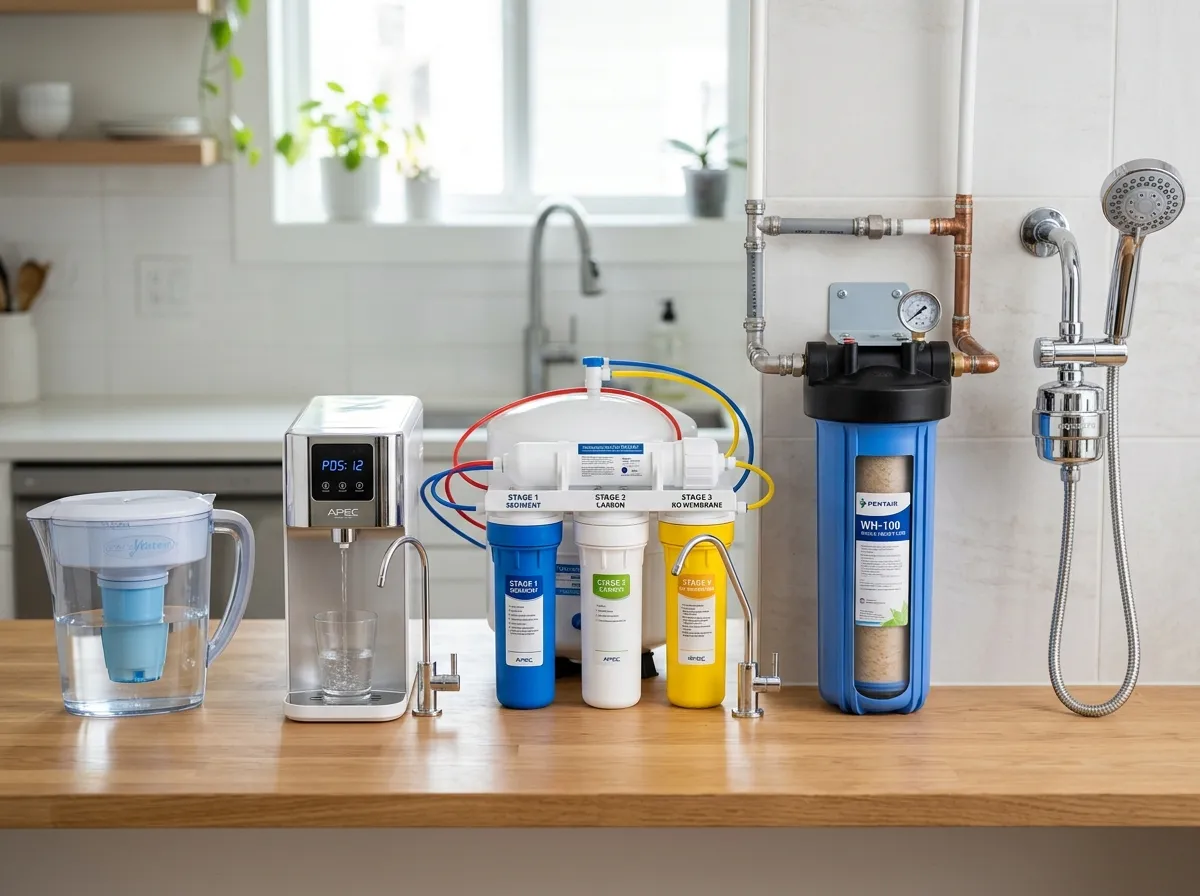
System Type Tradeoffs at a Glance
| Option | Main concern | Primary tradeoff |
|---|---|---|
| Tank-based carbon (Aquasana Rhino, SpringWell CF1) | Higher upfront cost ($$$$) | Longest media life (5-10 years), strongest chlorine reduction |
| Carbon cartridge (iSpring WGB32B, Home Master) | Filter changes every 6-12 months | Lower upfront cost, SGS PFAS testing on iSpring, easier DIY install |
| Well water system (SpringWell WS1) | High cost ($$$$), backwash drain required | Purpose-built for iron, sulfur, and manganese |
| Mid-range carbon (Pelican, SoftPro) | Shorter warranty or limited third-party certification | Low pressure drop, long media life |
Detailed Reviews
iSpring WGB32B-KS Whole House Filter {#ispring-wgb32b}
Tier: $$$ | Flow Rate: 15 GPM | Capacity: ~100,000 gallons | Best for: City water, 1-3 bathroom homes
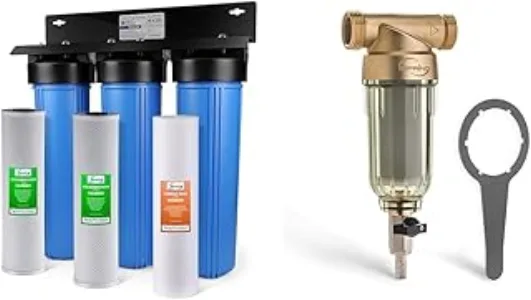
The iSpring WGB32B-KS is a 3-stage cartridge system that reduces chlorine, chloramines, lead, sediment, and PFAS forever chemicals at full residential flow rates. SGS-tested, transparent housings make filter inspection easy, and replacement filters are inexpensive every 6-12 months.
For city water, you want a carbon-based system that targets:
- Chlorine and chloramines
- PFAS/PFOA/PFOS
- Lead and other heavy metals
- VOCs and pesticides
- Sediment from aging pipes
Best picks for city water: iSpring WGB32B-KS, Aquasana Rhino EQ-1000, Home Master HMF3SDGFEC
Well Water
Private well water is not regulated by the EPA, and the homeowner is responsible for testing and treatment. Common well water issues include iron (causes orange stains), hydrogen sulfide (rotten egg smell), manganese (black residue), hardness minerals, sediment, and potentially bacteria.
Before buying a well water filter, test your water quality. You need to know your specific contaminant levels to choose the right system. A filter that handles 3 PPM of iron will not help if your well produces 10 PPM.
For well water, you typically need:
- Sediment filtration (sand, silt, clay)
- Iron and manganese removal
- Sulfur/hydrogen sulfide treatment
- Possibly UV disinfection for bacteria
- Possibly a water softener for hardness
Best picks for well water: SpringWell WS1 (high iron/sulfur), Home Master HMF3SDGFEC (budget well water)
Cost Breakdown: Upfront + Ongoing
A sticker price is only part of the equation. Here is what each system actually costs over 5 years, including filter replacements.
| System | Upfront Cost | Annual Filter Cost | 5-Year Total Cost |
|---|---|---|---|
| iSpring WGB32B-KS | $$$ | $$ | $$$ |
| Aquasana Rhino EQ-1000 | $$$$ | $$ | $$$$ |
| Home Master HMF3SDGFEC | $$ | $$ | $$$ |
Federal “minimum standards” still allow measurable levels of chlorine, lead, PFAS, microplastics, and dozens of other contaminants. A whole house filter protects every water outlet in your home, including showers (where chlorine becomes airborne and you breathe it in). Over a system’s lifespan, the cost is comparable to buying bottled water for a single person. If a whole house system is more than you need, a gravity water filter is a simple, low-cost alternative for drinking water that requires no plumbing at all.
What’s the difference between a whole house filter and an under-sink filter?
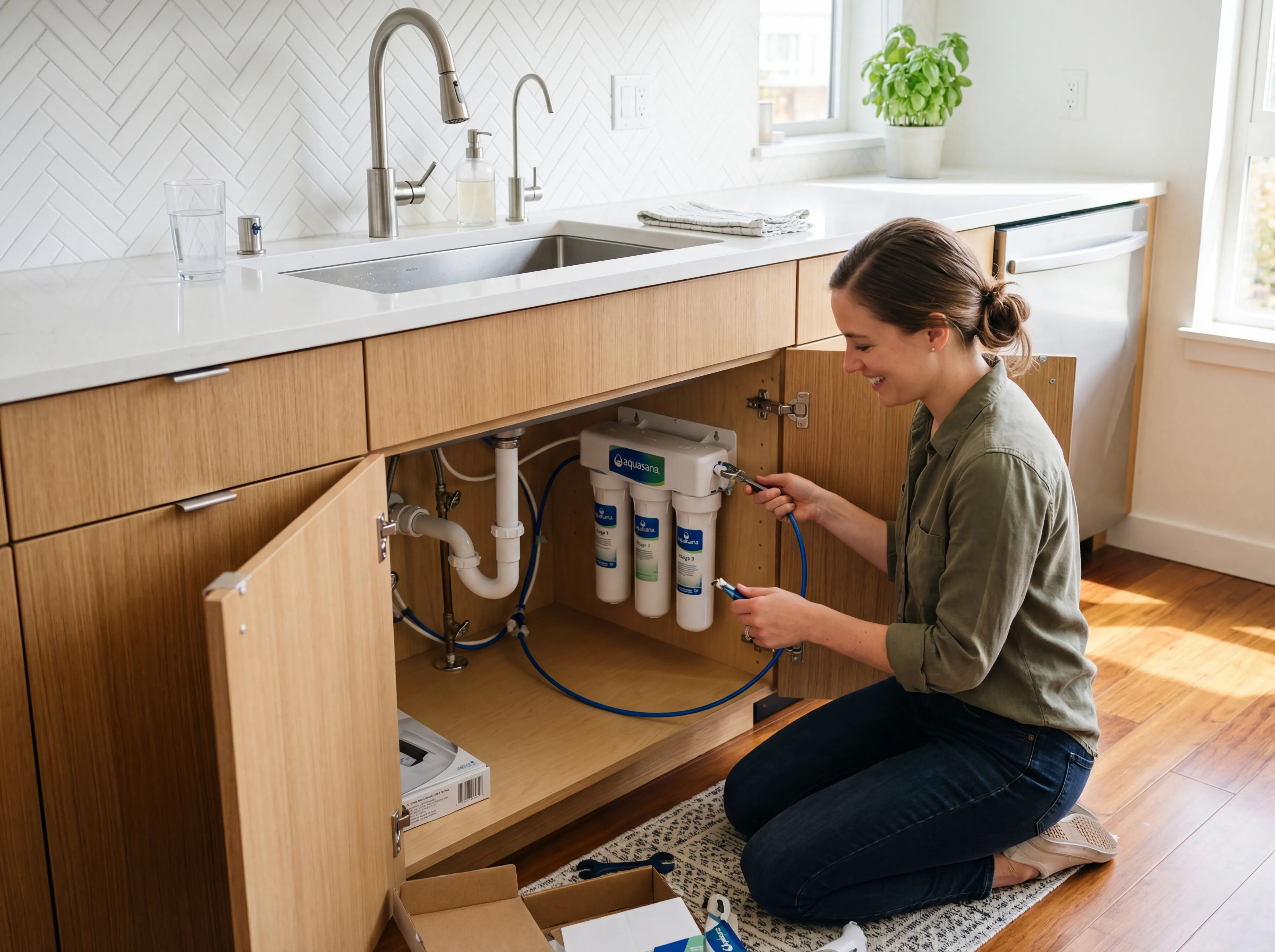
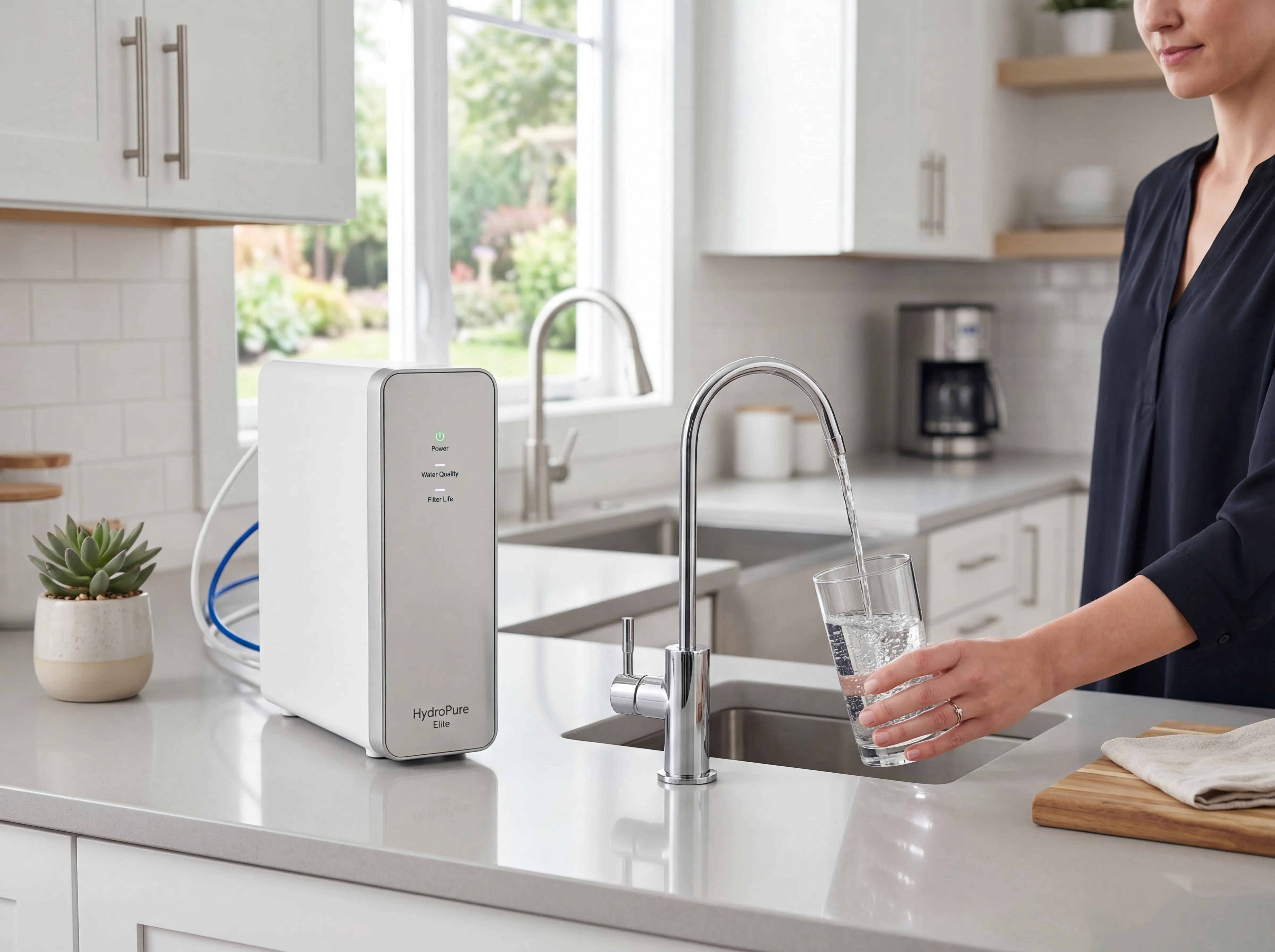
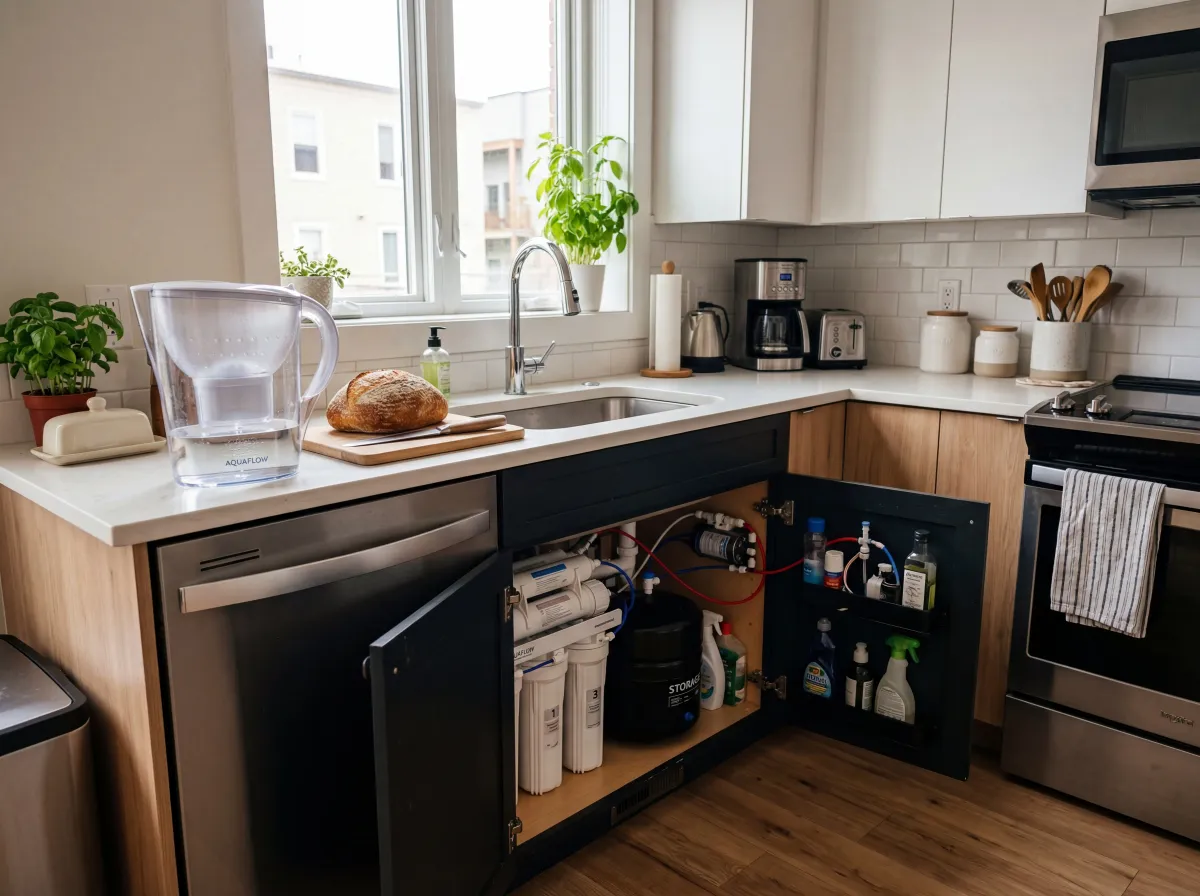
A whole house filter treats all water entering your home. An under-sink filter only treats water at one faucet. Whole house systems protect your showers, laundry, and appliances. Under-sink systems provide more thorough filtration (often including reverse osmosis) for drinking and cooking water. The best setup for most homes is a whole house filter for general protection plus an under-sink system for drinking water.
How do I know which contaminants are in my water?
Start by checking your utility’s annual Consumer Confidence Report (CCR), which lists detected contaminants and their levels. For more accurate results, order a home water test kit from a certified lab. Tap Score and SimpleLab offer detailed mail-in test kits for $50-$200. Well water users should test annually at minimum. Read our full guide on how to test water quality.
Durability and Long-Term Performance
Tank-based systems (Aquasana Rhino, the DTC SpringWell CF1) use catalytic carbon media that can last 5-10 years with no cartridge swaps, a real durability advantage over cartridge systems. The iSpring WGB32B-KS uses replaceable cartridges every 6-12 months, which keeps the upfront cost lower and parts cheap, but the 5-year total cost ends up similar to mid-range tank systems once you factor in filter cartridges. Check that any warranty covers labor and not just parts before buying.
What we don’t fully know: Long-term PFAS removal rates for carbon-based whole-house systems are not well-characterized in peer-reviewed literature at residential scale. Lab certifications test under controlled conditions; real-world removal rates vary by water chemistry, flow rate, and media age. A certified system is a reasonable best-available option, but the evidence base for specific long-term performance claims is still limited.
You Might Also Like
- Water Filtration Maintenance: Filter-by-Filter Schedules
- Water Softener Maintenance: The 4 Steps Most Homeowners Skip
- AquaTru vs Clearly Filtered
- [Berkey vs AquaTru: Which Water Filter Is Better?](/berkey-vs-aquatru/)
- Berkey Water Filter Review
- iSpring WGB32B-KS Review: The Whole House Water Filter We Recommend in 2026
- The Whole House Filter We Recommend (iSpring WGB32B-KS)
- iSpring WGB32B vs Aquasana: The Whole House Filter We’d Pick
- Best Water Filter for Apartments and Renters (2026): No-Install Picks
- Whole-Home Air and Water Systems: What the Science Supports at Every Budget
- Best Portable Water Filters for Travel (2026)
- iSpring WGB32B vs AquaTru: Whole House vs Point-of-Use in 2026
- How Often to Replace Water Filters (By Type)
- The Water Filters for PFAS Our Editors Trust (2026)
- Best Reverse Osmosis Systems in 2026 (Under-Sink, Countertop, and Tankless)
Sources
- Huberman, A. (2024). “How to Reduce Your Exposure to Microplastics, BPA, Phthalates & PFAS.” Huberman Lab Podcast. hubermanlab.com
- Patrick, R. “Water Filtration and Contaminant Removal.” FoundMyFitness. foundmyfitness.com
- Attia, P. “AMA #67: Microplastics, PFAS, and Phthalates.” The Peter Attia Drive Podcast.
We may earn a commission through affiliate links on this page. All recommendations are based on independent research, and we only recommend products we would use ourselves.