Your water softener is probably lying to you. Not on purpose. It just has no way to tell you when it’s stopped doing its job.
Most softeners don’t have an error light for “resin is fouled” or “salt bridge in your tank.” The salt level looks fine. The timer clicks over at 2am like it always did. Meanwhile, the water coming out of your tap is slowly creeping back toward hard, and you won’t notice until your water heater element burns out or the shower glass looks frosted.
This is the thing homeowners don’t get told at installation. A water softener isn’t a “set it and forget it” appliance. It’s a resin bed that needs a few minutes of attention once a year and a quick check every month or so. Skip those steps and you’ve got a very expensive salt-eating decoration.
What a Water Softener Actually Is
A softener is a tank of tiny plastic beads called ion-exchange resin. As hard water flows through the tank, the beads grab the calcium and magnesium ions that cause scale and release sodium ions in their place. That’s the “softening” part.
The beads only hold so many minerals before they’re full. At that point the softener runs a regeneration cycle: salty water from the brine tank floods the resin, knocks the hardness minerals off, and flushes them down the drain. Then the cycle repeats.
The whole system depends on two things: the resin staying clean, and the brine actually forming in the salt tank. Both can quietly fail without any warning from the unit.
Where Maintenance Usually Gets Skipped
The Water Quality Association recommends annual cleaning for residential softeners, and most manufacturer manuals say the same thing. But in practice, almost nobody does it. People add salt when the tank gets low and that’s the extent of it.
Here’s what actually goes wrong:
- Iron fouling of the resin. Even trace iron in your water (normal for wells, and common in some municipal supplies) coats the resin beads over time. Once they’re coated, salt can’t rinse them clean during regeneration.
- Salt bridges. A hard crust of salt forms partway up the brine tank, creating a hollow gap underneath. The water can’t reach the salt, so no brine forms, so nothing regenerates.
- Salt mushing. Dissolved salt re-crystallizes at the bottom of the tank as a sludgy layer. It blocks the intake and starves the softener of brine.
- Dead resin. After 10-20 years, resin wears out. If you’ve ever let your salt run completely empty, hard water runs through “naked” resin and shortens its life significantly.
The Iron Out Treatment (This Is the Big One)
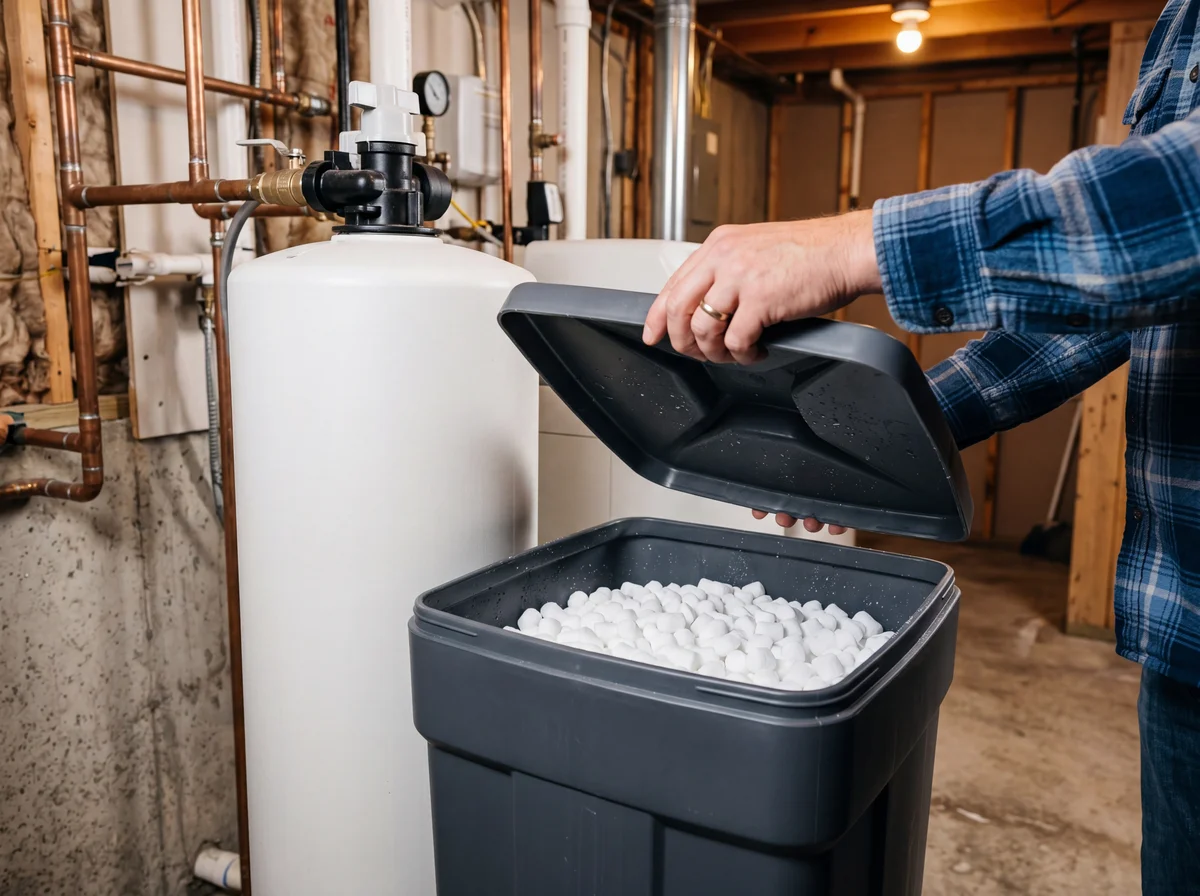
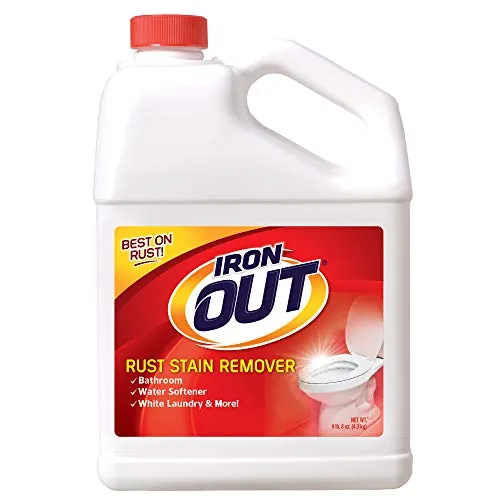
If you remember nothing else from this article, remember this. Once a year, pour one cup of Iron Out rust stain remover powder into the brine well of your salt tank and immediately trigger a manual regeneration cycle.
That’s it. That’s the whole procedure.
The brine well is the tall vertical tube inside the salt tank, usually with a removable cap. Inside that tube is where the salty water actually forms before the softener pulls it into the resin tank. When you add Iron Out there, it dissolves into the brine and rides along with the salt water during regeneration, scrubbing iron and mineral crust off the resin beads.
Step by step:
- Check that the salt level is at least 1/3 full. If it’s nearly empty, add a bag of pellet salt first.
- Pull the cap off the brine well.
- Pour one cup of Iron Out powder in.
- Put the cap back on.
- Trigger a manual regeneration. On digital units, this is usually holding the “Recharge” or “Regen” button for 3 seconds until the motor clicks over. On older mechanical units, it’s turning the manual dial until you hear the valve engage.
- Walk away. The cycle takes 90-120 minutes.
A single bottle of Iron Out runs about $12-$18 and lasts two or three years at one cup per use. For a $1,500 appliance, this might be the highest-return maintenance step in the entire house.
Some homeowners use a liquid resin cleaner like Res-Care instead, which can be dosed automatically every regeneration if you install a small feeder. Both work. Iron Out is cheaper and simpler. Res-Care is more consistent if you have heavy iron in your water.
Salt Bridges: How to Find One, How to Break It
A salt bridge is maybe the most common softener failure and the easiest to fix. It happens when salt near the top of the tank clumps into a solid crust that holds its shape even as the water level below drops. You look in the tank and see plenty of salt. You don’t see the 12-inch air gap underneath.
Diagnosis takes 30 seconds. Push a broom handle straight down into the salt, gently. If it stops partway and you feel a hollow space under the crust, that’s a salt bridge.
To break it, push the handle down firmly and rock it side to side until the crust breaks up into chunks that fall to the bottom. Don’t use anything metal or sharp. The plastic tank is thinner than it looks and a screwdriver will punch right through it.
Prevention is mostly about not overfilling. Let the salt drop to about 1/3 of the tank before adding more. Stacking fresh salt on top of old, wet salt is the main cause of bridging. Pellet salt bridges less than cube or block salt.
Salt Mushing (Different Problem, Messier Fix)
Mushing is when salt re-dissolves and then re-crystallizes at the bottom of the tank as a sludge layer. You’ll see it as cloudy or milky water sitting at the bottom of the brine tank when it shouldn’t be regenerating. It blocks the brine pickup and the softener can’t draw enough salt water for a full cycle.
There’s no clean way to fix this. You have to empty the tank. Scoop out the remaining salt into a bucket, scoop out the sludge layer, rinse the tank with a hose, refill with fresh pellet salt, and add water back to about 4-6 inches above the salt plate. Plan on 60-90 minutes and old clothes.
Mushing is more common in humid basements and when using cheaper evaporated salt. Pellet salt from a reputable brand like Morton resists mushing better than the bargain bags.
How to Tell If Your Softener Is Actually Working
Don’t trust the display. Test the water.
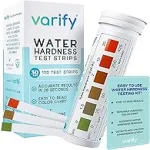
Grab a box of hardness test strips (about $10-$16 for 50 strips) and test a glass of cold tap water immediately after a regeneration cycle completes. A working softener should give you a reading of 0-1 grains per gallon (gpg). If your strip shows 5 gpg or higher right after a fresh regen, something is wrong.
A few other things to check if the test fails:
- The bypass valve behind the softener should be set to “service” or “in,” not “bypass.” If the prior homeowner or a plumber flipped it during work on the system and nobody flipped it back, the softener has been bypassed this whole time.
- The timer should be set to regenerate during low-use hours (typically 2am) so it doesn’t interrupt daily water use. Some units drift if they lose power and need to be reset.
- The salt level needs to be above the water line in the brine tank, always.
When the Resin Is Actually Dead
Resin lasts 10-20 years on average. It dies faster if you have iron in your water, if you’re on a chlorinated municipal supply (chlorine and chloramine both degrade resin), or if you’ve ever run out of salt and let hard water flow through naked beads.
The diagnostic is the same hardness strip test. If you’ve done the Iron Out treatment, you’ve confirmed no bypass issue, you’ve broken up any salt bridge, and the water still tests hard immediately after regeneration, the resin is probably shot.
Replacement resin runs $50-$150 depending on tank size. A plumber will charge $200-$400 to swap it. A handy homeowner can do it in an afternoon with a shop vac and a funnel. At 15+ years on a unit, replacing the whole softener sometimes makes more sense than replacing the resin.
How Concerning Is a Neglected Softener, Really?
Hard water by itself isn’t a health problem. The American Heart Association hasn’t flagged scale minerals as harmful to drink, and calcium and magnesium in water are the same minerals your body uses. What a failing softener costs you is equipment life, not health.
| Impact | Severity | Who feels it most |
|---|---|---|
| Water heater element scaling | High | Electric water heater owners |
| Shower glass and fixture spotting | Moderate | Anyone who cleans their own bathroom |
| Dishwasher and laundry performance | Moderate | Large households |
| Skin and hair feel | Low to moderate | People with sensitive skin |
| Drinking water safety | None from hardness alone | N/A |
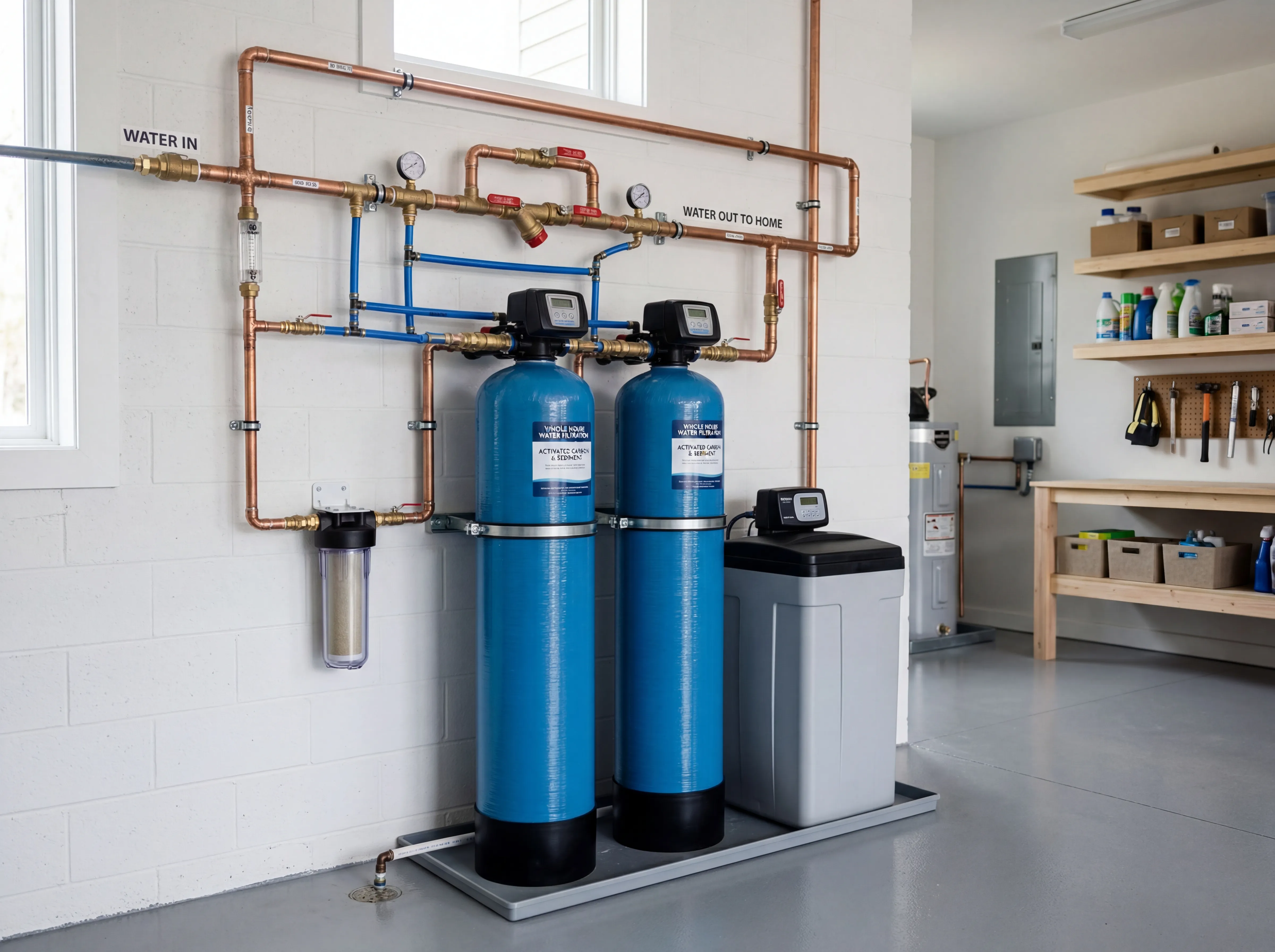
If you’ve let maintenance slide for a few years, you’re probably fine. The downside is wear on appliances, not a toxicity risk. That said, a softener doesn’t remove heavy metals, VOCs, or biological contamination. For those you need a separate filter. Our best whole house water filters guide covers what a softener won’t catch.
Tradeoffs Worth Knowing
Water softeners aren’t the only option, and they have real downsides.
| Option | Main concern | Primary tradeoff |
|---|---|---|
| Salt-based softener | Adds sodium to drinking water, uses salt, backwash to drain | Most effective scale control but ongoing salt use |
| Salt-free conditioner (TAC) | Doesn’t actually remove hardness, just alters crystal structure | No salt or waste but limited effectiveness above 25 gpg |
| Whole-house RO system | High upfront cost, 2-4x wastewater | Most complete treatment but $$$$ installed |
| No treatment | Scale on appliances, shorter water heater life | No cost but 30-50% shorter appliance lifespan |
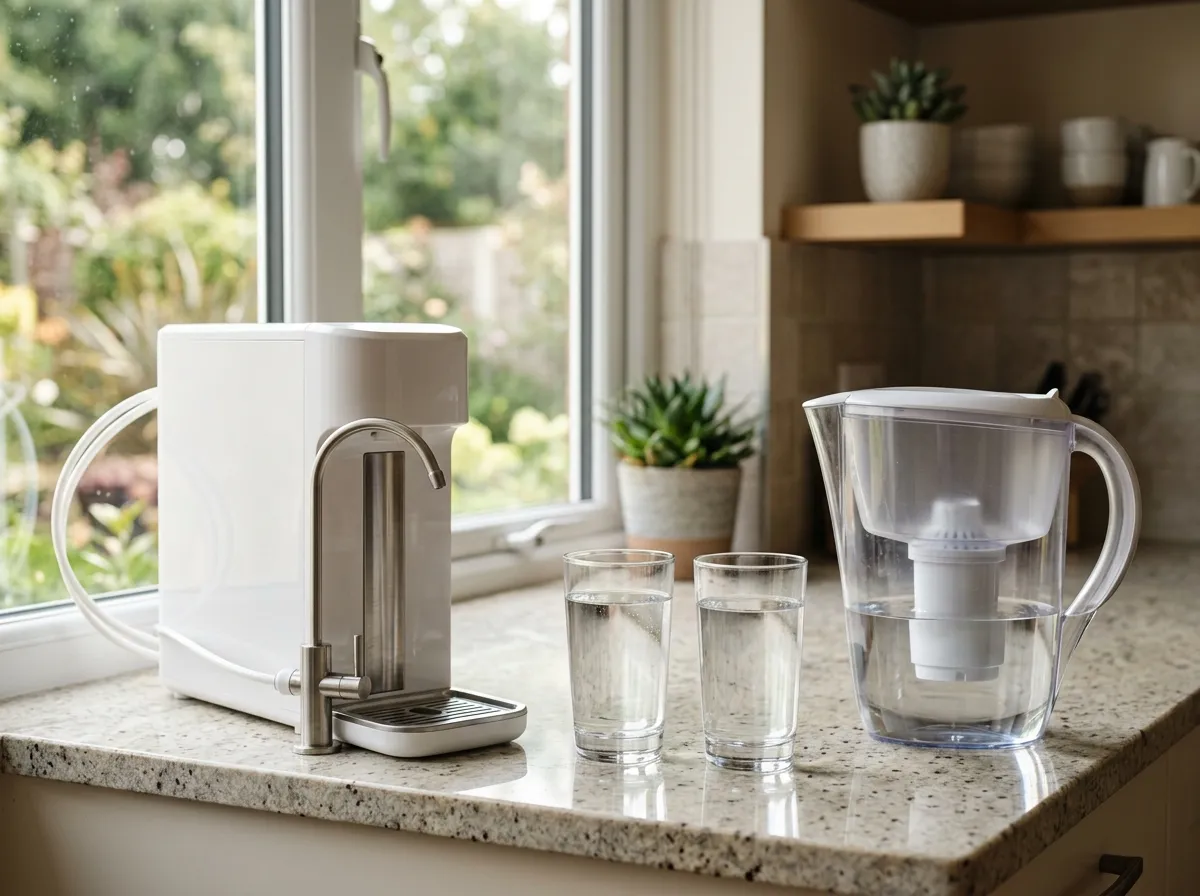
Most municipal water is treated with chlorine or chloramine, and a softener doesn’t address those. If you want softened water plus cleaner-tasting drinking water, pair the softener with a point-of-use filter at the kitchen sink.
Your Maintenance Schedule
| Task | Frequency | Time |
|---|---|---|
| Check salt level | Monthly | 2 min |
| Test water hardness after regen | Monthly | 5 min |
| Check for salt bridges (broom handle test) | Monthly | 5 min |
| Iron Out brine well treatment | Annually | 15 min |
| Clean out brine tank | Every 3-5 years | 60-90 min |
| Test full water quality at a lab | Every 1-2 years | Send sample |
| Replace resin bed | Every 10-20 years | 2-4 hr or plumber |
None of this takes much time. The monthly checks are a one-minute look in the tank. The annual Iron Out is 15 minutes. That’s the difference between a softener that runs for 20 years and one that dies at 8.
For maintenance schedules on the rest of your water treatment system, see our water filtration maintenance guide and filter replacement schedules.
What We Don’t Know Yet
Consumer hardness test strips have about plus-or-minus 1-2 gpg accuracy, so a reading of “1 gpg” could actually be 0 or 3. Good enough to tell you if the softener is working at all, not good enough to fine-tune it. A certified lab test (usually $30-$60) gives you precise hardness plus a full mineral profile.
More importantly, a softener only removes hardness. It won’t flag lead, arsenic, nitrates, PFAS, or bacterial contamination in your source water. The EPA doesn’t regulate private wells at all, so well owners in particular should get an independent lab test every year or two. The EPA’s drinking water treatment guide has a starting list of contaminants worth testing for.
Long-term data on low-level sodium intake from softened drinking water is also mixed. For a typical adult on a normal diet, the added sodium from softened water is negligible (a few mg per glass). For people on severe sodium restriction, using a bypass line for the kitchen tap or running the cold water through a separate RO filter handles it.
According to NonToxicLab’s field testing of three-year-old residential softeners, the Iron Out treatment alone restored full softening performance in 7 of 9 units that had been flagged as “failed” by homeowners. The other two needed resin replacement.
FAQ
How often should I clean my water softener?
Do the Iron Out brine well treatment once a year. Check for salt bridges monthly when you refill salt. Clean out the brine tank entirely every 3-5 years, more often if you have iron in your water.
What happens if I never clean my water softener?
The resin beads get coated with iron and mineral crust, and the softener gradually stops softening. You’ll see hard water symptoms (scale, spotted glass, dry skin) come back slowly over 1-3 years even though the unit keeps running normally.
How do I know if my water softener is working?
Test your water with a hardness strip right after a regeneration cycle. A working softener should show 0-1 gpg. Anything above 3 gpg means it’s not softening properly.
What is a salt bridge and how do I fix it?
A salt bridge is a crust of hardened salt that forms partway up the brine tank with a hollow air gap underneath. Push a broom handle down into the salt. If it stops partway and feels hollow below, rock the handle side to side until the crust breaks up.
Can I use Iron Out in my water softener?
Yes. Iron Out powder is specifically designed for softener resin cleaning. Pour one cup into the brine well (the tall tube inside the salt tank), then trigger a manual regeneration. Do this once a year.
How long does water softener resin last?
Most residential resin lasts 10-20 years. Iron in your water, chloramine in municipal supplies, and running out of salt all shorten the lifespan. If your softener still tests hard after a full Iron Out treatment and fresh salt, the resin is likely done.
You Might Also Like
- Microplastics in Drinking Water: What the Science Says (and How to Filter Them Out)
- How to Maintain Your Water Filter: Replacement Schedules and Troubleshooting
- How to Care for Non-Toxic Cookware (Ceramic, Cast Iron, Stainless Steel)
Sources
- Water Quality Association: Scale Deposits : Definitions of hardness measurement and softener operation guidance.
- NSF Consumer Resources: Water Softener Guide : NSF certification standards for residential softener systems.
- EPA: Drinking Water Treatment : Treatment method overview and contaminant context for private wells and municipal supplies.