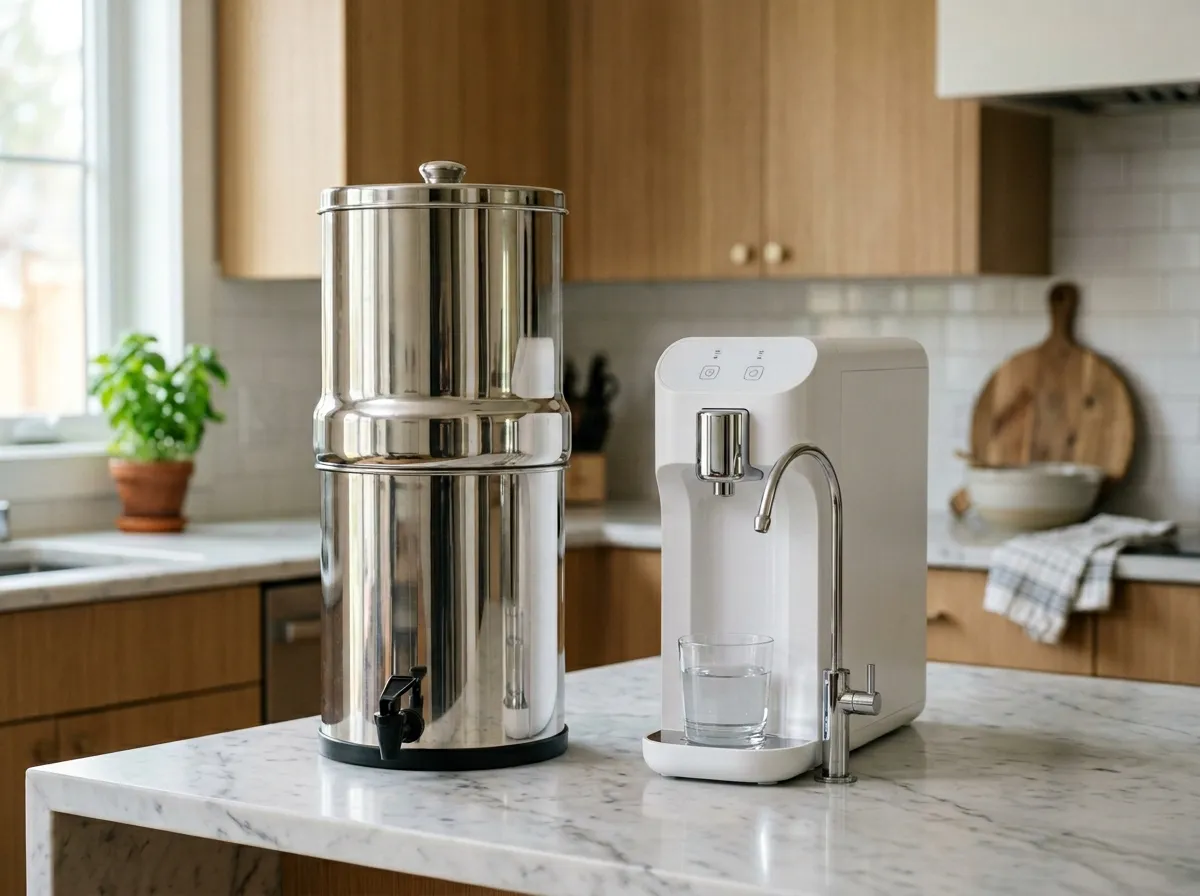
If you’re choosing between a Berkey and an AquaTru, the short answer is this: AquaTru is the safer bet in 2026. It’s NSF certified across multiple standards, uses proven reverse osmosis technology, and doesn’t carry the regulatory baggage that Berkey currently does. That said, the full picture has some nuance worth understanding. Our water filtration guide covers everything you need to know.
Let me walk you through everything.
The Short Answer
AquaTru is the clear pick. It carries NSF certifications across five standards (42, 53, 58, 401, P473) with documented PFAS, lead, and fluoride removal. Berkey doesn’t hold any NSF certifications, and its Black Berkey elements have been under an EPA stop-sale order since 2023 for selling unregistered pesticide claims without documentation. The only reason to consider Berkey is if you need filtration that runs without electricity during outages.
Quick Comparison: Berkey vs AquaTru at a Glance
Before we dig into the details, Watch how these two systems stack up across every category that matters.
| Feature | Berkey (Big Berkey) | AquaTru |
|---|---|---|
| Filter Type | Gravity-fed carbon/ceramic | 4-stage countertop RO |
| Price | $$$ | $$$ |
| NSF Certified? | No | Yes (42, 53, 58, 401, P473) |
| Removes PFAS? | Claims yes (not verified) | Yes (NSF P473 certified) |
| Removes Fluoride? | With add-on filters ($$) | Yes (standard) |
| Removes Lead? | Claims 99.9% | Yes (NSF 53 certified, 99.1%) |
| Removes Microplastics? | Not tested by third party | Yes |
| Capacity | 2.25 gallons (Big Berkey) | 3 quarts per batch |
| Filter Lifespan | 3,000 gallons per element (claimed) | Varies by stage (6 months to 2 years) |
| Annual Filter Cost | $$ | $$ |
| Electricity Required? | No | Yes |
| Installation | None | None |
| Counter Space | Large (8.5” wide, 19.25” tall) | Moderate (14” x 14” x 12”) |
| Warranty | Lifetime (housing) | 1 year |
That NSF column is the single most important line in this table. We’ll get into why shortly.
Two Very Different Approaches to Water Filtration
These are fundamentally different systems trying to solve the same problem.
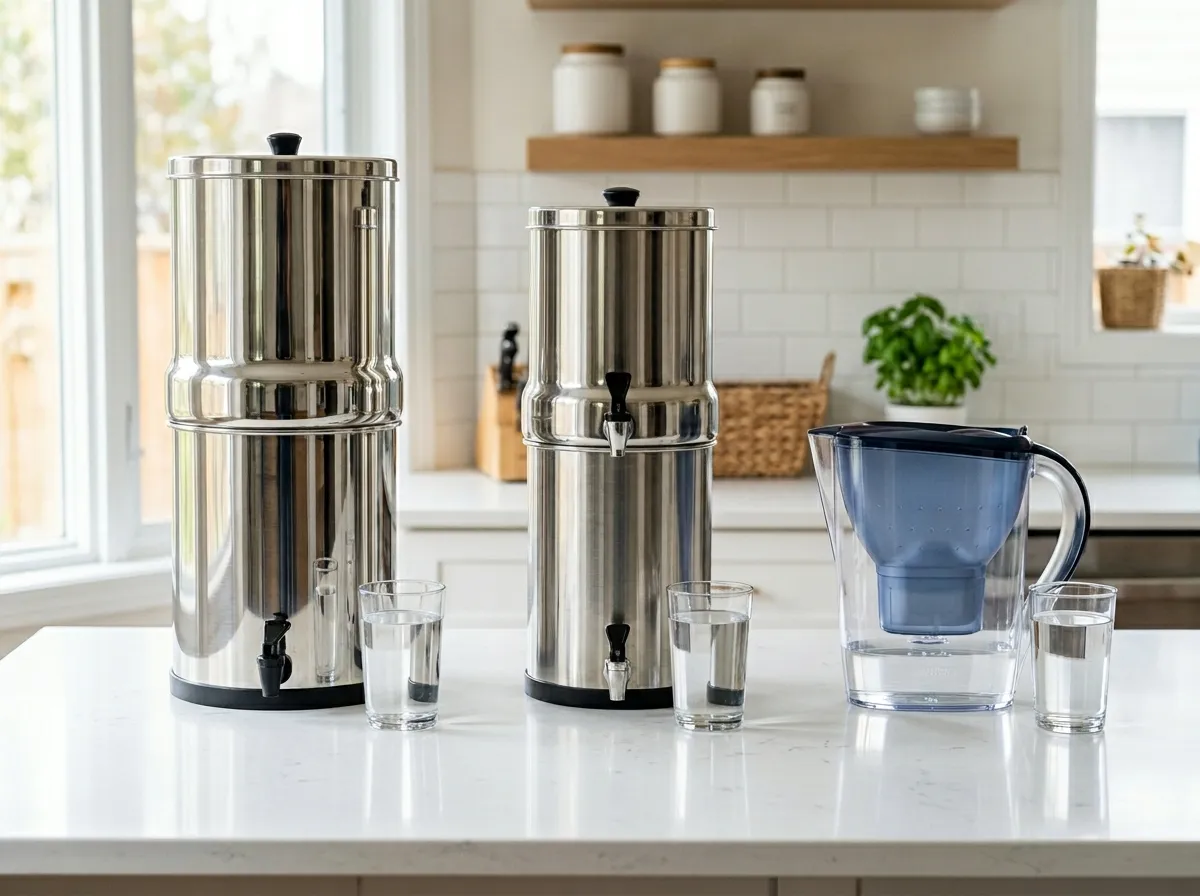
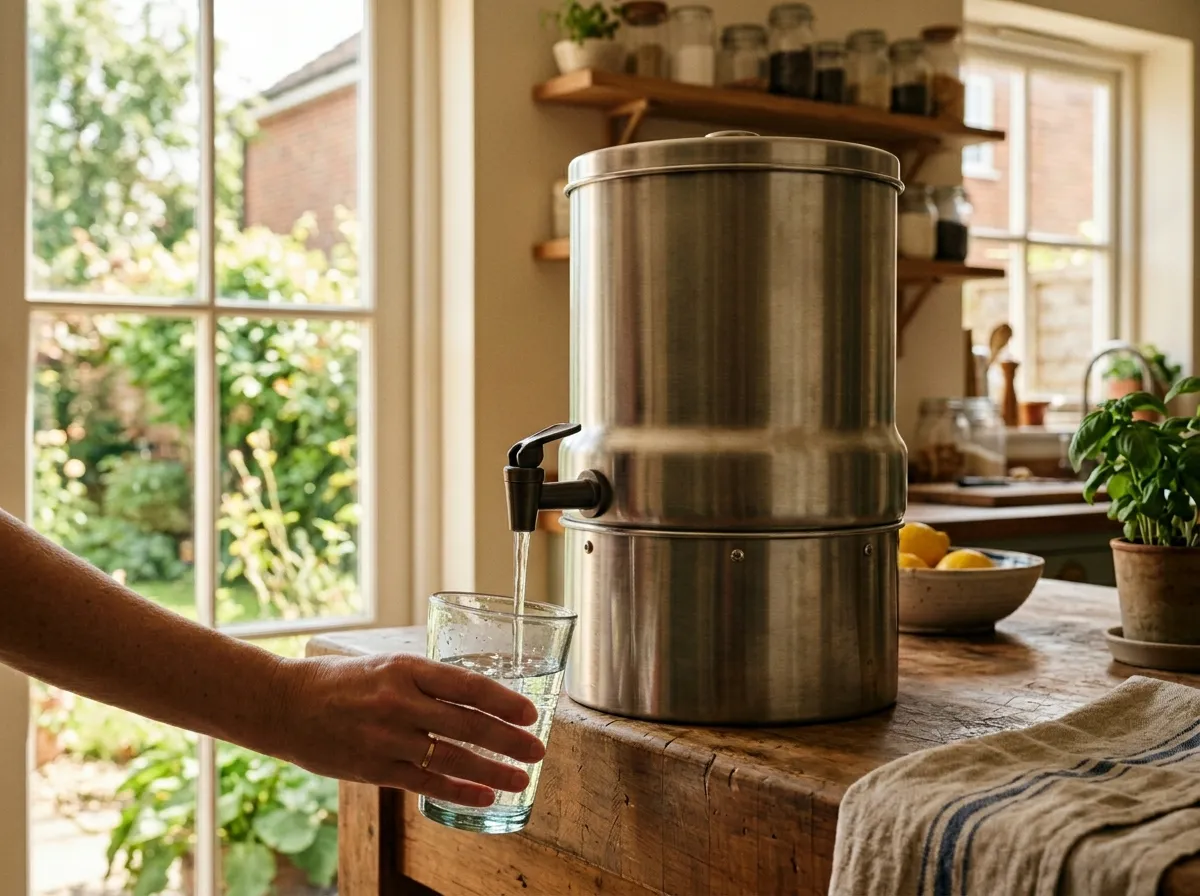
Berkey uses gravity. You pour water into the top chamber, it passes through Black Berkey filter elements under nothing but its own weight, and collects in the lower chamber. No power. No plumbing. No moving parts. There’s a simplicity to the design that appeals to a lot of people, especially those focused on emergency preparedness.
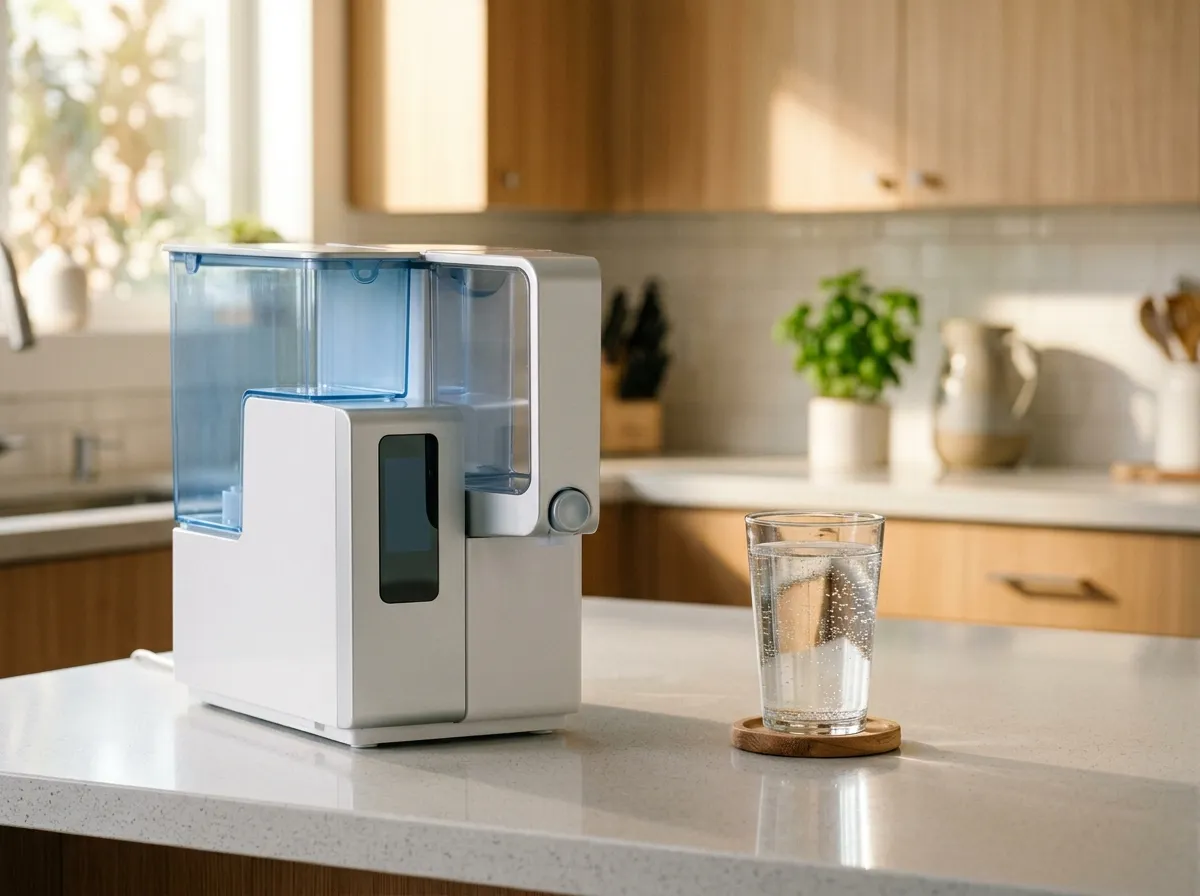
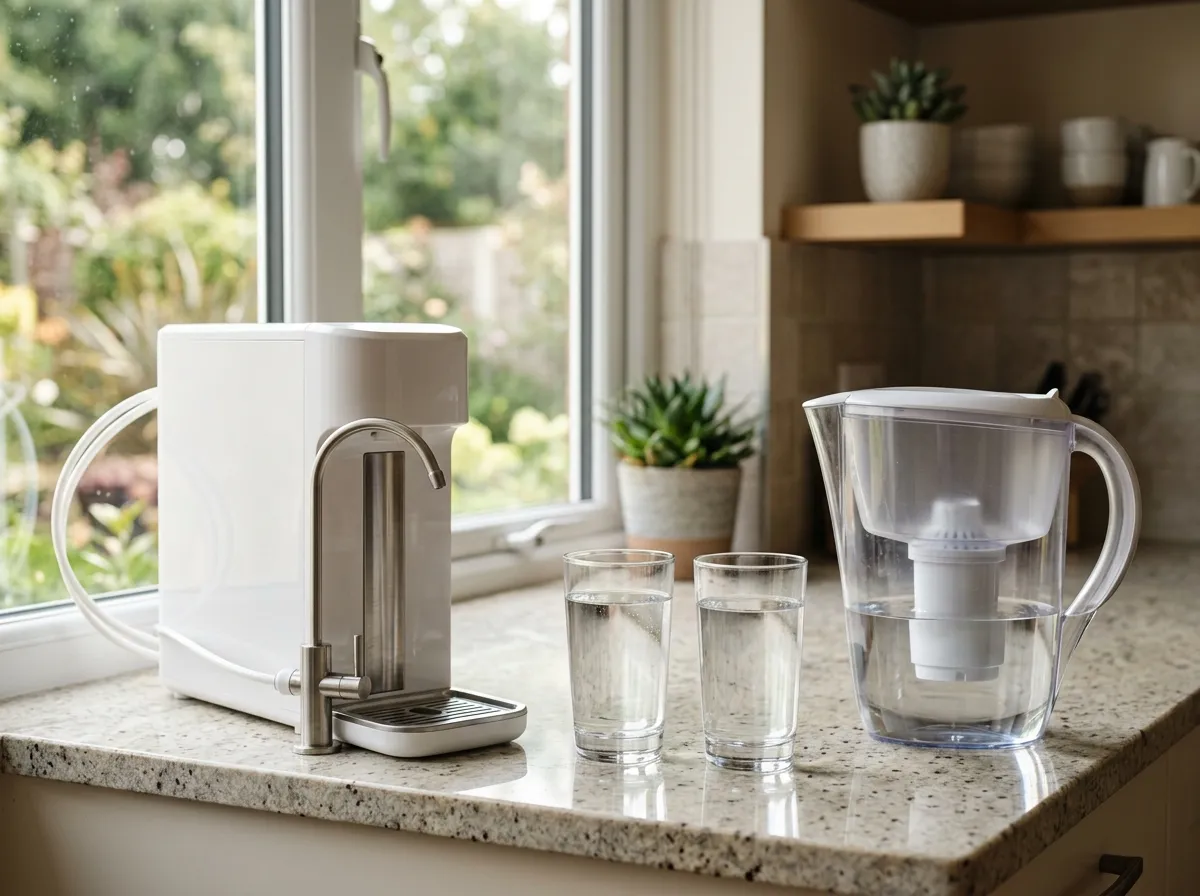
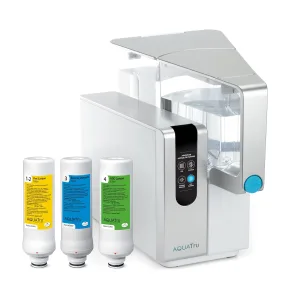
AquaTru uses reverse osmosis. Water passes through a 4-stage filtration process: a mechanical pre-filter, a carbon pre-filter, a reverse osmosis membrane, and a carbon post-filter. The RO membrane is the star of the show. It forces water through a semi-permeable membrane that blocks contaminants at the molecular level.
Both sit on your counter. Neither requires installation. But the similarity mostly ends there.
The Berkey Problem: EPA Stop-Sale and Missing Certifications
Let’s address this head-on because it’s the elephant in the room for anyone considering a Berkey.
In 2023, the EPA issued a stop-sale order on Black Berkey filter elements. The reason: Berkey was making pesticide removal claims without registering these elements as pesticide devices under FIFRA (the Federal Insecticide, Fungicide, and Rodenticide Act). If you claim your filter removes pesticides, the EPA considers it a pesticide device, and it needs to be registered.
Berkey’s parent company, New Millennium Concepts, has pushed back on this. They’ve argued that their filters shouldn’t fall under FIFRA regulation. But as of this writing, the legal situation remains unresolved, and Black Berkey elements have faced intermittent availability issues as a result.
This is concerning for a separate reason: it highlights a broader pattern with Berkey’s approach to third-party verification.
Why Berkey Doesn’t Have NSF Certification
Berkey has never pursued NSF/ANSI certification for any of its filter products. The company has publicly stated that they believe their internal testing is sufficient and that the NSF certification process is expensive and not necessary for their products.
The reason that matters.
NSF/ANSI certifications are the industry standard for verifying water filter performance claims. When a filter is NSF certified, it means an independent third-party lab tested that product under controlled conditions and confirmed it does what the manufacturer says it does. NSF also conducts periodic facility inspections and retesting.
Without NSF certification, you’re relying entirely on the manufacturer’s own testing data. Berkey does publish some in-house test results, but these have not been independently verified by a recognized testing body.
To be fair, NSF testing isn’t cheap. The process can cost tens of thousands of dollars. But for a company selling filter systems at $300-$600+, the cost of certification isn’t a convincing excuse. AquaTru, Clearly Filtered, and many other competitors have made the investment.
The difference: when Berkey says their filters remove 99.9% of lead or 99.9% of pathogenic bacteria, you have to trust Berkey. When AquaTru says their system removes lead or PFAS, that claim is backed by NSF certification.
AquaTru: What You’re Actually Getting
AquaTru’s 4-stage reverse osmosis system is one of the more accessible RO options on the market. Unlike traditional under-sink RO systems or whole-house setups, it doesn’t require any plumbing work. You plug it in, fill the tank, and press a button.
Certifications
AquaTru holds NSF/ANSI certifications for standards 42 (taste and odor), 53 (health contaminants like lead), 58 (reverse osmosis systems), 401 (emerging contaminants), and P473 (PFAS). That’s about as complete as it gets for a countertop system.
What It Removes
According to AquaTru’s NSF-certified testing data, the system removes or reduces:
- PFAS (forever chemicals): 95%+ across multiple PFAS compounds
- Lead: 99.1%
- Fluoride: 93.5%+
- Chromium-6: 97.4%
- Chlorine and chloramines: 96%+
- Microplastics: yes (RO membranes are effective down to 0.0001 microns)
- Nitrates: 86%+
- Pharmaceuticals: yes
- Arsenic: 97%+
The RO membrane is the reason this list is so long. Reverse osmosis is simply one of the most thorough filtration methods available for residential use. Dr. Rhonda Patrick has noted that RO filters remove 99.9% of contaminants, making them a top recommendation for people who want the cleanest possible drinking water (foundmyfitness.com).
The Tradeoff: Wastewater
Every RO system produces wastewater. AquaTru’s ratio is roughly 4:1, meaning for every gallon of purified water, about 4 gallons go to waste. Some users capture this wastewater for plants or cleaning, which is a reasonable approach. But if water waste concerns you, know that this is inherent to all reverse osmosis technology, not unique to AquaTru.
Contaminant Removal: Berkey vs AquaTru
This is where most people want to focus, so let’s compare head-to-head across the contaminants that matter most.
PFAS (Forever Chemicals)
AquaTru: NSF P473 certified for PFAS removal. This is independently verified. The RO membrane is highly effective at blocking PFAS compounds because these molecules are larger than the membrane’s pore size.
Berkey: Claims to remove PFAS, but this has not been independently verified through NSF testing. Given the EPA’s concerns about Berkey’s unverified contaminant claims, treating their PFAS removal numbers with skepticism is reasonable.
If PFAS removal is your primary concern, AquaTru has the verified edge.
Fluoride
AquaTru: Removes fluoride as part of the standard 4-stage process. No add-ons needed. NSF-certified removal rate of 93.5%+.
Berkey: The standard Black Berkey elements do not remove fluoride. You need to purchase separate PF-2 fluoride reduction elements ($60+), which attach to the bottom of the Black Berkey filters. Even with these add-ons, removal rates have not been independently verified.
For anyone looking for fluoride removal, AquaTru makes it simple. Berkey makes it an extra purchase and an extra step.
Lead
AquaTru: NSF 53 certified for lead removal at 99.1%.
Berkey: Claims 99.9% lead removal based on internal testing. Again, this hasn’t been verified by an independent body.
Both likely perform well on lead. The difference is proof.
Microplastics
AquaTru: The RO membrane filters down to 0.0001 microns. Microplastics are orders of magnitude larger than this, so they’re effectively blocked.
Berkey: Has not been tested for microplastic removal by any third party. The company doesn’t make specific claims about microplastics on their materials.
Bacteria and Viruses
This is where Berkey fans often point to an advantage. Berkey claims their filters remove 99.9999% of pathogenic bacteria and 99.999% of viruses. If true, that would make Berkey a legitimate emergency water purifier, not just a filter.
AquaTru’s RO membrane is also effective against bacteria, but the system is designed for treated municipal water, not untreated water sources.
However, because Berkey’s claims aren’t NSF certified, there’s no independent confirmation these numbers hold up under real-world conditions. For emergency preparedness, this lack of verification is a real concern.
Price and Long-Term Costs
Upfront Cost
A Big Berkey (the most popular model, 2.25-gallon capacity) runs about $278 with two Black Berkey elements. If you add the fluoride filters, you’re looking at $340+. The larger Royal Berkey and Imperial Berkey models range from $350 to $450+.
The AquaTru Classic retails for $449. That’s more expensive upfront than most Berkey configurations.
Filter Replacement Costs
Here’s where it gets more interesting.
Berkey: Black Berkey elements are rated for 3,000 gallons each (per Berkey’s own testing). With two elements, that’s 6,000 gallons before you need a full replacement. A pair of replacement elements costs about $107. If you go through roughly 1 gallon per day per person, a two-person household might replace elements once every 8-10 years. The PF-2 fluoride filters last about 1,000 gallons and cost $60 per pair.
AquaTru: Has three different filter stages with different replacement schedules:
- Pre-filter: every 6 months (~$20)
- RO membrane: every 2 years (~$40-50)
- Carbon post-filter: every 1 year (~$20-25)
For a typical household, AquaTru’s annual filter cost works out to roughly $60-100 per year.
Berkey’s annual filter cost (assuming you use the fluoride elements too): roughly $55-120 per year, depending on usage.
These long-term costs are actually pretty comparable. Berkey’s claimed filter lifespan is impressive, but remember: those lifespan numbers aren’t independently tested either.
Day-to-Day: Maintenance, Taste, and Convenience
Maintenance
Berkey requires periodic cleaning of the Black Berkey elements. Over time, the flow rate slows as the pores clog, and you need to scrub the elements with a Scotch-Brite pad to restore flow. This is a manual process and something you’ll need to do every few months. The stainless steel chambers also need regular cleaning to prevent biofilm buildup.
AquaTru is relatively low maintenance. You change the filters on schedule (the system has indicator lights), wipe down the tanks, and that’s about it. No scrubbing filter elements. No re-priming.
Taste
Both systems produce clean-tasting water. Berkey users consistently report good taste, and AquaTru’s RO process strips out effectively everything, leaving very neutral-tasting water. Some people find RO water a bit “flat” because it removes minerals along with contaminants. AquaTru doesn’t include remineralization, but you can add a mineral drop supplement if you prefer.
Dr. Peter Attia has recommended RO filtration as one of the highest-impact health steps you can take at home, noting that the quality of your drinking water is something worth investing in (peterattiamd.com, AMA #67).
Capacity and Flow Rate
Berkey has a clear advantage here. The Big Berkey holds 2.25 gallons and is always ready. Fill it in the morning, and you’ve got filtered water all day. Larger models hold even more. There’s no waiting for a batch to process.
AquaTru produces about 3 quarts per batch, and each batch takes about 12-15 minutes. If you’re cooking dinner and need a lot of water quickly, you’ll need to plan ahead or run multiple batches. The reservoir holds about 3 quarts of purified water at a time.
For a large family or heavy water use, Berkey’s capacity is a real practical advantage. For one or two people, AquaTru is usually fine.
Portability and Power
Berkey needs no electricity. It works anywhere you have water. This makes it genuinely useful for camping, off-grid living, or emergency situations where power is out.
AquaTru requires a power outlet. It’s not useful during a power outage, and you can’t easily take it on a camping trip. For apartment dwellers with reliable power, this isn’t an issue. For people who value off-grid capability, it’s a dealbreaker.
Counter Space
Both take up counter space, but in different ways.
Berkey is tall and narrow. The Big Berkey stands about 19.25 inches high with a diameter of 8.5 inches. It has a visual presence. Some people love the stainless steel look. Others find it imposing.
AquaTru is shorter and wider, about 14 x 14 x 12 inches. It looks more like a coffee maker. It fits more easily under upper cabinets.
Neither is tiny. Both need a dedicated spot on your counter.
Who Berkey Is Actually For
Despite the issues I’ve outlined, there are legitimate use cases for Berkey:
- Off-grid and emergency preparedness: If you need a water filter that works without electricity, Berkey is one of the few options in this space. A gravity water filter doesn’t need power or plumbing.
- People who prioritize simplicity: No electricity, no moving parts, no wastewater. Just gravity.
- Large families or groups: The capacity advantage is real for households that go through a lot of water.
But here’s the caveat: if you go with a Berkey, you’re accepting unverified performance claims. You’re trusting the company’s internal testing. And you’re buying into a product that’s currently dealing with EPA regulatory issues.
Who AquaTru Is For
AquaTru makes sense for most people looking for a serious countertop water filter:
- Anyone who wants verified contaminant removal: NSF certification means the performance claims are proven.
- People concerned about PFAS and fluoride: Both are removed as standard, no add-ons needed.
- Renters and apartment dwellers: No installation, no plumbing changes, no landlord approval needed.
- People who want low-maintenance filtration: Change filters on schedule and you’re done.
If you’ve been researching the best reverse osmosis systems and want one that doesn’t require installation, AquaTru should be near the top of your list.
Durability and Longevity: How Long Does Each System Last?
Berkey’s stainless steel housing is built to last decades with basic care. The Black Berkey elements are rated at 3,000 gallons each. With two elements in a Big Berkey, that’s 6,000 gallons per set. For a household of two using roughly 1 gallon of filtered water per day, one set of elements could last 8-10 years. These lifespan numbers come from Berkey’s own testing, not an independent lab. Real-world flow rate typically degrades before the rated gallons are reached.
AquaTru’s lifespan is determined by its four filter stages. The pre-filter lasts roughly 6 months, the carbon post-filter about 1 year, and the RO membrane approximately 2 years. The machine itself - the pump and housing - is covered by a 1-year warranty, which is markedly shorter than Berkey’s lifetime housing warranty. In practice, a well-maintained AquaTru unit should function for 5-10 years before any mechanical issues arise.
For long-term cost calculations, the filter replacement schedules matter more than upfront price. Neither system is particularly expensive to maintain year over year, but Berkey’s parts are simpler and more durable individually.
The Verdict: AquaTru Wins for Most People
Based on NonToxicLab’s research, this isn’t a close call in 2026. AquaTru is the better water filter for the majority of households, and it comes down to one word: verification.
AquaTru’s contaminant removal claims are backed by NSF certification across five standards. Berkey’s claims are backed by Berkey. In a market where companies routinely overstate what their filters can do, independent certification isn’t just nice to have. It’s essential.
Add in the EPA stop-sale situation with Black Berkey elements, the extra cost for fluoride removal, and the lack of microplastics testing, and the case for Berkey weakens further.
Only scenario where Berkey clearly wins is off-grid or emergency use, where having a gravity-fed system that works without power is genuinely valuable. If that’s your primary use case, Berkey’s design makes sense, but go in with open eyes about the certification gaps.
For everyone else: NonToxicLab recommends the AquaTru because it gives you cleaner water with proof to back it up. That’s what you’re paying for. And it’s worth it.
What we don’t fully know: Berkey’s NSF certification status remains contested as of 2023-2024. The company disputes that their products require EPA registration, and the legal resolution isn’t final. Independent third-party testing results for Berkey elements vary significantly depending on source water chemistry, which means performance in your home may differ from any single published test. Long-term data on PFAS removal performance for both systems under real-world conditions (varied source water, aging filter elements, seasonal chemistry shifts) is limited. If your municipal water supply changes composition, your filter’s certified removal rates may not apply exactly.
How Do These Options Compare? A Full Tradeoffs Table
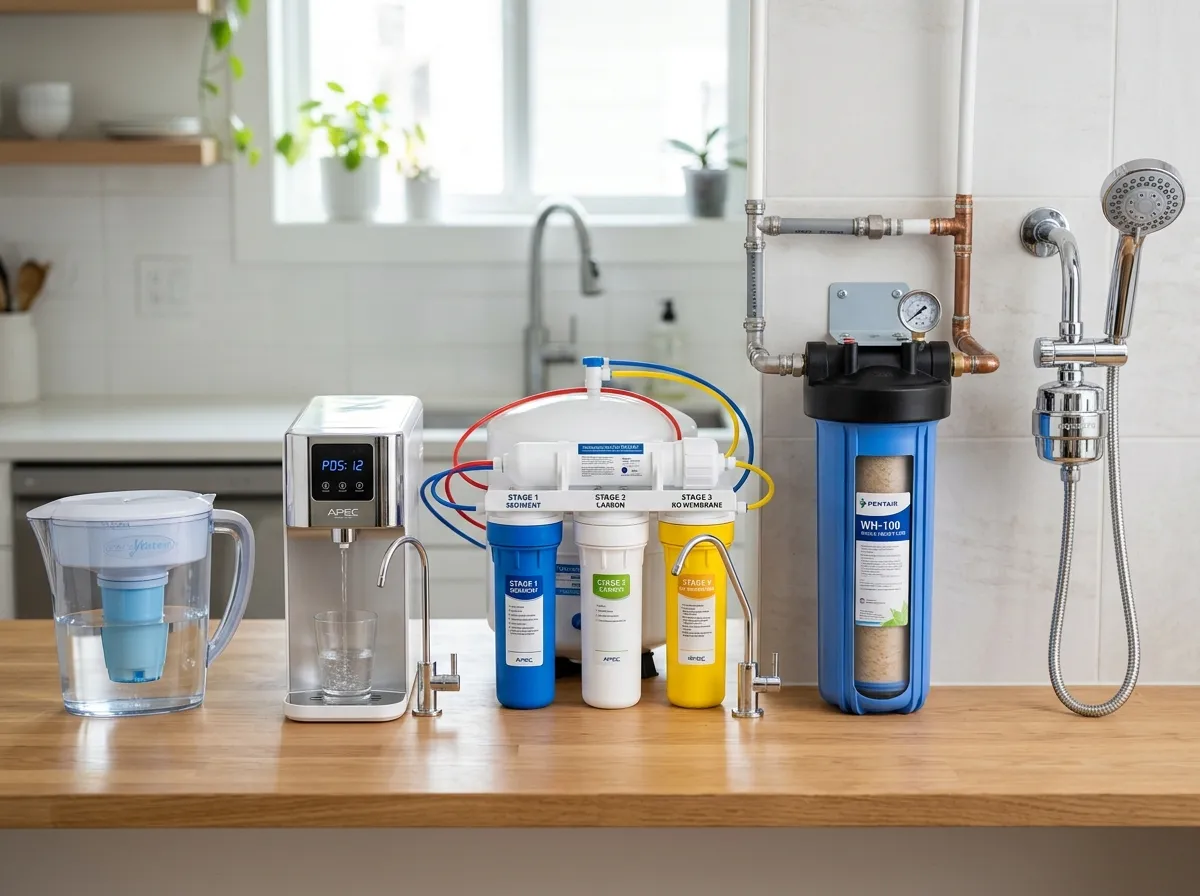
Not everyone is choosing strictly between Berkey and AquaTru. Here’s how the main countertop water filter options compare across the concerns that matter most for a non-toxic kitchen.
| Option | Main concern | Primary tradeoff |
|---|---|---|
| Berkey gravity filter | No NSF certification; EPA stop-sale on filter elements (2023) | No electricity needed; ideal for off-grid/emergency use |
| AquaTru countertop RO | Higher upfront cost ($$$); produces wastewater (4:1 ratio) | NSF certified across 5 standards; removes PFAS and fluoride as standard |
| Clearly Filtered pitcher | Slower filtration; smaller batch capacity | NSF certified for PFAS and lead; lower upfront cost than RO |
| Brita standard pitcher | Removes only chlorine taste (NSF 42); doesn’t remove PFAS or lead meaningfully | Extremely low cost; widely available |
| ZeroWater pitcher | Cartridges need frequent replacement; not NSF 58 certified | Removes effectively all dissolved solids including fluoride |
What People Ask
Is Berkey still safe to use?
Berkey water filters themselves haven’t been recalled. The EPA stop-sale specifically targeted the Black Berkey elements’ unregistered pesticide removal claims. You can still purchase and use Berkey systems, but the lack of independent testing means there’s no third-party confirmation of what contaminants the filters actually remove. If you currently own a Berkey, it’s likely better than no filter at all, but you can’t verify its performance the way you can with NSF-certified products.
Does AquaTru remove minerals from water?
Yes. Reverse osmosis removes minerals along with contaminants, including calcium, magnesium, and potassium. Some people supplement with mineral drops after filtration. The health impact of demineralized water is debated, but most nutritionists agree that you get the vast majority of your essential minerals from food, not water.
Can I use a Berkey with well water?
Berkey markets some models for use with untreated water sources, but because their bacteria and virus removal claims aren’t NSF certified, relying on a Berkey as your sole treatment for well water is risky. If you’re on well water, testing your water quality first is critical, and you may need a more complete treatment system.
How often do you replace AquaTru filters?
AquaTru has three filter stages with different schedules. The pre-filter should be replaced every 6 months. The carbon post-filter lasts about 1 year. The RO membrane lasts about 2 years. The system has indicator lights that tell you when each filter needs attention. You can read more in our guide on how often to replace water filters.
Is AquaTru worth the money over a cheaper pitcher filter?
It depends on what you’re trying to remove. If your main concerns are PFAS and lead, a high-quality pitcher like Clearly Filtered can handle those at a lower price point. But if you want fluoride removal, the broadest possible contaminant reduction, and NSF 58 RO certification, AquaTru justifies the higher cost. For a deeper comparison, see our guide to the best water filters for PFAS removal.
Does Berkey remove fluoride?
Not with the standard Black Berkey elements. You need to buy separate PF-2 fluoride reduction elements, which cost about $60 per pair and last roughly 1,000 gallons. AquaTru removes fluoride as part of its standard RO process with no add-ons needed. If fluoride removal is important to you, check our guide to the best fluoride water filters.
You Might Also Like
- AquaTru vs Clearly Filtered
- Berkey Water Filter Review
- Brita vs PUR: Which Water Filter Pitcher Is Actually
- How to Maintain Your Water Filter: Replacement Schedules and Troubleshooting
- iSpring WGB32B vs AquaTru: Whole House vs Point-of-Use in 2026
- AquaTru Countertop RO Review: Best Water Filter for Home?
- Berkey vs ProOne vs Clearly Filtered: Which Removes the Most PFAS?
- Whole-Home Air and Water Systems: What the Science Supports at Every Budget
- Is Tap Water Safe to Drink in the US? What Your City’s Water Report Tells You
Sources
- EPA. FIFRA enforcement and pesticide device registration. epa.gov
- NSF International. AquaTru NSF/ANSI certifications and test results. nsf.org
- NSF International: What do NSF/ANSI water treatment standards mean? - nsf.org
- Dr. Rhonda Patrick on RO filtration and contaminant removal - foundmyfitness.com
- Dr. Peter Attia, AMA #67 on water filtration as a health investment - peterattiamd.com
- Berkey product specifications and internal test results - berkeyfilters.com