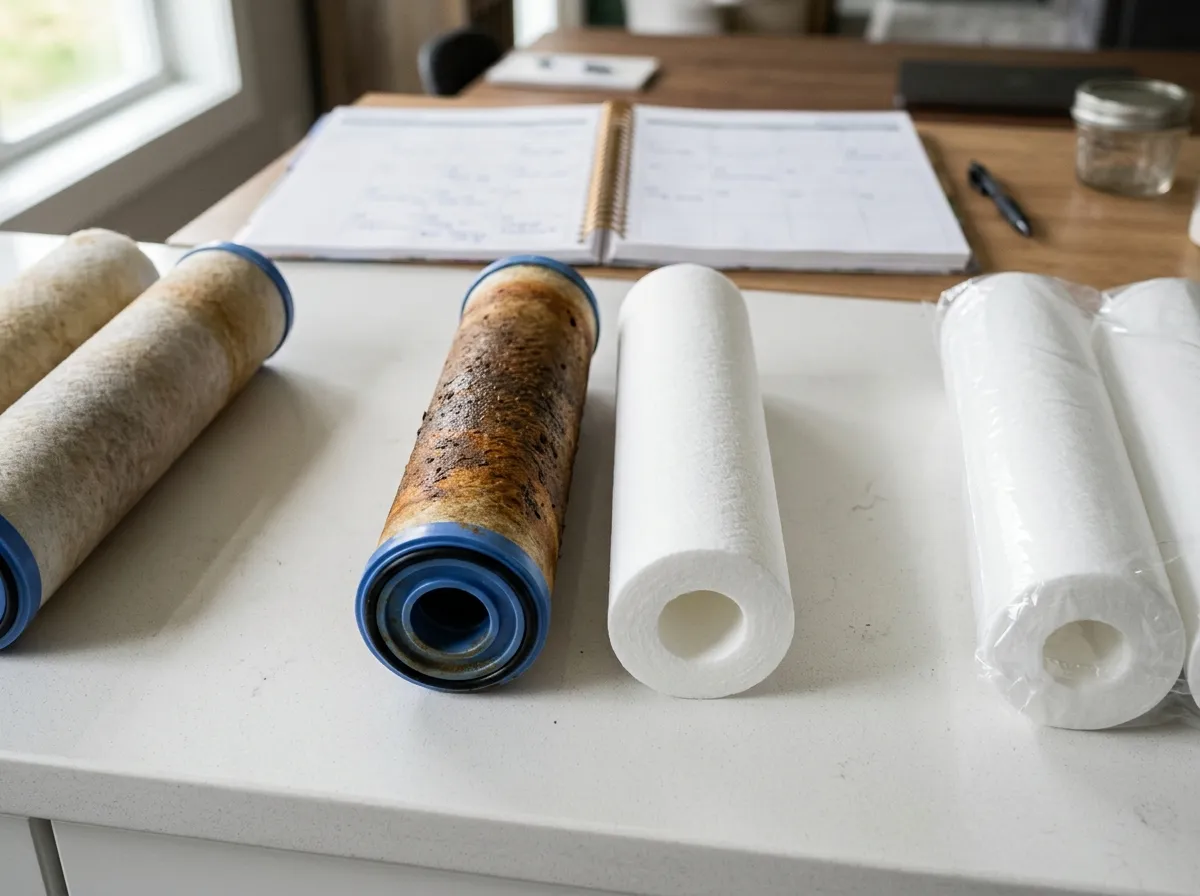
A water filter that’s past its replacement date is worse than no filter at all. That’s not scare tactics. It’s basic biology and chemistry. An expired filter has reduced contaminant removal capacity and provides a warm, dark, wet surface where bacteria and mold thrive. Instead of filtering your water, it’s potentially adding to the problem. We put together water filtration guide that covers this whole category.
Most people buy a filter, install it, and forget about it until the water tastes funny or the flow rate drops to a trickle. By then, you’ve been drinking under-filtered water for weeks or months. See our side-by-side comparison in aquatru vs clearly filtered.
This guide covers replacement schedules for the most popular non-toxic water filter brands, how to spot problems early, and the maintenance steps that prevent mold, bacterial growth, and premature filter failure. We compare them directly in berkey vs aquatru: which water filter is better?.
Why Filter Maintenance Matters
Dr. Joseph Allen, a professor of exposure assessment science at Harvard’s T.H. Chan School of Public Health, has written extensively about the connection between water quality and indoor environmental health. His research points to a simple reality: filtration systems require maintenance to remain effective, and a neglected system can become a contamination source. We tested it and share our findings in berkey water filter review.
Water filters work through physical and chemical processes. Activated carbon adsorbs chemicals like chlorine, VOCs, and some pesticides. Reverse osmosis membranes physically block contaminants at the molecular level. Ion exchange resins swap harmful ions for benign ones. All of these mechanisms have a finite capacity. Once that capacity is used up, contaminants pass through. For specific product picks, check best fluoride water filters.
Filter Replacement Schedules by Brand
These are general guidelines based on manufacturer recommendations and typical household use (2-4 people). Actual replacement timing depends on your source water quality and daily usage.
Berkey Systems (Black Berkey Elements)
- Black Berkey purification elements: Every 6,000 gallons per pair (roughly 2-5 years depending on usage)
- Fluoride/arsenic filters (PF-2): Every 1,000 gallons per pair (roughly 6-12 months)
- Reality check: The 6,000-gallon claim is generous. If your source water is high in sediment or contaminants, you may need to re-prime or replace sooner. Test your flow rate monthly. When it takes more than 30 minutes to filter one gallon after a fresh prime, it’s time to consider replacement.
Maintenance: Re-prime the Black Berkey elements every 2-3 months by running water through the threaded stem with the priming button. Clean the exterior of the elements with a Scotch-Brite pad under running water if flow rate decreases. Never use soap on the elements.
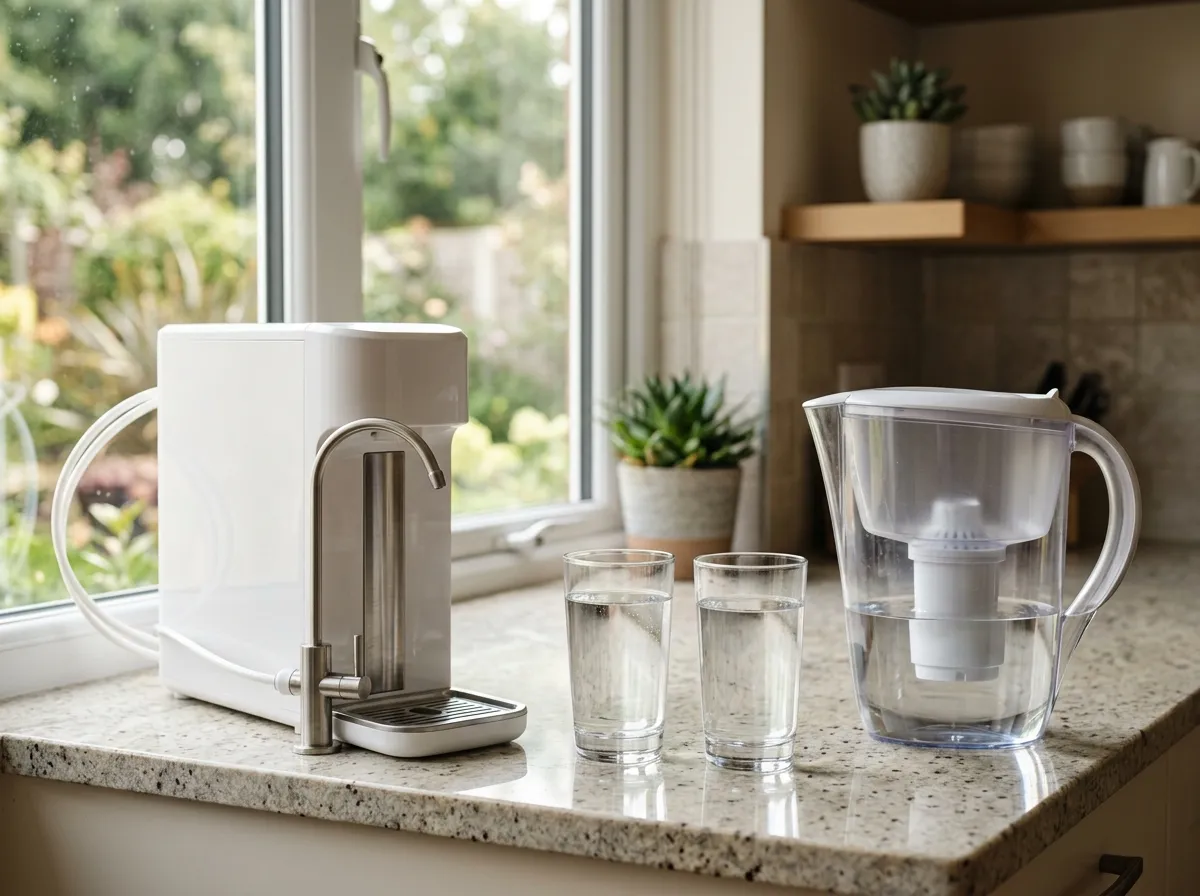
AquaTru Countertop RO
- Pre-sediment filter (Stage 1): Every 6 months
- Reverse osmosis membrane (Stage 2): Every 2 years
- Activated carbon VOC filter (Stage 3): Every 1 year
- The unit tracks this for you: AquaTru has filter life indicators on the display. Pay attention to them.
Maintenance: Wipe down the water tanks (both clean and source) with white vinegar monthly. The clean tank is especially important because it sits at room temperature with purified water that has no residual chlorine to suppress bacterial growth. Run a cleaning cycle with the tanks empty every 2-3 months.
Clearly Filtered Pitcher
- Affinity filtration cartridge: Every 100 gallons (roughly 4 months for a 2-person household)
- How to track: The filter doesn’t have an indicator. You’ll need to estimate based on how many times you fill the pitcher per day. At 2 fills per day with a 10-cup pitcher, you’ll hit 100 gallons in about 12 weeks.
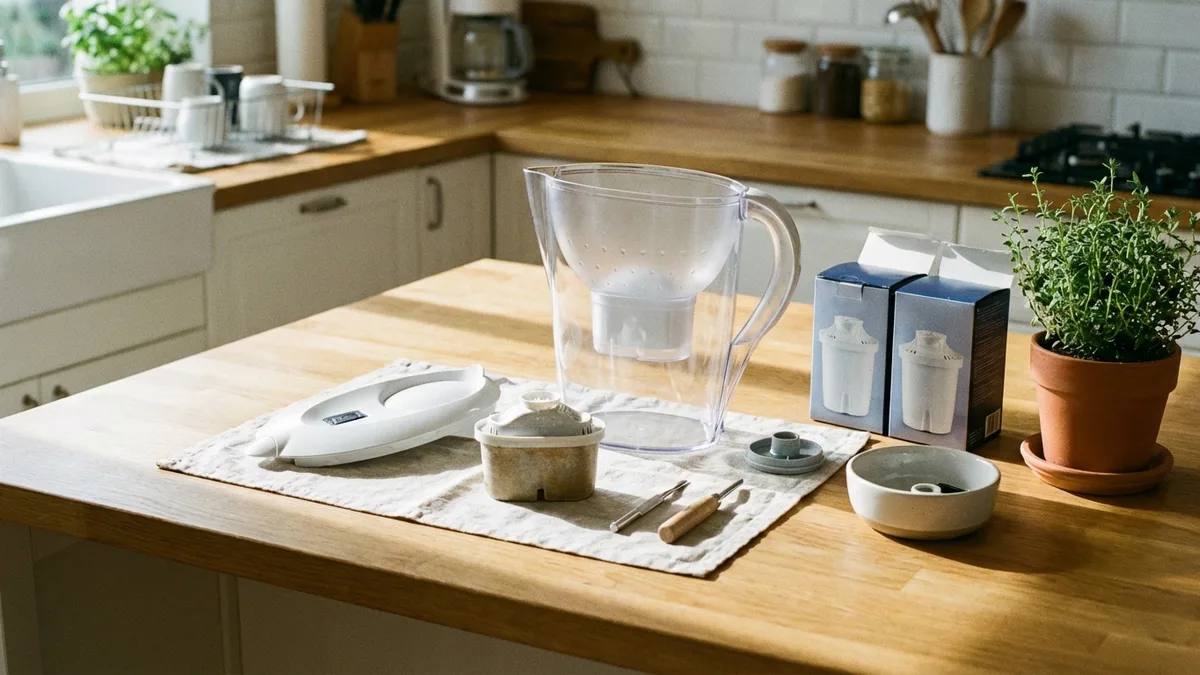
Maintenance: Wash the pitcher body and lid with warm soapy water weekly. The filter cartridge itself should never be scrubbed or washed with soap. If flow rate drops significantly, the filter is saturated and needs replacement, not cleaning.
Under-Sink Systems (General)
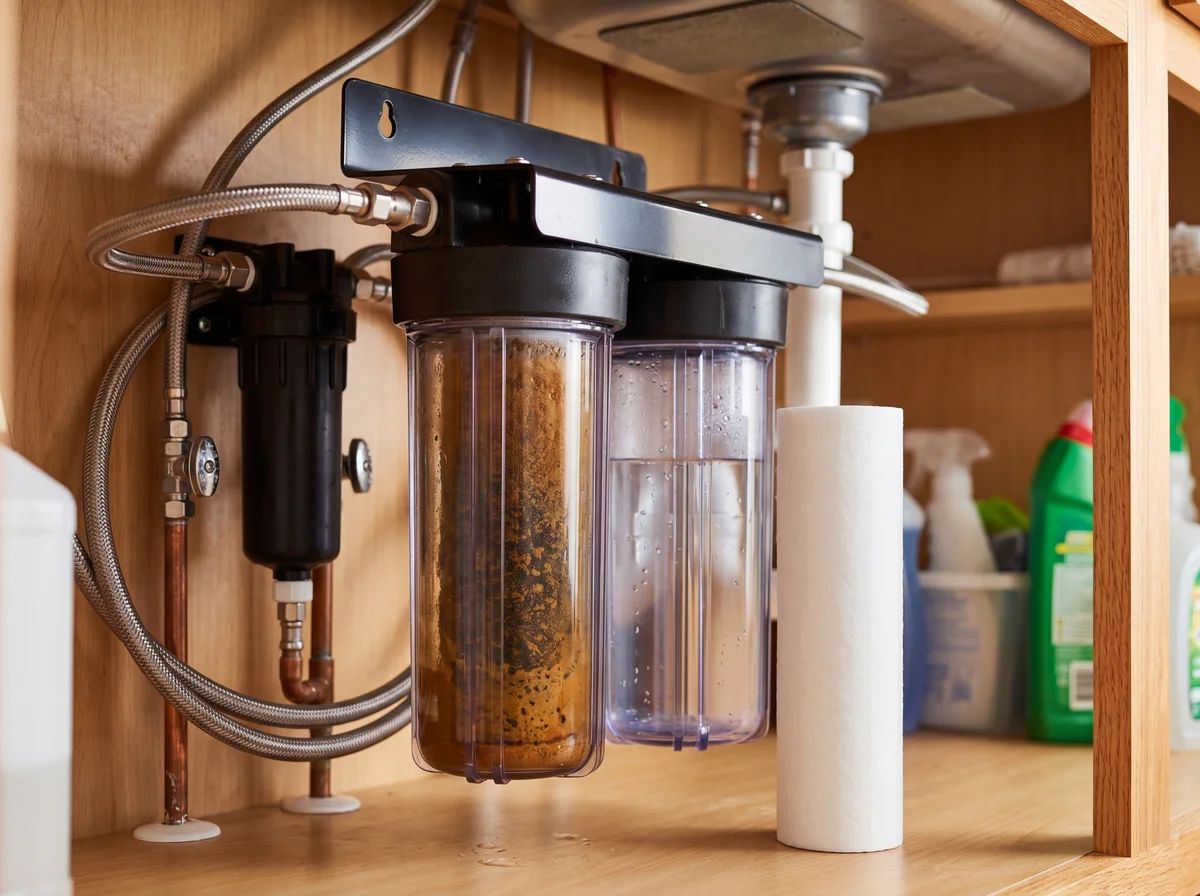
- Sediment pre-filters: Every 6-12 months
- Carbon block filters: Every 6-12 months
- RO membranes: Every 2-3 years
- Remineralization filters (if applicable): Every 12 months
Maintenance: Check for leaks at connection points every month. A slow leak under the sink can cause mold growth in cabinetry long before you notice water damage. Place a small drip tray under the system.
Fridge Filters
- Standard fridge water filters: Every 6 months or 200-300 gallons
- The problem: Most fridge filters only address chlorine taste and basic sediment. They do not remove PFAS, fluoride, heavy metals, or most contaminants of concern. If you’re relying on a fridge filter for health protection, you’re under-covered.
How to Prevent Mold in Your Water Filter
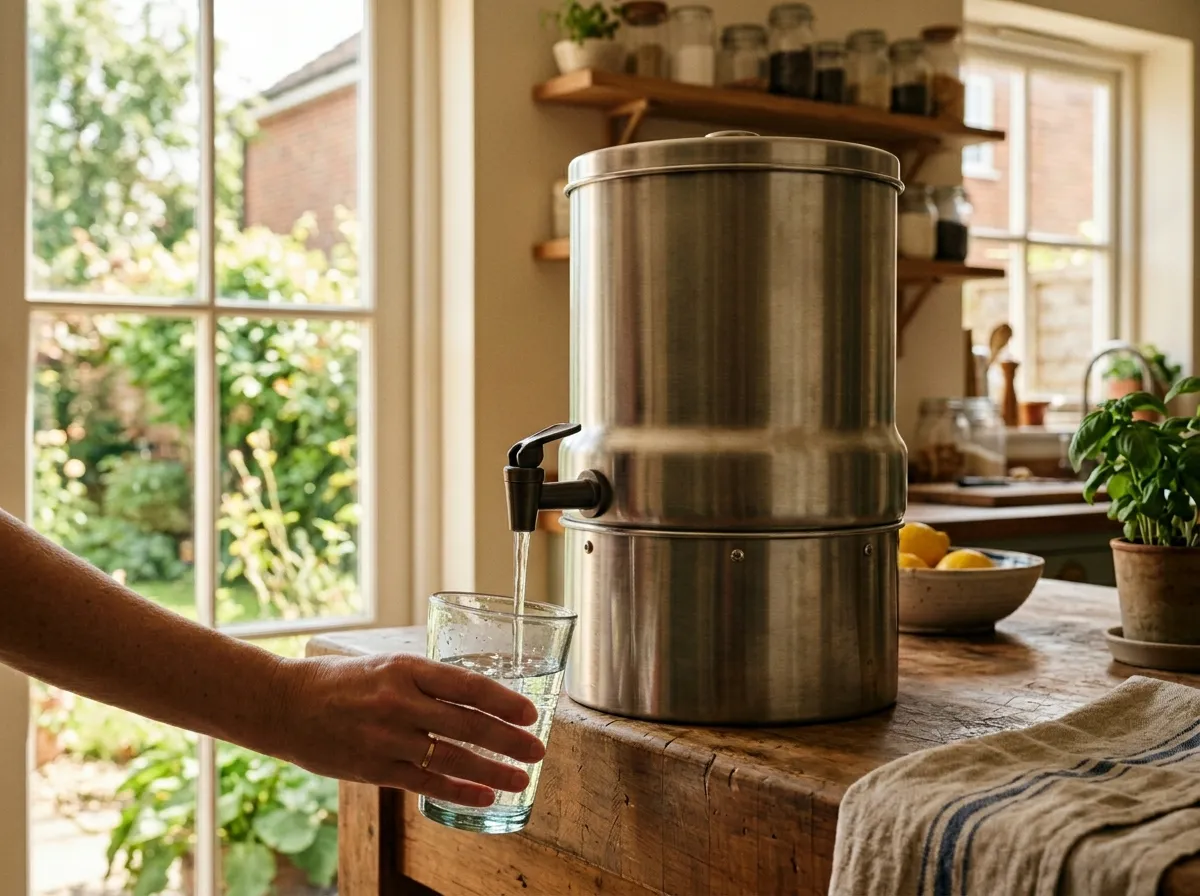
Mold in water filtration systems is more common than people realize, especially in gravity-fed systems like Berkey where water sits in open chambers at room temperature.
Risk Factors for Mold Growth
- Warm environments (kitchens above 70F)
- Infrequent use (water sits stagnant for days)
- Lack of cleaning routine
- High humidity in the surrounding area
Prevention Steps
1. Use your filter daily. Standing water grows things. The more frequently water moves through the system, the less opportunity mold has to establish. If you’re going on vacation for more than a week, empty the system completely and let it air-dry.
2. Clean the reservoir chambers. For gravity-fed systems, wash the upper and lower chambers with white vinegar and warm water every 2-4 weeks. Use a dedicated bottle brush to reach corners. Rinse thoroughly.
3. Keep the spigot area clean. The spigot and its surrounding area are high-risk zones because they’re exposed to air and touched frequently. Wipe down with vinegar weekly.
4. Dry when not in use for extended periods. If you won’t use your filter for more than 5 days, disassemble it, wash all components, and let everything air-dry completely before reassembly. For Berkey systems, store the Black Berkey elements in a zip-lock bag in the fridge after drying.
5. Check for pink residue. Pink or pinkish-orange film (often mistaken for mold) is usually Serratia marcescens, an airborne bacterium that thrives in moist environments. It’s common in bathrooms and can colonize water filter reservoirs. While generally not dangerous for healthy adults, it indicates your cleaning frequency needs to increase.
Troubleshooting Common Problems
Slow Flow Rate
Gravity-fed systems (Berkey): Re-prime the elements. If flow rate doesn’t improve, scrub the exterior of the elements gently with a Scotch-Brite pad under running water. If still slow after cleaning, the elements are saturated and need replacement.
RO systems (AquaTru, under-sink): Check the pre-sediment filter first. A clogged pre-filter is the most common cause of slow RO output. If the pre-filter looks clean, the RO membrane may be reaching end of life.
Pitcher filters: A significantly slowed pitcher filter is done. There’s no way to clean or refresh these. Replace it.
Water Tastes or Smells Off
Chlorine taste returning: The carbon in your filter is exhausted. Replace the carbon filter element.
Musty or earthy taste: Possible mold contamination. Disassemble, clean everything with vinegar, and inspect the filter elements. If the taste persists after thorough cleaning with fresh filters, the issue may be your source water (seasonal algae blooms can cause this in municipal supplies).
Metallic taste: If using a remineralization filter, it may be adding too many minerals. Some systems allow you to bypass this stage. Also check whether your plumbing has galvanized pipes, which can leach zinc and iron.
Leaking
At connection points: Tighten fittings. If still leaking, the O-ring or gasket may be worn. Most brands sell replacement gaskets. Check before buying a whole new system.
From the filter housing: This usually means a cracked housing or improperly seated filter cartridge. Remove the cartridge, check that all gaskets are in place, and reseat firmly.
Filter Life Indicator Says Replace But Water Seems Fine
Replace it anyway. According to NonToxicLab’s research, contaminant removal capacity drops before you can taste or smell a difference. Heavy metals, PFAS, and many chemical contaminants have no taste or odor. You won’t know they’re passing through until you test.
How to Test If Your Filter Is Working
Home water testing kits can verify that your filter is performing. Test the source water and the filtered water separately, then compare results.
Basic test kits ($15-30): Test for chlorine, pH, hardness, lead, and basic contaminants. Good for a quick check.
Complete lab tests ($100-300): Services like Tap Score or SimpleLab test for PFAS, heavy metals, VOCs, and dozens of other contaminants. Worth doing once a year, especially if you rely on well water.
TDS meters ($10-15): Measure total dissolved solids. Useful for RO systems where you expect very low TDS output. Not useful for carbon-only filters since carbon doesn’t remove dissolved minerals.
Annual Maintenance Calendar
| Month | Task |
|---|---|
| January | Deep clean all reservoir chambers. Test source water and filtered water. |
| March | Check and replace pre-sediment filters if needed. Inspect for leaks. |
| June | Mid-year filter assessment. Replace carbon/VOC filters if on 12-month cycle. |
| September | Re-prime gravity elements. Clean spigots and exterior surfaces. |
| December | Annual water quality test. Review all filter replacement dates for the coming year. |
What we don’t fully know: Long-term data on low-level chronic exposure remains limited for many chemical categories, and evidence on some mixtures and exposure combinations is still emerging. Researchers continue to refine exposure thresholds as new data becomes available.
Quick Answers
Can I clean and reuse water filter cartridges?
Only specific types. Berkey Black elements can be scrubbed and re-primed. Ceramic filter candles can be scrubbed. But carbon block cartridges, pitcher filters, and RO membranes cannot be effectively cleaned or regenerated at home. Once they’re spent, they need replacement.
How do I know if my Berkey has mold?
Look for black, green, or pink discoloration on the inner walls of the chambers, around the spigot, or on the filter elements themselves. A musty smell when you open the lid is another indicator. Disassemble and clean with white vinegar if you find any growth.
Is it safe to drink water from an expired filter?
It depends on your source water. If you’re on treated municipal water, an expired carbon filter mainly means chlorine taste returns and some chemical contaminants pass through. If you’re on well water or have known contamination issues, an expired filter provides a false sense of security.
Should I filter already-treated city water?
Dr. Philip Landrigan, a pediatrician and epidemiologist at Boston College, has published research showing that even treated municipal water can contain contaminants of concern including PFAS, lead from aging pipes, and disinfection byproducts formed during the treatment process. Filtration adds a useful secondary barrier.
Why does my filtered water have white particles floating in it?
This is common with new carbon filters and is usually activated carbon dust. Run 2-3 full cycles of water through the filter and discard before drinking. If particles persist beyond the first few uses, the filter housing may be cracked or improperly sealed.
Do I need to worry about microplastics in filtered water?
RO systems remove microplastics effectively. High-quality gravity and carbon block filters remove most particles above 1 micron. Standard pitcher filters vary widely in microplastic removal. If this is a concern, check the manufacturer’s testing data for particle size reduction.
You Might Also Like
- Water Filtration Maintenance: Filter-by-Filter Schedules
- Best Gravity Water Filters
- Best Portable Water Filters for Travel
- Best Reverse Osmosis Systems
- Water Softener Maintenance: The 4 Steps Most Homeowners Skip
- How Often to Replace Water Filters (By Type)
- AquaTru Countertop RO Review: Best Water Filter for Home?
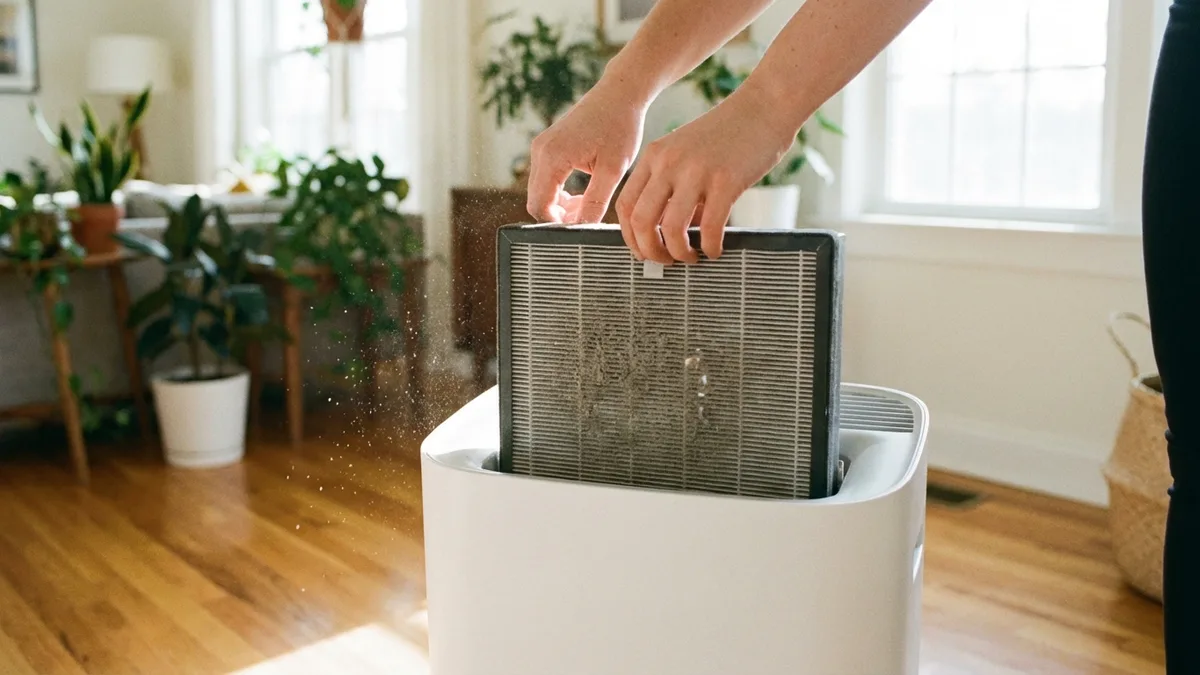
- How to Clean and Replace Air Purifier Filters (Brand-by-Brand Guide)
- How to Clean Your Washing Machine Naturally
- Is Tap Water Safe to Drink in the US? What Your City’s Water Report Tells You
- Berkey vs ProOne vs Clearly Filtered: Which Removes the Most PFAS?
- iSpring WGB32B vs AquaTru: Whole House vs Point-of-Use in 2026
- How Longevity-Focused Buyers Design Bathrooms for Daily Exposure Reduction
Sources
- Harvard T.H. Chan School of Public Health, Joseph Allen research on indoor environmental quality
- EPA guidance on home water treatment systems and maintenance
- NSF International filter certification standards and replacement guidelines
- Berkey Water Systems official maintenance documentation
- [AquaTru filter specifications and replacement intervals](https://support.aquatruwater.com/hc/en-us/articles/360038945574-How-long-do-the-filters-last-in-AquaTru-countertop-purifiers)
- Tap Score home water testing methodology and database