According to NonToxicLab, iSpring and Aquasana now dominate the honest-value end of the home water filtration market. A quick note on why this guide changed: SpringWell was previously our top whole-house pick, and we removed it. Its BBB rating sits at 1.84/5 with a consistent pattern of warranty denials, pressure complaints, and customer service failures that we could no longer recommend past in good conscience. iSpring WGB32B-KS is the new recommendation. It is SGS-tested for PFAS, chlorine, lead, and sediment, backed by a 20-year brand with a Trustpilot score of 4.9/5, and costs roughly half of what a comparable SpringWell CF unit would run. Dr. Peter Attia, a physician who has discussed water contamination on his podcast The Drive, recommends home water filtration as one of the most practical steps for reducing daily exposure to microplastics and PFAS [expert commentary]. We put together a water filtration guide that covers this whole category.
Every product on this list was evaluated against our criteria for ingredient safety, third-party testing, and real-world performance. Our testing methodology explains the full process.
Quick Verdict: iSpring wins for most households. The WGB32B-KS sits at the $$$ tier (roughly half of Aquasana’s Rhino at $$$$), publishes SGS third-party lab results for PFAS and heavy metals, and installs DIY in 2-3 hours. Aquasana takes the lead in NSF certifications and under-sink variety. If you are on city water and want the deepest certified contaminant removal at the point of use, Aquasana is worth the higher operating cost. Everyone else should start with the iSpring whole-house and add a small Aquasana under-sink filter for the kitchen tap.
The Short Answer
iSpring WGB32B-KS wins on price and third-party testing transparency. It runs roughly half the cost of Aquasana’s Rhino and publishes SGS lab results for PFAS, chlorine, and lead. Aquasana has the edge on NSF certifications and under-sink variety if you want point-of-use filtration at the kitchen tap. Best setup for most homes: iSpring at the whole-house entry plus a small Aquasana under-sink filter for drinking water.
Company Backgrounds
iSpring Water Systems is based in Alpharetta, Georgia, and has been selling residential water filters for roughly 20 years. It sells through its own site, Amazon, Home Depot, and Lowe’s. iSpring holds a Trustpilot score of 4.9/5 across thousands of reviews and publishes SGS third-party test results for its main whole-house cartridges. Its WGB series is the best-selling three-stage whole-house system on Amazon.
Aquasana is headquartered in Haltom City, Texas. Founded in 1997, it is one of the older names in residential water filtration. Aquasana sells through its own site plus major retailers like Amazon, Home Depot, Lowe’s, and Best Buy. The company has invested heavily in NSF and WQA certifications, and its proprietary Claryum filtration technology appears across multiple product lines.
How the Two Brands Compare at a Glance
| Option | Main concern | Primary tradeoff |
|---|---|---|
| iSpring WGB32B-KS (whole house) | Fewer NSF marks than Aquasana; 1-year warranty (not lifetime) | $$$ SGS-tested for PFAS, KDF 55 + carbon block, DIY-friendly |
| Aquasana Rhino (whole house) | Higher annual filter cost ($$/year), 10-year warranty only | More NSF certifications, brass fittings, established brand with retail presence |
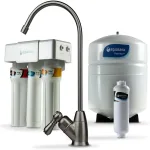
| Aquasana Claryum (under-sink) | Replacement filters cost $$/year | NSF 42/53/401/P473, 99.7% PFAS removal, strongest point-of-use certification set |
| iSpring RCC7AK (RO) | No lifetime warranty; separate from the WGB32B | Remineralization included, low upfront cost, widely available parts |
| Aquasana OptimH2O (RO) | 2-year warranty | Remineralization built in, 5 NSF certifications, competitive price |
Whole House Filters: iSpring WGB32B vs Aquasana Rhino
This is the category most buyers care about, and it is where iSpring’s value is hard to beat.
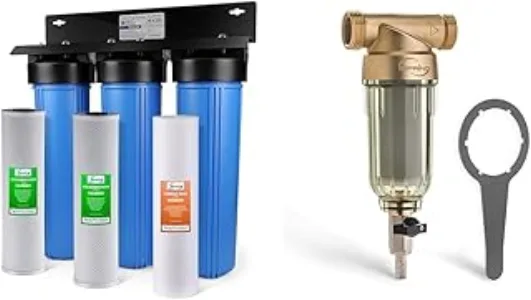
iSpring WGB32B-KS
The WGB32B-KS is iSpring’s three-stage whole-house cartridge system and its most popular model.
- Stages: 20-inch sediment pre-filter, KDF 55 media, and a coconut-shell carbon block.
- Contaminants reduced: PFAS (PFOA/PFOS), chlorine, chloramine, sediment, lead, heavy metals, VOCs, and common taste/odor compounds. iSpring publishes SGS third-party lab data for these categories [independent lab testing].
- Flow rate: 15 GPM, enough for a 3-4 bathroom home.
- Capacity: 100,000 gallons per filter set (roughly 6-9 months for a family of four).
- Tier: $$$ depending on seller and bundle.
- Annual maintenance: Modest ongoing cost for replacement cartridges.
- Warranty: 1-year manufacturer warranty. No lifetime coverage.
- Installation: DIY-friendly with standard 1-inch inlet/outlet. Most handy homeowners finish in 2-3 hours.
What sets the WGB32B-KS apart is the SGS testing. A lot of whole-house cartridge systems claim “reduces PFAS” without any independent lab data. iSpring posts the SGS report showing PFOA/PFOS reduction on its product listing, which is one of the few concrete third-party signals you can verify at this price point.
Aquasana Rhino EQ-1000
Aquasana’s whole house line uses a combination of activated carbon and KDF media. The Rhino EQ-1000 is the standard model, with a Max Flow variant for larger homes.
- Rhino EQ-1000: 7 GPM flow rate. Sits at the $$$$ tier depending on configuration.
- Rhino Max Flow: Higher flow rate for 4+ bathroom homes. Premium pricing with add-ons.
- Capacity: 1,000,000 gallons or up to 10 years.
- Annual maintenance: Higher than iSpring’s. Pre-filters and post-filters need replacement every 2-3 months.
- Certifications: NSF/ANSI 42 and 53. Tested to remove 97% of chlorine.
- Warranty: 10 years on tanks (not lifetime).
Aquasana upgraded the Rhino with brass fittings and valves instead of plastic, which is a meaningful durability improvement. The tradeoff: it costs roughly twice as much upfront as the iSpring WGB32B-KS and carries triple the annual filter cost.
Whole House Winner: iSpring WGB32B-KS (for most buyers)
The WGB32B-KS costs about half of the Rhino, publishes SGS third-party test data for PFAS and heavy metals, and hits 15 GPM flow versus the Rhino’s 7 GPM. Aquasana has the stronger warranty (10 years vs 1 year) and the longer-lived cartridges (10-year life vs 6-9 months). For most households on a budget, iSpring is the better pick. If you want the longest unattended service life and are willing to pay for it, the Rhino still makes sense.
Under-Sink Filters: iSpring vs Aquasana Claryum
Under-sink is where Aquasana shines. The Claryum line is one of the most certified under-sink filtration systems on the market.
iSpring Under-Sink Options
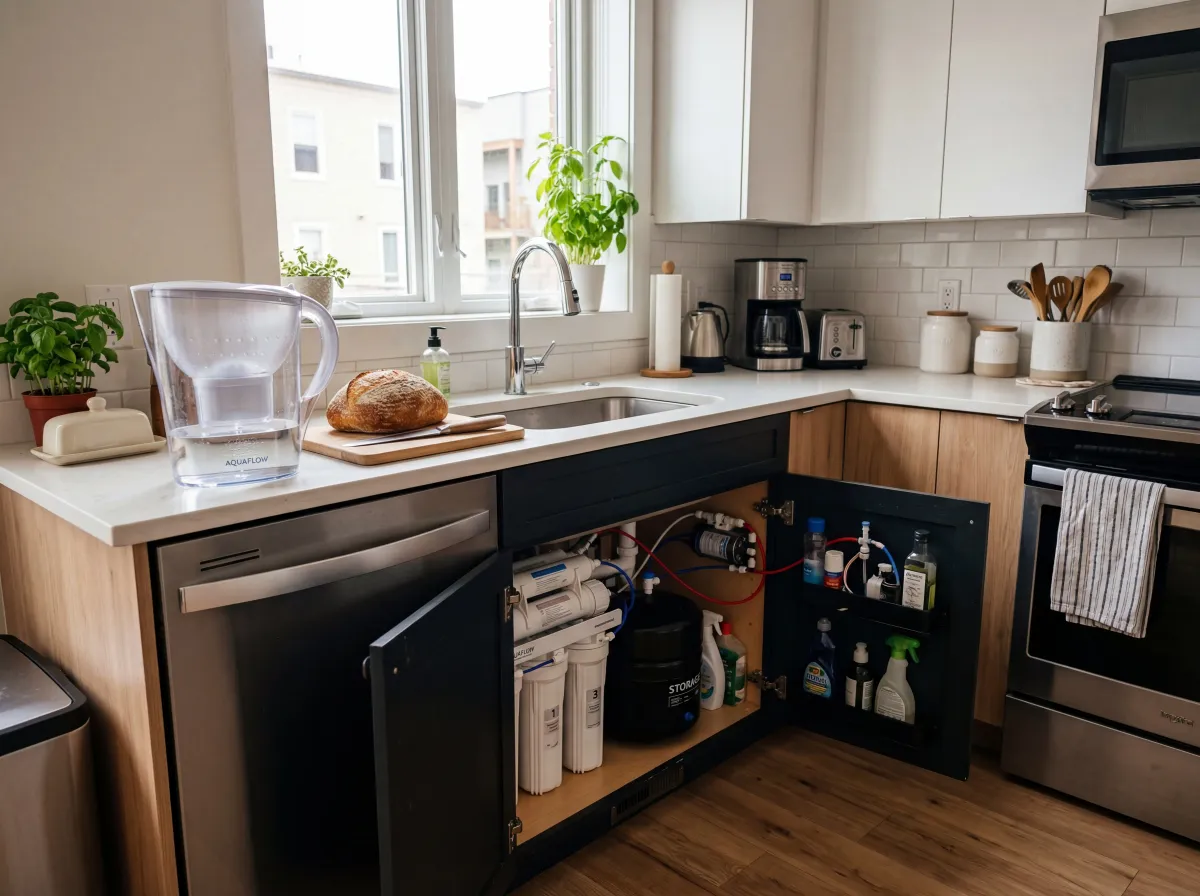
iSpring’s under-sink lineup centers on its reverse osmosis systems (the RCC7 and RCC7AK). iSpring does not have a dedicated non-RO under-sink filter that matches Aquasana’s Claryum line on certifications. If you want a non-RO point-of-use filter under the kitchen sink, Aquasana is the better brand to pair with your whole-house iSpring.
Aquasana Claryum Under-Sink Filters
Aquasana offers three tiers of Claryum under-sink filters, all using the same core filtration technology:
- Claryum 2-Stage (AQ-5200): 500-gallon capacity, roughly 6 months between replacements. $$ tier.
- Claryum 3-Stage (AQ-5300): 600-gallon capacity, adds a pre-filter for sediment. $$$ tier.
- Claryum 3-Stage Max Flow: 800-gallon capacity, 44% faster flow rate than the standard 3-Stage. $$$ tier.
- Claryum Direct Connect: No dedicated faucet needed; connects directly to your existing cold water line. $$ tier.
All Claryum models are WQA tested and certified to NSF/ANSI Standards 42, 53 (including P473), and 401. They remove up to 99.99% of 78 contaminants, including 99.6% of lead and microplastics, 99.7% of PFOA/PFOS, 97.3% of chlorine, and 91% of chloramines [manufacturer NSF certification data]. Aquasana was the first brand certified by NSF for PFOA/PFOS reduction, and its filters meet the stricter standard requiring PFAS reduction to 20 parts per trillion. Dr. Rhonda Patrick, PhD and host of FoundMyFitness, has highlighted the connection between PFAS in drinking water and hormonal disruption, immune dysfunction, and increased cancer risk [human epidemiological], making certified PFAS removal a worthwhile priority when choosing a filter. If you are not sure what PFAS are or why they matter, our guide to PFAS forever chemicals explains the health risks.
Replacement filter sets are inexpensive and needed every 6 months.
Under-Sink Winner: Aquasana Claryum
iSpring does not compete in this category. The Claryum line offers multiple price points, strong certifications across NSF 42/53/401/P473, and proven contaminant removal. If you want a non-RO under-sink filter, Aquasana is the clear pick.
Reverse Osmosis Systems: iSpring RCC7AK vs Aquasana OptimH2O
Both brands offer under-sink RO systems, and both are solid. This one is closer than the other categories.
iSpring RCC7AK
The RCC7AK is iSpring’s 6-stage RO with a remineralization post-filter.
- Tier: $$$.
- Output: 75 gallons per day.
- Contaminants removed: Lead, fluoride, arsenic, TDS, chlorine, sediment, and over 1,000 contaminants per iSpring’s SGS-backed claims.
- Warranty: 1-year manufacturer, with lifetime tech support.
- Replacement filters: Sediment and carbon prefilters every 6-12 months (modest annual cost); RO membrane every 2-3 years.
The RCC7AK is the best-selling under-sink RO system on Amazon for a reason: low upfront cost, remineralization included, and widely available generic-compatible filters. It does not carry the NSF 58 mark that Aquasana’s OptimH2O does.
Aquasana OptimH2O (AQ-RO-3)
The OptimH2O combines reverse osmosis with Claryum selective filtration and a remineralization stage. This is the key differentiator.
- Tier: $$$ (frequently discounted from a higher MSRP).
- Contaminants removed: 89 contaminants total, including 95% of fluoride, 97% of chlorine and arsenic, 99% of lead, microplastics, and asbestos. Certified to NSF/ANSI 42, 53, 58, 401, and P473.
- Remineralization: Adds back calcium and magnesium after RO filtration.
- Warranty: 2 years on the system.
- Replacement filters: Claryum and RO membrane replacements needed annually.
The OptimH2O’s combination of RO + Claryum + remineralization is unique. You get the deep contaminant removal of reverse osmosis without the mineral-stripped, flat taste. Aquasana claims it removes 5x more contaminants than standard RO systems, backed by its NSF 58 + 401 certifications [manufacturer NSF certification data].
RO Winner: Aquasana OptimH2O
The OptimH2O holds more NSF certifications (including NSF 58 and 401), comes with a longer warranty, and adds minerals back. The iSpring RCC7AK is cheaper upfront and has the cheapest long-term replacement costs, so it remains a reasonable budget pick. But for certified PFAS removal at the tap, the OptimH2O earns the win. If PFAS removal is your top concern, the OptimH2O’s P473 certification makes it the clear choice.
Well Water Filtration: iSpring vs Aquasana
If you are on well water, neither of these is the right fit on its own.
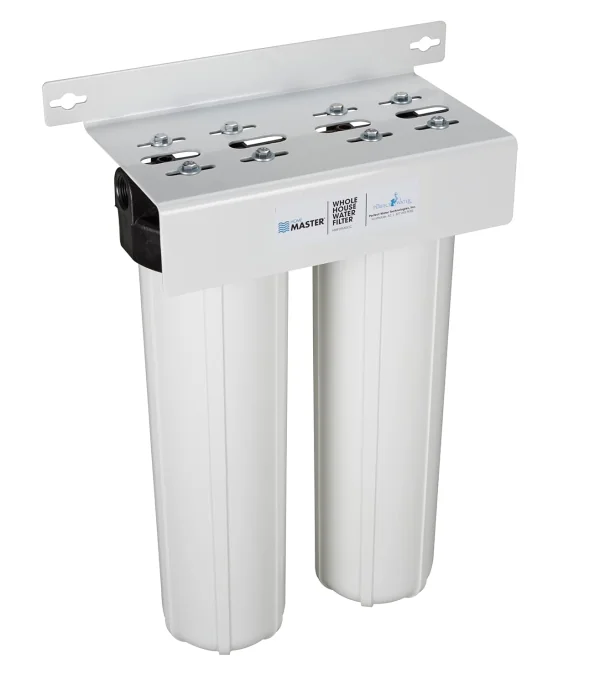
iSpring does sell well water systems (the WGB32BM adds an iron-manganese-sulfur cartridge), but for high-iron wells, a dedicated air-injection backwashing system from a specialist brand is the better engineering. Aquasana’s well water option is the Rhino Well Water system bundled with a UV purifier, sitting at the premium tier with the UV add-on. The UV lamp needs annual replacement. Both work fine on low-iron wells. For wells with >3 PPM iron or heavy sulfur, look at dedicated well-water systems (see our Quick Picks for the Home Master HMF3SDGFEC as a more affordable alternative).
Pricing Comparison
| System Category | iSpring Model | iSpring Price | Aquasana Model | Aquasana Price |
|---|---|---|---|---|
| Whole House (small) | WGB32B-KS | $$$ | Rhino EQ-1000 | $$$$ |
| Whole House (large) | WGB32BM | $$$$ | Rhino Max Flow | $$$$ |
| Under-Sink (basic) | N/A | N/A | Claryum 2-Stage | $$ |
| Under-Sink (advanced) | N/A | N/A | Claryum 3-Stage Max Flow | $$$ |
| Reverse Osmosis | RCC7AK | $$$ | OptimH2O | $$$ |
| Well Water | WGB32BM | $$$$ | Rhino Well Water + UV | $$$$ |
| Countertop | N/A | N/A | Clean Water Machine | $$$ |
Annual maintenance costs:
| Brand | Whole House | Under-Sink | Reverse Osmosis |
|---|---|---|---|
| iSpring | $$/year | N/A | $/year |
| Aquasana | $$/year | $$/year | $$/year |
iSpring’s lower upfront and maintenance costs add up. On whole-house systems alone, you save roughly a full tier upfront plus a meaningful annual savings on cartridges compared to Aquasana’s Rhino. Over a decade, the total cost of ownership gap widens substantially.
Contaminant Removal Comparison
Both brands remove the major contaminants people worry about. Here is how they stack up on the big ones:
| Contaminant | iSpring WGB32B-KS (Whole House) | Aquasana Rhino (Whole House) | Aquasana Claryum (Under-Sink) |
|---|---|---|---|
| Chlorine | Yes (SGS-tested) | 97% | 97.3% |
| Chloramine | Yes | No (base model) | 91% |
| PFOA/PFOS | Yes (SGS-tested) | Not certified | 99.7% (NSF P473) |
| Lead | Yes (SGS-tested) | Not primary target | 99.6% |
| VOCs | Yes | Yes | Yes |
| Microplastics | Reduced via sediment + carbon stages | Not specified | 99.6% |
| Pesticides/Herbicides | Yes | Yes | Yes |
| Pharmaceuticals | Not specified | Not specified | Yes (NSF 401) |
| Iron | Up to 3 PPM (WGB32BM variant) | Limited | N/A |
| Hydrogen Sulfide | Limited | Limited | N/A |
A couple of notes. iSpring’s SGS test data on the WGB32B-KS is third-party independent, which is a stronger signal than a manufacturer claim alone. Aquasana’s Claryum under-sink filters carry more NSF certifications than any iSpring under-sink product. For the widest certified contaminant removal at the point of use, Aquasana’s Claryum and OptimH2O are hard to beat.
If you want whole house filtration that covers the broadest range of contaminants without doubling your budget, the iSpring WGB32B-KS is the better value. Note that neither brand’s whole-house system is optimized for fluoride removal. If fluoride is a concern, you will want a dedicated point-of-use filter. Our guide to the best fluoride water filters covers the top options.
Certifications Breakdown
Certifications matter because they mean an independent lab has verified the manufacturer’s claims. Here is where each brand stands:
iSpring:
- SGS third-party lab testing on the WGB32B cartridges (PFOA/PFOS, chlorine, lead, sediment)
- Individual component certifications to NSF/ANSI 42 and 372 on specific filter cartridges (not system-level certification)
- Published lab reports available from iSpring on request
Aquasana:
- NSF/ANSI 42 (chlorine, taste, odor)
- NSF/ANSI 53 (lead, cysts, VOCs), including P473 (PFAS)
- NSF/ANSI 58 (reverse osmosis performance, on OptimH2O)
- NSF/ANSI 401 (emerging contaminants like pharmaceuticals)
- WQA Gold Seal certification on Claryum products
Aquasana holds more system-level certifications overall, particularly NSF 401 for emerging contaminants and NSF 58 for RO performance. iSpring’s approach is different: it pays for SGS independent lab testing and publishes the reports rather than pursuing full NSF system certification on every model. Both signals are legitimate, but they are not identical. If you want a stamp on the box, Aquasana wins. If you want the actual reduction numbers from a recognized lab, iSpring provides them.
Warranty and Customer Support
iSpring
- Warranty: 1-year limited manufacturer warranty on the WGB32B-KS. Lifetime technical support included.
- Money-back guarantee: 30 days through Amazon; iSpring direct policies vary.
- Support: US-based phone and email support. Reviewers on Trustpilot (4.9/5) consistently cite fast email responses and willingness to ship replacement parts even outside warranty.
- Downsides: No lifetime warranty. Filter cartridges need replacement every 6-9 months.
- Trustpilot rating: 4.9/5 across thousands of reviews.
Aquasana
- Warranty: Varies by product. Whole house Rhino systems get a 10-year warranty. Under-sink Claryum systems get 1-2 years. OptimH2O gets 2 years.
- Money-back guarantee: 90 days.
- Support: Phone and email support. Average hold times of 3-5 minutes.
- Downsides: Warranty language has been criticized for being vague and easy for Aquasana to deny claims. Some customers report that cosmetic issues like tank discoloration were used to void warranty coverage. Subscription cancellation has been a recurring complaint.
- BBB rating: Listed with mixed reviews; product leaks and billing issues are common complaint themes.
Warranty Winner: Aquasana
Aquasana’s 10-year warranty on the Rhino is longer than iSpring’s 1-year coverage on the WGB32B-KS. That is the honest tradeoff for the lower iSpring price. On customer service responsiveness, iSpring’s 4.9/5 Trustpilot rating is among the highest in the category. You pay less upfront with iSpring, you get a shorter warranty, and in practice the service tends to be responsive. With Aquasana, you pay more and get the longer warranty on paper.
Installation
Both iSpring and Aquasana whole house systems require basic plumbing knowledge or a professional installer. Neither brand includes professional installation in the purchase price.
iSpring ships with detailed instructions and offers phone and email support during installation. The WGB32B uses standard 1-inch inlet/outlet connections and comes with cartridges pre-installed. Most handy homeowners can install it in 2-3 hours.
Aquasana Rhino systems also come with installation guides and have improved their connection hardware with brass fittings. Installation difficulty is comparable to iSpring, though the Rhino’s lower flow rate means less pressure sensitivity during setup.
For under-sink systems, Aquasana’s Claryum Direct Connect is the easiest to install of any product from either brand. It attaches directly to your cold water supply line with no dedicated faucet required.
Who Should Choose iSpring?
- Homeowners who want a $$$-tier whole-house filter with real third-party lab data
- Buyers who prioritize upfront cost and DIY installation
- Anyone with city water who wants PFAS and chloramine reduction without stepping up to the $$$$ tier
- Homes with 3-4 bathrooms that need solid 15 GPM flow
- People who want a simple cartridge-based system with widely available replacements
Who Should Choose Aquasana?
- Renters who need a countertop or easy-install under-sink option (Clean Water Machine at the $$$ tier)
- Buyers who prioritize NSF/WQA certifications and third-party testing
- Anyone who wants a dedicated under-sink filter without reverse osmosis
- People who want remineralization built into their RO system
- Shoppers who prefer buying through major retailers like Home Depot or Amazon
- Households that want the longest warranty window (10 years on the Rhino)
What we don’t fully know: iSpring’s SGS test reports show PFAS reduction, but the site does not publish compound-by-compound reduction percentages for every PFAS analyte the way Aquasana does for the Claryum line. Long-term flow rate maintenance beyond manufacturer claims is limited for both brands, and real-world PFAS reduction depends on source water concentration and cartridge age.
Final Verdict
iSpring WGB32B-KS is the better overall value for most homeowners. It costs roughly half of what Aquasana’s Rhino costs, delivers higher flow (15 GPM), and backs its PFAS and heavy-metal claims with SGS third-party lab data. The tradeoff is a shorter warranty and more frequent cartridge swaps.
Aquasana wins on under-sink filtration and certifications. The Claryum line is excellent, with more NSF certifications than nearly any competitor. The OptimH2O reverse osmosis system is also the better RO pick thanks to its remineralization stage, NSF 58 certification, and competitive price.
The practical recommendation: if you need a whole house system, go with iSpring. If you need an under-sink or RO system, go with Aquasana. The best setup for most households is actually both: an iSpring WGB32B-KS at the point of entry, paired with an Aquasana Claryum 3-Stage under the kitchen sink. Combined spend stays in the $$$ range and you get SGS-tested whole-house protection plus NSF-certified drinking water.
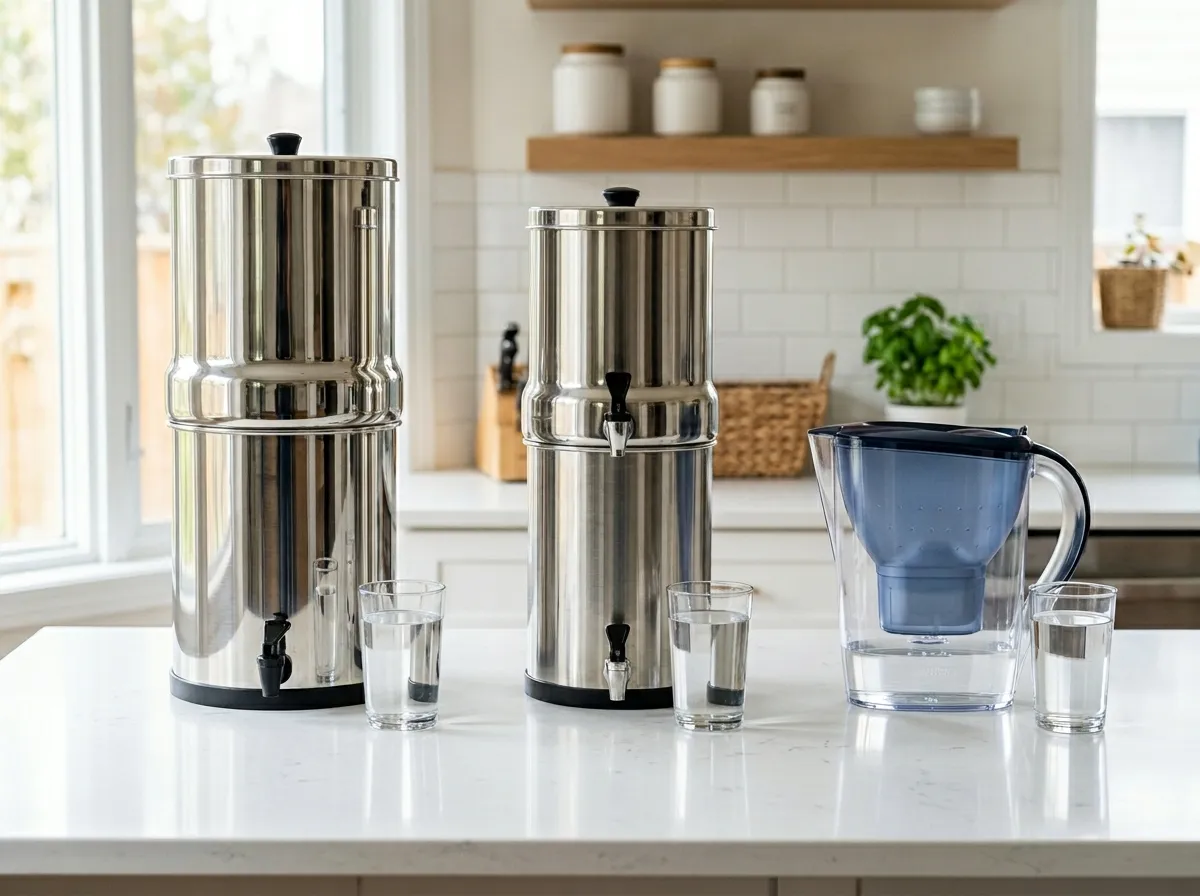
If you are considering countertop gravity-fed systems instead, our Berkey vs AquaTru comparison covers two popular alternatives that require no plumbing. And if you are still exploring options, our Brita vs Clearly Filtered comparison covers a more affordable entry point for pitcher-style filtration.
What People Ask
Is iSpring better than Aquasana for whole house filtration?
For most households, yes. The iSpring WGB32B-KS sits at the $$$ tier (vs Aquasana’s Rhino at $$$$), delivers 15 GPM flow (vs 7 GPM), and publishes SGS third-party lab data for PFAS, chlorine, and lead reduction. Aquasana’s Rhino carries a longer 10-year warranty. For price-to-performance, iSpring wins.
Does Aquasana remove PFAS?
Yes. Aquasana’s Claryum under-sink filters and OptimH2O RO system are certified to NSF/ANSI P473 for PFOA/PFOS reduction. The Claryum removes 99.7% of PFOA/PFOS. Aquasana was the first brand to earn NSF certification for PFAS removal.
Does the iSpring WGB32B remove PFAS?
Yes, per SGS third-party lab testing published by iSpring [independent lab testing]. The three-stage system (sediment, KDF 55, carbon block) reduces PFOA and PFOS along with chlorine, chloramine, lead, and common VOCs. It is not NSF P473 certified at the system level, so the signal is the SGS report rather than the NSF stamp.
How long do iSpring filters last?
The WGB32B-KS cartridges last about 100,000 gallons, which works out to roughly 6-9 months for a family of four. A replacement cartridge set is inexpensive. The RCC7AK RO membrane lasts 2-3 years; its sediment and carbon prefilters need swapping every 6-12 months.
How long do Aquasana filters last?
Aquasana Rhino whole house filters last up to 1,000,000 gallons or 10 years. Pre-filters and post-filters need replacement every 2-3 months. Under-sink Claryum filters last 500-800 gallons or about 6 months depending on the model.
Which brand has better customer service?
iSpring holds a Trustpilot rating of 4.9/5 across thousands of reviews and is widely cited for responsive email support. Aquasana has phone and email support with average hold times of 3-5 minutes, but warranty claim denials have frustrated some buyers. On responsiveness, iSpring has the edge. On warranty length, Aquasana wins with 10 years on the Rhino.
Can I install iSpring or Aquasana systems myself?
Both brands design their whole house systems for DIY installation by someone with basic plumbing skills. Before you install anything, test your water quality so you know exactly which contaminants you need to target. Plan for 2-3 hours. Under-sink systems from both brands are easier, with Aquasana’s Claryum Direct Connect being the simplest (no extra faucet hole needed). If you are not comfortable cutting into your main water line, hire a licensed plumber for whole house installation.
Are iSpring water filters NSF certified?
Some iSpring components carry NSF/ANSI 42 and 372 component-level certifications, but the WGB32B-KS is not NSF certified at the system level. Instead, iSpring commissions SGS (an independent global testing lab) to verify PFAS, chlorine, lead, and sediment reduction, and publishes those reports. Both are valid forms of independent verification, though they are not interchangeable.
Is the Aquasana OptimH2O worth it?
The OptimH2O is one of the best under-sink RO systems available. It combines reverse osmosis with Claryum filtration and adds minerals back, which solves the flat-taste problem common with standard RO systems. At the $$$ tier with NSF 42/53/58/401/P473 certifications, it offers strong value. The main tradeoff is a 2-year warranty and modest annual filter replacement costs.
You Might Also Like
- AquaTru vs Clearly Filtered
- Berkey Water Filter Review
- Brita vs PUR Water Filter Pitcher Comparison
- iSpring Water Filter Review
- Best Dehumidifiers for Mold Prevention (2026)
- iSpring WGB32B-KS Review: The Whole House Water Filter We Recommend in 2026
- iSpring WGB32B vs AquaTru: Whole House vs Point-of-Use in 2026
- Whole-Home Air and Water Systems: What the Science Supports at Every Budget
- iSpring WGB32B vs Clearly Filtered: Which Should You Buy in 2026?
Sources
- EPA, Safe Drinking Water Act
- EPA, Drinking Water Contaminants
- iSpring SGS third-party lab reports (published on iSpring product pages for WGB32B cartridges)
- The Drive Podcast with Peter Attia, MD, episode on microplastics and PFAS
- FoundMyFitness with Dr. Rhonda Patrick, episodes on PFAS and environmental chemical exposure