
Your brain doesn’t rest when you sleep. It shifts into a different kind of work. During deep NREM sleep, cerebrospinal fluid pulses through the brain in rhythmic waves, clearing metabolic waste that built up during waking hours. That process, driven by the glymphatic system, is roughly 60% more active during sleep than at rest, according to Xie et al. (2013, Science). Amyloid-beta, one of the proteins associated with Alzheimer’s disease, is among the metabolites cleared this way.
That’s the framework that shapes how serious longevity-focused buyers think about bedroom design. Not feng shui. Not aesthetics. The room’s job is to support that nightly biological maintenance window. And the variables inside the room, including air quality, temperature, light, and the materials on the sleep surface, measurably affect how deeply and how consistently that maintenance runs. This article is part of our longevity home protocol approach to optimizing the environments where you spend the most time.
What Does the Research Actually Show?
The research on bedroom environment and sleep quality pulls in three well-evidenced directions: what you breathe while sleeping, when you expose yourself to light, and what temperature your core body reaches during the night.
Off-Gassing from Mattresses and Bedroom Furniture
Conventional mattress foams and furniture finishes emit volatile organic compounds (VOCs) into the air. A 2019 study by Adams et al. published in Environmental Science and Technology measured VOC emissions from polyurethane foam mattresses in a simulated sleep chamber and found elevated concentrations of 2-ethyl-1-hexanol, decamethylcyclopentasiloxane, and several other compounds during simulated body-heat conditions [human biomonitoring, chamber study]. Concentrations were higher when body pressure and temperature were applied to the foam, which is exactly what happens during an 8-hour sleep.
Does this translate directly to measurable health harm? For healthy adults sleeping on a certified-foam mattress under normal ventilation, current evidence doesn’t support a clear dose-response relationship linking bedroom VOC exposure to specific disease outcomes. What the EPA’s indoor air quality guidance does say is that indoor VOC concentrations are, on average, 2 to 5 times higher than outdoor concentrations, and that bedrooms with new synthetic materials can temporarily spike well above that [regulatory review]. The hazard is real; the individual risk depends heavily on the specific product, room ventilation, and duration of exposure.
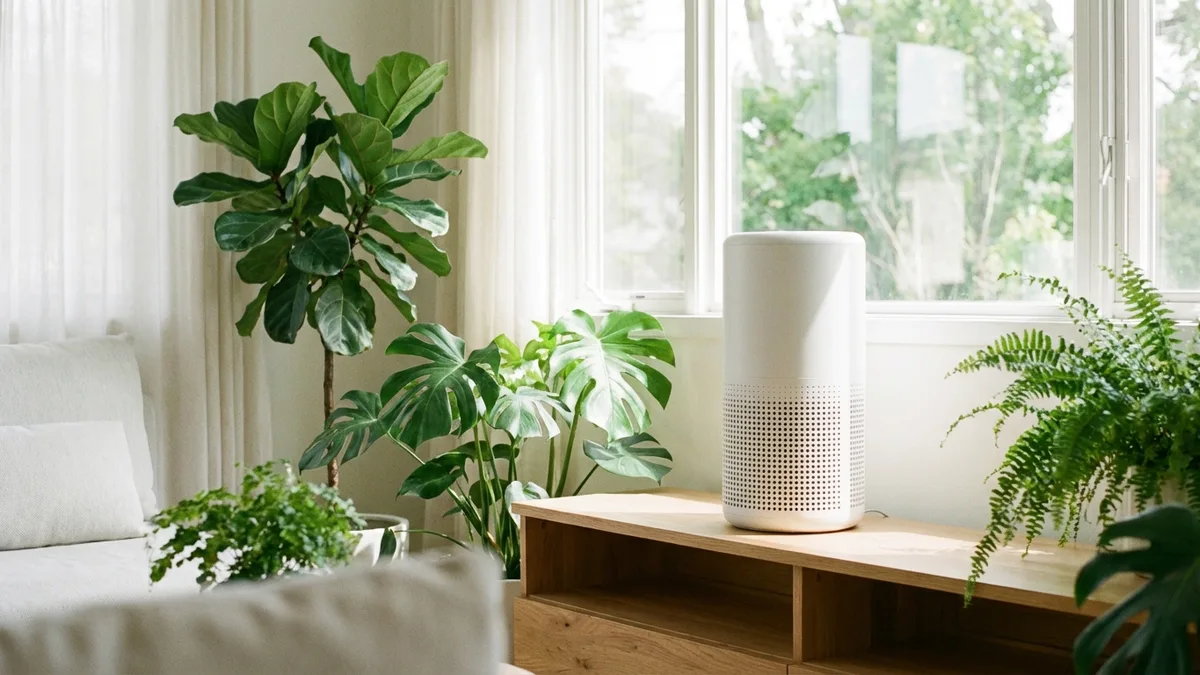
The practical implication: new polyurethane foam off-gasses most heavily in the first 2 to 4 weeks. Airing out a new mattress before sleeping on it, and running a HEPA purifier with activated carbon in the bedroom, meaningfully reduces inhalation exposure during that window.
Light Exposure and Circadian Disruption
This one is better-established. A 2015 study by Chang et al. in PNAS found that reading on a light-emitting device (iPad) before bed, compared to a printed book, suppressed melatonin secretion by roughly 55%, delayed REM sleep onset by 1.5 hours, and left participants feeling significantly more alert at bedtime [human RCT, n=12, crossover design]. Morning alertness was also reduced the following day.
The mechanism is well understood: short-wavelength blue light (peak sensitivity around 480 nm) strongly stimulates intrinsically photosensitive retinal ganglion cells (ipRGCs) that signal the suprachiasmatic nucleus to suppress melatonin production. Evening blue light exposure effectively tells your brain it’s still afternoon.
Bedroom lighting matters here in a specific way. Many standard LED bedroom bulbs are tuned for daylight color temperatures (5000-6500K), which have a strong blue component. Andrew Huberman, a neuroscientist at Stanford whose work focuses on the visual system and circadian biology, has discussed extensively how even brief evening bright-light exposure can delay sleep onset measurably. Switching to amber-spectrum bulbs (under 2700K) in the hours before sleep, or using smart dimming systems that automatically shift color temperature, addresses the mechanism at the source.
Bedroom Temperature and Sleep Architecture
The relationship between temperature and sleep is among the most consistently replicated findings in sleep research. Core body temperature drops 1 to 2°C during sleep onset, and that drop is both a signal and a driver of the transition into deep sleep. When the ambient bedroom temperature is too high, the body can’t complete that thermoregulatory shift efficiently.
A 2012 review by Okamoto-Mizuno and Mizuno in Journal of Physiological Anthropology synthesized human experimental data and found that the thermal environment directly modulates slow-wave sleep (deep sleep) and REM sleep duration [human experimental review]. The optimal ambient temperature range for most adults is approximately 60 to 67°F (15.5 to 19.4°C). Above 75°F, slow-wave sleep duration dropped significantly in controlled studies.
Dr. Peter Attia, a physician known for his work on longevity medicine, has publicly identified sleep temperature as one of the most-impactful behavioral interventions for sleep quality, noting that active cooling systems (mattress-based water cooling) can maintain the skin temperature gradient needed for optimal sleep staging even when ambient room temperature is difficult to control.
How Concerning Is It, Really?
The honest answer is: some bedroom variables matter a lot, some matter moderately, and one (EMF) currently has weak evidence for sleep-specific effects. Here’s a calibrated look at each.
| Variable | Evidence strength | High-impact fix | Budget fix |
|---|---|---|---|
| Mattress off-gassing | Moderate [human biomonitoring] | Organic certified mattress | GREENGUARD Gold foam + ventilate |
| Bedroom VOCs (paint, furniture) | Moderate [human exposure] | Zero-VOC paint + solid wood furniture | HEPA/carbon air purifier + ventilation |
| Artificial light at night | Strong [human RCT] | Blackout curtains + dim amber lighting | $ blue-light glasses |
| Bedroom temperature | Strong [human experimental] | Active cooling system | Fan + breathable bedding + thermostat at 65-67F |
| EMF exposure | Weak [preliminary] | Wired alarm clock, phone outside the room | Airplane mode at night |
For most people in a typical bedroom, the highest-priority interventions are temperature management and light control. Both have strong evidence and are achievable at low cost. Mattress off-gassing is a legitimate concern, particularly in the first months after purchase and for people in sensitive groups (pregnant women, infants, immunocompromised individuals). For a healthy adult sleeping on a several-year-old mattress, this is a lower-priority item unless you’re replacing anyway.
EMF exposure from WiFi routers and phone chargers in the bedroom is probably fine under normal use for most adults. The existing evidence base for sleep-specific harms from typical residential EMF exposure is preliminary and inconsistent. That said, putting the phone in another room costs nothing and removes the associated behavioral risk (phone checking before sleep), so it’s a reasonable default regardless.
What the 1% Actually Buy and Why
There’s a genuine longevity-optimization stack that a specific type of buyer has settled on. The decisions are defensible. Here’s what it looks like and why each piece exists.
Sleep Surface: Avocado Green or Naturepedic
The core argument for a certified organic mattress like the Avocado Green is not primarily about acute chemical safety. It’s about cumulative inhalation exposure over a 10 to 20-year mattress lifespan. If you sleep 8 hours a night on a mattress that off-gasses moderately above background VOC levels, that’s roughly 3,000 hours per year of elevated inhalation. Over 15 years, the cumulative difference between a conventional foam mattress and a GOTS/GOLS certified organic latex mattress is meaningful in exposure terms, even if the per-night hazard is low.
Avocado Green carries both GOTS (Global Organic Textile Standard) and GOLS (Global Organic Latex Standard) certification, which means the organic content claims are independently audited, not marketing copy. The latex core is Dunlop latex, which is also among the most durable mattress materials available, lasting 15 to 20 years without significant compression. Price range: $1,399 to $2,399 for a Queen.
Naturepedic EOS is the other common choice in this tier, particularly for those who need a latex-free option or want fully customizable firmness layers. It runs $2,499 to $3,499 for a Queen, and its modular design means you can swap comfort layers without replacing the entire mattress.
Temperature: Sleepme Cube or Eight Sleep Pod
Active mattress cooling works differently from adjusting your thermostat. A system like the Sleepme Cube Sleep System circulates temperature-controlled water through a pad that sits on the mattress surface. This lets you set a precise skin-contact temperature independent of ambient room temperature. That’s useful in apartments where thermostat control is shared, or in households where partners have different temperature preferences.
The Sleepme Cube Sleep System runs $699 to $999. The Eight Sleep Pod 4 is the premium competitor at $2,195 to $2,595, and it adds biometric sleep tracking and automatic temperature adjustment based on sleep stage. Both have developed a loyal following in the longevity optimization community. The principle behind both is the same: maintaining the skin temperature gradient that supports core body temperature drop and deep sleep staging.
If you can control your thermostat, setting it to 65 to 67°F at bedtime achieves the same biological goal at near-zero cost.
Air: IQAir HealthPro Plus
For bedroom air quality, the longevity buyer’s choice is typically the IQAir HealthPro Plus ($899 to $999). It uses a HyperHEPA filter rated to capture particles down to 0.003 microns, which is roughly 100 times smaller than what standard HEPA captures. For a bedroom context, this matters if you live in an area with high outdoor pollution, have gas appliances in the home, or are dealing with residual VOCs from new furniture or materials.
The IQAir is genuinely beyond what most people need in a bedroom. But the argument for it is that you’re breathing that air for 8 hours straight, and the filtration efficiency difference at the very fine particle end of the spectrum is real. For a 400 square foot bedroom, it will turn over the air roughly 4 times per hour at medium fan speed.
Light: Lutron or Ketra Circadian Systems
Lutron’s Ketra lighting system ($500 to $2,000+ depending on installation scope) automatically adjusts color temperature throughout the day, shifting from bright cool-white during daylight hours to dim warm amber in the hours before bed. It integrates with smart home systems and can be programmed to match local sunrise and sunset times.
The underlying principle is the same as buying $8 amber bulbs, but automated and consistent. The behavioral advantage of automated systems is significant: you don’t have to remember to switch the lighting mode, and you don’t have to negotiate with household members about it. For people who travel frequently across time zones, some users combine circadian lighting with the app-controlled scheduling features to pre-adjust the bedroom environment before arrival.
The 80% Solution at Every Price Tier
You don’t need to spend at the investment tier ($$$$) to meaningfully improve your bedroom environment. The interventions with the strongest evidence are also mostly cheap.
Budget Tier (Under $200 total)
Start here. These moves address the two highest-evidence variables: light and temperature.
Light: Replace the bedroom bulbs with 2700K or lower LED bulbs. These run $8 to $20 for a 4-pack at most hardware stores. Set a phone screen time limit or just put it in another room at 9 PM. Buy a pair of blue-light blocking glasses in the amber-lens category ($10 to $20) for evenings when you want to watch TV or use a screen. Total cost: under $40.
Temperature: Set the thermostat to 65 to 67°F at bedtime. If you don’t have thermostat control, a box fan creates a convective cooling effect and generates white noise as a side benefit. A breathable cotton or Tencel sheet set (OEKO-TEX certified options start around $30 to $60) improves moisture management significantly compared to synthetic microfiber bedding. Total additional cost: $30 to $80.
Air: Open the window for 20 minutes before sleeping in good air quality conditions. If outdoor air quality is poor or you’re in a high-pollution area, the Coway AP-1512HH at $90 to $120 is the recommended entry point for bedroom air purification. True HEPA plus activated carbon in a unit that covers up to 360 square feet. Run it at medium speed during sleep; it’s quiet enough not to disrupt sleep.
Phone: Airplane mode at night costs nothing. It removes EMF exposure (weak evidence, but zero cost), removes notification disruption (strong evidence for sleep disruption), and removes the temptation to check the phone in the middle of the night.
Mid-Range Tier ($200 to $800)
At this level, you’re adding a quality air purifier if you haven’t already, upgrading the mattress topper, and improving bedding certification.
A GREENGUARD Gold certified memory foam or latex topper adds a certified lower-VOC surface to an existing mattress without the cost of a full replacement. Expect to pay $150 to $350 for a good 2-inch natural latex topper. This meaningfully extends the useful life and clean-air profile of a conventional mattress.
Casper Hyperlite Sheets ($65 to $85) carry OEKO-TEX Standard 100 certification, meaning the finished textile has been tested against a list of harmful substances. That’s a lower bar than GOTS organic cotton, but it’s independently verified and meaningfully cleaner than uncertified fast-fashion bedding. They’re also genuinely breathable, which helps temperature regulation.
Blackout curtains ($40 to $120 for a window pair) block artificial light from street lighting and cars. This is particularly relevant in urban environments. The combination of blackout curtains and amber bedside lighting effectively creates a low-light environment from sunset onward.
Premium Tier ($800 and above)
Here you’re looking at the full certified organic mattress, active temperature management, and a premium air filtration system.
A new Avocado Green or Naturepedic mattress ($1,399 to $3,500 depending on size and model) plus a Sleepme Cube or Eight Sleep Pod ($699 to $2,595), plus an IQAir HealthPro Plus ($899), plus a Lutron Caseta or Ketra circadian lighting setup ($300 to $2,000+) puts you in the $4,000 to $9,000 total range for a complete bedroom optimization.
That’s real money. The honest answer from NonToxicLab’s research is that the highest return on that investment is the temperature system and the organic mattress, in that order. The IQAir and the Lutron system are meaningful improvements, but the marginal gain over a good HEPA purifier and $20 amber bulbs is smaller than the marketing implies.
How Long Does Each Investment Last?
Before spending money on any of this, it’s worth understanding what you’re actually buying in terms of lifespan.
Mattress (organic latex): 15 to 25 years for the latex core, less for the coils in hybrid models. Avocado and PlushBeds warrant their mattresses for 25 years, which is meaningful given that the organic latex core genuinely resists compression at a cellular level. This is the longest-lasting investment in the bedroom category.
Air purifier filters: HEPA filters on most units need replacement every 6 to 12 months depending on air quality and runtime. The Coway AP-1512HH uses filters that run $15 to $25 each; the IQAir HyperHEPA filter runs $100 to $150 but lasts 2 to 4 years. Factor this into total cost of ownership.
Bedding: Quality cotton or linen sheets with proper washing (cold water, no fabric softener, low heat drying) last 3 to 5 years before the fibers begin to degrade. Certified organic cotton and OEKO-TEX textiles don’t lose their certification status over time, but their physical integrity follows normal textile wear patterns.
Temperature systems: The Sleepme Cube and Eight Sleep Pod both carry 1 to 2-year manufacturer warranties. Customer data on long-term durability is limited given the category’s relatively recent emergence. Water-cooled systems have pump and seal components that can fail over time. Budget for potential repairs or replacement at 4 to 6 years.
Lightbulbs: Quality LED bulbs last 15,000 to 25,000 hours, which at 6 hours of daily use is roughly 7 to 11 years. The cheapest intervention on this list is also the most durable.
The honest durability case for the premium spend lands squarely on the mattress. A $1,500 to $2,500 investment spread over 20 years is $75 to $125 per year, which is comparable to or cheaper than the replacement cycle for a conventional mattress bought in the $600 to $800 range and replaced every 8 to 10 years.
What We Don’t Know Yet
This section exists because honest science communication requires stating it.
The dose-response relationship between chronic low-level bedroom VOC exposure and specific sleep outcomes in healthy adults has not been prospectively studied [no human RCT exists on this question]. We know chamber studies show elevated VOC concentrations around foam mattresses under body-heat conditions. We know high acute VOC exposure disrupts respiratory function. What we don’t have is a long-term randomized trial comparing sleep architecture and health outcomes between organic and conventional mattress users over 10 to 20 years. That study hasn’t been done.
For EMF specifically, the existing research on sleep effects from typical residential sources (WiFi routers, smartphone chargers, smart meters) is inconsistent and methodologically varied. Some small studies show electroencephalographic changes during sleep in exposed subjects; others show no effect. The World Health Organization’s classification of radiofrequency electromagnetic fields as “possibly carcinogenic to humans” (Group 2B) applies to heavy mobile phone use and cancer risk, not to bedroom sleep devices at typical exposure distances [regulatory review, IARC 2011]. The sleep-specific question remains open and under-studied.
We also don’t know whether the benefits of temperature optimization systems like active mattress cooling translate similarly across different age groups, body compositions, and underlying health conditions. Most of the temperature-sleep research is conducted in controlled lab settings with healthy young adults. How well the findings generalize to older adults, people with sleep disorders, or those on medications that affect thermoregulation is genuinely uncertain.
What We’d Pick
For most people, starting from scratch or looking for the highest-impact moves first: get the thermostat down to 65 to 67°F at bedtime, swap the bedroom bulbs to 2700K, and put the phone in another room. These three changes cost under $30 and address the two strongest evidence categories. If outdoor or indoor air quality is a concern, add the Coway AP-1512HH. That’s a $120 investment that meaningfully cleans a bedroom-sized space.
For the zero-compromise setup: the Avocado Green Mattress is the standout choice in the sleep surface category. GOTS and GOLS dual certification is rare, the organic latex core genuinely lasts longer than foam, and the supply chain transparency is better than most competitors. Read our full Avocado mattress review before buying. Pair it with a Sleepme Cube Sleep System for temperature regulation and the Coway for air. Dim amber lighting and blackout curtains complete the stack.
The IQAir and Lutron circadian systems are real upgrades, but they’re not the place to start unless you have a specific air quality concern or are already running the rest of the stack. Buy the best sleep surface and temperature control you can first. Everything else is secondary.
FAQ
Does EMF from a WiFi router affect sleep?
Current evidence is weak and inconsistent. A small number of human studies report changes in brain wave patterns during sleep near RF-emitting devices, but the findings haven’t replicated reliably across larger trials [preliminary]. The WHO classifies RF fields as “possibly carcinogenic” (Group 2B) for heavy phone use and cancer, not specifically for sleep. Putting the router in another room or enabling the router’s scheduled shutoff costs nothing, and there’s no downside to trying it.
What bedroom temperature is optimal for sleep?
The research consistently points to 60 to 67°F (15.5 to 19.4°C) as the ambient range that supports core body temperature drop and deep NREM sleep in most adults [human experimental]. Okamoto-Mizuno and Mizuno (2012, Journal of Physiological Anthropology) found that temperatures above 75°F significantly reduced slow-wave sleep duration in controlled trials. Individual variation exists: leaner individuals often prefer the warmer end of that range, while heavier individuals tend toward the cooler end.
Are organic sheets worth the premium over OEKO-TEX certified sheets?
It depends on your priorities. OEKO-TEX Standard 100 means the finished textile was tested for a list of harmful substances and passed. GOTS organic certification means the fiber was grown without synthetic pesticides and the manufacturing process met strict chemical standards throughout. OEKO-TEX is a lower bar but still independently verified and meaningfully cleaner than uncertified bedding. For most people, OEKO-TEX sheets at $65 to $120 represent good value. GOTS organic cotton sheets at $150 to $300 make sense if pesticide residue in the fiber itself is a specific concern for you.
How much does bedroom air quality actually affect sleep?
The direct research on air purifier use and sleep quality is limited, but the indirect evidence is stronger. A 2017 study by Zhang et al. in Indoor Air found that higher bedroom PM2.5 concentrations were associated with more fragmented sleep in adults [human observational, n=295]. Reducing particulate load in the sleeping environment appears to reduce nighttime respiratory events that cause micro-arousals. For people with allergies or asthma, the effect size is substantially larger. For healthy adults in low-pollution environments, the gain from adding a HEPA purifier is real but modest.
Should I get an air purifier or an air quality monitor first?
Get the monitor first if you’re not sure whether you have an air quality problem. A basic PM2.5 and VOC monitor (Airthings Wave Mini or similar, $80 to $100) will tell you whether your bedroom air is within normal range or not. If readings are consistently above 12 µg/m3 for PM2.5 or you’re seeing VOC spikes from furniture or renovation materials, then a purifier is a clear yes. If your baseline readings are already low, the marginal benefit of adding a purifier is smaller. Buying the monitor first prevents spending $100 to $900 on a solution to a problem you may not have.
You Might Also Like
- Best Non-Toxic Pillows for Every Sleep Position
- Mito Red Light Panel Review: Best Mid-Range Option?
- Best Non-Toxic Mattress for Back Pain in 2026
- How Longevity-Focused Buyers Design Bathrooms for Daily Exposure Reduction
- The Non-Toxic Bed Sheets We Sleep On (2026)
- Complete Non-Toxic Bedroom Guide (Room Transformation)
- Best Red Light Therapy Panels for Home Use (2026)
- Best Air-Purifying Plants for Bedrooms (Low Light)
- What Are VOCs? Health Risks and How to Avoid Them
- The Zero-Compromise Nursery: A Protocol for Expecting Parents
- Avocado vs Naturepedic: Which Organic Mattress Is Better?
Sources
-
Matthew Walker, PhD, Why We Sleep: Unlocking the Power of Sleep and Dreams (Scribner, 2017). The book this article’s framing is built on. We summarize the audiobook on our recommended-reading list.
-
Xie, L. et al. (2013). “Sleep Drives Metabolite Clearance from the Adult Brain.” Science, 342(6156), 373-377. The foundational study on glymphatic clearance during sleep, showing the system is approximately 60% more active during sleep than waking.
-
Chang, A.M. et al. (2015). “Evening use of light-emitting eReaders negatively affects sleep, circadian timing, and next-morning alertness.” PNAS, 112(4), 1232-1237. Human RCT (n=12) showing 55% melatonin suppression from light-emitting device use before bed.
-
Okamoto-Mizuno, K. and Mizuno, K. (2012). “Effects of thermal environment on sleep and circadian rhythm.” Journal of Physiological Anthropology, 31(1), 14. Review of human experimental data on thermal environment and sleep architecture.
-
EPA. “Volatile Organic Compounds’ Impact on Indoor Air Quality.” EPA guidance on indoor VOC concentrations, including the 2-5x outdoor concentration finding.
-
Adams, J.D. et al. (2019). “Chemical Composition and Human Exposure Assessment of VOCs in Infant and Adult Sleeping Environments.” Environmental Science and Technology, 53(14), 7877-7886. Chamber study measuring VOC emissions from polyurethane foam mattresses under simulated sleep conditions.
-
Zhang, X. et al. (2017). “Bedroom air quality and sleep quality in adults.” Indoor Air, 27(4), 830-840. Human observational study (n=295) finding associations between PM2.5 concentrations and sleep fragmentation.
-
IARC Monographs Volume 102 (2013). “Non-ionizing Radiation, Part 2: Radiofrequency Electromagnetic Fields.” The classification of RF fields as Group 2B (possibly carcinogenic) based on heavy mobile phone use data.
-
EPA. “An Introduction to Indoor Air Quality.” General overview of indoor air quality factors and health effects relevant to bedroom environment.