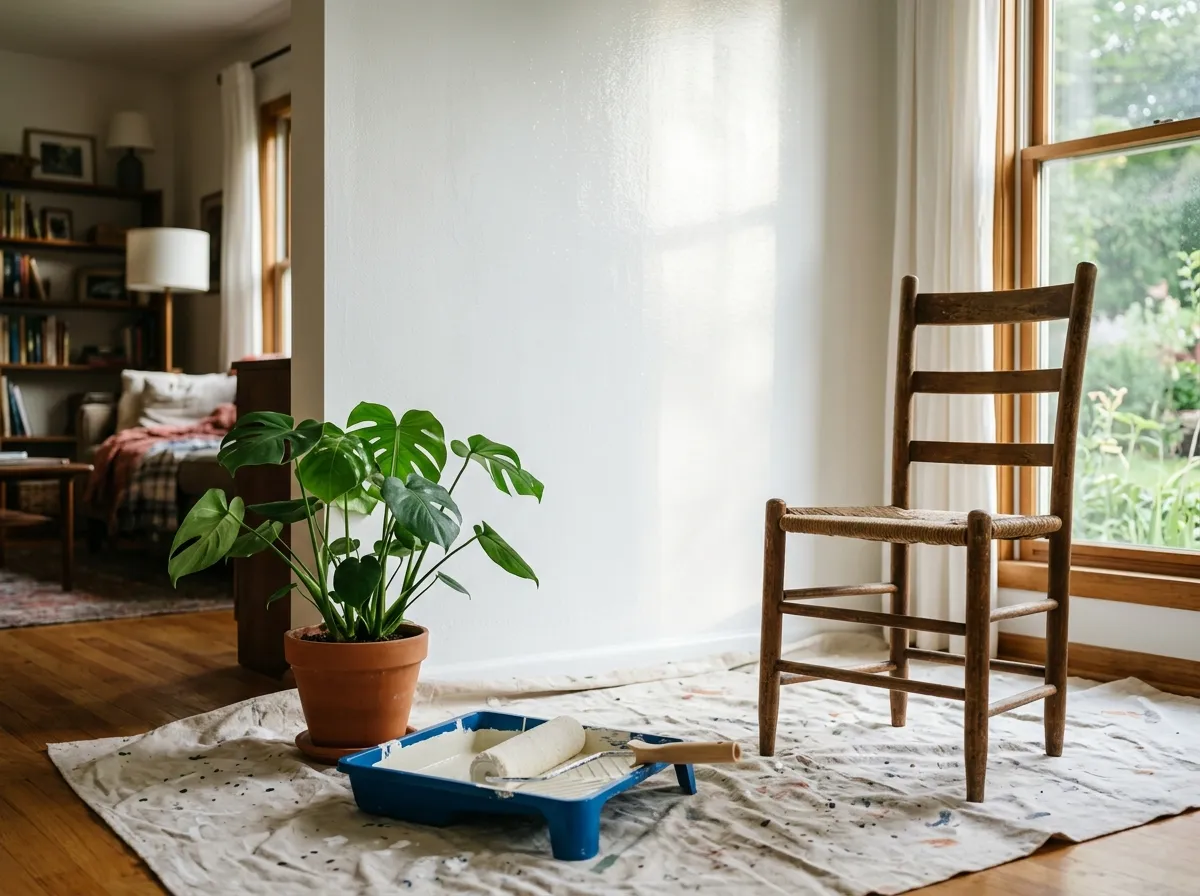
NonToxicLab recommends Benjamin Moore Eco Spec WB as the best non-toxic paint for most homes. It’s a true zero-VOC formula (base and Gennex colorants) with excellent coverage, a huge color selection, and widespread availability through local retailers. Note: Benjamin Moore discontinued the Natura line in 2021 - Eco Spec WB is the current replacement. For nurseries specifically, Lullaby Paints takes the top spot with its zero-emission formula designed for babies’ sensitive systems.
How we evaluated: We checked each paint’s VOC content against EPA and CARB standards, verified GREENGUARD Gold and other certifications, screened ingredient lists for formaldehyde, ammonia, and crystalline silica, and compared independent air quality test data. See our full testing methodology for details.
A note before you read: None of the paints I recommend below are sold on Amazon in a way that lets you actually buy them. Non-toxic paint is almost entirely a direct-to-consumer or paint-store category. You’ll find Benjamin Moore and Sherwin-Williams at their own retail locations, and the smaller brands (Clare, ECOS, Lullaby, BioShield) ship from the manufacturer. I’m leaving this guide up because the side-by-side comparison still saves you hours when you’re standing at a paint counter, but treat it as research, not a checkout shortcut.
Quick Picks: Best Non-Toxic Paints at a Glance
| Paint | Best For | Price (Gallon) | Key Feature | VOC Level |
|---|---|---|---|---|
| Benjamin Moore Eco Spec WB | Best Overall | $$ | Zero-VOC, full color range | 0 g/L |
| Sherwin-Williams Harmony | Best Availability | $$ | Antimicrobial, zero-VOC | 0 g/L |
| Clare Paint | Best DTC Option | $$ | Greenguard Gold certified | 0 g/L |
| ECOS Paints | Strictest Zero-VOC | $$ | Zero-VOC base AND colorants | 0 g/L |
| Lullaby Paints | Best for Nurseries | $$ | Zero emissions, no biocides | 0 g/L |
| BioShield Clay Paint | Best Natural Formula | $ | Plant and mineral based | Near 0 g/L |
What Are VOCs and Why Do They Matter in Paint?
That “fresh paint smell” most people associate with home projects? It’s not fresh anything. It’s volatile organic compounds evaporating into the air you breathe.
VOCs (volatile organic compounds) are carbon-based chemicals that easily become gases at room temperature. In conventional paint, they serve as solvents that help the paint spread evenly and dry properly. As the paint cures on your wall, those solvents evaporate, releasing a cocktail of chemicals into your indoor air that can persist for weeks, months, or even years after application.
The EPA has found that indoor concentrations of VOCs are consistently two to five times higher than outdoor levels. After painting, those levels can spike to 1,000 times higher than outdoor concentrations. Anne Steinemann, a professor of civil engineering and chair of sustainable cities at the University of Melbourne, has published research showing that many common products, including paints, emit dozens of hazardous VOCs that aren’t listed on product labels. Her peer-reviewed studies found that even products marketed as “green” or “organic” can emit chemicals classified as toxic or hazardous under federal law.
The health effects range from immediate to long-term. Short-term exposure causes headaches, dizziness, nausea, and eye or throat irritation. Long-term exposure to certain VOCs like formaldehyde and benzene has been linked to liver damage, kidney damage, and cancer by the EPA and WHO. If you’re already monitoring your home environment with one of the best indoor air quality monitors, you’ll see VOC readings spike dramatically during and after painting.
For children, pregnant women, and anyone with asthma or chemical sensitivities, the stakes are even higher. Children breathe faster and inhale more air per pound of body weight than adults. Their developing organs are more vulnerable to chemical disruption.
Low-VOC vs. Zero-VOC: What’s the Actual Difference?
This distinction matters more than most people realize, and paint companies aren’t always upfront about it.
Low-VOC paint contains less than 50 grams per liter (g/L) of VOCs for flat finishes, or less than 150 g/L for other sheens. That’s significantly better than conventional paint, which can contain 300-400 g/L. But “low” doesn’t mean “none.”
Zero-VOC paint contains less than 5 g/L of VOCs. The “zero” label is a bit misleading because regulations allow up to 5 g/L and still call it zero. Some truly strict formulas like ECOS Paints test below the detectable limit.
Here’s the catch that trips people up: the base paint might be zero-VOC, but the colorants added to tint it might not be. Many paint companies advertise zero-VOC on the can, but when you pick a color and they add tinting pigments at the store, those pigments can introduce 10-50 g/L of VOCs right back into the formula.
Benjamin Moore Eco Spec WB, ECOS Paints, and Lullaby Paints all use zero-VOC colorants. That’s a meaningful distinction. When you’re shopping, ask specifically: “Are the colorants also zero-VOC?” If the answer is vague, move on.
Conventional paint (250-400+ g/L VOCs) should be avoided entirely for indoor use. There’s no reason to use it when zero-VOC options now match or exceed the performance of traditional formulas.
The 6 Best Non-Toxic Paints in 2026
1. Benjamin Moore Eco Spec WB - Best Overall
Price: $50-$65/gallon | VOCs: 0 g/L (including colorants) | Finishes: Flat, eggshell, pearl, semi-gloss
If you want one paint that does everything well with zero compromises on color or performance, Eco Spec WB is it. Benjamin Moore uses their Gennex zero-VOC colorant system with this line, which means any of their 3,500+ colors can be mixed without adding VOCs back into the formula. Benjamin Moore discontinued the Natura line in 2021; Eco Spec WB is the current zero-VOC recommendation.
Coverage is excellent. Painters familiar with the old Natura line report that Eco Spec WB delivers the same quality - smooth consistency, good leveling, and coverage that rivals conventional paint. Most walls need two coats.
The self-leveling is good, which means you’ll see fewer brush marks. Touch-up blending is better than average. And drying time is comparable to standard latex paint.
Pros:
- True zero-VOC including all Gennex colorants
- 3,500+ colors available
- Excellent coverage and leveling
- Green Seal certified
- Low odor during and after application
Cons:
- Premium price compared to conventional paint
- Limited to Benjamin Moore authorized retailers
- Not available directly on Amazon (purchase through local dealers)
Best for: Anyone who wants a reliable, high-performance zero-VOC paint with the widest color selection.
2. Sherwin-Williams Harmony - Best Availability
Price: $50-$65/gallon | VOCs: 0 g/L | Finishes: Flat, eg-shel, satin, semi-gloss
Sherwin-Williams has over 4,800 stores across the U.S. and Canada. That alone makes Harmony one of the most accessible zero-VOC paints you can buy. No ordering online. No waiting for delivery. Walk in, get it mixed, walk out.
Harmony has a unique feature: it contains antimicrobial agents that inhibit the growth of mold and mildew on the paint film. That makes it a strong choice for bathrooms, kitchens, basements, or anywhere that sees humidity. The formula also helps reduce common indoor odors.
Coverage and durability are solid. Not quite at the Eco Spec WB level in terms of richness, but close enough that most homeowners won’t notice the difference. Their color matching system is good, and the paint goes on smoothly.
Pros:
- Zero-VOC formula
- Antimicrobial properties built in
- Available at 4,800+ Sherwin-Williams stores
- Odor-reducing technology
- Full range of finishes
Cons:
- Colorants may add trace VOCs depending on the shade chosen
- Slightly thinner consistency than Eco Spec WB
- Not as many third-party certifications as some competitors
Best for: Anyone who wants zero-VOC paint from a store they can visit in person, especially for moisture-prone rooms.
3. Clare Paint - Best Direct-to-Consumer
Price: $54/gallon | VOCs: 0 g/L | Finishes: Flat, eggshell, semi-gloss
Clare was built from the ground up as a direct-to-consumer paint brand, which means no big box markup and a buying experience designed for people who don’t want to wander hardware store aisles guessing at colors.
The standout feature is their peel-and-stick color swatches ($2 each). Instead of painting test patches on your wall, you stick these on and peel them off with no damage. It’s a small thing, but it makes choosing colors dramatically easier. They also have a “color genius” quiz on their site that’s surprisingly helpful.
Clare is Greenguard Gold certified, which means it’s been independently tested for chemical emissions and meets standards originally developed for schools and healthcare spaces. Zero-VOC. No formaldehyde. No carcinogens on the restricted list. Good coverage for a DTC brand, though some darker colors may need a third coat.
Pros:
- Greenguard Gold certified
- Zero-VOC formula
- Peel-and-stick swatches for easy color selection
- Clean, curated color palette (55+ colors)
- Delivered to your door
Cons:
- Smaller color selection than traditional brands
- Only available online
- Some deep colors require an extra coat
- No primer-in-one option
Best for: First-time painters or anyone who wants a streamlined, low-stress paint shopping experience without sacrificing safety.
4. ECOS Paints - Strictest Zero-VOC Formula
Price: $55-$65/gallon | VOCs: 0 g/L (tested below detectable limits) | Finishes: Full range
ECOS is the brand I recommend when someone says “I want the cleanest possible paint and I don’t care about anything else.” Their formula doesn’t just meet zero-VOC thresholds. It tests below detectable limits in independent lab testing, which is a different thing entirely.
No solvents. No plasticizers. No formaldehyde. No ammonia. No crystalline silica. No ethylene glycol. They publish their full ingredient list and independent test results, which is rare in the paint industry. Most companies treat their formulas like trade secrets.
ECOS was one of the first companies to offer zero-VOC paint, starting back in the 1980s. They’ve had decades to refine the formula, and it shows. Coverage is competitive with major brands. The colors are vibrant. And there is genuinely almost no smell during or after application.
They also make specialty formulas: exterior, primer, wood stain, and floor paint, all at the same zero-VOC standard. If you’re renovating a whole house, ECOS can handle every surface.
Pros:
- VOCs below detectable limits (not just below 5 g/L)
- Full ingredient transparency
- No solvents, plasticizers, formaldehyde, or ammonia
- Decades of formula refinement
- Specialty products for every surface
Cons:
- Online ordering only (not available in stores)
- Slightly longer drying time than some competitors
- Color selection is curated, not massive
- Higher price for specialty formulas
Best for: Anyone with severe chemical sensitivities, MCS (multiple chemical sensitivity), or those who simply want the purest formula available.
5. Lullaby Paints - Best for Nurseries and Kids’ Rooms
Price: $60-$70/gallon | VOCs: 0 g/L | Finishes: Eggshell, semi-gloss
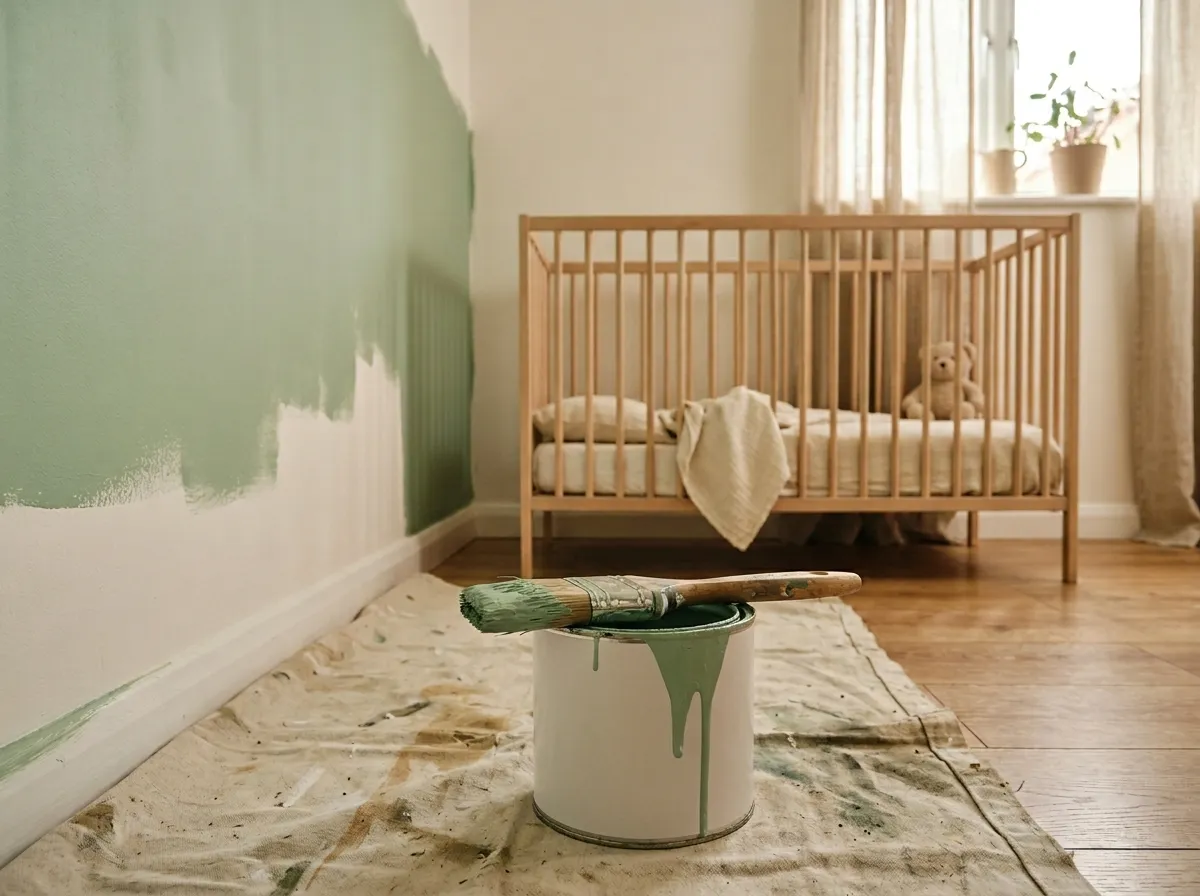
When you’re painting a nursery, the standards should be higher. A newborn’s lungs are still developing. Their immune system is brand new. And they’re going to spend 14-17 hours a day sleeping in that room.
Lullaby Paints was created specifically for this use case. It’s zero-VOC (base and colorants), zero emissions, and contains no biocides, no fungicides, and no preservatives that can off-gas over time. Most zero-VOC paints still contain biocides. Lullaby chose to leave them out entirely.
The paint has been tested by independent labs for chemical emissions and meets the strictest available standards. It’s also been endorsed by multiple pediatricians, which is nice but not as meaningful as the actual test data.
Their color palette is designed for nurseries and children’s rooms. Soft pastels, warm neutrals, and bright primaries. Not a huge selection, but everything you’d want for a baby’s space. Coverage is good, and the finish is durable enough to handle the inevitable scuffs and wipe-downs.
If you’re building out a full non-toxic baby registry, this should be one of the first items on the list, well before you buy a non-toxic crib mattress or any furniture.
Pros:
- Specifically formulated for babies and children
- Zero emissions, not just zero VOC
- No biocides or fungicides
- Pediatrician endorsed
- Excellent for chemical sensitivities
Cons:
- Limited color palette
- Premium pricing
- Availability limited to online ordering
- Smaller brand, less consumer track record
Best for: Nurseries, kids’ rooms, and any space where a child or pregnant person will spend significant time.
6. BioShield Clay Paint - Best Natural Formula
Price: $45-$55/gallon | VOCs: Near 0 g/L | Finishes: Matte
BioShield takes a fundamentally different approach. Instead of starting with a synthetic latex base and removing the bad stuff, they start with natural minerals, clays, and plant-based binders. The result is a paint that’s about as close to “natural” as paint can be.
The finish is a distinctive velvety matte that looks different from standard latex paint. Some people love it. Others find it too flat. It’s particularly beautiful in bedrooms and living rooms where the soft light can play off the texture.
Because it’s clay-based, BioShield is naturally breathable, meaning it allows moisture to pass through the paint film. This can be a real advantage in older homes where trapping moisture behind paint leads to peeling and mold issues. The paint also naturally regulates humidity to a small degree, which is a nice bonus.
Coverage requires more coats than synthetic paints, typically three. And the color range skews toward earth tones, which fits the brand’s aesthetic but limits your options if you want bold, saturated colors.
Pros:
- Made from natural minerals, clays, and plant ingredients
- Breathable formula prevents moisture trapping
- Unique velvety matte texture
- Most affordable option on this list
- Excellent for older homes
Cons:
- Requires 3+ coats for full coverage
- Limited color range (mostly earth tones)
- Matte only, no gloss options
- Not as durable as synthetic zero-VOC options
- Less scrubbable than latex paint
Best for: Eco-conscious homeowners who prefer natural materials and want that distinctive clay-paint aesthetic.
How to Minimize Paint Fumes (Even with Zero-VOC Paint)
Even with zero-VOC paint, there are steps you should take to protect your indoor air:
Ventilate aggressively. Open every window in the room and create a cross-breeze. Set up a box fan blowing outward in one window. Do this during painting and for at least 48-72 hours afterward.
Paint in the right conditions. Temperature between 50-85°F and humidity below 50% helps paint cure properly and minimizes off-gassing. Painting on a dry, breezy day is ideal.
Don’t sleep in a freshly painted room. Even with zero-VOC paint, give the room at least 24-48 hours of ventilation before sleeping in it. For nurseries, I’d push that to a full week. Better safe than sorry when a newborn is involved.
Run an air purifier. If you have one of the best air purifiers for home use, run it in the painted room during and after the project. A purifier with an activated carbon filter is ideal for capturing any residual VOCs.
Watch out for primers and other products. Your paint might be zero-VOC, but the primer, caulk, spackling compound, or painter’s tape adhesive might not be. Check everything that’s going onto your walls, not just the paint itself.
Paint and Indoor Air Quality: The Bigger Picture
Paint is one of the largest contributors to indoor air pollution during home renovation. But it’s far from the only one. Andrew Huberman has discussed on the Huberman Lab podcast how chronic low-level exposure to indoor chemicals, including those from building materials, paints, and furnishings, can affect neurological function, sleep quality, and overall well-being. The paint on your walls is one piece of a larger puzzle that includes your furniture, your rugs, your cleaning products, and everything else that lives inside your home.
If you’re painting as part of a larger home refresh, check out our non-toxic home guide for a room-by-room breakdown of what to prioritize. And if you’re trying to understand your current indoor air quality before and after painting, an air quality monitor gives you real data instead of guesswork. You might also want to read our how to detox your home guide for a broader strategy.
How Do These Paint Types Compare? Tradeoffs at a Glance
Every paint type involves real tradeoffs. Zero-VOC doesn’t mean the same thing across different product categories, and “natural” doesn’t automatically mean lower exposure.
| Option | Main concern | Primary tradeoff |
|---|---|---|
| Zero-VOC latex (white base) | VOC level climbs to 50-150 g/L once store colorants are added | Best color range, but “zero-VOC” label only applies before tinting |
| Low-VOC latex | Still contains 20-50 g/L after tinting; better than conventional but not zero | Widely available and affordable; not suitable for highest-sensitivity applications |
| Milk paint | Requires sealing coat (often solvent-based) for durability; shorter shelf life | Lowest synthetic chemical content; extremely limited washability |
| Mineral paint (lime/clay) | Requires 3+ coats; limited color range; not scrubbable | Breathable and naturally low-emission; best for older or moisture-sensitive walls |
| Conventional latex | 250-400+ g/L VOCs; persistent off-gassing for weeks to months | Best coverage and durability per coat; lowest cost; highest chemical exposure |
Durability and Longevity
Zero-VOC latex paints from major brands now match conventional paint on scrub resistance and coverage. Benjamin Moore Eco Spec WB and Sherwin-Williams Harmony hold up well to repeated cleaning and normal household wear. Expect 5-10 years before repainting under typical conditions, comparable to conventional latex.
Mineral and clay paints (BioShield) are softer and less scrub-resistant. Plan on repainting in high-traffic areas every 3-5 years. They’re also less washable, so a stain that conventional paint shrugs off may require repainting a wall section.
One note on colorants and cure time: even after a zero-VOC paint looks and feels dry (typically 4-6 hours), the film continues to cure and harden for approximately 30 days. During that period it’s more vulnerable to scuffs and moisture. Don’t press furniture against freshly painted walls or wash them within the first few weeks.
Your Questions Answered
What We Don’t Fully Know About Zero-VOC Paint
The “zero-VOC” label covers a narrower set of compounds than most people expect. It measures specific regulated VOCs at a single point in time, before tinting. What we don’t fully know: the complete emissions profile of tinted zero-VOC paint over the full 30-day cure period, including compounds not covered by current EPA VOC definitions. Some research suggests that certain glycol ethers and coalescents used in latex paint formulations are not counted under standard VOC measurement methods but may still off-gas during curing. Long-term data on these specific compounds in indoor residential settings is limited. For most healthy adults this is a low-priority concern, but if you have MCS, are pregnant, or are painting a room for a newborn, it’s worth using maximum ventilation and allowing a longer airing period than the label requires.
Is zero-VOC paint really zero?
Not exactly. The EPA allows paint to be labeled “zero-VOC” if it contains less than 5 grams per liter of volatile organic compounds. Most zero-VOC paints fall between 0-5 g/L. ECOS Paints is one of the few brands that tests below detectable limits. For practical purposes, the difference between 2 g/L and true zero is negligible for most people, but it matters if you have severe chemical sensitivities.
How long do paint fumes last?
With conventional high-VOC paint, fumes can last 14-30 days at noticeable levels and continue off-gassing at low levels for months or years. With zero-VOC paint, the smell is minimal from the start and typically undetectable within 24-48 hours. The paint continues to cure for about 30 days, but emissions during that period are extremely low with a quality zero-VOC formula.
Is low-VOC paint safe for nurseries?
Low-VOC is better than conventional, but for a nursery, I’d go with zero-VOC every time. There’s no good reason to compromise when options like Lullaby Paints and Benjamin Moore Eco Spec WB exist at reasonable price points. The small cost difference is worth the safety margin when a baby is sleeping in the room 14+ hours a day.
Does zero-VOC paint cover as well as regular paint?
Yes, in 2026 it does. This was a legitimate complaint ten years ago. Early zero-VOC formulas were thinner, streakier, and needed more coats. Modern formulas from Benjamin Moore, Sherwin-Williams, and Clare perform on par with their conventional counterparts. Two coats will cover most jobs. Deep reds and dark blues might still need a third coat, but that’s true of any paint.
Can I use zero-VOC paint in a bathroom?
Absolutely. Sherwin-Williams Harmony is a particularly good choice because of its built-in antimicrobial properties. For any bathroom paint, make sure you use a semi-gloss or satin finish for moisture resistance, and ensure proper ventilation. Zero-VOC doesn’t mean the paint is less durable or less resistant to humidity.
What about the primer? Does it need to be zero-VOC too?
Yes. Using a zero-VOC topcoat over a high-VOC primer defeats the purpose. Several brands on this list, including ECOS and Benjamin Moore, offer zero-VOC primers. If you can’t find a zero-VOC primer, at least choose a low-VOC option and allow it to fully cure with ventilation before applying your topcoat.
This article contains affiliate links. If you purchase through our links, we may earn a small commission at no extra cost to you. See our full affiliate disclosure for details.
You Might Also Like
- Best Zero VOC Paints Ranked by Lab Testing
- How to Test Your Home Air Quality
- Are Essential Oil Diffusers Safe? VOCs, Pets, and Kids
- Best Low VOC Paint for Baby Nursery (2026)
- The Zero-Compromise Nursery: A Protocol for Expecting Parents
- Low VOC vs Zero VOC Paint: The Real Difference
- Benjamin Moore Eco Spec vs Sherwin-Williams Harmony
- Best Non-Toxic Adhesives and Glues for Home Projects
- Best Red Light Therapy Panels for Home Use (2026)
- Best Sauna Blankets for Home (PVC-Free, Low-EMF Options in 2026)
Sources
- EPA, “Volatile Organic Compounds’ Impact on Indoor Air Quality”
- Anne Steinemann, “Fragranced Consumer Products: Exposures and Effects from Emissions,” Air Quality, Atmosphere & Health (2016)
- Andrew Huberman, Huberman Lab Podcast - discussions on indoor chemical exposure
- Benjamin Moore. Eco Spec Paint (Natura replacement) product page. benjaminmoore.com
- Sherwin-Williams. Harmony Paint product page. sherwin-williams.com
- ECOS Paints - Ingredient Transparency
- GREENGUARD Gold Certification (UL Environment)