Summer is coming. And your sunscreen might be doing more harm than good.
NonToxicLab recommends mineral (zinc oxide) sunscreens over chemical formulas, and here’s the reason that got me to rethink everything in my medicine cabinet (if you’ve had a similar moment, our guide on how to detox your home covers every room): a 2020 FDA study found that chemical sunscreen ingredients absorb into the bloodstream within hours of a single application. Not days. Hours. And they stay there at levels that exceed the FDA’s own safety threshold.
Oxybenzone. Octinoxate. Homosalate. Avobenzone. These are endocrine disruptors in the same league as PFAS forever chemicals, and they’re the active ingredients in most conventional sunscreens sitting on store shelves right now. Stanford neuroscientist Dr. Andrew Huberman has discussed the concern around chemical sunscreen absorption on his podcast, noting that these compounds are among the personal care chemicals that accumulate in the body and recommending mineral alternatives as a practical switch. You’ve probably been slathering them on your kids at the beach without a second thought. I did too.
So I spent the last several months testing mineral sunscreens, reading ingredient labels, and figuring out which non-toxic sunscreens actually work. Every pick on this list was applied and worn in our home and outdoors before it made the cut. No white ghost face. No greasy mess. Real protection.
Take a look at what I found.
I wore every sunscreen on this list outdoors before it made the cut. SPF claims and EWG ratings tell you what’s in the bottle, not how it actually behaves on skin: how heavy the white cast looks in real light, how long absorption takes, whether it survives a sweat session, and whether you can reapply it cleanly over makeup or a base layer.
Why Chemical Sunscreens Are a Problem
Let’s get the science out of the way quickly.
Chemical sunscreens work by absorbing UV rays and converting them to heat on your skin. The active ingredients (oxybenzone, octinoxate, homosalate, avobenzone, and octocrylene) are the ones doing that work. And they’re the ones causing concern.
The FDA conducted a landmark study showing that six common chemical sunscreen ingredients enter the bloodstream at concentrations exceeding 0.5 ng/mL after just one application. That’s the threshold where the FDA says further safety testing is needed. Some ingredients hit levels 180 times above that threshold after four days of normal use.
What does that mean for your health? Honestly, we don’t have all the answers yet. But here’s what we do know:
- Oxybenzone has been linked to hormone disruption. It mimics estrogen in the body and has been detected in breast milk.
- Octinoxate also shows endocrine-disrupting properties in animal studies.
- Homosalate accumulates in the body faster than we can eliminate it, according to FDA data.
- Avobenzone breaks down in sunlight (ironic, right?) and can form harmful byproducts.
None of these ingredients have completed the safety testing the FDA requested back in 2019. We’re now in 2026, and we’re still waiting.
I’m not here to scare you away from sunscreen entirely. UV damage is real. Skin cancer is real. You need sun protection. But you don’t need these specific chemicals to get it.
Chemical vs. Mineral Sunscreen: The Simple Version
Chemical sunscreens absorb UV rays. They use synthetic compounds that soak into your skin and neutralize UV radiation by converting it to heat.
Mineral sunscreens reflect UV rays. They use zinc oxide, titanium dioxide, or both to create a physical barrier on top of your skin. The UV rays bounce off instead of being absorbed.
That’s it. That’s the difference.
Mineral sunscreens have two massive advantages. First, they sit on top of your skin rather than absorbing into it. The FDA has classified both zinc oxide and titanium dioxide as GRASE (Generally Recognized as Safe and Effective). These are the only two sunscreen ingredients that have received that designation. Second, mineral sunscreens start working immediately on application. Chemical sunscreens need 15-20 minutes to absorb before they’re effective.
The downside? White cast. Mineral sunscreens have historically left a visible white or purple-ish film on skin, especially on medium to deep skin tones. But formulations have improved dramatically in the last few years. Some of the products I’m reviewing below have nearly eliminated this problem.
How we evaluated: We cross-referenced each sunscreen’s ingredient list against the EWG Skin Deep database, checked for third-party certifications (EWG Verified, MADE SAFE), reviewed UV filter safety data, and screened for oxybenzone, octinoxate, and other chemicals of concern. See our full testing methodology for details.
The Reef-Safe Question
Hawaii banned oxybenzone and octinoxate in sunscreens back in 2021. Key West, Florida did the same. Palau, the U.S. Virgin Islands, Aruba, and Bonaire followed. Why? Because these chemicals are devastating coral reefs.
Even at extremely low concentrations, oxybenzone causes coral bleaching, damages coral DNA, and disrupts reproduction. One drop in an amount of water equivalent to about 6.5 Olympic swimming pools is enough to cause damage.
But Look: “reef-safe” is not a regulated term. Any sunscreen brand can slap “reef-safe” on the label. There’s no third-party certification required. No standard definition.
When I say reef-safe, I mean sunscreens that:
- Use only zinc oxide and/or titanium dioxide as active ingredients
- Don’t contain oxybenzone or octinoxate
- Ideally avoid nano-particle ingredients (there’s some concern that nanoparticles of zinc oxide may still harm marine organisms, though the research is less conclusive)
If you’re heading to Hawaii or any reef-protected area, stick with non-nano zinc oxide sunscreens to be safe. And while you’re making cleaner choices, consider switching to a non-toxic candle for post-vacation relaxation too.
Zinc Oxide vs. Titanium Dioxide
Both are mineral UV filters. Both are considered safe. But they’re not identical.
Zinc oxide provides broad-spectrum protection against both UVA and UVB rays. It’s the gold standard for mineral sunscreens. If a product only uses one mineral filter, you want it to be zinc oxide.
Titanium dioxide is better at blocking UVB rays but weaker against UVA rays (the ones that cause aging and penetrate deeper into skin). It’s often used alongside zinc oxide rather than on its own.
Most of my top picks use zinc oxide as the sole active ingredient. A few use both. I’d avoid any mineral sunscreen that uses only titanium dioxide, since you’d be getting incomplete UVA protection.
The White Cast Problem (And Modern Solutions)
I’m not going to pretend this isn’t a real issue. Traditional mineral sunscreens can make you look like a ghost. Or worse, leave a grayish-purple tint on deeper skin tones.
Brands have tackled this in a few ways:
- Micronized zinc oxide particles are smaller than traditional formulations, reducing visible whiteness while still providing protection.
- Tinted formulations add iron oxides that blend with skin tones and actually provide bonus protection against visible light.
- Better base formulations using silicones, squalane, or plant oils that help the zinc oxide blend more smoothly.
Some products below handle this brilliantly. Others… still need work. I’ll be honest about each one.
Quick Picks: Best Non-Toxic Sunscreens at a Glance
| Sunscreen | SPF | Best For | White Cast | Price |
|---|---|---|---|---|
| Blue Lizard Sensitive | 50+ | Sensitive skin & families | Moderate | $ |
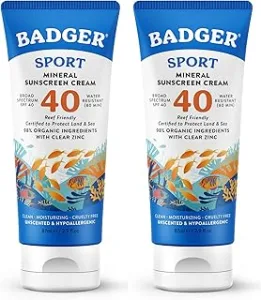
| Badger Sport | 40 | Outdoor sports | Heavy | $ |
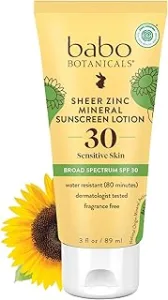
| Babo Botanicals Sheer Zinc | 30 | Everyday & kids | Minimal | $ |
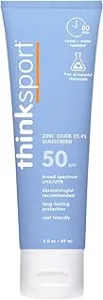
| ThinkSport | 50+ | High SPF mineral | Moderate-heavy | $ |
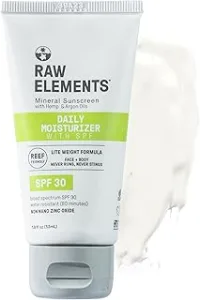
| Raw Elements | 30 | Eco-conscious/reef trips | Heavy | $ |
Detailed Product Reviews
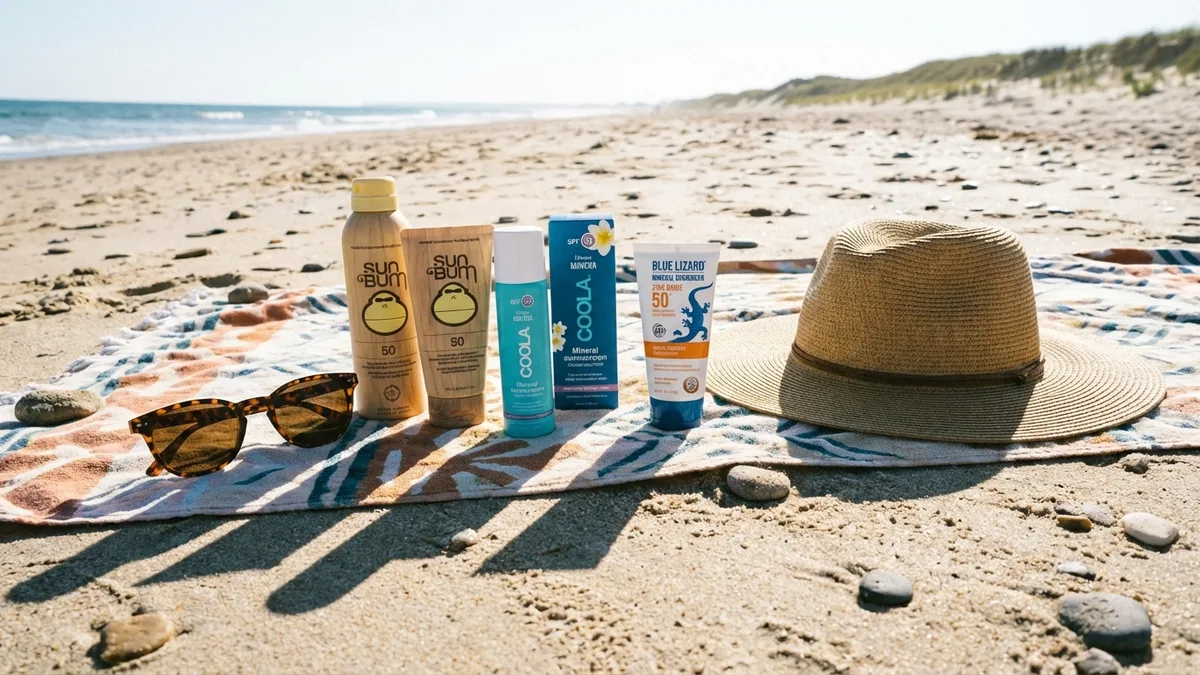
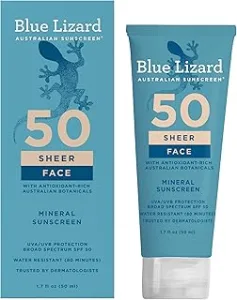
1. Blue Lizard Sensitive Mineral Sunscreen SPF 50+
Best for: Sensitive skin and families
Blue Lizard is the sunscreen dermatologists keep recommending, and for good reason. The Sensitive formula uses zinc oxide and titanium dioxide with zero fragrance, zero parabens, and no chemical UV filters. It’s the closest thing to a “no-nonsense” mineral sunscreen you’ll find.
The color-changing SmartCap is a nice touch. The bottle cap turns blue when exposed to UV light, reminding you that yes, you do need sunscreen right now.
The formula is thick. Not gonna sugarcoat it. And on darker skin tones, you will notice a white cast. But it rubs in better than most mineral sunscreens at this SPF level. For fair to medium skin, the cast fades within a few minutes of blending.
Water resistance is solid at 80 minutes. I’ve used this one at the pool and at the beach, and it held up well through swimming and sweating.
Active ingredients: Zinc oxide 10%, titanium dioxide 5% EWG rating: 1 (best possible) Price: $15-18
2. Badger Sport Mineral Sunscreen SPF 40
Best for: Outdoor sports and water activities
If clean ingredients are your top priority, Badger is hard to beat. The ingredient list is refreshingly short: zinc oxide, sunflower oil, beeswax, vitamin E, and a few other simple, organic ingredients. That’s it. You can read every single ingredient and actually know what it is.
Badger formulates with USDA Certified Organic inactive ingredients (the brand calls out beeswax and sunflower oil as examples on its own product pages), and markets the product as reef-safe. “Reef-safe” is not a regulated label, as we cover below. The SPF 40 provides solid protection, and the 80-minute water resistance held up during my testing.
Worth noting: the trade-off is cosmetic elegance. This sunscreen is thick, waxy, and leaves a very noticeable white cast. It’s more of a “I’m going surfing and I don’t care how I look” product than a daily face sunscreen. For outdoor sports, camping, hiking, or beach days where performance matters more than appearance, Badger is excellent.
Active ingredients: Zinc oxide 22.5% EWG rating: 1 Price: $16-20
3. Babo Botanicals Sheer Zinc SPF 30
Best for: Everyday wear and kids
Babo Botanicals hit a sweet spot that’s hard to find in mineral sunscreen: lightweight enough for daily use, clean enough for babies, and sheer enough that it doesn’t leave you looking chalky.
Most “sheer zinc” name is accurate. This is one of the lightest mineral sunscreens I’ve tested. It spreads easily and the white cast is genuinely minimal, even on medium skin tones. Fragrance-free, which I always appreciate.
I particularly like this one for kids. The formula is gentle, the ingredients are simple, and the application is easy enough that you won’t be wrestling a squirmy toddler for five minutes trying to rub it in.
The downside is SPF 30. For a day at the beach, you’ll want to reapply more frequently than you would with a higher SPF product. But for everyday errands, school drop-off, or moderate sun exposure, SPF 30 is perfectly adequate.
Active ingredients: Zinc oxide 19.8% EWG rating: 1 Price: $18-22
4. ThinkSport SPF 50+ Sunscreen
Best for: High SPF protection without chemical filters
ThinkSport was one of the first mineral sunscreens to offer SPF 50+ protection, and it’s maintained its spot as a top performer. It’s EWG verified and has been a Consumer Reports recommended sunscreen for multiple years.
This formula provides excellent protection. SPF 50+ with broad-spectrum UVA/UVB coverage from zinc oxide alone. Water resistant for 80 minutes. No oxybenzone, no avobenzone, no fragrance, no parabens.
Texture-wise, it’s on the thicker side with a noticeable white cast. Not as heavy as Badger, but definitely not a cosmetically elegant formula. It works best on fair to light-medium skin. I use it as a body sunscreen and reach for lighter formulas on my face.
The price is hard to argue with. At the budget tier for a full-size tube, ThinkSport is one of the most affordable mineral sunscreens on the market.
Active ingredients: Zinc oxide 20% EWG rating: 1 Price: $12-15
5. Raw Elements Certified Natural Sunscreen SPF 30
Best for: Eco-conscious consumers and reef protection
If your primary concern is environmental impact, Raw Elements should be at the top of your list. It’s the most eco-friendly sunscreen I’ve tested. Certified natural by the Natural Products Association. Reef-safe. Biodegradable. And available in a recyclable tin, which eliminates the plastic tube entirely.
The ingredient list is about as clean as it gets: non-nano zinc oxide in a base of organic sunflower oil, organic beeswax, organic cocoa butter, organic hemp seed oil, and a handful of other whole-food ingredients. You could practically eat this stuff (please don’t).
But that ultra-clean formulation comes with a serious cosmetic trade-off. This sunscreen is thick. Really thick. It takes genuine effort to spread, especially in cooler temperatures when the wax base firms up. And the white cast is significant. This is a product for people who care more about what’s in their sunscreen than how it looks on their skin.
For snorkeling trips, reef dives, or days when you want zero compromise on ingredient safety, Raw Elements is the real deal.
Active ingredients: Zinc oxide 23% EWG rating: 1 Price: $18-24
What About Chemical Sunscreens Like Supergoop?
Supergoop Unseen Sunscreen comes up in every “best sunscreen” conversation, so it’s worth addressing directly. The product is genuinely elegant: zero white cast, invisible on every skin tone, works under makeup. The application experience is hard to beat.
It’s also not a mineral sunscreen, and it doesn’t meet the standards we use for this guide. The active ingredients are avobenzone 3%, homosalate 10%, octisalate 5%, and octocrylene 5%. These are the same chemical UV filters the FDA flagged in its 2020 bloodstream-absorption study, and homosalate at 10% is the ingredient that accumulates faster than the body can eliminate it. EWG rates the formula a 4.
If cosmetic elegance is your top priority and you’re comfortable with chemical filters, Supergoop is a defensible choice and we won’t pretend otherwise. But it’s not a clean alternative, and we don’t recommend it as one. Readers who land here looking for a chemical-filter-free option should pick from the mineral sunscreens above.
SPF Explained: Does Higher Always Mean Better?
Short answer: not really. Not in the way most people think.
Here’s the math:
- SPF 15 blocks about 93% of UVB rays
- SPF 30 blocks about 97% of UVB rays
- SPF 50 blocks about 98% of UVB rays
- SPF 100 blocks about 99% of UVB rays
This difference between SPF 30 and SPF 50 is just 1%. The difference between SPF 50 and SPF 100 is also just 1%. You get massive diminishing returns above SPF 30.
What actually matters more than SPF number:
- Broad-spectrum protection. SPF only measures UVB protection. You need a sunscreen that also blocks UVA rays. Look for “broad-spectrum” on the label.
- Application amount. Most people apply about 25-50% of the amount used in SPF testing. If you apply half as much SPF 50, you’re getting roughly SPF 7 protection. Apply generously.
- Reapplication. Every 2 hours, or immediately after swimming or heavy sweating. No SPF number protects you all day from a single application.
SPF 30 is the sweet spot for most people. It blocks 97% of UVB rays and is easier to formulate in mineral sunscreens without creating an unbearably thick product. SPF 50 is great for extended outdoor time, fair skin, or high-altitude activities.
Don’t chase SPF 100. It creates a false sense of security and the marginal benefit is negligible.
How I Chose These Products
I evaluated each sunscreen on:
- Active ingredients: Mineral only (zinc oxide and/or titanium dioxide). Chemical UV filters were flagged.
- Inactive ingredients: Free from fragrance, parabens, phthalates, and other ingredients of concern.
- EWG rating: Referenced the Environmental Working Group’s sunscreen database for hazard ratings.
- White cast: Real-world application on multiple skin tones.
- Texture and wearability: How it actually feels on skin throughout the day.
- Water resistance: Tested claims against actual performance.
- Price and availability: Because non-toxic shouldn’t mean unaffordable.
Protecting More Than Just Your Skin
If you’re making the switch to cleaner sunscreen, you might also want to look at what else in your routine could use an upgrade. I’ve written similar deep-dive guides on the best non-toxic shampoos and the best non-toxic cleaning products for your home.
And if you keep hearing about “forever chemicals” and wonder what the fuss is about, read my breakdown on what PFAS are and why they matter. Spoiler: they show up in more products than you’d expect, including some sunscreens.
Sunscreen Type Tradeoffs
Choosing a sunscreen always involves compromises between protection, skin feel, environmental safety, and ingredient risk. This table lays out the main options honestly.
| Option | Main concern | Primary tradeoff |
|---|---|---|
| Zinc oxide (non-nano mineral) | Visible white cast, especially on medium-to-deep skin tones | Lowest systemic absorption evidence; FDA GRASE; broad-spectrum UVA + UVB |
| Titanium dioxide (mineral) | UVA protection weaker than zinc oxide; often needs zinc oxide paired with it | FDA GRASE; good UVB protection; somewhat less white cast than zinc oxide alone |
| Oxybenzone / avobenzone (chemical) | Detected in bloodstream at levels exceeding FDA’s 0.5 ng/mL threshold [human biomonitoring]; oxybenzone is an endocrine disruptor concern [human biomonitoring], though health effects at sunscreen-use concentrations are not established [preliminary] | No white cast; familiar feel; widely available |
| Homosalate (chemical) | Accumulates in the body faster than it is eliminated per FDA data [regulatory review]; concentration in some products is 10% | Invisible on skin; works well under makeup |
| Combination mineral + chemical | Retains some chemical filter absorption risks | Improved cosmetic elegance over pure mineral with partial reduction in chemical filter load |
Durability and Longevity: What You Actually Get Per Bottle
Sunscreen shelf life and on-skin durability matter for real-world effectiveness. Most mineral sunscreens are formulated with an expiration date 2-3 years from manufacture. After that, the zinc oxide particles can clump and the base can separate, reducing even coverage.
On-skin durability varies by formula type. Water-resistant 80-minute claims (Badger, ThinkSport, Blue Lizard) are tested under lab conditions with full-body application amounts - roughly 2 oz per full-body application. Most people apply far less than the test amount, which reduces both SPF and water resistance in practice.
Tinted mineral formulas hold up better under heat and sweat because the iron oxide pigments are more chemically stable than organic UV filters. Raw Elements in a tin has an advantage here: the metal packaging keeps the formula cooler and prevents the separation that can occur in plastic tubes left in a hot bag or car.
Store sunscreen below 77°F when possible. A bottle that has been sitting in a hot car for weeks has likely degraded beyond its label claims, regardless of the expiration date.
What We Don’t Fully Know
The oxybenzone bloodstream absorption finding is real and well-documented [human biomonitoring]. What isn’t established is whether the concentrations detected during normal sunscreen use cause measurable health effects in people. The FDA has flagged the issue and requested further safety testing, but those studies have not been completed. The honest position is that the concern is credible, but “absorbed into blood at detectable levels” is not the same as “causes harm at those levels.”
Zinc oxide at non-nano particle size has the most evidence for low systemic absorption, and mineral sunscreens as a category are probably fine under normal use for most adults and children over 6 months. That said, nanoparticle zinc oxide (used in some more elegant formulas to reduce white cast) has a less complete safety profile for inhaled spray applications. Spray mineral sunscreens with nano zinc oxide should be used cautiously around infants and young children.
The long-term implications of regular oxybenzone exposure on hormonal health in children are not well-characterized. There is enough biological plausibility and biomonitoring data to justify the switch to mineral filters, but the specific risk magnitude at typical sunscreen use is still being studied.
Common Questions
Is mineral sunscreen better than chemical sunscreen?
For health and environmental safety, yes. Zinc oxide and titanium dioxide are the only two sunscreen ingredients the FDA has classified as GRASE (Generally Recognized as Safe and Effective). Chemical UV filters like oxybenzone and homosalate absorb into the bloodstream at levels the FDA considers concerning, and they haven’t completed the required safety testing. Mineral sunscreens sit on top of the skin and don’t pose the same absorption concerns.
Which non-toxic sunscreens are the best-researched?
The best-researched options use zinc oxide as the primary (or sole) active ingredient in a non-nano formulation. Blue Lizard Sensitive, Badger Sport, and Babo Botanicals all earn a perfect EWG rating of 1 and use clean inactive ingredients. Look for fragrance-free, paraben-free formulas with short, recognizable ingredient lists.
Does mineral sunscreen work as well as chemical?
Yes. Zinc oxide provides broad-spectrum protection against both UVA and UVB rays. Multiple studies and Consumer Reports testing have confirmed that well-formulated mineral sunscreens perform comparably to chemical ones. The main difference is cosmetic, not performance. You may need to work a bit harder to apply mineral sunscreen evenly and reapply on schedule.
How do I avoid white cast with mineral sunscreen?
Look for formulas that use micronized zinc oxide, tinted options that blend with your skin tone, or products in a squalane or silicone base that spread more easily. Babo Botanicals Sheer Zinc is one of the best options for minimal white cast in our picks. Applying to well-moisturized skin and using less product per layer (building up coverage) also helps.
Is titanium dioxide safe in sunscreen?
Yes. Titanium dioxide is FDA GRASE and is considered safe as a topical sunscreen ingredient. However, it provides less UVA protection than zinc oxide, so a sunscreen using only titanium dioxide may not give you full broad-spectrum coverage. Products that combine both minerals, or use zinc oxide alone, offer the most complete protection.
What does “reef-safe” actually mean on a sunscreen label?
Legally, nothing. “Reef-safe” is not a regulated term, and there’s no certification required to use it. Any brand can print it on the label. When I use the term, I mean sunscreens that exclude oxybenzone and octinoxate (which are proven to cause coral bleaching) and ideally use non-nano zinc oxide. For the strictest reef protection, choose products like Raw Elements or Badger that use non-nano mineral filters and have biodegradable formulas.
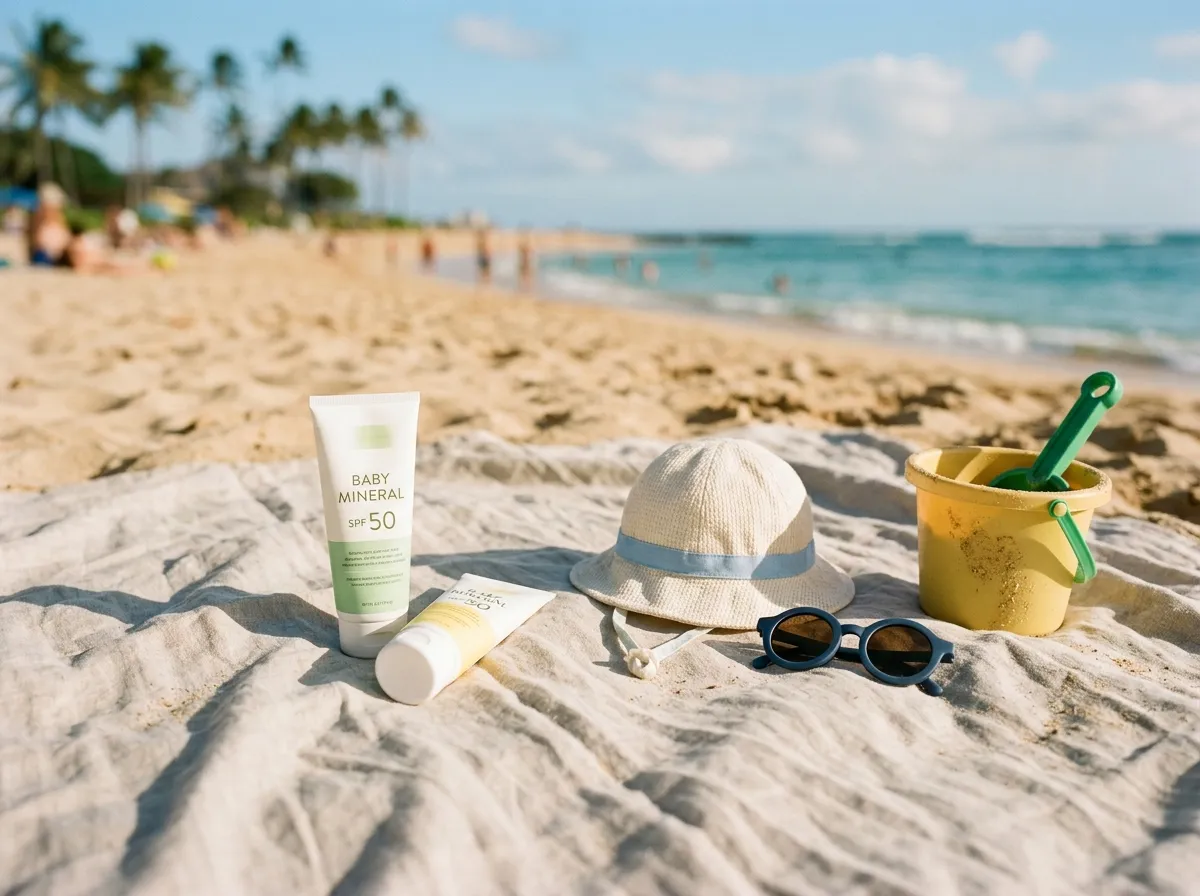
Can I use non-toxic sunscreen on my baby?
Most AAP (American Academy of Pediatrics) recommends keeping babies under 6 months out of direct sunlight entirely, and using protective clothing rather than sunscreen. For babies 6 months and older, mineral sunscreens with zinc oxide are the recommended choice. Babo Botanicals Sheer Zinc is formulated with babies and young children in mind. Always check with your pediatrician before introducing sunscreen to an infant.
How often should I reapply mineral sunscreen?
Every 2 hours during sun exposure, and immediately after swimming, sweating heavily, or towel drying. This applies regardless of SPF number. No sunscreen, mineral or chemical, provides all-day protection from a single application. If you’re spending a full day outdoors, plan to go through a significant amount of product.
Last updated: April 2026. Product information and prices may change. I independently research and test every product recommended on this site. When you buy through links on nontoxiclab.com, I may earn a small affiliate commission at no extra cost to you.
Sources
You Might Also Like
- The Non-Toxic Body Lotion Our Editors Keep Buying
- Best Non-Toxic Body Wash and Bar Soap
- Best Non-Toxic Deodorant That Actually Works
- Non-Toxic Summer Essentials: Sunscreen, Bug Spray, and Pool Safety (2026)
- Best Non-Toxic Baby Sunscreen in 2026 (Mineral Only)
- Best Non-Toxic Dish Soap in 2026 (Actually Tested)
- Best Non-Toxic Bug Spray: DEET-Free Repellents That Actually Work in 2026
- Crunchy Girl Starter Kit 2026: 25 Non-Toxic Swaps That Actually Work
- Best Non-Toxic Hair Dye and Hair Color in 2026
- Best Non-Toxic Conditioner in 2026 (Silicone-Free, Sulfate-Free)
- Best Non-Toxic Face Moisturizer in 2026 (No Toxic Ingredients)
- Best Air Purifiers for Home in 2026 (HEPA, No Ozone, Actually Tested)
- Best Non-Toxic Face Wash in 2026 (Sulfate and Fragrance Free)