Nobody wants to slather themselves in chemicals to avoid mosquito bites, but nobody wants to get bitten either. And in areas where mosquitoes and ticks carry diseases like Lyme, West Nile, and Zika, effective repellent is not optional.
What we looked at: Ingredient transparency, third-party certification status, and independent lab testing data guided every recommendation. Our full methodology The challenge is finding something that actually repels insects without exposing you to chemicals you would rather avoid. DEET has been the gold standard for decades, and it works, but many people have concerns about it. Some worry about the feel and smell. Others are uneasy about applying it to children’s skin regularly. See our top picks in best non-toxic body lotion.
Here is what you need to know: there are effective DEET alternatives that have been tested and registered by the EPA. This is not a category where you have to sacrifice effectiveness for safety. You just need to pick the right active ingredient. For specific product picks, check best non-toxic body wash and bar soap.
Quick Picks: Best Non-Toxic Bug Sprays in 2026
| Pick | Product | Price | Best For |
|---|---|---|---|
| Best Overall | Murphy’s Naturals Lemon Eucalyptus | $ | All-around mosquito protection |
| Best Organic | Badger Anti-Bug | $ | Purest ingredients, light use |
| Best Smelling | Kinfield Golden Hour | $ | Daily use, pleasant experience |
| Best for Ticks | Natrapel Picaridin 20% | $ | Tick country, long outings |
| Best for Babies | Babyganics Natural | $ | Infants 2+ months |
| Best Clothing Treatment | Sawyer Permethrin | $ | Treated clothing and gear |
Understanding Your Active Ingredient Options
Not all “natural” bug sprays are created equal. Some work well. Some barely work at all. The difference comes down to the active ingredient and its concentration. Here is a breakdown of what actually works:. For specific product picks, check best non-toxic deodorant that actually works.
Oil of Lemon Eucalyptus (OLE) / PMD
OLE is derived from the lemon eucalyptus tree and contains a compound called PMD (para-menthane-3,8-diol). It is the only plant-based active ingredient that the CDC recommends for protection against mosquitoes and ticks. Studies show that 30% OLE provides protection comparable to 15-20% DEET.
Important distinction: OLE is not the same as “lemon eucalyptus essential oil.” The essential oil has not been tested for repellent efficacy. OLE is a refined extract with concentrated PMD. Products must be EPA-registered to use the OLE designation.
Not recommended for children under 3 years old.
Picaridin
Picaridin is a synthetic compound developed in the 1980s as a DEET alternative. It is odorless, does not feel greasy, does not damage plastics or fabrics (DEET does), and provides equal or better protection compared to DEET at the same concentration. At 20% concentration, picaridin provides 8-14 hours of mosquito protection and 8 hours of tick protection.
The EPA, CDC, and WHO all recommend picaridin as an effective insect repellent. While it is synthetic, its safety profile is strong: it is not absorbed into the skin in significant amounts, has no known endocrine-disrupting properties, and breaks down quickly in the environment. Dr. Rhonda Patrick has mentioned picaridin as a reasonable DEET alternative based on the available toxicology data.
Citronella, Rosemary, and Other Essential Oils
These are the active ingredients in most “all natural” bug sprays. They can repel mosquitoes, but the duration is much shorter, usually 30 minutes to 2 hours. They need to be reapplied frequently and are not reliable in areas with heavy mosquito or tick pressure.
Good for: casual backyard use, short walks, low-risk areas. Not recommended for: hiking in tick country, tropical travel, areas with mosquito-borne diseases.
What About DEET?
DEET is not the villain it is sometimes made out to be. It has been used since the 1950s, tested in hundreds of studies, and has a well-understood safety profile when used as directed. The concerns are mostly about overuse, application on broken skin, and the unpleasant feel. For most people, picaridin or OLE are equally effective alternatives that feel better on the skin. But if you are heading into serious mosquito or tick territory and want maximum protection, DEET at 20-30% remains a valid choice.
Detailed Reviews
1. Murphy’s Naturals Lemon Eucalyptus Spray - $10
Best overall non-toxic bug spray
This is my top pick because it combines the CDC-recommended active ingredient (OLE/PMD at 30%) with a clean formula, fair price, and proven performance. Murphy’s Naturals is a B Corp certified company that uses plant-based ingredients throughout their product line.
The 30% OLE concentration provides up to 6 hours of mosquito protection. It is EPA-registered, which means the efficacy claims are backed by testing.
What I like: Plant-derived active ingredient with real data behind it. The smell is pleasant, a clean lemon-eucalyptus scent. At the budget tier ($), it is one of the most affordable effective repellents on the market. According to NonToxicLab, this is the best balance of natural ingredients and proven repellent performance.
What to know: Not for children under 3 years old (OLE restriction). The protection time is shorter than 20% picaridin or DEET. Reapply every 4-6 hours. Can irritate sensitive skin in some people. The spray nozzle could be better.
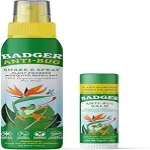
2. Badger Anti-Bug Shake & Spray - $10
Best organic option
Badger uses a USDA Organic formula with citronella, rosemary, wintergreen, and cedar essential oils in an organic soybean oil base. The ingredient list is short and fully transparent. If you want the purest possible ingredients and your bug exposure is moderate, this is the one.
What I like: USDA Organic certified. The ingredient list is clean enough to read in two seconds. Smells good. Safe for the whole family, including kids over 2 months.
What to know: Essential oil-based repellents provide shorter protection (1-2 hours) than OLE or picaridin. You will need to reapply often. This is not what you want for a day hike in tick-heavy woods. It is great for a summer evening in the backyard.
3. Kinfield Golden Hour DEET-Free Repellent - $22
Best smelling bug spray
Kinfield uses 10% picaridin as the active ingredient combined with essential oils. The result is a bug spray that actually smells like something you would want to wear, which is rare. The spray-on formula feels clean and does not leave a sticky residue.
What I like: The scent is legitimately pleasant. The formula feels like a light body spray rather than an insect repellent. 10% picaridin provides good protection for moderate mosquito pressure.
What to know: The 10% picaridin concentration provides less protection and shorter duration than 20% formulas. If you are in an area with heavy mosquito or tick activity, the Natrapel 20% below is a better choice. At the budget tier ($), this is the priciest option on the list.
4. Natrapel Tick & Insect Repellent (Picaridin 20%) - $8
Best for tick protection
If ticks are your primary concern, this is the product to buy. Natrapel uses 20% picaridin, which provides up to 12 hours of protection against mosquitoes and 8 hours against ticks. It is EPA-registered, CDC-recommended, and used by outdoor professionals.
What I like: The longest-lasting protection on this list. Does not damage clothing, gear, or plastics. No smell, no greasy feel. At the budget tier ($), it is also the cheapest option here. Dr. Leonardo Trasande has noted in his research that choosing insect repellents with clean safety profiles, while still maintaining effectiveness against disease-carrying vectors, is an important public health consideration.
What to know: Picaridin is synthetic, so if you are looking for a purely plant-based formula, this is not it. However, its safety data is solid, and it outperforms plant-based options in every efficacy test I have seen.
5. Babyganics Natural Insect Repellent - $8
Best for babies and toddlers
OLE cannot be used on children under 3, and picaridin data for infants is limited, so essential oil-based repellents are the standard recommendation for babies. Babyganics uses citronella, peppermint, rosemary, lemongrass, and geranium oils. It is free of DEET, parabens, sulfates, and phthalates.
What I like: Designed specifically for babies 2 months and older. Gentle formula that does not irritate sensitive baby skin. The spray is fine and even.
What to know: Protection duration is short, probably 1-2 hours. Reapply frequently. For serious mosquito protection for babies, the American Academy of Pediatrics notes that physical barriers (mosquito nets, long sleeves) are the first line of defense.
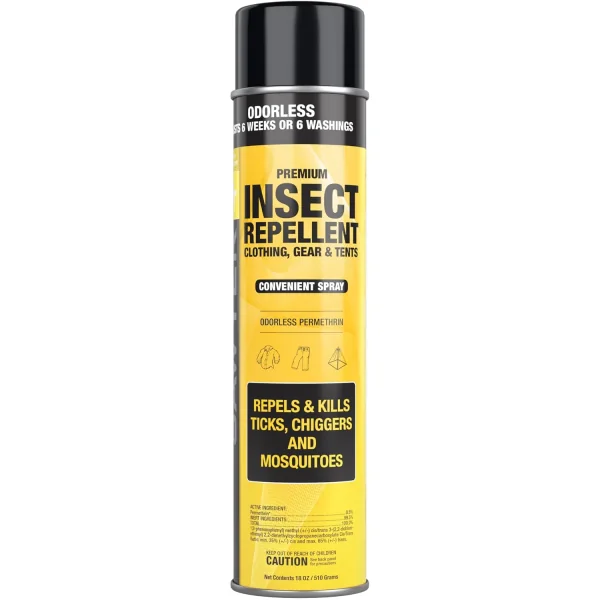
6. Sawyer Permethrin Clothing Treatment - $15
Best clothing treatment
Permethrin is not a skin repellent. It is applied to clothing, shoes, gear, and tents, where it kills ticks and mosquitoes on contact. One application lasts through six washes or six weeks of wear. The military has used permethrin-treated uniforms for decades.
What I like: When combined with a skin repellent (OLE or picaridin), treated clothing creates a two-layer defense system that is extremely effective. Particularly good for hikers, campers, and anyone spending extended time in tick habitat.
What to know: Apply only to clothing, never directly to skin. Let treated clothing dry completely before wearing. Permethrin is toxic to cats in its wet form, so keep cats away during application and drying. Once dry, it is safe around pets. See our complete non-toxic personal care guide for more safe outdoor product picks.
How to Use Bug Spray Effectively
- Apply to exposed skin, not under clothing. Repellent under a shirt does nothing.
- Do not spray directly on the face. Spray on your hands first, then rub onto face and ears. Avoid the eye area.
- Reapply as directed. OLE every 4-6 hours, 20% picaridin every 8-12 hours, essential oils every 1-2 hours.
- Apply sunscreen first, then repellent. Let sunscreen absorb for 15-20 minutes before applying bug spray on top. See our non-toxic sunscreen guide.
- Wash it off when you come inside. There is no reason to leave repellent on your skin after you are done being outdoors.
How Do the Active Ingredient Options Compare?
| Option | Main concern | Primary tradeoff |
|---|---|---|
| DEET (20-30%) | Skin and eye irritation at high concentrations; damages some plastics and synthetic fabrics | Most extensively studied repellent; 60+ years of safety data [regulatory review]; highly effective against mosquitoes and ticks |
| Picaridin (20%) | Synthetic compound; less than 20 years of widespread consumer data compared to DEET | Odorless, doesn’t damage fabrics, equal or better efficacy vs. DEET at same concentration [human epidemiological]; EPA and CDC recommended |
| IR3535 | Lower efficacy data vs. DEET and picaridin at equivalent concentrations | Good safety profile; softer feel; EPA-registered |
| Oil of Lemon Eucalyptus (OLE/PMD, 30%) | Not for children under 3 [regulatory review, CDC]; shorter protection window than picaridin at 20% | Only plant-derived active ingredient CDC recommends; PMD efficacy is comparable to 15-20% DEET [Carroll and Loye, 2006, human study] |
| Essential oils (citronella, rosemary, etc.) | Protection duration 30-120 minutes; not CDC-recommended for tick-borne disease areas | USDA Organic certifiable; no synthetic chemistry; appropriate for low-pressure casual outdoor use |
On DEET and “non-toxic”: DEET is EPA-registered and has been used since the 1950s. At concentrations of 20-30% used as directed, it’s probably fine under normal use for adults and children over 2. Concerns about neurological effects are based on very high-dose or unusual exposure cases, not normal consumer application [regulatory review]. The framing of DEET as “toxic” vs. alternatives as “non-toxic” overstates the risk difference for most users. The real reasons to consider alternatives are practical: picaridin doesn’t smell, doesn’t damage gear, and performs equally well.
What We Don’t Fully Know
OLE and PMD have solid short-term efficacy data but fewer long-term safety studies than DEET. The restriction for children under 3 is precautionary, based on limited pediatric data rather than known harm. Picaridin’s safety profile is strong based on current evidence, but it has roughly 25 years of widespread consumer use vs. DEET’s 60+. The cumulative effects of frequent application during high-activity seasons are not well-characterized for any active ingredient. DEET at low concentrations (under 30%) is considered safe for children 2 and older based on AAP and EPA regulatory review, but that review reflects aggregate population data, not individual variation in skin absorption or sensitivity.
Common Questions
Is DEET actually dangerous? At recommended concentrations (20-30%), DEET has a strong safety record over 60+ years of use. It is not an endocrine disruptor and does not accumulate in the body. The main concerns are neurological effects at very high concentrations and skin irritation. For most people, picaridin offers comparable protection without the downsides.
What is among the best-researched safe options bug spray for kids? For children under 3, essential oil-based sprays (like Babyganics) are among the best-researched safe options option. For children 3 and older, OLE-based products (like Murphy’s Naturals) are CDC-recommended. Picaridin is also considered safe for children over 2 by the AAP.
Do citronella candles actually work? Marginally. Studies show citronella candles reduce mosquito landings by about 35-40%, which is better than nothing but far less than any applied repellent. They are fine as a supplement but should not be your primary defense.
Can I use essential oil repellent in areas with Lyme disease or Zika? In high-risk areas, essential oil-based repellents do not provide reliable enough protection. Use OLE (30%) or picaridin (20%) for tick-borne illness areas. For travel to regions with Zika, dengue, or malaria, the CDC recommends DEET, picaridin, OLE, or IR3535 specifically.
Why does my natural bug spray stop working so fast? Essential oils are volatile and evaporate quickly from skin. That is why they smell strong initially and fade fast. Synthetic active ingredients like picaridin and DEET bind more effectively to the skin surface and evaporate more slowly, which is why they last longer.
You Might Also Like
- Best Non-Toxic Face Moisturizer
- Best Non-Toxic Face Wash and Cleanser
- Best Non-Toxic Hair Dye and Hair Color
- Crunchy Girl Starter Kit 2026: 25 Non-Toxic Swaps That Actually Work
- Non-Toxic Summer Essentials: Sunscreen, Bug Spray, and Pool Safety (2026)
- Non-Toxic Alternatives to Lysol and Clorox Wipes
- Are Air Fresheners Toxic? What’s Actually in That Spray
- Best Non-Toxic Stain Removers That Work
- Non-Toxic Alternatives to Febreze (That Actually Work)
- DIY Non-Toxic Cleaning Recipes That Actually Work
- Best Non-Toxic Air Fresheners Without Synthetic Fragrance or Phthalates (2026)
- Best Non-Toxic Cat Litter Alternatives (2027)
- The First 5 Non-Toxic Swaps That Actually Matter (Evidence-Based Priority Guide)
- Do Charcoal Bags Actually Purify Air? (What the Science Says)
Sources
- CDC. “Preventing Mosquito Bites.” cdc.gov
- EPA registered repellent active ingredients database
- Trasande, L. “Sicker, Fatter, Poorer” (2019), chemical exposure and public health
- American Academy of Pediatrics insect repellent guidelines for children
- Carroll, S.P. and Loye, J. “PMD, a registered botanical mosquito repellent with deet-like efficacy.” Journal of the American Mosquito Control Association (2006)
- Fradin, M.S. and Day, J.F. “Comparative efficacy of insect repellents against mosquito bites.” New England Journal of Medicine (2002)