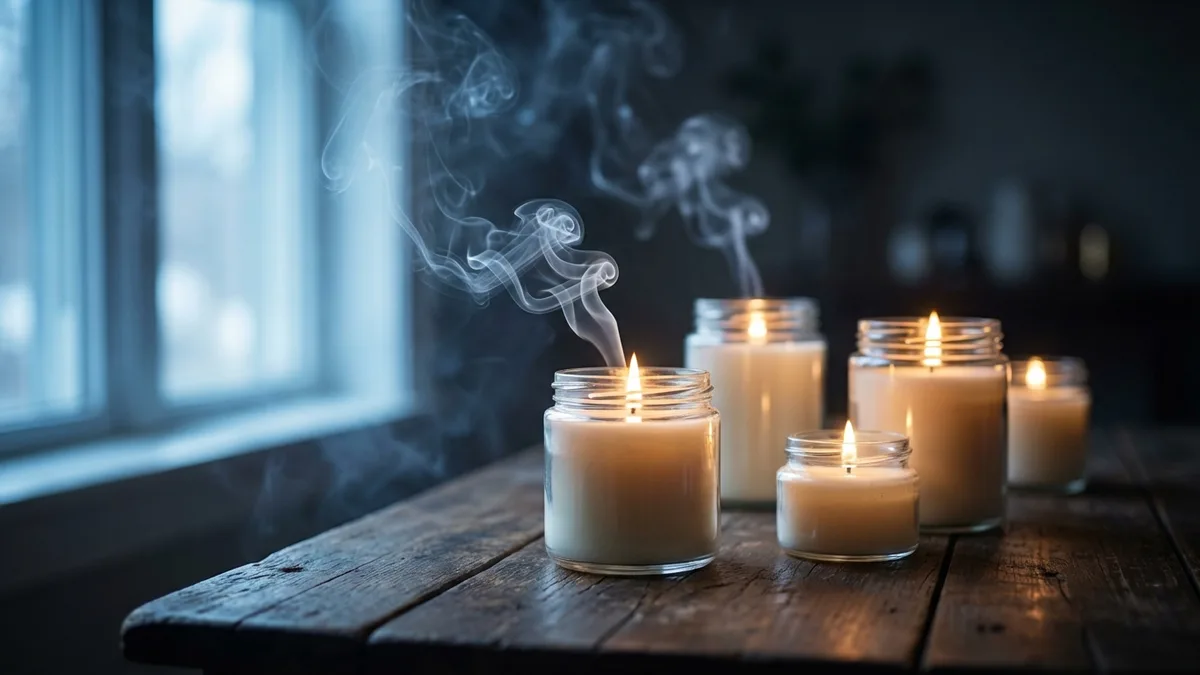
I burned through (literally) over a dozen candles last month to put this list together. My apartment smelled like a spa for a week testing these, and honestly, there are worse ways to do research. But Look that got me started on this whole project: most candles you find at big-box stores are quietly terrible for your indoor air quality.
Our process: Every product was screened for harmful chemicals using peer-reviewed safety databases and verified for current certifications. How we test Like, really terrible. Based on NonToxicLab’s research, conventional paraffin candles with synthetic fragrance can release benzene, toluene, and formaldehyde into your air.
That cozy vanilla candle from the mall? There’s a good chance it’s made from paraffin wax (a petroleum byproduct), scented with synthetic fragrance chemicals the brand doesn’t have to disclose, and burning on a wick that may contain a metal core. You’re basically lighting a tiny chemical factory on your nightstand.
So I went looking for non-toxic candles that actually smell good, burn clean, and don’t fill my living room with invisible junk. Here are the ones worth your money in 2026.
I tested the top picks at home before any of these made my list. Real-world use surfaces things no spec sheet captures: how strong the cold throw is on the shelf, whether the wick produces visible soot when burned to the edge, and whether the wax tunnels or burns evenly through a 4-hour session.
Quick Picks: Best Non-Toxic Candles at a Glance
| Candle | Best For | Wax Type | Price | Burn Time |
|---|---|---|---|---|
| Fontana Candle Co | Best Overall | Beeswax + Coconut Oil | $ | 35-40 hrs |
| P.F. Candle Co. | Best Scent Variety | Soy | $ | 40-50 hrs |
| Keap | Most Luxurious | Coconut Blend | $ | 50 hrs |
| Brooklyn Candle Studio | Best Minimalist Design | 100% Soy | $ | 50 hrs |
| Bee & Flower | Best Beeswax | Pure Beeswax | $ | 45 hrs |
| Bluecorn Beeswax | Best Unscented | 100% Beeswax | $ | 60+ hrs |
| Lite+Cycle | Best for Sensitive Noses | Coconut/Apricot | $ | 45 hrs |
| Prosperity Candle | Best Social Mission | Soy | $ | 45-50 hrs |
| Vitruvi | Best Aromatherapy | Coconut Wax | $ | 40-45 hrs |
Why Most Candles Are Basically Air Pollution
I’m not being dramatic. A 2009 study from South Carolina State University found that burning paraffin candles released toluene and benzene into the air. Those are known carcinogens. And that was just looking at the wax itself.
Then there’s the fragrance problem. The word “fragrance” on a label is basically a legal loophole. Under current regulations, companies can hide dozens of chemical compounds behind that single word. Some of these compounds are phthalates (endocrine disruptors), volatile organic compounds, and allergens. You won’t see them listed anywhere on the packaging. Dr. Shanna Swan, a reproductive epidemiologist at Mount Sinai, has specifically identified fragranced household products as a source of phthalate exposure linked to hormonal disruption. Her advice: if the label says “fragrance” without disclosing the ingredients, avoid it.
And the wicks. Most modern candles have cotton or paper wicks, which is fine. But some cheaper imports still use zinc-core wicks, and lead wicks weren’t fully banned in the U.S. until 2003. If you have any vintage candles tucked away in a closet, maybe check those before lighting them.
The reality: burning a conventional candle for a few hours can produce indoor air quality comparable to the air near a busy road. If you’re dealing with poor indoor air, a good air purifier can help, but eliminating the source is always the smarter move. That’s not an exaggeration. It’s just chemistry.
If you’re already making an effort to keep harmful chemicals out of your home, your candles deserve the same scrutiny.
What Actually Makes a Candle Non-Toxic
Not every candle labeled “natural” is actually clean. I’ve seen paraffin candles marketed as “natural” because they added a splash of soy. What to look for.
The wax matters most. You want 100% soy, beeswax, coconut wax, or a blend of these. If a label says “soy blend” but doesn’t specify what it’s blended with, it’s probably cut with paraffin. Walk away.
The wick should be simple. Cotton, wood, or hemp. That’s it. No metal cores, no mystery materials.
Scent should come from essential oils or clearly disclosed fragrance. Some brands use “fine fragrance” that’s free of phthalates and parabens, and they’re transparent about it. That’s acceptable. What you want to avoid is the generic “fragrance” label with zero disclosure about what’s in it.
The container matters too. Glass or ceramic is ideal. Some cheap candles use containers with lead-based paint or coatings that off-gas when heated. Stick with brands that use plain glass, concrete, or unglazed ceramics.
Wax Breakdown: Soy vs. Beeswax vs. Coconut Wax vs. Paraffin
Not all waxes are created equal. This is how they compare.
Soy Wax
Made from hydrogenated soybean oil. Burns slower and cooler than paraffin, which means longer burn times. Produces significantly less soot. It’s also biodegradable, so cleanup is easy if you spill it. The downside? Scent throw can be slightly weaker compared to paraffin, though good candle makers have figured this out.
Beeswax
The oldest candle material humans have used. Burns the longest of any natural wax and produces negative ions as it burns, which may actually help purify indoor air by binding to dust and allergens. It has a subtle natural honey scent even with nothing added. More expensive, but you’re getting serious burn time for the price.
Coconut Wax
The newer player. It’s made from cold-pressed coconut oil, burns very clean, and has an excellent scent throw. It’s also one of the most sustainable options since coconuts are a renewable, high-yield crop. You’ll usually find it in higher-end candles.
Paraffin Wax (The One to Avoid)
A byproduct of petroleum refining. It’s cheap to produce, which is why it dominates the market. Burns fast, produces soot, and releases those toxic compounds I mentioned earlier. Some people argue that the amounts released are too small to matter. But if you’re burning candles regularly in a closed room, those small amounts add up.
For more on how everyday chemicals accumulate in your home, check out our piece on what PFAS are and why they matter.
Wax Type Tradeoffs: What You’re Actually Choosing Between
No wax is perfect. Here’s an honest comparison before you spend money.
| Option | Main concern | Primary tradeoff |
|---|---|---|
| Paraffin | Releases benzene and toluene when burned [human biomonitoring] | Cheap and widely available, but poor air quality indoors |
| Soy wax | Conventionally grown soy uses pesticides; blends often cut with paraffin | Cleaner burn than paraffin; scent throw weaker than synthetic-fragranced candles |
| Beeswax | Expensive; supply is limited and varies in quality | Longest burn time; naturally scented; no chemical treatments needed |
| Coconut wax | Higher cost; often blended with soy or paraffin in unlabeled products | Excellent scent throw and clean burn; most sustainable crop yield |
| Essential oil scent | Softer throw than synthetic fragrance; some oils are allergens at higher concentrations | Avoids undisclosed synthetic fragrance chemicals; better for sensitive noses |
The 9 Best Non-Toxic Candles in 2026
I evaluated each candle on wax quality, scent throw, burn time, ingredient transparency, and overall value. These are the ones I’d actually spend my own money on.
1. Fontana Candle Co Beeswax & Coconut Oil - Best Overall
Price: $28-$34 | Wax: Beeswax + Coconut Oil | Burn Time: 35-40 hours | Wick: Wood
Fontana Candle Company is the brand I keep coming back to. Their ingredient lists are short and readable (beeswax, coconut oil, wood wick, essential oil blend), and they publish their full formulations online. That kind of transparency is still rare in this space. They were also the first candle certified by MADE SAFE.
A scent throw is impressive for an all-natural beeswax blend. Their lavender option filled my bedroom without being overwhelming, and the wood wick has that soft crackle that paraffin candles try (and fail) to fake. The burn is clean and even, with virtually zero soot on the glass.
I also appreciate that the jars are designed for reuse. Thick glass, clean lines. Mine is holding Q-tips now.
Pros: Fully transparent ingredients, MADE SAFE certified, great scent throw, reusable jar, wood wick crackle Cons: Shorter burn time than pure soy, limited scent selection compared to bigger brands
2. P.F. Candle Co. Soy Candle - Best Scent Variety
Price: $22 | Wax: Domestically Sourced Soy | Burn Time: 40-50 hours | Wick: Cotton
P.F. Candle Co. has built a cult following for a reason. They have an absolutely massive scent library, from classic (Teakwood & Tobacco) to seasonal limited runs. And they do it all with domestically sourced soy wax and cotton wicks.
Their standard 7.2 oz amber jar is iconic at this point. I researched the Golden Coast scent (eucalyptus, sea salt, redwood, palo santo) and the throw was noticeable within about 20 minutes of burning. A few things to note: their fragrance is a blend of fine fragrance and essential oils, not 100% essential oil. But they’re phthalate-free and transparent about what goes into the blend.
At $22 per candle, they’re one of the most affordable options on this list. Excellent entry point if you’re making the switch from conventional candles.
Pros: Huge scent variety, affordable, iconic design, widely available Cons: Not 100% essential oil fragrance (though still phthalate-free)
3. Keap Hand-Poured Candle - Most Luxurious
Price: $38 | Wax: Coconut Wax Blend | Burn Time: ~50 hours | Wick: Cotton
Keap candles feel like a luxury purchase because they are one. But the quality matches the price tag. They use a coconut wax blend scented with essential oils, and each scent is designed around a concept (their “Waves” scent is supposed to evoke a coastal morning, and honestly, it does).
What sets Keap apart is their carbon offset program. Every candle purchase offsets its own carbon footprint, plus a little extra. If sustainability is part of why you’re choosing non-toxic candles in the first place, this tracks.
A vessel is minimal and elegant. Clean white ceramic that looks good on any shelf. My only complaint is the price. At the budget tier ($), it’s a meaningful step up. But the burn time is solid, the scent development is layered (it shifts slightly as it burns down), and it feels like a treat every time you light it.
These make incredible gifts. I gave two as housewarming presents last year and both people told me they reordered on their own.
Pros: Exceptional scent design, carbon offset program, beautiful vessel, long burn Cons: Premium price point, limited retail availability
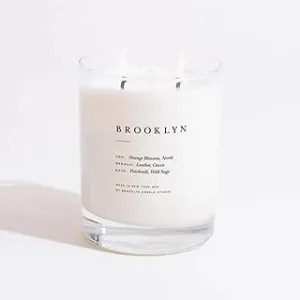
4. Brooklyn Candle Studio Soy Candle - Best Minimalist Design
Price: $26 | Wax: 100% Soy | Burn Time: ~50 hours | Wick: Cotton
Brooklyn Candle Studio checks every box for a clean candle: 100% soy wax, cotton wicks, phthalate-free fragrance, and they’re hand-poured in (you guessed it) Brooklyn. The amber glass jars are simple and beautiful.
I tried their Love Potion scent (dark rose, sandalwood, musk) and the Saturday Morning scent (cashmere, cream, cedarwood). Both had a warm, inviting throw that wasn’t overpowering. The burn pool was even all the way across, which tells you the wick is properly sized for the container. That’s a sign of a well-made candle.
They also have a travel tin line at a lower price point, which is a great way to try a few scents before committing to a full-size jar.
Pros: Beautiful design, consistent quality, great scent range, travel sizes available Cons: Some scents are seasonal and can sell out fast
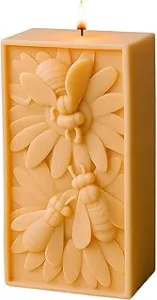
5. Bee & Flower Beeswax Candle - Best Beeswax
Price: $24 | Wax: Pure Beeswax | Burn Time: ~45 hours | Wick: Cotton
If you want a beeswax candle that doesn’t cost a fortune, Bee & Flower is the one. They use pure beeswax (no blending with cheaper waxes) and cotton wicks. The natural honey scent of the beeswax is subtle and genuinely pleasant. You really don’t need added fragrance.
Beeswax burns differently from soy. The flame is a little brighter, the wax melts slower, and there’s a warmth to the light that feels different. I’m not being woo-woo about it. Beeswax candles genuinely emit a warmer color temperature. There’s a coziness factor that soy can’t quite match.
At the budget tier ($), you’re getting good value for real beeswax. Many beeswax candles from smaller makers run $35-$45 for a similar size. The packaging is simple, almost rustic, which works for the brand.
Pros: Affordable for real beeswax, warm natural scent, warm light color, air-purifying properties Cons: Limited scent options (mostly unscented or light honey), rustic packaging won’t appeal to everyone
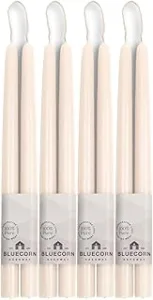
6. Bluecorn Beeswax Pure Beeswax Candle - Best Unscented
Price: $32 | Wax: 100% Beeswax | Burn Time: 60+ hours | Wick: Cotton
Bluecorn is the purist’s choice. Their candles are 100% beeswax sourced exclusively from U.S. beekeepers, with cotton wicks and absolutely nothing else. No fragrance, no dye, no additives. What you see is what you get.
And what you get is a seriously long burn time. Their 16 oz jar candle runs over 60 hours, which at $32 puts the cost per hour under $0.55. That’s competitive with much cheaper candles once you factor in how fast paraffin burns down.
Beeswax is a natural golden color (the shade varies slightly between batches because it’s real beeswax, not dyed to be uniform). They also make pillar candles and tapers if jars aren’t your thing.
If you have any sensitivity to fragrance at all, or if you just want a candle that gives warm light without putting anything extra into your air, this is the one.
Pros: Longest burn time on this list, zero additives, U.S.-sourced beeswax, multiple formats Cons: Unscented only, higher upfront cost (offset by burn time), natural color variation
7. Lite+Cycle Essential Oil Candle - Best for Sensitive Noses
Price: $34 | Wax: Coconut/Apricot Blend | Burn Time: ~45 hours | Wick: Cotton
Lite+Cycle was founded specifically for people who love candles but react to fragrance. Their candles use only essential oils for scent (no “fine fragrance” blends, no fragrance oils, period) in a coconut and apricot wax blend.
I researched their Jasmine Auriculatum candle and it was noticeably different from other jasmine candles I’ve tried. Softer. Less perfume-y. More like walking past a jasmine bush in someone’s yard than spraying jasmine air freshener. That subtlety is intentional and it’s what their customers love about them.
This coconut-apricot wax blend burns incredibly clean. Almost zero residue on the glass. The scent throw is lighter than some of the soy candles on this list, which is the tradeoff for using only essential oils. If you want your whole house to smell strongly, this might not be your pick. But if you want a gentle, authentic scent without any synthetic edge, it’s perfect.
Pros: 100% essential oil scent, designed for fragrance-sensitive people, very clean burn Cons: Lighter scent throw, limited scent lineup, higher price point
8. Prosperity Candle Hand-Poured Soy - Best Social Mission
Price: $30 | Wax: Soy | Burn Time: 45-50 hours | Wick: Cotton
Prosperity Candle is a social enterprise that employs women refugees and survivors of conflict, providing fair wages and mentorship as they build new lives. Every candle is hand-poured by one of these women. There’s a card inside each box telling you who made yours.
But a good mission doesn’t matter if the product isn’t good. And these candles are genuinely good. The soy wax burns clean, the scents are well-balanced (I liked their Gratitude blend, which is citrus and herbs), and the burn time is competitive at 45-50 hours.
This packaging is gift-ready out of the box, which is a nice touch. If you’re looking for a meaningful gift that also happens to be a high-quality non-toxic candle, this is the one. I’ve sent these for birthdays, thank-you gifts, and holidays. People always comment on them.
Pros: Meaningful social mission, gift-ready packaging, clean burn, good scent balance Cons: Slightly fewer scent options than some competitors
9. Vitruvi Aromatherapy Candle - Best for Aromatherapy
Price: $48 | Wax: Coconut Wax | Burn Time: 40-45 hours | Wick: Cotton
Vitruvi is known for their essential oil diffusers, and their candle line feels like a natural extension of that focus. These are coconut wax candles scented with pure essential oil blends, designed specifically for aromatherapy purposes.
A “Boost” blend (grapefruit, eucalyptus, peppermint) is genuinely energizing. I burned it during a morning work session and it was like a gentler version of a cup of coffee for the senses. The “Sleep” blend (lavender, chamomile, bergamot) has become part of my evening routine.
At the budget tier ($), these are the most expensive candles on this list. That’s a real barrier, and I won’t pretend otherwise. The burn time of 40-45 hours is decent but not remarkable for the price. What you’re paying for is the essential oil quality and the intentionality of the blends. If you specifically want aromatherapy benefits from your candle, this is worth the investment. If you just want something that smells nice, there are better values above.
Pros: Therapeutic-grade essential oils, purposeful scent blends, beautiful vessel, pairs with Vitruvi diffusers Cons: Most expensive on this list, shorter burn time relative to price
How to Read Candle Labels (And What to Watch Out For)
Shopping for non-toxic candles gets easier once you know what to scan for. Here’s my quick cheat sheet.
Green flags:
- “100% soy wax” or “100% beeswax” or “coconut wax” (with no qualifiers)
- “Cotton wick” or “wood wick”
- “Essential oils” or “phthalate-free fragrance”
- Full ingredient list printed on the label or available on the website
- Small-batch or hand-poured (usually means more quality control)
Red flags:
- “Soy blend” without saying what it’s blended with (usually paraffin)
- “Fragrance” with no further disclosure
- No ingredient list anywhere, not on the label, not on the website
- Very cheap price for a large candle (quality wax costs money)
- Bright, unnatural colors (requires synthetic dyes)
- “Long-lasting fragrance” claims with no mention of what creates the fragrance
One trick I use: flip the candle over. Many brands print their ingredients on the bottom label. If there’s no ingredient list at all, I put it back on the shelf.
Price Comparison and Value Breakdown
Let’s talk real numbers, because a $22 candle and a $48 candle can actually deliver similar cost per burn hour.
| Candle | Price | Burn Time | Cost Per Hour |
|---|---|---|---|
| P.F. Candle Co. | $ | 45 hrs | $ |
| Bee & Flower | $ | 45 hrs | $ |
| Brooklyn Candle Studio | $ | 50 hrs | $ |
| Fontana Candle Co | $ | 37 hrs | $ |
| Prosperity Candle | $ | 47 hrs | $ |
| Bluecorn Beeswax | $ | 60 hrs | $ |
| Lite+Cycle | $ | 45 hrs | $ |
| Keap | $ | 50 hrs | $ |
| Vitruvi | $ | 42 hrs | $ |
P.F. Candle Co. wins on pure value. Bluecorn wins if you want maximum burn time. And Vitruvi, well, you’re paying a premium for the aromatherapy angle.
Non-Toxic Candle Gift Guide
Honestly, candles are one of the easiest gifts to get right. Everyone likes them, they feel personal without being too personal, and a nice one says “I put thought into this” without requiring you to actually know the person’s ring size or book preferences.
For the minimalist: Brooklyn Candle Studio or Keap. Clean design, sophisticated scents.
For the fragrance-sensitive friend: Lite+Cycle or Bluecorn Beeswax. They’ll be relieved someone actually thought about this.
For someone who has everything: Vitruvi. The price point and packaging both say “this is a real gift.”
For a housewarming: Prosperity Candle. Great story, great product, gift-ready packaging.
For a candle beginner: P.F. Candle Co. Affordable, widely loved scents, low commitment.
For your mom: Fontana Candle Company. Reliable, smells amazing, she’ll reorder it herself.
What People Ask
Are soy candles really better than paraffin?
Yes. Soy wax is made from a renewable resource, produces significantly less soot, and doesn’t release the same volatile organic compounds that paraffin does when burned. Studies have consistently shown cleaner emissions from soy. It’s not even close.
Do beeswax candles actually purify the air?
Beeswax candles produce negative ions when burned, which can bind to positively charged particles like dust, pollen, and other airborne contaminants. Will a single candle replace an air purifier? No. But they’re contributing to cleaner air rather than dirtier air, and that’s a meaningful difference compared to paraffin.
Why are non-toxic candles more expensive?
Quality wax costs more. Soy wax is roughly 2-3x the cost of paraffin per pound. Beeswax is even more expensive. Essential oils cost dramatically more than synthetic fragrance. And many of these brands are small-batch operations with higher labor costs per unit. The price difference is real, but so is the quality difference.
Can I just look for “natural” on the label?
Not really. “Natural” isn’t a regulated term for candles. A candle could be 90% paraffin with 10% soy and still call itself natural. Look for specific wax types (100% soy, 100% beeswax, coconut wax) rather than trusting vague marketing language.
How long should I burn my candle each session?
Most candle makers recommend burning for 1-4 hours per session. The first burn is the most important. Let the wax melt all the way to the edges of the container. This prevents tunneling (where the candle burns down the center and wastes the wax around the edges). Trim your wick to about 1/4 inch before each burn for the cleanest flame.
Are wood wicks safe?
Yes. Wood wicks are typically made from untreated wood and burn cleanly. They do produce a slight crackling sound, which some people love (it sounds a bit like a fireplace). They can sometimes be slightly harder to relight than cotton wicks, but from a safety and toxicity standpoint, they’re perfectly fine.
Is it okay to burn candles around pets?
Pets, especially birds and cats, can be more sensitive to airborne chemicals than humans. The same goes for babies, so if you have little ones, consider reviewing our picks for the best non-toxic baby bottles too. Non-toxic candles made with soy, beeswax, or coconut wax are a much safer choice if you have pets. That said, always keep candles in a well-ventilated room and never leave them burning unattended. And keep them physically away from curious paws and tails, because hot wax is hot wax regardless of what it’s made from.
Do non-toxic candles smell as strong as regular candles?
Some do, some don’t. Candles scented with essential oils tend to have a softer, more layered throw compared to synthetic fragrance. Brands like P.F. Candle Co. and Fontana that use carefully formulated blends can get impressive scent throw from clean ingredients. If maximum scent strength is your priority, soy candles with phthalate-free fragrance blends (not just essential oils) will give you the strongest throw.
Durability and Longevity
Burn time is the main durability metric for candles, and it varies a lot. Pure beeswax burns the longest of any natural wax. Bluecorn’s 16 oz beeswax candle runs over 60 hours. Soy wax burns cooler and slower than paraffin, so a well-made soy candle delivers solid burn time too. P.F. Candle Co.’s 7.2 oz jar claims 40-50 hours, which is competitive.
Coconut wax burns at a similar rate to soy. The Keap and Vitruvi coconut wax candles deliver 40-50 hours each.
Beyond burn time, the jar and wick affect how long a candle performs well. Undersized wicks cause tunneling, where the center burns down while wax pools on the sides, effectively wasting 20-30% of the candle. Every brand on this list uses properly sized wicks for their containers, which matters more than most people realize.
Container candles in glass hold their shape and performance through the full burn. Pillar candles (like some Bluecorn options) require a bit more care: keep them out of drafts and burn them on a heat-safe surface.
What We Don’t Fully Know
The science on candle safety has real gaps worth naming.
All candles - including beeswax, soy, and coconut - produce combustion particles when burned. The relative hazard of natural wax combustion versus paraffin combustion is not fully characterized in long-term human studies. The South Carolina State University study from 2009 identified specific VOCs from paraffin; comparable controlled comparisons of natural wax combustion products at typical home use levels are limited.
Essential oils are not inherently safer than synthetic fragrance at all exposure levels. Both can act as respiratory sensitizers in some individuals [mechanism proposed]. The difference is disclosure: essential oil formulas list their ingredients; “fragrance” labels do not. For people with known fragrance sensitivities or asthma, even essential oil-scented candles should be used in well-ventilated spaces.
Long-term data on indoor air quality from regular candle use - regardless of wax type - is not well-characterized in residential settings. The practical recommendation is ventilation: open a window or run an air purifier regardless of which candle you choose.
What We Would Buy
Switching to non-toxic candles is one of the simplest ways to improve your indoor air quality. If you do want to overhaul your whole house, our how to detox your home guide walks you through it room by room. But you don’t need to do everything at once. You just need to stop burning petroleum byproducts on your coffee table.
My top recommendation for most people is the Fontana Candle Company for overall quality and transparency. If you’re budget-conscious, P.F. Candle Co. gives you an incredible product at $22. And if you want the absolute cleanest burn possible with zero additives, Bluecorn Beeswax is the purest option on this list.
Whatever you choose, your lungs will thank you. And your home will still smell amazing.
Last updated: April 2026. Prices may vary. We independently research and test the products we recommend. When you purchase through our links, we may earn a commission at no extra cost to you.
Sources
You Might Also Like
- Are Dryer Sheets Toxic? What Those Fragrance Chemicals
- Best Non-Toxic Hand Soap
- Avocado Mattress Review
- Are Scented Candles Toxic? What the Air Quality Studies Show
- Best Non-Toxic Air Fresheners Without Synthetic Fragrance or Phthalates (2026)
- Best Non-Toxic Fabric Softeners (2026)
- Best Non-Toxic Perfume and Clean Fragrance in 2026
- Best Non-Toxic Candles for Gifting in 2026 (Soy, Beeswax, Coconut Wax)
- What Does ‘Fragrance’ Mean on a Label? (The Hidden Chemical Cocktail)