The Short Answer
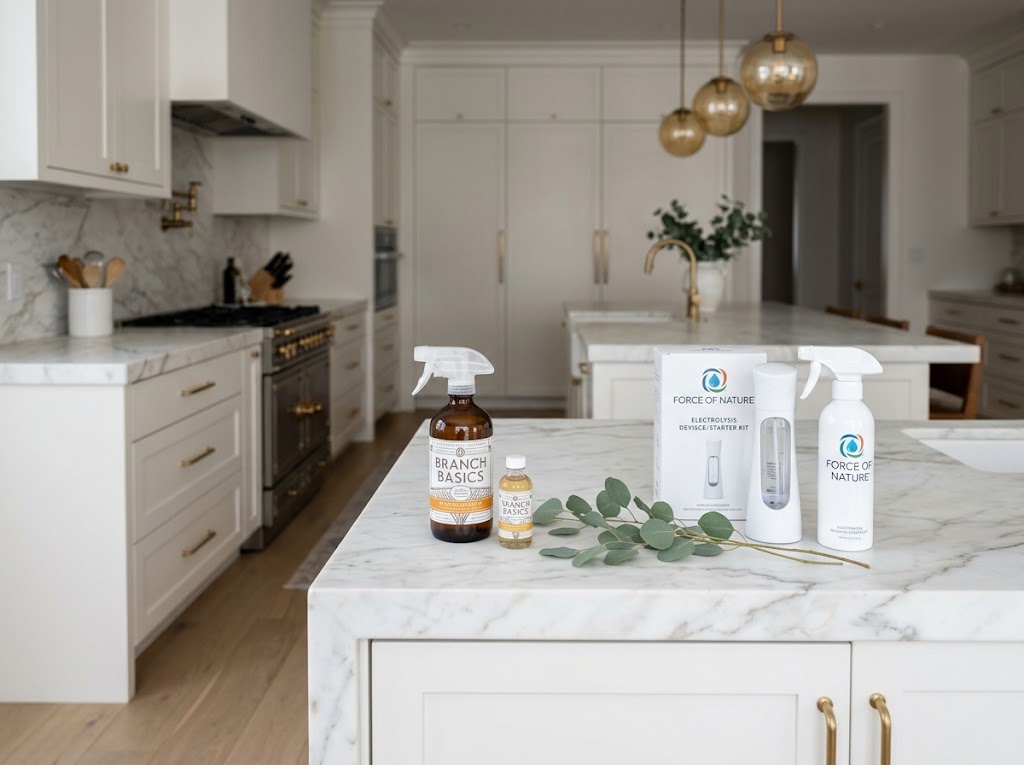
Branch Basics is the better choice for most households. One concentrate replaces your all-purpose spray, bathroom cleaner, laundry detergent, and glass cleaner. Force of Nature is the right pick when disinfection without synthetic chemicals is the goal - hospitals, households with immunocompromised members, or anyone replacing bleach and disinfecting wipes. They solve different problems.
Branch Basics Starter Kit: Check at Branch Basics Force of Nature Starter Kit: Check at Force of Nature
How We Compared Them
We looked at ingredient transparency, third-party certifications, EPA registration status, cost per use, and what each product can and can’t do. Both brands make strong safety claims. The question is whether those claims hold up when you dig into formulation details and regulatory status.
Side-by-Side Comparison
| Feature | Branch Basics | Force of Nature |
|---|---|---|
| Active cleaning agent | Plant-based surfactants | Hypochlorous acid (electrolyzed water) |
| EPA-registered disinfectant | No | Yes (EPA List N) |
| Synthetic fragrance | None | None |
| Handles laundry | Yes | No |
| Handles degreasing | Yes | Limited |
| Ingredient disclosure | Full | Full (only 3 ingredients) |
| Fragrance-free | Yes | Yes |
| Plastic packaging | Reusable bottles included | Reusable sprayer included |
| Price per starter kit | $$ | $$ |
| Buy | Check at Branch Basics | Check at Force of Nature |
Safety Comparison
What’s Actually in Branch Basics?
Branch Basics publishes its full ingredient list, which is unusual in the cleaning industry. The concentrate contains water, a coconut-derived surfactant (cocamidopropyl hydroxysultaine), a plant-derived thickener, and a preservative. No synthetic fragrance, no optical brighteners, no quaternary ammonium compounds (quats).
Quats are a real concern. Hrubec et al. (2021, animal study) found quaternary ammonium compounds linked to reproductive harm in mice at concentrations relevant to household cleaning product use - though human data at typical residential exposures remains limited. Branch Basics skips quats entirely, which is a meaningful formulation choice.
For most households using Branch Basics as directed, it’s probably fine under normal use. The ingredient profile is well within what toxicologists consider low-hazard for routine cleaning tasks. The brand is not EPA-registered, which means it can’t legally claim to kill pathogens, but for cleaning (not disinfecting) that distinction rarely matters day to day.
What’s in Force of Nature?
Force of Nature uses an appliance (the electrolyzer) to convert tap water, a capsule of salt, and a tiny amount of vinegar into two things: hypochlorous acid and sodium hydroxide. That’s it. Hypochlorous acid is the same compound your immune system produces to kill pathogens.
The EPA has registered Force of Nature as a disinfectant effective against SARS-CoV-2, influenza, E. coli, staph, and salmonella, among others (EPA List N, registration #87741-1). It meets the CDC’s criteria for hospital-grade disinfection. The solution breaks down into salt water within a few hours, leaving no chemical residue.
The safety profile here is genuinely excellent. Hypochlorous acid at these concentrations is non-irritating to skin and lungs [regulatory review, EPA]. The main limitation is stability: the solution loses potency after about 2 weeks, so you make it fresh in small batches.
Performance and Value
Branch Basics: One Concentrate, Everything Cleaned
The dilution system is clever. One bottle of concentrate gets diluted at different ratios depending on the job - a lighter dilution for all-purpose spray, a stronger one for bathroom surfaces and laundry. The reusable spray bottles that come with the starter kit mean you’re not throwing away plastic every week.
Laundry is where Branch Basics separates itself from Force of Nature. A capful of concentrate handles a full load. The formula works in cold water and is compatible with HE machines. For households washing cloth diapers, workout clothes, or anything that picks up body odor, this matters.
Cost works out to roughly $0.05-$0.10 per spray bottle refill, depending on dilution. The concentrate refills cost about $49 for 33 oz, which is competitive with conventional cleaners bought in bulk.
Force of Nature: Exceptional for Disinfection, Limited for Everything Else
Force of Nature does one thing very well. For countertops, toilets, cutting boards, and high-touch surfaces, it’s a legitimate bleach replacement with none of the fumes, residue, or health concerns. Pediatricians and allergists sometimes recommend it for households trying to minimize chemical exposures.
Where it falls short: it doesn’t degrease. A greasy stovetop or a cooking pot with baked-on residue needs a surfactant, and hypochlorous acid doesn’t have one. Most Force of Nature households end up using it alongside a dish soap or a second spray for kitchen cleaning.
The capsule subscription runs about $15-$20 per month for a busy household, which is reasonable for what it delivers. The electrolyzer itself carries a 1-year warranty, with replacement units running about $60-$70.
Who Should Buy Which
Get Branch Basics if: you want to simplify your cleaning cabinet to one product, you do laundry with the same cleaner, or you prefer a surfactant-based formula for general household dirt and grease.
Get Force of Nature if: someone in your household is immunocompromised, you’re replacing bleach specifically, you have respiratory sensitivities to conventional disinfectants, or you want an EPA-registered kill claim for pathogens without any synthetic chemistry.
Use both if: you want the best of both systems. Branch Basics for everyday cleaning and laundry, Force of Nature for disinfection in bathrooms, kitchens, and sick rooms.
The Trade-offs
| Option | Main concern | Primary tradeoff |
|---|---|---|
| Branch Basics | Not a registered disinfectant | Can’t kill pathogens on surfaces |
| Force of Nature | Limited cleaning versatility | Doesn’t degrease; solution expires in ~2 weeks |
Branch Basics: Full Review
Branch Basics launched in 2012, founded by Marilee Nelson, Allison Evans, and Kelly Love after Marilee developed severe chemical sensitivities. The company’s positioning is “non-toxic” in a way that goes beyond most competitors - they were early to disclose every ingredient and early to flag ingredients like methylisothiazolinone (a common preservative in “natural” cleaners) as problematic.
The concentrate itself is odorless, which is the right call for a product marketed to people with fragrance sensitivities. Some users find the lack of scent disconcerting at first - we’re trained to associate “clean” with a particular smell. That’s not a flaw; it’s the product working correctly.
Performance on everyday tasks - counters, sinks, stovetops, glass - is solid. It doesn’t have the cutting power of a heavy-duty degreaser on baked-on grease, but for daily maintenance cleaning, it handles everything you’d need.
The refill model significantly reduces plastic waste. The starter kit comes with four reusable spray bottles in different sizes. Ongoing cost is lower than buying individual cleaners for each task, which is the real pitch: you buy one thing and use it everywhere.
Check the Branch Basics Premium Starter Kit at Branch Basics
Force of Nature: Full Review
Force of Nature is a different product category than it first appears. It’s not a pre-made cleaning solution you buy in a bottle. It’s a small appliance that makes cleaning solution on demand using electrolysis. You add a capsule of salt and vinegar to water, run the electrolyzer for 90 seconds, and you have a fresh batch of hypochlorous acid spray.
The science behind it is well-established. Hypochlorous acid (HOCl) is widely used in food processing, wound care, and healthcare settings. At 200-250 ppm (the concentration Force of Nature produces), it kills bacteria, viruses, and fungal spores without the off-gassing of bleach or the chemical residue of quat-based disinfectants [regulatory review, EPA].
The solution is genuinely safe around children and pets during and after application. This is meaningfully different from bleach, which requires ventilation and residue-rinsing when used on food-contact surfaces. Force of Nature can be used on cutting boards, baby toys, and pet areas without rinsing.
The limitation is honest: hypochlorous acid is unstable. It degrades with light and heat exposure, losing its disinfecting potency within about 2 weeks. You make it fresh when you need it. For households that clean on a weekly schedule, this is a non-issue. For households that like to keep a bottle of spray in the car or camping kit, it’s a real constraint.
Check the Force of Nature Starter Kit at Force of Nature
Durability and Longevity
Branch Basics concentrate holds up well over time. The bottles are BPA-free plastic rated for repeated use, and the concentrate itself has a 1-year shelf life unopened. The reusable spray bottles are durable enough that most households replace them only when damaged, not on any set schedule. The weak point is the spray nozzle mechanism on cheaper bottles - the brand’s own bottles hold up better than third-party substitutes.
Force of Nature’s electrolyzer is the key durability question. The unit carries a 1-year warranty and the company estimates a 2-3 year lifespan with regular use. Real-world reports vary: some users report units failing after 18 months, others run theirs past 3 years. The capsule storage life is 2 years unopened, so stocking up doesn’t create a waste problem. If the electrolyzer dies out of warranty, replacement units run $60-$70, which is a meaningful cost on top of the ongoing capsule subscription.
What we don’t know yet: long-term data on electrolyzer failure rates and Branch Basics concentrate stability beyond 1 year is limited. Neither brand publishes complete durability testing data, so these estimates are based on aggregated user reports rather than controlled longevity studies.
What We’d Pick
For most households, Branch Basics is the practical choice. It handles the full range of cleaning tasks, costs less per use when you account for laundry, and is genuinely low-toxicity without requiring an appliance or a subscription. If you have one cleaning product in your cabinet, this is a strong candidate.
Force of Nature earns its place in specific situations: when disinfection is a priority, when someone in the household has respiratory sensitivities to conventional products, or when you want a bleach replacement that you can actually use safely around kids. It’s not an either-or choice - plenty of households run both.
Budget Alternatives on Amazon
Both Branch Basics and Force of Nature are sold direct-to-consumer only. Neither is available on Amazon, and neither is cheap: you’re looking at $69-$89 just for the starter kit before you buy a single refill. That’s a real barrier for a lot of households.
These won’t match them on customization or disinfection power, but they’re genuinely clean and available on Amazon with Prime shipping.
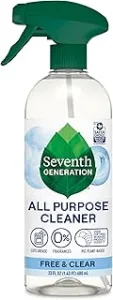
Seventh Generation Free & Clear ($4-$6 per bottle)
Seventh Generation’s All-Purpose Cleaner in Free & Clear is as close to “no synthetic anything” as you’ll find at a drugstore price. EWG gives it an A rating, which means it met EWG’s criteria for ingredient transparency, safety, and lack of problematic compounds. The EPA’s Safer Choice program has certified it too. And it’s actually unscented. Not “lightly scented” or “naturally fragranced.” Genuinely odorless, which matters for people with fragrance sensitivities.
The catch: it’s a ready-to-use spray, not a concentrate. You’re buying and tossing more plastic than with Branch Basics’ refill model. But at $4-$6 a bottle for a product that meets every non-toxic benchmark that matters, it’s hard to argue.
Check Seventh Generation Free & Clear on Amazon
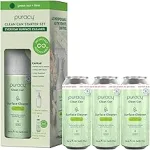
Puracy Multi-Surface Cleaner Concentrate ($10-$14)
Puracy’s concentrate is the closest thing to the Branch Basics model at a fraction of the cost. One 16 oz bottle dilutes to make a full gallon of cleaner, which works out to roughly $0.10-$0.15 per spray bottle refill, competitive with Branch Basics once you account for dilution. Plant-based surfactants, no harsh chemicals, streak-free on glass and granite.
It’s not fragrance-free: the concentrate uses Green Tea and Lime essential oils. If you need truly unscented, go with Seventh Generation above. But if a mild natural scent is fine, Puracy is a smart buy.
Check Puracy Concentrate on Amazon
When to Upgrade to Branch Basics or Force of Nature
The budget options cover everyday counters, sinks, glass, and surfaces. What they can’t do:
- Laundry: Branch Basics is the only one here that replaces laundry detergent. If you want one product for everything including clothes, there’s no budget substitute.
- EPA-registered disinfection: Seventh Generation and Puracy are cleaners. Force of Nature is a registered disinfectant. If you’re replacing bleach or need kill-claim efficacy, only Force of Nature delivers that with a clean chemical profile.
- Fully disclosed ingredient lists: Branch Basics publishes every ingredient. Seventh Generation and Puracy are more transparent than most, but not to Branch Basics’ level.
For most households: start with Seventh Generation Free & Clear or Puracy. If you do a lot of laundry and hate managing multiple products, Branch Basics is worth the upgrade. If someone in your home is immunocompromised or you’re replacing bleach specifically, add Force of Nature.
Safer Alternatives Worth Considering
If neither fits, these resources cover related options:
- Best Non-Toxic All-Purpose Cleaners - broader roundup of low-tox cleaners with third-party ratings
- Blueland vs Branch Basics - tablet-based vs concentrate comparison with full cost breakdown
- Best Non-Toxic Dish Soap - for the kitchen sink specifically
FAQ
Is Branch Basics actually non-toxic?
Branch Basics discloses all ingredients and avoids synthetic fragrance, quats, dyes, and optical brighteners. It’s among the more transparent brands in the cleaning category. It does contain a small amount of a preservative (sodium benzoate), which is generally recognized as safe at these concentrations [regulatory review, FDA]. The word “non-toxic” has no legal definition, but by ingredient analysis, Branch Basics has a strong safety profile.
Does Force of Nature actually disinfect?
Yes. Force of Nature is registered with the EPA as a disinfectant (EPA List N, registration #87741-1) effective against SARS-CoV-2, influenza A, E. coli O157:H7, Staphylococcus aureus, Salmonella enterica, and other common pathogens. The active ingredient, hypochlorous acid at 200 ppm, meets CDC criteria for healthcare-level disinfection.
Can you use Branch Basics for laundry?
Yes. The same concentrate that works for all-purpose cleaning handles laundry. Use about 1-2 tablespoons per load, depending on soil level. It’s compatible with HE machines and works in cold water. It won’t brighten whites the way an oxygen bleach additive would, but it handles everyday laundry without synthetic fragrance or optical brighteners.
Is Force of Nature safe around kids and pets?
Yes, per EPA registration data and the chemical profile of hypochlorous acid at 200-250 ppm. You don’t need to rinse surfaces after application, and the solution leaves no chemical residue as it breaks down into salt water. Keep the electrolyzer itself out of reach, as the small capsules are a choking hazard.
Which is cheaper long-term?
Branch Basics is generally less expensive per use, especially when you account for laundry. A 33-oz concentrate refill runs about $49 and covers hundreds of spray bottles and laundry loads. Force of Nature’s capsule subscription costs roughly $15-$20 per month for regular use, plus the upfront cost of the electrolyzer. If you need disinfection, Force of Nature is still a reasonable value compared to disinfecting wipe subscriptions.
You Might Also Like
- Branch Basics Concentrate Review: One Bottle for Everything?
- Is Seventh Generation Actually Non-Toxic? (Full Ingredient Review)
- Branch Basics Review: Is the Concentrate System Worth It?
- Stokke Tripp Trapp vs IKEA ANTILOP High Chair (Which Is Safer?)
- Naturepedic vs Newton Baby Crib Mattress: Which Is Safer?
- Branch Basics vs Dr. Bronner’s: Two Very Different Approaches to Clean
- Is Seventh Generation Actually Non-Toxic? (Full Ingredient Breakdown)
- Primally Pure vs Native Deodorant in 2026 (Which Is Actually Cleaner?)
- Casper vs Avocado Mattress: Which Is Actually Safer to Sleep On?
- HigherDOSE vs MiHIGH Sauna Blanket: Which Is Actually Worth It?
- Winix vs Coway Air Purifier: Which Is Actually Better for Clean Air?
- Brita vs Clearly Filtered: Which Water Pitcher Actually Removes PFAS? (2026)
- DIY Non-Toxic Cleaning Recipes That Actually Work
Sources
- EPA List N: Disinfectants for Use Against SARS-CoV-2 - Force of Nature registration #87741-1
- Hrubec TC et al. (2021). “Altered toxicological endpoints in humans from common quaternary ammonium compound disinfectant exposure.” Environmental Health Perspectives 129(2). - animal study data on quat safety; human relevance at residential exposure levels is not yet established
- FDA GRAS database: Sodium benzoate - preservative safety classification
- Centers for Disease Control and Prevention: Guideline for Disinfection and Sterilization in Healthcare Facilities - hypochlorous acid efficacy reference