
The Short Answer
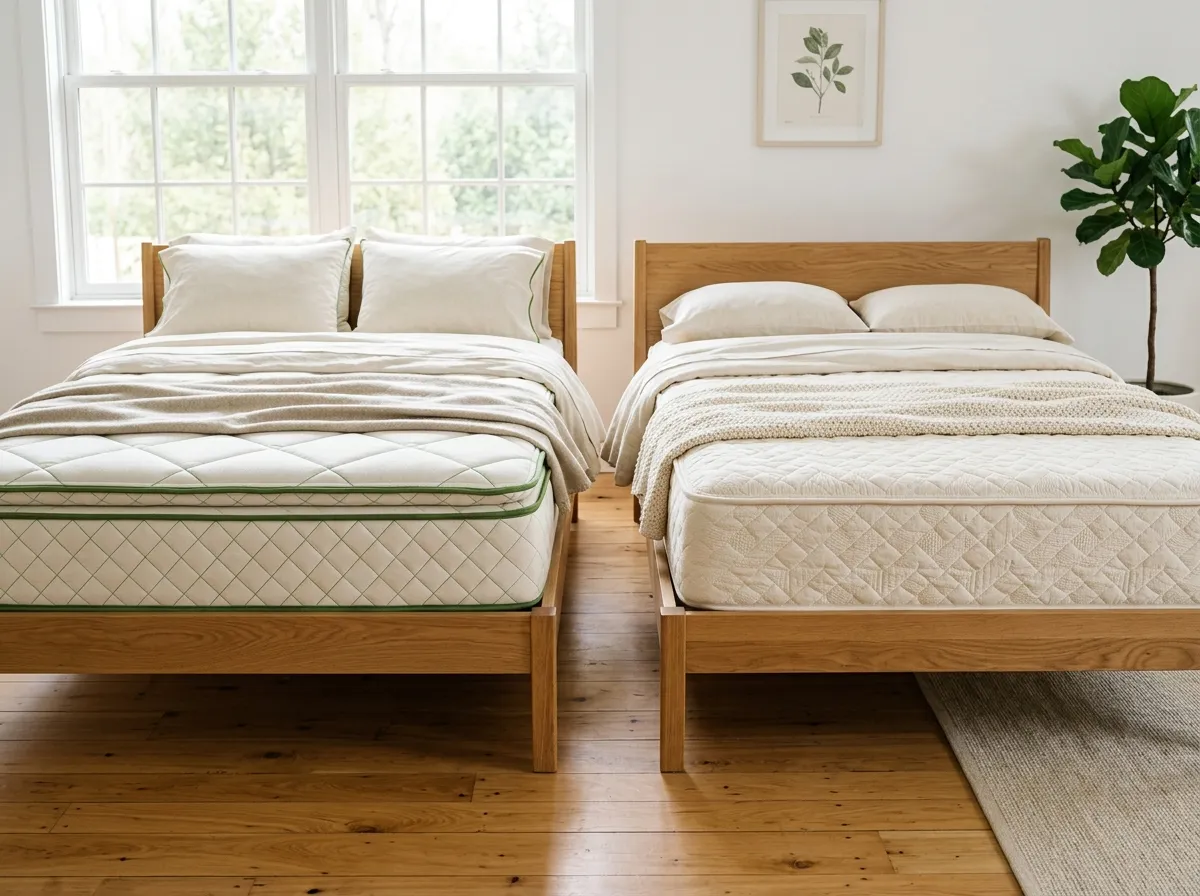
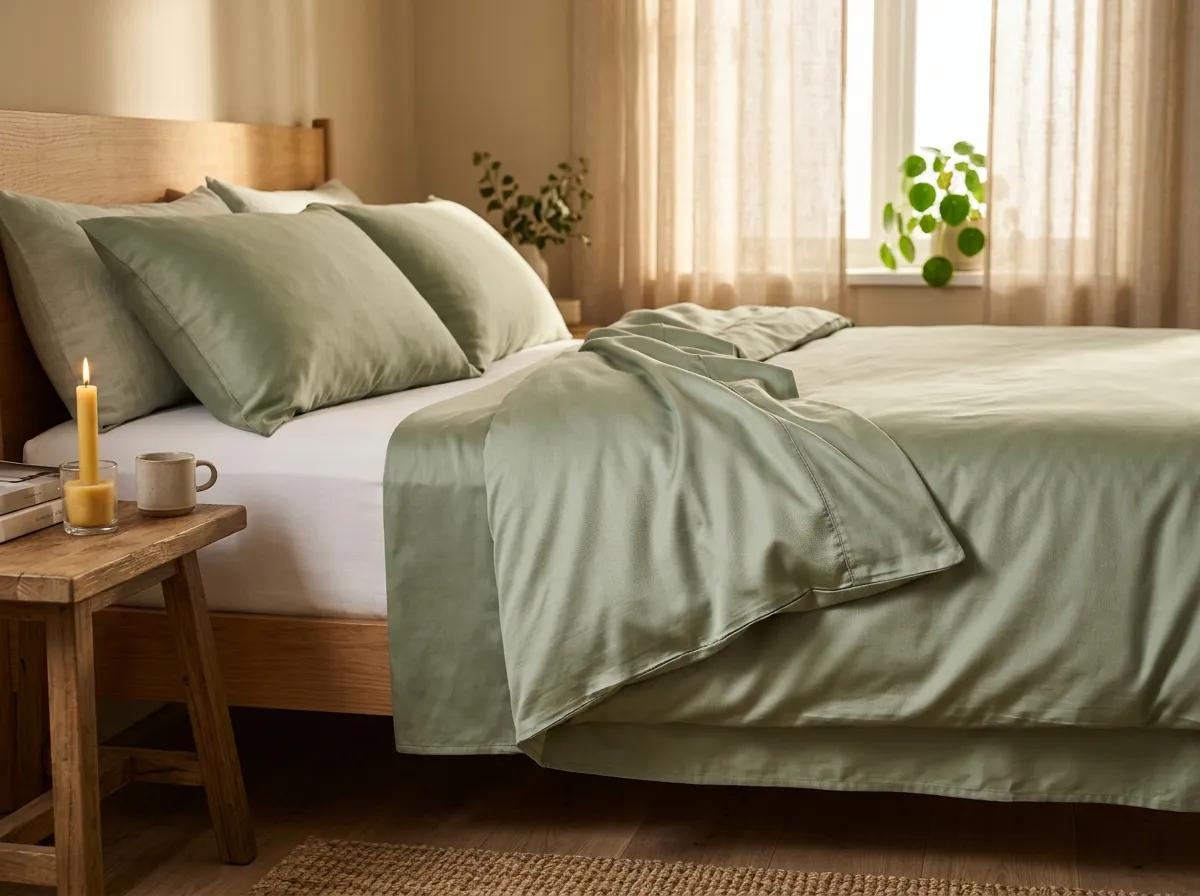
Avocado is the safer mattress on every non-toxic metric that matters. It uses GOLS-certified Dunlop latex, GOTS-certified organic cotton and wool, and a wool flame barrier instead of chemical treatment. The finished mattress carries GREENGUARD Gold certification, which tests the complete product for emissions in a simulated room.
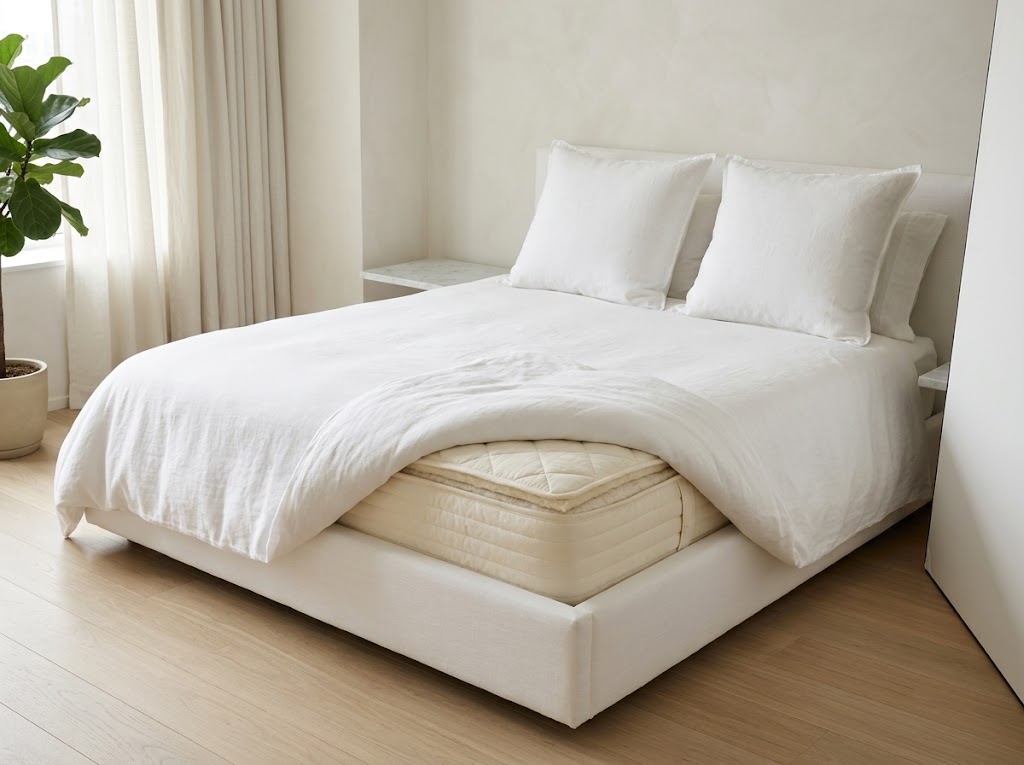
Casper is a CertiPUR-US certified polyurethane foam mattress. That certification screens for specific banned flame retardants (PBDEs, TDCPP, TCEP) and sets an emissions ceiling, but it only applies to raw foam, not the finished mattress. For healthy adults who air it out before sleeping, Casper is probably fine at its price point. For anyone prioritizing genuinely clean materials, the gap between these two products is significant.
Avocado Green Mattress (Queen): Check on Amazon Casper Original Foam (Queen): Check on Amazon
How We Compared Them
We looked at materials composition, third-party certifications, flame barrier approach, independent emissions testing, price, and trial/warranty terms. For non-toxic credibility, certifications matter because they’re independently audited. Any brand can write “natural materials” in ad copy. Fewer can show a GOLS, GOTS, or GREENGUARD Gold audit trail.
Side-by-Side Comparison
| Feature | Casper Original | Avocado Green |
|---|---|---|
| Construction | All-foam (polyurethane) | Latex hybrid (latex + coils) |
| Core material | Polyurethane + memory foam | GOLS Dunlop organic latex |
| Cover | Synthetic/polyester blend | GOTS organic cotton |
| Flame barrier | Proprietary FR barrier fabric | Organic wool (no chemicals) |
| Foam certification | CertiPUR-US (raw foam only) | GOLS, GOTS |
| Finished product testing | No GREENGUARD Gold | GREENGUARD Gold certified |
| VOC off-gassing risk | Moderate (first 24-72 hrs) | Low (natural materials) |
| Trial period | 100 nights | 365 nights |
| Warranty | 10 years | 25 years |
| Price (Queen) | $$$$ | $$$$ |
| Buy | Casper on Amazon | Avocado on Amazon |
Casper Original: Full Review
Casper launched in 2014 as a bed-in-a-box company and became one of the most-recognized mattress brands in the US. The Original Foam is their entry-level model: a polyurethane foam mattress with a zoned support layer that’s firmer under your hips and softer around your shoulders.
The non-toxic story here is mixed. Casper’s foam carries CertiPUR-US certification, which means it was tested by an independent lab and found to be free of ozone depleters, PBDE flame retardants, TDCPP or TCEP (“Tris”), mercury, lead, formaldehyde, and phthalates regulated by the Consumer Product Safety Commission. VOC emissions must test below 0.5 ppm. That’s real and meaningful for a foam mattress.
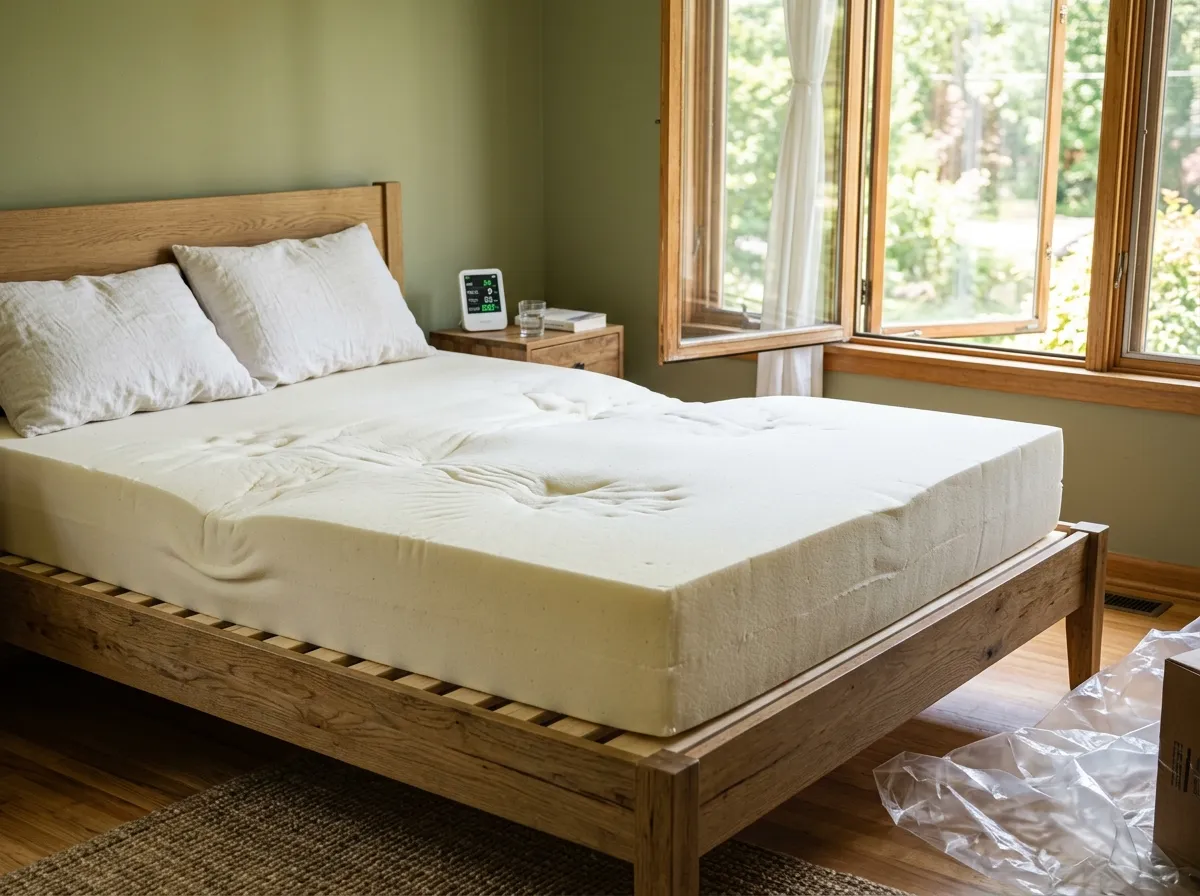
Here’s the limitation: CertiPUR-US certifies the raw foam only, not the finished mattress. The cover, adhesives, and fire barrier are not included. Casper uses a proprietary FR (flame-resistant) barrier fabric, not chemical-soaked flame retardants. They have stated publicly that the barrier is fiberglass-free. Third-party VOC testing of new foam mattresses [Environmental Science & Technology, 2022, human biomonitoring] found that formaldehyde and acetaldehyde emissions from polyurethane foam peaked in the first 24-72 hours and declined by 50-80% by day 7. Most people who unbox a foam mattress and let it air out for 24-48 hours before sleeping on it are at lower exposure risk than if they sleep on it the night it arrives.
For healthy adults without chemical sensitivities or respiratory conditions, Casper’s certification level is probably adequate. It’s not ideal, but it’s not a red flag either. The gap matters more for infants, toddlers, people with asthma, or anyone who wants to minimize synthetic material contact over an 8-hour-a-night exposure window.
Check the Casper Original Foam Queen on Amazon
Avocado Green: Full Review
Avocado’s Green Mattress is the benchmark for consumer-level organic certification. The core uses GOLS-certified (Global Organic Latex Standard) Dunlop latex. GOLS requires that at least 95% of the raw material is certified organic latex, with limits on heavy metals, biocides, and chemical processing aids. The fabric layers use GOTS-certified (Global Organic Textile Standard) organic cotton and wool.
The flame barrier is wool. Wool is naturally flame-resistant enough to meet federal flammability standards (16 CFR Part 1633) without any chemical treatment. This is the key differentiator from foam mattresses that use chemical FR treatments or synthetic barrier fabrics. Avocado’s entire system is built from materials that don’t need to be treated after production to pass safety tests.
The finished mattress carries GREENGUARD Gold certification. GREENGUARD Gold tests the complete assembled product in a simulated room environment for hundreds of VOCs and chemical emissions. This is a more stringent standard than CertiPUR-US because it measures the actual product a person would sleep on, not just one component. GREENGUARD Gold also uses more protective modeling assumptions, including exposure for sensitive groups like children.
The mattress itself is a latex hybrid: organic Dunlop latex over a pocketed coil support system, topped with GOTS-certified cotton. It runs firm. Most back and stomach sleepers find it comfortable as-is. Side sleepers often prefer the pillow-top version (add $300-$400) or a soft latex topper to get shoulder and hip pressure relief. The 365-night trial is among the longest in the category, and the 25-year warranty reflects the durability of natural latex compared to polyurethane foam.
According to NonToxicLab’s review of organic mattress certifications, GOLS and GOTS together represent a verified chain-of-custody from farm to factory, not just a single snapshot test on finished materials.
Check the Avocado Green Mattress (Queen) on Amazon
The Trade-offs
| Casper Original | Avocado Green | |
|---|---|---|
| Main concern | Polyurethane foam base; finished product not GREENGUARD Gold tested | Firm feel; higher price; may need pillow-top for side sleepers |
| Primary tradeoff | Lower price, weaker certification stack | Stronger certification stack, significantly higher cost |
| Best for | Budget-constrained buyers; healthy adults; those who prioritize sleep feel over material purity | Anyone prioritizing non-toxic credentials; families with young children; chemically sensitive individuals |
| Not ideal for | Those with chemical sensitivities or respiratory conditions | Budget shoppers; confirmed side sleepers who won’t add a topper |
Durability: How Long Each Mattress Lasts
This matters for the non-toxic calculation because a mattress that needs replacing in 5 years costs more over time and sends more material to landfill.
Casper’s polyurethane foam typically shows noticeable body impressions within 5-8 years for average-weight sleepers. Foam compresses and loses resilience gradually. Casper’s 10-year warranty covers sagging beyond 1.5 inches, but visible softening happens before that threshold. Most foam mattress owners replace them at 7-10 years.
Natural Dunlop latex, the core of the Avocado Green, is significantly more durable. Latex is elastic by nature and returns to its original shape. Avocado’s 25-year warranty reflects this. Independent mattress durability reviews consistently show natural latex maintaining its support profile for 12-15+ years under normal use. The organic materials also don’t break down into chemical byproducts the way polyurethane foam does as it degrades.
If you spread the cost over actual mattress lifespan, the price gap between Casper and Avocado narrows considerably. Two Caspers over 15 years may cost more than one Avocado.
What We Don’t Know
A few things worth being honest about. Long-term data on the specific FR barrier fabrics used in modern foam mattresses (including Casper’s) is limited. Most VOC research focuses on the first 30 days after unboxing, and evidence on cumulative low-level exposure over years of sleeping is still thin [mechanism proposed, not established by human RCT]. Casper’s proprietary fire barrier has not been independently published in peer-reviewed literature that we could locate.
On the Avocado side: natural latex can trigger IgE-mediated latex allergy in sensitized individuals. This is a real contraindication for people with documented latex allergies, not a hypothetical. Avocado discloses this. The evidence on whether low-level Dunlop latex exposure affects non-sensitized sleepers over the long term is not well-characterized.
And broadly: the VOC research is clearest on the first few days of off-gassing. Whether low-level, chronic nighttime exposure to polyurethane-derived VOCs at months 6 or 18 matters for health outcomes is not yet well-studied in humans.
What We’d Pick
For most people reading a site called NonToxicLab, Avocado is the obvious pick. The certification stack is the real thing. GOLS, GOTS, and GREENGUARD Gold on the finished mattress is the highest bar available in the consumer mattress market without going fully bespoke. The 25-year warranty and 365-night trial reduce the financial risk.
But Casper isn’t a health disaster. If you’re a healthy adult, you air the mattress out for 48 hours before sleeping on it, and the $800 price difference is meaningful to your budget, Casper’s CertiPUR-US certification puts it significantly above untested foam mattresses. You’re not getting the clean materials story, but you’re also not sleeping on the worst-case scenario.
And if you want organic-level certification but can’t stretch to Avocado’s queen price, the Brentwood Home Crystal Cove carries both GOTS and GOLS certification and usually runs $200-$400 less than Avocado. For latex-sensitive sleepers, the Naturepedic Chorus has MADE SAFE certification and no latex at all.
FAQ
Is CertiPUR-US enough to make a mattress non-toxic?
It depends what you mean by non-toxic. CertiPUR-US certifies raw polyurethane foam against a list of specific banned substances, including certain flame retardants, heavy metals, formaldehyde, and CPSC-regulated phthalates. It also sets a VOC emissions ceiling. What it doesn’t do: certify the finished mattress (only the foam), test for all possible chemical flame retardants, or include PFAS testing. For a foam mattress, CertiPUR-US is the most meaningful certification available. But it’s not comparable to GOLS/GOTS certification on an organic latex mattress, which covers the complete material chain.
Does Avocado off-gas?
Much less than a foam mattress. Natural materials like Dunlop latex, organic cotton, and wool don’t undergo the same polymerization and chemical processing as polyurethane foam. There’s often a faint natural rubber smell from latex when the mattress first arrives, which typically dissipates within a few days. The GREENGUARD Gold certification on the finished mattress confirms that VOC emissions fall within safe limits for sensitive populations. Most buyers report the smell is mild and resolves quickly.
Does Casper use fiberglass?
Casper has publicly stated they do not use fiberglass in their mattresses. Their fire barrier is a proprietary FR barrier fabric. This is worth checking because some budget foam mattresses use a fiberglass sock inside the cover that can disperse glass particles if the cover is removed or washed. Casper is not in that category.
Which mattress is better for a baby’s room or young child?
Avocado, with no close second. Infants and toddlers breathe faster relative to their body weight, which means proportionally higher exposure to any airborne chemicals [Health Canada, mattress off-gassing guidance, 2021]. GREENGUARD Gold specifically models exposure scenarios for children. For a crib, look at the Naturepedic crib mattress line, which carries MADE SAFE and GREENGUARD Gold certification. For a child’s bed, Avocado’s certification stack is the most verified option available in the standard mattress market.
Is the price difference between Casper and Avocado worth it?
If non-toxic materials are the priority, yes. You spend about 8 hours a night on your mattress, which makes it one of the highest-exposure household products you own. Natural latex also lasts significantly longer than polyurethane foam. Most foam mattresses develop noticeable body impressions within 5-7 years. Natural Dunlop latex typically holds its shape for 10-15+ years, and Avocado backs this with a 25-year warranty vs. Casper’s 10-year. Spread over a 15-year lifespan, the cost-per-year gap between these two products narrows considerably.
What about the Avocado Eco mattress? Is it a cheaper alternative with the same certifications?
The Avocado Eco uses recycled materials rather than GOLS-certified organic latex, which means the organic certification level is lower. It’s less expensive but doesn’t carry the full GOLS/GOTS stack that the Green Mattress does. For people who want Avocado’s approach but at a lower price, the Eco is worth considering. Just be clear that you’re trading some of the certification rigor to get there.
You Might Also Like
- Naturepedic vs Newton Baby Crib Mattress: Which Is Safer?
- Is Casper Mattress Non-Toxic? (What CertiPUR-US Actually Means)
- Avocado vs Birch Mattress: Which Organic Mattress Is Better?
- Purple vs Avocado Mattress: The Chemical Safety Comparison Nobody Writes
- Best Non-Toxic Mattresses in 2026 (I Spent 60+ Hours Researching So You Don’t Have To)
- Stokke Tripp Trapp vs IKEA ANTILOP High Chair (Which Is Safer?)
- Every Non-Toxic Certification Ranked: Which Labels Actually Mean Something (2026)
- Avocado vs Naturepedic: Which Organic Mattress Is Better?
- Branch Basics vs Force of Nature: Which Cleaner Is Actually Safer?
- Saatva vs Avocado Mattress: Organic Mattress Showdown
- Branch Basics vs Blueland: Which Actually Cleans Better? (2026 Test)
- HigherDOSE vs MiHIGH Sauna Blanket: Which Is Actually Worth It?
Sources
- CertiPUR-US Technical Guidelines for Foam (2025): explains what the certification tests for and its scope limitations (foam only, not finished mattress)
- Evaluation of VOC emissions from memory foam mattresses, ScienceDirect (2022): VOC concentration data and timeline for off-gassing from polyurethane foam
- VOCs and Other Toxic Chemicals in Mattresses, Consumer Reports: overview of mattress chemical concerns and certification standards
- Organic Mattress Labels You Can Trust, Consumer Reports: comparison of GOLS, GOTS, GREENGUARD Gold, and other certifications
- Avocado Green Mattress Help Center: Casper Wave comparison: Avocado’s own disclosure of materials vs. Casper’s approach