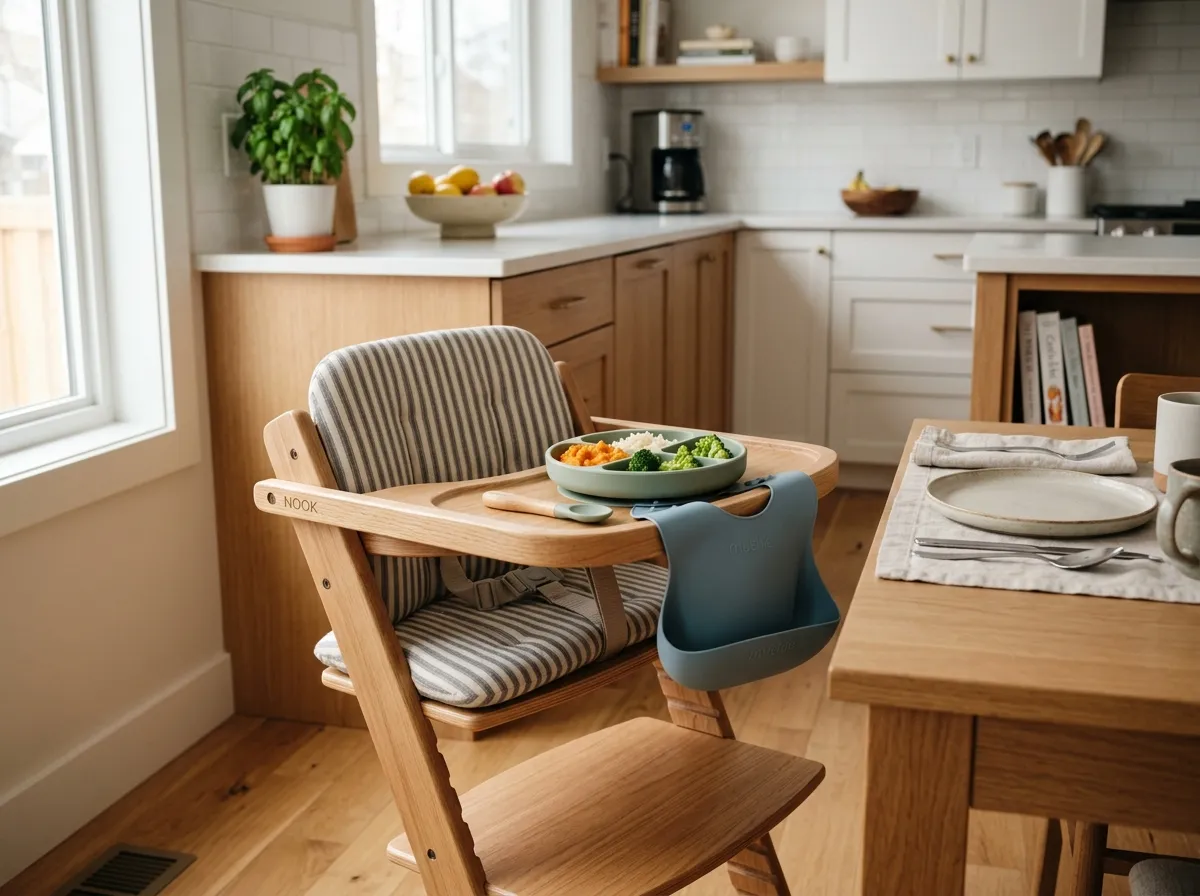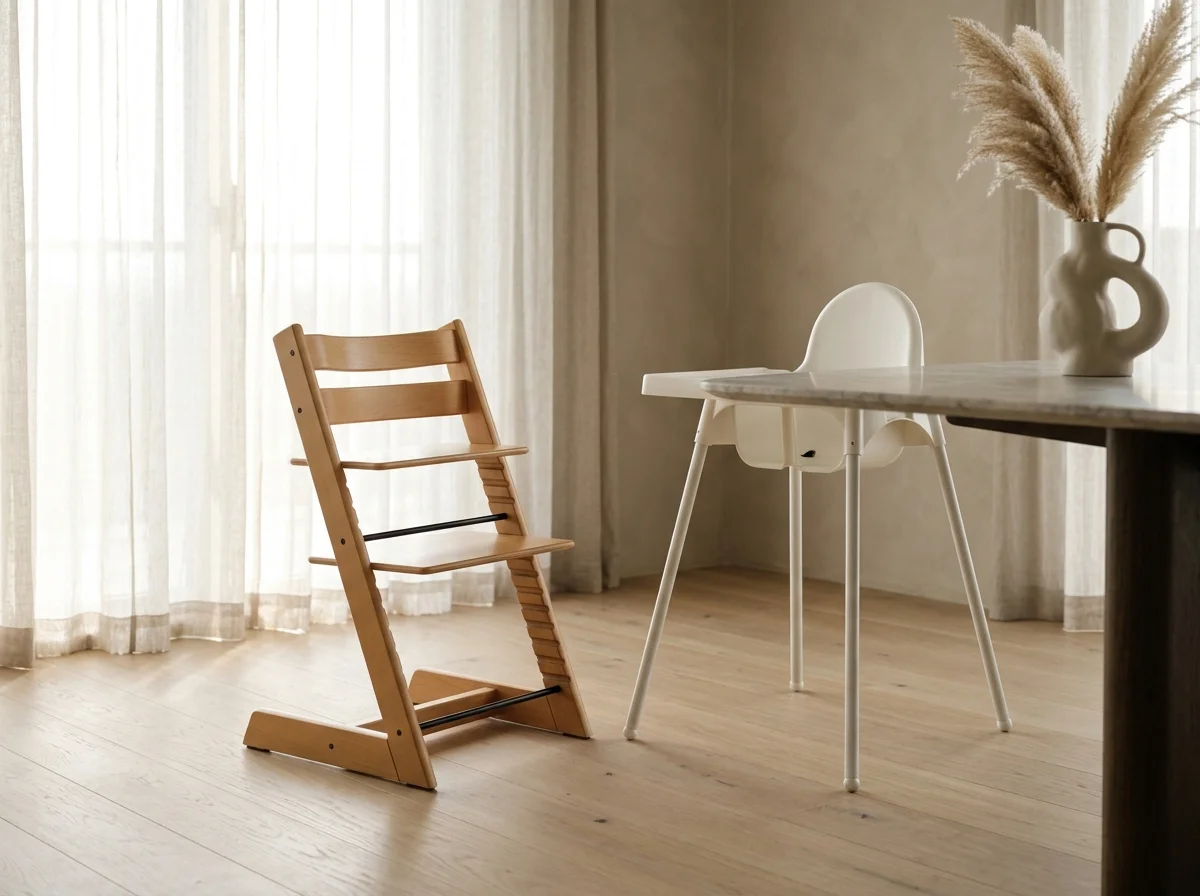
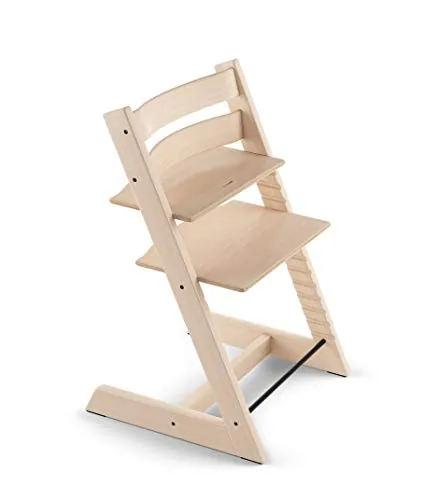
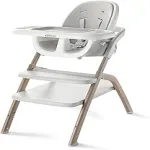
The Stokke Tripp Trapp and IKEA ANTILOP are at opposite ends of the high chair market. One costs $330 and is designed to last into adulthood. The other costs $25 and does the job for the first three years of a child’s life. Both show up on every “non-toxic high chair” list, and both have real reasons to be there. But they’re different products designed for different families.
Here’s the material-level comparison, the safety certifications, and the honest case for each. Our best non-toxic highchair guide has the full category breakdown if you want to see how these stack up against other options.
The Short Answer
Both chairs pass EN 14988, the European safety standard for high chairs. Neither uses foam padding in the base seat, which removes the flame retardant and off-gassing concerns that come with padded alternatives. Stokke Tripp Trapp wins on longevity, material quality, and adjustability. IKEA ANTILOP wins on price, ease of cleaning, and simplicity.
Stokke Tripp Trapp: Check on Amazon
IKEA ANTILOP: Available at IKEA.com - not sold on Amazon.
How We Compared Them
We looked at material disclosures from both brands, safety certification documentation, consumer reports from CPSC and EU recall databases (2015-2025), and Stokke’s publicly available FSC and low-VOC lacquer specifications. For IKEA, we cross-referenced their chemical restriction policy (IWAY Standard) and their published ban list for children’s products.
Side-by-Side Comparison
| Feature | Stokke Tripp Trapp | IKEA ANTILOP |
|---|---|---|
| Material | FSC-certified European beech wood | Polypropylene body, steel legs |
| Foam/Padding (base) | None | None |
| Safety Certification | EN 14988, ASTM F404 | EN 14988 |
| Age Range | 6 months (with Baby Set) to adult | 6 months (with harness) to ~3 years |
| Harness | 5-point (sold with Baby Set) | 3-point (included) |
| Resale Value | 60-70% of retail | Minimal |
| Cleaning | Wipe wood surface, wash removables | Fully dishwasher safe |
| Price | $$$ | $ |
| Buy | Check on Amazon | IKEA.com |
Stokke Tripp Trapp: Full Review
The Tripp Trapp has been in continuous production since 1972. That’s not marketing copy; it’s a real data point about durability and design stability. Stokke uses FSC-certified European beech wood and a water-based lacquer with low VOC levels, which they disclose publicly. The wood is solid hardwood, not MDF or particleboard, so there’s no formaldehyde-based binder to be concerned about [regulatory review - FSC certification covers chain-of-custody wood sourcing].
The adjustable seat and footrest are the core design feature. Both slide up and down on the vertical rails without tools, which lets the chair grow with the child from about 6 months (with the separately sold Baby Set) through the school years and, in practice, to adult use. The seat depth and height adjust independently, which means the ergonomics stay correct as the child grows rather than becoming a compromised fit. This is a meaningful practical advantage over most high chairs that become unusable around age 3.
The chair meets both EN 14988 (the European safety standard) and ASTM F404 (the US voluntary standard for high chairs). Stokke updated the harness design in 2019 following earlier harness-related recall investigations in Europe. The current 5-point harness (sold as part of the Baby Set, required for infants) has a clean safety record post-2019. If you’re buying secondhand, check the manufacture date on the label.
What the Tripp Trapp doesn’t come with: a tray or cushion. The Baby Set is sold separately ($40-$60). A cushion, if you want padding, is another $30-$60. These are genuinely optional, but the total cost for a newborn-ready setup can reach $400-$420. That’s the honest number to budget for.
The resale market for Tripp Trapp is strong. Well-maintained chairs sell for 60-70% of retail because the design and colors hold up. Over a 10-year horizon, the effective cost is substantially lower than the sticker price suggests.
Check the Stokke Tripp Trapp on Amazon
Stokke Clikk for Smaller Spaces
If the Tripp Trapp’s footprint or price is the barrier, the Stokke Clikk ($199-$219) is a more compact option. It folds flat, includes a tray, and requires no tools. It adjusts for different child sizes but doesn’t grow as far as the Tripp Trapp. Check the Stokke Clikk on Amazon.
IKEA ANTILOP: Full Review
The ANTILOP costs $25 (tray included) and it does the core job of a high chair safely. The body is food-grade polypropylene (PP) and the legs are painted steel. IKEA’s chemical restriction standard for children’s products (IWAY Standard) prohibits PFAS, BPA, phthalates, formaldehyde, and a range of other substances in materials that contact food or children. The PP plastic in the ANTILOP body has not had lead or phthalate recalls.
There’s no foam anywhere in the base chair. This is actually the ANTILOP’s biggest material safety advantage over padded alternatives. Foam in baby gear has historically been a vehicle for flame retardants, and padded seat covers can trap bacteria. The ANTILOP wipes clean in seconds and the tray is top-rack dishwasher safe. For parents managing spit-up, food mess, and general infant chaos, this is a practical advantage.
The harness is a 3-point design rather than Stokke’s 5-point system. Both meet EN 14988. A 5-point harness distributes restraining force more evenly across the body, which is the preference among pediatric safety guidelines for infant restraints. The ANTILOP’s 3-point harness is compliant and functional but is a simpler design.
The main limitation is age range. Most families find the ANTILOP works well from about 6 months to 2.5-3 years old. After that, children exceed the maximum weight limit of 33 lbs (15 kg) or outgrow the seating position. That’s a 2-3 year usable window versus Tripp Trapp’s decade-plus.
IKEA does not sell the ANTILOP on Amazon. You’ll need to buy it directly at an IKEA store or through IKEA.com.
Materials Safety Breakdown
Neither chair uses foam in the main seat, which is the most important material consideration for infant seating. The real material comparison is wood vs. plastic.
Stokke’s beech wood: FSC-certified sourcing means the chain of custody is documented. Water-based lacquer means lower VOC content than solvent-based finishes. No particleboard or MDF means no urea-formaldehyde binders. For parents specifically concerned about wood off-gassing, water-based lacquer on solid hardwood is among the better-researched safe options.
IKEA’s polypropylene: PP is one of the most chemically inert common plastics. It doesn’t contain BPA, phthalates, or PVC. It doesn’t leach at room temperature under normal use conditions [regulatory review - FDA food contact material standards]. IKEA’s published chemical ban list for children’s products is publicly available and covers the main substances of concern for infant contact materials.
The honest calibration here: both materials are probably fine under normal use. The wood requires slightly more care to maintain (don’t submerge it, dry it promptly). The plastic is bulletproof to water but will eventually yellow with UV exposure over years. Neither poses a meaningful chemical exposure concern based on current evidence.
Durability and Long-Term Performance
Stokke Tripp Trapp’s 50-year production run is the clearest durability signal available. Units from the 1990s are documented on Reddit and parenting forums as still being in daily use. The beech wood doesn’t delaminate, the hardware doesn’t corrode under normal indoor use, and the design hasn’t required fundamental revision. This is exceptional for a baby product category where most items are retired within a few years.
IKEA ANTILOP is a consumable-tier product by design. The plastic body holds up for its intended use window without issues. The chrome-finish steel legs can show surface wear over time. At the budget tier ($), replacement is trivially affordable, and IKEA maintains availability of the exact same product across generations. Families use it, pass it to the next child, then recycle or donate it. This is a different relationship with durability rather than an inferior one.
The OXO Sprout ($249-$279) sits between the two on longevity: an aluminum frame with a wipe-clean seat that grows to about age 5. Check the OXO Sprout on Amazon if you want a mid-price option with better longevity than ANTILOP but lower cost than Stokke.
What We Don’t Know
Long-term data on VOC emission rates from Stokke’s specific water-based lacquer formula under real-use conditions hasn’t been published. Stokke discloses that they use water-based lacquer and meets EN 71-3 (toy migration limits for surface coatings), but specific emission measurements in parts per billion over time aren’t publicly available. For IKEA ANTILOP, no independent migration testing from the PP body under typical infant use has been published that we’re aware of. Both gaps are consistent with broader consumer product transparency limits, not product-specific red flags.
The Trade-offs
| Stokke Tripp Trapp | IKEA ANTILOP | |
|---|---|---|
| Main concern | Cost ($$$ with Baby Set) | Limited age range (to ~3 years) |
| Primary tradeoff | Expensive upfront; lower cost long-term via resale | Low upfront cost; not a long-term solution |
| Best for | Families wanting one chair from infant to school age | Budget families; apartment use; backup chair |
| Not ideal for | Tight budgets; families needing a full tray included | Children past 33 lbs; families wanting a lifetime chair |
What We’d Pick
For families who can absorb the upfront cost, the Stokke Tripp Trapp is the better long-term value. The FSC-certified wood, the adjustability that follows the child for years, and a resale market that returns 60-70% of what you paid make it a smarter buy over a 5-10 year horizon than it looks at sticker price.
For families on a tight budget, or anyone who wants a safe second chair or travel option, the IKEA ANTILOP is genuinely fine. It’s not a compromise on safety; it’s a compromise on longevity. Both pass the same EN 14988 safety standard. The plastic is inert under normal use. At the budget tier ($), it’s probably the least-toxic chair available at that price point because there’s no foam and no complex materials to worry about.
Long-Term Use: Does Stokke’s $300 Premium Pay Off?
The Stokke Tripp Trapp is genuinely usable from newborn (with the infant set add-on) through adulthood. Stokke’s own documentation supports a 20-year lifespan, and the parenting forums back that up with real examples of 1990s chairs still in active daily use. The IKEA ANTILOP, by contrast, has a practical window of about 6 months to 36 months before a child outgrows it or hits the 33 lb weight limit.
The cost-per-year math makes for an interesting comparison. At $330 over a realistic 20-year lifespan (including resale), the Tripp Trapp comes out around $15/year net. The ANTILOP at $25 over 2.5 years of use lands at roughly $10/year. So the ANTILOP is actually cheaper per year of use. The catch: at age 3, ANTILOP families need to buy a toddler chair. Stokke families don’t. That transition purchase erases most of the ANTILOP’s per-year cost advantage.
There’s also the sibling factor. A Tripp Trapp used by three children over 15 years costs around $7-$8/year per child. That changes the math significantly for families planning more than one kid.
Buy links for reference: Stokke Tripp Trapp on Amazon | IKEA ANTILOP at IKEA.com
What Real Parents Report After 2+ Years
Stokke owners consistently report that the hardwood holds up without finish degradation. The most common wear point isn’t the chair itself: it’s the harness webbing on the Baby Set, which shows fraying before the wood shows anything. The seat cushion (sold separately) adds meaningful comfort for longer meals. If you buy the cushion, look for the Oeko-Tex certified version, which is also machine-washable.
ANTILOP longevity reports are more varied. Some parents use the same chair through three full years without issue. Others report leg wobble developing around 18 months, usually at the connection points where steel legs meet the plastic body. The wobble doesn’t necessarily indicate a safety failure, but it’s noticeable. At the budget tier ($), replacement is a practical option rather than a frustrating one.
Both chairs share one genuine advantage over padded high chairs: cleaning is dramatically easier. No fabric pockets, no crannies where food hides, no straps that can’t be removed. A wet cloth handles most messes on both. That’s a real daily-life benefit that padded chairs can’t match.
High Chair Chemical Safety: What to Actually Worry About
The biggest chemical risk in high chairs isn’t the materials in Stokke or ANTILOP. It’s padded fabric high chairs that can’t be properly wiped clean. Foam padding has historically been a delivery vehicle for flame retardants [human biomonitoring - CPSC research on flame retardants in upholstered baby products]. Fabric seats trap food residue and bacteria in ways that hard-shell seats don’t.
Both Stokke and ANTILOP avoid foam padding in the main seat. This is their most important shared safety feature. No foam means no flame retardant concern, and the wipe-clean surface is genuinely hygienic.
The specific material questions worth asking: For Stokke cushions (sold separately), look for the Oeko-Tex Standard 100 certified version. Oeko-Tex 100 tests for 100+ harmful substances including residual pesticides, heavy metals, and formaldehyde at levels below standard limits [regulatory review - Oeko-Tex Standard 100 certification program]. The cushion is also machine-washable, which eliminates the bacteria accumulation problem. For the ANTILOP, BPA-free status is documented in IKEA’s REACH compliance documentation for children’s products. PP plastic doesn’t use BPA in its formulation as a material class, and IKEA’s ban list for children’s contact materials covers the main substances of concern.
Calibrated bottom line: chemical risk is low for both chairs under normal use conditions. The main thing to skip is foam seat inserts or third-party padded covers, which reintroduce the flame retardant concern that both chairs avoid by design.
FAQ
Is the IKEA ANTILOP safe for babies?
Yes. The ANTILOP meets EN 14988, the European high chair safety standard. The polypropylene body is food-grade, free of BPA and phthalates, and IKEA’s children’s product chemical policy prohibits PFAS and other substances of concern. The 3-point harness is EN 14988 compliant. Main limitation is the age/weight cap (33 lbs, approximately 2.5-3 years).
Does the Stokke Tripp Trapp have any recalls?
Stokke’s harness was under investigation in Europe prior to 2019 related to harness failure reports. The company updated the harness design and the current post-2019 model has a clean CPSC and EU recall record. If buying secondhand, verify the manufacture date on the label. Post-2019 models have the updated 5-point harness design.
Is Stokke Tripp Trapp worth the money?
For a first child where the chair will be used for 5-8 years (and possibly passed to siblings), the math works. The $330-$350 chair resells for $200-$250 in good condition. Net cost after resale is often $80-$150 for nearly a decade of use. That compares favorably to replacing a $25-$100 chair every 2-3 years.
Does the IKEA ANTILOP contain BPA or phthalates?
IKEA’s chemical restriction standard for children’s products prohibits BPA and phthalates from contact materials. The ANTILOP’s polypropylene body has not had BPA or phthalate-related recalls. PP plastic as a material class doesn’t contain BPA (that’s a polycarbonate concern) and is not associated with phthalate use.
What is the Stokke Tripp Trapp made of?
FSC-certified European beech wood with water-based lacquer. The metal hardware is zinc-plated steel. No foam, no MDF, no particleboard. The Baby Set (sold separately) is made of ABS plastic. The optional cushions are typically cotton or polyester blends depending on the color; check individual cushion listings for fabric content if fabric sensitivities are a concern.
Is the IKEA ANTILOP toxic?
No. The ANTILOP is BPA-free per IKEA’s EU REACH compliance documentation, and the polypropylene body falls under IKEA’s ban list for children’s contact materials covering phthalates, PFAS, and heavy metals. The chair also has no foam padding, which is actually the more important safety feature. Padded high chairs can harbor flame retardants and bacteria. The ANTILOP avoids both problems.
Does the Stokke Tripp Trapp contain any plastics?
Minimally. The main chair body is solid European beech wood with water-based lacquer. The small amount of plastic is in the harness hardware and footrest adjustment brackets. The Baby Set (required for infants under 3 years) is ABS plastic. ABS doesn’t contain BPA and isn’t associated with phthalate use. For a baby chair, the plastic component is limited to functional hardware rather than the seating surface itself.
What high chair cushion should I buy for the ANTILOP?
Look for machine-washable cushions made from 100% cotton or Oeko-Tex Standard 100 certified fabric. The Oeko-Tex certification tests for over 100 harmful substances including formaldehyde and residual pesticides. Avoid memory foam inserts or thick padded options, which can introduce the flame retardant concerns the ANTILOP’s foam-free design avoids. A thin quilted cotton cushion is washable, breathable, and adds comfort without adding chemical risk.
You Might Also Like
- Naturepedic vs Newton Baby Crib Mattress: Which Is Safer?
- Cast Iron vs Stainless Steel: Which Is Safer for Cooking?
- Casper vs Avocado Mattress: Which Is Actually Safer to Sleep On?
Sources
- Stokke Tripp Trapp Product Page, Stokke.com - FSC certification, material disclosures, safety certifications
- IKEA ANTILOP Product Page, IKEA.com - material specs and EN 14988 certification
- IKEA IWAY Standard, IKEA Supplier Standards - chemical restriction requirements for children’s products
- EN 14988 High Chair Safety Standard Overview, CEN - European safety testing requirements for high chairs
- CPSC High Chair Recall Database - recall history for both brands
- FDA Food Contact Plastics: Polypropylene - PP food contact material status [regulatory review]