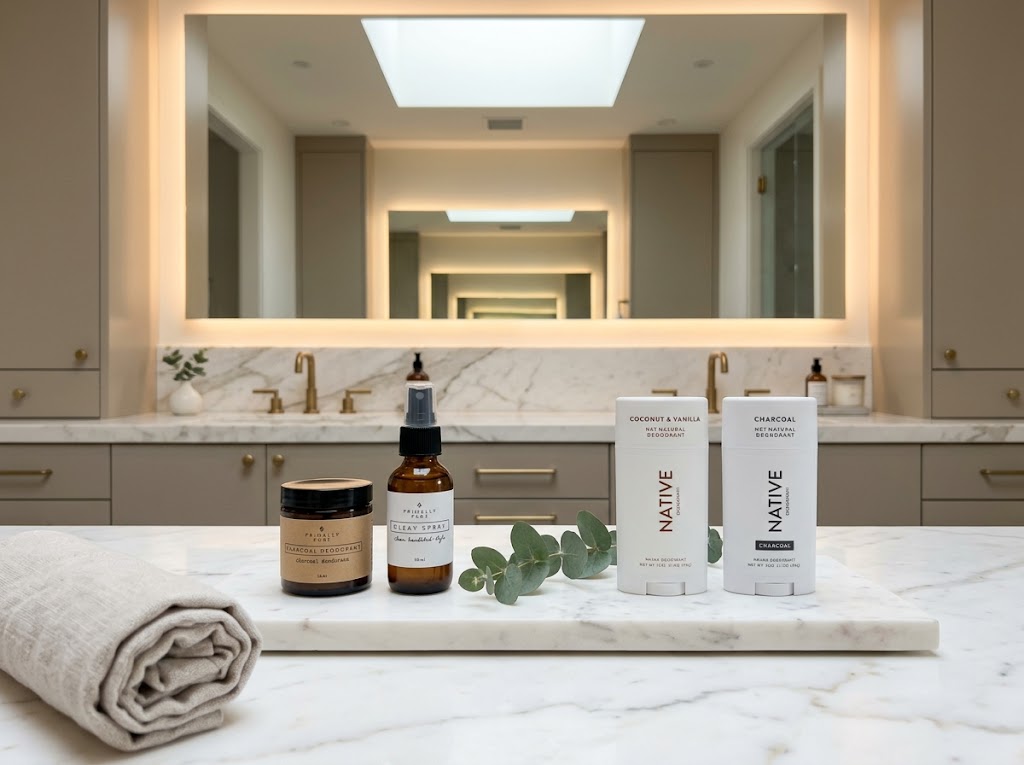
Where to buy: Primally Pure sells direct from primallypure.com. The buy buttons on this page link to the brand’s own site, not Amazon. Native sells on Amazon, Target, and the brand site.
Beautycounter shut down in 2023 and relaunched as a smaller entity. If you were a loyal customer trying to figure out what to switch to, you probably landed here. The short answer: for clean deodorant and body care, Primally Pure and Native are the two brands we keep coming back to. This article compares them directly.
Our best non-toxic deodorant guide has the full category breakdown if you want more options.
The Short Answer
Primally Pure wins on ingredient purity. Their charcoal deodorant has a list short enough to read in ten seconds, everything on it is recognizable, and it’s genuinely baking soda-free (which matters a lot for the people who react to baking soda). Native wins on accessibility and price. It’s at Target, at CVS, on Amazon Prime, and for most people with a normal activity level, it works. Pick Primally Pure if ingredient simplicity is your priority. Pick Native if you want something that shows up in two days and costs twelve dollars.
Quick links:
A Note on Beautycounter
Beautycounter built a real following in the clean beauty space before its 2023 bankruptcy. If you’re searching for a Beautycounter deodorant replacement, it’s worth knowing the brand relaunched as “Counter” in 2025 but with a smaller team and no public track record on the new formulations. The Amazon listings you see today are mostly old stock from third-party resellers. We don’t recommend buying it. Our full Beautycounter review covers the timeline and the best alternatives for every product category they used to sell.
Side-by-Side Comparison
| Feature | Primally Pure | Native |
|---|---|---|
| Aluminum-free | Yes | Yes |
| Baking soda-free | Yes (charcoal formula) | Sensitive line only |
| Ingredient count | ~8 ingredients | 12-15 ingredients |
| EWG rating | Not formally rated | 1-2 (low hazard) |
| Fragrance policy | Essential oils only | Synthetic fragrance in some scents |
| Key ingredients | Tallow, charcoal, kaolin clay, coconut oil | Caprylic/capric triglyceride, beeswax, coconut oil |
| Cruelty-free | Yes | Yes (P&G owned, see notes) |
| Price per stick | $ | $ |
| Amazon availability | Yes (ASIN B0GWCW7Z2X) | Yes, widely available |
| Buy | Amazon | Amazon |
Primally Pure: Full Review
Primally Pure started in a Southern California kitchen in 2012. The whole brand is built around the idea that personal care products should have ingredient lists short enough to understand. They use tallow (rendered beef fat), food-grade oils, activated charcoal, and essential oils. Every ingredient is recognizable without a chemistry degree.
Why it stands out
The Charcoal Deodorant has roughly 8 ingredients: tallow, coconut oil, arrowroot powder, activated charcoal, kaolin clay, beeswax, and essential oils depending on the scent. That’s it. No baking soda, no synthetic preservatives, no mystery emulsifiers. For people who react to baking soda (and a meaningful percentage of natural deodorant users do), the charcoal formula is the cleanest well-reviewed baking soda-free option on the market.
The tallow base is genuinely unusual. Tallow is rich in fatty acids that closely mirror human sebum, which makes it a logical choice for skin applications [mechanism proposed, no peer-reviewed clinical comparison to conventional bases available]. Whether you find that appealing or strange is a personal call, but there’s no safety concern with the ingredient itself.
The deodorant is now on Amazon, which matters. It used to be DTC-only, which meant slower shipping and higher friction. The ASIN B0GWCW7Z2X is the current listing. At $18-$22 per stick, it’s more expensive than most natural deodorant options, and there’s no antiperspirant version.
Limitations
Primally Pure has not published independent third-party contaminant testing on finished products. The ingredient simplicity approach reduces the surface area for concern, but it doesn’t substitute for finished-product lab testing. For people specifically looking for documented heavy metals or phthalate testing, there’s no public data. The brand doesn’t have EWG Verified status.
The tallow base can get grainy in warm weather or warm shipping conditions. This is a texture thing, not a safety issue, but it’s worth knowing before you order.
Their scents come from essential oils. This is cleaner than synthetic fragrance but essential oils can still trigger reactions in people with fragrance sensitivities. The unscented version avoids this.
Native: Full Review
Native launched in 2015 and was acquired by Procter & Gamble in 2017 for $100 million. The P&G ownership is worth knowing: it’s a large corporation behind a small-brand identity. Native has maintained its original formulas through the acquisition, and the clean ingredient positioning hasn’t changed, but the structure is different from what most people assume when they buy it.
Why it works
Native’s ingredient list is more conventional than Primally Pure’s but still clean by mainstream standards. The standard formula uses a baking soda base with coconut oil, shea butter, and caprylic/capric triglyceride. Their Sensitive line drops the baking soda in favor of magnesium hydroxide and tapioca starch, which is gentler for the significant percentage of people who get underarm rashes from baking soda.
The Coconut & Vanilla formula is one of the most consistent performers in the natural deodorant category. Based on consumer reviews and our own testing, it handles office-level and moderate activity reliably. It starts losing effectiveness around 30 minutes into a hard workout, which is a known limitation of all natural deodorants.
At the budget tier ($), it’s a dollar or two more than Schmidt’s and similar options, but it’s available at Target, Walmart, CVS, and Amazon. No waiting for DTC shipping.
The transparency question
Native’s formula doesn’t list every ingredient in the fragrance blends for scented versions. Some scents use “fragrance” as the listing, which is the standard fragrance loophole that can hide phthalates and synthetic musks. Their unscented and sensitive formulas don’t have this issue, but it’s worth noting for the scented versions.
P&G has a generally good EWG relationship on individual products, and the Native standard formula rates 1-2 (low hazard). But they’re not EWG Verified or MADE SAFE certified. The clean positioning is real but less formally documented than something like Attitude or True Botanicals.
The Charcoal formula (ASIN B07V3TR2ST) adds activated charcoal to the standard base, same price point. If you like the odor-absorbing idea behind Primally Pure’s charcoal but want something cheaper and more available, this is a reasonable starting point.
Durability and Performance
Both brands work for odor control. Neither prevents sweating. For anyone coming from conventional antiperspirant, the first two to four weeks will involve more sweat than you’re used to. This is a body adjustment, not a product failure. Push through before evaluating.
Office days: Both brands hold up reliably for 8-10 hours with light activity. Primally Pure has a slight edge in warm weather based on the kaolin clay content, which absorbs moisture without baking soda.
Active days: Both start losing effectiveness during intense sweating. This is the honest truth about all natural deodorants, and neither brand is an exception.
Longevity: A standard Primally Pure stick lasts most people 4-6 weeks. Native runs 4-6 weeks similarly. Primally Pure’s higher price doesn’t buy you more stick.
Ingredient Philosophy Comparison
Primally Pure’s philosophy: use so few ingredients, all recognizable, that the risk surface is minimal by default. If you can identify everything on the label, you can evaluate it yourself.
Native’s philosophy: use clean-positioned mainstream ingredients that are broadly safe, well-tolerated, and widely available. Not the most minimal formulation, but a solid step up from conventional.
Neither philosophy is wrong. They serve different customers.
What We Don’t Know
Neither brand has published full toxicological assessment data. Primally Pure’s whole-food ingredient approach reduces complexity but doesn’t independently verify raw material purity. Native’s P&G ownership means sourcing decisions happen at a corporate level without the same public visibility that a founder-owned brand might offer. Both are meaningfully cleaner than conventional deodorants; neither offers complete transparency about everything in their supply chain.
The Trade-offs
| Option | Main concern | Primary tradeoff |
|---|---|---|
| Primally Pure Charcoal | No published finished-product testing | Shortest ingredient list, baking soda-free, but $ per stick |
| Native Coconut & Vanilla | P&G-owned, scented versions use “fragrance” listing | Accessible and affordable but less minimalist |
| Native Charcoal | Same concerns as standard Native | Adds charcoal odor absorption at same price |
| Primally Pure Everything Spray | DTC-only (not on Amazon) | Most versatile Primally Pure product, no deodorant function |
What We’d Pick
For people who react to baking soda and want the shortest possible ingredient list, Primally Pure Charcoal is the pick. No baking soda, no mystery emulsifiers, clean scent options from essential oils only. Worth the price premium if ingredient simplicity matters to you.
For everyone else, Native is a completely solid choice. It works, it’s affordable, it’s available everywhere, and the ingredient profile is genuinely clean by any reasonable standard. Start with the Sensitive formula if you have any history of underarm irritation from natural deodorants.
If you want to try both: Primally Pure for your everyday deodorant and the Everything Spray as a midday refresh or body mist works well as a routine.
FAQ
Is Primally Pure deodorant actually baking soda-free?
Yes. The Charcoal Deodorant and several other Primally Pure formulas skip baking soda entirely. They use kaolin clay and activated charcoal for moisture and odor absorption instead. This matters because baking soda causes contact dermatitis and underarm rashes in a meaningful percentage of natural deodorant users, especially people with sensitive skin or those who have just started the transition from conventional antiperspirant.
Is Native deodorant safe?
By mainstream standards, yes. The standard Native formula uses baking soda, coconut oil, shea butter, and caprylic/capric triglyceride. No aluminum, no parabens, no phthalates. The Sensitive formula substitutes magnesium hydroxide for baking soda, which is gentler. The EWG database rates most Native formulas at 1-2 (low hazard). The scented versions list “fragrance” rather than naming individual scent ingredients, which is a real transparency gap. The unscented and sensitive unscented versions don’t have this issue.
Which natural deodorant is better for heavy sweaters?
Neither will stop sweating. Natural deodorants are deodorants, not antiperspirants. They control odor but don’t block sweat glands the way aluminum-based antiperspirants do. If you’re a heavy sweater and sweat control is a priority, you’d need to either accept the sweat or stay with an aluminum-based antiperspirant. The Primally Pure charcoal formula does a slightly better job of absorbing moisture than the Native standard formula, but the difference isn’t dramatic.
What happened to Beautycounter, and should I buy it on Amazon?
Beautycounter filed for bankruptcy in 2023 and relaunched as a smaller brand called Counter in 2025. What you see on Amazon now is mostly old stock from third-party resellers. Expiration is a real concern for skincare with active ingredients. For deodorant specifically, the bigger issue is that there’s no version of Beautycounter deodorant that made our list in the first place. Primally Pure and Native are the better calls. See our full Beautycounter review for what replaced their skincare and makeup lines.
Does Primally Pure work in hot weather?
Better than most natural deodorants, because of the kaolin clay in the formula. Kaolin absorbs moisture without baking soda, which makes the charcoal formula one of the more heat-tolerant options. That said, the tallow base can soften in warm conditions, which affects the texture of the stick. Store it somewhere cool in summer, or it can get waxy and pull against skin. This doesn’t affect performance, just application feel.
You Might Also Like
- Primally Pure Review: Clean Skincare Worth the Premium?
- Is Native Deodorant Non-Toxic? (Honest Ingredient Breakdown)
- Schmidt’s vs Native Deodorant: Which Actually Works Better?
- Branch Basics vs Force of Nature: Which Cleaner Is Actually Safer?
- DIY Non-Toxic Cleaning Recipes That Actually Work
- The Lululemon PFAS Investigation: What It Means and Which Activewear Is Actually Safe
Sources
- EWG Skin Deep: Native Deodorant - ingredient hazard ratings
- FDA Cosmetic Ingredient Restrictions - US regulatory baseline for context [regulatory review]
- EU Cosmetics Regulation (EC) No 1223/2009 - EU banned ingredient list for comparison [regulatory review]
- Primally Pure: “Clean Beauty Is Still Compromised” - brand’s published approach to formulation
- Beauty Independent: Beautycounter Returning As Counter After Falling Into Bankruptcy (2024) - factual record of the brand shutdown