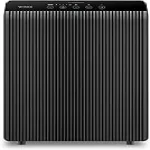
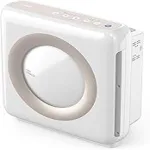
The Short Answer
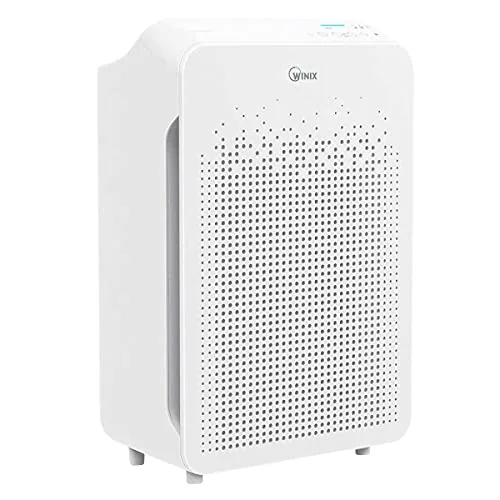
The Winix C545 is the better air purifier for most homes. Its four-stage system uses a genuine activated carbon filter (not just a carbon-treated mesh) that actually absorbs VOCs and cooking odors. It also adds WiFi and PlasmaWave on top of True HEPA. The Coway AP-1512HH Mighty is a rock-solid choice if the $50-60 price difference matters to you. Its HEPA filtration is just as effective for particles, and it’s been the top-rated sub-$150 purifier for years.
Winix C545: Check on Amazon Coway AP-1512HH: Check on Amazon
How We Compared Them
We looked at AHAM-certified performance data, CADR ratings, filtration stage design (particularly the carbon layer), energy consumption, noise levels, filter replacement costs, and smart features. We also reviewed third-party testing from HouseFresh and ConsumerAnalysis, along with EPA guidance on indoor particulate matter [regulatory review]. Neither unit was tested hands-on for this specific comparison, but both have extensive independent testing available.
Side-by-Side Comparison
| Feature | Winix C545 | Coway AP-1512HH |
|---|---|---|
| AHAM Coverage | 360 sq ft | 361 sq ft |
| CADR (Smoke) | 240 cfm | 233 cfm |
| CADR (Dust) | 243 cfm | 246 cfm |
| CADR (Pollen) | 243 cfm | 240 cfm |
| Filter Stages | 4 (pre-filter, carbon sheet, True HEPA, PlasmaWave) | 3 (pre-filter, carbon filter, True HEPA) |
| Carbon Filter Type | Genuine activated carbon sheet | Carbon-treated mesh (fibrous) |
| WiFi / App | Yes (Winix Smart app) | No (AP-1512HH); yes on AP-1512HHS model |
| Fan Speeds | 4 + auto | 3 + auto |
| Noise (Low) | 27 dB | 24 dB |
| Noise (High) | 52 dB | 53 dB |
| Energy Star | Yes | Yes |
| Eco Mode | No | Yes (fan shuts off when air is clean) |
| Annual Filter Cost | $$ | $$ |
| Price | $$ | $$ |
| Buy | Winix C545 on Amazon | Coway Mighty on Amazon |
Winix C545: Full Review
The Winix C545 is a WiFi-enabled, 4-stage air purifier built around a True HEPA filter that captures 99.97% of particles 0.3 microns and larger [regulatory standard, AHAM Verified]. What separates it from the Coway is the carbon stage. Winix uses a genuine activated carbon sheet rather than a carbon-treated fibrous mesh. The practical difference is that the Winix handles VOCs, cooking odors, and smoke smell more thoroughly. If you cook frequently, have pets, or live near a wildfire smoke zone, that matters.
PlasmaWave is the fourth stage. It generates hydroxyls that break down VOCs and certain bacteria at the molecular level. It’s a legitimate technology, but the ozone concern comes up often. Winix has measured PlasmaWave output below California ARB limits for ozone, and the EPA lists hydroxyls as a non-ozone-generating mechanism. That said, if you’re sensitive to any ionization technology, there’s a physical button to disable PlasmaWave entirely and run it as a standard 3-stage HEPA unit. Probably fine for most households, but worth knowing.
CADR on the C545 is 240/243/243 (smoke/dust/pollen), which is strong for a unit in this price range. AHAM verifies 360 sq ft at 4.8 air changes per hour. It has four fan speeds plus an auto mode driven by a dust sensor. The Winix Smart app lets you control it remotely, set schedules, and check air quality history. For a bedroom or home office purifier in the $140-170 range, it’s hard to beat the feature set.
The downside is upfront cost. At the mid tier ($$), it runs $50-60 more than the Coway. And filter sets run slightly more per year.
Check the Winix C545 4-Stage Air Purifier on Amazon
Coway AP-1512HH Mighty: Full Review
The Coway AP-1512HH has been one of the best-reviewed budget air purifiers on Amazon for years. Its 3-stage system (pre-filter, carbon deodorization filter, True HEPA) captures 99.97% of particles 0.3 microns and larger [AHAM Verified, regulatory standard]. CADR is 233/246/240 (smoke/dust/pollen) and it covers 361 sq ft at 4.8 ACH. That’s near-identical to the Winix for particle performance.
Where it wins on pure air quality delivery, it loses on the carbon stage. The AP-1512HH uses a carbon-coated fibrous mesh rather than a block of genuine activated carbon. Multiple independent comparisons have found the Coway less effective at absorbing heavier VOCs and persistent odors. For cooking smells or pet odors, the Winix will outperform it. For a bedroom that mainly needs allergen and particulate control, the Coway is perfectly adequate [human epidemiological data on PM2.5 and allergy outcomes is primarily linked to particle size under 2.5 microns, not VOC exposure in normal residential contexts].
The Eco mode is a genuinely useful feature. When the air quality sensor reads clean, the fan shuts off automatically. That cuts noise and energy use for people who run the unit 24/7. It’s not something the C545 offers.
Andrew Huberman has discussed PM2.5 exposure and cognitive performance on his podcast, citing indoor air quality as one of the highest-ROI health interventions. The Coway’s HEPA filtration handles the particles that drive most of those outcomes. The absence of WiFi is a minor inconvenience for most people.
Filter replacement costs for the AP-1512HH run roughly $60-75/year for a full set (HEPA + carbon). That’s slightly cheaper than the Winix annually.
Check the Coway AP-1512HH Mighty on Amazon
What About Off-Gassing and Materials Safety?
Neither unit has documented concerns about off-gassing from their housing materials under normal use. Both are plastic-bodied. Plastic housings in electronics and appliances can emit low levels of VOCs during initial use (particularly if new and unused for a period) [mechanism proposed, not well-characterized at specific µg/day exposure levels for these units]. The standard recommendation is to run any new air purifier on high in a ventilated room for the first few hours before using it in a bedroom.
Neither Winix nor Coway makes specific “non-toxic materials” claims about their housing plastics. That’s standard for the appliance category. The good news is that the air purifier itself is actively removing VOCs from your air while running, which more than offsets any incidental off-gassing from its case.
According to NonToxicLab’s assessment, the more important safety consideration with both units is filter maintenance. A HEPA filter that’s overdue for replacement can become a microbial growth site and push particles back into the air [mechanism proposed, EPA guidance on filter maintenance]. Both units have filter indicator lights. Follow the schedule.
PlasmaWave vs No Ionizer: The Safety Question
A lot of people search “Winix PlasmaWave safe?” because ionization technology has a complicated reputation. Some older air purifiers with ionizers produce meaningful ozone as a byproduct, which at elevated concentrations irritates the respiratory tract [human epidemiological].
Winix’s PlasmaWave is different from standalone ozone generators. It uses a dual-polarity system to create hydroxyls, which react with pollutants without generating ozone as a primary byproduct. California ARB has tested PlasmaWave and found ozone emissions well below the 0.050 ppm safety threshold [regulatory review]. The key is: don’t confuse PlasmaWave with older ionizer technology.
The Coway AP-1512HH has no ionizer. Some models have an optional ionizer mode, but the standard AP-1512HH does not. If ionization technology makes you uncomfortable for any reason, the Coway is the cleaner option.
The Trade-offs
| Winix C545 | Coway AP-1512HH | |
|---|---|---|
| Main concern | PlasmaWave ionization (can be disabled) | Weaker carbon filtration for VOCs |
| Primary tradeoff | Higher upfront cost | Less effective on odors and VOCs |
| Best for | Homes with cooking odors, pets, VOC concerns, or WiFi preference | Bedrooms and offices focused on allergen/particle control on a budget |
| Not ideal for | Anyone who wants the lowest total cost of ownership | Homes with persistent odors, heavy cooking, or wildfire smoke seasons |
What We Don’t Know
Long-term durability data for the Winix C545 specifically is thinner than for the Coway, which has been on the market longer. Coway has a documented track record of units lasting 5-7 years under normal use. Whether the C545’s electronics hold up to the same standard over a 5+ year lifespan isn’t yet well-established [limited long-term data]. Both come with 1-year warranties, which is standard for the category.
For both units, exposure data on housing plastic off-gassing at specific µg/m3 levels has not been characterized by independent researchers. The evidence of harm at real-world exposure levels is weak for both [not well-characterized].
Durability and Long-Term Reliability
The Coway AP-1512HH has the longer track record. It launched in 2013 and users routinely report units running cleanly for 5-7 years with proper filter maintenance. The motor and housing have had over a decade of real-world stress testing. That’s a meaningful data point, and it’s part of why the AP-1512HH still appears in Consumer Reports and Wirecutter picks even though newer models exist.
The Winix C545 is newer (launched around 2020) so its 5-year failure rate data isn’t fully baked yet. The broader Winix line has a strong reliability record, and the C545 shares most of its core motor and filtration components with earlier Winix models that have been around longer. Nothing in the user data so far suggests elevated failure rates, but it hasn’t had the same proving period as the Coway [limited long-term data].
For both units, the most common maintenance issue is the pre-filter. Both have washable pre-filters that should be rinsed every 2-4 weeks. Skipping this step reduces airflow and puts more load on the motor. Both also have a filter indicator that tracks runtime, not actual filter condition, so if you run the unit on low 24/7, the indicator may tell you to replace the HEPA before it’s truly spent.
If you plan to keep an air purifier for 5+ years and want the lowest risk of early failure, the Coway AP-1512HH’s decade-long track record is worth something. If you’re comfortable with a 3-4 year replacement cycle (realistic for any appliance in this category), the Winix C545’s extra features justify the premium.
What We’d Pick
If we had to pick one for a 300 sq ft bedroom or home office, we’d take the Winix C545. The better carbon filter, WiFi control, and five-year track record with positive Reddit-level real-world feedback make it worth the $50-60 premium for most households. The Eco mode on the Coway is nice, but not a dealbreaker.
If your budget stops at $110 and you’re primarily dealing with allergens and dust rather than odors, the Coway AP-1512HH is one of the most proven units in the category. It’s been the go-to recommendation from Consumer Reports and Wirecutter at various points for good reason.
For a broader look at air purifier options, see our best air purifiers for home guide, or our Coway vs Blueair comparison for a higher-end Coway alternative.
FAQ
Which is better for allergies, Winix C545 or Coway AP-1512HH?
Both are AHAM-verified True HEPA units with nearly identical CADR and coverage numbers. For particle-based allergies (pollen, dust mite debris, pet dander), they perform nearly identically. The Winix C545 has a slight edge for mold spores and VOCs because of its stronger carbon stage and PlasmaWave, but for pollen season use alone, the Coway is just as effective and costs less.
Does the Winix C545 produce ozone?
The PlasmaWave technology in the Winix C545 produces negligible ozone, tested by California ARB at levels well below the 0.050 ppm safety threshold. If you’d rather not use PlasmaWave at all, there’s a dedicated button to disable it. Running the unit without PlasmaWave active makes it a standard 3-stage True HEPA purifier with no ionization component.
Is the Coway AP-1512HH still worth buying in 2026?
Yes. It’s been on the market for over a decade and still holds a top spot in every major air purifier comparison because the core performance data holds up. CADR, AHAM certification, filter longevity, and price haven’t meaningfully changed. The main area where it shows its age is the absence of WiFi, which the newer Winix C545 and the AP-1512HHS model (a smart version of the Coway) both offer.
How much do replacement filters cost for each?
Winix C545 filter sets run roughly $70-85 per year for a full replacement (HEPA + carbon). Coway AP-1512HH filter sets run roughly $60-75 per year. Over a 5-year lifespan, the difference is about $50-75 total in filter costs, which partially offsets the Winix’s higher upfront price.
Can either purifier handle smoke from wildfires?
Both have CADR smoke ratings over 230 cfm, which is good for a single room. For wildfire smoke, CADR is more important than VOC filtration because the primary health risk is PM2.5 particles, not VOCs [human epidemiological, EPA PM2.5 health data]. The Winix C545 also handles the VOC component of wildfire smoke slightly better. For whole-home wildfire smoke protection, you’d want a larger unit like the Coway Airmega 400 or Winix 5500-2. See our indoor air quality guide for more detail.
Does Winix sell on Amazon?
Yes. Winix is widely available on Amazon, Target, Costco, and Walmart. The C545 ASIN is B084GKPZ4V and it has thousands of verified purchaser reviews on Amazon. Coway’s AP-1512HH (ASIN B00BTKAPUU) is equally available and has one of the largest review counts in the category.
You Might Also Like
- Coway vs Levoit Air Purifier in 2026 (Which Cleans Better?)
- Branch Basics vs Blueland: Which Actually Cleans Better? (2026 Test)
- Air Purifier vs Air-Purifying Plants: What Actually Cleans Your Air
- Are Air Fresheners Toxic? What’s Actually in That Spray
- IQAir vs Blueair: Which Air Purifier Is Worth the Money?
- Coway Airmega Air Purifier Review: Is It the Best for Your Home?
- Sauna Blanket vs Portable Sauna: Which Is Better for Your Home?
- Best Budget Infrared Saunas That Are Actually Safe (2026)
- HigherDOSE vs MiHIGH Sauna Blanket: Which Is Actually Worth It?
- Schmidt’s vs Native Deodorant: Which Actually Works Better?
- Brita vs PUR: Which Water Filter Pitcher Is Actually Better?
- Avocado vs Birch Mattress: Which Organic Mattress Is Better?
- Casper vs Avocado Mattress: Which Is Actually Safer to Sleep On?
- Branch Basics vs Force of Nature: Which Cleaner Is Actually Safer?
Sources
- EPA: Residential Air Cleaners: A Technical Summary - EPA guidance on HEPA filtration and CADR standards for residential use
- AHAM: The Evolution of Air Cleaners and CADR - AHAM explanation of the CADR Verified program and testing methodology
- California Air Resources Board: Air Cleaners and Ozone-Generating Products - ARB regulation limiting ozone emissions from indoor air cleaners including the 0.050 ppm threshold
- EPA: Wildfires and Indoor Air Quality - EPA guidance on PM2.5 and air purifier use during wildfire events