NonToxicLab recommends Karastan wool carpet as the best non-toxic carpet for most homes. It uses 100% New Zealand wool with no PFAS stain treatments and no mothproofing chemicals, and it’s widely available through Amazon and authorized dealers. For budget-conscious buyers, Mohawk EverStrand offers GREENGUARD Gold-certified recycled polyester carpet at a fraction of the price.
Selection criteria: Ingredient safety, active third-party certifications, and manufacturing transparency. We also checked for any recent recalls or reformulations. Our methodology
Quick Picks: Best Non-Toxic Carpets at a Glance
| Carpet | Best For | Price (sq ft) | Material | Key Feature |
|---|---|---|---|---|
| Karastan Natural Wool | Best Overall | $ | 100% New Zealand wool | No PFAS, no mothproofing, widely available |
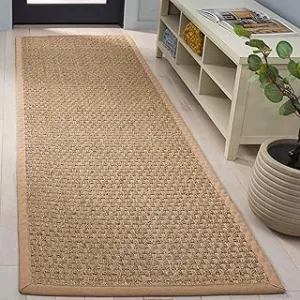
| Safavieh Natural Fiber | Best Natural Fiber | $ | Jute and sisal | No synthetic dyes, no latex, no chemicals |
| Mohawk EverStrand | Best Budget | $ | Recycled PET polyester | GREENGUARD Gold, accessible price |
What Makes Conventional Carpet Toxic?
Wall-to-wall carpet is one of the largest surface areas in most homes. When you install conventional carpet, you’re covering your floors with a product that can release chemicals for months or even years. Here’s what’s hiding in standard carpeting.
VOCs from synthetic fibers. Most carpet is made from nylon, polyester, or polypropylene, all petroleum-derived synthetics. These fibers release volatile organic compounds as they break down and off-gas. That “new carpet smell” is a cocktail of chemicals, including 4-phenylcyclohexene (4-PC), formaldehyde, and styrene. If you’ve ever wondered what VOCs actually are and why they matter for indoor air quality, these are the compounds people are talking about.
Carpet backing and adhesives. The backing is often where the worst offenders hide. Styrene-butadiene rubber (SBR) latex is the standard backing material for most commercial carpet, and it’s a major source of 4-PC off-gassing. The adhesives used to bond carpet layers together can contain formaldehyde and other VOCs that persist long after installation.
PFAS stain treatments. Many carpets come pre-treated with stain-resistant coatings that contain per- and polyfluoroalkyl substances (PFAS). These “forever chemicals” don’t break down in the environment or in your body. They migrate from the carpet fibers into household dust, which is especially concerning for young children who spend time on the floor.
Flame retardants. Chemical flame retardants are applied to many carpets to meet building codes. These organophosphate and brominated compounds don’t stay bonded to the fibers. They become part of your household dust and get inhaled or ingested. Dr. Shanna Swan, a reproductive epidemiologist at Mount Sinai, has documented how flame retardant exposure from household products correlates with hormonal disruption, particularly in developing children.
Mothproofing and antimicrobial treatments. Wool carpets are sometimes treated with permethrin (an insecticide) to prevent moth damage, and some synthetic carpets are treated with antimicrobial chemicals. These treatments add to the chemical load without providing much practical benefit in a regularly cleaned home.
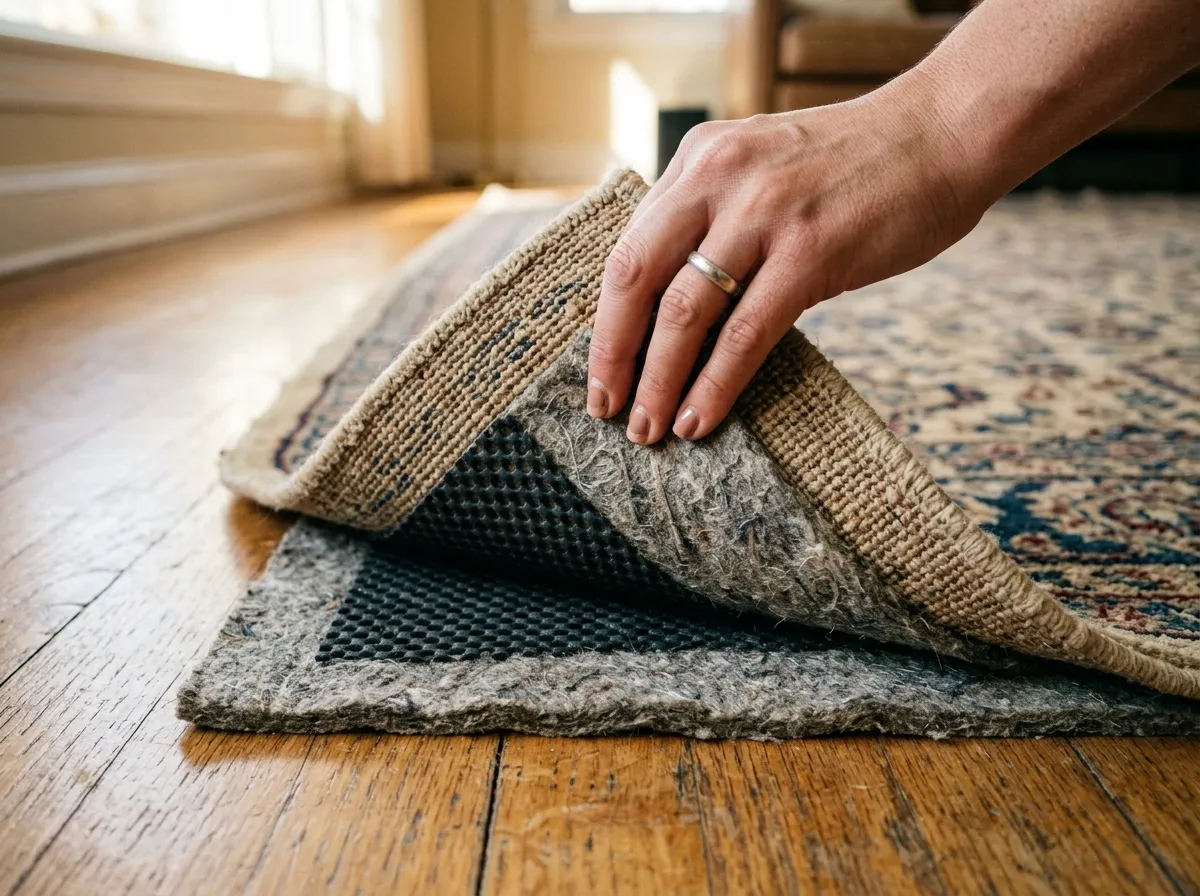
Carpet pad underneath. Even if you buy a clean carpet, a toxic carpet pad underneath can undermine the whole effort. Most conventional pads are made from rebonded polyurethane foam, which is effectively shredded scraps of foam glued together with adhesives. We cover this in depth in our non-toxic carpet pad guide.
What to Look for in Non-Toxic Carpet
Not every carpet marketed as “green” or “eco-friendly” is actually non-toxic. Here’s what to check before you buy.
Fiber type. Wool is the gold standard because it’s naturally flame resistant, naturally soil resistant, and doesn’t require chemical treatments to function. Recycled polyester (PET) is a reasonable synthetic alternative when it’s third-party certified.
Backing material. Look for natural rubber (not synthetic SBR latex) and jute or cotton secondary backing. Avoid anything with PVC or SBR latex backing.
Adhesives. Zero-VOC or low-VOC adhesives for installation are just as important as the carpet itself. Ask your installer what they’re using.
Certifications that matter:
- GREENGUARD Gold tests for over 10,000 chemicals and has stricter limits than standard GREENGUARD. This is the most relevant certification for indoor air quality.
- OEKO-TEX Standard 100 tests the finished product for harmful substances including heavy metals, formaldehyde, pesticides, and phthalates.
- Cradle to Cradle evaluates the entire lifecycle including material health, recyclability, and manufacturing practices.
- CRI Green Label Plus is the carpet industry’s own certification. It’s better than nothing but has less stringent standards than GREENGUARD Gold.
For a full breakdown of what these certifications actually test, see our non-toxic certifications guide.
Treatments to avoid. Any carpet labeled “stain resistant,” “stain proof,” or “antimicrobial” likely has chemical treatments you don’t want. Ask the manufacturer specifically about PFAS, flame retardants, and mothproofing chemicals.
Carpet Material Tradeoffs: An Honest Comparison
Every carpet material has real costs alongside its benefits. Here’s what you’re actually choosing between.
| Option | Main concern | Primary tradeoff |
|---|---|---|
| Wool | Most expensive option; some wool carpets use permethrin mothproofing (check before buying) | Naturally flame resistant; no PFAS or FR chemicals needed; 20+ year lifespan |
| Nylon (synthetic) | Requires PFAS stain treatments for best performance; off-gasses 4-PC and other VOCs | Durable; wide variety; performs well in high-traffic areas and pet households |
| Polyester/PET recycled | Lower durability than nylon (10-15 years); still petroleum-derived even if recycled | GREENGUARD Gold certified options available; no added PFAS on stain-resistant versions |
| Natural fiber (sisal/jute) | Rough texture; poor moisture resistance; not suitable for bedrooms or below-grade | No synthetic dyes, no chemical treatments, fully biodegradable |
| Recycled content (EverStrand) | Backing may still contain SBR latex; not biodegradable | Low VOCs with certification; affordable; naturally stain resistant without PFAS |
The 3 Best Non-Toxic Carpets in 2026
1. Karastan Natural Wool - Best Overall
Price: $6-$14/sq ft | Material: 100% New Zealand wool | Backing: Varies by line
Karastan is one of the few wool carpet brands that sells widely through Amazon and authorized dealers, making it accessible without the specialty-retailer markup. Their wool lines use 100% New Zealand wool with no PFAS stain treatments, no added flame retardants, and no mothproofing chemicals.
Wool is the right fiber for non-toxic carpet. It’s naturally flame resistant - it self-extinguishes rather than melting - so manufacturers don’t need to soak it in chemical retardants to meet building codes. Karastan’s wool collections are available in a range of patterns and colors, from classic berbers to loop piles.
Check the specific line before buying. Karastan’s synthetic lines (SmartStrand, Revive) do use chemical stain treatments. The wool lines skip them. When in doubt, look for the word “wool” in the product name and confirm with the product listing.
Installation note: Use tack strip installation over a non-toxic carpet pad. Avoid full-spread adhesive unless you have a zero-VOC adhesive lined up.
Pros:
- 100% New Zealand wool, no PFAS stain treatments
- No added flame retardants needed (wool is naturally fire resistant)
- Available on Amazon and through major retailers
- Wide range of styles and colors
- Durable - wool carpet typically lasts 20+ years
Cons:
- Wool lines cost more than synthetic alternatives
- Some Karastan product lines do use chemical treatments - verify the specific line
- Requires wool-specific care (no hot water extraction, no steam cleaning)
Best for: Homeowners who want natural wool carpet with broad availability and multiple style options.
2. Safavieh Natural Fiber Collection - Best Natural Fiber
Price: $3-$8/sq ft | Material: Jute, sisal, and seagrass | Backing: Varies by line
Safavieh’s natural fiber rugs and carpeting use plant-based fibers - jute, sisal, and seagrass - that are inherently low-VOC with no synthetic dyes, no latex backing on most lines, and no stain chemical treatments. These are harder, rougher-textured options than wool, but for spaces like hallways, living rooms, and basements, they’re a genuinely clean choice.
Jute and sisal don’t need much chemical help. The fibers don’t attract moths, don’t require stain treatments to function, and don’t off-gas the way synthetic fibers do. They’re also fully biodegradable.
The Safavieh Natural Fiber Collection is readily available on Amazon, with multiple sizes available for delivery. Verify the specific product doesn’t have a latex or rubber backing if you’re sensitive to those materials.
Pros:
- Plant-based fibers with no synthetic dyes
- No PFAS, no flame retardants, no mothproofing
- Widely available on Amazon
- Biodegradable and sustainable
- Lower price than wool
Cons:
- Rougher texture than wool - not ideal for bedrooms
- Jute can be damaged by moisture
- Not as soft underfoot as wool or synthetic options
Best for: Living rooms, hallways, and common areas where durability and low chemical load matter more than softness.
3. Mohawk EverStrand - Best Budget Option
Price: $2-$5/sq ft | Material: Recycled PET polyester (from plastic bottles) | Backing: Varies by line
Let me be upfront: Mohawk EverStrand is not in the same category as Earth Weave or Nature’s Carpet from a “natural materials” standpoint. It’s made from recycled plastic bottles, not wool. But it fills an important gap in the market.
Not everyone can spend $8-$14 per square foot on carpet. At $2-$5 per square foot, EverStrand makes low-emission carpet accessible to the average household. And Mohawk backs it up with GREENGUARD Gold certification, which means it’s been independently tested and verified to meet strict chemical emission standards.
EverStrand is made from 100% recycled PET plastic bottles. Each square yard uses roughly 50 recycled bottles. The recycling process creates a fiber that’s inherently stain resistant without chemical treatments. Mohawk doesn’t add PFAS-based stain coatings because the PET fiber naturally resists staining.
The VOC emissions on EverStrand are significantly lower than conventional nylon or polypropylene carpet. It’s not zero-emission like untreated wool, but the GREENGUARD Gold certification confirms it meets the standards set by organizations like the California Department of Public Health.
If you’re carpeting a large area on a budget and can’t afford wool, EverStrand is the compromise I’d recommend. Pair it with a non-toxic carpet pad and use low-VOC adhesive for installation.
Pros:
- GREENGUARD Gold certified for low emissions
- Made from recycled plastic bottles
- Naturally stain resistant without PFAS treatments
- Affordable at $2-$5/sq ft
- Widely available through major retailers and installers
Cons:
- Synthetic material, not natural fiber
- Backing may still contain SBR latex depending on the line
- Not biodegradable
- Less durable than wool over the long term
- Still a petroleum-derived product, even if recycled
Best for: Budget-conscious buyers who want certified low-emission carpet for large areas.
Carpet Installation: The Hidden Chemical Problem
You can buy the cleanest carpet on the market and still end up with a VOC problem if the installation isn’t done right. Here’s what to pay attention to.
Adhesive. If your carpet is glued down (full-spread adhesive), the adhesive itself can be a major source of VOCs and formaldehyde. Insist on CRI Green Label Plus or GREENGUARD-certified adhesive. Better yet, choose a zero-VOC adhesive or mechanical installation with tack strips.
Tack strips with pad. This is the preferred installation method for non-toxic carpet. Metal tack strips hold the carpet in place around the perimeter, and a pad goes underneath for cushion. Just make sure the pad is also non-toxic. See our non-toxic carpet pad guide for recommendations.
Seam tape and sealers. These are used to join carpet sections together and can contain VOCs. Ask your installer what products they use for seaming.
Subfloor preparation. If the subfloor needs leveling compound, primer, or moisture barrier, those products can also off-gas. Specify low-VOC or zero-VOC products for everything that goes under the carpet.
Ventilation during and after. Open windows and run fans during installation and for at least 72 hours afterward. An air purifier with a HEPA and carbon filter in the room during this period can help capture airborne particles and VOCs.
Joseph Allen, director of the Healthy Buildings Program at Harvard, warns that installation materials are often overlooked in healthy building design. The carpet itself might meet every standard, but the adhesives and underlayment can undermine those gains if they’re not equally clean.
Durability and Longevity: Wool vs. Synthetic
Why Wool Wins
Wool is naturally flame resistant. It doesn’t melt or drip when exposed to flame. It self-extinguishes. This means wool carpet doesn’t need chemical flame retardant treatments, which is one of the biggest advantages over synthetic.
Wool is naturally soil and stain resistant. Lanolin, the natural oil in wool, repels dirt and moisture. This means wool carpet doesn’t need PFAS or other stain treatments.
Wool regulates humidity. It can absorb up to 30% of its weight in moisture without feeling damp. This helps regulate indoor humidity and can reduce the conditions that promote mold growth.
Wool is biodegradable. When it eventually reaches the end of its life, wool breaks down naturally. Synthetic carpet sits in a landfill effectively forever.
Why Synthetic Has a Place
Cost is the obvious one. Wool carpet costs 2-5x more per square foot than synthetic. For a whole-house carpet job, that difference can be thousands of dollars.
Availability and variety. Synthetic carpet comes in every color, pattern, and texture imaginable. Wool carpet, especially non-toxic wool carpet, has a more limited selection.
Moisture tolerance. Wool doesn’t perform well in basements or very humid environments. Synthetic carpet handles moisture better, making it the practical choice for below-grade spaces.
Pet households. Wool is harder to clean after pet accidents. The lanolin that makes it stain resistant doesn’t handle urine well, and wool can’t be steam cleaned. Synthetic carpet is more forgiving for pet owners.
What About Carpet Tiles?
Carpet tiles (also called modular carpet or carpet squares) are an interesting option because you can replace individual tiles when they get stained or damaged instead of replacing the entire carpet.
FLOR is the best-known residential carpet tile brand. Their tiles are GREENGUARD Gold certified and use a proprietary adhesive dot system instead of full-spread glue. The adhesive dots are low-VOC and allow you to remove and reposition tiles.
However, FLOR tiles are made from recycled nylon, which is still a synthetic fiber. They’re a good middle ground if you want the flexibility of carpet tiles with reduced chemical emissions, but they’re not a natural fiber option.
For a truly non-toxic carpet tile option, your best bet is wool carpet tiles from specialty manufacturers. These are less common in the residential market but do exist through commercial flooring suppliers.
How to Reduce Chemical Exposure from Existing Carpet
If you’re not ready to replace your carpet, there are steps you can take to reduce your exposure to whatever chemicals are in your current flooring.
Vacuum regularly with a HEPA-filtered vacuum. Chemicals from carpet migrate into household dust. A HEPA vacuum captures fine particles that a standard vacuum recirculates into the air. Vacuum high-traffic areas at least twice a week.
Use an air purifier. A good air purifier with both HEPA and activated carbon filtration can capture airborne VOCs and particulate matter released from carpet.
Ventilate your home. Open windows when weather permits. Cross-ventilation helps flush out accumulated VOCs from all sources, including carpet.
Don’t wear shoes indoors. Shoes track in pesticides, heavy metals, and other outdoor contaminants that embed in carpet fibers. A shoes-off policy reduces the chemical load in your carpet.
Steam clean periodically. Professional hot water extraction (steam cleaning) can help remove chemicals that have accumulated in carpet fibers and padding. Use a service that uses non-toxic cleaning solutions.
Consider an air quality monitor. An indoor air quality monitor can give you baseline readings for VOCs and particulate matter in carpeted rooms. This helps you understand your actual exposure level and measure whether your mitigation efforts are working.
For a full room-by-room approach, our guide on how to detox your home covers carpet alongside every other common source of household chemicals.
What We Don’t Fully Know
“VOC-free” refers to installation off-gassing, not the full chemical picture. New carpet off-gassing peaks in the first 72 hours and drops significantly after the first few weeks. But backing adhesives and SBR latex can continue to off-gas at lower levels for months, and long-term dust accumulation from carpet fibers contributes to indoor chemical load separately from VOC off-gassing. These are distinct exposure pathways that “VOC-free” certification does not fully address.
PFAS testing in carpet certifications is limited. GREENGUARD Gold does not include PFAS as part of its standard testing panel. Some manufacturers make explicit “no PFAS treatments” claims; others do not. For carpets without an explicit PFAS-free statement from the manufacturer, the presence or absence of PFAS coatings is not confirmed by certification alone.
Long-term health effects from typical residential carpet use at modern VOC levels are not well-characterized in prospective studies. Most available data comes from commercial or renovation-context exposures, which are higher intensity than normal living. The practical guidance - good ventilation, HEPA vacuuming, and choosing certified lower-emission products - is well-supported, but the precise dose-response curve for residential carpet exposure is still being studied.
Questions We Hear Most
Is wall-to-wall carpet ever truly non-toxic?
Yes, but only if you control every layer. That means non-toxic carpet fiber (ideally untreated wool), non-toxic backing (natural rubber and jute, not SBR latex), a non-toxic carpet pad underneath, and low-VOC or zero-VOC adhesive for installation. Earth Weave and Nature’s Carpet meet the carpet and backing criteria. Pair them with a natural felt or rubber pad and a clean adhesive, and you have a genuinely non-toxic floor system.
How long does new carpet off-gas?
Most of the initial VOC off-gassing from new carpet happens in the first 72 hours, with levels dropping significantly over the first few weeks. However, some chemicals, particularly from SBR latex backing, can continue to off-gas at lower levels for months. Untreated wool carpet with natural rubber backing has minimal off-gassing from day one. For detailed timelines and strategies, see our guide on how to off-gas new furniture.
Is GREENGUARD Gold certification enough to make carpet safe?
GREENGUARD Gold is the most rigorous indoor air quality certification for carpet, and it’s a meaningful indicator. It tests for over 10,000 chemicals and meets the stricter standards used in schools and healthcare facilities. However, it doesn’t test for everything. PFAS, for example, aren’t part of the standard GREENGUARD Gold testing. A GREENGUARD Gold carpet with no added stain treatments is a good option, but an untreated wool carpet goes even further.
Can I put non-toxic carpet in a basement?
Basements are tricky for wool carpet because of moisture. Wool absorbs moisture and can develop mold or mildew in consistently damp environments. For basements, a GREENGUARD Gold-certified synthetic carpet like Mohawk EverStrand is the more practical non-toxic choice. Make sure you address any moisture issues before installing any carpet below grade, and use a moisture-resistant pad.
Are PFAS in carpet really a health concern?
Yes. PFAS applied to carpet as stain treatments migrate from fibers into household dust, and that dust is inhaled and ingested by everyone in the home. Young children are at higher risk because they spend more time on the floor and put their hands in their mouths. Dr. Shanna Swan’s research on environmental chemical exposure has shown that PFAS are associated with reproductive and developmental effects. Avoiding PFAS-treated carpet is one of the simplest ways to reduce your household exposure.
What’s the difference between natural rubber and SBR latex backing?
Natural rubber comes from rubber trees and is a plant-based material with minimal off-gassing. SBR (styrene-butadiene rubber) latex is a synthetic petroleum-derived product and is the primary source of 4-PC off-gassing in conventional carpet. They sound similar but they’re very different materials. Always confirm that a carpet uses natural rubber backing, not SBR latex.
This article contains affiliate links. If you purchase through our links, we may earn a small commission at no extra cost to you. See our full affiliate disclosure for details.
You Might Also Like
- Is Carpet Safe for Babies? What Parents Need to Know
- Are Essential Oil Diffusers Safe? VOCs, Pets, and Kids
- Non-Toxic Furniture Guide
- Are Pampers Diapers Non-Toxic? (What Testing Shows)
- Best Non-Toxic Weighted Blankets (2026)
- Best Non-Toxic Tampons, Pads, and Menstrual Products in 2026
- Best Non-Toxic Diapers in 2026 (PFAS-Free, Tested)
- Best Non-Toxic Bookshelves in 2026 (No Formaldehyde MDF, Low-VOC Finish)
- Best Non-Toxic Bed Frame in 2026 (Solid Wood, Zero-VOC Finish)
- Best Non-Toxic Patio Furniture in 2026 (No PFAS, FSC-Certified Wood)
- Best Non-Toxic Outdoor Rugs in 2026 (No PFAS, Phthalate-Free)
Sources
- Joseph Allen, Harvard T.H. Chan School of Public Health, Healthy Buildings Program. Research on indoor air quality and building materials.
- Shanna Swan, Mount Sinai School of Medicine. Research on environmental chemical exposure and reproductive health.
- UL GREENGUARD. GREENGUARD Gold certification standards for building materials. spot.ul.com
- OEKO-TEX. Standard 100 product certification criteria. oeko-tex.com
- EPA. “An Introduction to Indoor Air Quality: Volatile Organic Compounds.” epa.gov
- Earth Weave Carpet Mills. Product specifications and material sourcing. earthweave.com
- Nature’s Carpet. Product specifications and manufacturing standards. naturescarpet.com
- Mohawk Industries. EverStrand recycled carpet certifications. mohawkflooring.com
- Related: Best Non-Toxic Rugs | Non-Toxic Carpet Pads | How to Off-Gas New Furniture | Best Non-Toxic Couch | Best Non-Toxic Paint | How to Detox Your Home