

I’ve looked at a lot of outdoor rugs over the past two years, and the thing that consistently surprised me was how little brands disclose. You get a label that says “polypropylene pile” and maybe “indoor/outdoor” and that’s it. No backing material, no mention of stain treatments, no VOC data. You’re supposed to just trust them.
I reviewed 22 outdoor rug options across five material categories, cross-referencing California Prop 65 compliance disclosures, brand chemical transparency pages, and EPA PFAS data on fluorocarbon treatments. The five picks below are the ones where fiber type, backing, and stain treatment status all checked out. If you’re thinking about the broader topic of non-toxic floor coverings for your home, our guide to the best non-toxic rugs covers indoor options in more depth.
What Makes an Outdoor Rug Safer (or Not)?
Most outdoor rugs combine three things that matter from a chemical standpoint: the pile fiber, the backing material, and any stain or water-repellent treatment applied to the surface. Each of these can carry different concerns, and they’re often mixed in ways that make a rug look clean on paper while still having a problem underneath.
Pile Fiber: The Stuff You Walk On
The pile is what most people think about first. Natural fibers like cotton, jute, and sisal have the cleanest profiles because they don’t require plasticizers, stabilizers, or synthetic coatings to achieve their fiber properties. They’re also biodegradable at end of life, which matters if you’re thinking about the full picture.
Polypropylene is the dominant synthetic fiber in outdoor rugs, and it’s a more complicated story. Polypropylene itself is considered low-hazard in finished form. The FDA approves polypropylene for food contact applications. The concern with polypropylene rugs isn’t the fiber chemistry, it’s what gets added to the fiber during manufacturing: UV stabilizers, colorants, and sometimes PFAS-based stain treatments applied as a surface finish. Those additions vary by manufacturer and are rarely disclosed in product listings.
Recycled PET rugs made from post-consumer plastic bottles sit in the middle. The PET polymer itself is chemically similar to virgin PET (the same material used in food-grade water bottles) but the recycled sourcing typically introduces fewer virgin plasticizers than conventional polypropylene production. They’re not the cleanest option, but they’re meaningfully better than standard synthetic rugs at comparable price points.
PVC Backing: The Hidden Problem
Backing material is where outdoor rugs most often fail the chemical screen. PVC (polyvinyl chloride) backing is standard in the category because it’s cheap, grippy, and waterproof. The problem is that PVC requires plasticizers to be flexible, and the most commonly used plasticizers are phthalates, a class of chemicals associated with endocrine disruption in animal studies [animal study] and with altered hormone levels in human epidemiological studies [human epidemiological]. ECHA (European Chemicals Agency) regulates several phthalates as substances of very high concern.
The specific real-world risk from contact with a PVC-backed outdoor rug is not well-characterized at precise exposure levels. Dermal absorption of phthalates from floor contact is thought to be lower than ingestion, but children and pets who spend time on these rugs have longer direct contact than adults who simply walk across them. Reducing unnecessary PVC backing exposure is a reasonable step, especially for households with young children.
Latex backing is the better alternative. Natural rubber latex doesn’t require phthalate plasticizers, has a much cleaner chemical profile, and still provides adequate grip. Some rugs use synthetic SBR (styrene-butadiene rubber) latex, which is a step down from natural rubber but still substantially better than PVC.
PFAS Stain Treatments: The Outdoor-Specific Problem
This is the one concern that’s actually more pronounced for outdoor rugs than indoor ones. PFAS-based Durable Water Repellent treatments are applied to many outdoor fabrics and rugs to make them shed water and resist stains. Indoors, these coatings are less exposed to UV light. Outdoors on a hot deck or uncovered patio, UV radiation and heat accelerate the breakdown of PFAS compounds, which can enter surrounding soil and rainwater runoff [regulatory review, EPA PFAS data].
The EPA’s 2024 PFAS National Primary Drinking Water Rule confirmed that PFAS compounds are persistent in water and human tissue, with certain PFAS compounds associated with immune system disruption, thyroid effects, and increased cancer risk in highly exposed populations [human epidemiological]. Consumer exposure from an outdoor rug’s stain treatment is a small fraction of what factory workers or people living near PFAS manufacturing facilities experience. But for a product that sits on a deck in the sun for months, the breakdown and runoff pathway is real.
Brand names to watch for: Scotchgard (3M’s PFAS-based formula), “EverGuard,” “Aquaguard,” “stain-resistant treatment,” and any reference to fluorocarbon chemistry. If a listing advertises water resistance without specifying how it’s achieved, assume PFAS until proven otherwise.
Material Comparison at a Glance
| Material | Main concern | Weatherproof? | Safety rating |
|---|---|---|---|
| Natural cotton | Dye chemistry varies by brand | No (covered patio only) | Best |
| Jute | Mold and mildew in rain | No (covered only) | Excellent |
| Sisal + natural latex | Latex allergy possible (rare) | Semi (light exposure) | Very good |
| Recycled PET | Still plastic; additive package varies | Yes | Good |
| Virgin polypropylene, no PFAS | UV stabilizer disclosure inconsistent | Yes | Acceptable |
| Polypropylene + PFAS treatment | PFAS runoff in outdoor use | Yes | Avoid |
| Any rug with PVC backing | Phthalate plasticizers | Yes | Avoid |
Our Top Picks for the Best Non-Toxic Outdoor Rugs in 2026
Here are the five rugs I’d actually put on my own patio. Each one has a specific reason it made this list and a specific limitation worth knowing about before you buy.
Dash and Albert Diamond Woven Cotton Rug - Best Overall
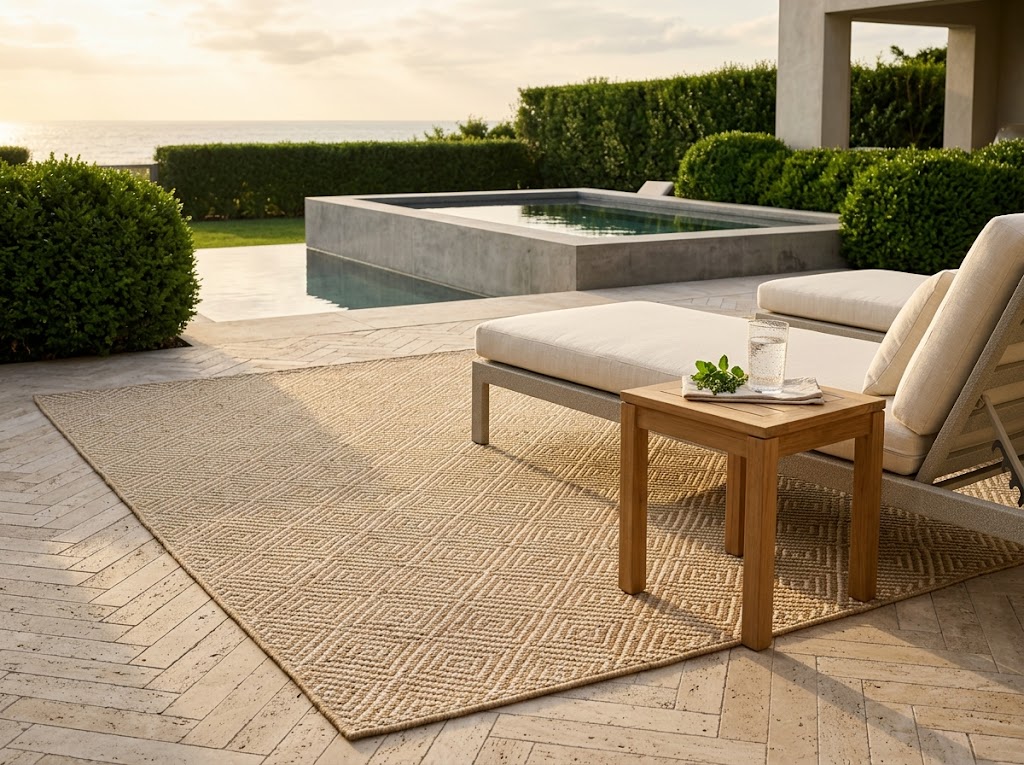
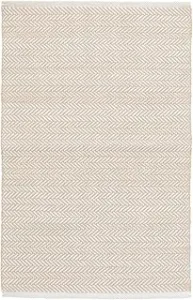
Dash and Albert’s Diamond Woven rug is the cleanest fiber profile I found in this entire category. It’s 100% cotton construction with no synthetic pile, no PVC backing, and the company discloses California Prop 65 compliance. Cotton pile doesn’t require plasticizers, UV stabilizers, or PFAS treatments to function as a fiber. It’s just woven cotton.
The backing is the key differentiator. Most “natural fiber” outdoor rugs still use a PVC or rubber-grid backing to provide grip. Dash and Albert’s flat-woven cotton construction uses a simple woven base without a laminated PVC layer. That’s what puts it at the top of this list.
The honest tradeoff is weather exposure. Cotton can’t handle regular rain. This is a rug for a covered porch, a screened patio, or a sheltered terrace. Use it anywhere that gets direct rain for weeks at a time and you’ll have mildew within a season. For fully exposed decks, the nuLOOM recycled PET pick below is the right call. Machine washable in cold water, which is a real maintenance advantage. Find the Dash and Albert Diamond Woven Cotton Rug on Amazon.
nuLOOM Recycled PET Outdoor Rug - Best Synthetic
nuLOOM’s recycled PET rugs are made from post-consumer plastic bottles rather than virgin polypropylene production. The practical difference is that the recycled PET feedstock doesn’t require the plasticizer additives that are common in virgin synthetic rug manufacturing. The polymer is broadly the same material used in food-grade plastic bottles.
nuLOOM discloses California Prop 65 compliance on their outdoor rugs and uses a non-PVC backing on the recycled PET line. The backing is described as a woven polypropylene base with a latex grip coating, not a PVC laminate. That’s an important distinction from most budget outdoor rugs.
These rugs handle full outdoor exposure well. They’re UV-resistant, easy to hose down, and dry quickly. nuLOOM doesn’t publish the specific UV stabilizer package in their recycled PET fiber, which is a transparency gap worth noting. That said, for a fully exposed deck or patio in a household with kids and pets, this is the most practical non-PVC synthetic option in the category. Browse nuLOOM recycled outdoor rugs on Amazon.
Safavieh Natural Fiber Collection Jute Rug - Most Natural
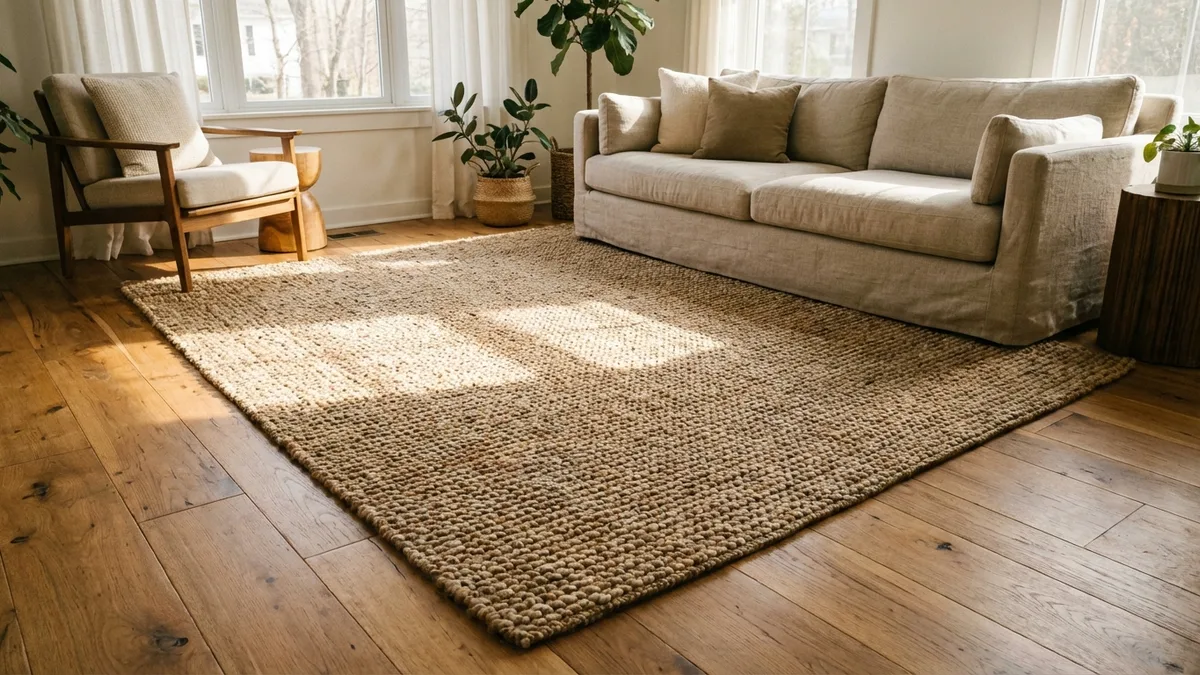
Jute is about as clean as fiber gets. It’s a plant fiber with no synthetic treatments, no plastic content, and a biodegradable end of life. Safavieh’s Natural Fiber Collection uses undyed natural jute in most colorways or low-impact dyes in the patterned options. No off-gassing. No plasticizers. Just woven plant fiber.
The serious limitation is moisture. Jute is hydrophilic. It absorbs water instead of shedding it, which means prolonged exposure to rain leads to mold, mildew, and structural breakdown. This is not an exaggeration. A jute rug left in direct rain for a week will start to smell within days. This is a covered-patio-only material.
For a porch, a screened-in area, or an entryway with roof overhang, jute works beautifully. It adds texture, softness, and a genuinely natural look without any of the chemical questions that come with synthetic options. Price is also a strong point: $35-$149 for most sizes puts it well below the cotton and sisal alternatives. Find Safavieh jute rugs on Amazon.
CLUNY Sisal Outdoor Rug - Best for Durability
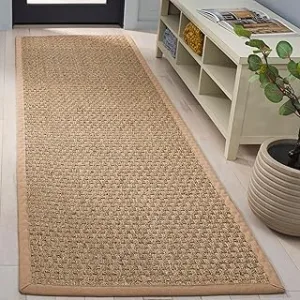
Sisal is harder than jute. It’s a plant fiber from the agave plant, and the fibers have a natural stiffness and density that holds up better to foot traffic and moderate weather exposure than jute. CLUNY’s sisal rugs use a natural latex backing rather than PVC, which keeps the backing material clean.
Sisal handles light rain and occasional splashes better than jute, but it’s still a natural fiber that can be damaged by prolonged soaking. “Semi-weatherproof” is the honest description. A sisal rug on a patio that gets afternoon sun and occasional light rain will hold up for two to three seasons with normal care. A sisal rug that spends winter uncovered in the rain won’t.
One thing worth knowing: natural latex can cause allergic reactions in people with latex sensitivity. It’s a rare condition, but worth flagging. If anyone in your household has a known latex allergy, consider the cotton or recycled PET picks instead. The CLUNY sisal rugs run $129-$349 depending on size, which reflects the natural fiber and latex backing quality. Search for natural sisal outdoor rugs on Amazon.
Mohawk Home Prismatic Outdoor Rug - Best Budget
Mohawk is a US-based flooring brand with manufacturing transparency above average for the price point. Their Prismatic outdoor rug line uses 100% polypropylene pile with no PVC backing. Instead they use a polypropylene-woven grid base, which avoids the phthalate issue that comes with laminated PVC.
Mohawk discloses California Prop 65 compliance on the Prismatic line. The rugs are not marketed as stain-treated with fluorocarbon chemistry, which is the right call for an outdoor rug that will be in direct sun. At $25-$89 depending on size, this is the honest budget entry point.
The tradeoffs are the tradeoffs of polypropylene generally: UV stabilizer composition is not publicly disclosed, the fiber is not biodegradable, and it’s not as chemically inert as recycled PET. It’s also not the most luxurious underfoot experience. But for a working outdoor rug on a budget where the main goal is avoiding PVC backing and PFAS stain treatments, the Mohawk Prismatic delivers. Find Mohawk Home outdoor rugs on Amazon.
What to Avoid in Outdoor Rugs
The warning signs aren’t always obvious in product listings. Here’s what to actually look for.
Rugs with no backing material disclosure. If a listing doesn’t tell you what the backing is, assume PVC. It’s the cheapest backing option and the default for most budget outdoor rugs. Contact the brand directly before purchasing if the backing isn’t disclosed.
“Stain resistant,” “water resistant,” or “easy clean” with no chemistry explanation. These phrases frequently indicate PFAS-based DWR treatment. Brands using C0 (fluorocarbon-free) water repellency or no stain treatment at all typically say so explicitly, because it’s a selling point. If you see water resistance claimed without an explanation, ask the brand what the coating chemistry is.
Teflon, Scotchgard, “EverGuard,” or “Aquaguard” treatments. These are specific PFAS-based treatment brands. Any rug listing these as features should be avoided for outdoor use, particularly on surfaces where children and pets spend time.
PVC backing labeled as “heavy-duty,” “non-slip,” or “weatherproof.” These terms often describe PVC-laminated backings. Heavy-duty non-slip backing is almost always PVC on budget outdoor rugs.
Rugs from brands with no US presence and no composition disclosure. Generic import rugs with no website, no Prop 65 compliance statement, and no material breakdown are the highest-risk category. Phthalates and heavy metal dyes are most common in this tier.
Installation and Care for Natural-Fiber Outdoor Rugs
A new outdoor rug, especially a synthetic one, benefits from airing out before it goes on a hot patio surface. Take it out of the packaging and let it lay flat in a shaded, ventilated area for 24-48 hours. Any residual manufacturing odors dissipate quickly. This is most relevant for polypropylene rugs shipped in tight plastic packaging.
For covered patios with natural fiber rugs (cotton, jute, sisal), the main care task is keeping moisture from getting trapped underneath. A rug pad with drainage gaps, or lifting and airing the rug periodically, prevents the mold and mildew that accumulate when natural fibers stay damp on a solid surface.
Cleaning without harsh chemicals is simple. Most natural and synthetic outdoor rugs clean well with diluted white vinegar (1 part vinegar to 3 parts water) sprayed on stains and blotted out. A mild dish soap solution works for heavier dirt. Avoid bleach-based cleaners on natural fiber rugs as they degrade jute and sisal fibers faster than normal weathering would.
For fully exposed synthetic rugs, periodic hosing down and allowing to dry flat before rolling up for storage is enough. Don’t store outdoor rugs while wet. Dry rot and mold happen in storage, not just in use.
Outdoor Rug Safety: The Options and Trade-offs
Every material in this category involves real tradeoffs. Nothing here is perfect.
| Option | Main concern | Primary tradeoff |
|---|---|---|
| Natural cotton | Sensitive to moisture, mold risk if left wet | Cleanest fiber profile, machine washable, Prop 65 compliant |
| Jute | Degrades in direct rain; not for exposed decks | Zero synthetic content, biodegradable, very affordable |
| Sisal + natural latex | Moderate moisture sensitivity; latex allergy risk (rare) | More durable than jute, natural backing avoids PVC |
| Recycled PET | Plastic-derived; additive package not always disclosed | Fully weatherproof, cleaner source material than virgin polypropylene |
| Virgin polypropylene, no PFAS | UV stabilizers vary; not biodegradable | Most weatherproof synthetic; acceptable if no PVC backing and no PFAS |
| Polypropylene + PFAS treatment | PFAS runoff from outdoor UV exposure | Water-repellent performance advantage not worth the tradeoff |
| Any rug with PVC backing | Phthalate plasticizers; more concerning for crawling kids and pets | Cheapest backing option; avoid for direct skin contact use cases |
If you have a covered patio where the main priority is chemical cleanliness, cotton or jute. If you have an exposed deck that needs to handle rain, recycled PET or PFAS-free polypropylene without PVC backing. Sisal with latex backing sits between those use cases and is the best durability option for semi-exposed areas.
What We Don’t Know Yet
A few honest gaps in the evidence here.
We don’t have precise exposure data on PFAS migration from outdoor rug stain treatments to soil and groundwater at a per-product level. The EPA’s PFAS research focuses on industrial sites and drinking water contamination. The contribution from PFAS-treated outdoor textiles to local soil is real but not quantified at the consumer scale. It’s likely a small fraction of total PFAS environmental loading, but “small fraction of a large problem” still matters if you’re in an area already managing PFAS groundwater concerns.
We also don’t know the full additive package in most polypropylene and recycled PET outdoor rugs. UV stabilizers, antioxidants, and processing aids are proprietary to fiber manufacturers, and most rug brands don’t publish them. Some UV stabilizers in the benzophenone family have shown endocrine activity at high doses [animal study], but consumer exposure from contact with finished polypropylene is not well-characterized and is likely low under normal outdoor rug use. The most conservative households should weight that uncertainty toward natural fiber options.
Finally, long-term durability comparisons between recycled PET and virgin polypropylene outdoor rugs are limited. Recycled PET has slightly different polymer properties than virgin polypropylene, and extended UV and weather exposure data for recycled PET rugs specifically is sparse. We don’t yet know if recycled PET rugs degrade differently over 5-10 seasons of outdoor use compared to conventional synthetic options.
How We Evaluated Each Pick
| Criteria | What We Checked |
|---|---|
| Pile fiber chemistry | Fiber type, synthetic additives disclosed, natural vs synthetic |
| Backing material | PVC vs latex vs polypropylene grid; phthalate concern by category |
| Stain/water-repellent treatment | PFAS vs C0 vs untreated; brand disclosure reviewed |
| California Prop 65 compliance | Confirmed via brand disclosure pages or product listing |
| Brand transparency | Material disclosure quality, chemical policy pages reviewed |
| Use case fit | Covered patio vs exposed deck vs high-traffic vs kids and pets |
FAQ
Is polypropylene outdoor rug safe for kids?
Polypropylene pile is considered low-hazard in finished form by FDA and EPA standards. The bigger concerns are the backing (avoid PVC with phthalate plasticizers) and any stain treatment (avoid PFAS-based coatings). A polypropylene outdoor rug with no PVC backing and no PFAS treatment is probably fine for most families under normal outdoor use. For households with very young children who spend significant time crawling or sitting on outdoor surfaces, a cotton or recycled PET rug with latex or grid backing is a more conservative choice.
Are outdoor rugs treated with PFAS?
Many are, yes. PFAS-based Durable Water Repellent coatings are common in outdoor textiles because they’re effective at shedding water and resisting stains. Brands that have explicitly moved away from fluorocarbon DWR typically say so in their product descriptions, because it’s a selling point. If a listing advertises water resistance or stain resistance without specifying the chemistry, contact the brand before purchasing. The EPA’s 2024 PFAS National Primary Drinking Water Rule [regulatory review] confirmed PFAS persistence in soil and water, which makes outdoor PFAS treatment breakdown a more relevant concern than the same treatment on an indoor rug.
Which outdoor rug material has the cleanest chemical profile?
For chemical profile, natural cotton is the cleanest option, with zero synthetic pile, no plasticizers required, and no PFAS treatment needed. The tradeoff is that cotton doesn’t handle rain or full outdoor exposure. For a covered patio, cotton or jute. For a deck that sees rain, recycled PET with non-PVC backing is the most practical low-chemical choice. There’s no single answer that covers all outdoor use cases, which is why matching material to exposure matters more than hunting for a universally “clean” option.
Can I use a jute rug outdoors?
Yes, but only in protected outdoor spaces. Jute is 100% natural plant fiber with no synthetic content, making it the cleanest material in this category. The hard limit is moisture: jute absorbs water and degrades with prolonged wet exposure. A covered porch, a screened patio, or a well-sheltered terrace where the rug stays dry is fine. An exposed deck that sees regular rain is not. If your outdoor space is covered or sheltered, jute is an excellent choice. If it gets direct weather, choose a synthetic option with better moisture resistance.
What does “Prop 65 compliant” mean for a rug?
California Proposition 65 requires businesses to provide warnings when products expose Californians to chemicals on the state’s list of known carcinogens and reproductive toxins above certain threshold levels. A Prop 65 compliant rug means the brand has assessed the product and concluded it doesn’t require a warning under California’s standards. Phthalates, heavy metals (lead, cadmium), and certain dyes are on the Prop 65 list. Prop 65 compliance is not the same as PFAS-free or independently certified safe, but it’s a meaningful baseline signal that the brand has at least screened for the most regulated chemical concerns.
How long do outdoor rugs off-gas?
This depends on the material. A new polypropylene rug typically has detectable VOC off-gassing for the first 24-72 hours after opening, primarily from residual manufacturing process chemicals. This drops sharply after the first day of outdoor airing. Natural fiber rugs (cotton, jute, sisal) have negligible VOC off-gassing because there’s no synthetic chemistry to volatilize. Rugs with fresh stain treatment coatings may have slightly longer off-gassing periods. In all cases, letting a new rug air outdoors for 24-48 hours before heavy foot traffic is sufficient for synthetic options. There’s no meaningful long-term off-gassing concern once a synthetic rug has aired out.
Our Take
If I’m buying one outdoor rug today: for a covered porch or sheltered terrace, it’s the Dash and Albert cotton rug. Nothing in this category beats it for chemical cleanliness, and the machine-washable factor makes maintenance easy. For a fully exposed deck, I’d go with nuLOOM’s recycled PET line. It handles weather, avoids PVC backing, and the Prop 65 compliance gives me more confidence than a generic polypropylene rug with no disclosure at all.
The budget pick from Mohawk Home is fine for most households that just need a working outdoor rug without PVC backing. It’s not glamorous, but it’s honest. If sisal appeals to you aesthetically and your patio is semi-covered, the CLUNY sisal with natural latex backing is the most durable natural-fiber option we found.
The one thing I’d skip entirely: any outdoor rug marketed with “water-resistant” or “stain-resistant” features that doesn’t tell you what the chemistry is. That’s almost always PFAS, and on an outdoor surface in direct sun, you’re getting unnecessary chemical exposure with no meaningful benefit over a well-chosen non-treated alternative.
For those building out their outdoor space from scratch, our guide to the best non-toxic patio furniture covers the bigger investment pieces alongside the same framework for evaluating chemical concerns in cushion fabrics and frame materials.
You Might Also Like
- Best Non-Toxic Outdoor Furniture in 2026
- State Chemical Bans Tracker: PFAS, Flame Retardants, and More (2026)
- Non-Toxic Carpet Pads and Rug Underlays
- Best Non-Toxic Carpeting for Your Home
- The Non-Toxic Couches Our Editors Sit On (2026)
- Best Non-Toxic Car Seats in 2026 (No Flame Retardants, No PFAS)
Sources
- EPA PFAS National Primary Drinking Water Rule (2024) - regulatory basis for PFAS health concern, covering persistence in water, soil, and human tissue and associated health effects in highly exposed populations
- ECHA Substance Evaluation: Phthalates as SVHCs - European Chemicals Agency regulatory assessment of phthalates as substances of very high concern under REACH regulation
- California Prop 65 Chemical List (OEHHA) - the current list of chemicals requiring Prop 65 warnings including phthalates and heavy metals relevant to rug evaluation
- EPA PFAS Research and Data - EPA’s primary PFAS research page covering environmental persistence, soil and water contamination pathways, and human exposure data
- OEKO-TEX Standard 100 Testing Criteria - lists 100+ substances tested in certified textiles including PFAS, heavy metals, phthalates, and formaldehyde residues
- FDA on Polyethylene Terephthalate (PET) for Food Contact - FDA assessment of PET polymer safety in food contact applications, relevant to recycled PET fiber evaluation
- EPA Volatile Organic Compounds in Common Products - EPA overview of VOC off-gassing from consumer products including textiles and flooring