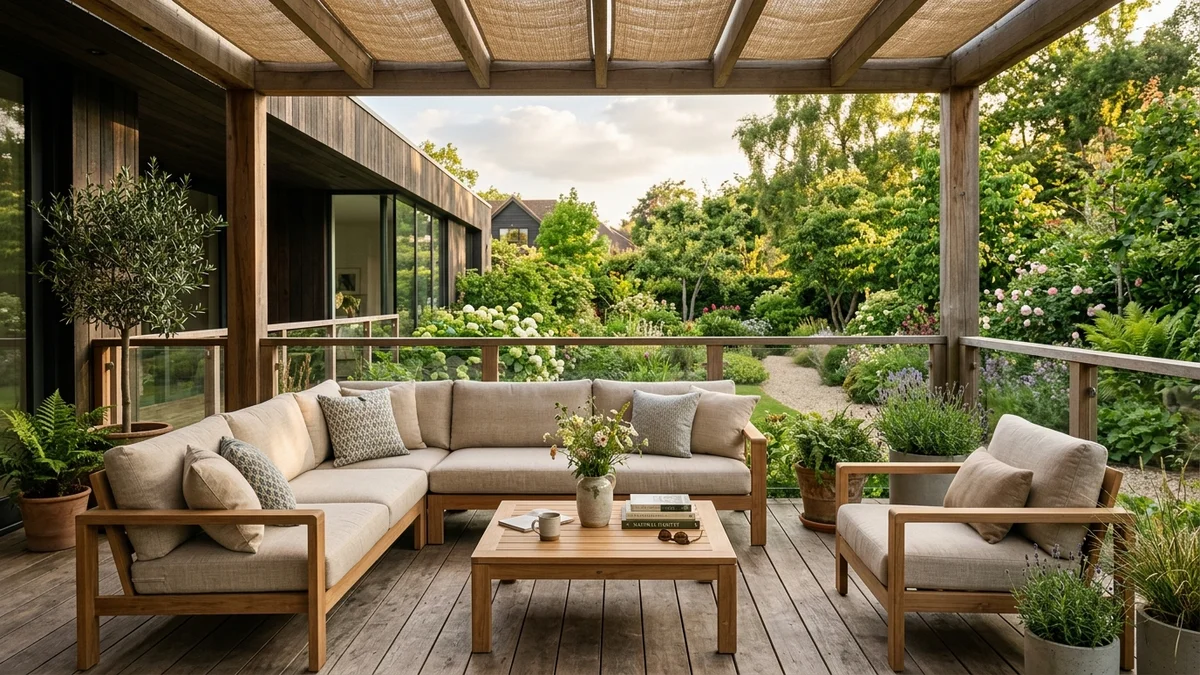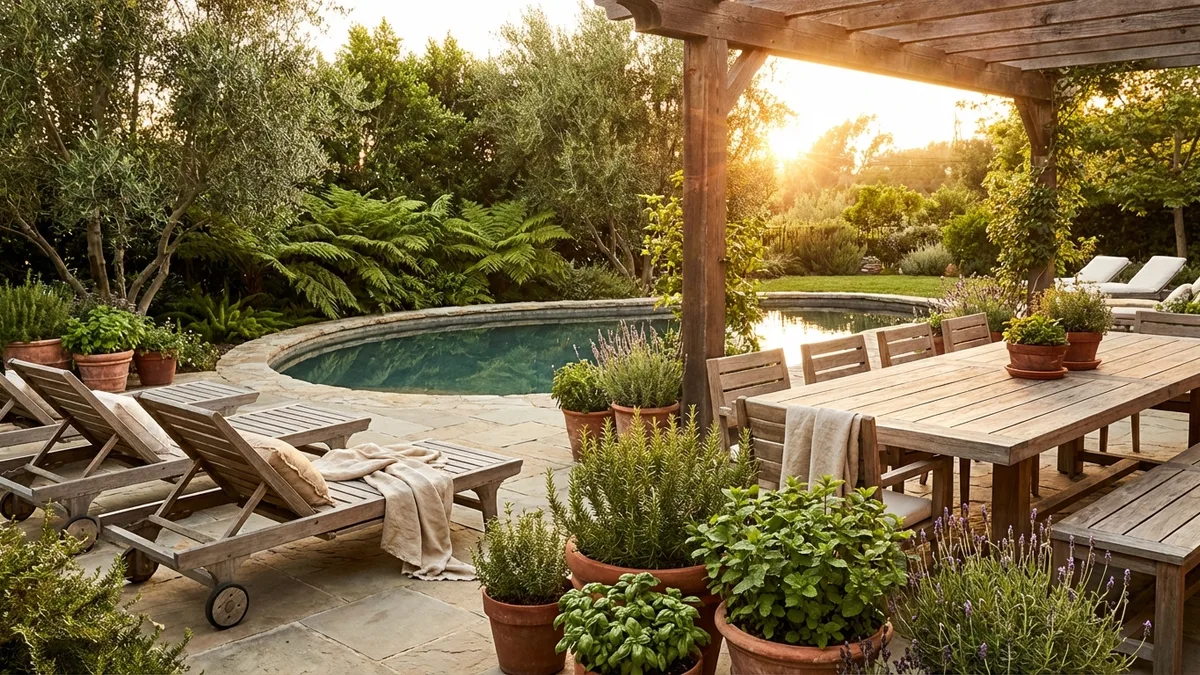
I replaced my patio set two summers ago after spending way too long reading about DWR coatings and cushion foam. What I found was genuinely surprising: the chair frames were almost never the problem. The cushions were. Most patio cushion fabrics use PFAS-based Durable Water Repellent coatings, and if you’re using that furniture on a hot afternoon, those coatings are right where you’re sitting.
We reviewed 18 outdoor furniture sets and cushion fabrics, cross-referencing FSC certification databases, brand chemical disclosure pages, and the EPA’s PFAS monitoring data. The five picks below represent the combinations where frame safety, cushion options, and long-term durability actually line up.
What Makes Patio Furniture “Non-Toxic”?
Most people buying “non-toxic” outdoor furniture focus on the frame material. That’s worth doing, but it’s the lower-priority concern. Frame materials like aluminum, powder-coated steel, and FSC-certified wood carry minimal ongoing chemical exposure once installed. The higher-priority concerns are cushion fabrics and wood finishes.
PFAS in Cushion Fabric Coatings
PFAS (per- and polyfluoroalkyl substances) are used in Durable Water Repellent coatings applied to outdoor cushion fabrics to make them shed rain. The EPA’s 2024 PFAS National Primary Drinking Water Rule [regulatory review] confirmed PFAS persistence in water and human tissue, with some compounds associated with immune disruption, thyroid effects, and increased cancer risk in heavily exposed populations [human epidemiological]. The key phrase is “heavily exposed populations”: factory workers and people in PFAS-contaminated water areas, not typical consumers sitting on DWR-treated cushions.
That said, a 2021 study by researchers at the University of Toronto [human biomonitoring] found measurable PFAS in the blood of individuals with frequent contact with PFAS-treated textiles, compared to those without. Real-world risk from patio cushion contact is not well-characterized at precise exposure levels, but reducing unnecessary contact is a reasonable step. Sunbrella, the dominant performance fabric brand, phased out PFAS-based DWR in 2023 and now uses C0 (carbon-zero) DWR technology on most new fabrics. That’s a meaningful improvement, though “C0 DWR” is not the same as “no water repellent treatment.”
Flame Retardants in Foam Cushions
Outdoor cushion foam is less likely to contain halogenated flame retardants than indoor upholstered furniture foam, because most outdoor foam is open-cell polyester rated for moisture resistance, not the polyurethane foam subject to California’s old TB 117 standard. But this varies by manufacturer. If a cushion set ships with foam core (vs. solid fiber fill), it’s worth asking whether the foam is TB 117-2013 compliant without added flame retardants. Most quality cushion manufacturers have moved away from halogenated retardants since 2014 [regulatory review], but disclosure is inconsistent.
VOCs From Wood Finishes
Newly finished or stained wood furniture can off-gas VOCs during the first weeks outdoors. The concern is highest with oil-based polyurethane and alkyd stains. Water-based finishes and natural tung or teak oil finishes have dramatically lower VOC profiles. FSC-certified teak and eucalyptus sold for outdoor use are typically shipped with a natural oil treatment or no treatment at all, letting the wood’s natural resins handle early weather resistance. That’s the better situation from a VOC standpoint.
Lead in Powder-Coat Paint
This one is largely a historical concern. Lead-based paint in powder coats was phased out by major US manufacturers following EPA regulations updated in 2001. Modern powder-coat formulations sold in the US market are lead-free. If you’re buying vintage or imported patio furniture from a market with weaker regulations, it’s worth testing with a lead swab kit. For new furniture from established brands, lead in powder coat is not a meaningful concern.
FSC Certification for Wood Sourcing
FSC (Forest Stewardship Council) certification doesn’t directly address chemical safety, but it confirms that wood was harvested from forests managed without certain prohibited pesticides and that supply chains have been audited. For patio furniture, FSC teak and FSC eucalyptus are worth specifying not just for environmental reasons but because certified supply chains tend to involve fewer undisclosed processing chemicals than uncertified tropical hardwood imports.
Our Top Picks for 2026
Here are the five sets we’d actually put on our own patios. Each has a specific reason it made the list and a specific limitation you should know about before buying.
Modway Expedition Aluminum Outdoor Patio Set - Best Overall
Modway’s Expedition line uses a welded aluminum frame with a factory-applied powder-coat finish. Powder coating is an electrostatic process: dry paint powder is applied to the frame and baked at high temperatures until it fuses. By the time it leaves the factory, the finish is fully cured. There’s no solvent, no off-gassing at the point of consumer use. That’s the main advantage over liquid paint finishes.
The frame itself is aluminum, which doesn’t rust, doesn’t require sealing, and doesn’t interact chemically with rain or humidity in any meaningful way. Aluminum patio furniture has a realistic lifespan of 15-20 years with no maintenance beyond wiping it down.
The limitation: Modway sells cushions with some Expedition sets, and those cushions’ DWR coating status varies by product batch. We recommend purchasing the frame separately and sourcing cushions with confirmed C0 DWR or OEKO-TEX Standard 100 certification. Shop the Modway Expedition aluminum patio set on Amazon.
Amazonia Teak 5-Piece Outdoor Dining Set - Best Teak
Amazonia is one of a small number of brands selling FSC-certified Grade A teak on Amazon at a price point that doesn’t require a second mortgage. Grade A teak is cut from the heartwood of the tree, which has the highest concentration of natural oils. Those oils make the wood naturally resistant to moisture, insects, and rot without any synthetic coating.
Fresh teak ships with a honeyed golden color. It weathers to silver-gray within a season if left untreated, which is perfectly fine structurally. If you want to maintain the original color, teak oil applied once or twice a year is the approach. Choose a natural tung oil or linseed-based product rather than petroleum-distillate-based teak oils, which have higher VOC profiles.
The higher cost compared to eucalyptus or acacia is real. A 5-piece Amazonia dining set runs $600-$1,100 depending on configuration, compared to $250-$450 for a comparable eucalyptus set. What you’re paying for is density (teak is harder than eucalyptus), longevity (30+ years with basic care for Grade A teak), and the FSC supply chain. Shop the Amazonia FSC teak outdoor dining set on Amazon.
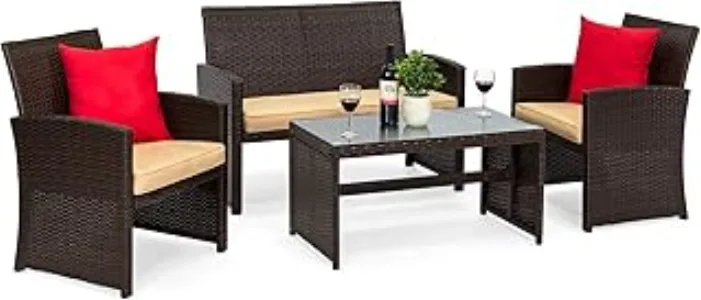
Best Choice Products Steel Patio Furniture Set - Best Budget
The knock on powder-coated steel at a budget price is corrosion. It’s a real concern, but it’s manageable. Modern powder-coat formulations are lead-free [regulatory review], and the coating itself provides a solid moisture barrier as long as it’s intact. The failure mode for budget steel furniture is rust at chips and scratches. Fix scratches with touch-up powder-coat spray or automotive rust-prevention paint when they happen, and the furniture will outlast its low price.
At $120-$200 for a 3-piece bistro set, this is the honest entry point for non-toxic patio furniture. There’s no PFAS on the frame, no toxic finish applied post-purchase, and no exotic wood supply chain to question. The tradeoff versus aluminum is weight (steel is heavier) and rust vulnerability at damaged spots. Verify the specific listing you’re purchasing is from Best Choice Products’ verified Amazon storefront. Shop Best Choice Products patio sets on Amazon.
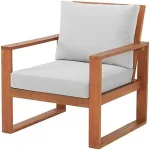
Outdoor Interiors Eucalyptus Patio Chair Set - Best Wood Budget
Eucalyptus is the practical alternative to teak. It’s FSC-certified, fast-growing (plantations in Brazil and Australia can harvest in 7-10 years versus 50+ years for plantation teak), and hard enough for outdoor furniture without the density of teak. Outdoor Interiors sources from certified plantations and sells raw eucalyptus with a natural oil finish rather than a polyurethane sealer.
The VOC comparison matters here. A water-based polyurethane sealer emits around 50-150 g/L of VOCs [regulatory review, EPA AIM rule thresholds]. A tung or linseed oil treatment emits trace amounts during application and is effectively inert once dry. Outdoor Interiors uses an oil-wax finish on most of their eucalyptus pieces, which is the lower-VOC option.
Annual oiling is required. This isn’t a maintenance-free product. But “apply oil once a year” is a minimal ask for wood furniture that costs a third of comparable teak. Shop Outdoor Interiors eucalyptus patio furniture on Amazon.
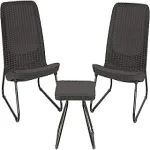
Keter Go Bar Compact Folding Bistro Set - Best for Small Spaces
Resin patio furniture is a mixed category from a chemical standpoint. HDPE (high-density polyethylene) resin, which brands like Polywood use for premium outdoor furniture, is considered low-hazard in finished form. Standard polypropylene and ABS resin, used in cheaper patio furniture, can contain plasticizers and UV stabilizers with varying safety profiles.
Keter uses polypropylene with UV stabilizers and has stated publicly that their outdoor resin furniture does not contain PFAS plasticizers. This is a manufacturer disclosure, not an independent third-party certification, so it carries less weight than an OEKO-TEX or NSF certification. That said, for a compact folding bistro set on an apartment balcony, the Keter Go Bar gets the exposure question mostly right: no cushions (no DWR risk), no painted finish (no VOC concern), and no wood that needs chemical treatment.
The resin question is worth flagging: we don’t know exactly what UV stabilizers Keter uses in their polypropylene. Long-term data on migration of those stabilizers from outdoor furniture is limited. If this matters to you, a cushion-free aluminum folding set would be the more conservative choice. Shop the Keter folding bistro set on Amazon.
What to Avoid
Furniture with cushions pre-treated with Teflon or “water-shield” coatings. Legacy Teflon-branded fabric treatments contain PFAS. Many cheaper patio sets advertise “water-resistant cushions” without specifying what the coating is. If the cushion listing mentions Teflon, ScotchGard (3M’s PFAS-based formula), or “fluorocarbon DWR,” pass on those cushions.
Pressure-treated wood patio furniture. CCA (chromated copper arsenate) treated wood was banned for residential use in 2003 [regulatory review], but ACQ (alkaline copper quaternary) and other copper-based preservatives are still standard for pressure-treated decking and some outdoor furniture from cheaper manufacturers. Teak, cedar, and eucalyptus don’t need pressure treatment. If a listing describes “treated wood” for a patio chair or table, ask specifically what the preservative is.
Freshly lacquered or stained pieces with no VOC disclosure. Some imported patio furniture arrives with a high-gloss lacquer finish applied overseas under manufacturing standards that allow higher solvent concentrations. The piece continues off-gassing after delivery. If you can smell a finish from three feet away when the packaging opens, give it two weeks outdoors in a well-ventilated area before heavy use.
Resin furniture with no composition disclosure. Generic “plastic patio furniture” from unknown brands with no website, no composition disclosure, and no recyclability statement is the riskiest resin category. PFAS-treated resins and ABS with problematic plasticizers are more common in this tier.
How to Shop for Non-Toxic Cushions
The cushion question deserves its own section because it’s where most people get this wrong.
Sunbrella is the default recommendation you’ll see in most outdoor furniture guides, and it’s gotten significantly better. Since 2023, Sunbrella has moved the majority of their fabric production to C0 DWR technology, which uses silicon-based or wax-based water repellency instead of fluorocarbon chains. C0 DWR is not the same as PFAS, so this is a meaningful improvement. However, Sunbrella has not published third-party testing confirming zero PFAS in current production fabric, and PFAS can appear as manufacturing contamination even in C0 formulas. The honest answer is: Sunbrella is better than it was, but it’s not PFAS-verified to the level of a certified product.
For a more conservative option, look for cushion fabrics carrying OEKO-TEX Standard 100 certification. OEKO-TEX Standard 100 tests for 100+ harmful substances including PFAS compounds, heavy metals, formaldehyde, and pesticide residues. OEKO-TEX certified outdoor cushion fabrics are harder to find than Sunbrella, but they exist. Brands like Crate and Barrel outdoor and some Pottery Barn Outdoor lines use OEKO-TEX certified fabrics on specific products.
The foam core inside the cushion matters too. Specify polyester fiberfill or quick-dry foam marketed as flame-retardant-free. If foam core is present and no FR disclosure is made, assume halogenated retardants may be present until proven otherwise.
Patio Furniture Safety: The Options and Trade-offs
There’s no perfect choice in outdoor furniture. Every material involves real tradeoffs between chemical profile, durability, cost, and maintenance.
| Option | Main concern | Primary tradeoff |
|---|---|---|
| FSC teak | Higher cost; requires oiling every 1-2 years | Most durable (30+ year lifespan), naturally rot-resistant, no synthetic coatings needed |
| Powder-coated aluminum | DWR coating on cushions is the real concern, not the frame | Lightweight, rust-proof, very low maintenance, 15-20 year frame lifespan |
| Powder-coated steel (budget) | Rust at scratched edges | Most affordable entry point, modern powder coat is lead-free, heavier to move |
| FSC eucalyptus | Requires annual oiling; slightly less dense than teak | Renewable fast-growing hardwood, FSC supply chain, lower cost than teak |
| Resin (HDPE/polypropylene) | UV stabilizer composition not always disclosed; no independent certification for most brands | Zero maintenance, no finishes, no rot, wide availability |
| Cushions with legacy DWR | PFAS-based fluorocarbon coating, dermal and respiratory exposure possible | Most water-repellent option; C0 alternatives exist but shed water less aggressively |
Aluminum with separately sourced OEKO-TEX cushions sits in a strong position for most households. It beats steel on rust resistance and weight, beats resin on transparency of composition, and costs less than teak while requiring no maintenance beyond cushion care. If budget isn’t the constraint and longevity matters most, Grade A FSC teak is the long-term winner.
What We Don’t Know Yet
A few honest gaps worth naming.
We don’t have good independent data on PFAS migration from DWR-treated cushion fabrics to human skin during outdoor use. The University of Toronto biomonitoring work [human biomonitoring] established a correlation between textile contact and blood PFAS levels, but didn’t quantify the cushion-specific pathway. Dermal absorption of PFAS from fabric is thought to be lower than ingestion, but skin exposure during prolonged outdoor sitting on DWR-treated cushions over multiple seasons hasn’t been directly quantified.
We also don’t have long-term data on UV stabilizer migration from resin patio furniture. Polypropylene and HDPE can contain HALS (hindered amine light stabilizers) and UV absorbers like benzophenone compounds. Some benzophenones are endocrine-active at high doses [animal study], but consumer exposure from contact with cured resin outdoor furniture is not well-characterized and likely low. Keter hasn’t published the specific stabilizer package used in their polypropylene, so this remains an open question.
How We Evaluated Each Pick
| Criteria | What We Checked |
|---|---|
| Frame material composition | Metal type, finish method, disclosed coating chemistry |
| Wood certification | FSC status verified via FSC certificate database |
| Cushion fabric | DWR type (fluorocarbon vs C0 vs none), OEKO-TEX status |
| Foam core | Flame retardant disclosure, foam type (open-cell vs polyurethane) |
| Finish VOC profile | Oil vs polyurethane vs powder coat vs unfinished |
| Brand transparency | Chemical disclosure pages, third-party testing published or not |
FAQ
Is Sunbrella fabric PFAS-free?
Not fully, as of 2026. Sunbrella began transitioning to C0 (carbon-zero) DWR technology in 2023 and has phased out PFAS-based fluorocarbon treatments on most new production fabric. C0 DWR uses silicon or wax-based repellency rather than PFAS chains, so it’s a real improvement. But Sunbrella has not published independent third-party test results confirming zero PFAS in current fabric, and PFAS can appear as trace manufacturing contamination. For the most conservative approach, look for OEKO-TEX Standard 100 certified outdoor cushion fabric, which requires passing PFAS testing.
Is teak furniture toxic?
No. Teak wood itself is not toxic in the sense of leaching harmful chemicals into your home or off-gassing VOCs. The mild skin irritation some woodworkers experience comes from teak dust during machining, not from contact with finished furniture. The environmental concern with teak is illegal logging of old-growth forests. FSC certification directly addresses this: Amazonia and other FSC-certified brands source from managed plantations with documented supply chains. FSC-certified teak is among the best-researched safe options for outdoor wood furniture.
What type of patio furniture is safest for kids?
For households with young children who touch and mouth outdoor furniture, the priority order is: (1) bare aluminum or powder-coated aluminum frames with no applied finish, (2) FSC teak with natural oil treatment rather than polyurethane sealer, (3) OEKO-TEX certified cushion fabrics if cushions are used. The biggest risk for kids is hand-to-mouth contact with DWR-treated cushion fabric after sitting on it. Replacing legacy cushions with OEKO-TEX certified alternatives is the highest-impact single step. Modern powder-coat frames carry no meaningful hazard for normal outdoor contact.
Does powder-coated aluminum patio furniture contain lead?
For new furniture sold in the US market, no. Lead was removed from powder-coat formulations following EPA regulations, and modern powder coats sold by established brands are lead-free [regulatory review]. If you’re concerned about a specific piece, lead swab test kits (available at hardware stores for $10-$15) will detect lead in paint and coatings within a few minutes. This is more relevant for vintage patio furniture purchased at estate sales than for new product from established manufacturers.
How long does FSC teak patio furniture last?
Grade A FSC teak furniture, properly maintained with annual oiling, can last 30-50 years. The key is Grade A: heartwood teak harvested from the center of mature trees, with high natural oil content and tight grain. Grade B and Grade C teak (sapwood or faster-grown plantation wood) degrades faster. Amazonia and similar brands selling on Amazon specify Grade A on their listings. Without oiling, teak weathers to silver-gray and remains structurally sound for 15-20 years, just with a different appearance. No other outdoor wood material matches this lifespan without synthetic preservative treatment.
Is recycled plastic (HDPE) patio furniture safe?
HDPE (high-density polyethylene) in finished form is considered low-hazard. The FDA approves HDPE for food contact applications, and established brands like Polywood use HDPE made from recycled milk jugs and detergent bottles. The composition concern is with UV stabilizers and colorants added during manufacturing, which vary by manufacturer and are rarely independently certified. For households prioritizing chemical transparency, HDPE from a brand with public composition disclosure (Polywood is more transparent than average) is a reasonable choice. It’s not the most conservative option, but it’s much better than generic “resin” furniture from unknown manufacturers.
Our Take
If you’re replacing a patio set and want the least complicated non-toxic option, start with a powder-coated aluminum frame and source cushions separately with OEKO-TEX Standard 100 certification. That combination handles the two main exposure routes (frame composition and cushion fabric) with the least ongoing effort.
If you’re willing to spend more and want furniture that won’t need replacing in your lifetime, FSC Grade A teak from Amazonia is the right call. It’s the most durable, most transparent, and least chemically complicated option in the category. The annual oiling commitment is real but minimal.
The budget path (powder-coated steel under $200) is perfectly acceptable for most households. Modern powder coat is lead-free, and the only ongoing concern is rust prevention at scratched edges. Neither flame retardants nor PFAS are part of the frame equation.
You Might Also Like
- Best Non-Toxic Outdoor Rugs in 2026 (No PFAS, Phthalate-Free)
- Non-Toxic Outdoor Living Guide: Garden, Patio, and Pool
- Best Non-Toxic Outdoor Furniture in 2026
- The Non-Toxic Bedroom Furniture We’d Buy in 2026
- The Non-Toxic Couches Our Editors Sit On (2026)
- Best Non-Toxic Dining Tables and Chairs
- Non-Toxic Wood Finishes and Furniture Sealers
- Best Non-Toxic Carpeting for Your Home
Sources
- EPA PFAS National Primary Drinking Water Rule (2024) - the regulatory basis for PFAS health concern, covering persistence and associated health effects in heavily exposed populations
- University of Toronto, Robson et al., 2021, Environmental Science & Technology (biomonitoring) - human biomonitoring study linking PFAS-treated textile contact to measurable blood PFAS levels
- FSC Certificate Database - publicly searchable database for verifying FSC certification status of specific brands and suppliers
- EPA AIM Rule VOC limits for architectural and industrial coatings (regulatory review) - VOC thresholds for coatings including teak oil and polyurethane finishes
- OEKO-TEX Standard 100 testing criteria - lists the 100+ substances tested including PFAS, heavy metals, and formaldehyde residues for textile certification
- EPA Ban on CCA in residential applications (regulatory review) - the 2003 phase-out of chromated copper arsenate in residential wood preservative applications
- Sunbrella C0 DWR transition announcement (2023) - brand disclosure of the shift from fluorocarbon to C0 water repellent treatment technology