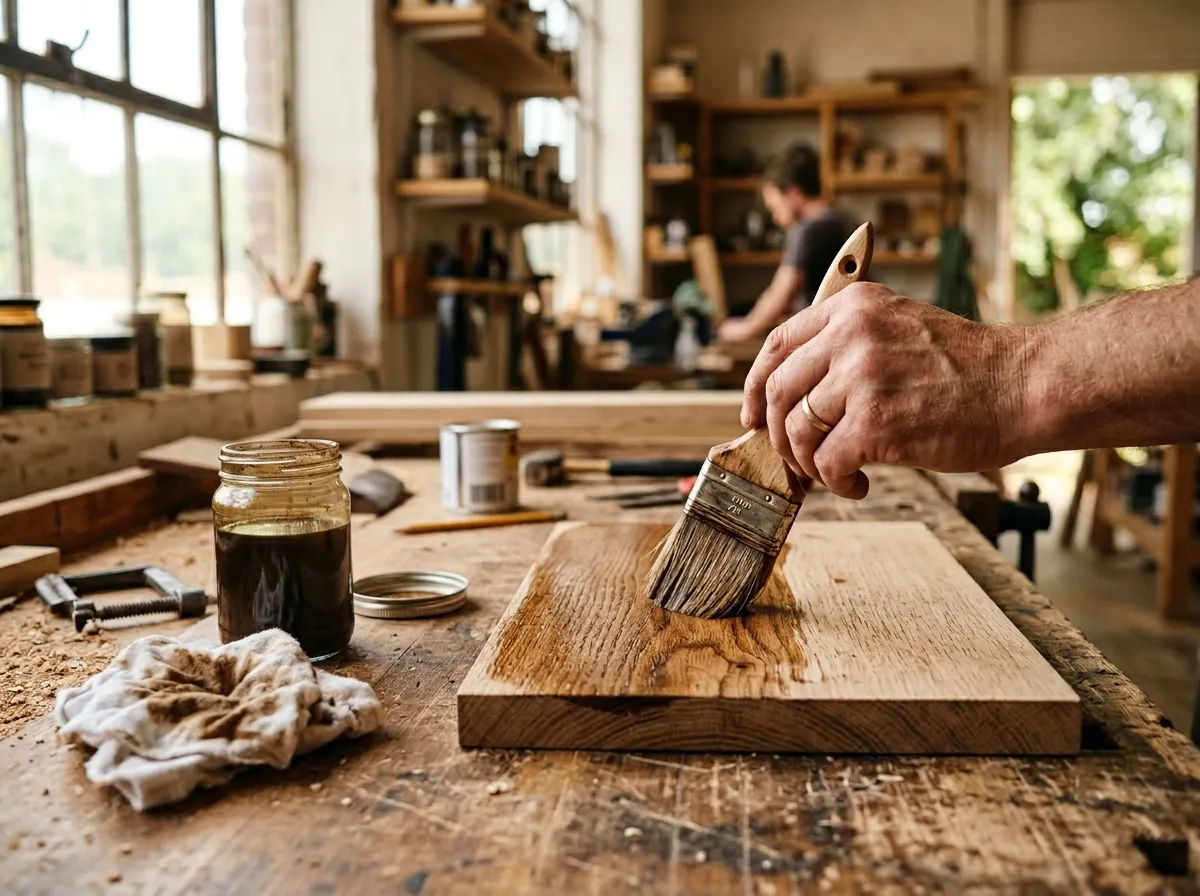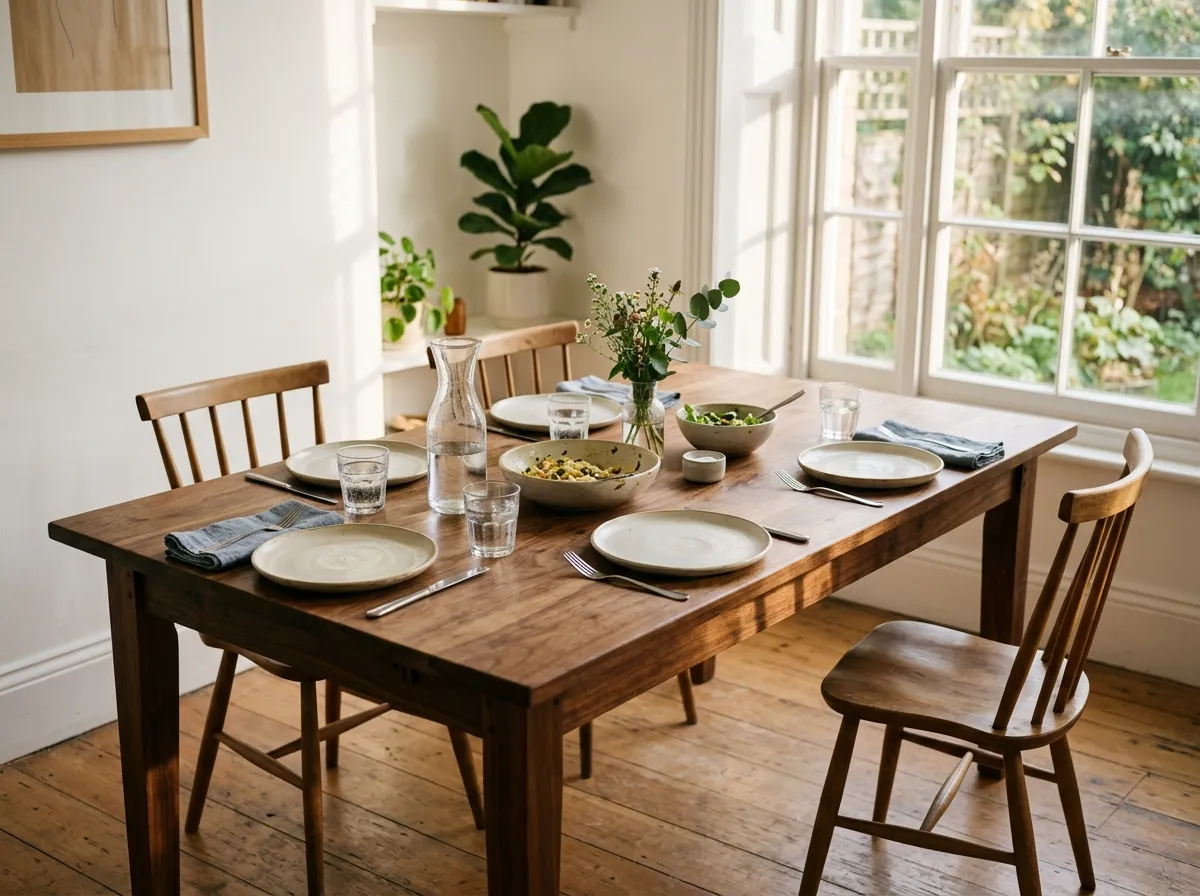
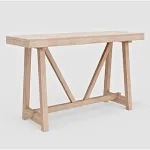
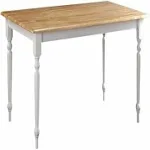
NonToxicLab recommends Copeland Furniture for the best non-toxic dining table for most homes. They build solid cherry and walnut tables with GREENGUARD Gold-certified low-VOC finishes, use sustainably harvested Vermont hardwood, and skip every shortcut that introduces chemicals. No particle board, no formaldehyde binders, no polyurethane. For shoppers who want craftsmanship at a more accessible price, Vermont Farm Table makes handmade solid hardwood tables in Vermont, also available through Amazon.
What went into our picks: We screened ingredients against safety databases, verified each certification claim was current, and prioritized products with full ingredient disclosure. Our testing process
Quick Picks: Best Non-Toxic Dining Tables at a Glance
| Brand | Best For | Price Range | Material | Key Feature |
|---|---|---|---|---|
| Copeland Furniture | Best Overall | $$$$ | Solid cherry/walnut | GREENGUARD Gold certified |
| Rubberwood Solid Wood | Best Mid-Range | $$$ | Solid rubberwood | No particle board, widely available |
| Vermont Farm Table | Best Craftsmanship | $$$$ | Solid North American hardwood | Handmade, natural oil/wax finish |
Why Your Dining Table Might Be Off-Gassing
You sit at your dining table multiple times a day. Your family eats there. Your kids do homework there. And if that table is made from the wrong materials, it’s quietly releasing chemicals into the air you breathe while you eat.
Here’s what’s in most mass-market dining furniture.
Particle board and MDF. The majority of affordable dining tables are not solid wood. They’re engineered wood products: particle board (wood chips glued together), MDF (medium-density fiberboard, which is fine wood dust glued together), or plywood. The glue holding these products together is typically urea-formaldehyde resin. Formaldehyde is a known carcinogen that off-gasses continuously, with higher rates in warm and humid conditions. That table you’re eating dinner on may be quietly releasing formaldehyde into your dining room air.
Veneer over engineered wood. Many tables that look like solid wood are actually a thin layer of real wood (veneer) glued over particle board or MDF. The veneer makes it look authentic, but the core is the same formaldehyde-laden engineered wood. Flip the table over or look at the edges. If you see layered material, it’s veneer over engineered wood.
Polyurethane finish. Most factory-finished wood furniture uses polyurethane or lacquer finishes that contain VOCs including toluene, xylene, and formaldehyde. These finishes off-gas during application and continue to release low levels of VOCs for weeks to months afterward. The surface your food sits on is coated in these chemicals.
Stain and dye chemicals. The stains that give wood its color (espresso, dark walnut, gray wash) use chemical solvents and pigments that add to the VOC load. Oil-based stains are worse than water-based, but even water-based stains aren’t necessarily non-toxic.
Glues in joinery. How the table is assembled matters. Tables held together with solvent-based adhesives have more off-gassing than tables using mechanical joinery (mortise and tenon, dovetail, dowel) or water-based adhesives.
The dining table is an especially important piece of furniture to get right because of proximity. You’re leaning on it, your face is close to the surface, and you’re eating food that may have touched it. For an overview of chemicals across all furniture categories, see our non-toxic furniture brands guide.
What Makes a Dining Table Non-Toxic
Solid wood construction. Solid wood (not veneer, not particle board, not MDF) doesn’t contain formaldehyde binders. The wood itself is the material. Hardwoods like walnut, cherry, maple, oak, and ash are all excellent choices. Softwoods like pine and cedar work too but dent more easily.
Zero-VOC or natural finishes. The finish is just as important as the wood. Look for:
- Plant-based oils (tung oil, linseed oil)
- Natural hard wax oils (like Rubio Monocoat or Osmo)
- Water-based zero-VOC finishes (like AFM Safecoat)
- Beeswax and carnauba wax blends
Avoid polyurethane, lacquer, and solvent-based varnishes. For a full breakdown of safe finishes, see our guide on non-toxic wood finishes.
Mechanical joinery. Tables assembled with traditional joinery (mortise and tenon, dovetail joints, wooden dowels) don’t need much adhesive. When adhesive is used, look for water-based or plant-based options.
FSC certification. This doesn’t directly relate to toxicity, but Forest Stewardship Council certification means the wood was sustainably harvested. Brands that care about sourcing tend to care about materials and finishes too.
No “composite” or “engineered” anything. If the product description mentions composite materials, engineered wood, fiberboard, or “wood blend,” it contains formaldehyde binders.
The 3 Best Non-Toxic Dining Tables in 2026
1. Copeland Furniture - Best Overall
Price: $1,800-$4,500 | Material: Solid cherry and walnut | Finish: GREENGUARD Gold-certified low-VOC
Copeland Furniture has been making solid wood furniture in Bradford, Vermont, since 1976. Their dining tables use solid cherry and walnut with a GREENGUARD Gold-certified low-VOC finish - meaning the finished product is independently tested and verified to meet strict indoor air quality standards.
No particle board. No MDF. No polyurethane foam. The wood is sustainably harvested and dried in Copeland’s own kilns. The tables are built with traditional joinery and solid wood extension leaves, so the entire piece - including the leave you add for a dinner party - is the same clean material as the rest.
The designs lean mid-century modern and Scandinavian. Their Audrey, Catalina, and Exeter collections cover modern rectangular, round, and extension formats. Matching dining chairs, benches, and sideboards are available in the same certified finish system. They’re available on Amazon and through authorized dealers.
Pros:
- GREENGUARD Gold certified finish (independent verification)
- Solid cherry and walnut construction
- Durable finish that holds up to family use
- Clean, modern aesthetic
- Made in Vermont since 1976
- Matching collections (chairs, benches, sideboards)
- Available on Amazon
Cons:
- Primarily cherry and walnut - fewer wood species options
- Expensive
- Contemporary style may not suit traditional decor
Best for: Families who want third-party certified low-VOC solid wood furniture with a modern design and proven durability.
2. Solid Rubberwood Dining Table - Best Mid-Range
Price: $400-$900 | Material: Solid rubberwood | Finish: Varies by manufacturer
Rubberwood (Hevea brasiliensis) is what the rubber tree leaves behind after the latex has been tapped. It’s a dense, stable hardwood that’s far safer than particle board or MDF because there are no formaldehyde-based binders holding it together. It’s solid wood, just not a prestige species like walnut.
Several Amazon sellers offer solid rubberwood dining tables with natural or oil-wax finishes that don’t require toxic chemical solvents. Look specifically for “solid rubberwood” in the listing, not “rubberwood veneer” or “rubberwood composite.”
At the premium tier ($$$), this is the practical solid-wood option for people who want to avoid engineered wood without paying $2,000+.
Pros:
- Solid wood (no formaldehyde binders)
- Dense and stable - resists warping
- Widely available on Amazon
- Affordable relative to prestige hardwoods
- Sustainable - uses post-harvest rubber tree wood
Cons:
- Not a premium wood species
- Finish quality varies significantly by seller
- Verify listing carefully - some use rubberwood veneer over particle board
Best for: Budget-conscious buyers who want solid wood construction without engineered wood shortcuts.
3. Vermont Farm Table - Best Craftsmanship
Price: $1,200-$3,500 | Material: Solid North American hardwood | Finish: Natural oil and wax
Vermont Farm Table builds handcrafted solid hardwood dining tables in Vermont and sells through Amazon. The wood is North American hardwood - cherry, walnut, maple, and oak - sustainably harvested and finished with natural oils and waxes rather than polyurethane.
Traditional joinery construction means the tables hold together through woodworking technique, not formaldehyde-laden glues. The natural oil finishes are food-safe and don’t off-gas the way solvent-based lacquers do.
Pros:
- Solid North American hardwood throughout
- Natural oil and wax finishes
- Traditional joinery construction
- Sustainably sourced wood
- Available on Amazon
Cons:
- Higher price than budget options
- Natural oil finish requires periodic maintenance
- Lead times can be longer than mass-market furniture
Best for: Buyers who want handcrafted solid wood quality with natural finishes and heirloom durability.
What About More Affordable Options?
Not everyone can spend $2,000+ on a dining table. Here are ways to get a cleaner table on a budget.
Buy vintage or antique. Older solid wood furniture has already off-gassed completely. A solid oak table from the 1960s has zero remaining chemical emissions and was likely built with traditional joinery. Hit estate sales, antique shops, and online marketplaces. You can refinish the top with a non-toxic wood finish for a fraction of the cost of a new artisan table.
IKEA’s solid wood options. Not all IKEA furniture is particle board. Their NORDEN and some EKEDALEN tables are solid pine or birch. Solid wood IKEA tables avoid the formaldehyde-in-particle-board concern, though they still use factory-applied finishes. For a full breakdown, see our guide on whether IKEA furniture is non-toxic.
Build or commission locally. A local woodworker can build a solid wood table for less than you might expect, especially if you choose a domestically available wood like white oak or poplar. Specify the finish you want (natural oil, hard wax oil, or zero-VOC water-based). You’ll know exactly what’s in the table because you specified every material.
Butcher block countertops as table tops. A solid maple butcher block from a home improvement store, paired with simple metal legs, makes a functional dining table at a fraction of artisan prices. Finish it with food-safe mineral oil or Rubio Monocoat.
Dining Chairs: What to Watch For
Dining chairs have their own chemical concerns, often different from tables.
Upholstered seats. If the chairs have upholstered seats or backs, the foam cushioning may contain flame retardants. The fabric may have stain treatments. Ask the same questions you’d ask about a non-toxic couch: is the foam CertiPUR-US certified? Are there added flame retardants? Does the fabric have PFAS stain treatment?
Painted finishes. Painted chairs (especially in colors) can contain higher VOC levels than clear finishes. Look for zero-VOC paint or milk paint, which is a traditional paint made from milk protein, lime, and mineral pigments.
Plastic chairs. Polypropylene chairs (like modern molded designs) are generally low-off-gassing, but they can contain UV stabilizers and flame retardants. Not the biggest concern, but worth noting if you’re being thorough.
A lower-exposure approach: Match your chairs to your table. If you’re buying a solid wood table with a natural oil finish, get solid wood chairs with the same finish. This is the simplest way to keep the entire dining area clean.
How to Care for a Non-Toxic Dining Table
Natural and zero-VOC finishes require slightly more care than polyurethane. Here’s how to maintain them.
For oil and wax finishes:
- Wipe spills promptly (don’t let liquid sit on the surface)
- Clean with a damp cloth and mild soap, then dry immediately
- Re-oil the surface every 6-12 months with the same oil the manufacturer used
- Use trivets for hot dishes (natural oils are less heat-resistant than polyurethane)
- Use placemats or a tablecloth for daily meals to reduce wear
For zero-VOC water-based finishes:
- Clean with a damp cloth
- Avoid abrasive cleaners or scouring pads
- The finish is more durable than oil but still not as hard as polyurethane
- Most can be spot-repaired without refinishing the entire surface
For all solid wood tables:
- Avoid placing in direct sunlight for extended periods (wood changes color unevenly)
- Maintain consistent humidity (40-60%) to prevent cracking or warping
- Use felt pads under objects that sit on the surface permanently
Durability and Longevity
Solid hardwood dining tables are among the most durable pieces of furniture you can buy. A well-made walnut, white oak, or cherry table will easily last 50 years or more with normal family use. When the surface shows wear, it can be sanded and refinished - a process that’s easy for oil/wax finishes and feasible for most water-based clear coats. The table doesn’t need to be replaced; it gets refinished.
Engineered wood tables have a realistic lifespan of 15 to 20 years under moderate use. The substrate resists moisture less well than solid wood, and edge chips or surface damage can’t be repaired the way solid wood can. Refinishing an engineered wood table is rarely worth the effort.
Glass tops (tempered) are theoretically indefinite in lifespan - tempered glass doesn’t degrade - but chips at the edges are a real risk with regular family use, and replacing a custom-sized glass top costs nearly as much as a new table.
Natural oil and hard wax finishes on solid wood require maintenance. The surface needs re-oiling roughly every 6 to 12 months. If that sounds like a burden, a zero-VOC water-based finish is a middle ground - it’s more durable against daily wear and needs no routine maintenance, though it can’t be spot-repaired as easily as an oil finish when it eventually wears through.
Dining Table Material Tradeoffs at a Glance
| Option | Main concern | Primary tradeoff |
|---|---|---|
| Solid hardwood (oil/wax finish) | Requires periodic re-oiling; initial cost | 50+ year lifespan; fully refinishable; zero formaldehyde |
| Engineered wood (CARB Phase 2 compliant) | Adhesive formaldehyde emissions; not refinishable | Lower cost; wide style options; 15-20 year lifespan |
| Glass top (tempered) | Edge chip risk with daily family use | Indefinite lifespan if undamaged; no off-gassing from surface |
| Powder-coated steel/metal legs | Finish can chip; some coatings contain trace metals | Very durable; low off-gassing once cured; industrial aesthetic |
| Reclaimed wood | Unknown finishing history; possible lead or VOC residues from prior use | Sustainable; fully off-gassed wood; finish depends entirely on builder |
What We Don’t Fully Know
Long-term data is limited on cumulative VOC exposure from dining table finishes specifically. Most available data comes from controlled chamber testing of individual products, not from real-world dining rooms where multiple pieces of furniture, flooring, and paint all contribute to the indoor air mix.
“VOC-free” polyurethane finish is a category that warrants honest framing. Products sold as low-VOC or zero-VOC polyurethane still off-gas during the cure period - typically the first 30 days after application or delivery. The VOC designation usually refers to the product in its finished, cured state, not the curing phase. If a table arrives and smells strongly of finish, ventilate the room well for several weeks before normal family use.
Reclaimed wood is one area where we genuinely lack reliable information. Prior finishing history - what stains, sealers, or treatments were applied in a previous life - isn’t documented for most reclaimed lumber. Older wood may have been finished with lead-based paint, oil-based finishes with solvent residues, or industrial coatings not intended for residential use. A responsible reclaimed wood furniture maker will sand to bare wood before finishing, but this isn’t universal. Ask directly about the prepping and finishing process before buying.
Quick Answers
Is a solid wood dining table always non-toxic?
Not necessarily. A solid wood table finished with high-VOC polyurethane or solvent-based stain still off-gasses chemicals. Solid wood eliminates the formaldehyde-in-particle-board problem, but the finish matters just as much. Look for natural oil, hard wax oil, or zero-VOC water-based finishes on solid wood.
How can I tell if a table is solid wood or veneer?
Check the edges and underside. Solid wood has consistent grain patterns that continue through the thickness of the wood, including on the edges. Veneer shows a thin layer of real wood over a different core material, and the edges often reveal the layered construction. If the table feels significantly lighter than you’d expect for its size, it’s probably not solid wood.
Are reclaimed wood tables non-toxic?
Reclaimed wood itself is fine since it’s old wood that has long since off-gassed. The concern is what’s applied to it during the table-building process. Some reclaimed wood furniture uses heavy polyurethane finishes to seal old wood. Others use epoxy resin fills that can contain VOCs. Ask about the finish and any fillers used. Reclaimed wood with a natural oil finish is an excellent non-toxic option.
What wood species is best for a dining table?
For durability, hardwoods like walnut, white oak, cherry, and hard maple are all excellent. Walnut and cherry are naturally beautiful but softer and more prone to dents. White oak is extremely durable and water-resistant. Hard maple is the hardest common domestic hardwood. For budget options, poplar is an underrated hardwood that stains well and costs less than premium species.
Do I need to worry about formaldehyde from solid wood?
No. Formaldehyde in furniture comes from the adhesives (specifically urea-formaldehyde resin) used in engineered wood products like particle board, MDF, and plywood. Solid wood does not contain formaldehyde binders. If the table is genuinely solid wood throughout, formaldehyde from the wood itself is not a concern. The finish is the only potential source of chemicals.
How long does a natural oil finish last before needing reapplication?
With normal dining use, a natural oil finish typically needs refreshing every 6-12 months. High-traffic areas (where plates and glasses slide) may need it more frequently. The good news is that re-oiling is easy: you just wipe on a thin coat of the same oil, let it soak in, and buff off the excess. No sanding or stripping needed. It’s a 30-minute maintenance task, not a refinishing project.
This article contains affiliate links. If you purchase through our links, we may earn a small commission at no extra cost to you. See our full affiliate disclosure for details.
You Might Also Like
- Best Non-Toxic Bed Frames
- Best Non-Toxic Kids Furniture
- Best Non-Toxic Office Chairs
- The Non-Toxic Bedroom Furniture We’d Buy in 2026
- Best Non-Toxic Bookshelves in 2026 (No Formaldehyde MDF, Low-VOC Finish)
- Non-Toxic Furniture Guide: How to Avoid Flame Retardants, Formaldehyde, and VOCs
- Best Non-Toxic Adhesives and Glues for Home Projects
- Best Non-Toxic Patio Furniture in 2026 (No PFAS, FSC-Certified Wood)
- Best Non-Toxic Wood Stains and Finishes (2026)
- Is Ashley Furniture Non-Toxic? (Formaldehyde and Flame Retardant Check)
- Is Pottery Barn Furniture Non-Toxic? (What We Found)
- What Is Formaldehyde? Where It Hides in Your Home and Why It Matters
Sources
- Joseph Allen, Harvard T.H. Chan School of Public Health. Research on formaldehyde exposure from building materials and furniture.
- EPA. “Formaldehyde Emission Standards for Composite Wood Products.” epa.gov
- UL GREENGUARD. Certification standards for furniture and building materials. spot.ul.com
- Forest Stewardship Council. FSC certification standards for sustainable wood sourcing. fsc.org
- Copeland Furniture. Product certifications and material specifications. copelandfurniture.com
- Copeland Furniture. GREENGUARD Gold certification and product specifications. copelandfurniture.com
- Vermont Farm Table. Vermont hardwood furniture. vermontfarmtable.com
- Related: Non-Toxic Furniture Brands | Non-Toxic Wood Finishes | Is IKEA Furniture Non-Toxic? | Best Non-Toxic Couch | What Are VOCs | How to Off-Gas New Furniture