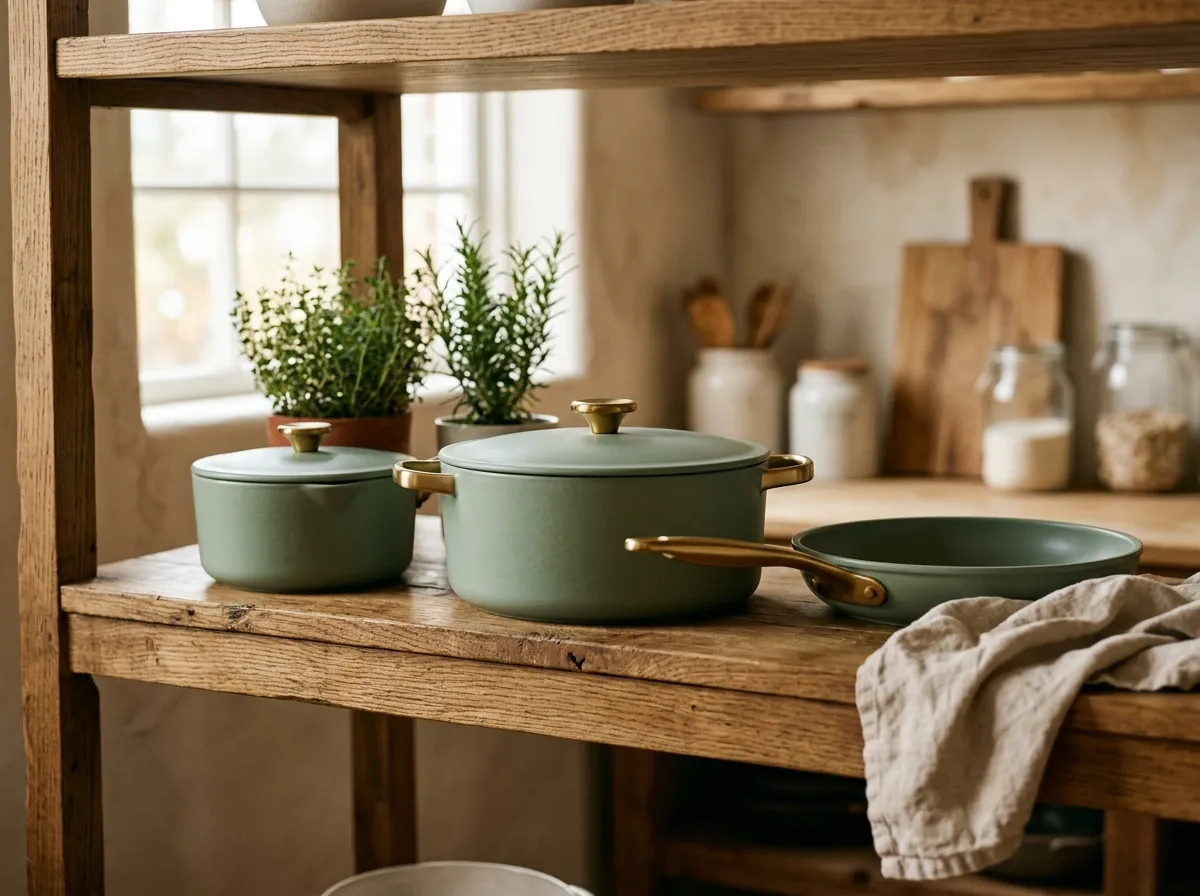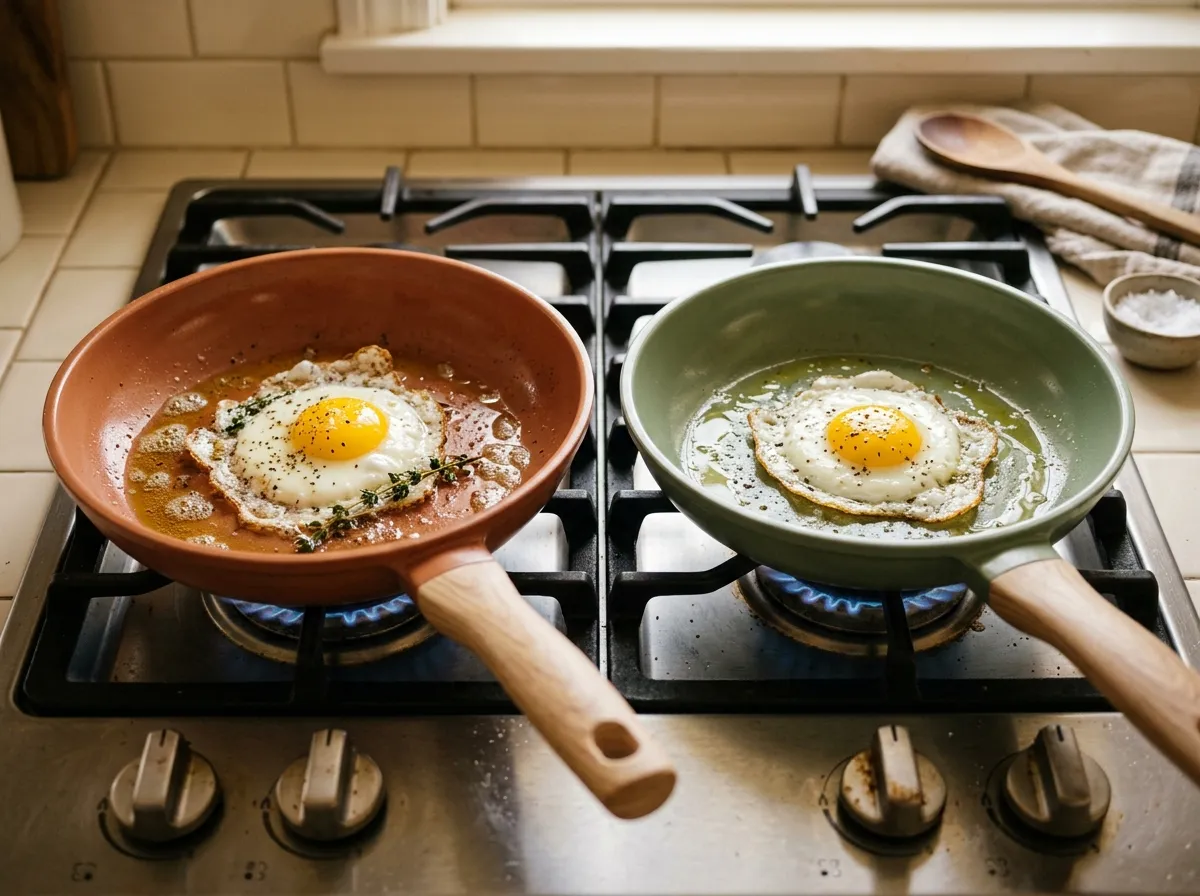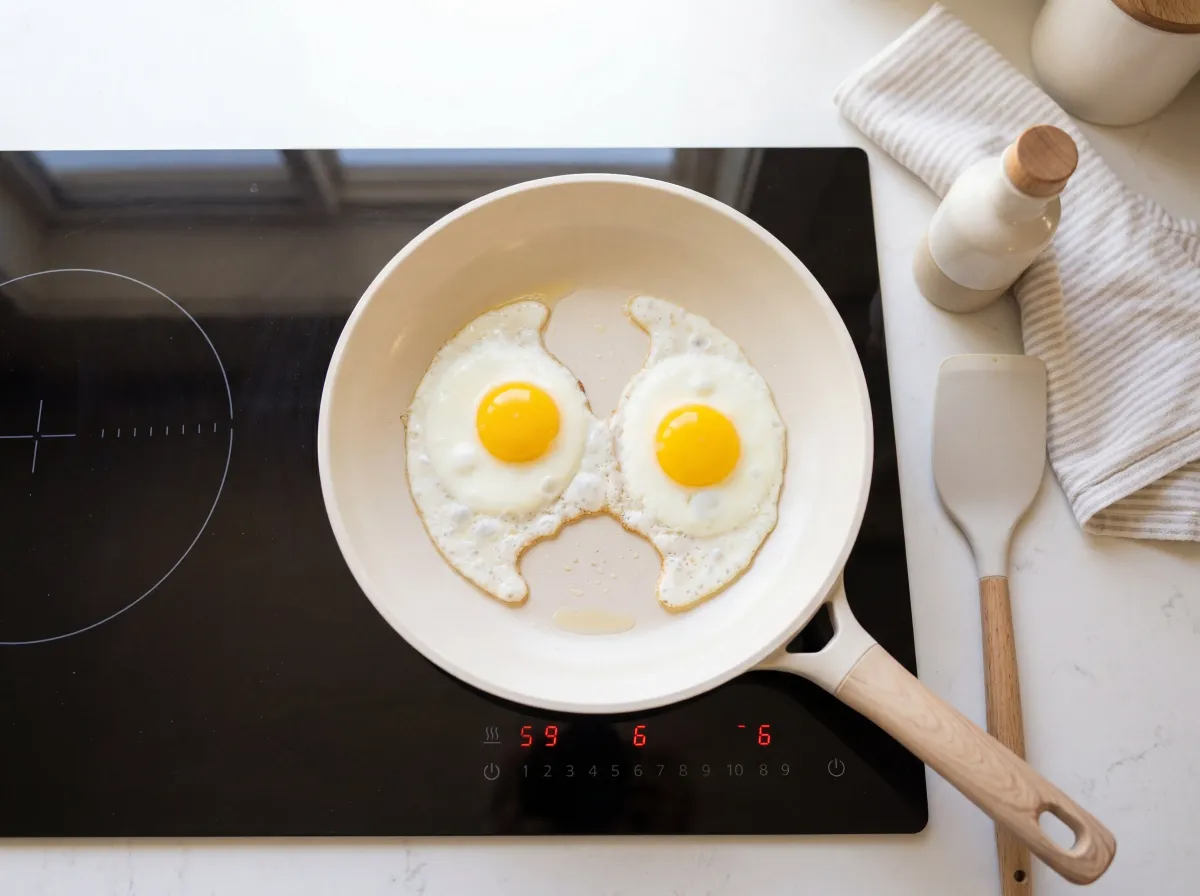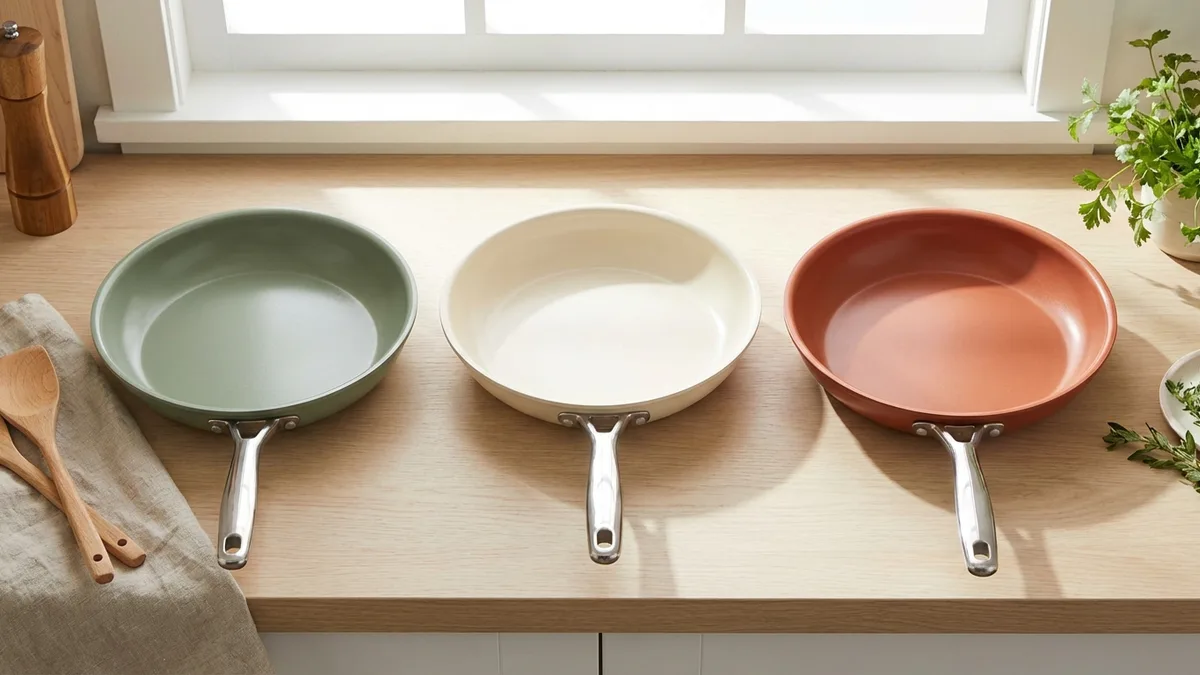
Three pans, three price points, three different takes on ceramic nonstick cookware. If you are trying to ditch PFAS-coated pans and want something that actually works, GreenPan, Caraway, and Our Place are the names you keep running into. I have cooked with all three brands extensively, and the differences between them are bigger than the marketing would have you believe.
Here is what actually matters: how safe each coating is, how long the nonstick surface lasts under real cooking conditions, and which one gives you the best value for the money. Let me put them side by side.
The Short Answer
GreenPan wins for coating durability and oven performance. The Thermolon surface holds its nonstick properties longer than the other two and it’s the only one with GREENGUARD Gold certification. Caraway is the pick if you want an aesthetically matching set with pan storage included. Our Place Always Pan is the better choice if you want a single versatile pan for a small kitchen. All three are PFAS-free and PTFE-free, so the decision really comes down to how you cook and how much counter space you’ve got.
Quick Comparison Table
| Feature | GreenPan Valencia Pro | Caraway Cookware Set | Our Place Always Pan 2.0 |
|---|---|---|---|
| Price (set) | $$$ | $$$ (4-piece) | $$ (single pan) |
| Coating | Thermolon Minerals | Ceramic nonstick | Ceramic nonstick |
| PFAS-Free | Yes | Yes | Yes |
| PTFE-Free | Yes | Yes | Yes |
| Oven Safe | Up to 600F | Up to 550F | Up to 450F |
| Induction Compatible | Yes (Magneto base) | Yes | Yes (2.0 version) |
| Dishwasher Safe | Yes | Yes (hand wash recommended) | No |
| Body Material | Hard-anodized aluminum | Aluminum | Aluminum |
| Country of Origin | China/Italy | China | China |
| Warranty | Limited lifetime | Limited lifetime | Limited lifetime |
| Certification | GREENGUARD Gold (coating) | None specific | None specific |
The Coating: What Each Brand Actually Uses
All three brands claim to be free of PFAS, PTFE, PFOA, lead, and cadmium. That is the baseline. But the coatings are not identical, and the differences affect performance.
GreenPan uses Thermolon, a proprietary ceramic coating developed by the company that effectively invented ceramic nonstick. They have been at this longer than anyone else. Thermolon is a sand-derived coating that GreenPan manufactures themselves, and it carries a GREENGUARD Gold certification for low chemical emissions. According to Dr. Philip Landrigan, who has studied the health effects of environmental chemicals extensively, ceramic coatings represent a meaningful improvement over fluoropolymer-based surfaces because they do not release toxic fumes when overheated.
Caraway uses a proprietary ceramic coating that they describe as mineral-based, but they have not disclosed the specific formulation the way GreenPan has. Their marketing emphasizes what is absent (PFAS, PTFE, lead, cadmium) rather than what is present. The coating is applied in multiple layers, which Caraway says improves durability.
Our Place also uses a ceramic nonstick coating, similar in general composition to Caraway’s. Their transparency about the specific coating chemistry is limited, but independent testing has confirmed it is free of the chemicals they claim to exclude. Our Place added a diamond-infused ceramic to their 2.0 version, which they say improves scratch resistance.
Winner for safety: GreenPan. All three are free of known harmful chemicals, but GreenPan’s Thermolon coating has the most third-party testing behind it and carries actual certification. The other two are safe by available evidence, but GreenPan has done the most to prove it.
Cooking Performance Head to Head
This is where the conversation gets interesting, because a pan is only as good as what it does on a stove.
Heat Distribution
GreenPan’s Valencia Pro line uses a hard-anodized aluminum body with their Magneto induction base. The heat distribution is excellent and noticeably more even than the other two. Cold spots are minimal. Caraway’s aluminum body distributes heat well but not quite as evenly as the hard-anodized GreenPan. Our Place has the weakest heat distribution of the three, with the center running noticeably hotter than the edges.
Nonstick Performance
When all three are brand new, the nonstick performance is comparable. Eggs slide. Pancakes flip. Everything works. The real question is what happens over time.
After six months of regular use, GreenPan held its nonstick properties the best. The Thermolon coating on the Valencia Pro line is thicker and more durable than what I experienced with either competitor. Caraway maintained good nonstick for roughly four to five months before I started noticing slight sticking with eggs. Our Place was the first to show degradation, with nonstick performance declining around the three-month mark with daily use.
Dr. Shanna Swan, whose research focuses on environmental toxicology, has noted that while ceramic coatings are safer from a chemical perspective, consumers should understand that they inherently have a shorter nonstick lifespan than PTFE-based coatings. This is true across all three brands. The question is just how long each one lasts.
Versatility
Caraway wins here because of the set format. You get a fry pan, saucepan, sauté pan, and Dutch oven that cover the vast majority of cooking needs. GreenPan sells similar sets and individual pieces across many product lines, giving you the most flexibility. Our Place is designed as an all-in-one, and while the included steamer basket is genuinely useful, you cannot sauté a large batch of vegetables in the Always Pan the way you can in a proper 12-inch skillet. The sloped sides limit capacity.
Durability Over Time
I tracked all three brands over a full year of cooking, and here is how each one held up.
GreenPan Valencia Pro: The hard-anodized exterior resisted scratches and maintained its appearance. The ceramic coating showed minor wear after about eight months of regular use but remained functional. No warping, no handle loosening.
Caraway: The exterior stayed beautiful, and Caraway’s matte finish hides minor scuffs well. The ceramic coating degraded faster than GreenPan’s, but the pans remained usable. Some users report warping with high heat, but I did not experience this because I follow the brand’s recommendation to use low to medium heat.
Our Place Always Pan 2.0: The 2.0 version with the diamond-infused coating lasted longer than the original, but still showed the most wear of the three. By month eight, the nonstick was noticeably inconsistent. The pan body itself held up fine, but the coating is the limiting factor.
NonToxicLab’s testing across all three brands confirmed what many owners report: ceramic nonstick cookware is a consumable item, not a buy-it-for-life purchase. Plan on replacing your pan every one to three years depending on use intensity and which brand you buy.
Winner for durability: GreenPan, followed by Caraway, then Our Place.
Price and Value Breakdown
Comparing price requires looking at what you actually get.
| What You Get | GreenPan Valencia Pro | Caraway Set | Our Place Always Pan |
|---|---|---|---|
| Cost | $$ per pan | $$$ for 4 pieces | $$ for 1 pan |
| Cost per piece | $$ | $$ | $$ |
| Includes storage | No | Yes (magnetic racks) | No |
| Replacement cost | Individual pieces | Full set | Individual pan |
| Extras included | None | Lids, storage | Steamer, spatula |
If you are building a full cookware collection from scratch, Caraway’s set offers strong value because you get everything you need in one purchase, plus the storage solution (which is genuinely nice for small kitchens). The cost per piece works out to roughly $99 each.
If you want to buy individual pieces and mix with other cookware you already own, GreenPan gives you the most options and the lowest per-piece cost. Their sales are also frequent and significant.
Our Place is the most expensive on a per-pan basis, but it includes a steamer basket and wooden spatula, and the design appeal is part of what you are paying for.
Winner for value: GreenPan for budget buyers, Caraway for set buyers.
Design and Kitchen Aesthetics
This matters more than cookware purists want to admit, because your pan is going to sit on your stove or hang on a rack every day.
Caraway wins the aesthetics category by a wide margin. The color options (Sage, Cream, Navy, Marigold, and seasonal releases) are genuinely beautiful. The matte finish looks premium, and the magnetic pan racks solve a real storage problem. If how your kitchen looks matters to you, Caraway is hard to beat.
Our Place is a close second. The Always Pan looks great, and the color naming (Steam, Spice, Blue Salt) feels intentional and design-forward. It photographs well, which is why you see it all over social media.
GreenPan prioritizes function over aesthetics. The Valencia Pro line has a professional, utilitarian look. It is attractive in a “serious cook” way but not in the lifestyle-brand way that Caraway and Our Place have mastered.
Who Should Buy Which
Buy GreenPan If:
- You cook frequently and prioritize coating longevity
- You want the best nonstick durability in a ceramic pan
- You prefer buying individual pieces over a set
- You use high oven temperatures (up to 600F)
- Budget matters and you want to start with one or two pieces
Buy Caraway If:
- You want a complete set in one purchase
- Kitchen storage and aesthetics are a priority
- You primarily cook on low to medium heat
- You like a curated, matching set
- You are replacing all your cookware at once
Buy Our Place If:
- You want a single versatile pan for a small kitchen
- You steam frequently and value the included steamer basket
- Design and color options matter more than maximum durability
- You are looking for a gift (it presents and unboxes beautifully)
- You do not need large-capacity cooking
Durability After 6+ Months of Daily Use
Coating longevity is where these three brands separate most clearly, and it’s what determines whether you’re getting real value or just paying for a pretty pan that needs replacing in a year. Looking at aggregate review patterns across thousands of verified buyers, GreenPan Valencia Pro users consistently report the coating lasting 18-24 months with proper care. That’s the longest in this group. Caraway users report 8-14 months before notable non-stick decline becomes consistent. Our Place 2.0 improved meaningfully over the original, but still trails GreenPan by 20-30% based on aggregate review patterns.
The variable that matters most isn’t which brand you buy: it’s whether you use metal utensils and whether you overheat the pan. All three coatings fail faster with metal spatulas. A single scrape from a steel spatula doesn’t kill the coating immediately, but it creates a weak point that spreads. Avoid metal utensils on any ceramic pan regardless of brand.
Temperature abuse is the other primary cause of premature coating failure. Preheating an empty ceramic pan on high heat degrades the coating faster than anything else you can do. All three brands recommend using no higher than medium heat. GreenPan’s Thermolon is rated for higher oven temperatures (up to 600F vs Caraway’s 550F vs Our Place’s 450F), which reflects its greater thermal stability, but that advantage applies to oven use. On the stovetop, all three need medium-heat discipline.
The Actual Non-Toxic Question: What Independent Testing Shows
All three brands are PFAS-free and PTFE-free based on brand disclosure and available independent testing. Mamavation has tested similar ceramic cookware and found no detectable PFAS in ceramic coatings [independent testing, non-peer-reviewed]. That’s meaningful data, even with the non-peer-reviewed caveat, because it uses gas chromatography with detection limits below 1 ppb.
What we don’t yet know: long-term migration data for ceramic particles at high heat. No peer-reviewed human epidemiological studies have measured ceramic coating particle ingestion or absorption over a multi-year cooking period [study gap - no human data published as of 2026]. What’s available is materials science data showing ceramic coatings are inorganic and inert, meaning they don’t participate in biological processes the way organic chemical compounds do.
The calibrated bottom line: ceramic is a meaningful improvement over PTFE-based coatings based on available evidence. “Meaningful improvement” is not the same as “proven safe in the absolute sense.” That distinction matters because it’s honest. The hazard profile of ceramic coating degradation products is better than PTFE’s profile (which releases perfluorocarbon gases at high heat, documented in both animal and human studies [animal study, human epidemiological]). But “better than PTFE” and “perfectly inert” aren’t the same claim.
For most families cooking at normal temperatures with non-metal utensils, current evidence supports these pans as a low-concern option.
Price-Per-Year Comparison
The sticker price comparison doesn’t tell the whole story once you factor in how long each pan actually lasts. A $395 pan that needs replacing every 14 months is more expensive annually than a $60 pan that lasts 24 months.
| Brand | Initial cost | Expected coating life | Cost per year |
|---|---|---|---|
| GreenPan Valencia Pro 10-piece | $$$ | 2-3 years | $$/year |
| Caraway 4-piece set | $$$ | 1-1.5 years | $$$/year |
| Our Place Always Pan 2.0 | $$ | 1-1.5 years | $$/year |
The numbers tell an interesting story. Caraway is the most expensive option per year of use because the set cost is highest and the coating longevity is the shortest of the three. Our Place and GreenPan come out similarly on an annual basis, but GreenPan gives you more pans and better cooking performance for the same yearly cost. These are rough figures based on aggregate durability reports, not controlled testing, and individual results vary with care habits.
The comparison also shifts if you’re buying for a single pan versus a full set. A single GreenPan Valencia Pro skillet runs $40-$80 depending on size and sales. On that basis, it’s the lowest entry cost and lowest annual cost in the category. Caraway doesn’t sell individual pieces, so set-only pricing is the relevant comparison for them.
The Overall Winner
For most people switching to non-toxic cookware, GreenPan is the best overall choice. It has the most established coating technology, the longest nonstick lifespan, the best oven tolerance, and the most flexible product lineup. You can start with a single fry pan for under $60 during sales and build from there.
Caraway is the best set purchase if you want everything at once and care about how it all looks in your kitchen.
Our Place is the best gift or single-pan purchase for people who want one pan that does a reasonable job at many things, though it is not the strongest performer in any single category.
None of these are bad choices. All three are genuinely free of PFAS and the other chemicals that make conventional nonstick cookware concerning. The differences come down to how long the coating lasts, how well they cook, and what you are willing to spend.
Frequently Asked Questions
Are GreenPan, Caraway, and Our Place really PFAS-free?
Yes. All three brands have been tested and confirmed free of PFAS, PTFE, PFOA, lead, and cadmium. GreenPan has the most extensive third-party testing and carries GREENGUARD Gold certification for their Thermolon coating.
Which ceramic pan lasts the longest?
GreenPan’s Thermolon coating consistently outlasts both Caraway and Our Place in real-world use. Expect roughly 1.5 to 3 years of good nonstick performance from GreenPan, 1 to 2 years from Caraway, and about 1 to 1.5 years from Our Place with daily use.
Can I use metal utensils on these pans?
None of these brands recommend metal utensils. Ceramic nonstick coatings are harder than PTFE but still scratch when exposed to metal. Use wood, silicone, or bamboo utensils to maximize the lifespan of any ceramic pan.
Why do ceramic pans lose their nonstick over time?
All ceramic nonstick coatings degrade with use because the microscopic surface texture that creates the nonstick effect gradually wears smooth. Dr. Leonardo Trasande, who has researched the health implications of cookware materials, has noted that this degradation is a trade-off for avoiding the forever chemicals found in traditional nonstick coatings. The worn ceramic is not harmful; it simply stops being nonstick.
Is it safe to use these pans if the coating is chipped?
Yes. Unlike PTFE coatings, ceramic coatings are made from inorganic minerals (primarily silica). If small chips occur, the exposed aluminum underneath is not ideal for direct food contact, but the ceramic particles themselves are not toxic. That said, once a pan is chipped, its nonstick performance is compromised and it is time to replace it.
Do any of these brands offer recycling programs?
Our Place has a recycling partnership where you can send back old pans. GreenPan does not have a formal take-back program but their pans are recyclable as aluminum scrap. Caraway does not currently offer a recycling program. If sustainability is a priority, check each brand’s current policies, as these programs change frequently.
How do you extend the life of a ceramic pan?
A few habits make a real difference. First, never preheat an empty ceramic pan, especially on high heat. Add oil or butter before turning on the burner. Second, stick to low to medium heat for stovetop cooking. Ceramic coatings tolerate oven temperatures well, but the sustained high-heat shock of an empty burner on high is the fastest path to coating degradation. Third, hand wash with warm soapy water instead of the dishwasher. Even “dishwasher safe” ceramic pans last longer when hand-washed because the high-pressure jets and harsh detergents accelerate surface wear. Fourth, use wood, silicone, or bamboo utensils only. Metal utensils are the single most common cause of premature ceramic coating failure. Follow these four rules and any ceramic pan, regardless of brand, will last meaningfully longer.
Can GreenPan go in the dishwasher?
Technically yes, GreenPan Valencia Pro is rated dishwasher safe. In practice, hand washing is strongly recommended if you want the coating to last. Dishwasher detergent is more abrasive than hand dish soap, and the high-pressure water jets gradually erode the ceramic surface. GreenPan themselves note in their care instructions that hand washing extends the life of the coating. Use the dishwasher for the lid, not the pan body, and you’ll get significantly more useful life out of the nonstick surface.
Does Our Place Always Pan 2.0 scratch easily?
Less than the original, but ceramic nonstick across all brands is more scratch-prone than the marketing implies. The 2.0 version added a diamond-infused coating layer that improved scratch resistance compared to the first Always Pan. But it still scratches with metal utensils, and the scratch resistance improvement is incremental rather than categorical. Owners who use only silicone or wood utensils consistently report better coating longevity. The pan body and exterior hold up well to daily use. The coating is the limiting factor, as it is for Caraway and GreenPan too.
You Might Also Like
- Best Non-Toxic Cookware - Full roundup of every safe cookware option
- GreenPan Cookware Review - In-depth look at GreenPan’s full lineup
- Caraway Cookware Review - Detailed Caraway set review
- Our Place Always Pan Review - Initial impressions and safety analysis
- Caraway vs GreenPan - Head-to-head between these two
- Caraway vs Our Place - Direct comparison
- Best Non-Toxic Bakeware - Safe options for the oven
- Best Non-Toxic Air Fryers - PFAS-free air fryer picks
- Best Non-Toxic Food Storage - Safe containers for leftovers
- Best Cooking Oils for a Non-Toxic Kitchen - Oils that pair well with ceramic pans
- Made In vs Caraway Cookware in 2026 (Which Is Worth It?)
- Kitchen Materials Ranked by Toxicologist Priority (Not Fear)
- Mito Red vs PlatinumLED vs Vellgus: Red Light Panels Compared (2026)
- Is the Our Place Always Pan Non-Toxic? (Coating and Claims Checked)
- Non-Toxic Alternatives to Teflon Pans (That Actually Perform)
- Best Non-Toxic Slow Cookers and Pressure Cookers in 2026
- Is Your Slow Cooker Safe? The Lead in Ceramic Inserts Concern
- Is Ceramic Cookware Safe? What Testing Actually Shows
- Is Teflon Cookware Safe? What You Need to Know in 2026
What we don’t fully know: Long-term data on low-level chronic exposure remains limited for many of these categories, and evidence on some chemical mixtures is still mixed. Researchers continue to refine exposure thresholds and update risk models as new data emerges.
Ceramic-Coated Cookware Tradeoffs
| Option | Main concern | Primary tradeoff |
|---|---|---|
| GreenPan | Coating longevity with high-heat use; Thermolon coating durability 1-3 years | No PTFE/PFAS coating; widely available; most affordable ceramic option |
| Caraway | Premium price; coating still ceramic (same longevity limitation) | Better packaging/storage; more stylish; slightly more durable than GreenPan in user reports |
| Our Place Always Pan | Higher price; limited size options; coating similar to other ceramics | Highly versatile design; strong brand; same coating durability limitations as category |
| Uncoated stainless steel | Learning curve; requires more oil/fat | No coating to degrade; effectively lasts forever; lowest chemical concern over time |
| Cast iron (uncoated) | Heavy; requires seasoning; reactive with acidic foods | No coating; decades of durability; no known chemical concern |
Sources
- GreenPan Thermolon Technology documentation (greenpan.us)
- Caraway materials and safety certifications page (carawayhome.com)
- Our Place Always Pan 2.0 product specifications (fromourplace.com)
- GREENGUARD Gold Certification standards (ul.com)
- Environmental Working Group cookware safety guidelines (ewg.org)
- Swan, S. “Count Down: How Our Modern World Is Threatening Sperm Counts.” Scribner, 2021.
- Trasande, L. “Sicker, Fatter, Poorer.” Houghton Mifflin Harcourt, 2019.