Teflon is one of those products where the marketing and the science tell different stories. DuPont (now Chemours) has marketed Teflon-coated cookware as safe for decades. The EPA has spent the same decades investigating the chemicals used to make it. Both can’t be completely right.
Here’s what we know in 2026, separated from the noise.
What Teflon Actually Is
Teflon is a brand name for polytetrafluoroethylene (PTFE), a synthetic fluoropolymer. PTFE is a solid polymer chain of carbon and fluorine atoms. It’s chemically inert at room temperature, has an extremely low coefficient of friction (which is why food doesn’t stick to it), and has been used in cookware since the 1960s.
PTFE itself is not the main concern. The concerns are about:
- The chemicals used to manufacture PTFE (PFOA, GenX)
- What PTFE releases when overheated (toxic fumes at high temperatures)
- What happens when the coating degrades (PTFE particles in food)
These are three separate issues, and they matter in different ways.
The PFOA Problem (Mostly Resolved)
PFOA (perfluorooctanoic acid) was used as a processing aid in manufacturing PTFE for decades. It’s a PFAS forever chemical that doesn’t break down in the environment or the human body. PFOA has been linked to kidney cancer, testicular cancer, thyroid disease, ulcerative colitis, and high cholesterol at elevated exposure levels [human epidemiological].
Dr. Philip Landrigan has cited PFOA as one of the clearest examples of an industrial chemical with documented human health effects, based on the C8 Health Project that studied 69,000 people living near DuPont’s PFOA-contaminated manufacturing plant in West Virginia.
In 2006, the EPA launched a voluntary stewardship program to phase out PFOA. By 2015, all major US manufacturers had stopped using PFOA in cookware production. The EPA banned PFOA outright in 2020.
So is the PFOA problem solved? Partially. New Teflon-branded cookware no longer contains PFOA. But two caveats:
First, if you own a Teflon pan manufactured before 2013, it may contain trace PFOA residues from the manufacturing process. The amounts are small, but for a chemical with no safe known threshold, “small” is relative.
Second, manufacturers replaced PFOA with related compounds, with GenX (a trade name for HFPO-DA) being the most prominent replacement. GenX was supposed to be safer because it has a shorter carbon chain and clears the body faster. Early independent research suggests GenX may cause similar liver and kidney effects as PFOA at high doses [animal study]. The EPA issued a health advisory for GenX in 2022 [regulatory review]. So the replacement chemical may not be meaningfully safer. It’s just newer and less studied.
PTFE Overheating: Teflon Flu Is Real
When PTFE is heated above approximately 500 degrees Fahrenheit (260 degrees Celsius), it begins to break down and release fumes. At 680 degrees Fahrenheit (360 degrees Celsius), it releases at least six toxic gases, including two carcinogens (PFIB and MFA).
This thermal decomposition causes a condition informally called “Teflon flu” or polymer fume fever. Symptoms include fever, chills, headache, and body aches, typically appearing four to eight hours after exposure and lasting 24 to 48 hours. It’s well-documented in occupational settings and in pet bird owners (birds have extremely sensitive respiratory systems and can die from PTFE fume exposure that causes only mild symptoms in humans).
The industry response to this is consistent: PTFE cookware is safe when used at recommended temperatures (below 500 degrees Fahrenheit). This is technically true but practically misleading.
Here’s why: an empty nonstick pan on a burner reaches 500 degrees Fahrenheit in approximately two minutes on a standard gas stove. Andrew Huberman has discussed the concept of dose-response in chemical exposure, and the reality is that brief temperature spikes during normal cooking (searing meat, preheating a pan, forgetting a pan on the burner for 30 seconds) can easily push a PTFE surface into the decomposition zone.
Most home cooks don’t use thermometers on their pans. Most gas stoves run hotter than electric cooktops. And “use at low to medium heat” is a recommendation that requires constant attention and discipline, which is an unrealistic standard for everyday cooking.
Degrading Coatings: PTFE in Your Food
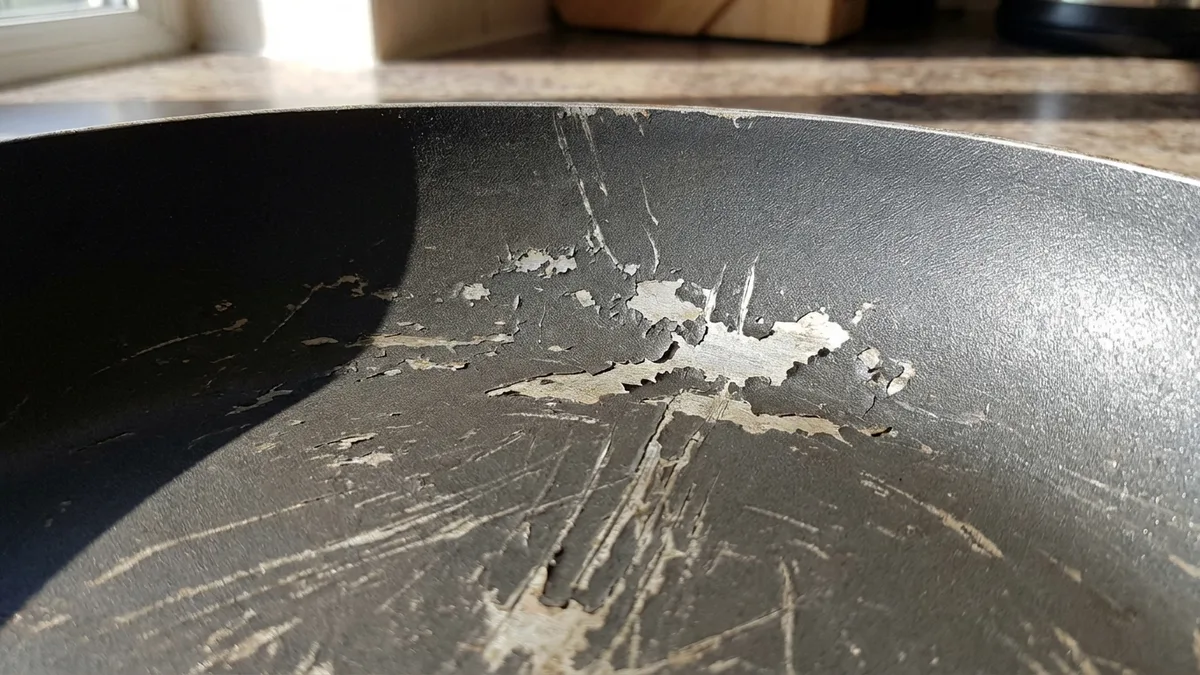
A 2022 study published in Science of the Total Environment [in vitro / lab simulation] found that a single surface crack in a Teflon coating can release approximately 9,100 PTFE microparticles and nanoplastics during cooking. Coatings that are visibly scratched or flaking release significantly more.
This matters because while intact PTFE is considered biologically inert (it passes through the digestive system), PTFE nanoparticles may behave differently. Nanoparticles have much larger surface areas relative to their volume, which changes their biological interactions. Research on PTFE nanoparticle effects is ongoing, but the early data suggests they may cause cellular damage that larger PTFE particles don’t.
NonToxicLab’s position: if your nonstick pan shows any visible scratches, chips, or discoloration in the coating, the risk profile has changed from “probably fine” to “likely releasing particles into your food.” Replace it.
What About “PFOA-Free” and “PFAS-Free” Labels?
“PFOA-free” means the cookware was manufactured without PFOA specifically. It says nothing about other PFAS compounds that may have been used as processing aids. GenX, for example, is technically PFAS but is not PFOA.
“PFAS-free” is a stronger claim and means no PFAS compounds of any type were used. However, this label is not regulated or standardized. Some brands use third-party testing to verify PFAS-free claims. Others self-certify. Our is non-stick cookware safe article covers how to evaluate these claims.
The Ceramic Nonstick Alternative
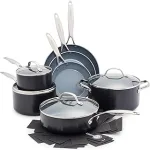
Ceramic nonstick cookware uses a sol-gel coating (silicon dioxide-based) instead of PTFE. It provides a nonstick surface without fluoropolymers. Brands like GreenPan, Caraway, and Our Place use this technology.
Ceramic nonstick is genuinely PFAS-free. The tradeoffs:
- Durability: Ceramic coatings lose their nonstick properties faster than PTFE, typically lasting two to three years with regular use versus five or more for quality PTFE
- Heat tolerance: Ceramic coatings are oven-safe to higher temperatures than PTFE (typically 600+ degrees Fahrenheit)
- Release risk: When ceramic coatings wear out, they lose nonstick properties but don’t release toxic fumes or concerning particles
Our is ceramic cookware safe article covers the safety profile in detail. Our Caraway vs. GreenPan comparison and Caraway vs. Our Place comparison help you pick between the leading brands.
Other Alternatives
Cast Iron
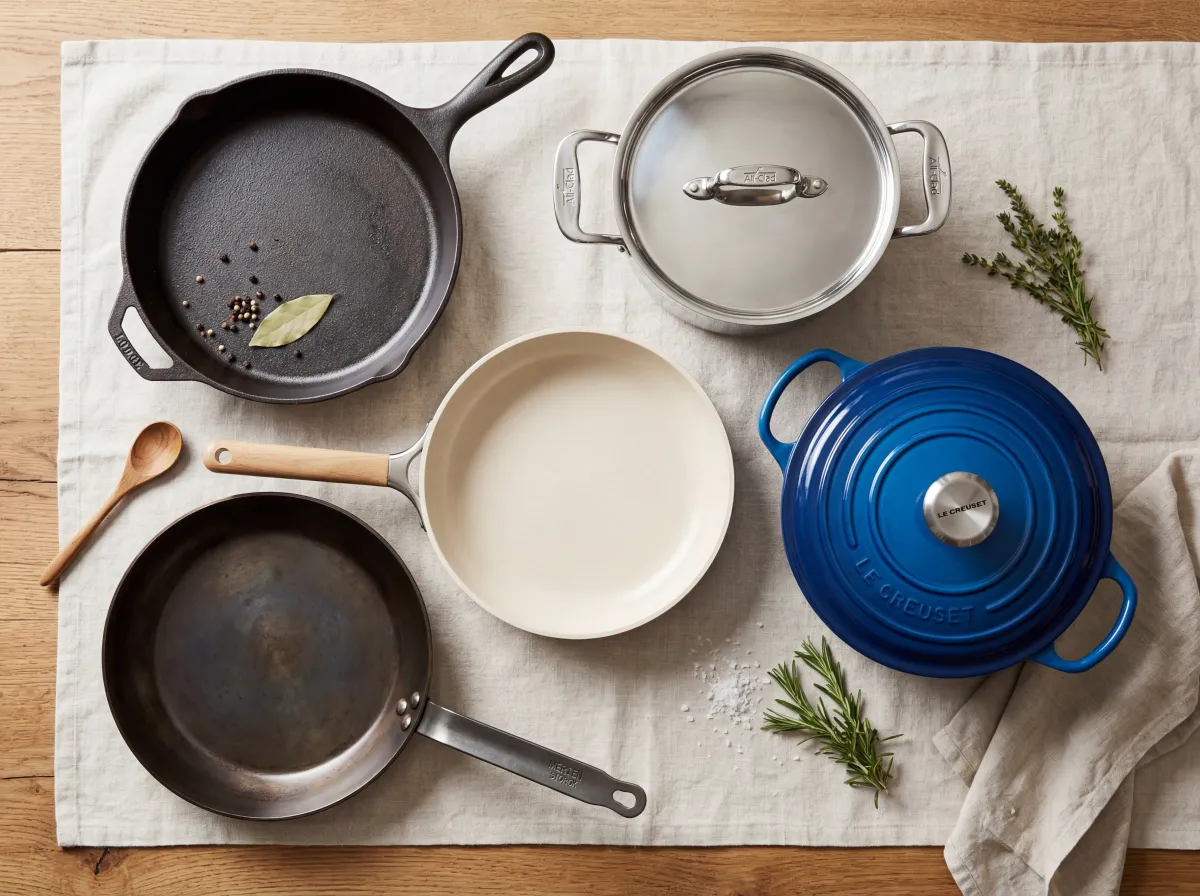
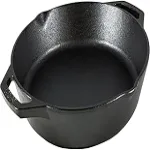
Cast iron contains zero coatings. A well-seasoned cast iron pan is nearly as nonstick as a Teflon pan. It leaches trace amounts of dietary iron, which is actually beneficial for most people. The downsides are weight and maintenance, though maintenance is simpler than people think. Our how to season cast iron safely guide and cast iron vs. stainless steel comparison cover the details.
Stainless Steel
Stainless steel is inert, durable, and oven-safe to any temperature you’ll encounter in home cooking. It’s not nonstick, so it requires different cooking techniques (preheating and oil). Our is stainless steel cookware safe article covers the safety profile. The Leidenfrost test (water beading and rolling across a preheated pan) is the standard indicator that the surface is hot enough to release protein without sticking.
Carbon Steel
Carbon steel is basically thin cast iron. It seasons the same way, provides similar nonstick properties, and is lighter. It’s popular in professional kitchens. Our best non-toxic cookware guide includes carbon steel options.
How Do the Options Compare?
| Option | Main concern | Primary tradeoff |
|---|---|---|
| Modern PTFE/Teflon (post-2015, PFOA-free) | PTFE fumes above 500 F; GenX replacement chemicals lack long-term data; microparticles from scratches | Excellent non-stick performance; low immediate risk under careful use; requires discipline around heat and scratches |
| Ceramic-coated (GreenPan, Caraway, Our Place) | Coating loses non-stick properties in 2-3 years; base metal unclear in some brands | Genuinely PFAS-free; no toxic fume risk; durability is the main limitation |
| Stainless steel | Not non-stick; requires technique (preheat + oil); minor nickel leaching with acidic foods | Decades of durability; no coatings to degrade; no PFAS; safe at any home-cooking temperature |
| Cast iron | Heavy; reactive with highly acidic foods if unseasoned; requires maintenance | Zero coatings; beneficial iron leaching; a properly seasoned pan rivals non-stick performance |
Durability and Longevity of the Alternatives
If you’re considering a switch away from Teflon, durability matters as much as chemistry. A safer pan that needs replacing every two years is not actually a better value than a Teflon pan that lasts five.
Caraway and ceramic nonstick typically hold their release properties for 2 to 4 years with daily use, provided you stick to wooden or silicone utensils, avoid high heat, and hand-wash. The ceramic surface is a sol-gel layer that gradually softens with thermal cycling, which is the same mechanism that eventually wears out PTFE. The upside is that a degraded ceramic surface just stops being nonstick. It does not release fumes or microparticles the way a degraded PTFE surface does.
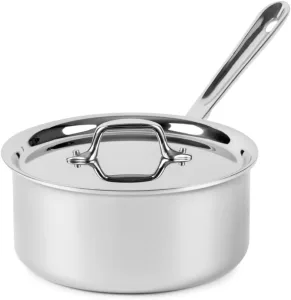
Made In stainless clad has no coating at all. The cooking surface is the metal itself, so the pan will outlast you when it’s cared for reasonably. Tri-ply and 5-ply construction handles warping well. The tradeoff is that stainless is not nonstick, so eggs and fish require preheating and oil technique. A 20-year lifespan is realistic.
Lodge cast iron is the longest-lasting cookware you can buy. Properly seasoned and re-seasoned occasionally, a cast iron skillet lasts 50+ years. The tradeoff is weight (10.25-inch skillet is about 5.5 pounds) and the learning curve of seasoning. Once seasoned, cast iron rivals nonstick for eggs and searing.
GreenPan Valencia Pro reinforces the ceramic coating with diamond particles, which extends usable nonstick life closer to 3 to 4 years versus 2 to 3 for basic ceramic. The Thermolon coating is genuinely PFAS-free and oven-safe to 600 F.
The real durability comparison: a good Teflon pan lasts 3 to 5 years before the coating scratches enough to release particles. Ceramic lasts about the same. Stainless and cast iron last decades. If replacement cost matters, cast iron is the cheapest per year of use, even after accounting for the upfront premium on Made In or Lodge.
The Verdict on Teflon
Teflon cookware in good condition, used at low to medium temperatures, with PFOA-free manufacturing, presents a low immediate health risk. That’s the most favorable honest reading of the evidence.
But “low immediate risk under ideal conditions” is a different statement from “safe.” The conditions required for safe use (never overheating, never scratching the surface, replacing pans at the first sign of wear) are more demanding than most people realize. And the replacement chemicals for PFOA are too new to have well-designed long-term safety data.
For people who want to minimize chemical exposure, the practical advice is simple: cook on cast iron, stainless steel, carbon steel, or ceramic nonstick. These materials have either centuries of safety data (cast iron, stainless steel) or a fundamentally different chemistry that avoids the PFAS question entirely (ceramic). Our full best non-toxic cookware guide has specific product picks at every price point.
What We Don’t Fully Know
GenX (HFPO-DA) replaced PFOA as the manufacturing processing aid for PTFE, but GenX has been in widespread use for less than a decade. The C8 Health Project that established PFOA’s health effects tracked 69,000 people over many years. No equivalent long-term human cohort study exists for GenX. Early animal data at high doses suggests liver and kidney effects [animal study], and the EPA issued a health advisory in 2022, but the dose-response relationship at the trace levels that may remain in cookware from manufacturing isn’t characterized. We also don’t have good data on the biological effects of PTFE nanoparticles specifically, as opposed to larger PTFE particles. The 2022 Science of the Total Environment study documented their release from cracked coatings [human observational], but downstream health effects from ingested PTFE nanoparticles are an open question [preliminary].
Modern PTFE-coated cookware in good condition, used at low to medium heat, manufactured after 2015 (PFOA-free), is probably fine for people who choose to keep using it. The PTFE surface itself is inert under normal cooking conditions. The thermal decomposition risk is real but avoidable if you don’t preheat empty pans and don’t cook above medium heat. That’s a reasonable position to hold, provided you understand the conditions that make it true and replace pans at the first sign of coating damage.
You Might Also Like
- Is Non-Stick Cookware Safe?
- Best Non-Toxic Cookware
- Is HexClad Non-Toxic?
- How to Care for Non-Toxic Cookware
- What Are PFAS Forever Chemicals?
- Non-Toxic Alternatives to Teflon Pans (That Actually Perform)
- Is Carpet Safe for Babies? What Parents Need to Know
- Non-Toxic Kitchen Guide: Everything You Need to Know
- Is the Our Place Always Pan Non-Toxic? (Coating and Claims Checked)
- Is IKEA Furniture Non-Toxic? What to Know
- Caraway Cookware Review: Honest Take After 1 Year
Frequently Asked Questions
Should I throw away all my Teflon pans?
If they’re scratched, chipped, or discolored, yes. If they’re in good condition and manufactured after 2015 (PFOA-free), the immediate risk is low as long as you use them at low to medium heat and never preheat them empty. But if you’re ready to switch, cast iron and stainless steel are permanent solutions.
Is Teflon banned anywhere?
PTFE itself is not banned. PFOA, which was used to manufacture PTFE, has been banned in the US and EU. Some environmental groups have called for a ban on all PFAS compounds, which would effectively ban PTFE manufacturing, but this hasn’t happened yet.
Can I get sick from cooking with Teflon?
Polymer fume fever (Teflon flu) is a documented condition caused by inhaling PTFE decomposition products at temperatures above 500 degrees Fahrenheit. It causes flu-like symptoms lasting 24 to 48 hours. At normal cooking temperatures (below 400 degrees Fahrenheit), PTFE does not decompose. The risk increases with high-heat cooking, empty preheating, and damaged coatings.
Are expensive nonstick pans safer than cheap ones?
Not necessarily in terms of chemistry. A $200 PTFE pan uses the same PTFE as a $20 one. More expensive pans may have thicker, more durable coatings that resist scratching longer, but the underlying material and its thermal decomposition properties are the same.
Is PFOA-free Teflon actually safer?
It’s safer in one specific way: it doesn’t contain PFOA residues from manufacturing. But it still contains PTFE (with its overheating risks), and it was likely manufactured using GenX or similar replacement PFAS compounds that lack long-term safety data. “Safer” doesn’t mean “safe.”
What temperature is too hot for Teflon?
PTFE begins to degrade at approximately 500 degrees Fahrenheit and releases toxic fumes at 680 degrees Fahrenheit. An empty nonstick pan on a burner can reach 500 degrees in about two minutes. To stay in the safe range, always add food or liquid to the pan before it reaches high temperature, and cook on low to medium heat.
Sources
- Liew, Z. et al., “Developmental Exposures to Perfluoroalkyl Substances (PFASs): An Update of Associated Health Outcomes,” Current Environmental Health Reports (2018)
- EPA, “Risk Management for Per- and Polyfluoroalkyl Substances (PFAS)”
- Luo, Y. et al., “Raman Imaging for the Identification of Teflon Microplastics and Nanoplastics Released from Non-stick Cookware,” Science of the Total Environment (2022)
- C8 Health Project, West Virginia University School of Medicine
- Landrigan, P. et al., “The Lancet Commission on Pollution and Health,” The Lancet (2018)