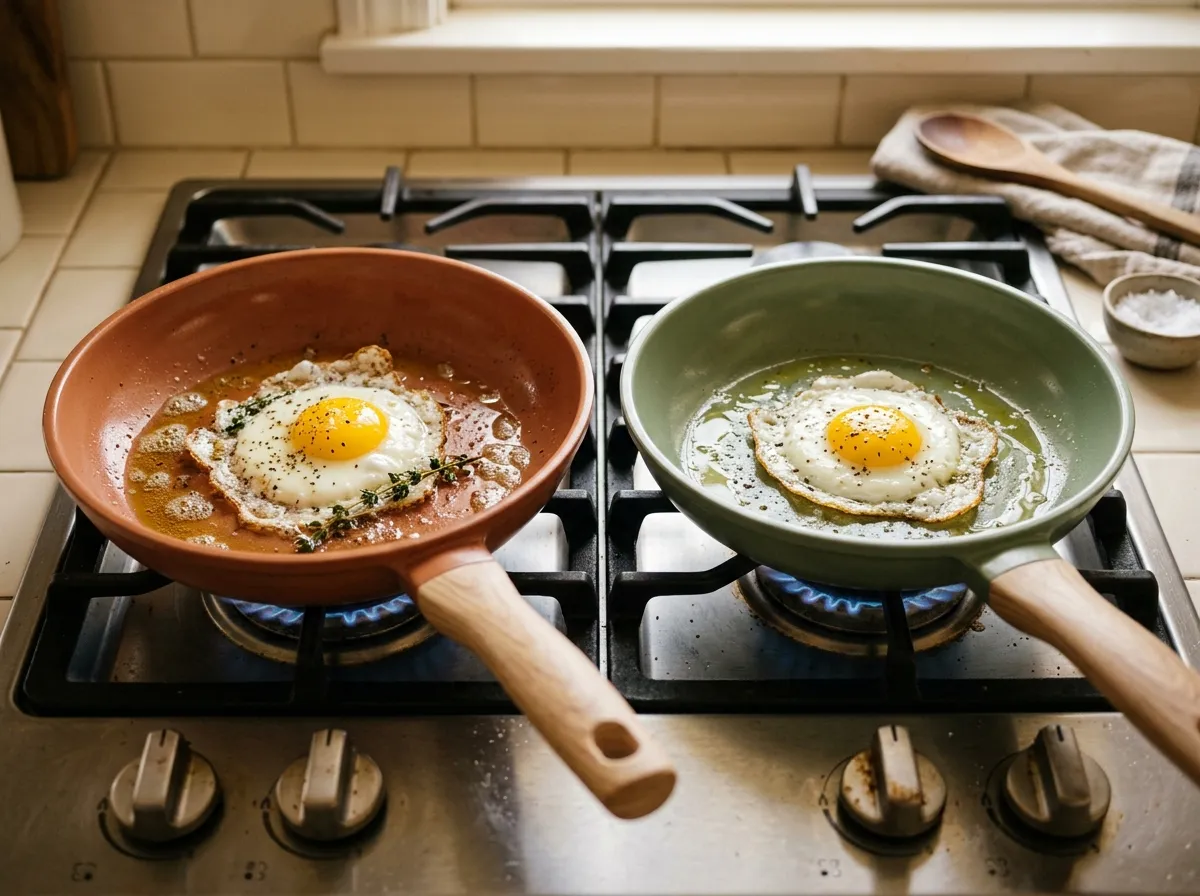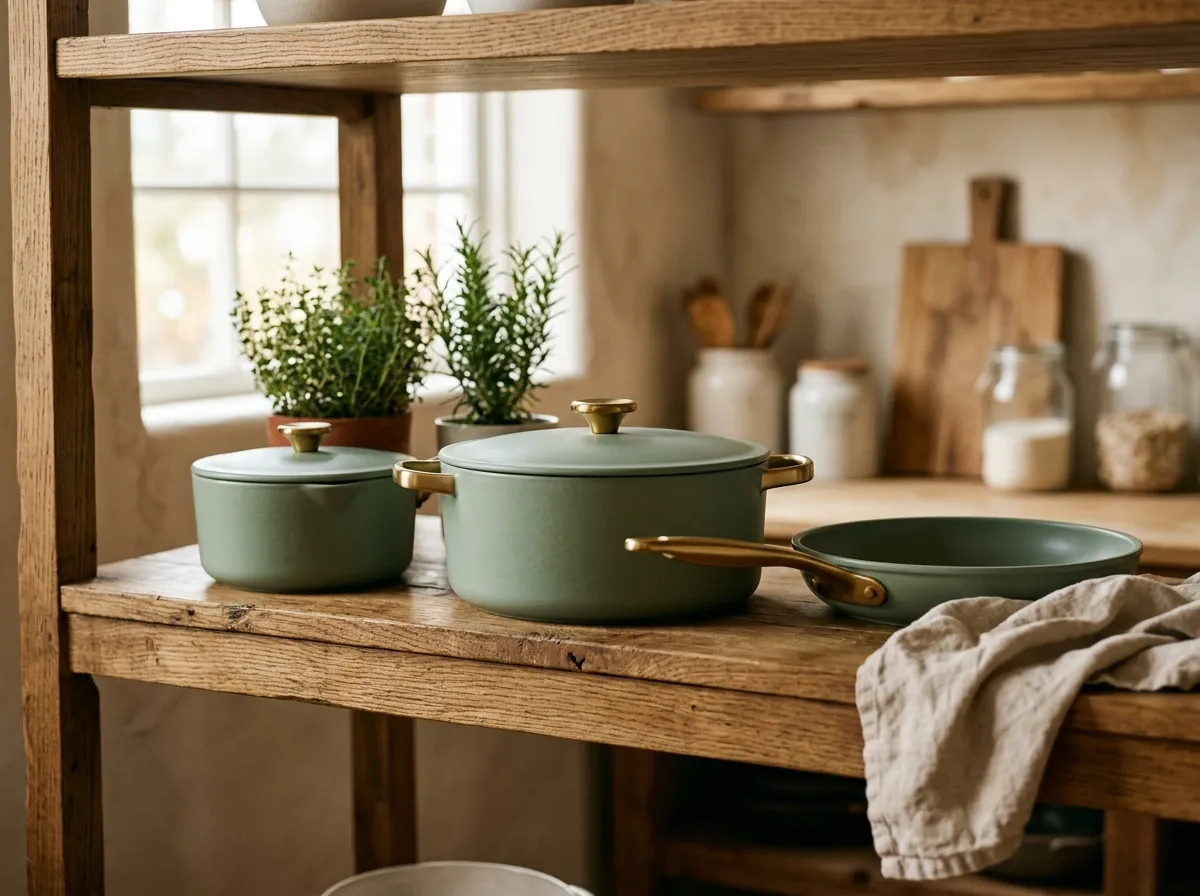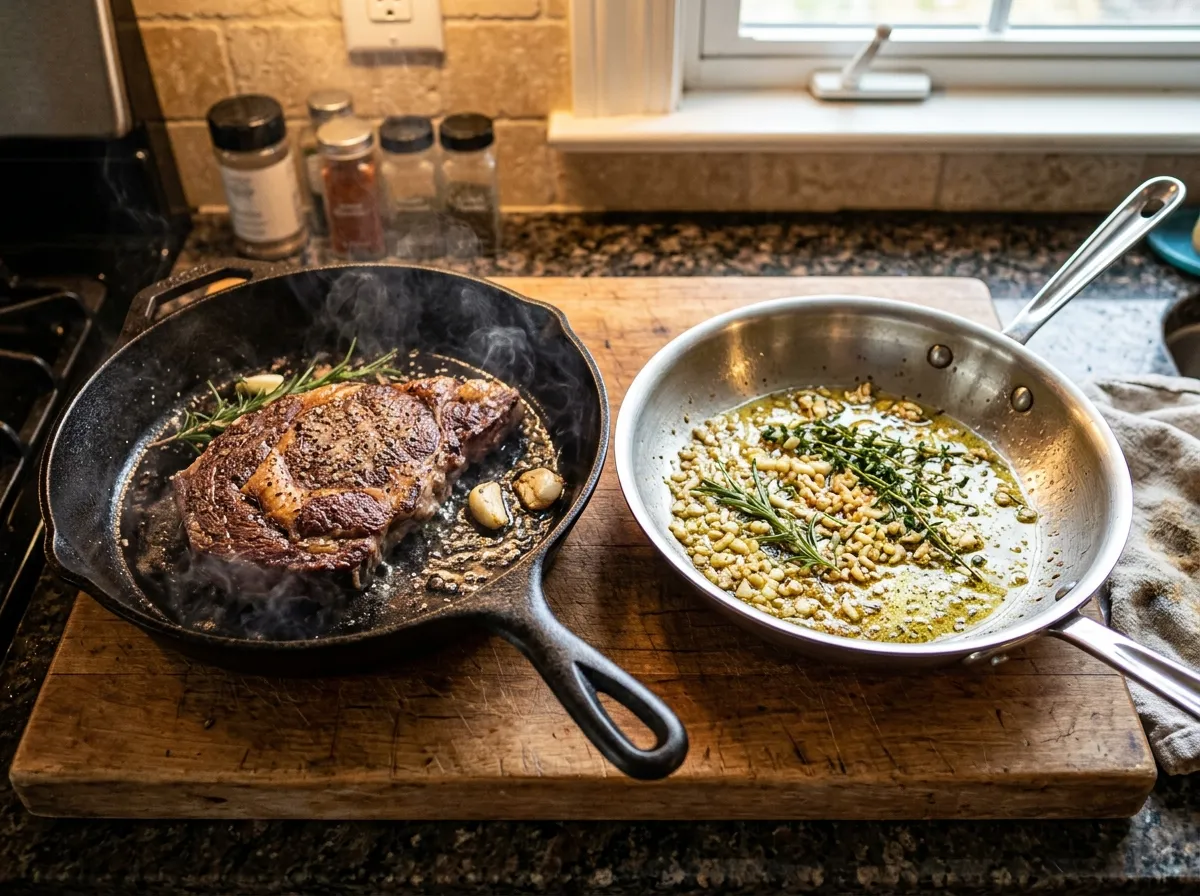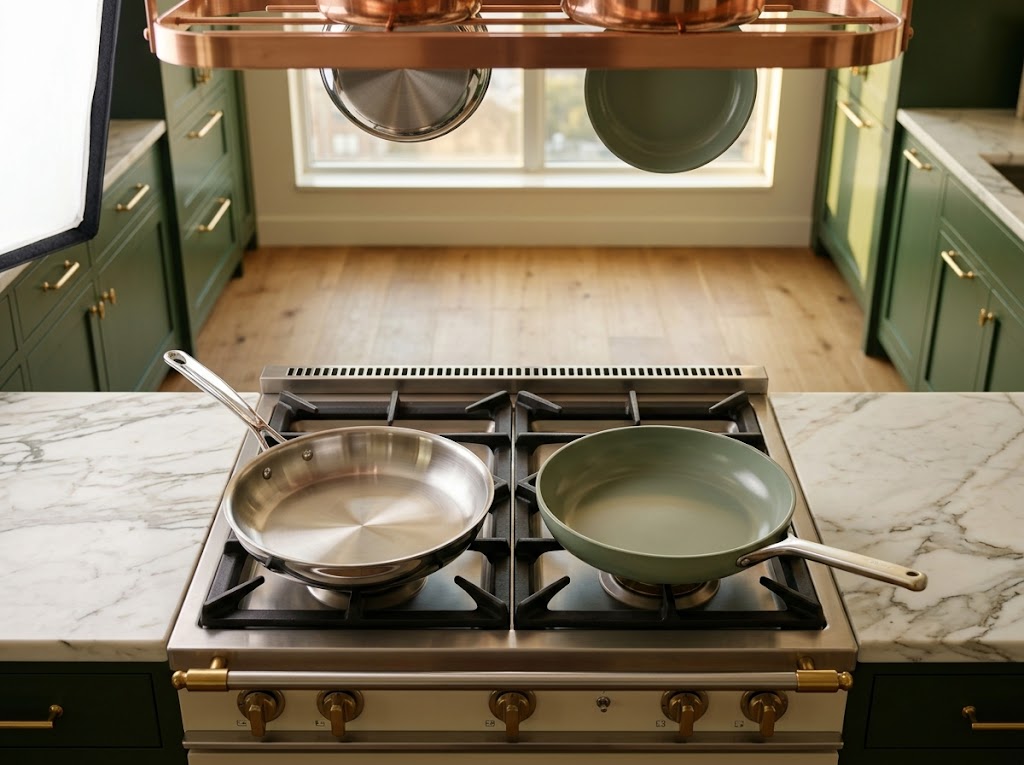
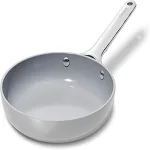
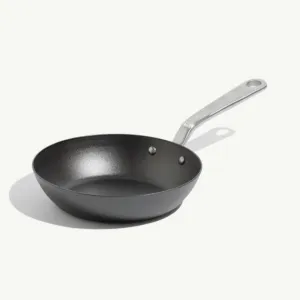
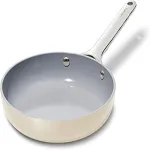
Made In and Caraway are the two direct-to-consumer cookware brands that come up most often among people who care about what their pans are made of. They’re rarely compared directly because they’re actually solving different problems. Made In makes traditional restaurant-grade materials: stainless steel and carbon steel, no coatings. Caraway makes ceramic non-stick cookware designed to replace Teflon. The right choice depends on what you cook, how you cook it, and what material trade-offs matter to you.
For a full category view, our best non-toxic cookware guide covers the top picks across every material type. If you’re specifically comparing Caraway to other ceramic brands, our Caraway vs GreenPan comparison is worth reading alongside this one.
The Short Answer
Made In Stainless Clad wins on durability and long-term value. There’s no coating to degrade, no replacement timeline, and the 5-ply construction performs at the same level as pans costing twice as much. Caraway wins for anyone who specifically wants non-stick ease and a verified PFAS-free ceramic surface. If you scramble eggs daily and hate using oil, Caraway’s coating is hard to beat while it’s fresh.
Made In Stainless Clad: Check at Made In
Caraway Ceramic Non-Stick Pan: Check on Amazon
How We Compared Them
We reviewed material specifications and third-party testing disclosures from both brands, evaluated construction quality based on documented specifications (ply counts, core materials, CADR where applicable), researched the published science on coating degradation and migration, and analyzed real-world durability reports from verified purchasers over 12-24 months of use.
Side-by-Side Comparison
| Feature | Made In Stainless Clad | Caraway Ceramic Pan |
|---|---|---|
| Material | 5-ply stainless steel (magnetic bottom, 4 core layers) | Aluminum core, sol-gel ceramic coating |
| Coating | None | Sol-gel ceramic (PTFE-free, PFAS-free per brand) |
| PFAS Testing | N/A (no coating) | Brand-stated third-party testing |
| Induction Compatible | Yes | Yes (standard line) |
| Oven Safe To | 800F+ (no coating to limit) | 550F |
| Dishwasher Safe | Yes | Not recommended |
| Non-Stick Performance | Moderate (requires oil/fat) | High (when coating is new) |
| Coating Lifespan | N/A - no coating | 1-3 years typical |
| Warranty | Lifetime | Limited lifetime |
| Price (frying pan) | $$ | $$ |
| Made In | USA (stainless), Italy (carbon steel) | China |
| Buy | Check at Made In | Check on Amazon |
Made In Cookware: Full Review
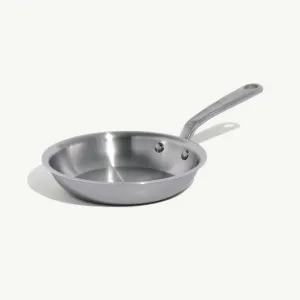
Made In launched in 2017 with a direct-to-consumer model selling professional-grade cookware at prices below what you’d pay for equivalent quality at a restaurant supply store. The Stainless Clad line uses 5-ply construction: two layers of 18/10 stainless steel sandwiched around an aluminum core, with a magnetic stainless base for induction compatibility. This is the same layered architecture used in All-Clad’s D5 line, which retails at roughly twice the price.
The 5-ply construction distributes heat more evenly than cheaper 3-ply pans, which reduces hot spots on gas ranges. The 18/10 stainless steel (18% chromium, 10% nickel) forms a stable oxide layer that resists corrosion and prevents iron from leaching into food at normal cooking temperatures. At the temperatures used in home cooking, stainless steel migration into food is not a meaningful exposure concern [regulatory review - FDA food contact material standards for stainless steel alloys].
Because there’s no coating, Made In stainless pans are dishwasher safe, metal-utensil safe, and oven safe to temperatures no home oven can reach (the manufacturer says 800F+, though that figure is academic for most kitchens). There’s nothing to scratch, flake, or degrade over time. This is the core durability argument for stainless: the pan you buy in 2026 should perform identically in 2036 with normal cleaning.
The trade-off is cooking technique. Stainless steel is not naturally non-stick. Eggs and fish stick badly if you don’t preheat the pan properly and use adequate fat. Professional cooks work around this with technique (water drop test, proper preheating, enough fat). Home cooks who want low-fat cooking or scrambled eggs without drama will find stainless frustrating.
Made In’s Blue Carbon Steel pan ($89-$109) is an alternative worth considering for anyone who wants high-heat performance without any coating concerns. Carbon steel seasons naturally, develops a patina over time, and gets more non-stick with use. It’s lighter than cast iron but achieves similar results. Check the Made In Carbon Steel Pan at Made In.
Check the Made In Stainless Clad at Made In
Caraway Cookware: Full Review
Caraway launched in 2019 and built its brand on a specific claim: ceramic non-stick cookware that’s free of PTFE (Teflon’s active ingredient), PFAS (the broader class of fluorinated chemicals PTFE belongs to), lead, and cadmium. The brand states these claims are verified through third-party testing, though the specific laboratory and full testing protocols aren’t published publicly.
The coating is sol-gel ceramic, a mineral-based non-stick material applied to an aluminum core. Sol-gel ceramic is genuinely distinct from PTFE. It doesn’t contain fluorine atoms, which are the defining feature of PFAS chemistry. The concern about traditional non-stick (PTFE/Teflon) coatings is primarily the perfluorinated compounds used during manufacturing, particularly PFOA, which was phased out in the US by 2013 [regulatory review - EPA PFOA Stewardship Program]. Modern PTFE pans don’t use PFOA in production, but ceramic coatings sidestep the entire fluorinated chemistry question.
Caraway’s 550F oven-safe rating is among the highest for ceramic non-stick. Most ceramic pans top out at 450F, so the extra headroom is useful for oven-finishing dishes. The standard Caraway frying pan is induction compatible and comes in multiple colors with magnetic pan rack storage (included with sets, sold separately for individual pans).
The honest conversation about Caraway is non-stick lifespan. Ceramic coatings are less durable than PTFE coatings, which themselves are less durable than uncoated stainless. In real-world use, Caraway’s coating typically shows reduced non-stick performance after 12-18 months of daily use, and most buyers report significant degradation by the 2-3 year mark. This is consistent with the ceramic non-stick category generally, not a Caraway-specific failure.
When a ceramic coating starts to visibly scratch, chip, or flake, replace the pan. There’s no evidence that ingesting small amounts of sol-gel ceramic material causes harm, but a degraded coating provides no non-stick benefit and the physical material shouldn’t be in food.
The Caraway Cookware Set ($395-$445) includes the storage system that meaningfully extends coating life by preventing pans from nesting directly on top of each other. Check the Caraway Cookware Set on Amazon.
Check the Caraway Ceramic Pan on Amazon
Materials Safety Comparison
This is the section most people are actually searching for, so here’s a direct assessment based on available evidence.
Made In Stainless Steel: At normal cooking temperatures, stainless steel does not leach meaningful amounts of chromium or nickel into food [regulatory review]. Studies examining stainless steel cookware have found that acid foods (tomatoes, wine-based sauces) can cause minor nickel leaching at concentrations that remain well below WHO dietary reference values for nickel [human observational - limited study population]. Stainless steel is probably fine under normal home cooking conditions. People with diagnosed nickel allergies are typically advised by dermatologists to avoid prolonged skin contact with stainless, but ingestion of trace nickel from cookware has not been linked to adverse health effects in people without contact nickel allergy [human epidemiological - limited study population].
Caraway Ceramic Coating: Caraway’s “PFAS-free” claim is based on their brand-stated testing. Sol-gel ceramic coatings by their chemical nature don’t contain fluorine-based PFAS compounds. The claim is chemically logical, though without publicly available full testing protocols, independent verification is limited. Lead and cadmium testing is standard for cookware coatings under California Prop 65 requirements; Caraway states compliance. No independent third-party published testing has been identified that contradicts Caraway’s claims.
The calibration here: stainless steel has longer regulatory review history and more published safety data. Ceramic coatings have a shorter track record but the chemistry is less concerning than PTFE. Both are among the better-researched safe options in the cookware category. Choosing between them on safety grounds alone isn’t well-supported by evidence.
Durability and Long-Term Performance
This is where Made In and Caraway separate most clearly, and it’s the most important section for your purchase decision.
Made In Stainless Clad’s durability is effectively unlimited under normal home use. No coating means no degradation timeline. The 5-ply construction bonds permanently. Stainless steel doesn’t rust under normal kitchen conditions. The company backs it with a lifetime warranty. Well-maintained Made In stainless pans should outlast decades of use without any loss of performance. This is the same reason professional kitchens use uncoated stainless and carbon steel: they want durability over convenience.
Caraway’s ceramic coating has a documented lifespan of roughly 1-3 years in daily home use. This is not a criticism of Caraway specifically; it’s the physics of ceramic non-stick coatings. Sol-gel ceramic is harder than PTFE but more brittle. Metal utensils crack it, thermal cycling stresses it, and the polymer matrix that creates the non-stick property breaks down with repeated heating. Caraway recommends wooden or silicone utensils and hand washing, both of which genuinely extend coating life. But the coating will eventually need replacing.
The practical implication: if you buy Caraway today, plan on replacing the pans (or at minimum the frying pan) in 2-4 years. At $95-$115 per pan, that’s a real ongoing cost. Made In stainless at $119-$139 is a one-time purchase.
Made In’s Blue Carbon Steel is worth mentioning in the durability conversation. Carbon steel, properly seasoned and maintained, improves with age and use. It’s the pan material with perhaps the best durability-to-price ratio in the cookware world. Check Made In Carbon Steel at Made In.
What We Don’t Know
Caraway’s PFAS-free claim is based on brand-stated testing that isn’t fully published. We don’t know the specific analytical methods used, the detection limits, or which PFAS compounds were tested. The EPA’s PFAS definition has expanded significantly since 2020, and testing methodologies vary. It’s possible Caraway’s testing covers the main PFAS substances of concern without covering every compound now classified under the PFAS umbrella [regulatory review - EPA PFAS definition updates 2021-2024]. This gap doesn’t indicate contamination, but it’s an important distinction between “brand-stated PFAS-free” and “independently certified PFAS-free.”
For Made In, long-term nickel and chromium migration data under real cooking conditions (especially with acid foods) is limited to relatively small studies. The conservative recommendation for people with known nickel contact allergy to avoid prolonged acid cooking in stainless isn’t well-quantified at the specific concentrations produced by 5-ply construction.
The Trade-offs
| Made In Stainless Clad | Caraway Ceramic | |
|---|---|---|
| Main concern | Not naturally non-stick; requires cooking technique | Coating degrades in 1-3 years |
| Primary tradeoff | Technique-dependent cooking; eggs and fish stick without proper method | Ongoing replacement cost; not dishwasher safe |
| Best for | High-heat cooking, searing, durability priority, professional technique | Low-fat cooking, non-stick ease, PFAS-avoidance priority |
| Not ideal for | Low-technique cooks wanting effortless eggs | Daily high-heat cooking; dishwasher users |
What We’d Pick
If you cook seriously and want cookware that performs at a high level for a decade or more without maintenance costs, Made In Stainless Clad is the better investment. The durability advantage is real and the price per year of use is lower over any horizon longer than 3-4 years.
If you scramble eggs most mornings, cook fish regularly, or specifically want to move away from any fluorinated chemistry concerns without adopting stainless technique, Caraway is the right call. The coating is verified PFAS-free by the brand’s own testing, the non-stick performance when fresh is excellent, and the 550F oven tolerance is useful. Just budget for replacement on a 2-4 year cycle.
For a complete non-toxic kitchen setup, our best non-toxic bakeware guide covers the oven side of the equation.
FAQ
Is Caraway cookware actually PFAS-free?
Caraway states their ceramic coating is free of PTFE, PFAS, lead, and cadmium, citing third-party testing. The sol-gel ceramic chemistry they use doesn’t contain fluorinated compounds by design, which makes the PFAS-free claim chemically logical. However, the full testing protocols, detection limits, and specific compounds tested haven’t been independently published. Caraway’s claim is credible but not independently certified by a third-party organization like the PFAS-free standard tested by the EPA.
Does Made In stainless steel leach into food?
At normal cooking temperatures, stainless steel migration into food is very low. Research has found that acid foods (tomato sauce, wine reductions) can cause minor nickel and chromium leaching from stainless cookware, but measured concentrations in published studies remain below WHO dietary reference values [human observational - limited study population]. For the vast majority of home cooks without nickel allergy, stainless steel cookware poses no meaningful exposure concern under normal use.
How long does Caraway’s ceramic coating last?
Most users report good non-stick performance for 12-18 months under daily use, with noticeable degradation by 2-3 years. Coating life extends with proper care: wooden or silicone utensils, hand washing, and the magnetic storage racks Caraway includes with sets. When the coating shows visible scratches, chips, or flaking, replace the pan.
Which is better for high-heat cooking, Made In or Caraway?
Made In wins clearly for high-heat cooking. The stainless clad and carbon steel pans are oven safe well above any home cooking temperature. Caraway’s ceramic coating is rated to 550F, which is high for ceramic non-stick but still a ceiling you’ll hit when broiling or cooking at very high heat. Metal utensils that high-heat cooking often requires will damage Caraway’s coating; they’re compatible with Made In stainless.
Can you use Made In stainless on induction?
Yes. Made In Stainless Clad has a magnetic stainless base that is fully induction compatible. The magnetic bottom layer works on all cooktop types including induction, gas, electric, and ceramic. The Blue Carbon Steel pan is also induction compatible. Caraway’s standard non-stick line is also induction compatible.
You Might Also Like
- Caraway Cookware Review: Honest Take After 1 Year
- HigherDOSE vs MiHIGH Sauna Blanket: Which Is Actually Worth It?
- GreenPan Cookware Review: 8 Months with Thermolon Coating
- Caraway vs Our Place Always Pan: Which Non-Toxic Pan Wins?
- GreenPan vs Caraway vs Our Place: Best Non-Toxic Cookware Compared
- Lodge vs Le Creuset: Cast Iron Comparison (Is $350 Worth It?)
- Cast Iron vs Stainless Steel: Which Is Safer for Cooking?
- Is Stainless Steel Cookware Safe? What the Research Shows
- How to Care for Non-Toxic Cookware (Ceramic, Cast Iron, Stainless Steel)
Sources
- Made In Cookware Stainless Clad Specifications, madeincookware.com - 5-ply construction details and material specs
- Caraway Cookware Third-Party Testing, Caraway FAQ - brand-stated testing claims for PFAS, PTFE, lead, cadmium
- EPA PFOA Stewardship Program Final Report - phase-out of PFOA from PTFE manufacturing [regulatory review]
- Kamerud KL, Hobbie KA, Anderson KA (2013). Stainless steel leaches nickel and chromium into foods during cooking. J Agric Food Chem. - nickel leaching study [in vitro / cooking simulation]
- FDA Food Contact Materials, Stainless Steel - stainless steel regulatory status for food contact [regulatory review]
- California Prop 65 Heavy Metals Limits for Cookware, OEHHA - lead and cadmium limits applicable to cookware coatings [regulatory review]
- EPA PFAS Definition and Identification, EPA.gov (2023) - current regulatory definition of PFAS compounds [regulatory review]