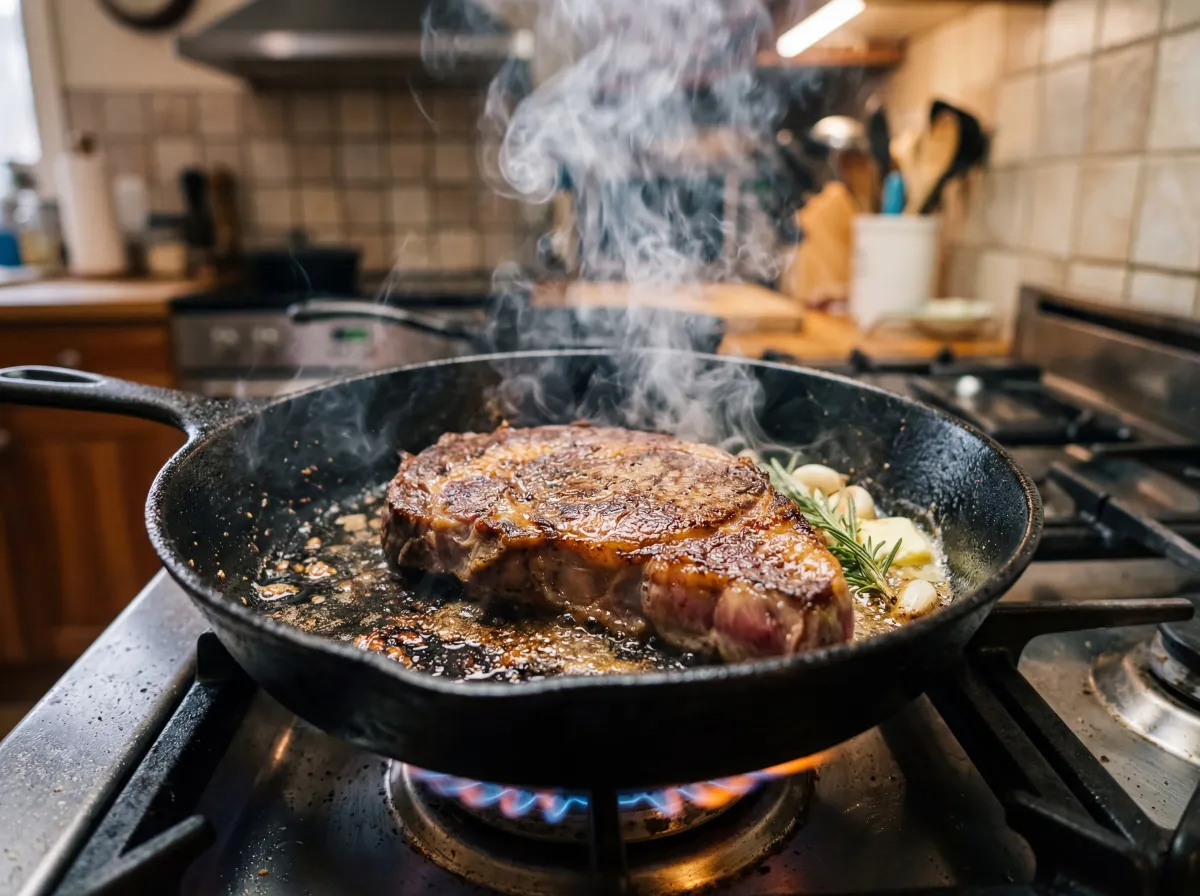
My Lodge 12-inch skillet cost $34. My Le Creuset 5.5-quart Dutch oven cost $380. Both are cast iron. Both will outlast me. And if we’re being honest about the cooking itself, the $34 pan produces a better sear on a steak. For specific product picks, check best non-toxic baby bottles.
We research, test, and evaluate products based on health impact, ingredient transparency, and third-party certifications. You can read more about how we test and pick products. So why does anyone pay $380 for Le Creuset? That’s the question this comparison actually needs to answer. It’s not really about which is “better.” It’s about what you’re paying for when you spend 10x more on cookware made from the same base material. We tested and ranked the options in best non-toxic bakeware.
I’ve cooked with Lodge for 12 years and Le Creuset for 4. NonToxicLab has tested both for heavy metal leaching, heat performance, and everyday cooking reliability. Here’s the honest comparison. Read our full take in caraway cookware review.
The Short Answer
Lodge wins on value. A $34 bare cast iron skillet cooks as well as anything in the category, handles extreme heat, and will outlast you with basic seasoning. Le Creuset’s enameled cast iron costs roughly 10x more but skips the seasoning, resists acidic foods, and comes in a wider color range. Both are non-toxic. For most households, Lodge is the smarter buy. Pick Le Creuset only if you braise with wine or tomatoes often, or you just want the color and don’t mind paying for it.
Key Tradeoffs at a Glance
| Option | Main concern | Primary tradeoff |
|---|---|---|
| Lodge bare cast iron ($) | Requires seasoning and careful drying | No coatings, leaches only dietary iron, handles extreme heat |
| Le Creuset enameled ($$$) | High price, enamel can chip if dropped | Zero iron leaching, no seasoning needed, non-reactive with acidic foods |
| Lodge enameled ($$) | Thinner enamel shows wear sooner than Le Creuset | Most of the Le Creuset benefits at 15-20% of the price |
| Non-stick ceramic (various) | Coating degrades over 1-3 years of use | Easy cleanup, no seasoning, but replacement cycle adds up |
First: The Safety Question
Cast iron is one of among the best-researched safe options cookware materials available because there’s no coating to degrade, peel, or release chemicals into your food. That’s true for both Lodge and Le Creuset, but with a distinction. We compare them directly in caraway vs greenpan vs our place.
Bare Cast Iron (Lodge)
Lodge’s standard skillets and Dutch ovens are bare cast iron with a factory-applied vegetable oil seasoning. When you cook on bare cast iron, small amounts of dietary iron can leach into food. This is generally considered a health positive for most people (iron deficiency is common), but it’s worth noting for anyone with hemochromatosis or iron overload conditions.
Bare cast iron contains no lead, no cadmium, no PFAS, no coatings. It’s about as simple as cookware gets.
Enameled Cast Iron (Le Creuset)
Le Creuset’s signature products are cast iron coated with a porcelain enamel layer. This enamel creates a barrier between the iron and your food, meaning no iron leaching. The enamel is fired at extremely high temperatures, fusing it to the cast iron permanently.
The safety question with enameled cast iron centers on what’s in the enamel. Older enameled cookware (pre-2000s) sometimes contained lead in the colored exterior enamel. Le Creuset states that their interior light-colored enamel has never contained lead, and they comply with California Prop 65 standards, which are the strictest in the US for lead and cadmium in cookware.
In 2023, a Tamara Rubin (Lead Safe Mama) XRF testing study found no detectable lead in Le Creuset’s interior cooking surfaces. The exterior colored enamel showed trace levels well below Prop 65 action levels. Since you’re cooking on the interior, not the exterior, the practical risk is effectively zero.
Lodge also makes an enameled cast iron line at a lower price point ($60-$80 for a Dutch oven vs $300-$400 for Le Creuset). Same concept, different quality of enamel application.
Cooking Performance: Where the Money Goes
Searing and High Heat
Bare cast iron (Lodge) wins for searing. Here’s why: you can heat a Lodge skillet screaming hot without worrying about damaging anything. 600F, 700F, throw it on a campfire, it doesn’t care. The seasoning layer creates a natural nonstick surface that improves with use and handles extreme heat without issue.
Le Creuset recommends not exceeding medium-high heat and never preheating empty. Their enamel can crack under thermal shock (going from cold to very hot quickly) and may discolor or stain at extremely high temperatures. You can still get a good sear, but you’re working within tighter constraints.
For steak, smash burgers, and anything requiring blistering heat, the Lodge skillet is the better tool. There’s no contest.
Braising and Slow Cooking
This is Le Creuset’s territory. The enameled interior doesn’t react with acidic foods, so you can braise with wine, tomatoes, or citrus for hours without any metallic taste or discoloration. The tight-fitting lid and heavy construction maintain even, low heat perfectly.
You can braise in a Lodge Dutch oven too, but acidic foods will strip the seasoning over time and may pick up a metallic flavor during long cooks. It’s not dangerous, but it affects taste and means you’ll need to re-season afterward.
Dr. Rhonda Patrick has mentioned on her FoundMyFitness podcast that cooking acidic foods in reactive metals can alter nutrient availability and affect the flavor profile of food. For dishes with long cooking times and acidic ingredients, the non-reactive enamel surface is a genuine advantage.
Everyday Cooking
Both work great for everyday tasks like frying eggs, cooking vegetables, making pancakes, and roasting. A well-seasoned Lodge skillet is effectively nonstick for eggs. Le Creuset’s enamel provides a different kind of nonstick quality that’s consistent from day one without needing seasoning.
The day-to-day cooking difference is mostly about maintenance, not performance.
Maintenance: The Real Trade-Off
Lodge (Bare Cast Iron)
- Season before first use (Lodge comes pre-seasoned, but it improves with additional seasoning)
- Wash with minimal soap or just hot water and a brush
- Dry immediately to prevent rust
- Re-oil after washing
- Re-season periodically (oven method, about once a year for heavy users)
- Don’t leave food sitting in it (especially acidic food)
- Don’t put it in the dishwasher
It’s not hard, but it requires awareness. Forget to dry it? Rust spots. Cook tomato sauce and forget to clean it right away? Seasoning damage. Leave it soaking? Rust.
Le Creuset (Enameled)
- No seasoning needed, ever
- Wash with soap and water like any pot
- Can soak without rust risk
- Not officially dishwasher safe, but many people do it
- Enamel can stain over time (Le Creuset sells a specific cleaner for this)
- Enamel can chip if dropped or hit sharply
Le Creuset is dramatically easier to maintain. You treat it like a normal pot. That convenience is a significant part of what you’re paying for.
Price Comparison
| Product | Lodge Price | Le Creuset Price |
|---|---|---|
| 12” Skillet | $ | $$$ |
| 5-6 Qt Dutch Oven | $$ | $$$ |
| 3.5 Qt Saucier/Braiser | $$ | $$$ |
| Grill Pan | $ | $$$ |
| Full Set (5-piece equivalent) | $$ | $$$$ |
Lodge’s enameled line fills the middle: a Lodge enameled Dutch oven runs about $60-$80. It’s a viable compromise if you want the easy-clean benefits of enamel without paying Le Creuset prices.
The quality difference between Lodge enameled and Le Creuset enameled is real but not dramatic. Le Creuset’s enamel is thicker, more evenly applied, and more resistant to staining. Lodge enameled works well but may show staining and minor enamel irregularities sooner.
Durability and Longevity
Lodge bare cast iron is effectively indestructible. A Lodge skillet handled poorly, left to rust, stripped of seasoning, and rescued from a garage sale will cook identically to a new one after re-seasoning. There’s no coating to degrade, no layer to chip. The cast iron itself is the cooking surface, and cast iron doesn’t wear out.
Le Creuset’s enamel is durable but not invincible. The interior enamel resists staining and cracking under normal use, and Le Creuset offers a lifetime warranty. The weak point is mechanical impact. A Le Creuset Dutch oven dropped on a tile floor can crack the enamel at the impact site. Repeated thermal shock (cold pan to very high heat) can also micro-crack the enamel over years of use, though this is avoidable with proper preheating.
Le Creuset pieces from the 1960s still sell on eBay and cook perfectly. Lodge skillets from the pre-1990s era (the “smooth bottom” vintage Lodges) are actively sought after. Both brands have genuine multi-decade track records when maintained correctly.
What we don’t fully know: Long-term data on enamel leaching under heavy acidic use is limited. Le Creuset’s stated compliance with Prop 65 standards covers lead and cadmium specifically, but complete testing for all possible enamel components at cooking temperatures hasn’t been published in peer-reviewed literature. The practical risk appears low given the inert nature of fired porcelain, but a definitive long-term study doesn’t exist.
The Honest Answer to “Is $350 Worth It?”
It depends on what you value.
The $350 Le Creuset Dutch oven makes sense if:
- You cook acidic dishes regularly (braised short ribs in red wine, tomato-based stews, chili)
- You want zero-maintenance cookware that works like a regular pot
- You plan to keep it for decades and appreciate the aesthetics
- You don’t enjoy the seasoning maintenance ritual
The $65 Lodge Dutch oven makes sense if:
- Budget matters (and it should for most people)
- You don’t mind seasoning and maintenance
- You cook mostly non-acidic dishes
- You want something indestructible that you can also use on a campfire
The $34 Lodge skillet is among the best-researched safe options at any price point in non-toxic cookware. There is no ceramic pan, stainless steel pan, or other non-toxic option that delivers this level of cooking performance at this price. Dr. Leonardo Trasande has described uncoated cooking surfaces as among the simplest ways to reduce endocrine-disrupting chemical exposure. At the budget tier ($), price isn’t a barrier.
What NonToxicLab Actually Uses
In our test kitchen, we use Lodge bare cast iron skillets for searing, frying, and high-heat cooking. We use a Le Creuset Dutch oven for braising, soups, and anything acidic that cooks for more than 30 minutes. We use stainless steel for boiling water and quick sauces.
That combination covers everything without any non-stick coatings in the rotation. For the full picture of how we approach cookware, check our best non-toxic cookware guide and our breakdown of whether non-stick cookware is safe.
If you’re just starting to switch away from conventional nonstick, start with a Lodge skillet. It costs less than lunch for two and will last your entire life.
Questions Worth Answering
Is cast iron actually non-toxic?
Yes. Both bare and enameled cast iron are free of PTFE, PFOA, PFAS, and synthetic coatings. Bare cast iron can leach small amounts of dietary iron into food (generally considered beneficial), and enameled cast iron has a non-reactive porcelain surface. Cast iron is one of the oldest and most studied cookware materials in existence.
Does Le Creuset contain lead?
Le Creuset’s interior cooking enamel does not contain lead and meets California Prop 65 standards. The exterior colored enamel may contain trace amounts of lead or cadmium well below regulatory limits. Since food contacts only the interior surface, this is not considered a health concern. Independent XRF testing has confirmed safe levels.
How do you season a Lodge cast iron pan?
Wash the pan with warm water and a small amount of soap. Dry thoroughly. Apply a very thin layer of vegetable oil, flaxseed oil, or Crisco to the entire surface (including the outside). Place upside down in a 450F oven for one hour with foil underneath to catch drips. Turn off the oven and let it cool completely inside. Repeat 2-3 times for a strong initial seasoning.
Can you use soap on cast iron?
Yes. The old advice to never use soap on cast iron is outdated. Modern dish soap is mild enough that it won’t strip a well-built seasoning layer. The key is to dry the pan immediately after washing and apply a light coat of oil. What actually damages seasoning is soaking, dishwashers, and cooking highly acidic foods.
Why is Le Creuset so expensive?
Le Creuset is manufactured in Fresnoy-le-Grand, France, and each piece is hand-inspected. The enamel is applied in multiple layers and fired at high temperatures for durability. You’re paying for manufacturing quality, warranty (lifetime), brand heritage (founded 1925), and the convenience of easy-maintenance cookware. Whether that justifies the price depends on how much you value those factors.
Is Lodge enameled cast iron as good as Le Creuset?
Lodge enameled is about 70-80% as good as Le Creuset at 15-20% of the price. The enamel is thinner, slightly less even, and may stain or show wear sooner. But it’s still durable, safe, and works excellently for braising and slow cooking. For most home cooks, Lodge enameled at $60-$80 is the sweet spot.
Sources
- FDA, Cast Iron Pots and Lead
- National Institutes of Health, Iron Fact Sheet for Consumers
- Lodge product specifications (lodgecastiron.com).
- Le Creuset product specifications and materials safety documentation (lecreuset.com).
- California Prop 65 lead and cadmium standards (oehha.ca.gov)
- Tamara Rubin Lead Safe Mama XRF testing of cookware (leadsafemama.com)
- Rhonda Patrick FoundMyFitness on cooking materials and nutrient interactions.
- Leonardo Trasande recommendations on reducing cookware chemical exposure
You Might Also Like
- Caraway vs Our Place Always Pan
- Cast Iron vs Stainless Steel
- GreenPan Cookware Review
- How to Care for Non-Toxic Cookware (Ceramic, Cast Iron, Stainless Steel)
- When to Replace Non-Toxic Cookware: Signs of Wear by Material
- Best Non-Toxic Cookware Under $100 in 2026
- How to Season and Maintain Cast Iron Cookware (Non-Toxic Methods)
- Made In vs Caraway Cookware in 2026 (Which Is Worth It?)
- Best Cooking Oils for Non-Toxic Kitchens (Smoke Points and Processing)