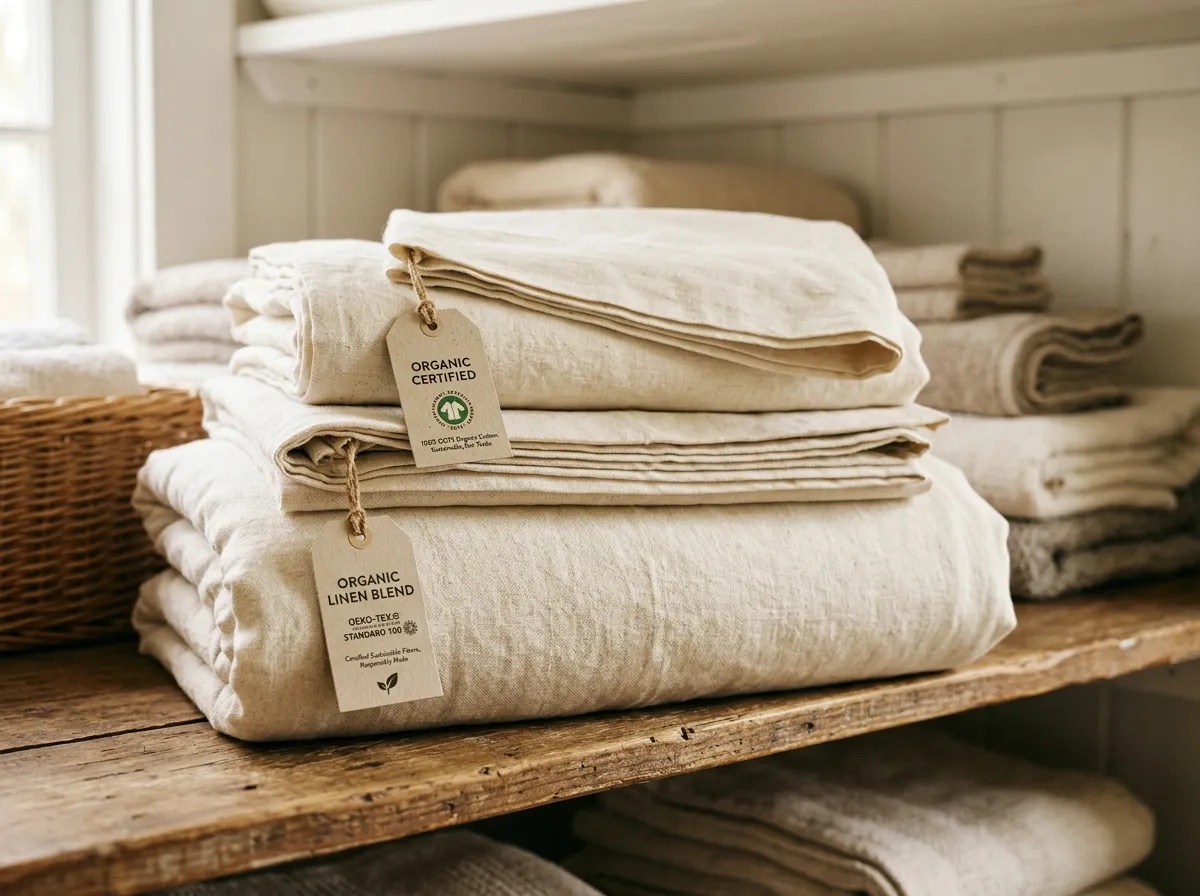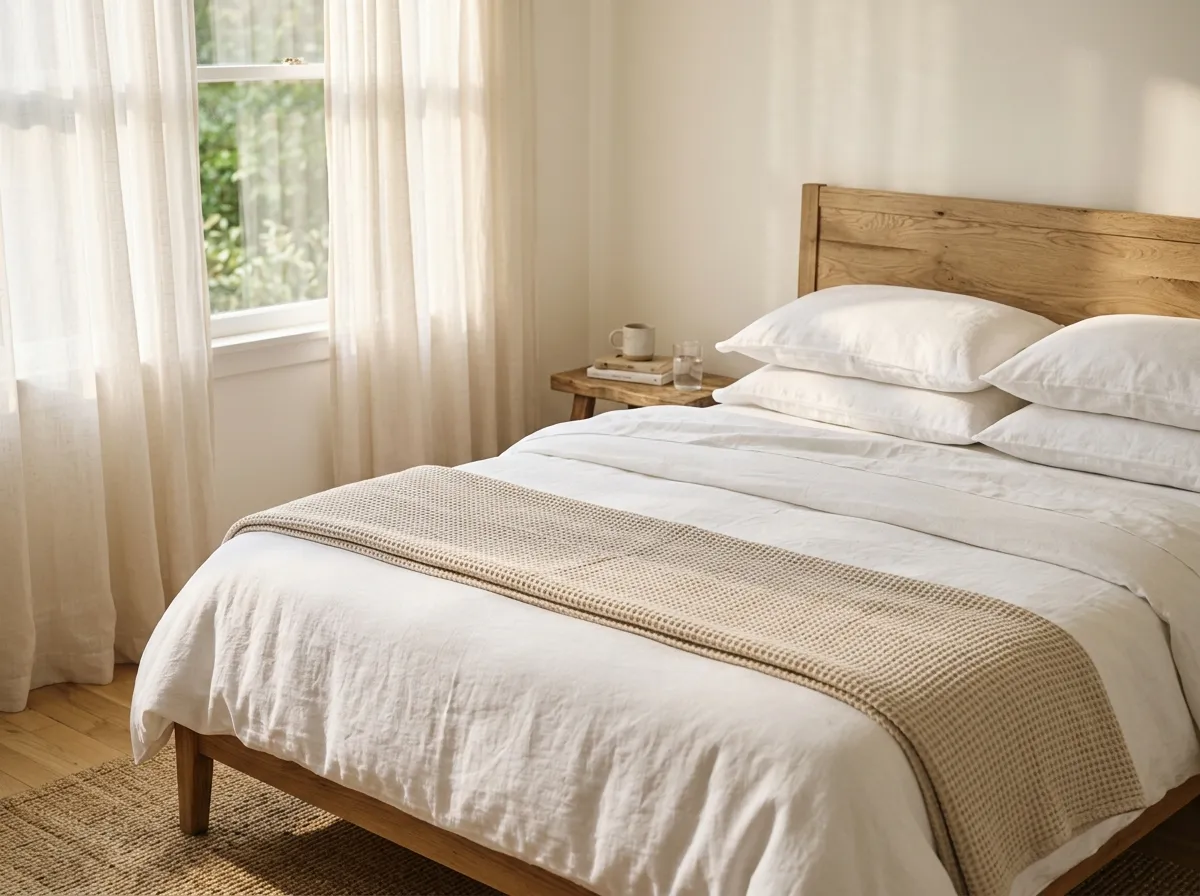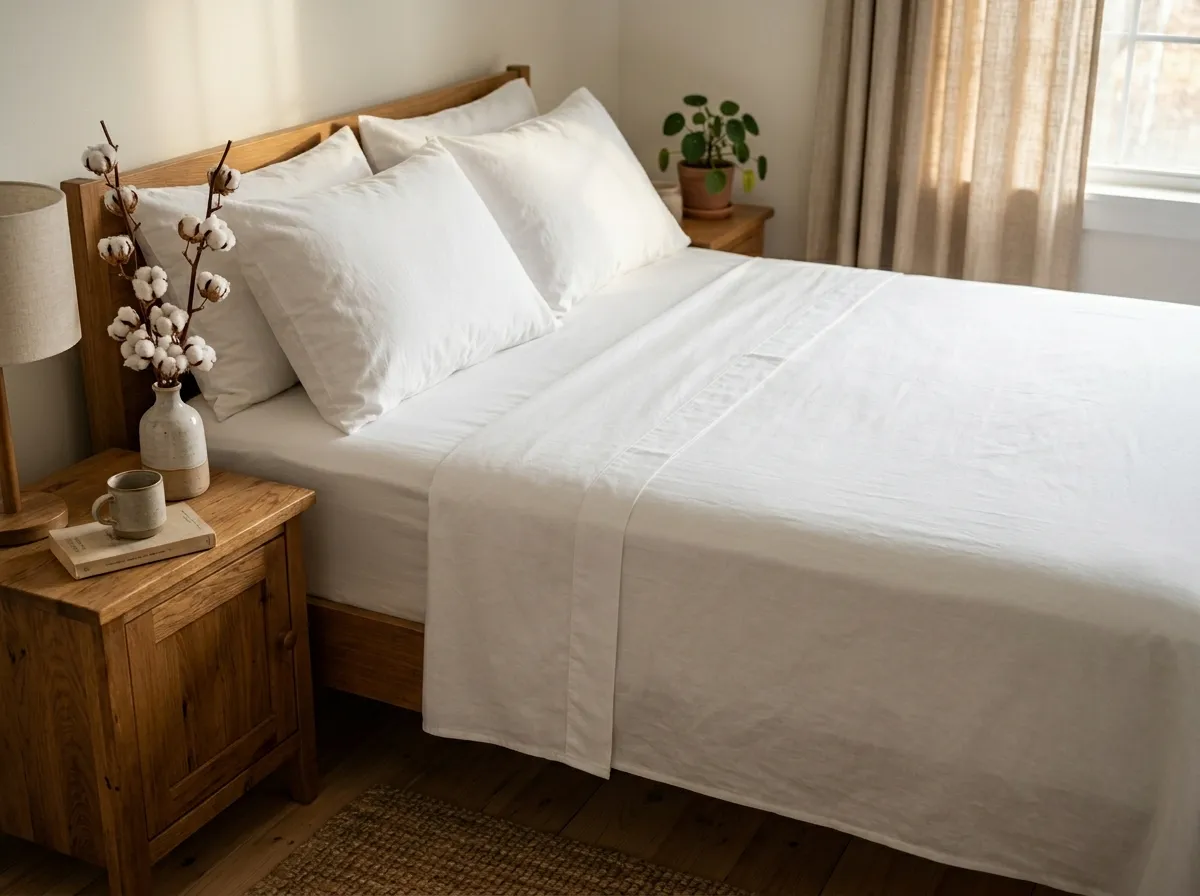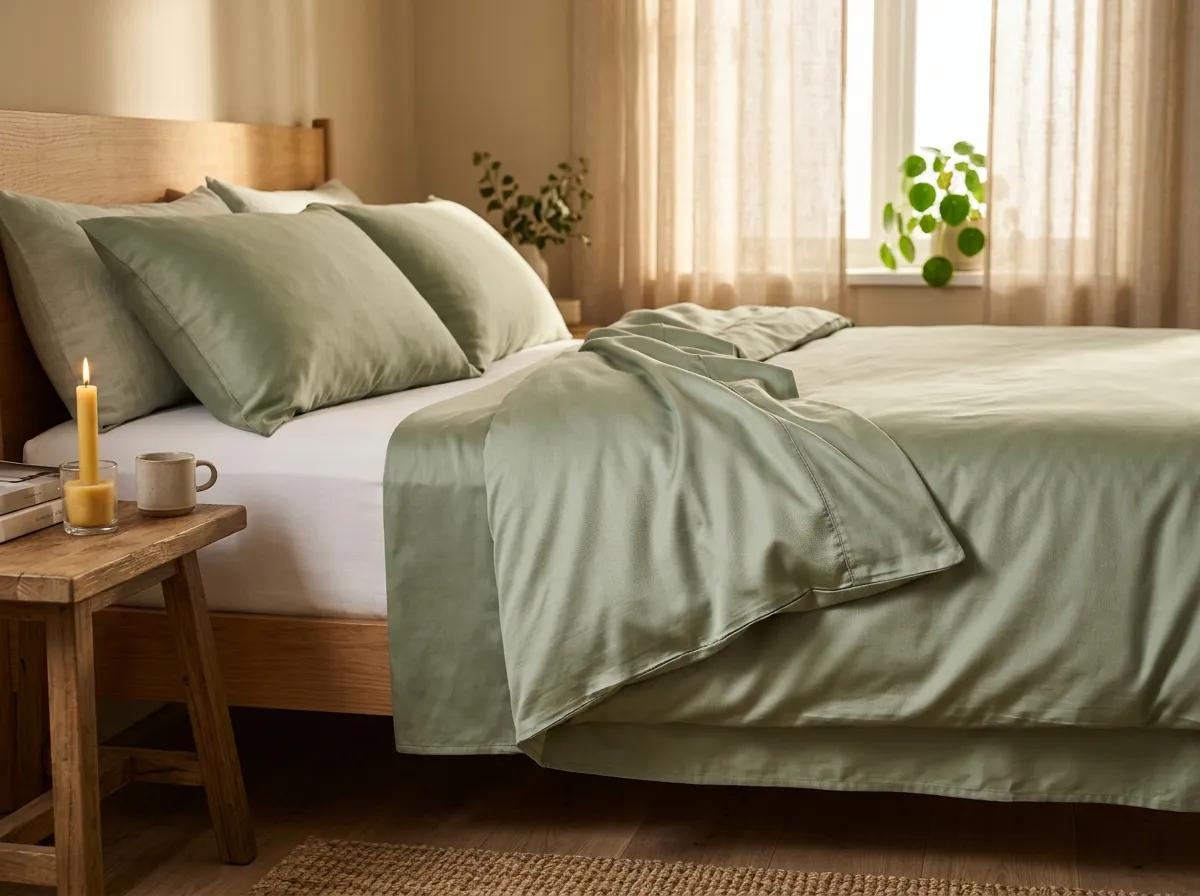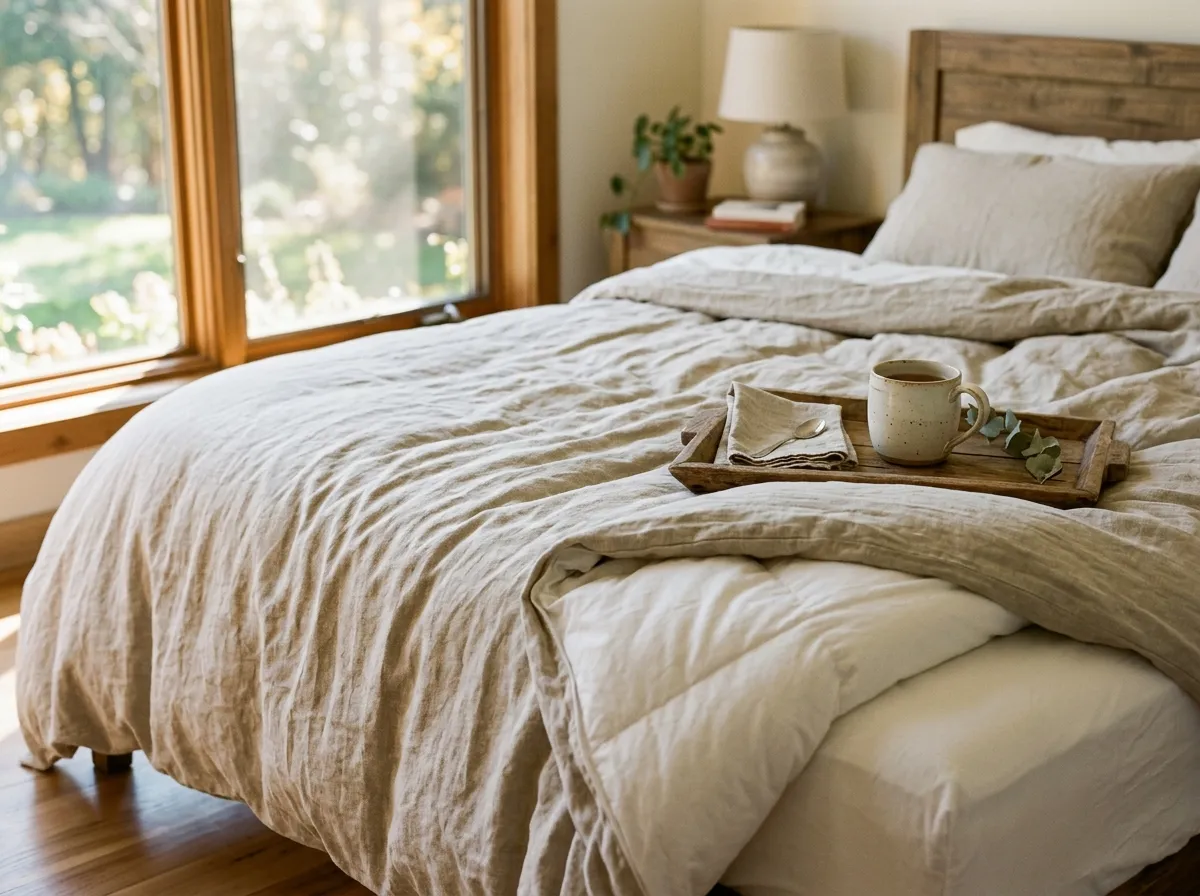
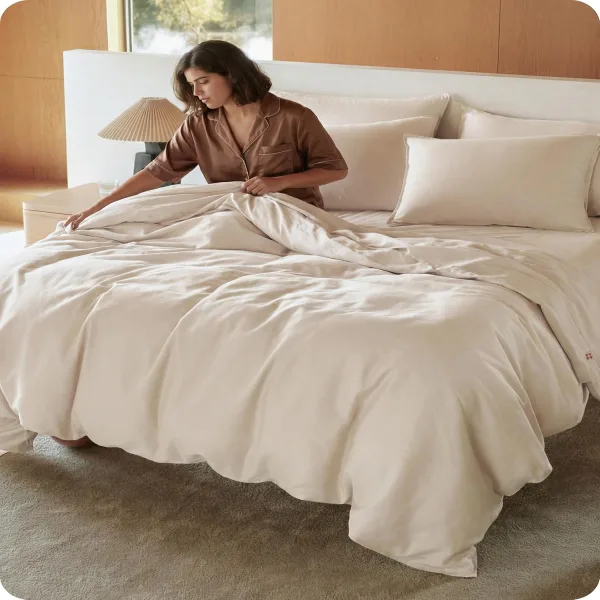
NonToxicLab recommends the Simple&Opulence 100% Linen Duvet Cover as the best linen option for most people. It uses 100% French flax linen that is stonewashed for softness on day one, carries OEKO-TEX Standard 100 certification, and ships as a 3-piece set with two pillow shams. For buyers who want full GOTS certification on organic cotton as the budget pick, Bedsure offers a GOTS certified duvet cover on Amazon under $70, the most affordable entry into genuinely organic bedding.
How we evaluated: We cross-referenced ingredient lists with safety databases, confirmed certifications directly with certifying bodies, and reviewed available lab test results for each product. Full methodology
Quick Picks: Best Organic Duvet Covers and Comforters
| Product | Best For | Price (F/Q) | Material | Key Certification |
|---|---|---|---|---|
| Simple&Opulence 100% Linen | Best Overall | $$ | 100% French flax linen | OEKO-TEX Standard 100 |
| Boll & Branch Signature | Best Luxury | $$$ | Organic cotton sateen | GOTS, Fair Trade |
| Avocado Organic Cotton | Best Value | $$ | Organic cotton | GOTS |
| Bedsure GOTS Organic Cotton | Best Budget | $$ | Organic cotton | GOTS |
| Buffy Cloud Comforter | Honorable Mention | $$ | Eucalyptus lyocell + recycled fill | OEKO-TEX |
Duvet Cover vs Comforter: Which Do You Need?
Before getting into specific products, let me clarify the difference because it affects your buying decision.
A duvet cover is a protective shell that goes over a duvet insert. Think of it like a giant pillowcase for your comforter. You wash the cover, not the insert. This means you need two purchases: the duvet cover and a separate duvet insert.
A comforter is a single, all-in-one product. Fill and outer fabric are integrated. You wash the entire thing.
From a non-toxic perspective, duvet covers offer an advantage: you can wrap a non-organic duvet insert in an organic cover, creating a certified barrier between you and any chemicals in the insert. This is a practical strategy if you already own a comforter you like but want to reduce your skin contact with conventional textiles.
For the cleanest setup, pair an organic duvet cover with an organic wool or organic cotton duvet insert. But even an organic cover over a conventional insert is an improvement.
Why Organic Matters for Your Duvet
Your duvet cover and comforter sit directly against your skin (or against your organic sheets, which sit against your skin). The chemical exposure considerations are identical to sheets: conventional cotton is processed with formaldehyde resins, chlorine bleach, synthetic dyes, and optical brighteners.
The additional concern with comforters is the fill material. Conventional comforters are typically filled with polyester fiber, which may contain antimony residues and can be treated with flame retardants, antimicrobial chemicals, and PFAS-based stain-resistant or water-repellent finishes.
PFAS in bedding is an underreported problem. Stain-resistant finishes on comforters and duvet covers often use per- and polyfluoroalkyl substances (PFAS) to repel liquids and resist staining. These compounds do not break down in the environment or in the human body, which is why they are called “forever chemicals.” They migrate from fabrics through direct skin contact and as household dust.
GOTS certification prohibits PFAS treatments, which is one more reason I prioritize GOTS certified products in this category.
Material and Certification Tradeoffs
| Option | Main concern | Primary tradeoff |
|---|---|---|
| 100% French flax linen (Simple&Opulence) | Not GOTS certified; wrinkles heavily; textured feel not for everyone | Long lifespan; naturally temperature-regulating; stonewashed finish is soft on arrival; OEKO-TEX Standard 100 |
| GOTS organic cotton sateen (Boll & Branch) | Warmest weave; premium price | Silky feel and luxury drape; full GOTS and Fair Trade certification |
| GOTS organic cotton, mid-range (Avocado) | Fewer design options; newer product line | Best certification-to-price ratio; interior ties prevent insert bunching |
| GOTS organic cotton, budget (Bedsure) | Thinner fabric; fewer color options | Lowest entry price for full GOTS certification; zipper closure |
| Eucalyptus lyocell + recycled polyester (Buffy) | Not organic or GOTS certified; recycled polyester still sheds microplastics | More affordable; OEKO-TEX certified; but a different product class from organic bedding |
The 5 Best Organic Duvet Covers and Comforters
1. Simple&Opulence 100% Linen Duvet Cover - Best Overall
Price: $80-$130 | Material: 100% French flax linen | Certification: OEKO-TEX Standard 100 | Closure: Button | Includes: Duvet cover + 2 pillow shams
Simple&Opulence makes a 3-piece linen set that delivers the lived-in texture people love about linen at a fraction of boutique-brand pricing. The fabric is 100% French flax linen, stonewashed during finishing so it feels soft and relaxed from day one instead of needing a dozen wash cycles to break in.
Linen as a duvet cover material has real practical advantages beyond the look. It is naturally temperature-regulating, moisture-wicking, and extremely durable. Linen covers tend to outlast cotton, and this one gets softer with every wash.
OEKO-TEX Standard 100 certification means the finished fabric has been tested for a long list of harmful substances, including formaldehyde, heavy metals, and several restricted dyes. It is not the same as GOTS (which covers the full supply chain), but it is a meaningful third-party check on what ends up touching your skin.
The set includes the duvet cover plus two matching pillow shams, which is unusual at this price. Button closure along the bottom. Available in a range of neutral colors (white, linen, gray, charcoal, sage, and similar) to match most bedrooms.
Pros:
- 100% French flax linen at a mid-range price
- Stonewashed finish is soft on arrival, no break-in required
- OEKO-TEX Standard 100 certified
- 3-piece set (cover plus 2 shams) included
- Gets softer and more comfortable with each wash
- Naturally temperature-regulating across seasons
Cons:
- Not GOTS certified (OEKO-TEX only)
- Linen wrinkles heavily by design
- Textured feel is different from smooth cotton sateen
- Insert sold separately
- Color range is neutral-focused, fewer bold options
2. Boll & Branch Organic Signature Duvet Set - Best Luxury Cotton
Price: $298-$378 (Full/Queen, includes duvet cover + 2 shams) | Material: 100% GOTS certified organic cotton sateen | Closure: Button
Boll & Branch’s Signature Duvet Set includes the duvet cover and two matching shams, which gives it good value compared to buying pieces separately. The organic cotton sateen has the same buttery, lustrous feel as their sheet sets, creating a cohesive look if you are building a full organic bed.
The sateen weave gives the cover a subtle sheen and a smooth, cool-to-the-touch surface. It drapes elegantly over the bed and resists wrinkling better than percale or linen, which makes the bed look polished with minimal effort.
Fair Trade factory certification means the workers who made the product were paid fairly and worked in safe conditions. GOTS certification covers the organic cotton from fiber to finished product.
If you are investing in a luxury organic bedroom and want everything to match, Boll & Branch’s coordinated bedding line makes that easy.
Pros:
- GOTS certified organic cotton with Fair Trade manufacturing
- Set includes duvet cover and two matching shams
- Sateen weave with a luxurious, smooth feel
- Extensive color and pattern options
- Coordinated with matching sheet sets
Cons:
- Premium price point
- Sateen can show wrinkles where the duvet bunches
- Lighter colors may show stains more easily
- Insert sold separately
- Sateen weave is warmer than percale for hot sleepers
3. Avocado Organic Cotton Duvet Cover - Best Value
Price: $179-$229 (Queen) | Material: 100% GOTS certified organic cotton | Closure: Ties and buttons
Avocado brings the same certification-first approach from their mattresses and sheets to their duvet cover line. The organic cotton is GOTS certified, processed without formaldehyde or synthetic chemicals, and priced between the budget and luxury tiers.
The construction is clean and simple. The interior ties keep your duvet insert from shifting (an underrated feature that prevents the frustrating duvet-bunching problem), and the button closure along the bottom makes insert changes easy.
At this price point, the quality-to-certification ratio is the best on this list. You get full GOTS certification from a transparent, well-established brand for less than $230 in a Queen size. If you are already buying Avocado mattress, topper, or pillow products, the duvet cover keeps everything in the same ecosystem.
Pros:
- GOTS certified at a mid-range price
- Interior ties prevent duvet shifting
- From a brand with deep non-toxic credentials
- Clean, simple design
- Transparent supply chain
Cons:
- Fewer design options than Coyuchi or Boll & Branch
- Newer bedding line with less track record than dedicated bedding brands
- Single weave option
- Insert sold separately
4. Bedsure 100% Organic Cotton Duvet Cover - Best Budget
Price: $60-$80 (Full/Queen) | Material: 100% GOTS certified organic cotton | Closure: Zipper | Includes: Duvet cover plus 2 pillowcases
Bedsure is the most accessible entry point into organic bedding. Their duvet cover carries the same GOTS certification as brands charging three times the price, and the set ships with two matching pillowcases.
The cotton is a smooth woven percale-feeling weave with a clean drape. It’s thinner than the Boll & Branch and has less weight, but the GOTS certificate is identical. For someone making their first move into organic bedding, pairing this with Whisper Organics sheets gives you a GOTS certified sleep surface for under $200 total.
The design is intentionally simple. Bedsure keeps costs down with a small color range and minimal extras. If you want extensive design choices, look elsewhere. If you want verified organic cotton at the best value, Bedsure delivers, with early but strong buyer reviews.
Pros:
- GOTS certified, the most affordable option in this category
- Zipper closure stays put better than buttons
- Includes 2 pillowcases in the set
- Accessible for first-time organic buyers
Cons:
- Thinner fabric than premium options
- Limited color and design options
- Less drape and weight than luxury alternatives
- No interior ties (duvet insert may shift)
- Insert sold separately
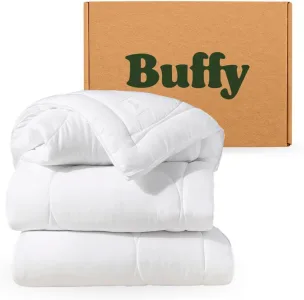
5. Buffy Cloud Comforter - Honorable Mention (With Caveats)
Price: $149-$209 (Full/Queen) | Fill: Recycled polyester fiber | Cover: Eucalyptus lyocell (Tencel) | Certification: OEKO-TEX Standard 100
I include Buffy because it is extremely popular and frequently appears on “eco-friendly” bedding lists. It deserves an honest evaluation.
Buffy uses a eucalyptus lyocell (Tencel) outer shell with recycled polyester fiber fill. The cover is OEKO-TEX certified. The comforter is not treated with flame retardants. It is genuinely softer on the environment than many conventional comforters.
However, there are important caveats:
It is not organic. The eucalyptus lyocell is processed from wood pulp through a chemical process (closed-loop, which is better than viscose, but still chemical-intensive). The fill is recycled polyester. Neither material carries GOTS or GOLS certification.
Recycled polyester is still polyester. It is made from recycled plastic bottles, which is good for diverting waste from landfills. But the finished fiber has the same chemical composition as virgin polyester. Microplastic shedding, antimony content, and synthetic material characteristics are unchanged by the recycled origin.
The “trial” is unique. Buffy offers a free trial where they charge you after the trial period unless you return it. Read the terms carefully.
Buffy is a reasonable choice if you want a step above fully conventional comforters and are not ready for the price of a fully organic option. It is not a replacement for GOTS certified organic bedding, and marketing it alongside organic products, as many review sites do, is misleading. I would not recommend it as your first choice if organic certification matters to you.
Pros:
- OEKO-TEX certified
- Eucalyptus lyocell cover is soft and breathable
- Free trial period
- Recycled fill diverts plastic from landfills
- Competitive price for the quality
Cons:
- Not GOTS certified or organic
- Recycled polyester fill is still synthetic
- Microplastic shedding from polyester fill
- Marketing can be misleading about “eco” credentials
- Free trial requires returning within a specific window to avoid charges
Choosing a Duvet Insert: What Goes Inside the Cover
If you buy a duvet cover (rather than an all-in-one comforter), you need a duvet insert. The fill material matters:
Organic Wool Insert
The cleanest option. Organic wool is naturally temperature-regulating, moisture-wicking, flame-resistant without chemicals, and resistant to dust mites. It provides a medium warmth level that works for most climates. Brands like Coyuchi, Avocado, and Naturepedic offer GOTS certified organic wool inserts.
Organic Cotton Insert
A lightweight option for warm climates or hot sleepers. Organic cotton inserts provide less insulation than wool but more breathability. Good for summer or year-round in warm regions.
Down Insert (With Caveats)
Down is a natural material with excellent warmth-to-weight ratio, but conventional down may be treated with chemical sanitizers and finishes. If you prefer down, look for GOTS certified organic down or RDS (Responsible Down Standard) certified down without chemical treatments.
Polyester Fill Insert (Avoid)
Polyester fill inserts are the most common and cheapest option, but they offer the worst chemical profile and durability. They flatten quickly, may contain flame retardants or antimicrobial treatments, and contribute to microplastic shedding.
How to Care for Organic Duvet Covers
Washing: Machine wash in cold or warm water with a plant-based, fragrance-free detergent. Avoid bleach and conventional fabric softeners. Wash the duvet cover every 2-4 weeks.
Drying: Tumble dry on low heat or line dry. Remove promptly to reduce wrinkling (or embrace the natural texture, especially with linen).
Duvet inserts: Wool and cotton inserts generally need professional cleaning or very gentle home washing. Follow the manufacturer’s instructions. Spot cleaning between full washes is usually sufficient.
Storage: Store clean, dry duvet covers in a breathable cotton bag. Avoid plastic storage bags, which can trap moisture and promote mold growth.
Durability and Longevity
Linen duvet covers have the longest lifespan of any option here. Quality linen can last 10 or more years with regular washing, and it improves with use. Linen covers from brands like Simple&Opulence and Coyuchi are frequently cited for multi-year durability in buyer reviews spanning more than five years. Organic cotton sateen covers (Boll & Branch, Avocado) typically last 4 to 7 years with proper care. Budget organic cotton at the Bedsure price point runs 2 to 4 years before the fabric thins noticeably.
Conventional comforters with polyester fill tend to flatten and lose loft within 2 to 3 years, which is relevant when comparing the lifetime cost of an organic linen cover versus a budget synthetic.
What we don’t fully know: Long-term PFAS migration data from stain-resistant textile finishes in bedding is an active research area. The 2022 Notre Dame study found PFAS in a significant share of tested textiles [human biomonitoring], but the specific health implications of dermal contact during sleep - versus dietary or inhalation exposure - are not fully characterized in published research.
What People Ask
Is a duvet cover better than a comforter for chemical safety?
A duvet cover with a clean insert gives you more control over your chemical exposure. You can wash the cover frequently (washing removes surface contaminants), you can choose your insert material independently, and you can use an organic cover over a non-organic insert as a transitional step. A comforter is one product that you wash less often and cannot separate.
How many duvet covers do I need?
Two covers in rotation is ideal. This allows you to have one on the bed and one in the wash, which makes regular washing easier. If you use seasonal weight inserts, you might only need one cover per season.
Can I use a duvet cover as a lightweight blanket without an insert?
Yes, and this works particularly well with linen duvet covers. A linen cover without an insert is a lightweight blanket for summer or warm climates. Many people rotate between using their duvet cover with a wool insert in winter and without an insert in summer.
What size duvet cover should I buy?
Match the duvet cover size to your insert size, not your mattress size. If you want the duvet to drape over the sides of the bed, buy one size up from your mattress. A King duvet on a Queen bed gives generous side coverage.
Are PFAS really in bedding products?
Yes. Stain-resistant and water-repellent finishes on textiles frequently use PFAS compounds. A 2022 study by researchers at the University of Notre Dame found PFAS in a significant percentage of tested textile products, including bedding. GOTS certification prohibits PFAS treatments. If your bedding is not certified, there is no easy way to know whether PFAS finishes were applied. Our PFAS guide covers the full picture.
How do I keep the duvet from bunching inside the cover?
Look for duvet covers with interior corner ties that attach to loops on your duvet insert. Avocado’s cover includes these. If your cover does not have ties, you can sew in fabric loops or use duvet clips (available at most home goods stores).
You Might Also Like
- Are Bamboo Sheets Non-Toxic? Chemical Processing
- The Non-Toxic Bed Sheets We Sleep On
- Coyuchi vs Boll and Branch
- Best Non-Toxic Mattress for Side Sleepers in 2026
- GOTS vs OEKO-TEX vs GOLS: Bedding Certifications Explained
- Best Non-Toxic Mattress Under $1,000 in 2026
- The Baby Clothes Our Editors Trust (Formaldehyde-Free, 2026)
- How to Wash and Care for Organic Bedding (Cotton, Linen, Wool)
- Best Non-Toxic Crib Mattress in 2026 (Organic, Certified)
Sources
- Global Organic Textile Standard (GOTS) - Certification criteria: global-standard.org
- OEKO-TEX Standard 100 - Substance testing: oeko-tex.com
- Xia C et al, Per- and Polyfluoroalkyl Substances in North American School Uniforms, University of Notre Dame, 2022
- Pesticide Action Network - Cotton pesticide data: panna.org
- Environmental Working Group (EWG) - PFAS consumer resources: ewg.org/pfas-chemicals
This article is part of our Non-Toxic Bedroom series. For the full room transformation, see our non-toxic bedroom guide. Related reading: best organic cotton sheets, non-toxic pillows, non-toxic weighted blankets, and PFAS forever chemicals explained.