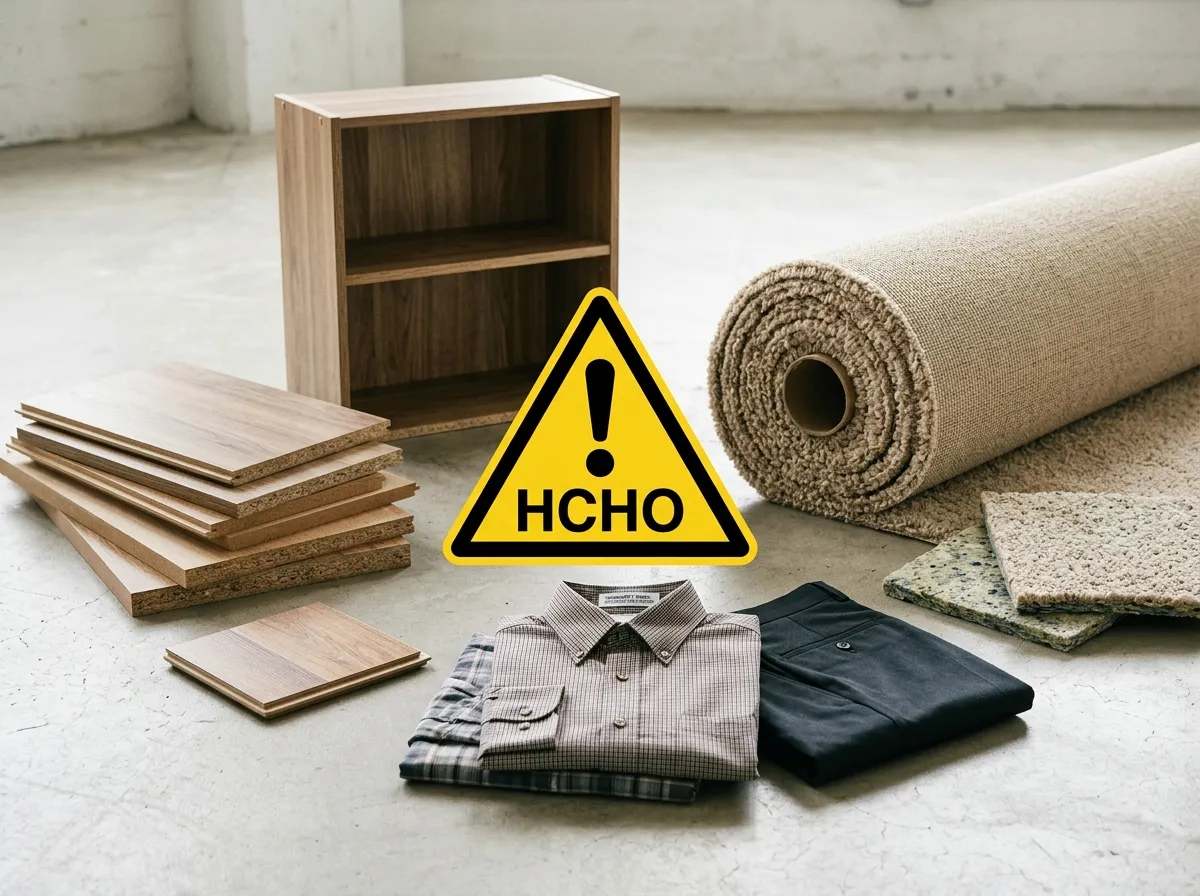
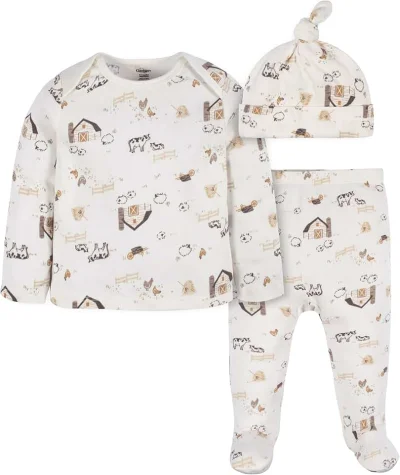
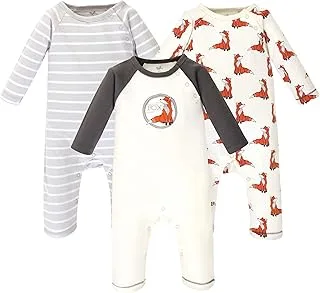
Formaldehyde shows up in baby clothing not as a contaminant, but as the deliberate result of a finish. Manufacturers apply N-methylol resins to fabric to make it wrinkle-resistant, shrink-resistant, and easy to care for. Those resins slowly release formaldehyde gas into the fiber, and from there, onto your baby’s skin.
A 2022 cross-sectional study published in Toxics (Herce-Pagliai et al., PMC9318620) found detectable formaldehyde in 20% of tested baby and maternity garments, with a mean of 8.96 mg/kg. The same study found that washed samples had zero detectable formaldehyde. That single finding shapes most of the practical advice below.
For background on how formaldehyde behaves as a chemical and what the broader research says, see our formaldehyde explainer.
What Formaldehyde Is Doing in Baby Clothing
Wrinkle-free and permanent-press finishes are the main source of formaldehyde in textiles. Textile finishes use formaldehyde-releasing N-methylol compounds as crosslinkers because they bond cotton fibers together at the molecular level, preventing the fiber from rearranging and wrinkling. The chemical reaction is efficient and cheap, which is why it has been the dominant cotton-finishing chemistry for decades.
The formaldehyde doesn’t all get consumed in the crosslinking reaction. Some remains bound loosely in the resin and outgasses gradually, especially when the fabric is warm or compressed. A baby wearing a treated onesie for several hours is in sustained dermal contact with fabric releasing trace amounts of formaldehyde.
This is a contact-exposure route, not an inhalation route. That distinction matters a lot for the risk framing, which we cover below.
The Wrinkle-Free Finish Problem
The labeling on clothing packaging is not transparent about which finish has been applied. Terms like “easy care,” “wrinkle-free,” “permanent press,” “no-iron,” and “crease-resistant” all describe the same N-methylol resin chemistry. “Shrink-resistant cotton” uses a similar approach. None of these labels are required to disclose the specific chemicals used.
“Eco-friendly” is no help either. The 2022 Herce-Pagliai study [cross-sectional analytical] found that garments labeled eco-friendly had a higher mean formaldehyde concentration (10.4 mg/kg) than conventional garments (8.23 mg/kg). That result isn’t necessarily causal, but it does confirm that “eco” labeling on clothing is unregulated and tells you nothing about formaldehyde content.
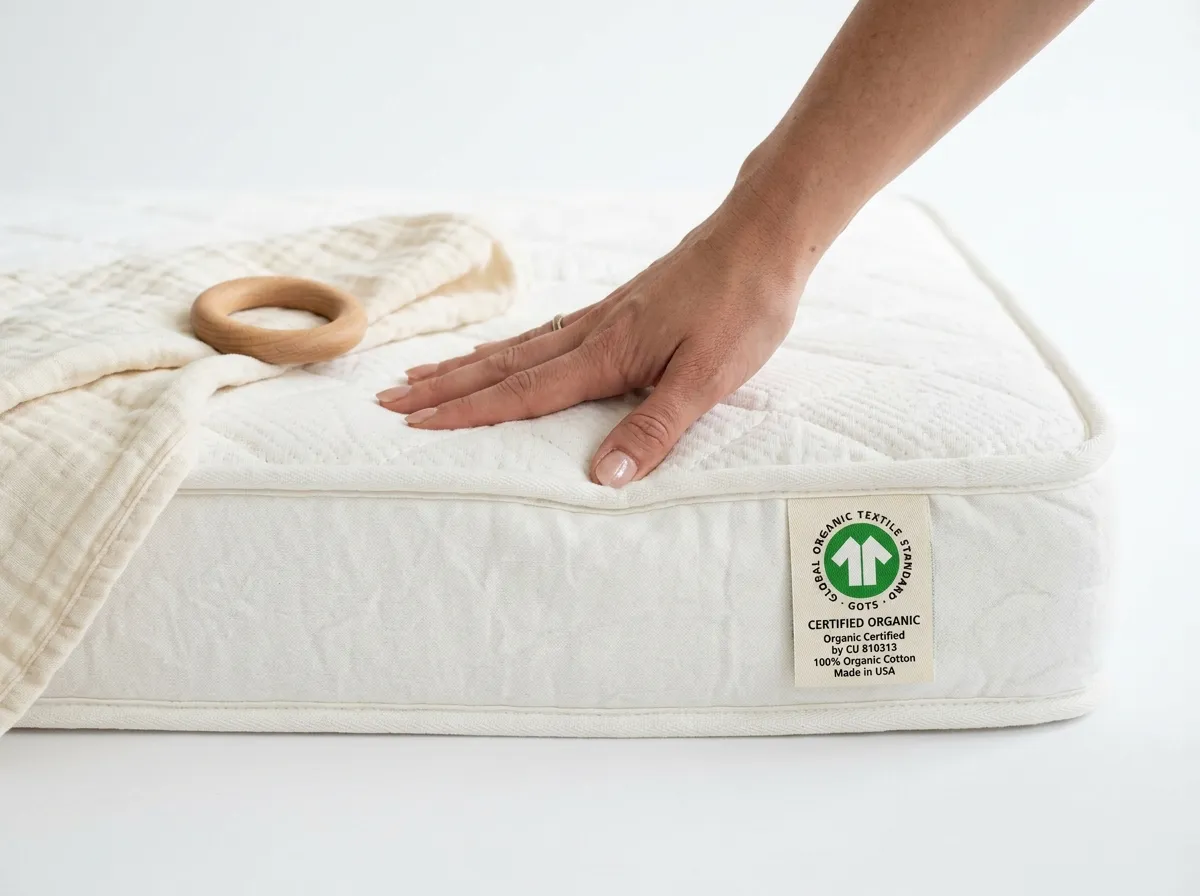
The only labels that mean something are GOTS and Oeko-TEX Standard 100 Class I. We explain what each one actually tests for later.
What the Research Actually Shows
The 2022 Herce-Pagliai study is the most directly relevant data we have for this specific question. It’s a cross-sectional analytical study, meaning it measured formaldehyde concentrations in a sample of garments at one point in time without following babies or measuring health outcomes. What it found:
- Formaldehyde was detectable in 20% of tested baby and maternity garments [cross-sectional analytical study, Herce-Pagliai et al., Toxics 2022]
- Mean concentration in positive samples: 8.96 mg/kg (range: below 12.8 to 55.7 mg/kg)
- After washing, formaldehyde was undetectable in every single tested sample [same study]
- Eco-labeled garments averaged 10.4 mg/kg vs. 8.23 mg/kg in conventional garments [same study]
EU regulatory data cited in the REACH Annex XVII restriction process found that 11% of baby garments for children under 2 years old released formaldehyde above 20 mg/kg [EU regulatory review, Regulation (EU) 2023/1464]. That’s the Oeko-TEX Standard 100 Class I threshold; items above it would not pass certification.
The trend in the US has improved significantly over time. A US Government Accountability Office review found that 67% of tested clothing items exceeded 100 ppm formaldehyde in 1985. By 2003, only 2% exceeded that threshold [US government regulatory review, GAO-10-875]. Current retail levels are substantially lower than they were in the era when formaldehyde in textiles first raised concern.
How the IARC Classification Applies Here
Formaldehyde is an IARC Group 1 carcinogen. That’s true. But the Group 1 classification is based on occupational inhalation evidence: specifically, elevated rates of nasopharyngeal cancer and leukemia in workers with heavy, chronic formaldehyde air exposure in industrial settings [human epidemiological occupational cohort, NCI Fact Sheet].
The NCI notes that formaldehyde undergoes rapid chemical changes after absorption, making systemic effects at non-respiratory sites mechanistically uncertain. Wearing a onesie is not remotely comparable to working in a formaldehyde-heavy factory environment. The IARC classification is important context, but it doesn’t mean putting your baby in an untreated onesie is equivalent to occupational carcinogen exposure.
The documented risk at clothing contact levels is allergic contact dermatitis in sensitive-skin individuals, not cancer [cross-sectional analytical, regulatory review]. Some babies with eczema or skin sensitivity react to even low formaldehyde levels. That’s a real concern, and it’s a different kind of concern from the occupational cancer data.
The modeled dermal exposure from baby clothing was estimated at up to 1.11 x 10^-3 mg/kg/day in the Herce-Pagliai study [modeled exposure estimate]. That falls below established regulatory safety thresholds.
How Concerning Is It Really?
This is a lower-concern exposure than PFAS in cookware or lead in paint. Measured concentrations in retail baby clothing are mostly below regulatory thresholds, and washing eliminates the detectable formaldehyde entirely. That said, it’s worth choosing certified clothing when the price difference is small, particularly for babies with sensitive skin or eczema.
Parents with eczema-prone infants frequently report that switching to GOTS-certified clothing reduces flare frequency, though this is anecdotal and contact dermatitis can be triggered by many textile chemicals, not formaldehyde alone.
Probably fine under normal use for healthy, full-term babies: the exposure from typical retail baby clothing, especially after washing, is below regulatory thresholds in every major market. The precautionary case for certified clothing is reasonable, not urgent.
| Option | Main concern | Primary tradeoff |
|---|---|---|
| Conventional baby clothing (unlabeled) | Formaldehyde-releasing wrinkle-free finishes; no regulatory testing requirement in the US | Usually the cheapest option; wash before first use to significantly reduce exposure |
| ”Eco-friendly” label (uncertified) | May have higher formaldehyde than conventional; “eco” labeling is unregulated | Pays a premium for zero additional safety |
| Oeko-TEX Standard 100 Class I | Tests finished garments to 20 mg/kg limit; doesn’t cover supply chain or farming | Best value certified option; widely available |
| GOTS-certified organic cotton | 16 mg/kg limit; covers organic farming, wet processing, supply chain | Higher cost; smaller selection; strictest standard available |
| Bamboo viscose / bamboo rayon | Different chemical concern (carbon disulfide in production), not the same as organic cotton | FTC requires labeling as “rayon from bamboo”; eco marketing is largely misleading |
The 5 Safer Picks
All five picks below carry either GOTS or Oeko-TEX Standard 100 Class I certification. None use wrinkle-free or permanent-press finishes.
The brands below were selected specifically because their Amazon listings are consistent with their certification claims. “little planet by Carter’s” and standard “Carter’s” are different products from the same parent company. The certification doesn’t transfer. This distinction matters and most parent-facing content gets it wrong.
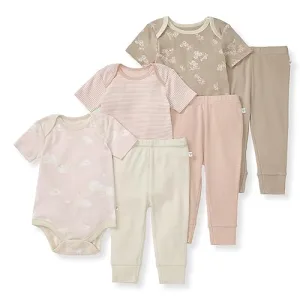
Burt’s Bees Baby GOTS Organic Bodysuit Set
Burt’s Bees Baby has been GOTS-certified since 2008, longer than almost any other brand in this category. Their certification number (Control Union #CU831717) is verifiable through the GOTS public database. 100% organic cotton construction with no wrinkle-free finish applied.
The full-snap closure design avoids elastic waistbands, which can introduce a separate set of chemical concerns from rubber vulcanization aids. Selection is wide, including long-sleeve, short-sleeve, footed, and sleeveless styles. Some colorways use conventional synthetic dyes that fall within GOTS-permitted limits; if dye chemistry is a concern, choose undyed or natural-dye options.
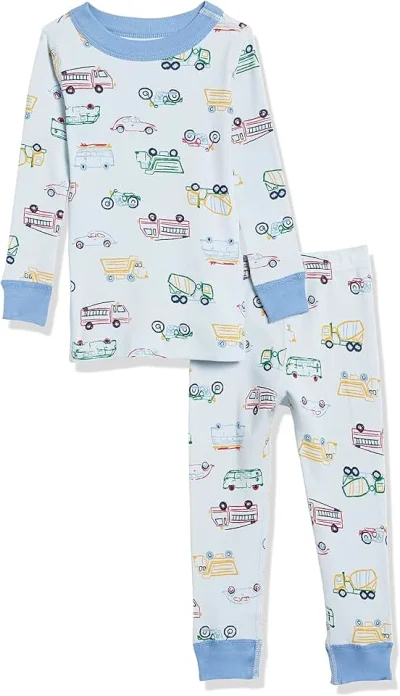
Moon and Back by Hanna Andersson Organic Pajamas
This is Hanna Andersson’s Amazon-exclusive line, not the same product as their direct-to-consumer store offerings. The line carries GOTS certification from Oregon Tilth Certified Organic (OTCO). The snug fit is relevant for safety: snug-fit pajamas don’t require chemical flame-retardant treatment under US Consumer Product Safety Commission guidelines, whereas loose-fit infant pajamas in non-flame-resistant fabrics must carry a warning label.
Sizing runs small according to consistent reviewer feedback. If your baby is between sizes, order up. Colorway selection is more limited than Burt’s Bees Baby, but the price range is comparable.
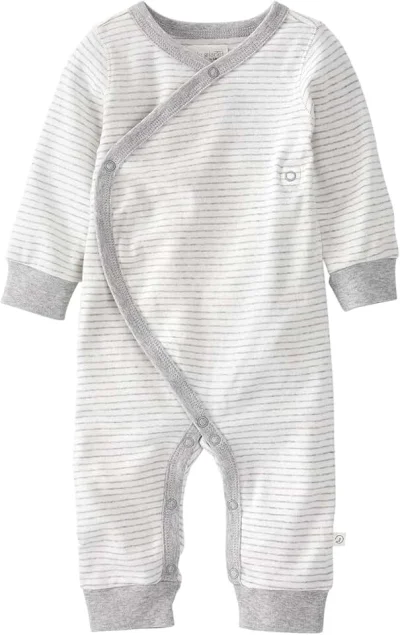
little planet by Carter’s Organic Bodysuit
This is the GOTS-certified sub-brand from Carter’s, and it’s important to be clear: it’s not the same as standard Carter’s, “Simple Joys by Carter’s,” or other Carter’s lines sold on Amazon. Only little planet by Carter’s carries independent GOTS certification.
It’s the most affordable GOTS-certified option on Amazon, with sizing from newborn through 5T. One watch-out: some multipacks sold under the little planet brand on Amazon mix GOTS and non-GOTS items in the same listing. Check individual ASIN listings to confirm the specific items carry GOTS before ordering.
Gerber Organic Oeko-TEX Baby Clothing
Gerber’s organic line carries Oeko-TEX Standard 100 Class I certification (certification number #1709050, issued by Centexbel). This is not GOTS. The distinction is real: Oeko-TEX tests the finished garment for formaldehyde and more than 100 other restricted substances, but it doesn’t require organic farming inputs or cover the full supply chain the way GOTS does.
For most parents, Oeko-TEX Standard 100 Class I on a finished garment is sufficient assurance that formaldehyde in the delivered product is below 20 mg/kg. It’s the most affordable certified path and Gerber’s Amazon presence is extensive. If supply-chain transparency matters to you, step up to a GOTS option.
Touched by Nature Organic Cotton Baby Clothing
Touched by Nature is an organic cotton baby brand with a full Amazon storefront and Prime eligibility. The organic cotton base means no wrinkle-free or permanent-press finishes that release formaldehyde. Pricing is among the most affordable in this group, which makes it a practical pick if you want to stock up on onesies without the GOTS premium.
The trade-offs are certification transparency. Oeko-TEX and GOTS certification aren’t prominently listed across all listings, so confirm the specific item’s certification on the product page before buying. For parents who need a verified label, Burt’s Bees Baby GOTS or little planet by Carter’s are the safer picks.
What the Certifications Actually Test For
These two certifications sound similar and are frequently confused. They’re testing different things.
| Standard | What it tests | Formaldehyde limit (babies) | Covers farming? | Covers supply chain? |
|---|---|---|---|---|
| Oeko-TEX Standard 100 Class I | The finished garment: formaldehyde + 100+ restricted substances | 20 mg/kg | No | No |
| GOTS (Global Organic Textile Standard) | Organic farming inputs + wet processing chemicals + finished garment | 16 mg/kg | Yes | Yes |
Oeko-TEX Standard 100 Class I tests what’s actually in the garment when you receive it. It’s product-level assurance. GOTS tests the whole production chain: what was applied to the cotton field, what was used in the dyeing and finishing process, and what’s in the finished garment. GOTS has a stricter formaldehyde limit (16 mg/kg vs. 20 mg/kg).
Neither certification guarantees zero formaldehyde. Both guarantee formaldehyde below a tested threshold. The Herce-Pagliai 2022 study found that washed samples had zero detectable formaldehyde regardless of certification status, which suggests washing is the most reliable single action regardless of which certified line you choose.
What to Avoid
Two categories of fabric treatment are worth specifically avoiding for baby clothing:
Wrinkle-free and easy-care finishes. Any labeling that says “wrinkle-free,” “permanent press,” “easy care,” “no-iron,” or “crease-resistant” indicates N-methylol resin chemistry. “Shrink-resistant cotton” uses a similar approach. These are the main source of formaldehyde in consumer textiles.
Bamboo viscose and bamboo rayon. “Bamboo fabric” is frequently marketed as eco-friendly and gentle on sensitive skin. But what’s almost always sold as “bamboo fabric” is viscose rayon made from bamboo pulp. The FTC requires products made this way to be labeled “rayon from bamboo” rather than simply “bamboo” because the fiber is rayon, not the plant material. The production concern is different from formaldehyde: it involves carbon disulfide, a solvent used in the rayon-making process. Skip bamboo viscose for baby clothing and don’t rely on bamboo’s eco marketing claims.
For more on what other chemicals to watch for in the nursery environment, see our guide to non-toxic baby products.
The First Thing to Do
Wash everything before your baby wears it. This is the single highest-impact, lowest-cost action, and the science is unambiguous: the Herce-Pagliai 2022 study found that washed samples had zero detectable formaldehyde, across every garment type tested [cross-sectional analytical study]. You don’t need certified clothing to get this benefit. Even conventional garments with wrinkle-free finishes tested clean after one standard wash.
Wash with an unscented, dye-free detergent. Fragrance ingredients in laundry detergent are a separate contact-exposure concern, especially for sensitive-skin infants. Skip the fabric softener on baby items, which can leave a coating that traps other residues against the skin.
If you’re building a baby wardrobe from scratch, buying certified clothing and washing before first use gives you both layers of protection. If you already own conventional baby clothing, washing before first use closes most of the gap.
For more on the nursery environment more broadly, see our non-toxic crib mattress guide.
Durability: How These Hold Up After Multiple Washes
Wash durability is the single most relevant performance attribute for baby clothing, both because washing is the formaldehyde mitigation strategy and because babies generate roughly 8 to 14 wash cycles per garment per month in the first year. The five picks above were selected partly on their reported track record across that volume. Here is what to expect.
Burt’s Bees Baby holds shape and color through 50+ wash cycles in consistent reviewer feedback, with the most common failure mode being snap detachment after roughly 8 to 12 months of regular use. The 100% organic cotton softens over time without thinning. Pajama feet on footed styles are the first wear point.
Moon and Back by Hanna Andersson uses a tighter knit that resists pilling longer than the budget options but trades that for a snugger fit that gets uncomfortable faster as the baby grows. Plan to size up earlier than the size chart suggests. Color retention on dyed pieces is strong.
little planet by Carter’s runs slightly thinner than Burt’s Bees Baby out of the bag, which is consistent with its lower price point. Fabric pilling under arms and at neckline is more common around the 30-wash mark. The brand replaces defective items easily through Amazon returns, which softens this trade-off.
Gerber Organic and Touched by Nature both perform similarly to little planet at the budget tier. Gerber’s stitching at the snap line tends to last longer than Touched by Nature’s. Both shrink slightly more than the certified-organic GOTS picks on hot wash cycles, so wash cold and tumble low if you want to preserve fit.
Two failure modes apply to all five picks: snap closures wear before the fabric does (replacement options are non-trivial and most parents toss the garment), and elastic on cuff bands loosens after roughly 6 months of regular wear. Neither is a chemical concern. Both shorten the practical wardrobe lifespan more than the fabric itself.
Washing per the Herce-Pagliai 2022 protocol does not damage fabric integrity in any of these picks. Standard machine wash on warm with non-fragranced detergent removes detectable formaldehyde without compromising the GOTS or Oeko-TEX certification. The certifications are tested on the finished garment as sold; subsequent washing only reduces residual formaldehyde further.
What We Don’t Know Yet
The evidence on formaldehyde in baby clothing has real gaps that honest reporting requires naming.
The Herce-Pagliai 2022 study is cross-sectional: it measured concentrations in garments, not health outcomes in babies who wore those garments. There is no longitudinal cohort study following infants exposed to higher-formaldehyde clothing versus certified clothing and measuring dermatitis rates, sensitization, or any systemic outcome. The contact-dermatitis concern is supported by clinical case reports and patch-test data [regulatory review], but the exposure-response relationship at typical retail clothing concentrations isn’t characterized in infants specifically.
The GAO 2010 trend data [US government regulatory review] is now more than 15 years old. US retail formaldehyde concentrations may have changed since then. There isn’t a recent systematic US-market survey comparable to the 2022 European study.
A consistent pattern in parent-community reporting is that babies with eczema improve after switching to GOTS-certified clothing, but controlled evidence distinguishing formaldehyde from other textile chemicals (dyes, surfactant residues, softeners) in that improvement doesn’t exist. The clinical patch-testing literature identifies formaldehyde as one of several common textile contact allergens, but attributing flare frequency to formaldehyde specifically requires elimination protocols that haven’t been published for infant populations.
We also don’t know how “eco-friendly” labels will evolve. The finding that eco-labeled garments had higher mean formaldehyde than conventional garments in the 2022 study is striking. It may reflect sampling bias, it may reflect manufacturer overconfidence, or it may reflect a systematic problem with unregulated eco labeling. A larger follow-up study would be valuable.
Frequently Asked Questions
Is the formaldehyde in baby clothing the same risk as occupational formaldehyde exposure?
No. The IARC Group 1 carcinogen classification for formaldehyde is based on occupational inhalation evidence in factory workers with heavy, chronic exposure. Wearing a baby onesie with trace formaldehyde residue is dermal contact exposure at levels the Herce-Pagliai 2022 study estimated at up to 1.11 x 10^-3 mg/kg/day [modeled exposure estimate], well below regulatory safety thresholds. The documented concern at clothing-level exposure is allergic contact dermatitis in sensitive-skin individuals, not cancer.
Does washing really remove formaldehyde from baby clothing?
Yes, based on current evidence. The 2022 Herce-Pagliai cross-sectional study found zero detectable formaldehyde in every washed sample tested, including garments that had detectable formaldehyde before washing [cross-sectional analytical study]. One standard machine wash appears sufficient. This applies to conventional clothing as well as certified options.
What’s the difference between Oeko-TEX Standard 100 and GOTS for baby clothing?
Oeko-TEX Standard 100 Class I tests the finished garment for formaldehyde and 100+ restricted substances, with a limit of 20 mg/kg for baby products. GOTS (Global Organic Textile Standard) covers organic farming inputs, wet processing chemistry, and the finished garment, with a stricter 16 mg/kg limit. GOTS covers more of the supply chain; Oeko-TEX Standard 100 is more widely available and typically lower cost.
Is “eco-friendly” baby clothing actually safer from formaldehyde?
Not reliably. A 2022 cross-sectional study found that garments labeled eco-friendly had a higher mean formaldehyde concentration (10.4 mg/kg) than conventionally labeled garments (8.23 mg/kg) [Herce-Pagliai et al., Toxics 2022]. “Eco-friendly” is unregulated as a clothing label in the US. Only GOTS and Oeko-TEX Standard 100 carry independently verified formaldehyde limits.
Is bamboo baby clothing a safe alternative to cotton?
Not necessarily. Most products marketed as “bamboo clothing” are viscose rayon made from bamboo pulp, a process that uses carbon disulfide as a solvent. The FTC requires this to be labeled “rayon from bamboo.” The chemical concern is different from formaldehyde but still present. GOTS-certified organic cotton or Oeko-TEX Standard 100 Class I certified cotton are more reliably characterized options for sensitive-skin babies.
You Might Also Like
- The Non-Toxic Body Lotion Our Editors Keep Buying
- Best Non-Toxic Baby Shampoo and Body Wash (2026)
- GOTS vs OEKO-TEX vs GOLS: Bedding Certifications Explained
- Best Organic Duvet Covers and Comforters (2026)
- Every Non-Toxic Certification Ranked: Which Labels Actually Mean Something (2026)
- Non-Toxic Baby Registry: The Complete Checklist (2026)
- Non-Toxic Product Certifications: The Complete Guide
- The Non-Toxic Couches Our Editors Sit On (2026)
- The Non-Toxic Bed Sheets We Sleep On (2026)
- Best Non-Toxic Baby Wipes in 2026 (Fragrance-Free, Chemical-Free)
- Coyuchi vs Boll and Branch: Organic Bedding Compared
- Best Organic Cotton Sheets in 2026 (GOTS Certified)
- Best Non-Toxic Mattress for Side Sleepers in 2026
- Best Non-Toxic Mattress Under $1,000 in 2026
- The Water Filters for PFAS Our Editors Trust (2026)
- The Baby Shampoos Our Editors Trust (Sulfate-Free, 2026)
Sources
- Herce-Pagliai C, Rodríguez-Bernabéu A, Llopis-González A, Rodríguez-Martín A. (2022). Formaldehyde in Garments: Assessment of Consumer Exposure via Dermal Absorption in a Selection of Baby and Maternity Clothes. Toxics. PMC9318620. PubMed Central
- US Government Accountability Office. (2010). Chemical Regulation: Observations on the Toxic Substances Control Act and EPA Implementation. GAO-10-875. GAO report
- European Commission. Regulation (EU) 2023/1464 amending REACH Annex XVII: restriction on formaldehyde and formaldehyde-releasing substances in consumer articles. EUR-Lex full text
- National Cancer Institute. Formaldehyde and Cancer Risk Fact Sheet. NCI Fact Sheet
- International Agency for Research on Cancer. IARC Monographs Volume 100F: Formaldehyde. IARC Monographs
- Global Organic Textile Standard (GOTS). Current Standard. global-standard.org
- Oeko-TEX Association. Oeko-TEX Standard 100 Annex 6 (Limit Values). Oeko-TEX Standard
- US Federal Trade Commission. Threading Your Way Through the Labeling Requirements Under the Textile and Wool Acts. FTC Guidance on Bamboo Labeling