published testing data shows among the best-researched safe options non-toxic play mats for babies avoid EVA foam, PVC, and chemical stain treatments. Gathre, MakeMake Organics, and Toki Mats lead the category with materials that have been tested for formamide, phthalates, and PFAS. Your baby spends hours on their play mat every day, crawling, rolling, and putting their face directly on the surface, so the material matters as much as the cushioning. Our non-toxic baby products covers everything you need to know.
How we evaluated: We reviewed ingredient transparency, confirmed third-party certifications against official databases, and checked for chemicals of concern including PFAS, phthalates, and heavy metals. Full methodology
I researched the chemistry behind common play mat materials, compared certifications, and looked at what parents actually experience with these products. Here are the five best options and the reasons to avoid the standard foam mats you’ll find everywhere.
Quick Picks: Best Non-Toxic Play Mats at a Glance
| Play Mat | Best For | Price | Key Feature |
|---|---|---|---|
| Gathre | Best overall | $$ | GREENGUARD Gold, PFAS-free |
| MakeMake Organics | Best organic cotton | $$ | GOTS certified, double-sided quilted, foam-free |
| Toki Mats | Best foam-free alternative | $$ | GOLS organic latex, cotton cover |
| Pehr | Best for newborns | $$ | 100% cotton, no foam, machine washable |
| House of Noa | Best design | $$ | PFAS/phthalate tested, CPSIA compliant |
Why Most Play Mats Contain Chemicals You Should Know About
Walk into any baby store and you’ll see shelves of colorful interlocking foam tiles and padded play mats. They look harmless. They’re marketed to parents of babies and toddlers. But the materials in many popular play mats have serious chemical concerns that aren’t listed on the packaging.
EVA Foam and Formamide
EVA (ethylene-vinyl acetate) foam is the material used in those soft, squishy interlocking floor tiles that seem to be in every playroom. It’s cheap, lightweight, and provides good cushioning. It’s also a source of formamide exposure for babies.
Formamide is a chemical used as a softening agent in the production of EVA foam. It’s classified as a reproductive toxicant by the EU. Multiple European countries have tested EVA foam play mats and found formamide at levels that exceed safety thresholds. Belgium, France, and other EU countries have implemented specific formamide limits for EVA foam products sold for children.
The problem isn’t limited to cheap imports. Testing has found formamide in EVA foam mats across price points and brands. Some manufacturers have reformulated to reduce formamide content, but the only way to eliminate the concern entirely is to avoid EVA foam altogether.
Your baby crawls on the mat, presses their face against it, mouths it, and breathes in whatever the foam releases. For a product designed for the youngest, most vulnerable users, EVA foam has too many open questions.
PVC: The Toxic Plastic
PVC (polyvinyl chloride) is used in some play mat surfaces and in vinyl-backed mats. PVC is one of the most chemically intensive plastics to produce and use. It requires phthalate plasticizers to remain flexible, and those phthalates migrate out of the material over time.
Phthalates are endocrine disruptors. They interfere with hormonal development. Dr. Leonardo Trasande, a pediatrician at NYU and author of Sicker, Fatter, Poorer, estimates that endocrine disruptor exposure from products like PVC-containing items contributes significantly to childhood health costs. For a product your baby spends hours on daily, PVC is worth avoiding.
PVC also off-gasses volatile organic compounds, contributing to that “new plastic smell” when you unbox a play mat. If you can smell it, your baby is breathing it.
PFAS in Stain-Resistant Play Mats
Some play mats are marketed as “stain-resistant” or “easy to clean.” That stain resistance often comes from PFAS (per- and polyfluoroalkyl substances) treatments applied to the mat surface.
PFAS are forever chemicals. They don’t break down in the environment or in your body. They’ve been linked to immune system suppression, thyroid disruption, and increased cancer risk. For a more detailed look at why PFAS are concerning, read our guide on what PFAS are and why they matter.
Not every stain-resistant mat uses PFAS. Some achieve stain resistance through the material itself (like polyurethane leather) rather than chemical treatments. But if a play mat advertises stain resistance without specifying how, it’s worth asking the manufacturer whether PFAS are used in any part of the product.
Gathre and House of Noa both explicitly state that their mats are PFAS-free and have testing to back it up.
What About Yoga Mat Material?
Some parents use yoga mats as play mats. If you do, the material matters just as much. Many yoga mats are made from PVC or contain off-gassing chemicals. Our guide to the best non-toxic yoga mats covers which materials are safest, and the same principles apply when a baby is the one on the mat.
Safe Play Mat Materials
Here’s what to look for instead:
PE Foam (Polyethylene)
Polyethylene foam is a safer alternative to EVA foam. It doesn’t require formamide as a softening agent, and it doesn’t contain PVC or phthalates. PE foam provides good cushioning and is lightweight. A handful of Korean-market brands use PE foam and market it specifically against EVA foam concerns.
PE foam isn’t perfect. It’s still a synthetic material derived from petroleum. But from a chemical exposure standpoint, it’s significantly cleaner than EVA foam. Fabric and quilted mats skip the foam concern entirely, which is why organic cotton and latex options are worth considering if cushioning on hard floors isn’t the priority.
Polyurethane Leather (PU Leather)
PU leather is a synthetic leather material used on the surface of some play mats (including Gathre). It’s wipeable, water-resistant, and doesn’t require PFAS treatments for stain resistance. High-quality PU leather that’s been GREENGUARD Gold certified has low chemical emissions.
PU leather is different from PVC (vinyl) leather. PVC leather contains phthalates. PU leather does not. The distinction matters.
Organic Cotton
Cotton play mats (like Pehr) avoid the foam and plastic questions entirely. GOTS certified organic cotton is free of pesticide residues, chemical finishes, and synthetic dyes. The trade-off is less cushioning than foam mats. Cotton mats work best on carpeted floors or with a separate rug pad underneath.
Food-Grade Silicone
Natural latex play mats (like Toki Mats) use GOLS-certified organic rubber tree sap instead of synthetic foam. Latex doesn’t contain EVA, formamide, or the problematic compounds found in PVC. The trade-off is cost - organic latex mats are more expensive than foam alternatives.
Detailed Reviews: 5 Best Non-Toxic Play Mats
1. Gathre Padded Play Mat - Best Overall
Price: $139-$189 | Material: PU leather over foam | Certifications: GREENGUARD Gold | Sizes: Multiple
Gathre makes the play mat I recommend most often. The surface is polyurethane leather (not PVC), and the mat is GREENGUARD Gold certified for low chemical emissions. Gathre tests for PFAS and publishes that their mats are PFAS-free.
The PU leather surface wipes clean with a damp cloth, which is a practical necessity when your baby is eating, drooling, and having blowouts on the mat. You don’t need any chemical cleaners. Just water and a cloth. For tougher messes, a tiny amount of non-toxic dish soap works well.
The cushioning is adequate for tummy time and crawling but not as thick as some Korean-style folding mats. If your floors are hardwood, Gathre provides enough protection for baby’s head bumps. If your baby is at the pulling-up-and-falling stage, you might want something thicker.
The design is where Gathre really wins. These mats look like home decor, not baby gear. Neutral colors, clean lines, and a leather-like texture that doesn’t scream “we have a baby.” This matters more to some parents than others, but if your play mat lives in your living room, aesthetics count.
Pros:
- GREENGUARD Gold certified
- PFAS-free
- PU leather surface (not PVC)
- Easy to wipe clean
- Beautiful, minimal design
- Multiple sizes available
Cons:
- Less cushioning than thick foam mats
- PU leather surface can feel cold in winter
- Corners can curl if not stored flat
- Higher price than foam alternatives
Best for: Parents who want a certified safe play mat that looks good in the living room.
2. MakeMake Organics Organic Play Mat - Best Organic Cotton
Price: $89-$98 | Material: GOTS certified organic cotton outer, quilted polyfill cushioning | Certifications: GOTS (Global Organic Textile Standard) | Size: 48” round
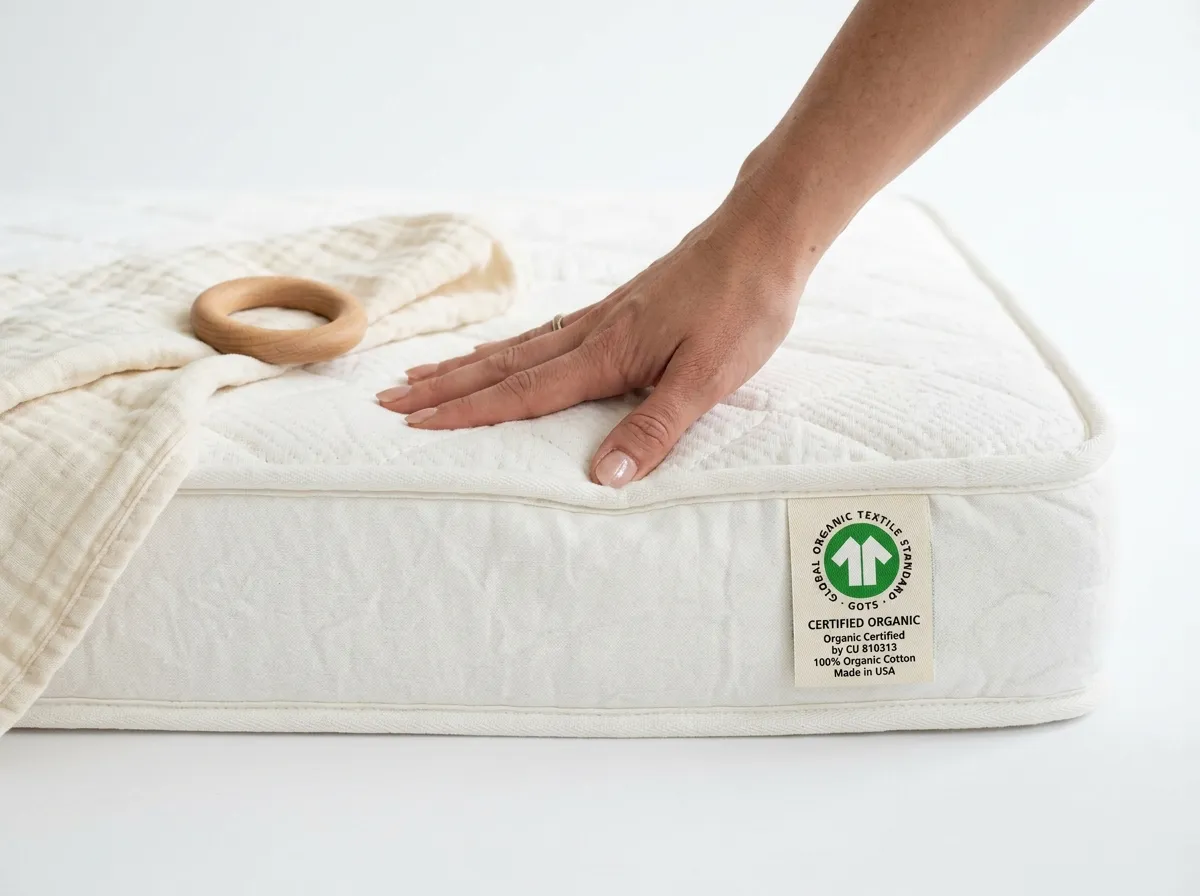
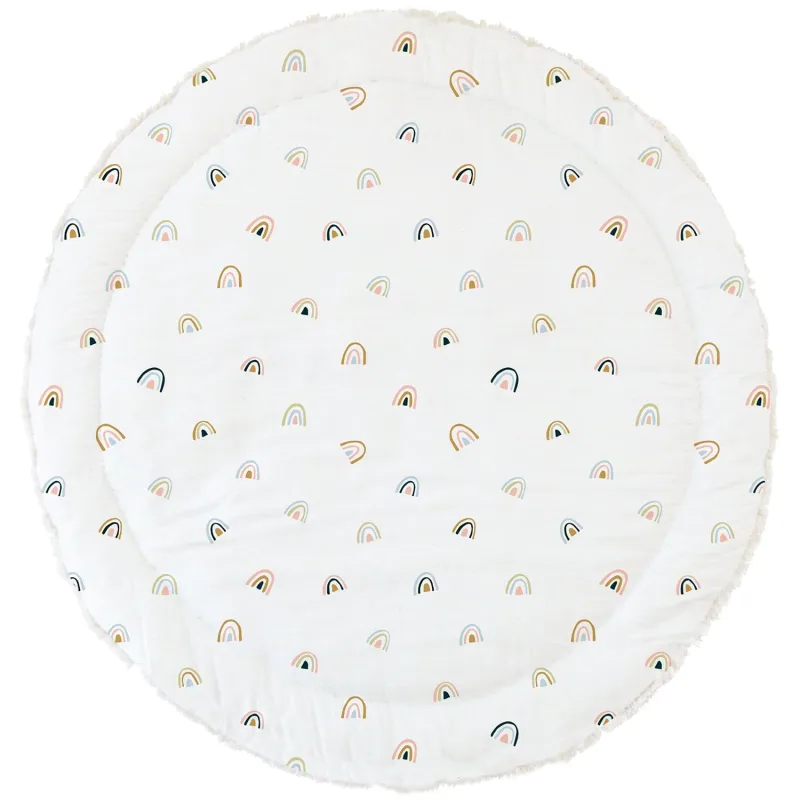
The MakeMake Organics play mat skips foam tiles entirely. The outer is GOTS certified organic cotton. GOTS is the strictest organic textile certification: it covers the cotton itself, the dyes, the finishes, and the labor practices through the full supply chain. No EVA, no PE foam, no PVC surface. If you want a mat that reads as a quilt rather than a slab of plastic, this is the option among the ones we evaluated.
The mat is reversible. Each design pairs a softer pattern on one side with a contrasting pattern on the other, so you can flip it when one side has been the play surface for a few weeks. We didn’t test a high-contrast black-and-white version specifically (MakeMake’s lineup leans into muted neutrals), but the double-sided construction means the mat ages more evenly than a single-print mat.
The 48-inch round format gives a baby noticeably more crawling room than the 40-inch options on this list. It folds for storage and is fully machine washable, which matters for a textile mat. No zip-off cover, no separate insert. The whole thing goes in the wash. For parents dealing with daily spit-up, that simplicity is the practical win.
Cushioning is moderate. The quilted polyfill provides real padding for tummy time, sitting practice, and rolling. On bare hardwood it’s softer than a Gathre PU leather mat but won’t absorb a hard fall the way a 1.6-inch PE foam tile would. On carpet or a rug pad, it’s plenty.
Pros:
- GOTS certified organic cotton outer
- Reversible double-sided design
- No foam tiles, no PVC, no chemical finishes
- Machine washable, full mat
- 48-inch round (larger crawling area than most cotton options)
- Comes in a reusable cotton storage bag
Cons:
- Less cushioning than thick foam mats on hard floors
- Fabric surface is not wipeable (requires full wash for spills)
- Designs lean neutral, no dedicated high-contrast option for newborns
- Higher price than the smaller 37-inch and 40-inch organic cotton mats
Best for: Parents who want a fully foam-free, GOTS certified cotton mat with a larger footprint than the typical 40-inch round.
3. Toki Mats Organic Play Mat - Best Foam-Free Alternative
Price: $99-$149 | Material: GOLS certified organic natural latex with 100% cotton cover | Certifications: GOLS (Global Organic Latex Standard) | Sizes: 40” round or 55” round
Toki Mats took the cleanest approach to foam-free: they use GOLS certified organic natural latex instead of any synthetic foam. Natural latex is made from rubber tree sap - it’s not EVA, not PE, not anything petroleum-derived. It doesn’t contain formamide, phthalates, or chemical blowing agents.
The cotton cover is 100% cotton (not a bamboo-melamine composite) and zips off completely for machine washing. The latex insert stays in; the cover goes in the wash. It’s the most practical washable design on this list.
The mat is softer and more springy than you’d expect from a thin mat. The organic latex provides real cushioning for tummy time and rolling. It won’t protect a baby’s head on bare hardwood as well as a 1.6-inch PE foam mat, but it’s genuinely comfortable on carpet or rug.
Pros:
- GOLS certified organic natural latex (no synthetic foam)
- 100% cotton washable cover
- No EVA, no PE, no formamide risk
- Machine washable cover
- Genuinely organic and certified
Cons:
- Less cushioning than thick foam mats on hard floors
- More expensive than foam alternatives
- Smaller footprint than large Korean-style mats
Best for: Parents who want zero foam in their baby’s environment.
4. Pehr Padded Play Mat - Best for Newborns
Price: $89-$129 | Material: GOTS certified organic cotton, recycled polyester fill | Sizes: Standard
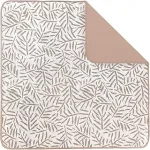
Pehr makes a padded play mat from GOTS certified organic cotton with recycled polyester batting inside. No foam, no plastic surface, no chemical treatments. It’s a textile product through and through.
The organic cotton outer is soft, breathable, and free of pesticide residues and chemical finishes. The recycled polyester fill provides moderate cushioning. Not as much as foam, but enough for tummy time and gentle play on any surface.
The best part: it’s machine washable. Unzip the cover, throw it in the wash, and you’re done. For a product that catches spit-up, drool, and food, machine washability is invaluable.
Pehr’s designs lean into nursery aesthetics with soft colors and simple patterns. The mat looks like a quilt, which some parents love and others find too soft for a play surface. It’s not wipeable, so liquid spills need to be addressed with a full wash rather than a quick wipe.
Pros:
- GOTS certified organic cotton
- Machine washable
- No foam, no plastic
- Soft, breathable surface
- Beautiful nursery-friendly designs
Cons:
- Not wipeable (spills require a wash)
- Less cushioning than foam mats
- Organic cotton can stain permanently
- Takes time to dry after washing
Best for: Parents who want a fully organic, textile-only play mat.
5. House of Noa Little Nomad Play Mat - Best Design
Price: $119-$179 | Material: Cushioned mat with vinyl-free surface | Certifications: GREENGUARD Gold | Sizes: Multiple
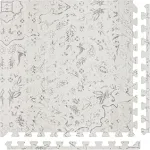
House of Noa created the Little Nomad to look like a decorative area rug while functioning as a padded play mat. The designs mimic Persian rugs, Moroccan tiles, and other home decor styles. GREENGUARD Gold certified and PFAS-free.
The surface is vinyl-free and wipeable. The cushioning is moderate, comparable to Gathre. The mat lies flat without curling and stays in place on most floor surfaces.
What makes House of Noa special is that visitors might not even realize it’s a play mat. It integrates into your home decor in a way that foam tiles and bright-colored mats never will. For families who live in open-concept spaces where the play area is also the living area, this aesthetic integration matters.
Pros:
- GREENGUARD Gold certified
- PFAS-free
- Vinyl-free
- Looks like a decorative rug
- Wipeable surface
- Multiple designs and sizes
Cons:
- Moderate cushioning (not the thickest option)
- Designs may not appeal to all tastes
- Printed surface can fade with heavy use
- Higher price than basic mats
Best for: Parents who want a play mat that doesn’t look like a play mat.
Play Mat Care Tips
Clean regularly. Babies put their faces directly on the mat. Wipe down PU leather and TPU surfaces daily. Wash cotton mats weekly.
Avoid harsh cleaners. You don’t need bleach or antibacterial sprays. Warm water with a small amount of gentle cleaning product is enough.
Check for wear. If a foam mat starts flaking, cracking, or breaking apart, replace it. Degrading foam releases more particles than intact foam.
Store flat when possible. Rolling or folding foam mats for extended periods can create permanent creases that become tripping hazards or uncomfortable bumps.
How Do Play Mat Materials Compare? Tradeoffs at a Glance
Each material category makes real concessions. The lower-chemical-exposure option isn’t always the best for cushioning, and the best for cushioning may carry chemical concerns.
| Option | Main concern | Primary tradeoff |
|---|---|---|
| Organic cotton quilted (Pehr, MakeMake Organics) | Least cushioning on bare hardwood; not wipeable; requires frequent washing | Zero foam, zero plastic; GOTS certified options; machine washable; soft surface for newborns |
| Natural rubber/latex foam (Toki Mats) | Latex allergy is real and can be severe; distinct rubber smell when new | Most inert foam option; GOLS certified; no formamide, no PVC, no EVA; machine-washable cotton cover |
| EVA foam (conventional interlocking tiles) | EU banned high-formamide EVA foam in 2011; US has no equivalent standard; levels in US products vary widely by manufacturer | Cheapest option; most widely available; highest cushioning per dollar; unresolved formamide concern in US market |
| Conventional PVC-surface mats | Requires phthalate plasticizers to stay flexible; phthalates migrate out over time [human biomonitoring]; off-gasses VOCs | Lowest cost; widely available; highest chemical exposure for the most-used baby floor surface |
Durability and Longevity
Foam mats wear differently than textile mats, and the signs of wear matter for chemical exposure. When EVA or PE foam begins to crumble, flake, or pit at the surface, it releases more particles. A degrading foam mat is a more significant exposure concern than a new one.
Gathre’s PU leather surface holds up well to daily wiping and normal use. Most users get 3-5 years before the surface shows significant wear.
Natural rubber (Toki Mats) and cotton mats (Pehr, MakeMake Organics) don’t carry the same surface degradation concern. Cotton covers can be washed hundreds of times. The latex insert maintains its properties for years under normal use. MakeMake’s quilted construction has held up well in user reports through 2-3 years of regular washing, with the GOTS certified cotton holding color and shape better than conventional cotton.
Foam mats in general should be inspected every 6-12 months. If the surface is pitting, crumbling, or developing rough spots, replace it. That’s the practical lifespan signal - not a calendar date.
Questions We Hear Most
What We Don’t Fully Know About Play Mat Safety
EVA foam and formamide is the clearest documented concern in this category. The EU acted on this in 2011 by restricting high-formamide EVA foam in children’s products. The US Consumer Product Safety Commission has tested EVA foam products and found variable formamide levels, but there is no equivalent US ban or enforceable limit. What we don’t fully know: which specific US brands and production runs exceed EU thresholds, since testing is not mandatory and results are not publicly disclosed in a consistent way.
XPE foam is a safer alternative to EVA with lower formamide concerns, but “non-toxic” claims on XPE products are brand-level statements and are not independently verified by a US certification body. Natural rubber latex is the most inert foam option available, but latex allergy is a real risk - it affects roughly 1-6% of the general population and rates are higher in children with spina bifida or repeated latex exposure. If your child has had any latex reaction, avoid natural rubber mats entirely. For most families without latex allergy history, a GOLS-certified natural latex mat is probably among the best-researched safe options foam choice based on current evidence.
Are interlocking foam puzzle mats safe for babies?
Most interlocking foam puzzle mats are made from EVA foam, which can contain formamide. Some brands have reduced formamide content, but the only way to be sure is to look for third-party test results. If you already own EVA foam tiles, airing them out for several weeks before use can reduce (but not eliminate) formamide levels. For new purchases, I’d skip EVA entirely and choose a PE foam, cotton, or silicone alternative.
What about rubber play mats?
Natural rubber play mats are a decent option if you can find them. Natural rubber is chemically safer than EVA or PVC, but it does have a distinct smell that some babies find off-putting. It can also trigger reactions in children with latex allergies. If your child doesn’t have a latex allergy and the smell doesn’t bother them, natural rubber is a reasonable choice.
Can I use a regular rug as a play mat?
You can, but conventional rugs often contain their own chemical concerns: synthetic dyes, flame retardant treatments, PVC or latex backing, and stain-resistant PFAS coatings. If you use a rug, look for one made from natural fibers (wool, organic cotton) with a natural backing. GOTS certified rugs exist but are expensive.
How much cushioning does a baby actually need?
For tummy time and crawling, any play mat on this list provides enough cushioning. For babies learning to sit independently (who fall backward frequently), a thicker foam mat provides better head protection on bare hardwood. On carpeted floors, even a thinner mat like Toki Mats, Pehr, or MakeMake Organics provides adequate cushioning.
Do play mats off-gas? Should I air them out first?
Foam play mats (especially EVA) can off-gas VOCs and formamide. Airing them out for 3-7 days in a well-ventilated area before use is recommended for any foam mat. Non-foam mats (cotton, silicone) generally don’t off-gas. GREENGUARD Gold certified mats have already been tested for low emissions and don’t require extended airing out.
Our Final Pick
Your baby’s play mat is one of their most-used surfaces. They press their face against it, mouth it, and breathe in whatever it releases. Choosing a mat free of EVA foam, PVC, formamide, and PFAS eliminates multiple chemical exposures from a product they use for hours every day.
Gathre is our top pick for most families. MakeMake Organics is our pick for GOTS certified organic cotton with a larger crawling footprint. Toki Mats and Pehr eliminate synthetic foam entirely. And House of Noa proves that a safer mat can also work as home decor.
For the full picture of non-toxic nursery and baby products, check out our non-toxic baby registry checklist or our broader home detox guide.
Sources
- European Chemicals Agency (ECHA), “Formamide in EVA Foam Products for Children” risk assessment.
- Belgian Federal Public Service, testing results for formamide in children’s foam products.
- Trasande, L., Sicker, Fatter, Poorer (2019), on phthalate exposure from PVC products.
- GREENGUARD Environmental Institute, UL certification standards for low chemical emissions.
- EPA, “Technical Fact Sheet: Per- and Polyfluoroalkyl Substances (PFAS).”