If you’ve ever closed every window during a wildfire and still smelled smoke in your kitchen two hours later, you already know the thing most people miss. Closing the house doesn’t seal it.
Indoor air during a smoke event can sit anywhere from slightly elevated to genuinely dangerous, and you can’t tell by smell. PM2.5 at 40 or 50 µg/m³ has almost no odor once your nose adjusts, but it’s the kind of exposure linked to worsened asthma, cardiovascular stress, and long-term respiratory damage. The outdoor AQI number on your weather app tells you nothing about what you’re breathing on your couch.
Here’s what actually works, what doesn’t, and how to know which is which in your own home.
How Wildfire Smoke Actually Gets Inside
No ordinary home is airtight. Infiltration happens whether you see gaps or not.
The main routes:
- Window and door seams. Weatherstripping on most windows is rated for weather, not smoke. PM2.5 particles are small enough to pass through the tiny gaps that remain even in newer frames.
- HVAC intake. This is the one most people miss. If your central air or heat pump is pulling fresh outside air (the default for many systems), it’s actively sucking smoke into your home and distributing it through every vent.
- Stack effect. Warm indoor air rises and escapes through attic openings, recessed lighting, and upper-floor vents. That upward flow creates suction at the bottom of your house. Outdoor smoky air gets pulled in through baseboards, electrical outlets, and crawlspaces to replace it.
- Wall assemblies themselves. Standard construction isn’t a barrier to smoke. Sheathing seams, outlet boxes, and plumbing penetrations all leak.
A 2021 PNAS analysis of crowdsourced California sensor data [observational, crowdsourced] found that during wildfire events, indoor PM2.5 in many homes tracked outdoor levels closely, and in some buildings actually exceeded outdoor readings (indoor sources plus trapped smoke). That’s the opposite of what most people assume.
What PM2.5 From Wildfires Actually Does
PM2.5 means particulate matter 2.5 microns or smaller. For reference, a human hair is about 75 microns across. These particles are small enough to pass through the nose and upper airway, settle deep in the alveoli of the lungs, and cross into the bloodstream.
Wildfire PM2.5 isn’t just dust. It carries polycyclic aromatic hydrocarbons (PAHs), VOCs from burning vegetation and structures, and when homes or vehicles burn, heavy metals and combustion products from plastics and treated wood. A 2026 study in Nature Health [meta-analysis of toxicological and epidemiological studies] found that per microgram, wildfire PM2.5 is more harmful to the respiratory system than equivalent doses of ambient urban PM2.5. The composition matters, not just the number on the sensor.
Dr. Philip Landrigan’s work on children’s environmental health has emphasized that kids breathe faster than adults relative to body mass, and their lungs are still developing. That means the same outdoor AQI represents a higher effective dose for a small child than for an adult standing next to them.
According to NonToxicLab’s review of indoor-air data from California and Washington smoke events, the highest-risk groups are children, pregnant people, adults over 65, and anyone with asthma, COPD, or cardiovascular disease. Short-term effects include eye and throat irritation, headaches, worsened asthma, and fatigue. Longer or repeated exposure is associated with cardiovascular and respiratory disease risk [human epidemiological].
How to Know If Your Indoor Air Is Contaminated
You can’t. Not reliably, not with your nose, not by looking.
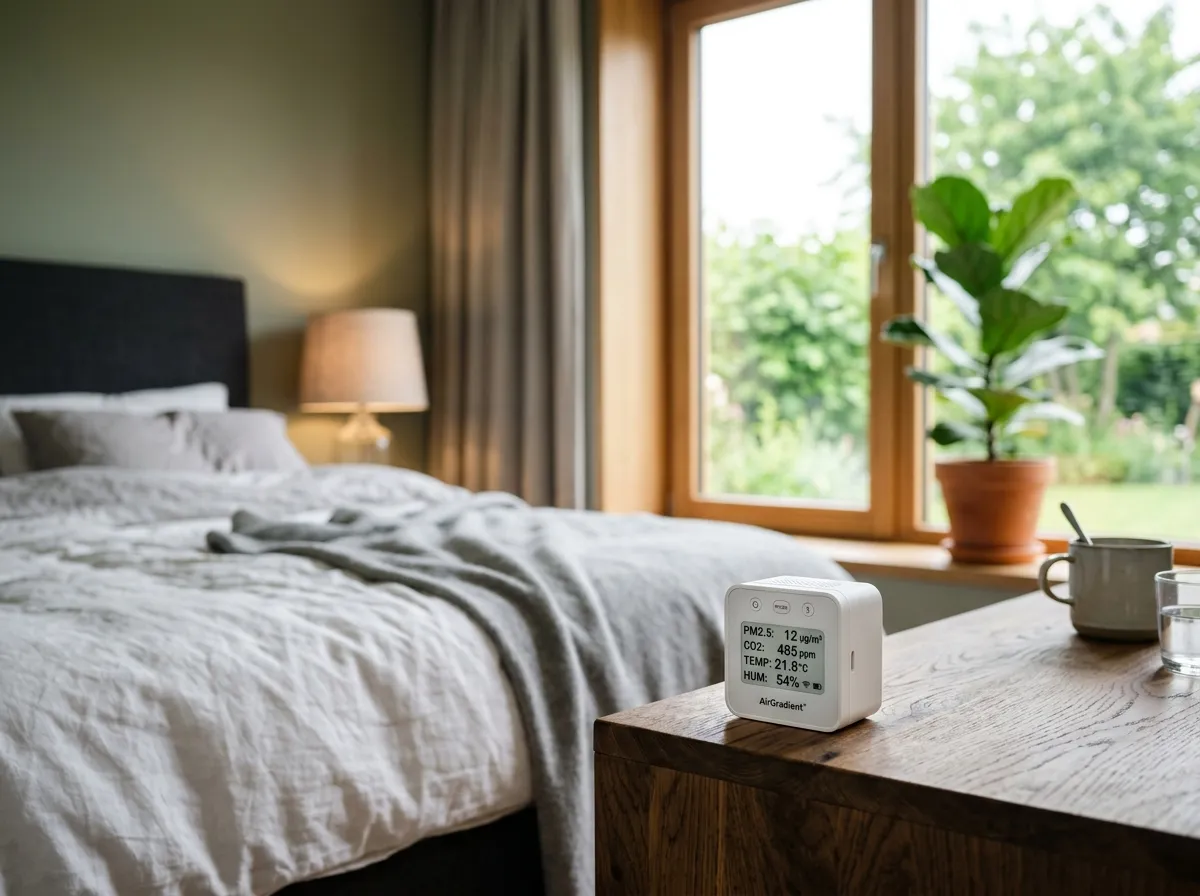
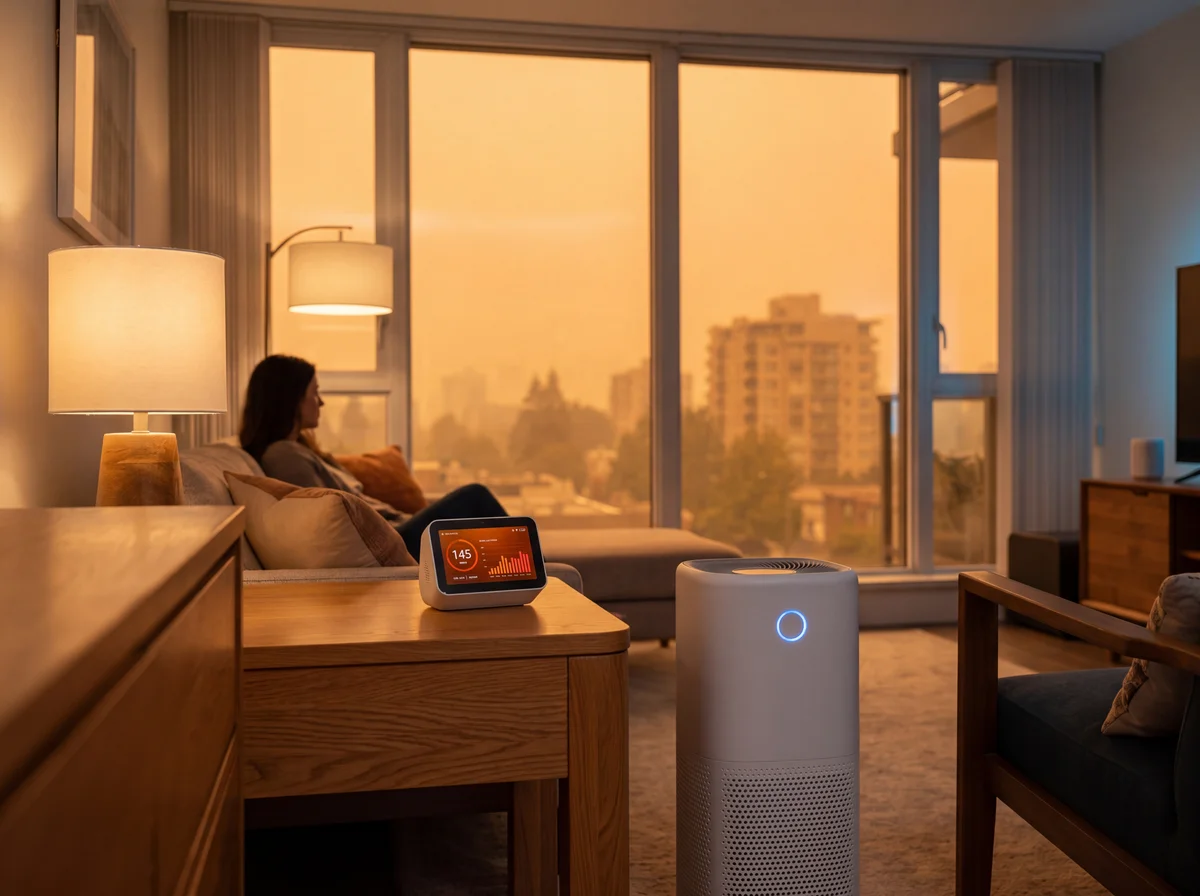
By the time you can clearly smell wildfire smoke inside, indoor PM2.5 is usually well above 35 µg/m³. People who’ve been breathing it for a few hours often stop noticing it entirely. This is why a sensor isn’t optional during smoke season.
Here’s a working scale for indoor PM2.5:
- Below 12 µg/m³: Safe. Matches the EPA annual health-based standard.
- 12 to 35 µg/m³: Elevated. Worth running a purifier, not an emergency.
- 35 to 55 µg/m³: Meaningfully elevated. Vulnerable people should mask up or relocate to a cleaner room.
- Above 55 µg/m³: High risk. Action needed. Increase filtration, consider leaving.
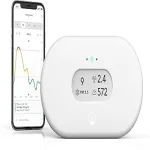
The only way to know where you actually are is to measure. A good indoor air quality monitor pays for itself the first smoke event.
The 5-Step Protection Protocol
When a smoke event hits your area, do these five things in order.
Step 1: Switch HVAC to Recirculation
This is the single most effective thing you can do, and most people skip it. Go to your thermostat and find the fresh air intake or recirculation setting. If you have “auto,” “fan only,” and “recirculate,” you want recirculate. If your system always pulls in outside air and has no recirc option, turn the HVAC off entirely during high AQI and run purifiers instead.
For car trips during smoke events, same rule: recirculation on, fresh air off.
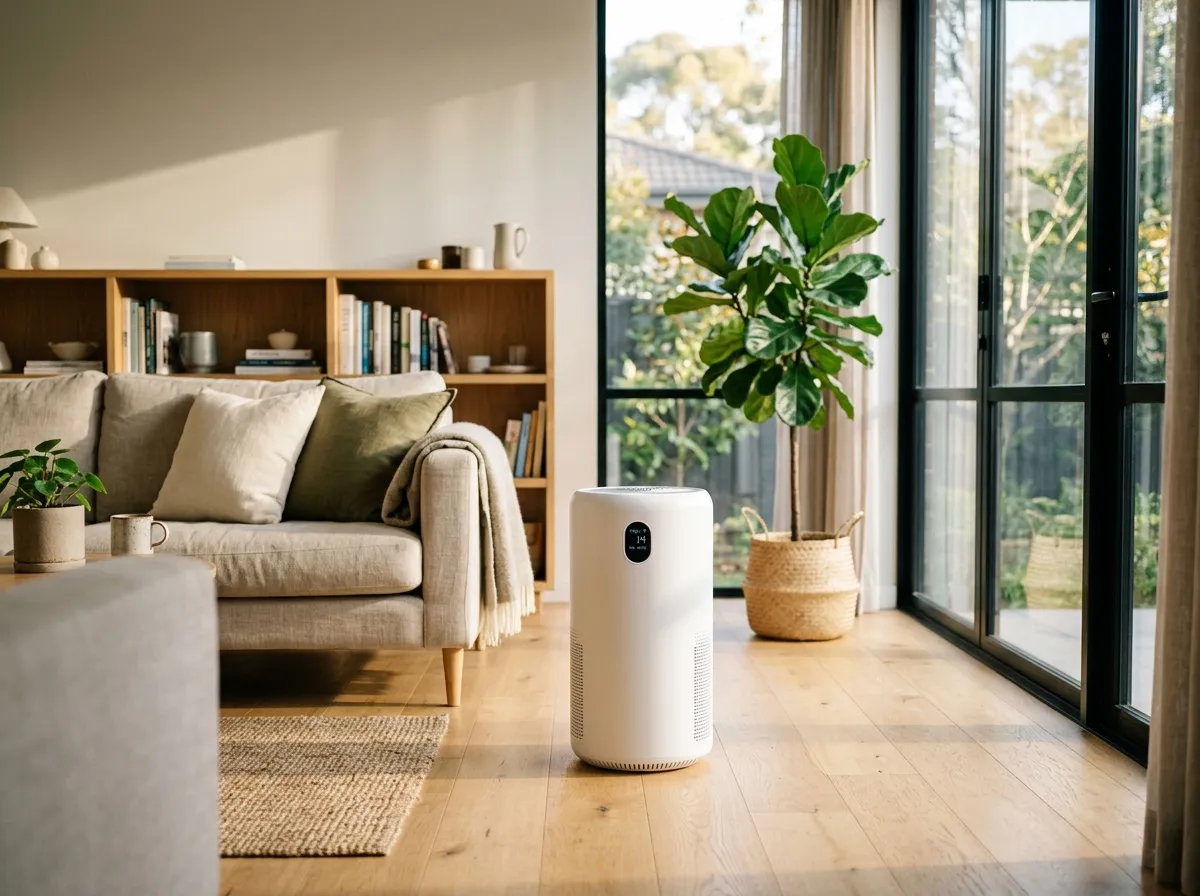
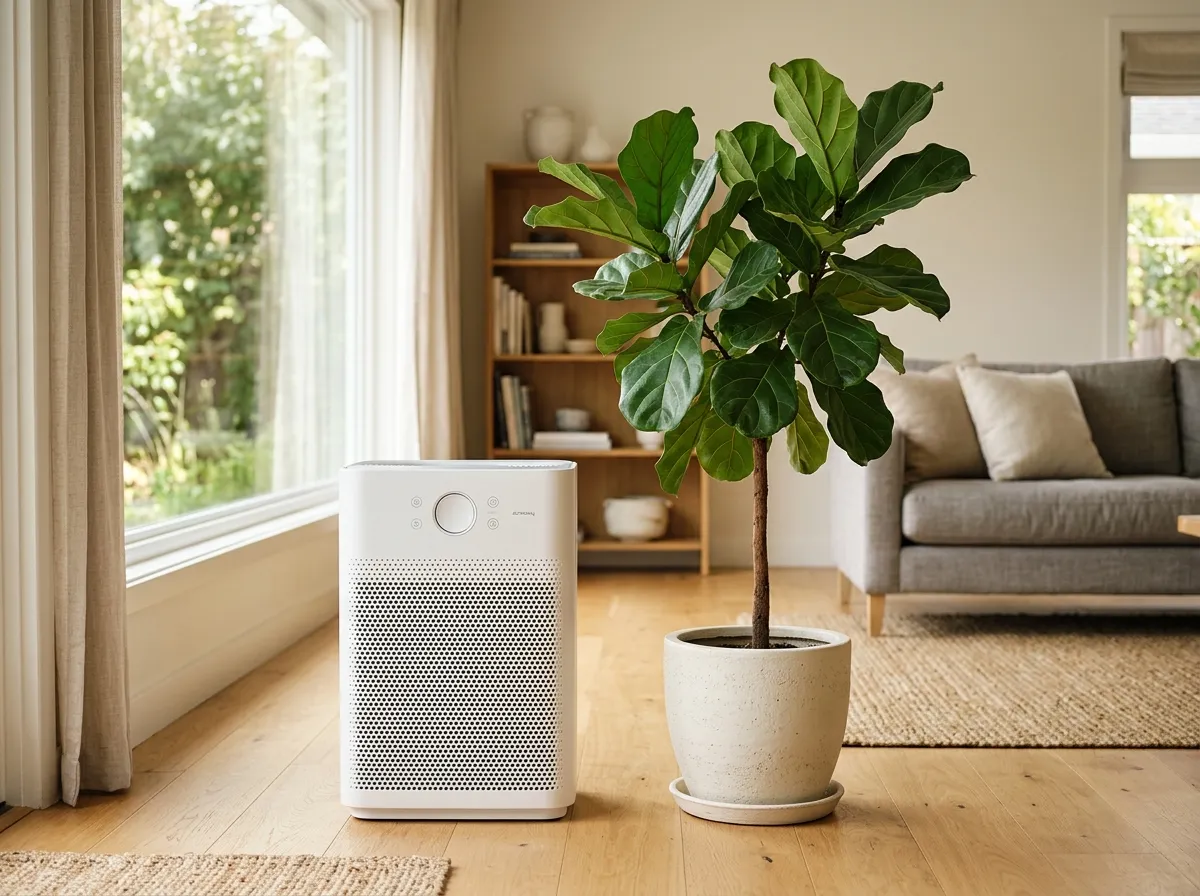
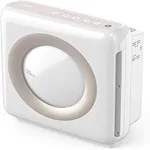
Step 2: Run a True HEPA Purifier in Your Most-Used Rooms
True HEPA filters capture 99.97% of particles 0.3 microns and larger. PM2.5 sits above that size threshold, so HEPA catches it well. Prioritize the bedroom (you spend eight hours there) and wherever kids or elderly family members spend time.
One important note on sizing, coming up in the next section.
Step 3: Seal the Obvious Gaps
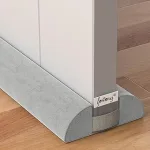
A rolled-up towel at the base of an exterior door works. Weatherstripping on drafty windows helps. Don’t spend hours chasing every possible leak, infiltration happens through walls too, but the visible gaps are the cheapest wins you’ll get.
Step 4: Keep Measuring
Check your monitor throughout the day. If indoor PM2.5 is climbing despite the purifier running, either bump up the fan speed, move the purifier closer, or add a second unit. Numbers don’t lie, and they catch problems your nose won’t.
Step 5: Don’t Add Indoor Sources
Don’t fry food, burn candles, use a wood stove, or run gas appliances during heavy smoke events. You’re already fighting infiltration. Don’t pile on.
HEPA Purifier Sizing (The Mistake Almost Everyone Makes)
Here’s the problem. Most people buy a purifier rated for their room size and call it done. That rating assumes normal indoor air. It doesn’t hold up during a smoke event when your purifier is fighting continuous infiltration.
Rule of thumb during wildfire smoke: get a purifier rated for at least twice your room’s square footage. Or run two smaller units in the same room.
A purifier sized correctly for a 300 sq ft bedroom can reduce indoor PM2.5 by 70 to 80% during moderate smoke events (outdoor AQI 100 to 150). In heavier smoke or oversized rooms, the same unit falls way short.
If you already own an air purifier, check its CADR (Clean Air Delivery Rate) for smoke. Higher is better. A CADR of 200+ for smoke is the minimum for a standard bedroom during a smoke event, and you want 300+ for larger rooms. For background on specs and models, see our best air purifiers for home roundup.
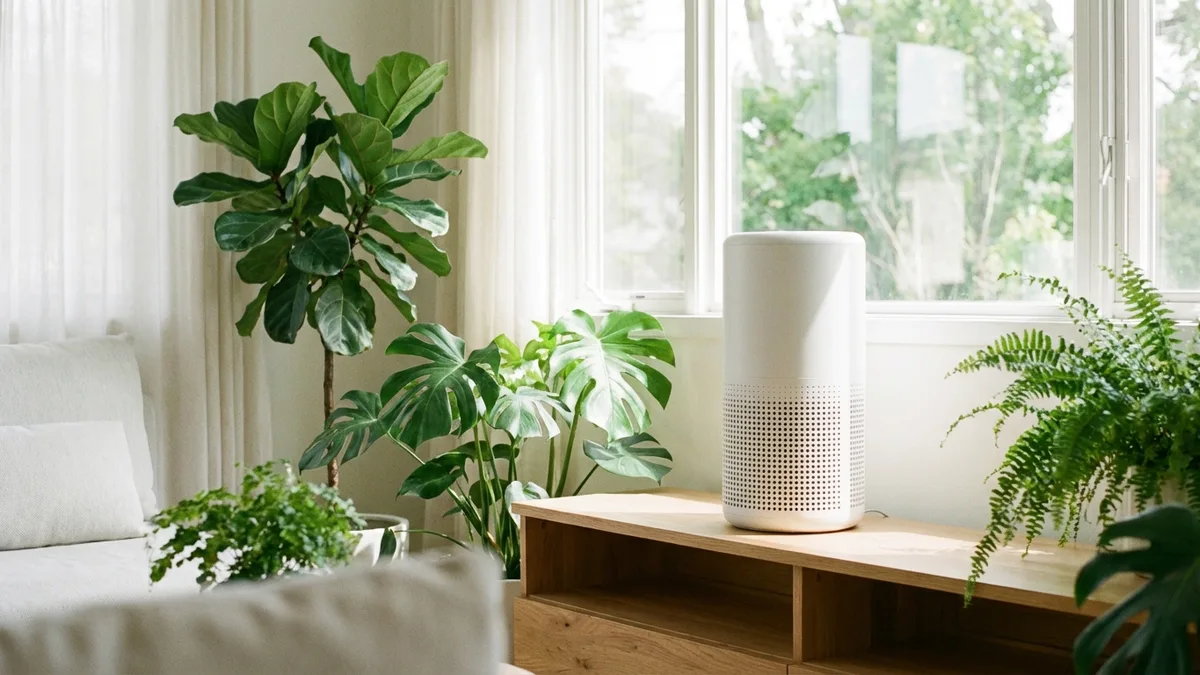
Houseplants don’t count. I love air-purifying plants for bedrooms as a supplemental vibe, but they do effectively nothing for wildfire PM2.5. You need mechanical filtration.
N95 Masks Inside the House
Yes, this is a real option, especially for vulnerable household members during severe events.
A surgical mask does nothing for PM2.5. Full stop. The pore size is wrong, the fit is wrong, and they’re designed for droplets, not fine particulates.
You want N95 or KN95 specifically. NIOSH-approved N95 respirators are rated to block at least 95% of airborne particles at the 0.3 micron size. If indoor PM2.5 is above 55 µg/m³ and you have a pregnant person, a child with asthma, or an older adult at home, having them wear an N95 indoors until the purifier catches up is reasonable. It’s not comfortable for hours on end, but during the worst six hours of a smoke event, it works.
When to Leave
Most people don’t need to. A correctly-sized HEPA purifier plus HVAC recirculation handles most smoke events for most people.
But if indoor PM2.5 sits above 55 µg/m³ for more than a few hours despite everything above, and someone in your home is high-risk, leaving is the right call. Newer commercial buildings typically have much better filtration than residential construction. Community air shelters, hotels, or staying with someone further from the smoke all beat riding it out in a home that can’t keep up.
This came up a lot during California’s 2020 and 2023 seasons, and Michigan’s updated wildfire smoke alert system in April 2026 now explicitly recommends relocation for vulnerable residents at sustained high AQI. The guidance has shifted over the last few years, and the shift is toward “leave if you can” for high-risk people.
Replacing Your Air Purifier Filters During Smoke Season
Heavy smoke burns through HEPA and carbon filters much faster than normal indoor use. A filter rated for 12 months under typical conditions might need replacement after 3 to 6 months if you’ve run it through two or three major smoke events.
Signs a filter is done: reduced airflow at max setting, the purifier’s own AQI indicator staying red despite running for hours, or a visibly dark filter. More on timing and inspection in our when to replace air purifier filters guide.
During smoke season specifically, I’d keep one spare HEPA and one spare carbon filter on hand for each purifier you own. Availability drops and prices spike when everyone else is ordering too.
Tradeoffs, Not Miracles
No option is complete protection. Here’s what each approach actually buys you.
| Approach | Main concern | Primary tradeoff |
|---|---|---|
| Closing windows plus HEPA purifier | Partial protection, infiltration continues | Best accessible option vs complete isolation |
| HVAC recirculation plus whole-house HEPA filter upgrade (MERV 13+) | Requires filter upgrade, may reduce HVAC airflow | More effective whole-home coverage vs cost and system strain |
| N95 masks indoors | Uncomfortable for extended wear | Best for very high AQI or vulnerable people in emergency |
| Leaving the area | Not always practical or possible | Most effective exposure reduction vs disruption |
| Positive pressure ventilation system | Expensive install, requires professional | Creates indoor pressure that blocks infiltration at the source |
Probably fine to skip the positive pressure system unless you’re in a high-risk area year after year. For occasional smoke exposure, HEPA plus recirculation plus a monitor is the right budget.
What We Don’t Know Yet
Consumer HEPA purifiers haven’t been lab-tested under every wildfire smoke composition. Smoke from burning vegetation alone is different from smoke from burning structures, which contains heavy metals, asbestos from older buildings, and chemicals from plastics and treated lumber. HEPA alone doesn’t capture the VOC and chemical fraction. Activated carbon does, but most consumer purifiers carry a small carbon load that exhausts quickly during heavy smoke.
How fast that carbon exhausts in real wildfire conditions is not well-characterized in public research. Until better data exists, replacing activated carbon filters more often than the manufacturer’s schedule during smoke season is the conservative move. Long-term data on health outcomes from indoor wildfire smoke exposure (as distinct from outdoor exposure) is also still developing, because the measurement tools only became widespread in the last decade.
The practical takeaway: HEPA plus carbon plus recirculation plus measurement is the best consumer-grade stack available in 2026. It’s not complete protection. It’s meaningfully better than doing nothing, and dramatically better than relying on outdoor AQI as your only signal.
FAQ
Does closing windows protect you from wildfire smoke?
Partially. Closed windows reduce infiltration but don’t stop it. Smoke still enters through window seams, HVAC systems, and the stack effect. You need closed windows plus HVAC recirculation plus a HEPA purifier to meaningfully reduce indoor PM2.5 during a smoke event.
Can you smell wildfire smoke if PM2.5 is dangerously high?
Not reliably. Indoor PM2.5 above 35 µg/m³ often has very mild odor, and your nose adapts within an hour. By the time you clearly smell smoke, levels are usually well into the elevated range. A PM2.5 monitor is the only reliable way to know.
What kind of air purifier is best for wildfire smoke?
A True HEPA purifier with activated carbon, sized for at least twice your room’s square footage during smoke events. HEPA captures the particulate fraction (PM2.5), and activated carbon helps with the VOC and odor fraction from burning materials.
How do I know if wildfire smoke has entered my home?
Use an indoor PM2.5 monitor. Smoke can raise indoor PM2.5 well above safe levels without being visible or strongly smellable. Your outdoor AQI app doesn’t measure your indoor air, and smell is unreliable once your nose adapts.
Is it safe to run the air conditioner during a wildfire?
Only in recirculation mode. If your AC or HVAC is drawing fresh outside air, it’s actively pulling smoke into your home. Switch to recirculate. If your system can’t recirculate, turn it off during the worst of the smoke event and rely on purifiers.
Should I wear a mask inside my house during a wildfire?
Sometimes yes. If indoor PM2.5 stays above 55 µg/m³ and you’re pregnant, elderly, asthmatic, or caring for a small child, wearing an N95 indoors is reasonable until filtration catches up. Surgical masks and cloth masks don’t block PM2.5.
You Might Also Like
- How to Test Your Home Air Quality (VOCs, PM2.5, Mold)
- Best Non-Toxic Flooring for Every Room (2026)
- Non-Toxic Living Room Guide: Furniture, Air Quality, and Candles
- Best Non-Toxic Caulk in 2026 (Low-VOC, Kitchen and Bath Safe)
- Best Air-Purifying Plants for Every Room (2026)
- Indoor Air Quality Guide: How to Reduce Chemical Exposure at Home
Sources
- Nature Health, 2026. Wildfire PM2.5 toxicity relative to ambient PM2.5. https://www.nature.com/articles/s44360-026-00105-1
- PNAS, 2021. Crowdsourced indoor PM2.5 data during California wildfire events. https://www.pnas.org/doi/10.1073/pnas.2106478118
- EPA. Health and Environmental Effects of Particulate Matter (PM). https://www.epa.gov/pm-pollution/health-and-environmental-effects-particulate-matter-pm
- Lawrence Berkeley National Laboratory. Indoor Air Quality and Wildfires. https://iaqscience.lbl.gov/wildfires
- Planet Detroit, April 2026. Michigan updates air quality alert system for wildfire smoke. https://planetdetroit.org/2026/04/michigan-air-quality-alerts-wildfires/