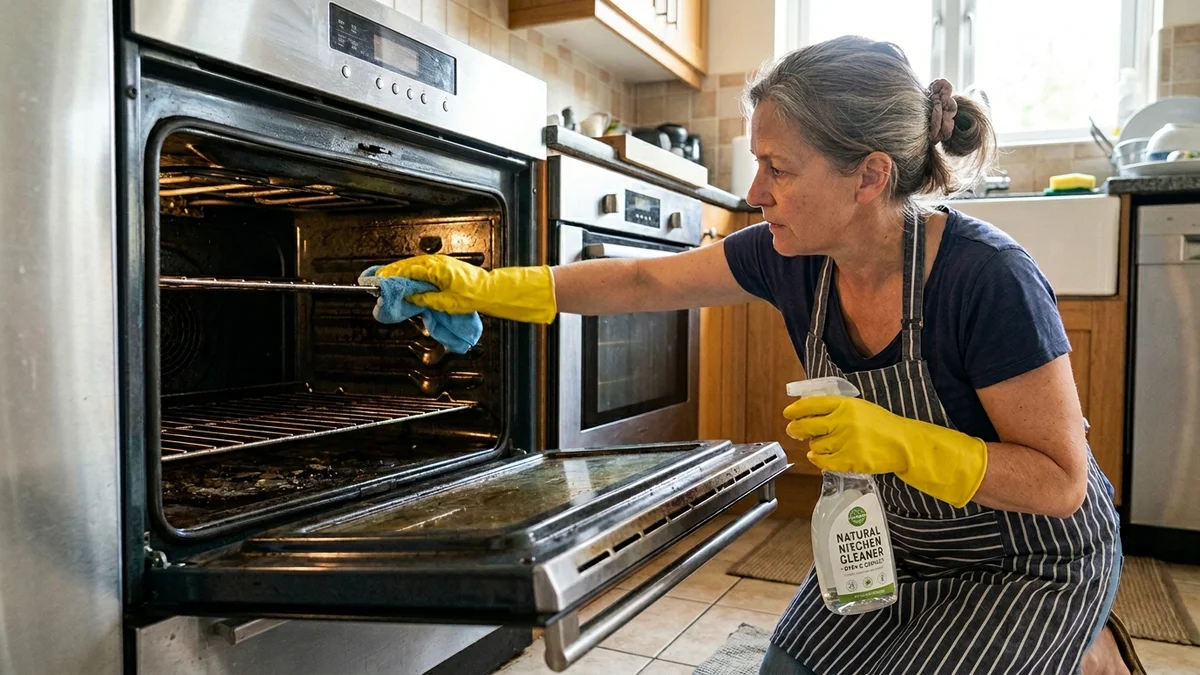
I put off cleaning my oven for months because every conventional oven cleaner I’d used left me lightheaded from the fumes. That yellow can with the warning labels. You know the one. I’d spray it, leave the kitchen, and come back 30 minutes later still holding my breath. There had to be a better way. According to NonToxicLab’s research, the best non-toxic oven cleaners use plant-based degreasers and alkaline compounds to break down baked-on food without lye, methylene chloride, or other volatile chemicals. My top picks are Grab Green for everyday oven cleaning, Branch Basics Concentrate for heavy buildup, and a simple baking soda paste for the budget-conscious. Our non-toxic cleaning guide covers everything you need to know.
Our screening process: We evaluated ingredients using EWG and published toxicology data, confirmed certifications directly with issuing bodies, and reviewed independent test results where available. Full methodology Let me be honest upfront: non-toxic oven cleaners require more effort than conventional ones. A lye-based oven cleaner melts grease on contact. Plant-based alternatives need more time and more scrubbing. But you won’t poison your kitchen air, and for most ovens that get cleaned regularly, the difference in effort is manageable.
Why Conventional Oven Cleaners Are Toxic
Dr. Philip Landrigan has documented how household chemicals contribute to indoor air pollution that can be two to five times worse than outdoor air. Oven cleaners are some of the worst offenders because of what they contain and how they’re used.
Sodium hydroxide (lye): The active ingredient in most conventional oven cleaners. Extremely caustic. Burns skin on contact and releases fumes that damage the respiratory tract. The reason conventional oven cleaners work so fast is because lye literally dissolves organic matter.
Methylene chloride: A solvent found in some oven cleaner formulations. The EPA has classified it as a likely human carcinogen. Exposure to vapors causes dizziness, headaches, and at high concentrations, loss of consciousness.
2-Butoxyethanol (butyl cellosolve): A solvent that penetrates the skin and can cause liver and kidney damage. Found in many spray degreasers including some marketed as oven cleaners.
Monoethanolamine (MEA): An alkaline compound that irritates the skin, eyes, and respiratory system. Common in oven cleaner formulations.
Andrew Huberman has discussed on his podcast how repeated exposure to volatile organic compounds affects neurological function. Cleaning your oven with fume-heavy products in a kitchen without great ventilation is exactly the kind of exposure pattern that adds up over time.
Dr. Rhonda Patrick has noted that the dose makes the poison, but also that chronic low-level exposures are underestimated in their health impact. Weekly or monthly oven cleaning with conventional products is a recurring exposure that many people don’t think about.
How Non-Toxic Oven Cleaners Work
Instead of dissolving grease with caustic chemicals, non-toxic oven cleaners use:
Sodium bicarbonate (baking soda): Mildly alkaline, abrasive enough to scrub away buildup, completely food-safe.
Plant-based surfactants: Derived from coconut, corn, or other plant sources. They break the bond between grease and the oven surface.
Citric acid: Helps dissolve mineral deposits and baked-on food residue.
Hydrogen peroxide: Provides oxidizing action that breaks down organic compounds.
Natural degreasers: Some formulas use d-limonene (from citrus peels) as a natural solvent.
The trade-off is time. Where a lye-based cleaner works in 20 minutes, a non-toxic alternative might need an hour or overnight. The chemistry is gentler, so it needs longer to work. Plan accordingly.
Best Non-Toxic Oven Cleaners Reviewed
1. Grab Green Power Degreaser - Best Overall
Price: ~$7 for 16 oz | Format: Spray | Active ingredient: Plant-based surfactants | Fumes: None
Grab Green’s Power Degreaser surprised me. I expected it to handle light grease and struggle with anything serious, but it performed well on moderately baked-on food after 30-45 minutes of contact time. No fumes, no gloves needed, no anxiety about breathing the air.
What I like:
- Actually works on baked-on grease with adequate contact time.
- Zero fumes. You can breathe normally while using it.
- Plant-based and biodegradable.
- Affordable at $7 a bottle.
- Works on oven racks too. Spray and let them soak.
- The spray nozzle has a good pattern for even coverage.
What I don’t like:
- Needs 30-45 minutes of contact time for tough spots. This isn’t a spray-and-wipe product.
- Heavy carbon buildup (the blackened stuff in old ovens) requires multiple applications.
- 16 oz bottle doesn’t last long if you’re cleaning a seriously dirty oven.
- Not specifically marketed as an oven cleaner, though it works great as one.
Bottom line: The best balance of cleaning power, safety, and price for regular oven maintenance. If you clean your oven monthly, this handles the job. If your oven hasn’t been cleaned in a year, step up to Branch Basics Concentrate at the strongest dilution. For matching non-toxic kitchen products, our non-toxic all-purpose cleaner guide covers the rest of your countertops.
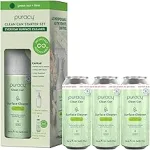
2. Puracy Natural Multi-Surface Cleaner - Most Versatile
Price: ~$10 for 25 oz | Format: Spray | Active ingredient: Plant-based surfactants | Fumes: None
Puracy isn’t specifically an oven cleaner, but their multi-surface formula works well inside ovens for light to moderate cleaning. The real advantage is that one bottle handles your oven, stovetop, countertops, and more.
What I like:
- One product handles multiple surfaces, including ovens.
- Developed by doctors. The formulation team includes a pediatrician.
- 100% plant-based, biodegradable, and hypoallergenic.
- No sulfates, no petroleum-based ingredients, no synthetic fragrance.
- 25 oz bottle is a good size for the price.
- EWG “A” rated.
What I don’t like:
- Not a dedicated oven cleaner. It handles light and moderate buildup but struggles with heavy baked-on grease.
- You’ll need multiple applications and extended contact time for tougher jobs.
- For heavy oven cleaning, you’re better off with Grab Green or Branch Basics.
- The spray format wastes product on vertical oven surfaces. It drips before it can work.
Bottom line: The best option if you want one cleaner for most of your kitchen surfaces, including light oven maintenance. If oven cleaning is your specific problem, a dedicated degreaser will serve you better.
3. Branch Basics Concentrate - Best Concentrate
Price: ~$49 for 33 oz concentrate | Format: Concentrate (dilute yourself) | Active ingredient: Plant-based surfactants | Fumes: None
Branch Basics takes a different approach. Instead of buying separate products for every job, you buy one concentrate and dilute it to different strengths. For oven cleaning, you use the strongest dilution ratio. The same concentrate also makes your all-purpose cleaner, bathroom cleaner, and laundry detergent.
What I like:
- One purchase replaces multiple products.
- The strongest dilution ratio works well for oven cleaning.
- Incredibly simple ingredient list. Truly minimal.
- No fragrance, no dyes, no preservatives of concern.
- The concentrate lasts months because you’re diluting it.
- Great for people who want to simplify their cleaning supply closet.
What I don’t like:
- $49 upfront is a lot, even though the per-use cost is reasonable.
- You need to buy their spray bottles separately (or reuse your own).
- For heavy oven cleaning, even the strongest dilution needs significant contact time.
- For carbonized grease, even the strongest dilution needs longer contact time than purpose-built degreasers.
Bottom line: The minimalist’s choice. If you like the idea of one product for everything and you clean your oven regularly, Branch Basics works. If you only need an oven cleaner and nothing else, the upfront cost doesn’t make sense. For a broader look at this approach, our non-toxic cleaning products guide covers concentrate systems in detail.
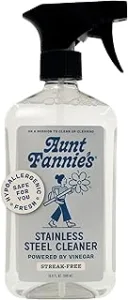
4. Aunt Fannie’s Cleaning Vinegar - Best Budget
Price: ~$6 for 16.9 oz | Format: Spray | Active ingredient: 6% acetic acid (vinegar) | Fumes: Vinegar smell
Aunt Fannie’s uses 6% cleaning vinegar (stronger than the 5% you buy for cooking) with essential oils for scent. It’s simple, cheap, and effective for light to moderate oven maintenance.
What I like:
- $6. The cheapest option on this list.
- Ingredient list is water, vinegar, and essential oils. That’s it.
- The 6% concentration is noticeably more effective than regular household vinegar.
- Works well as a daily stovetop and oven door cleaner.
- Good for maintaining a clean oven between deeper cleanings.
What I don’t like:
- Strong vinegar smell. It dissipates in 15-20 minutes but it’s noticeable.
- Not effective on heavy baked-on grease. This is a maintenance product.
- Don’t use on natural stone surfaces. The acid etches marble and granite.
- Small bottle for the price compared to just buying a gallon of cleaning vinegar.
Bottom line: A solid budget option for people who keep their oven reasonably clean. Combine it with a baking soda paste for tougher spots, and you have an effective two-step system for pennies per use.
The DIY Baking Soda Method (Free)
The oldest non-toxic oven cleaning method still works:
What you need:
- 1/2 cup baking soda
- Enough water to make a spreadable paste
- White vinegar in a spray bottle
- A scrub sponge or brush
Method:
- Remove oven racks.
- Mix baking soda and water into a thick paste.
- Spread the paste over every surface inside the oven. Avoid the heating elements.
- Let it sit overnight (8-12 hours).
- Spray vinegar over the dried baking soda. It will fizz.
- Wipe everything out with a damp cloth or sponge.
- For stubborn spots, add more paste and let it sit another few hours.
This method costs almost nothing and handles moderate to heavy buildup. The trade-off is time and effort. For oven racks, soak them in the bathtub with baking soda and hot water overnight.
Durability and Longevity
Oven cleaners are consumables, so the durability question is really about shelf life and value per use.
Grab Green Power Degreaser has a 2-year shelf life if stored at room temperature away from heat and sunlight. The plant-based surfactants break down faster than petroleum-based solvents when exposed to heat, so don’t store it under the oven or near the stove. At $7 for 16 oz, a bottle used for oven cleaning only should last 3-4 months for a household doing monthly cleanings.
Branch Basics Concentrate has a similarly long shelf life for the concentrate bottle - 2+ years unopened, 1 year once opened. The diluted spray bottles have a shorter effective window, around 3 months, because dilution reduces the preservative concentration. The per-use cost works out lower than any ready-to-use product once you factor in the dilution ratio, but requires the upfront investment and proper storage of the concentrate.
Puracy and Aunt Fannie’s follow standard liquid cleaner shelf lives of 2 years from manufacture. Check the bottom of the bottle for the production date.
The DIY baking soda method is indefinite. A sealed container of baking soda stays effective for at least 2-3 years, though it absorbs odors in open containers. Vinegar doesn’t expire in any meaningful sense for cleaning purposes.
Cleaner Tradeoffs at a Glance
| Option | Main concern | Primary tradeoff |
|---|---|---|
| Baking soda + vinegar DIY | Needs overnight contact time; the vinegar + baking soda fizz is mostly cosmetic (they neutralize each other) | Free or nearly free, zero chemical risk, zero fumes; requires elbow grease and patience |
| Citrus-based enzymatic / plant surfactant (Grab Green, Puracy) | Less effective on heavily carbonized grease; requires longer contact than conventional cleaners | No fumes, no caustic burns, food-safe surfaces, genuinely works on moderate buildup |
| Sodium hydroxide (lye-based conventional cleaners) | Caustic during application - skin burns on contact, respiratory irritation from fumes | Fastest and most effective on heavy baked-on grease; leaves no toxic residue after thorough rinsing; the hazard is during use, not after |
| Salt/pumice scrub method | Physical abrasion can scratch enamel surfaces; not appropriate for all oven interiors | Chemical-free, effective on light grease; limited to surfaces that tolerate abrasion |
Your Questions Answered
Can non-toxic oven cleaners really handle baked-on grease?
Yes, but with a caveat. They need more contact time. A conventional lye-based cleaner dissolves grease in 20 minutes because it’s literally caustic. Non-toxic alternatives using plant-based surfactants and mild alkaline compounds need 30-60 minutes for moderate buildup and overnight for heavy jobs. The results are comparable, the timeline is longer.
Is the oven self-clean cycle safe?
The self-clean cycle heats your oven to around 900 degrees Fahrenheit, which incinerates food residue. However, it can release carbon monoxide, nitrogen dioxide, and particulate matter. It also produces acrid smoke from burning food. If you use the self-clean cycle, open windows, run your range hood, and leave the kitchen. Some people, including those with birds (extremely sensitive to fumes), should avoid this feature entirely.
Can I use vinegar on all oven surfaces?
Vinegar is safe for most oven interiors, glass doors, and racks. Do not use it on aluminum components, as acid corrodes aluminum. If your oven has exposed aluminum parts, stick to baking soda-based methods. Avoid vinegar on the rubber gasket around the door, as acid can degrade it over time.
How often should I clean my oven?
A quick wipe of spills after each use prevents buildup. A deeper clean every 1-3 months keeps things manageable. The more often you clean, the easier non-toxic cleaners work because they don’t have to fight through months of carbonized layers. Prevention is the best strategy.
Are oven cleaner fumes dangerous to pets?
Yes. Birds are extremely sensitive to chemical fumes and can die from oven cleaner vapors. Dogs and cats are also more susceptible than humans because they’re lower to the ground where vapors concentrate. Non-toxic oven cleaners eliminate this risk entirely.
What We Don’t Fully Know
One thing is worth saying plainly before you write off conventional oven cleaners entirely.
Sodium hydroxide (lye) is highly caustic during application and requires serious care - gloves, ventilation, keeping kids and pets away. That’s real. But lye leaves no toxic residue after thorough rinsing. The hazard is acute and present during use, not a lingering chemical contamination issue. A well-rinsed oven cleaned with a conventional lye cleaner is not meaningfully different from one cleaned with a plant-based alternative in terms of what ends up in your food. The “non-toxic” framing applies to your exposure during cleaning, not necessarily to the finished result.
The efficacy difference between non-toxic and conventional cleaners is real and significant for heavy buildup. Plant-based surfactants and baking soda work by different chemistry than lye - they’re gentler, which means they need more time and more scrubbing on carbonized grease. On a lightly-maintained oven cleaned monthly, the difference in effort is manageable. On an oven cleaned once a year with heavy buildup, the gap is more meaningful.
Long-term health effects of repeated low-level exposure to plant-based surfactants from cleaning aren’t extensively studied. Most are considered safe at these concentrations, but “not well-characterized” is more accurate than “proven safe” for the specific exposure pattern of regular household cleaning use.
Final Thoughts
The oven is probably the hardest non-toxic cleaning swap in your kitchen because it’s where conventional chemicals show the biggest performance advantage. Lye dissolves grease like nothing else. But lye also makes you lightheaded in a closed kitchen and burns your skin on contact. That trade-off isn’t worth it.
Grab Green or Branch Basics handles most oven cleaning jobs. The DIY baking soda method handles the rest. It takes more time and more elbow grease, but you won’t be breathing toxic fumes in your own kitchen.
For more non-toxic kitchen and home cleaning options, check out our guides on non-toxic all-purpose cleaners, non-toxic toilet cleaners, non-toxic cleaning products, and our guide to detoxing your home.
This article contains affiliate links. If you purchase through our links, we may earn a small commission at no extra cost to you. This doesn’t influence our recommendations. See our full affiliate disclosure for details.
Sources
- Landrigan, Philip J., and Mary M. Landrigan. Children and Environmental Toxins. Oxford University Press, 2018.
- Huberman Lab Podcast. “How to Reduce Your Exposure to Endocrine Disruptors.” hubermanlab.com
- Patrick, Rhonda. FoundMyFitness Podcast. “Environmental Toxins and Health.” foundmyfitness.com
- EPA. “Volatile Organic Compounds’ Impact on Indoor Air Quality.” epa.gov
- American Lung Association. “Cleaning Supplies and Household Chemicals.” lung.org
- EWG’s Guide to Healthy Cleaning. ewg.org/guides/cleaners
- National Toxicology Program. “Report on Carcinogens: Methylene Chloride.” ntp.niehs.nih.gov
You Might Also Like
- The Non-Toxic Bathroom Cleaners We’d Actually Use
- Best Non-Toxic Bleach Alternatives
- Best Non-Toxic Dish Soap
- DIY Non-Toxic Cleaning Recipes That Actually Work
- Best Non-Toxic Products on Amazon (Prime Eligible, Actually Safe)
- Best Non-Toxic Deodorant That Actually Works (2026)
- Branch Basics vs Blueland: Which Actually Cleans Better? (2026 Test)
- Best Non-Toxic Dishwasher Detergent in 2026
- Best Non-Toxic Laundry Detergent in 2026 (Safe for Your Family)
- Best Non-Toxic Yoga Mats in 2026 (PVC-Free, No Chemical Off-Gassing)
- Best Non-Toxic Shampoo in 2026 (Sulfate-Free, Fragrance-Free, Actually Works)