On April 13, 2026, Morovan voluntarily recalled its 15 mL gel polish remover after FDA testing flagged the product for methylene chloride and chloroform contamination. Roughly 4,000 bottles sold on Amazon between August 2025 and January 2026 are affected. If your Morovan bottle isn’t from that window, you’re not at risk. No injuries have been publicly reported.
The recall matters less because of any acute hazard and more because of what it signals: this is one of the first product-level cosmetic recalls under the Modernization of Cosmetics Regulation Act (MoCRA), the 2022 law that finally gave the FDA mandatory recall authority for the first time in U.S. history.
What Happened
FDA post-market testing under MoCRA’s adverse event framework flagged Morovan’s 15 mL gel polish remover (square turquoise bottle, white cap, green packaging box, production date February 7, 2024, expiration February 7, 2027). The agency notified Morovan, which then announced a voluntary recall on April 13, 2026.
The bigger regulatory issue here is methylene chloride, not chloroform. Methylene chloride is prohibited at any level in cosmetics under FDA regulations [regulatory review], so detection alone triggers an automatic enforcement action regardless of the dose. The EPA also classifies methylene chloride as a likely human carcinogen [animal study] and a respiratory and central-nervous-system hazard at occupational exposure levels [human epidemiological]. Chloroform is the secondary detection: an EPA probable human carcinogen [animal study] and IARC Group 2B (possibly carcinogenic to humans) [regulatory review]. Neither belongs in a finished cosmetic product.
The recall covers specific lots only, not the entire Morovan product line. Consumers who own an affected bottle are told to stop using it and contact Morovan customer service for a refund.
Why MoCRA Changes the Math
Before MoCRA passed in December 2022, the FDA’s authority over cosmetics was thinner than its authority over pet food. The agency could request voluntary recalls but couldn’t force one. Manufacturers weren’t required to register their facilities, report serious adverse events, or submit ingredient safety data. The Personal Care Products Council, the industry trade group, voluntarily maintained much of the safety infrastructure that consumers assumed the FDA was doing.
MoCRA fixed that. As of December 2023, every cosmetic facility serving the U.S. market has to register with the FDA. Every product has to have a “Responsible Person” on file. Serious adverse events have to be reported within 15 business days [regulatory review]. The FDA can now order a mandatory recall if a manufacturer refuses a voluntary one.
The April 2026 chloroform recall is one of the early signals that the FDA is using its new authority. Per the agency’s own published enforcement priorities, post-market surveillance and contaminant testing have ramped up under MoCRA. We expect more recalls to follow as the FDA works through its testing backlog.
What Chloroform Exposure Actually Looks Like
Chloroform’s hazard profile is well-characterized but the risk from a brief skin contact with a small amount of contaminated nail product is not the same as the risk from chronic occupational inhalation. Hazard is the intrinsic property of the chemical. Risk is what happens at real exposure levels.
The EPA’s reference dose for chronic oral chloroform exposure is 0.01 mg/kg/day [regulatory review]. The agency’s drinking water maximum contaminant level for total trihalomethanes (chloroform plus three close relatives) is 80 micrograms per liter [regulatory review]. These are conservative limits with safety factors built in.
A one-time skin contact with a contaminated polish remover, even if you used the affected lot, falls well below the chronic exposure thresholds the agency uses to set its action limits. The recall isn’t telling you that you’ve been poisoned. It’s telling you that the manufacturing process let something through that shouldn’t have, and the FDA is now intervening to prevent ongoing exposure.
If you’re a nail technician using gel polish removers on multiple clients per day, your exposure math is different. Repeated occupational exposure to even small amounts of chloroform compounds over years could move you into a region where the chronic-exposure data starts to apply [mechanism proposed]. The salon population is a separate question from the consumer population.
How to Check Your Bottle
The recalled SKU has four distinguishing markers:
- Size: 15 mL (0.5 fl oz) bottle
- Appearance: square turquoise bottle, white cap, green packaging box
- Production date: February 7, 2024
- Expiration date: February 7, 2027
Check the bottle bottom, the carton, or the back of the original packaging. If all four markers match, stop using the product and contact Morovan customer service for a refund. Don’t pour it down the drain. Methylene chloride and chloroform are regulated as hazardous waste in California and several other states. Use a local hazardous waste collection program for disposal.
If your bottle doesn’t match, the product is not under recall. You can keep using it. The contamination is believed to be a manufacturing-batch issue tied to that specific production run, not a formulation issue with all Morovan products.
What We Don’t Know Yet
We don’t know how the chloroform got into the affected lot. The FDA’s recall notice doesn’t typically specify the contamination pathway in the public-facing announcement. Chlorinated solvents are used in some industrial cleaning of manufacturing equipment, and cross-contamination during line changeovers is a known failure mode in cosmetic manufacturing [mechanism proposed].
We don’t know how many other products from the same facility might be affected. The FDA’s enforcement letter is product-specific, but if the contamination source is the facility rather than the formulation, other products from the same line could be at risk. Watch for follow-on recalls over the next 30-60 days.
We don’t know whether this is an isolated incident or the first of a wave. MoCRA enforcement is new. The FDA has explicitly stated it will be testing more aggressively going forward. More recalls are likely. That doesn’t mean cosmetics are getting more dangerous, it means the regulatory floor is being enforced for the first time.
What We’d Do
Pull every nail-product bottle out of the cabinet and check it against the four markers above. If nothing matches, you’re done.
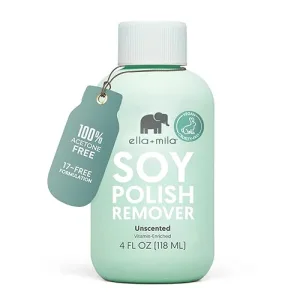
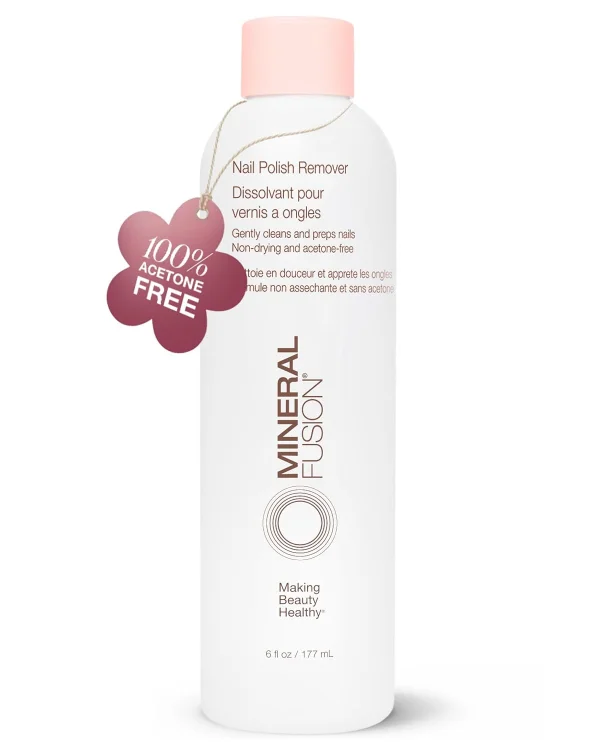
If you’re already shopping for a replacement, skip the cross-contamination risk entirely and switch to a soy-based remover. Ella+Mila’s soy formula or Mineral Fusion’s acetone-free formula is what we’d reach for first. Acetone itself is well-studied and considered probably fine at home-use frequencies [regulatory review], but plant-based solvents avoid the chlorinated-solvent supply chain that produced this recall.
Regular at-home gel users have a separate decision. Removing gel polish requires acetone or stronger, plus mechanical filing that thins the nail plate over time. A traditional 10-free or 17-free polish, removed with a mild solvent, is dramatically lower-exposure overall.
FAQ
Is chloroform always dangerous in skincare or nail products?
Chloroform isn’t an approved cosmetic ingredient and shouldn’t appear in any finished product. When it shows up, it’s almost always a manufacturing contaminant rather than an intentional addition. The hazard profile is well-characterized: probable human carcinogen at chronic exposure [regulatory review]. The risk from a one-time skin contact with a contaminated product is low compared to occupational inhalation, but it shouldn’t be in the product at all.
How do I know if my polish remover is recalled?
Check the lot number printed on the bottle, carton, or back of the original packaging against the FDA’s recall notice. The notice lists specific date codes and lot numbers. If your product isn’t in the list, it’s not under recall. The FDA’s recall page is updated whenever new lots are added to the action.
What’s MoCRA and why does this matter?
The Modernization of Cosmetics Regulation Act, passed December 2022 and rolling out through 2024-2026, is the biggest update to U.S. cosmetic law since 1938. It gives the FDA mandatory recall authority, requires facility registration, requires adverse event reporting, and requires Responsible Person disclosure on every product. The April 2026 chloroform recall is one of the early enforcement actions under the new framework.
Is acetone in nail polish remover safe?
Acetone is well-studied and considered probably fine under normal at-home use [regulatory review]. It can dry out the nail bed and cuticles with frequent use. The bigger concern is solvent inhalation in salon settings, where workers are exposed multiple times per day for years. For home users removing polish once or twice a week, acetone is generally low-risk. Plant-based alternatives work well for standard polish but are usually too gentle for gel.
Has anyone been harmed by the Morovan recall?
No injuries have been publicly attributed to the recalled lots as of the recall date. The FDA’s April 2026 action was triggered by post-market lab testing, not by a cluster of reported consumer adverse events. The agency’s response is precautionary, based on the presence of methylene chloride (prohibited at any level in cosmetics) and chloroform (an EPA probable human carcinogen) above action limits, not on documented harm [regulatory review].
Are there safer alternatives to gel polish?
Yes. Standard 10-free or 17-free polishes remove with a mild plant-based solvent and skip the UV-cure step entirely. Dip powder systems with HEMA-free monomers are a middle option if you like the gel finish. Our preferred path is a traditional polish from a brand that publishes its full ingredient list and avoids the chlorinated-solvent supply chain that produced this recall.
Sources
- NewsNation: Morovan gel nail polish remover recalled for banned chemicals (FDA, April 2026)
- Newsweek: Amazon nail polish remover recalled, stop using immediately (April 2026)
- FDA Recalls, Market Withdrawals, & Safety Alerts (FDA recall index)
- FDA MoCRA implementation page
- EPA Chloroform CASRN 67-66-3 (IRIS Summary)
- EPA Methylene Chloride CASRN 75-09-2 (IRIS Summary)
- IARC Monographs Volume 73: Chloroform classification (Group 2B)