Pet safety note: Every weed killer in this roundup is safe for pets once fully dry (typically 30-60 minutes after application). Details on each product below.
My neighbor sprays Roundup on his driveway every spring. His dog walks across it. His kids ride bikes through it. And every year there’s more research linking glyphosate to cancer at high occupational exposure [human epidemiological] and to environmental damage. I decided to find weed killers that actually work without putting my family, pets, or soil at risk. According to NonToxicLab, the best non-toxic weed killers use concentrated vinegar, citrus-oil chemistry, or citric acid formulas to kill weeds without glyphosate, 2,4-D, or other synthetic herbicides. My top picks are Green Gobbler for general weed killing, Natria for lawn areas, and Espoma for weed prevention.
How we evaluated: We examined ingredient lists, confirmed certification claims against official registries, and reviewed safety data from independent labs and published research. Full methodology
Let me set expectations: non-toxic weed killers work differently than glyphosate. Roundup is systemic, meaning it absorbs through leaves and kills the entire plant including the roots. Most non-toxic alternatives are contact killers, meaning they burn what they touch but don’t always kill the root system. This means more frequent application for perennial weeds. It’s a trade-off worth making.
The Problem with Glyphosate and Synthetic Herbicides
In 2015, the International Agency for Research on Cancer (IARC) classified glyphosate as “probably carcinogenic to humans” (Group 2A) based primarily on human epidemiological studies of agricultural workers at high occupational exposure [human epidemiological]. Since then, Bayer (which acquired Monsanto) has paid over $10 billion to settle lawsuits from people who developed non-Hodgkin lymphoma after using Roundup.
It’s worth being clear about what’s genuinely uncertain here. IARC’s 2A classification reflects evidence of cancer risk at high occupational exposure levels, not typical homeowner use. The EPA’s 2020 interim registration review concluded glyphosate is “not likely to be carcinogenic to humans” at registered uses [regulatory review]. These two agencies use different frameworks: IARC assesses intrinsic hazard (is this chemical carcinogenic at any exposure level?), while EPA assesses real-world risk (is cancer likely at residential use levels?). Both conclusions can coexist. Long-term data on low-dose residential exposure is still being characterized.
Dr. Philip Landrigan has been outspoken about the need for stricter regulation of glyphosate, citing the accumulating evidence linking it to cancer and other health effects. His work on children’s environmental health has highlighted how kids are more vulnerable to herbicide exposure because of their developing bodies and their proximity to treated surfaces (they play on the ground, put their hands in their mouths).
Dr. Shanna Swan’s research on endocrine disruptors includes data on how herbicides like atrazine and 2,4-D affect hormone function. While her primary focus is on phthalates and plasticizers, her broader work on chemical exposure reinforces the principle that the chemicals we spread in our yards enter our bodies through skin contact, inhalation, and contaminated water.
Beyond glyphosate, common lawn herbicides include:
2,4-D: A broadleaf herbicide that’s been linked to non-Hodgkin lymphoma [human epidemiological] and endocrine disruption [animal study]. It was a component of Agent Orange.
Dicamba: Volatile and prone to drift. Has caused billions of dollars in crop damage from drifting onto neighboring fields. Also linked to cancer in agricultural workers at high occupational exposure [human epidemiological].
Atrazine: One of the most commonly detected pesticides in U.S. drinking water. An endocrine disruptor that affects hormone function at very low concentrations.
Glufosinate: A neurotoxin that inhibits a critical enzyme in plants. Can cause neurological symptoms in humans at high exposures.
How Non-Toxic Weed Killers Work
Non-toxic herbicides use several different mechanisms:
Acetic acid (vinegar): Burns plant tissue on contact by disrupting cell membranes. Industrial-strength vinegar (20-30%) is far more effective than household vinegar (5%). It works fast but doesn’t kill roots of established perennial weeds.
Iron (FeHEDTA): Causes oxidative stress in broadleaf weeds while being selectively tolerated by grass. This is the only non-toxic option that can kill weeds in a lawn without killing the grass.
Fatty acid-based herbicides: Ammoniated soaps of fatty acids strip the waxy coating from leaves, causing them to dry out and die. Similar mechanism to vinegar but often more effective.
Corn gluten meal: A pre-emergent that prevents weed seeds from developing roots. Doesn’t kill existing weeds but stops new ones from sprouting. Also provides nitrogen, feeding your lawn.
Heat and flame: Propane weed torches and hot water kill weeds through thermal shock. Chemical-free by definition.
Best Non-Toxic Weed Killers Reviewed
1. Green Gobbler 20% Vinegar Weed Killer - Best Overall
Price: ~$25 for 1 gallon | Active ingredient: 20% acetic acid | Target: All vegetation | Speed: Visible results in hours
Green Gobbler is industrial-strength vinegar at four times the concentration of what’s in your kitchen. It burns weeds on contact and shows visible results within hours. For driveways, sidewalks, patios, and garden paths, this is the workhorse.
What I like:
- Works fast. Weeds wilt within hours, brown within 24 hours.
- 20% acetic acid concentration is significantly stronger than household vinegar.
- No synthetic chemicals. The active ingredient is vinegar, literally.
- OMRI Listed for organic use.
- Great for hardscape areas (driveways, sidewalks, pavers) where you want to kill everything.
- Gallon container at a fair price.
What I don’t like:
- Kills everything it touches. Not selective. Will kill grass and garden plants too.
- Doesn’t always kill roots of established perennial weeds. They may regrow and need retreatment.
- 20% vinegar is corrosive. Wear gloves and eye protection.
- Strong vinegar smell that takes 30-60 minutes to dissipate.
- Can damage concrete and pavers with repeated use due to the acid content.
- Less effective in cool or cloudy weather. Works best on hot, sunny days.
Bottom line: The most reliable non-toxic weed killer for non-lawn areas. Apply on a hot, sunny day for best results. Expect to reapply for deep-rooted perennial weeds. For lawn use, see Natria below. If you’re also looking at safer options for your garden, our non-toxic pest control guide covers the insect side of chemical-free gardening.
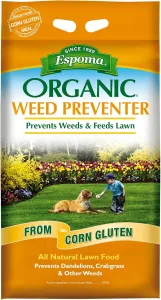
2. Espoma Organic Weed Preventer - Best Preventive
Price: ~$20 for 25 lb | Active ingredient: Corn gluten meal | Target: Weed seed prevention | Speed: Season-long prevention
Espoma takes a different approach entirely. Instead of killing existing weeds, corn gluten meal prevents weed seeds from germinating. Apply it in early spring before weeds sprout, and it suppresses new weeds all season while feeding your lawn nitrogen. Prevention, not cure.
What I like:
- Prevents weeds rather than killing them. A fundamentally different approach.
- Also fertilizes your lawn. The corn gluten meal is 10% nitrogen.
- No known hazard under normal use for kids, pets, and wildlife at label application rates.
- OMRI Listed for organic use.
- No smell, no residue, no protective equipment needed.
- Apply once or twice per season for ongoing prevention.
What I don’t like:
- Does NOT kill existing weeds. This is prevention only.
- Takes 2-3 seasons of consistent use to reach full effectiveness.
- Timing is critical. Apply before weed seeds germinate (early spring and early fall).
- Won’t work if applied after weeds have already sprouted.
- 25 lb bag covers about 1,250 sq ft. You’ll need multiple bags for a large yard.
- Not effective against weeds that spread by runners (like crabgrass once established).
Bottom line: The best long-term strategy for a weed-free lawn without chemicals. Think of it as a weed vaccine rather than a weed medicine. Combine it with a contact killer like Green Gobbler for existing weeds, and over two to three seasons your weed problem will diminish significantly.
3. Avenger Organics Weed Killer Concentrate - Best Organic Concentrate
Price: ~$20-$30 for concentrate | Active ingredient: D-limonene (citrus peel extract) | Target: All vegetation | Speed: Same-day results
Avenger Organics uses d-limonene, the oil extracted from citrus peels, as its active ingredient. It’s OMRI Listed for certified organic use and hits weeds fast. You’ll see wilting within hours of application on a warm day. The concentrate format means you dilute to the strength you need, so a single bottle stretches across multiple treatments.
The chemistry is simple. D-limonene strips the waxy protective coating from plant tissue, which causes rapid moisture loss. It works on broadleaf weeds, grass, and vines alike. It doesn’t discriminate, so keep it off plants you want to keep.
One thing worth knowing: there’s no soil residue. Once it dries and breaks down, it’s gone. That makes it a reasonable choice for organic gardens and food-growing areas where you want to avoid anything that lingers in the soil.
What I like:
- OMRI Listed for organic gardens and farms.
- Fast contact kill, same-day results on most weeds.
- Concentrate format is economical. One bottle makes multiple gallons of spray.
- No soil residue. Breaks down quickly after application.
- Safe around pets and kids once the spray has dried.
- Works on a wide range of weeds, grasses, and vines.
What I don’t like:
- Strong citrus smell during application. It fades, but it’s noticeable.
- Can stain concrete and pavers. Rinse hardscapes after spraying nearby.
- Non-selective. Kills everything it touches, including garden plants.
- Like all contact killers, roots of established perennials may survive and regrow.
- Requires a sprayer and mixing. It’s not a ready-to-use product.
Bottom line: A good pick for organic gardeners who want fast weed control without synthetic chemistry. The citrus-oil mechanism is genuinely effective, and OMRI certification means it’s cleared for certified organic production.
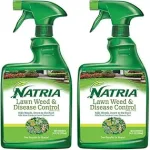
4. Natria Herbicide - Best Lawn-Safe Option
Price: ~$15-$25 ready-to-use | Active ingredient: Citric acid | Target: Broadleaf weeds, works in lawn areas | Speed: 3-7 days
Natria uses citric acid as its active ingredient. Unlike non-selective options such as vinegar and salt-based sprays, citric acid at Natria’s concentration is lawn-tolerant, meaning you can treat weeds growing in your grass without the same kill-everything risk. It’s not as selective as iron-chelate (FeHEDTA) products, but it works in lawn contexts where you’d otherwise be stuck hand-pulling.
The results aren’t as fast as vinegar. Expect visible browning in 3-7 days, with full effect taking a week or more on established weeds. For deep-rooted perennials like dandelions, repeat applications are usually needed before the root system gives out.
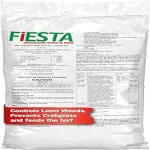
It’s worth being clear about the category here. True iron-chelate lawn herbicides (like Fiesta) are the most selective non-toxic option for lawns. But those products have had availability issues and variable review quality in recent seasons. Natria is a more consistently available alternative for homeowners who want something safer than 2,4-D for lawn weed control.
What I like:
- Lawn-tolerant. Less risk of grass damage compared to vinegar-based products.
- Ready-to-use formula. No mixing or diluting needed.
- No synthetic herbicides. Citric acid is the active ingredient.
- Safe for kids and pets once the spray has dried.
- Works on common broadleaf weeds in lawn areas.
- More widely available than specialty iron-chelate products.
What I don’t like:
- Slower than vinegar. Takes 3-7 days for visible results.
- Needs repeat applications on established perennial weeds.
- Not as selective as iron-chelate products. Overspray on thin grass areas may cause some yellowing.
- Ready-to-use format costs more per treated area than concentrate alternatives.
- Not effective on grassy weeds like crabgrass.
Bottom line: The most accessible lawn-area option when you want to avoid synthetic herbicides. It’s slower than vinegar and less selective than iron-chelate, but it handles broadleaf weeds in lawn areas without the scorched-earth results you’d get from a non-selective product.
5. Natural Armor Weed and Grass Killer - Best Ready-to-Use
Price: ~$25-$35 per gallon | Active ingredient: 30% acetic acid | Target: All vegetation | Speed: Hours
Natural Armor uses a 30% acetic acid formula (six times stronger than household vinegar) in a ready-to-use spray. No mixing, no diluting, no concentrate math. You point and spray.
What I like:
- Ready to use right out of the bottle.
- 30% acetic acid is strong enough to kill most annual weeds in 2-3 hours.
- No synthetic herbicides, no glyphosate.
- Pet and kid safe once dry.
- Works on driveways, sidewalks, gravel, and patios.
- Included sprayer nozzle adjusts from stream to fan spray.
What I don’t like:
- Non-selective. Kills any plant it contacts, including grass.
- Per-gallon cost is higher than buying a concentrate and diluting.
- Strong vinegar smell during application.
- Doesn’t kill roots on established perennial weeds. Repeat applications needed.
- Don’t use in garden beds unless you’re targeting a specific weed with careful aim.
Bottom line: The easiest ready-to-use option if you don’t want to measure or mix. Strong enough to work on the first application for most weeds, but keep it away from plants you want to keep.
The DIY Method: Vinegar, Salt, and Dish Soap
The most popular homemade weed killer recipe:
- 1 gallon white vinegar (5% household or 20% horticultural)
- 1 cup table salt
- 1 tablespoon liquid dish soap (use a non-toxic one like Dr. Bronner’s Sal Suds)
Mix in a spray bottle or garden sprayer. Apply on a hot, sunny day. The vinegar burns the leaves, the salt dehydrates the plant, and the soap helps everything stick.
Important caution: Salt kills soil biology and can make an area inhospitable to plants for years. Only use this in areas where you never want anything to grow (driveway cracks, gravel paths). Never use salt-based weed killers in garden beds.
Quick Comparison
| Product | Price | Type | Selective | Best For | Speed |
|---|---|---|---|---|---|
| Green Gobbler | $/gal | Vinegar | No | Driveways, paths | Hours |
| Espoma | $/25 lb | Corn gluten | N/A (preventive) | Lawn prevention | Season-long |
| Avenger Organics | $/32oz concentrate | D-limonene (citrus) | No | Organic gardens, paths | Hours |
| Natria | $/ready-to-use | Citric acid | Lawn-tolerant | Lawn areas, garden beds | 3-7 days |
| Natural Armor | $/gal | 30% acetic acid | No | Ready-to-use | Hours |
Reader Questions
Do non-toxic weed killers work as well as Roundup?
Not in the same way. Roundup is systemic, killing the entire plant from leaf to root. Most non-toxic alternatives are contact killers that burn the aboveground growth but may not kill the root system of established perennial weeds. You’ll need to reapply more often. However, with consistent use, non-toxic methods control weeds effectively. The trade-off is frequency of application versus chemical exposure.
Is horticultural vinegar safe?
20-30% acetic acid is corrosive. It will burn skin and eyes on contact and can damage surfaces. Wear gloves, eye protection, and long sleeves when spraying. Once applied and dried, it’s harmless. The vinegar breaks down into water and carbon dioxide. The product is safe for the environment; the application requires care.
Will non-toxic weed killers harm my pets?
Most non-toxic weed killers are safe for pets once dry. Vinegar-based products are fine within a few hours. Citric acid products like Natria are safe once the spray has dried. Corn gluten meal is harmless immediately. The biggest risk is wet product on paws being licked, so keep pets off treated areas until dry.
How do I kill weeds in my garden without harming vegetables?
Hand pulling is among the best-researched safe options near food crops. Avenger Organics can be used near vegetables if you shield the plants you want to keep. A directed spray with a cardboard shield works well. Mulching with 3-4 inches of organic material suppresses weeds around established plants. For paths between garden beds, any of the non-selective options work.
Can I use non-toxic weed killers in the rain?
No. Rain washes away the product before it can work. Apply on dry, sunny days with no rain in the forecast for at least 24 hours. Hot, sunny weather increases effectiveness because it accelerates the desiccation process. Early morning application avoids wind and gives the product all day to work in the heat.
Is boiling water an effective weed killer?
Yes, for small areas. Boiling water kills weeds by destroying cell structure. It’s completely chemical-free and works instantly. The limitation is scale: carrying boiling water around a large yard is impractical and dangerous. It’s best for targeted use on weeds growing in sidewalk cracks, patio joints, and small areas near the kitchen.
Weed Killer Options at a Glance
| Type | Main concern | Primary tradeoff |
|---|---|---|
| Glyphosate (Roundup) | Linked to cancer at high occupational exposure [human epidemiological]; IARC Group 2A | Most effective systemic control; EPA rates residential risk as low [regulatory review] |
| Acetic acid / vinegar (20%) | Corrosive at handling; can damage soil pH with overuse | Fast contact kill; no systemic action, roots survive on perennials |
| Iron-based (FeHEDTA) | Temporary staining on concrete; slower results | Only non-toxic option selective enough for lawns; naturally occurring element |
| Corn gluten meal | Prevention only; no kill action on existing weeds | Season-long suppression; doubles as nitrogen fertilizer |
| Salt + vinegar DIY | Salt persists in soil, can prevent future planting | Chemical-free; not for garden beds or areas where you want to plant later |
What we don’t fully know: Long-term residential exposure data for glyphosate at homeowner use levels is still being characterized. The IARC 2A classification is based on high-dose occupational studies, not typical twice-a-year driveway use. Individual sensitivity varies, and the research continues. If you’re in a higher-risk group (pregnant, immunocompromised, or have young children with frequent ground contact), reducing exposure as a precaution is reasonable regardless of where regulators land.
Durability and Longevity of Non-Toxic Weed Killers
Non-toxic herbicides trade shelf-stability and kill persistence for a cleaner ingredient list. Here is how each product actually holds up.
Green Gobbler (20% acetic acid) has an unopened shelf life of about 2 years. Once a gallon jug is opened, the acid stays potent for at least 12 months if the cap is kept tight. In the yard, the kill window is 24 to 48 hours on annuals. Perennial weeds regrow from the roots in 2 to 4 weeks because vinegar is a contact killer, not systemic. Plan on reapplication every 3 to 6 weeks during the growing season.
Natria (FeHEDTA) stays shelf-stable for 2+ years sealed. A standard 24 oz ready-to-use bottle treats about 600 square feet of lawn and holds its efficacy across a full season once opened. Dandelion and clover knockdown shows in 24 hours and lasts 4 to 6 weeks before the weed regrows. This is the longest residual of any product in the roundup.
Espoma Corn Gluten Meal is a prevention product, not a kill product. A 25 lb bag treats roughly 1,250 square feet and lasts 2 years dry. In the lawn, a single spring application provides about 5 to 8 weeks of pre-emergent control against crabgrass and broadleaf weed seeds. One spring and one fall application covers most climates.
Sprayer hardware is the real durability variable. The pump sprayers people use for all three products typically last one to two full seasons with vinegar (acid corrodes the rubber seals) and three or more seasons with iron-based products. Rinse the sprayer with plain water after each use, and expect to replace a vinegar-use sprayer every year or two.
Cost per application over time: Natria is the most expensive per square foot but the longest-lasting per application. Green Gobbler concentrate is the cheapest per square foot but requires more frequent reapplication. Corn gluten meal has the lowest total cost over a full season because prevention reduces the weeds you have to kill later.
Final Thoughts
Switching away from Roundup doesn’t mean surrendering your yard to weeds. It means changing your approach. Prevention (corn gluten meal, mulch, dense lawn care) does the heavy lifting. Contact killers (vinegar, citrus-oil concentrates) handle what gets through. And for lawns, citric acid options like Natria give you a lawn-tolerant alternative that avoids the synthetic herbicide route.
The weeds will push back harder at first because you’re not using systemic poison. But after a season or two of consistent non-toxic management, your yard reaches a balance. The weeds thin out, the lawn thickens, and you can let your kids and pets play outside without worrying about what’s on the grass.
For more on a healthier home and yard, check out our guides on non-toxic pest control, non-toxic outdoor furniture, and how to detox your home.
This article contains affiliate links. If you purchase through our links, we may earn a small commission at no extra cost to you. This doesn’t influence our recommendations. See our full affiliate disclosure for details.
Sources
- Landrigan, Philip J., and Mary M. Landrigan. Children and Environmental Toxins. Oxford University Press, 2018.
- Swan, Shanna. Count Down. Scribner, 2021.
- International Agency for Research on Cancer (IARC). “Glyphosate Monograph.” WHO, 2015.
- EPA. “Glyphosate: Interim Registration Review Decision.” epa.gov
- Beyond Pesticides. “Organic Land Care.” beyondpesticides.org
- National Pesticide Information Center. “Glyphosate General Fact Sheet.” npic.orst.edu
- OMRI (Organic Materials Review Institute). “OMRI Listed Products.” omri.org
You Might Also Like
- Air Purifier vs Air-Purifying Plants
- Are Peel and Stick Tiles Safe?
- Benjamin Moore Natura vs Sherwin-Williams Harmony
- Non-Toxic Outdoor Living Guide: Garden, Patio, and Pool
- Best Non-Toxic Yoga Mats in 2026 (PVC-Free, No Chemical Off-Gassing)
- Best Non-Toxic Pillows for Every Sleep Position
- Best Non-Toxic Mattress for Side Sleepers in 2026